
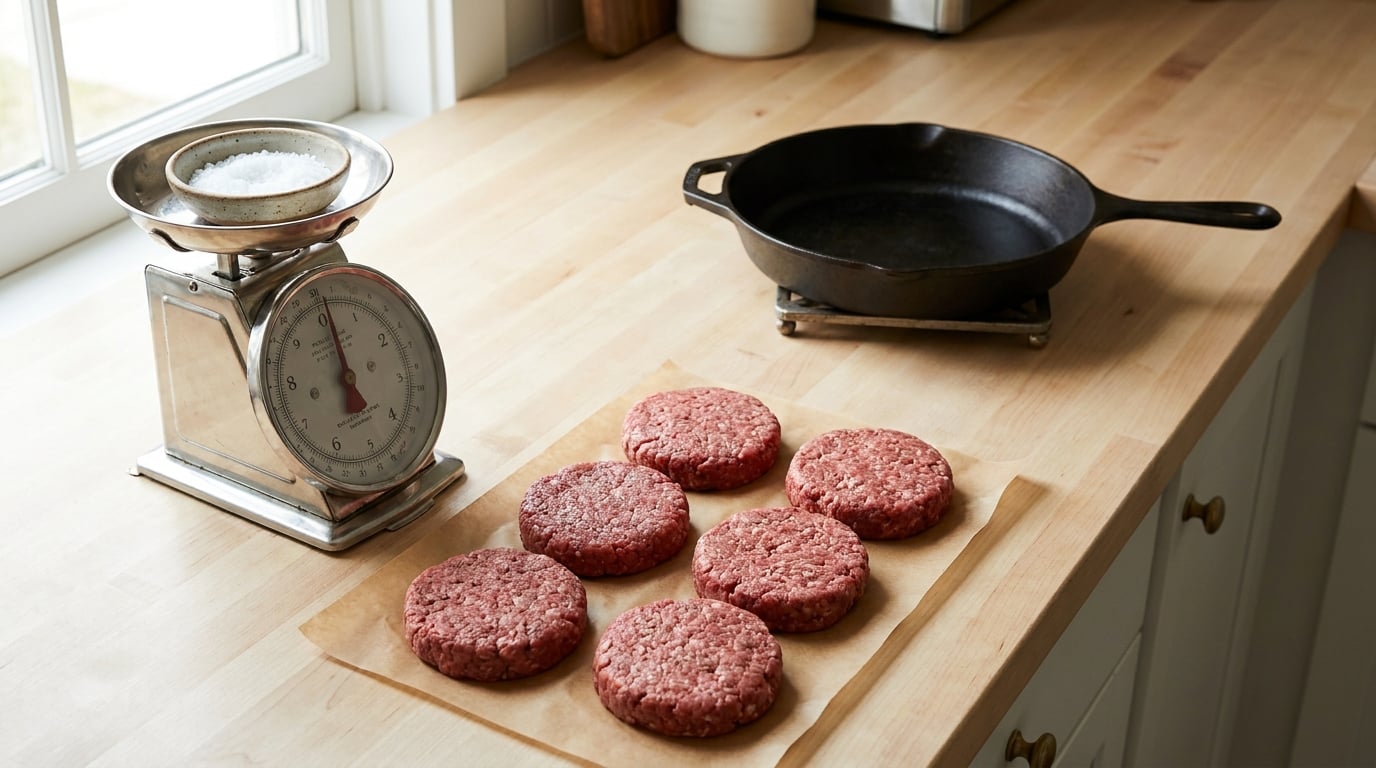
Burger patties fall apart for two reasons: the meat is too lean to hold itself, or the cook moved it before a crust had time to form. Learn how to make burger patties that hold together by using 80/20 ground beef, mixing gently, chilling the patties 15 to 30 minutes, and searing them hard for 3 to 4 minutes before the first flip. Total hands-on time is about 25 minutes.
The fat in the blend is doing most of the binding work, not any ingredient you add to the bowl. Once the patty hits a hot surface and the outside sets into a crust, that crust becomes the shell that survives the spatula. Everything between those two moments is technique.
Table of Contents
- What You Need
- Step-by-Step: How to Make Burger Patties That Hold Together
- Common Mistakes
- Quick tips for patties that stay together
- Frequently Asked Questions
- Why do my burger patties fall apart when I flip them?
- Do burger patties need egg or breadcrumbs to hold together?
- Does lean ground beef make patties that fall apart?
- Should I chill burger patties before grilling?
- How thick should a burger patty be?
- How do I keep veggie and black bean patties from crumbling?
- Conclusion
What You Need
Start with 1 to 1.5 pounds of 80/20 ground chuck for four standard patties. Avoid 90/10 unless you plan to blend something into it, because very lean meat has no fat to hold the shape.
Beyond the meat, you need coarse salt and black pepper, a scale or measuring cups, parchment paper, a flat plate, and a thin spatula. A burger press is helpful but not required, and an instant-read thermometer is the cheapest insurance against a raw center.
A binding agent is any ingredient added to ground meat that acts as glue, giving the patty structural integrity so it survives being picked up, flipped and stacked on a bun. For beef, it is optional. For poultry, veggie patties and lean blends, it earns its place.
Step-by-Step: How to Make Burger Patties That Hold Together
1. Choose ground beef with enough fat
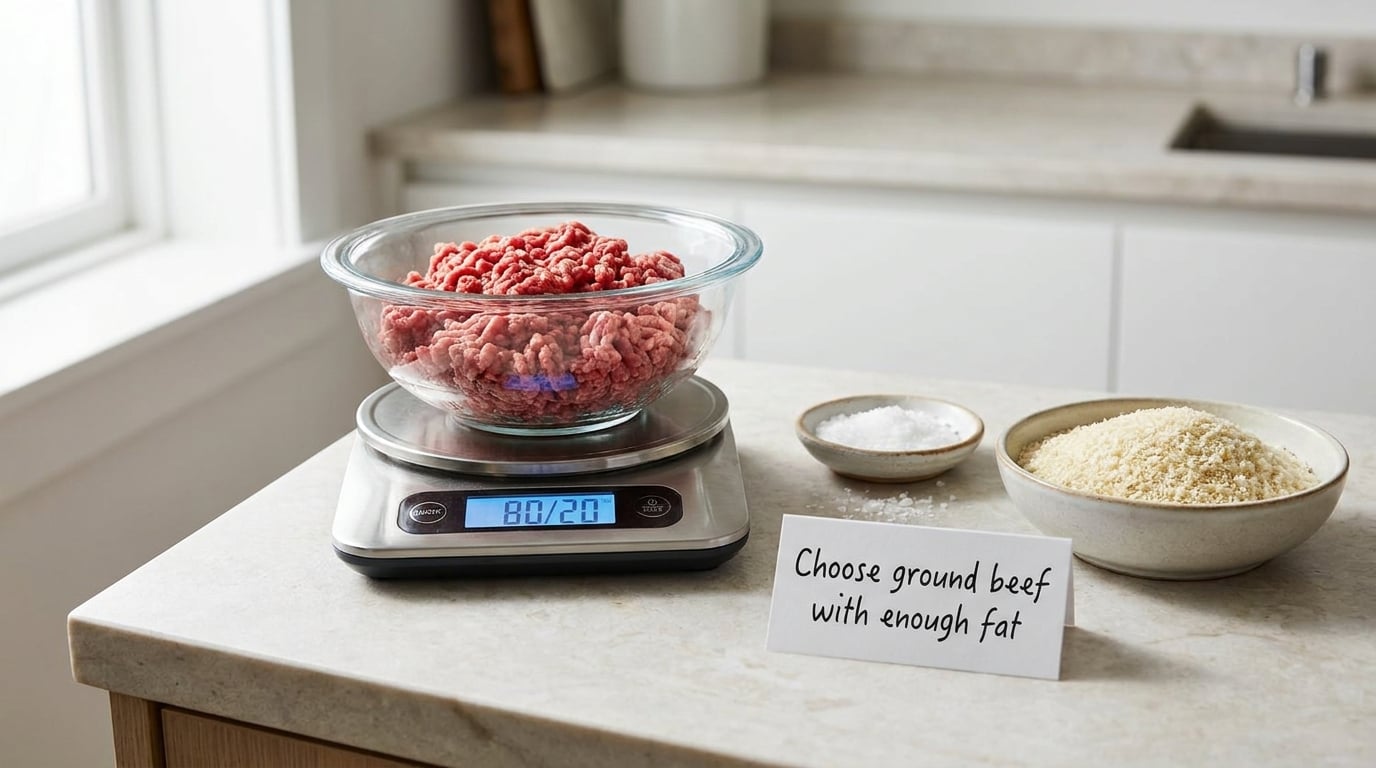
An 80/20 blend is the reliable starting point. Twenty percent fat gives the patty enough internal moisture to stay flexible and enough fat to set when it heats, which is what gives it a body that does not crumble when you lift it.
Weigh the meat rather than guessing by the tray. A quarter pound per person is a normal single burger, so 1.5 pounds gives you four patties with a little spare for a test.
2. Season and mix the meat gently
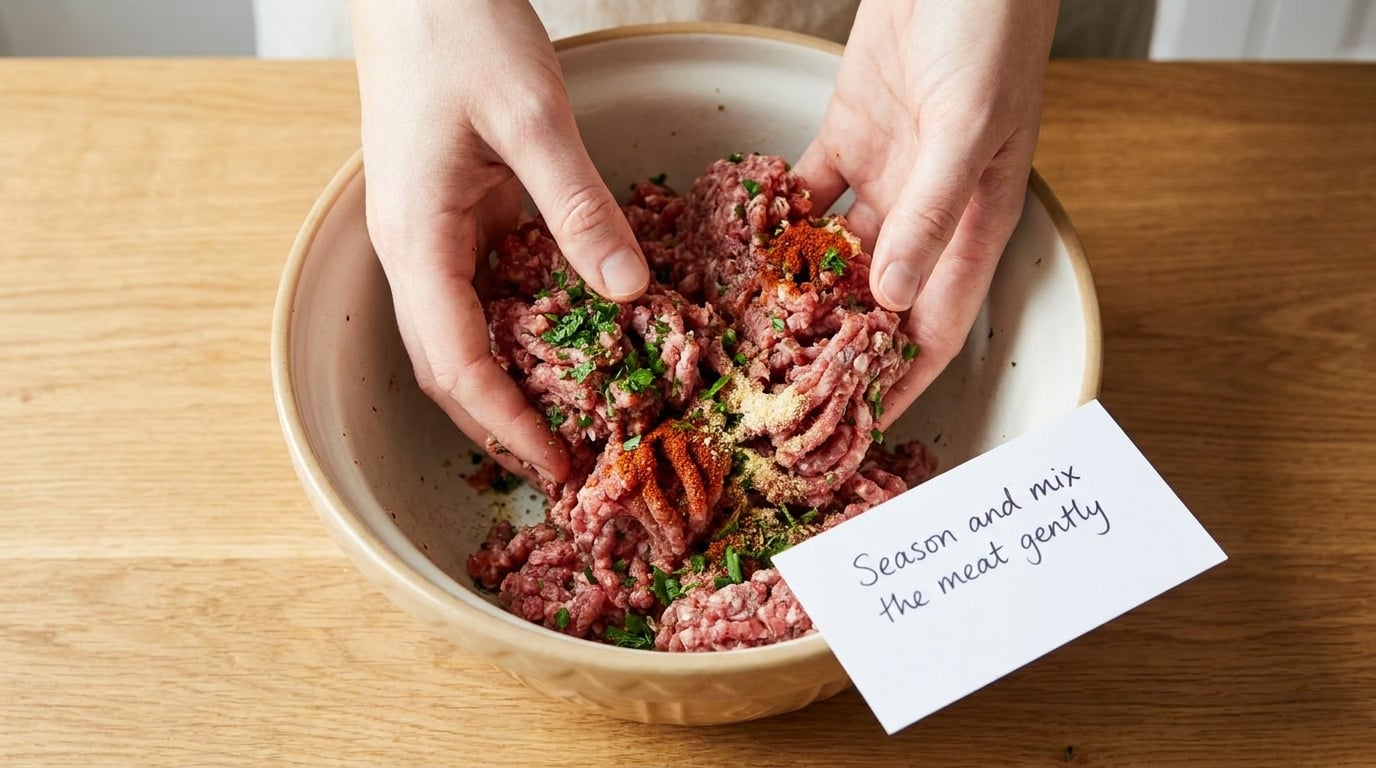
Season the meat just before it goes on the heat, not before you shape it. Salt applied earlier and worked in can tighten the proteins into a chewy, rubbery texture, which is the opposite of what you want.
Mix with a light hand and stop the moment the seasoning is evenly distributed. The mixture should still look loose and a bit ugly, with ridges and small dents that give the patty more surface to sear.
Overworking the meat is the single most common reason patties fall apart. It gets dense, springs back when you press it, and shatters instead of bending.
3. Add a binder only if the blend needs help
A well-made 80/20 beef patty needs nothing added. Binders matter for poultry, for very lean blends, and for homemade vegetable patties, and in those cases a small amount of the right thing adds a lot of glue. Too much turns the burger dense and dry.
| Binder | Amount per pound of meat | How it binds | Texture effect |
|---|---|---|---|
| Egg | 1 egg | Coagulates on contact with heat and locks the mixture | Slightly firmer, classic meatball-adjacent if overused |
| Breadcrumbs | 2 to 3 tablespoons | Absorbs moisture and gives the patty a solid matrix | Noticeably drier and more crumbly if you double it |
| Rolled oats | 3 tablespoons | Swells with liquid and holds shape | Slightly grainy, softens the meat’s chew |
| Grated potato | 1/4 cup, squeezed dry | Starch gelatinizes and welds the mixture | Keeps the inside moist |
| Ice cubes | 2 to 3 cubes | Melt during cooking and steam from the inside out | Juicier, minimal effect on the crust |
For chicken or turkey patties, aim for an 85/15 to 90/10 blend and add an egg or oats, since poultry has almost no fat of its own to bind. For black bean or lentil patties, mash the beans so they act as the glue and add a tablespoon of starch or oats.
Breadcrumbs cannot rescue a 90/10 patty. They also do nothing for a patty that was overworked, because the damage happened before the binder ever met the meat.
4. Shape patties of even thickness
Divide the beef into equal portions, roll each into a loose ball, then press it into a patty about three-quarters of an inch thick. Uniform thickness matters more than any other shaping choice, since a thin edge cooks through and dries out long before the center is done. Most of the patties that collapse in a home kitchen trace back to this single step, and it is the easiest one to fix once you know how to make burger patties that hold together.
Press the center a little firmer than the rim. A slight indentation is optional, not a requirement, and it is mostly a habit carried over from diner patties.
Leave the edges a little ragged rather than sealing them smooth. The bumps and dents are extra surface area for browning, and browned surface is what resists tearing.
Two plastic deli lids, about 4 inches across with a quarter-inch depth, make a serviceable press: put the meat between them, press down, and lift. You get the same patty every time, which matters when you are cooking for a group.
5. Chill the patties before cooking
Refrigerate the shaped patties 15 to 30 minutes before they go on the heat. Cold fat stays firm, so the patty keeps its edges instead of slumping into the pan at first contact.
Stack the patties between sheets of parchment rather than letting them touch face to face. If you are cooking later in the day or tomorrow, cover them and keep them cold, on ice if you have it.
For storage, USDA guidance puts raw ground beef in the refrigerator for one to two days and in the freezer for three to four months. Shape the patties first, lay them on a tray to freeze solid, then stack them in a bag with parchment between the layers.
6. Cook gently and check doneness
Heat a cast iron skillet or griddle until a drop of water skitters across it. That is the signal to lay the patties down. Once they touch, leave them completely alone for 3 to 4 minutes.
Do not press them, wiggle them, or lift an edge to peek. The first flip should be one confident motion with a thin spatula slid all the way under, and the second side needs roughly half the time because the heat has already started working inward.
A patty that tears as you try to flip it is not ready to be flipped. The outside has not set yet, so give it another minute on that first side rather than fighting the spatula.
Ground meat is safe at an internal temperature of 160 degrees Fahrenheit, and an instant-read thermometer in the thickest part of the patty is the only reliable way to know. Poultry patties need 165 degrees.
Rest the finished patties 2 to 3 minutes on a rack or plate. Carry-over cooking finishes the center, and a burger that has rested is juicier and more forgiving to handle.
Common Mistakes
Working the meat too hard. Mixing or kneading it like bread dough develops a dense, springy mass that tears instead of flexing. Mix until the seasoning disappears, then stop.
Using too lean a blend. Patties made from 90/10 crumble for the same reason fragile patties crumble, because there is no fat to bind. Buy 80/20 and skip the binder entirely.
Adding more binder than the meat needs. The instinct when a patty breaks is to reach for another egg or a handful of breadcrumbs. That makes a bouncy, dry burger that falls apart anyway, because the structure is now too stiff to bend when you flip it.
Skipping the chill. Room-temperature patties slump and spread the moment they meet the pan, and a spread patty cooks unevenly and dries out at the edges. Fifteen minutes in the fridge fixes it, and that habit does more for how to make burger patties that hold together than any binder on the shelf.
Flipping too early. The crust is the shell that holds a burger together, and it only forms after a few minutes of undisturbed heat. If the patty tears on the flip, it needed more time, not a spatula with more courage.
Cooking at excessive heat or crowding the pan. A screaming hot pan with no room between patties steam-sears them, and a steamed surface tears easily. Leave a finger’s width between patties and keep the heat at medium-high rather than screaming.
Quick tips for patties that stay together
Cook one throwaway patty first when you are making a batch for a group. It costs three minutes and tells you whether the blend, the mix and the heat are working before eight people are waiting on dinner.
Season your grill grates or pan rather than the meat once it is cooking. Coarse salt on the cooking surface keeps the crust from releasing, and it is easier to season than a patty that is already tearing.
For smash burgers, place the ball on the griddle for 30 to 45 seconds to set a skin, then press it down. That tiny sear keeps the patty from sticking when you smash it.
Shape to an even weight rather than an even look, so everything finishes at the same time on one tray. Press the last patty a little wider to match the first and nobody notices but you.
Get your buns toasted and your toppings out before the patties land. The 2 to 3 minute rest is exactly the time the toaster needs, and assembling under time pressure is how good burgers get dropped on the floor.
If you are freezing patties, freeze them raw and cook from frozen at a slightly lower heat, or thaw them in the refrigerator overnight first. A patty that has thawed and been re-frozen loses the structure you worked for.
Frequently Asked Questions
Why do my burger patties fall apart when I flip them?
In most cases the crust has not formed yet. A patty needs 3 to 4 minutes of undisturbed heat on the first side before its outside sets into a shell that can survive a spatula. If it tears as you lift it, it needs more time on that side, not a sharper flip. Pressing it with the spatula, moving it around, or cooking it on a griddle too crowded for heat to circulate all cause the same failure.
Do burger patties need egg or breadcrumbs to hold together?
No, not when you start with 80/20 ground beef and handle it gently. Fat and lightly worked muscle fibers are enough for a beef burger, and adding a binder to a good blend makes it dense and dry. Binders earn their place in turkey and chicken patties, very lean blends, and homemade veggie patties, where the meat alone has no fat to hold the shape.
Does lean ground beef make patties that fall apart?
Yes. Fat is structural in a ground-meat patty, not just flavor. A 90/10 blend has almost nothing holding the fibers together, so it dries out and crumbles. Some home cooks work around this by blending in a 50/50 mix of finely chopped mushrooms, which are mostly water and release moisture as the patty cooks. Simpler is to buy 80/20 and skip the workaround entirely.
Should I chill burger patties before grilling?
A short chill makes a real difference. Refrigerating shaped patties for 15 to 30 minutes firms the fat so the patty keeps its edges instead of spreading on contact with the heat. For longer storage, keep raw ground beef in the refrigerator for one to two days, or freeze the patties flat on a tray before stacking them with parchment between the layers.
How thick should a burger patty be?
About three-quarters of an inch is the sweet spot for a cast iron skillet or a grill. Thinner patties cook fast but have no structural core and dry out at the edges, while patties much thicker than an inch fall apart more often because the center stays raw and the outside overworks. Weigh each portion instead of eyeballing it, and press the center slightly firmer than the rim.
How do I keep veggie and black bean patties from crumbling?
Mash the beans or lentils first so they act as the binder, then add a tablespoon of an absorbent starch like breadcrumbs or quick oats to soak up moisture. Cook the mixture in a skillet briefly so the starch sets, and let the shaped patties chill before the grill. Veggie patties have no fat to hold them together, which is why they need a binder and a long first sear.
Conclusion
Start with 80/20 ground beef, mix it gently, season after shaping, and chill the patties 15 to 30 minutes. When they hit a hot cast iron skillet, leave them alone for 3 to 4 minutes, flip once, and cook to 160 degrees Fahrenheit before letting them rest. That sequence, followed every time, is what makes burger patties that hold together from the grill to the bun.