
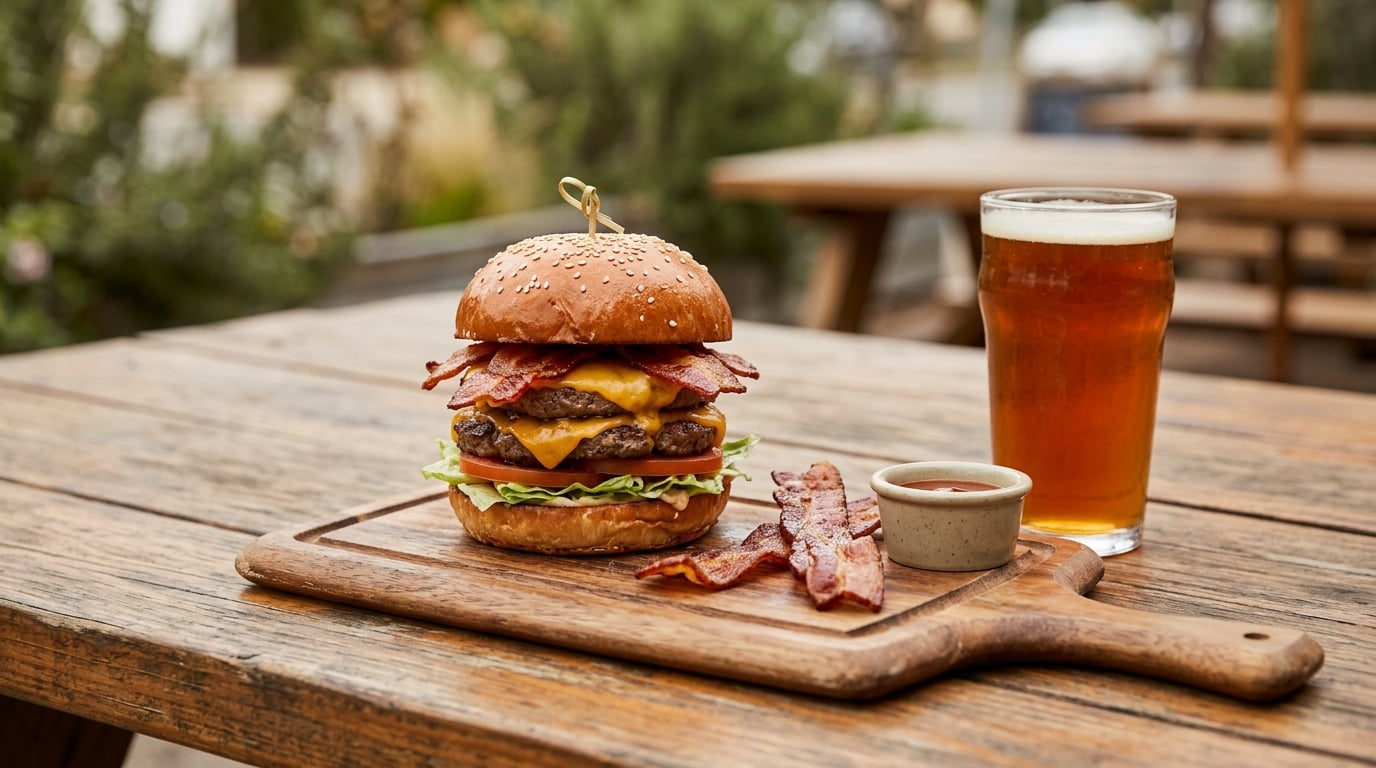
Short answer: a crisp lager, an amber ale, a brown ale, or an American porter is what beer goes with a bacon cheeseburger best. Not the heaviest bottle on the shelf, and not the coldest. The burger is rich, salty and smoky, so you want a beer with enough bitterness and carbonation to reset your mouth between bites rather than one that piles more sweetness on a plate that already has plenty.
I have gotten this wrong plenty of times. A double bacon cheeseburger with a smoky barbecue sauce, washed down with a sweet stout, is exactly how a good cookout turns into a heavy afternoon on the couch. The fix is boring and reliable: medium-bodied, moderately bitter, properly cold.
Table of Contents
- What Beer Goes with a Bacon Cheeseburger?
- How do the burger’s flavors change the beer pairing?
- Which beer styles work best with a bacon cheeseburger?
- How to choose a beer based on the cheese and toppings
- Beer temperature, glassware, and serving order
- Frequently Asked Questions
- What is the best beer to pair with a bacon cheeseburger?
- Is a heavy stout too much with a bacon cheeseburger?
- Does an IPA clash with the bacon?
- What beer works with a spicy jalapeno bacon cheeseburger?
- What non-beer drink goes as well as beer with a bacon cheeseburger?
- Can I use the same beer I cook the burgers in?
- Conclusion
What Beer Goes with a Bacon Cheeseburger?
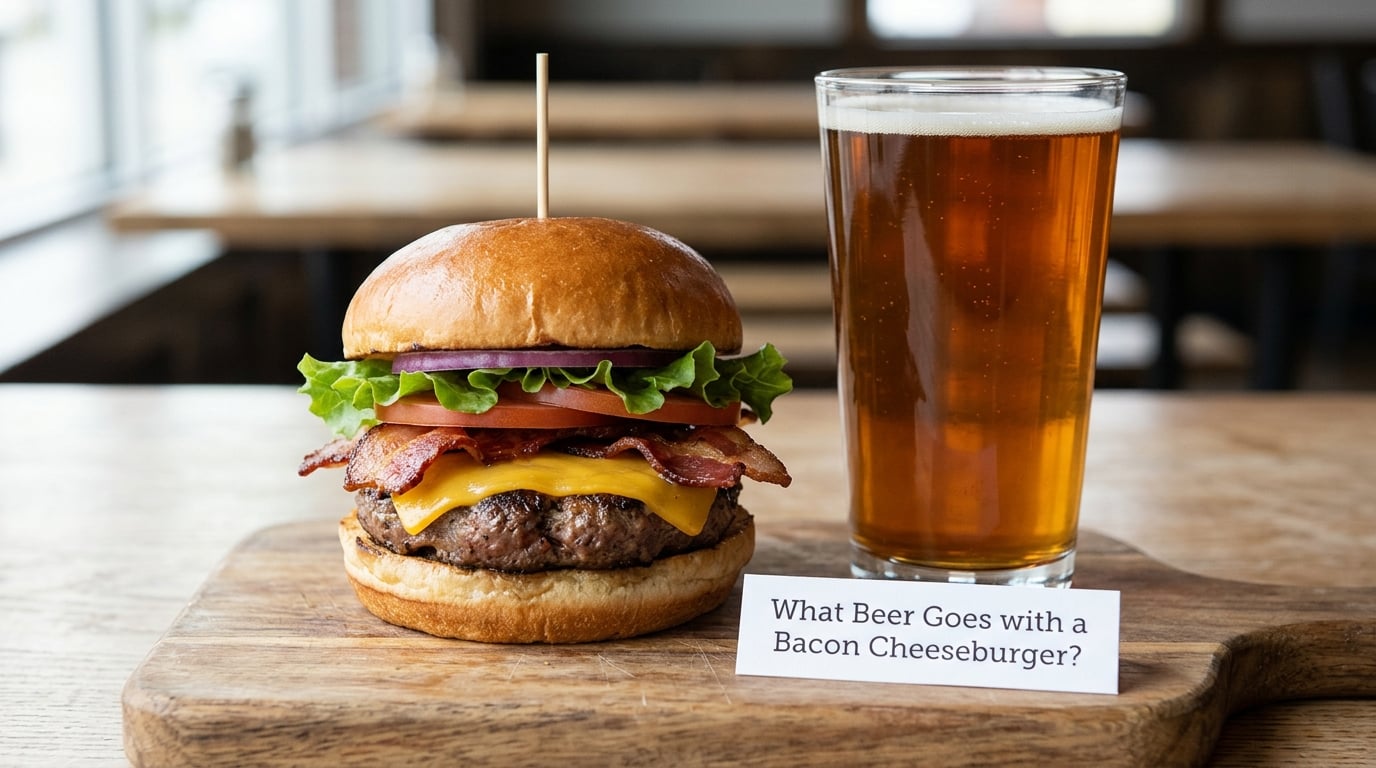
Start with a crisp American lager or German-style pilsner, an amber ale, a nut-brown English-style brown ale, or an American porter. Those four cover almost every bacon cheeseburger you will meet, in a backyard or a bar. Here is the version in one scannable block:
- American lager or pilsner – its carbonation and snap scrub the fat, and its grainy malt sits right next to the toasted bun.
- Amber ale – caramel and toasted bread crust mirror the char on the beef without adding any roast.
- English-style brown ale – nutty malt and light roast handle double the bacon without turning heavy.
- American porter – chocolate and coffee notes echo the sear, and the bitterness cuts straight through rendered fat.
- Session or West Coast IPA – resinous bitterness is the single most reliable palate reset for a greasy plate.
If you only remember one, remember this: order the amber ale or the porter. They are the two styles that hold up whether the cheese is American or aged cheddar, whether there is one strip of bacon or four, and whether the bun is a plain potato roll or a toasted brioche.
The two styles to be careful with sit at the ends of the scale. A very roasty imperial stout or a barrel-aged beer tends to taste cloying next to salty bacon, and a super-hoppy double IPA can bury a delicate cheese entirely. Neither is wrong, but both are a bet on a very specific build.
How do the burger’s flavors change the beer pairing?
A plain cheeseburger is a one-flavor problem: rich beef, melted cheese, done. Bacon adds three more things to balance, which is why beer advice for a cheeseburger transfers to a bacon cheeseburger only halfway.
Rendered fat. Bacon fat plus beef fat plus cheese fat is a lot of oil in one bite. Fat coats the palate and dulls flavor receptors, which is exactly why carbonation and bitterness matter more here than they do with a grilled chicken breast. A beer that tastes flat on its own will taste lively on this burger.
Salt. Bacon is salted before it hits the grill, and the patty is salted again. A salty burger paired with a salty, heavy beer turns cloying fast, because the beer has nothing left to contrast with. This is the main reason the standard advice is to keep the beer light-bodied and bitter when the bacon is heavily salted.
Smoke and char. Bacon adds smoke flavor, and the griddle adds caramelised char. Those are roasted flavors, so a beer with a little roast or caramel in it echoes them. That is the whole argument for porter over plain lager: not that lager is wrong, but that the roasted notes match what the meat is actually doing.
Cheese. American cheese is mild and melty, aged cheddar is sharp and crumbly, blue cheese is salty and funky. Sharp cheese pushes you toward bitterness, mild cheese tolerates more roast, and blue cheese opens up wheat beers and even funky wild ales.
Bun and toppings. A soft brioche bun adds its own sweetness and needs more bitterness to cut it. Grilled onions and pickles push toward hoppier, drier beer. A sticky barbecue sauce buries anything subtle, so you want a beer with a firm backbone rather than a delicate one.
Which beer styles work best with a bacon cheeseburger?
Ranked by how often they work rather than by how impressive they sound. Each one has a trade-off, and knowing the trade-off is what keeps you from ordering badly.
Crisp and refreshing bacon cheeseburger beer pairings
These are the choices when the burger is simple, the day is hot, and you want to eat three of them. High carbonation is the whole point; body and roast are what you are avoiding.
- Pale lager or pilsner (about 4 to 5% ABV) – cracker-dry, very high carbonation, almost no fruit or roast. The most crowd-safe answer and the one that disappears fastest on a grill.
- Mexican-style lager (about 4.5% ABV) – a touch of flaked maize and a light, sweetish finish. It handles a heavily topped burger because it does not fight the sauce.
- American wheat ale (about 4 to 5.5% ABV) – soft citrus and a hint of banana clove from the wheat. A good match with blue cheese and with pickles, less so with a heavily charred patty.
- Kölsch-style or blonde ale (about 4.8 to 5.5% ABV) – light body, faint fruit, dry finish. Similar job to a pilsner but rounder, and it pairs with a brioche bun without making it sweeter.
- Session pale ale (about 3.2 to 4.5% ABV) – hop aroma and bitterness at a strength you can drink for three hours. This is the sweet spot if you like hops but not a heavy body.
The trade-off is real: a very light beer can taste thin next to a double patty, because there is not enough bitterness to stand up to the meat. If your burger is stacked, move up to an amber ale.
Bold beers for a rich bacon cheeseburger
These match the char and the fat by mirroring them rather than cutting through them. They work best on a burger where the sear is pronounced and the bacon is crisp rather than chewy.
- American porter (about 5 to 6.5% ABV) – roasted barley, chocolate and coffee, moderate bitterness, dry finish. The single best all-rounder for this burger and my usual order.
- English-style brown ale (about 4 to 6% ABV) – nutty, toffee, a touch of roast, low bitterness. Good with aged cheddar, and it never gets cloying.
- Amber or red ale (about 4.5 to 6% ABV) – caramel, toasted crust and a clean bitter finish. The most forgiving style there is, and the one I suggest to anyone who does not know what they like.
- West Coast or session IPA (about 5 to 7% ABV) – grapefruit, pine, resin and firm bitterness. The most reliable palate cleanser on this list, especially with double bacon.
- Dry stout (about 5 to 6% ABV) – coffee, cocoa, ash, very dry. Excellent on a plain American cheeseburger. On a heavily salted bacon build, pick one under 6% ABV or skip it.
- Milk stout (about 4 to 6% ABV) – lactose sweetness that stands up to a smoky bacon cheeseburger. A small glass is plenty; a pint of it after two burgers is a lot.
Two warnings worth keeping. Hazy and New England IPAs are juicy and soft with low bitterness, so on a bacon cheeseburger they tend to vanish into the fat; save them for a plain cheeseburger. And anything above 8% ABV on a double-bacon build is a very large serving of very strong beer on a very heavy meal.
Where the beer crowd splits is worth knowing about, because it tells you how much the style actually matters. Plenty of homebrewers report a fatty bacon cheeseburger pairing well with both a light lager and a hoppy IPA, and a good share of adventurous drinkers reach for funky, Brett-forward ales with a double bacon burger. Both camps work, which is the useful part: intensity matching matters more than the label on the bottle.
How to choose a beer based on the cheese and toppings
The cheese on the burger is the biggest single variable, and it is the one people forget to check before they order. Sharp and salty cheeses want bitterness. Mild and melty cheeses can handle roast. That is the whole framework.
| Cheese | Best beer style | Why it works |
|---|---|---|
| American or processed | Dry stout or American porter | The mild, even melt does not compete, so the beer’s roasted character reads cleanly |
| Aged cheddar | Amber ale or English brown ale | The beer’s caramel malt answers the cheese’s sharpness instead of fighting it |
| Swiss or Gruyere | Pilsner or wheat ale | Light body and clean carbonation keep the cheese from feeling heavy twice |
| Pepper jack | West Coast or session IPA | Hop bitterness handles the mild heat and resets after each bite |
| Smoked cheddar | Porter or dry stout | Doubles the smoke on both sides of the pairing and it still works |
| Blue cheese | Wheat ale, saison, or a light amber | A light, faintly fruity beer keeps the funk readable rather than muddy |
Toppings push the decision just as hard. Pickles and grilled onions mean sharper, drier beer, so go West Coast IPA or a dry pilsner. Jalapenos and hot sauce mean the same, only harder: a bitter, dry, high-carbonation beer is the whole answer, and anything sweet makes the heat worse. Sticky barbecue sauce means the burger will swallow subtlety, so choose a beer with a firm, obvious backbone rather than a delicate one.
One more variable people never ask about: the bun. A soft brioche bun is sweet and rich, and it needs more bitterness than a crisp potato roll. A toasted sesame roll is drier and leans toward malt. If the burger comes on brioche, I would not choose a milk stout.
Beer temperature, glassware, and serving order
Temperature is the most common serving mistake and it costs you more than the beer choice does. Beer is aromatic, and cold beer suppresses aroma, so a heavy style served straight from a fridge tastes flat and then harsh as it warms and the alcohol comes forward.
Serve lagers and pilsners cold, around 38 to 45 degrees Fahrenheit. Serve ales, porters and stouts cool rather than cold, around 50 to 55. A stout poured at 38 degrees is genuinely hard to drink, and an IPA poured at 55 loses its aroma entirely.
Glassware is not fussy if you keep it simple. A straight pint or a tapered nonic suits lagers and brown ales. A tulip or goblet gives IPAs and stouts room for the aroma to open up. A stemmed glass keeps a pale lager cold. If you have none of these, a mug is fine for everything on this list.
For order of service, taste the burger on its own first. A plain bite tells you how much salt and char you are actually dealing with, and that tells you whether you want a cutting lager or a matching porter. Then alternate bites and sips rather than drinking a full glass between burgers.
One habit worth keeping: put the beer down during the last third of the burger and come back to it at the end. Your palate is cleaner, so the same beer tastes more like itself than it did an hour ago.
Frequently Asked Questions
What is the best beer to pair with a bacon cheeseburger?
An amber ale or an American porter is the safest bet for almost any bacon cheeseburger. Both sit in the middle: enough malt character to match the char on the beef, enough bitterness to cut the rendered fat, and no sweetness that turns cloying next to salt. A crisp pilsner works just as well when the day is hot and the burger is simply built.
Is a heavy stout too much with a bacon cheeseburger?
Sometimes. A dry stout under about 6% ABV is excellent with a plain cheeseburger or a lightly salted build. On a double bacon burger with barbecue sauce, the salt plus the beer’s own roasted weight can leave you cloying after two bites. Pick a porter instead, or drink a smaller, more bitter beer. You get the same roasted notes without the heavy finish.
Does an IPA clash with the bacon?
No, and the bitterness is the point. Bacon is salty and fatty, and hop bitterness plus carbonation is the most reliable way to reset a coated palate between bites. West Coast and session IPAs, with firm bitterness and low sweetness, are the best of the family. Hazy and New England IPAs are softer and lower in bitterness, so they do less work on a bacon-heavy burger.
What beer works with a spicy jalapeno bacon cheeseburger?
Anything bitter, dry and highly carbonated. A West Coast IPA, a dry pilsner, or a session IPA all cut the capsaicin and clean up after it. Avoid sweet styles, including sweet stouts, ambers with a lot of caramel, and fruit beers, because sugar makes heat feel worse. Cold, dry beer also numbs the burn more than a warmer, fuller one.
What non-beer drink goes as well as beer with a bacon cheeseburger?
Dry hard cider is the closest swap, with the same acidity and carbonation doing the same palate-cleaning job. Ginger beer works, especially with a spicy burger, and root beer is a genuinely good match for a kids’ table or a driver. For adults who want the beer flavor without the alcohol, a non-alcoholic stout or amber ale mirrors the malt exactly.
Can I use the same beer I cook the burgers in?
Yes, and it is a good trick. Using a pilsner or amber ale to deglaze the griddle leaves a subtle malt flavor in the pan sauce and the finished patty, and it makes the beer you serve taste more like it belongs with the burger. It is not a substitute for pairing, though. Pick the cooking beer for flavor and order a separate pint for balance.
Conclusion
Start with an amber ale or an American porter. Between them they handle nearly every bacon cheeseburger you will cook or order, and neither one goes wrong when the toppings change.
Then let the build decide. Simple burger on a hot day, go crisp lager or pilsner. Double bacon, go porter or a bitter session IPA. Spicy and saucy, go dry and bitter without exception. Check the cheese first, keep the beer cool rather than ice cold, and you will not have to think about it again.
That is the whole answer to what beer goes with a bacon cheeseburger: match the beer’s bitterness to the burger’s salt, and its malt to the char.