
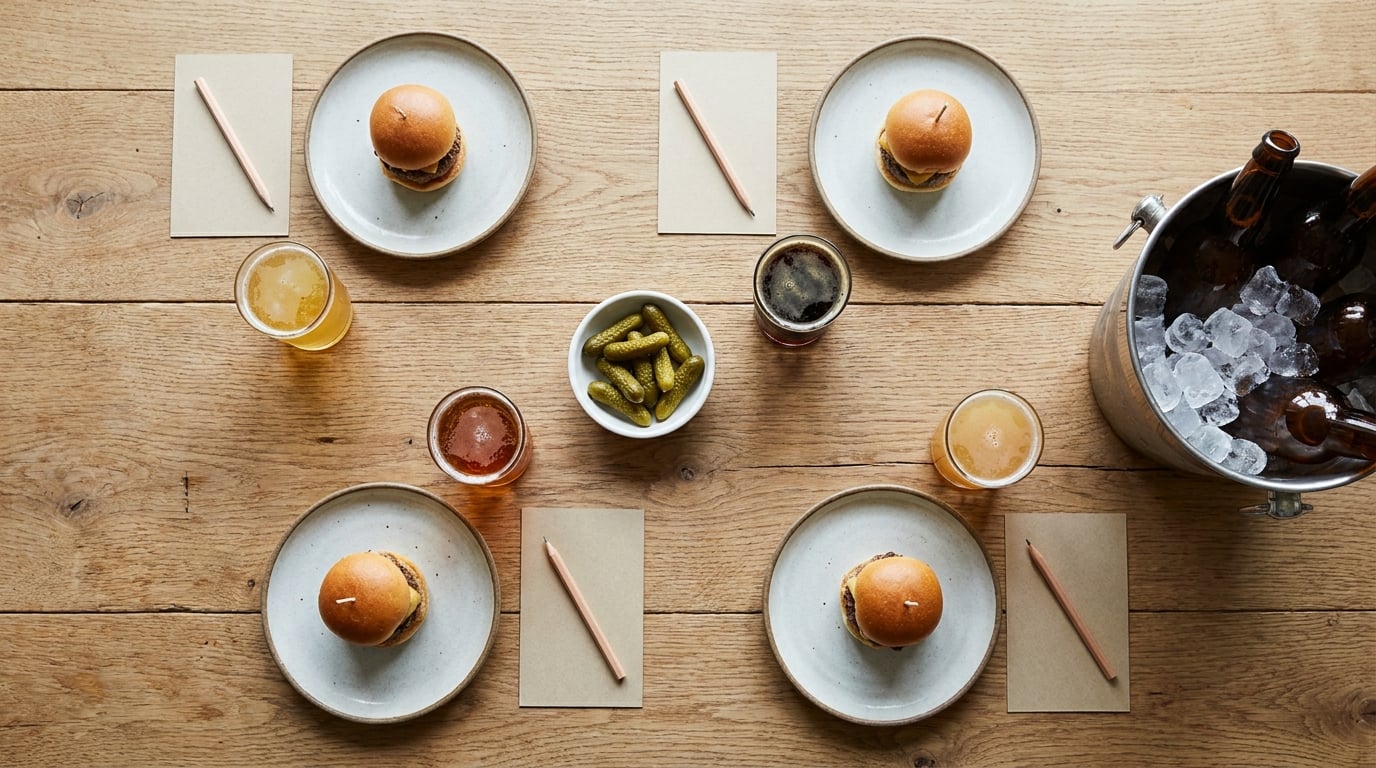
Learning how to host a beer and burger tasting night comes down to four beers, four mini burgers, and one pairing served at a time in small portions. Four pairings need roughly ninety minutes at the grill and two relaxed hours at the table, and all of it works on a normal kitchen counter.
A tasting night is not a competition and it is not a fancy dinner party. It is a small group, a printed list of what they are drinking, and food that arrives in bite-size pieces so nobody fills up after round two.
The nice thing about burgers is that they are forgiving hosts. A plain patty gives you a clean baseline, a smoky one covers a bold beer, and a plant-based option keeps the table from turning into a one-protein evening. Beer does the rest.
Before anything else, know what you are making. A burger and beer tasting night is a small gathering where guests sample a handful of beers, each poured in a tasting glass and matched to a mini burger, so they can compare which beer works best with which burger. Everything below is built around four pairings, which is the most a group of six can taste without going numb.
Table of Contents
- What You Need
- Step-by-Step: How to Host a Beer and Burger Tasting Night
- Common Mistakes
- Frequently Asked Questions
- How many burgers and beers should I prepare for a tasting night?
- What side dishes work best with a beer flight?
- How do I handle guests who do not drink beer or do not like hops?
- Should beer be chilled before a tasting night?
- How do I run a tasting without a formal judging system?
- How long should a beer and burger tasting night last?
- Conclusion
What You Need
Six people need about 24 mini burgers, 20 ounces of each beer, and one small glass per pairing per person. Sizing up from there keeps the night generous rather than tight.
Beer and glassware
- Four beers, light to dark. A lager or pilsner, a pale ale or IPA, a brown ale or porter, and a stout or saison. This range gives you a full arc without overwhelming beginners.
- About 20 ounces of each style for six guests tasting four ounces each. Buy one bottle and one can of each so you have a backup if a pour goes long.
- Small tasting glasses. Four-ounce stemless tumblers or small plastic cups work. The size matters more than the style, because a smaller glass stops anyone from committing to a whole bottle.
- An ice bucket or cooler per two styles. Fill it with ice and cold water, not just ice, so the bottles keep their chill without freezing solid.
- A bottle opener per guest. Cheap ring openers left on the table get used and never get lost.
Burgers and toppings
- One and a quarter to one and a half pounds of ground beef for 24 sliders, shaped into small patties about two inches wide.
- One pound of ground plant-based protein for the guests who do not eat beef. Buy one type, not four.
- Small buns or sliced baguette rounds. A cut baguette from the grocery store costs less time than toasting 24 buns, and each round holds a slider without splitting.
- Toppings in small bowls: shredded cheddar or Swiss, caramelised onions, crisp bacon, chopped pickles, shredded lettuce, a slice of tomato, and two sauces you make yourself.
- Kosher salt and coarse black pepper. Season the patties only, so every burger tastes like its beer rather than like the grill.
Tools and setup
- An instant-read thermometer. This is the one piece of equipment worth insisting on. Guesswork is how undercooked patties happen.
- A sheet pan and a wire rack to hold cooked sliders while later batches cook.
- Tongs and separate plates per burger style so you are not using the same utensil between a beef and a plant-based patty.
- Printed tasting cards and pencils. One card per guest with four numbered rows. Type it, handwrite it, or print a template, but write it down.
- Paper towels and a bin near the table. Fingers are part of a burger tasting, and cleanup should not interrupt the evening.
A run of four pairings needs about 90 minutes at the stove and grill. Chill every beer the night before, and make the sauces and caramelised onions a day ahead so the cooking window on the day itself stays manageable.
Step-by-Step: How to Host a Beer and Burger Tasting Night
The whole night runs on one rule: change one thing at a time. Cook the burgers in order, serve one pairing completely, then move on.
Choose the Burgers and Beers
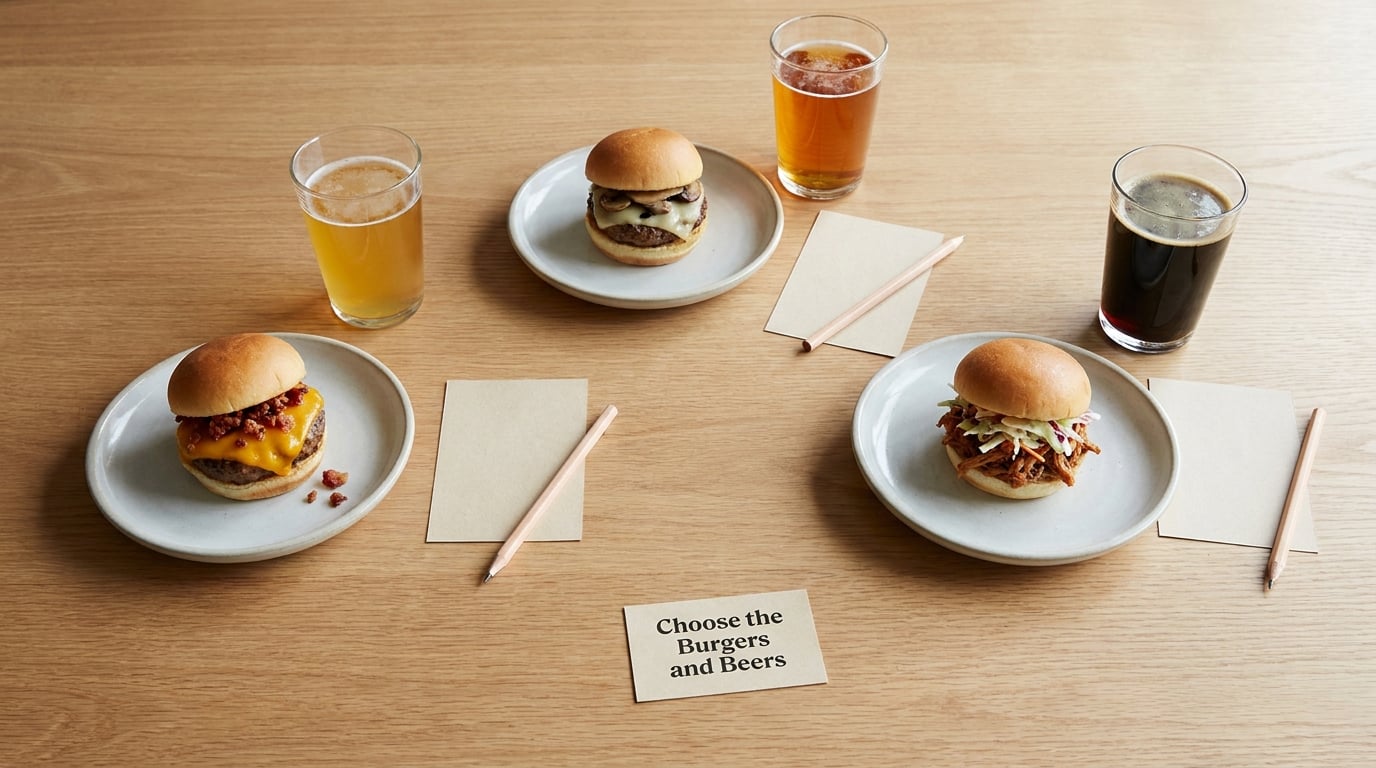
Choose burger styles that contrast rather than repeat. Four nearly identical cheeseburgers give you four nearly identical opinions, which wastes the beer entirely. Pick one plain patty, one loaded patty, one bold or smoky patty, and one plant-based patty, and let the beers follow the burgers.
Order the flight light to dark and low-hop to high-hop. Guests notice the arc even when they cannot name what they are tasting, and it keeps the strongest flavours at the end of the night instead of the middle.
| Burger style | Beer style | Why the pairing works |
|---|---|---|
| Plain patty, salt and pepper only | American pale lager or pilsner | Clean and lightly bitter, so the beef itself sets the baseline for the whole night |
| Classic cheeseburger, cheddar and pickles | West Coast pale ale or IPA | Hop bitterness and carbonation cut straight through the fat and the cheese |
| Bacon cheeseburger with caramelised onions | American brown ale or porter | Toasty malt mirrors the bacon and onion sweetness, so nothing competes |
| BBQ-glazed burger with smoked paprika | Saison or Belgian-style ale | Dry, peppery yeast spice stands up to a sweet smoky glaze without adding more sweetness |
| Spicy chicken or hot-sauce burger | Pale ale or amber lager | Moderate bitterness and a light body cool the heat instead of amplifying it |
| Portobello or plant-based patty with Swiss | Pale lager or wheat beer | Light body and gentle carbonation keep a softer patty from tasting flat |
| Double cheeseburger, two patties | Stout or milk stout | Roast, coffee and chocolate notes match the char and the extra fat |
If someone at your table does not like hops, keep them out of trouble in two ways. Pour the pale lager and the brown ale at full size for them, and put a hop-forward IPA last so it lands at the end of the night when everyone is more forgiving. A flight of four wildly different styles is the fastest way to turn beginners off beer, so stay within one broad family where you can.
Prepare the Burgers Without Losing Their Character
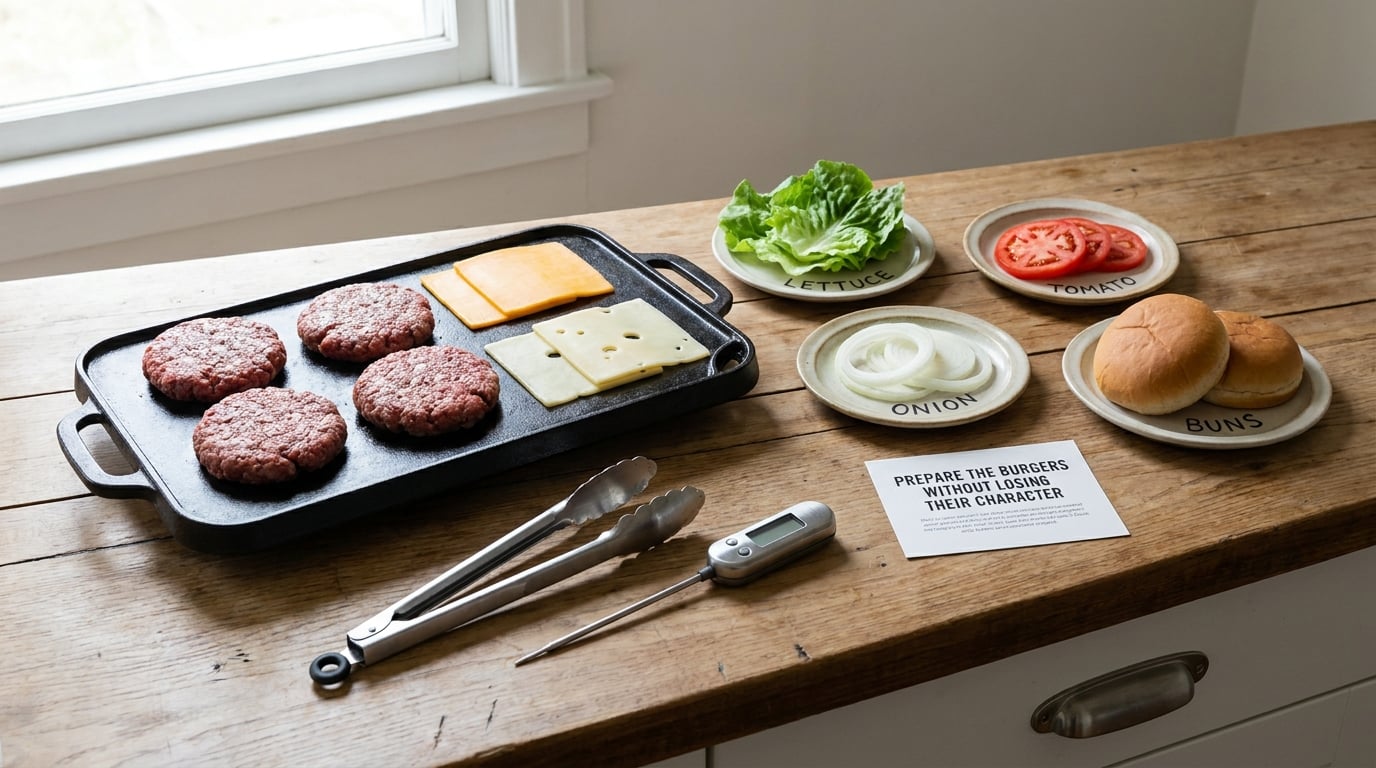
Cook every patty the same way so the beer is the variable. A hot cast-iron skillet or a gas grill at high heat gives you a crust, and a thin smash patty cooks in about two minutes per side. Thicker patties need four to five minutes per side with a lower heat and a lid for the last stretch.
Pull ground beef patties at 160°F (71°C) internal temperature and check with the thermometer rather than the press. Poultry-based burgers need 165°F (74°C), and any burger containing fish reaches 145°F (63°C). Rest every patty for three to five minutes on a wire rack so the juices settle instead of running onto the bun.
Cook styles in the order you will serve them, and use a separate plate and separate tongs for each one. Season only with salt and pepper, add cheese only to the ones that are meant to have it, and sauce every burger after assembly so the glaze stays visible instead of soaking through the bread.
Top light, sauce heavy. Put the lettuce, tomato and pickles down first, then the patty and cheese, then the sauce on top or on the lid. A slider that has been sitting for ten minutes with sauce on the bottom becomes a soggy piece of bread, and the last pairing of the night deserves better than that.
Hold finished sliders on a wire rack over a sheet pan in a single layer. A wire rack keeps the bottom crisp, and a single layer stops the last batch from steaming itself soft. Cook the next style only when the previous pairing is finished, which is what keeps everything warm and comparable.
Serve Small Portions in a Consistent Order
Portion small enough that everyone finishes before the next beer is poured. Four ounces of beer and one slider per person per round is the standard serving, and five rounds is as far as this format works well.
Give guests about ten minutes per pairing: four minutes for the beer on its own, then the slider, then conversation. The order matters, because tasting the beer before the food gives you a clean read on what the beer actually tastes like.
Pour the beer into the numbered glass first, hand out the matching burger, and only then talk about it. Ask people to take a sip of beer, then a bite of burger, then a sip again. That one bounce is what makes the pairing land, and it is the whole reason for doing this at a table instead of a bar.
| Time | What happens | Who is involved |
|---|---|---|
| 60 minutes before guests | Pull burgers from the fridge, set out glasses, cards and pencils, fill ice buckets | Host |
| 30 minutes before | Grill the first burger style, rest it under foil, assemble | Host plus one helper |
| Arrival | Pour round one, hand out tasting cards, explain the order in two sentences | Host |
| Every 10 minutes | Score the pairing, cook and assemble the next style | Helper |
| Between rounds | Refill ice, rinse glasses, move used cards to a side plate | Helper |
| After the last pairing | Read out the scores, name a pairing of the night, hand out leftovers | Host |
Keep the beer cold the whole night by topping up the ice buckets rather than the glasses. A second cooler in the kitchen holding the unopened bottles stops you from running out of cold beer in the middle of round three, which is the moment a tasting night falls apart.
Score the Pairings and Discuss the Results
Score each pairing out of five in four columns: aroma, taste, balance, and would you order it again. One line of the card should also ask guests to name the burger they thought suited the beer best. Keep the categories simple, because a complicated rubric makes guests self-conscious and the conversation dies.
Ask four questions after each round, and keep them about observation rather than judgement. What did the beer smell like before you tasted it? Which was sweeter, which was more bitter? Did the burger change how the beer tasted? Which of the four would you actually order at a bar?
Finish with a ballot. Each guest writes down the pairing they liked most and drops it in a bowl, and the host reads the tallies aloud at the end. People vote for different reasons, which is the fun part. A guest who dislikes dark beer will happily hand the crown to the barbecue pairing, and nobody minds losing a tasting they were never going to win on flavour.
State the rules before the first pour: everyone samples every pairing, nobody has to finish a glass, and skip the last round whenever you want. A tasting night where everyone stays is a different kind of night entirely, and this one works better with six people than a dozen.
Common Mistakes
Serving beer too warm is the most common problem and the easiest to fix. Warm beer tastes flat and foamy, and guests write it off as the beer’s fault rather than the temperature. Chill everything the day before and keep bottles in ice water, not just ice.
Making the burgers too large is the second. A full-size patty with a full-size bun ends the tasting after round two, and guests stop tasting because they are full. Make the sliders small and let the beer be the adult portion.
Changing five variables in one burger means nobody knows what they are reacting to. A smoky patty with a hoppy beer and a sweet sauce is three changes at once. Change the burger or change the beer, not both, and hold the toppings and sauces steady across the night.
Skipping food safety temperatures is the one worth being firm about. A judge-at-a-grill-show instinct says the patty is fine; a thermometer says 160°F (71°C) for ground beef and 165°F (74°C) for poultry. Ask a guest who is pregnant, elderly or immunocompromised to skip the raw-doner option entirely, and keep plant-based patties on a separate board.
Overwhelming guests with too many pairings is how a beginner walks away thinking they do not like beer. Five pairings is plenty, six is the ceiling, and anything past that becomes a drinking session rather than a tasting. If someone asks for more, serve a fourth round instead of a fifth style.
Letting toppings and sauces dominate the tasting is quieter but just as damaging. A heavily loaded burger with four sauces and pickled jalapenos says nothing about the beer. Keep most sliders to patty, cheese and one topping, and put the extras in a bowl at the centre of the table where guests can add them to their own second bite.
Two smaller habits help more than anything else. Set the tasting cards out before the first pour so nobody fills their own blanks while the beer is cold, and keep the conversation moving between rounds, because silence in round two is usually a sign the glasses are too big.
Frequently Asked Questions
How many burgers and beers should I prepare for a tasting night?
For six guests tasting four pairings, prepare 24 mini burgers and about 20 ounces of each of four beer styles. That gives every guest a four-ounce pour and one slider per round, which is enough to taste properly without ending the night early. Buy one extra bottle of each style so a long pour does not leave the last round short.
What side dishes work best with a beer flight?
Keep sides light and put them out from the start rather than alongside each pairing. Good options are salted chips, pretzel bites with mustard, pickles, a cheese board with crackers, and a simple side salad. Avoid anything heavily sauced or sweet, since those flavours follow the burger into the next beer and muddle the comparison.
How do I handle guests who do not drink beer or do not like hops?
Pour the pale lager and the brown ale at full size for anyone avoiding hop-forward styles, and save the IPA for the last round of the night. Offer non-alcoholic beer, sparkling water with citrus, and a hop-free ginger or root beer alongside the flight so those guests have a glass that looks the part and matches a pairing.
Should beer be chilled before a tasting night?
Yes, and colder is better than barely cool. Refrigerate every bottle the day before, then keep opened bottles in buckets filled with a mix of ice and cold water during the night. Glassware rinsed in cold water also helps, since a warm glass warms a small tasting pour in under a minute.
How do I run a tasting without a formal judging system?
Skip scores entirely if they make people self-conscious. Serve the pairings in a fixed order, ask two or three observation questions after each round, and finish with a simple show of hands for the pairing people liked most. That keeps the structure people want without turning a dinner party into a competition.
How long should a beer and burger tasting night last?
Plan on two hours at the table for four pairings, plus about ninety minutes of cooking and setup beforehand. Ten minutes per round handles the tasting, the conversation and the changeover without rushing anyone. Most hosts underestimate because they forget the twenty minutes it takes to grill, rest and assemble each new batch while guests are still talking.
Conclusion
Start by picking four beers and four small burgers that contrast, and write the four pairings on a card before you buy anything. Chill the beer the day before, keep a thermometer in the pan, and serve one complete pairing every ten minutes so nobody fills up before the last round.
That is the entire method. The point of how to host a beer and burger tasting night this way is not perfect browning or restaurant presentation. It is giving your friends four clean comparisons, a reason to talk about what they are drinking, and an evening that still feels like a relaxed night at your table.