
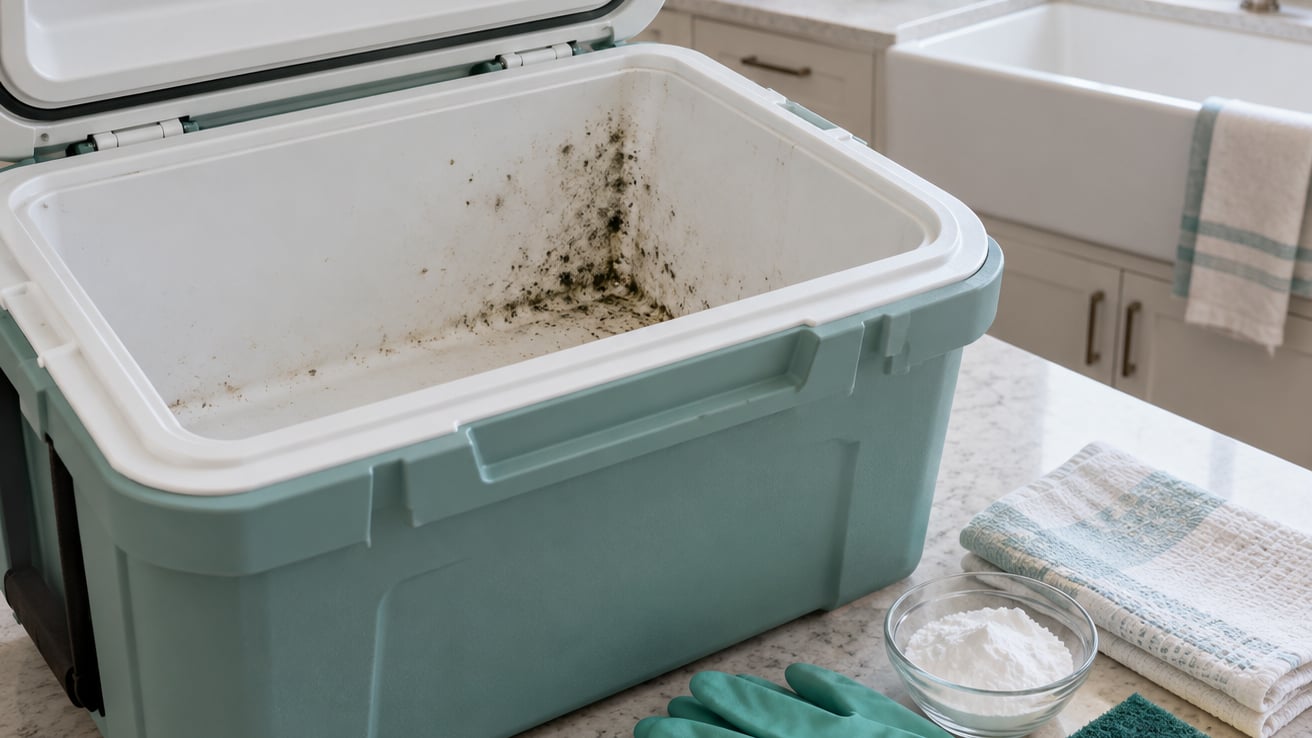
To get mold out of a cooler, wash it first with dish soap and water, kill the remaining mold using a vinegar or bleach solution, scrub the crevices, and let it dry completely before you store anything in it again. The whole job takes about an hour plus drying time, and you can do it in a bathtub or laundry sink.
The reason it works is that mold needs three things, and a cooler hands it all three: moisture, darkness, and food residue. Break one of those and it stops growing. Washing removes the food, the cleaner kills what is left, and full drying removes the moisture that reactivates spores hiding in the gasket and the drain channel.
Before you scrub, move any food out and check whether the cooler is even salvageable. Most are. If the mold is only in the corners, along the seal, or around the drain plug, it cleans up fine with dish soap and a ten-minute soak.
Table of Contents
- What You Need
- Step-by-Step: How to Get Mold Out of a Cooler
- How to Get Mold Out of a Cooler Step 1: Empty and Inspect
- How to Get Mold Out of a Cooler Step 2: Wash the Interior
- How to Get Mold Out of a Cooler Step 3: Treat Stubborn Mold and Stains
- How to Get Mold Out of a Cooler Step 4: Disinfect the Cooler
- How to Get Mold Out of a Cooler Step 5: Dry and Check the Result
- Common Mistakes
- Frequently Asked Questions
What You Need
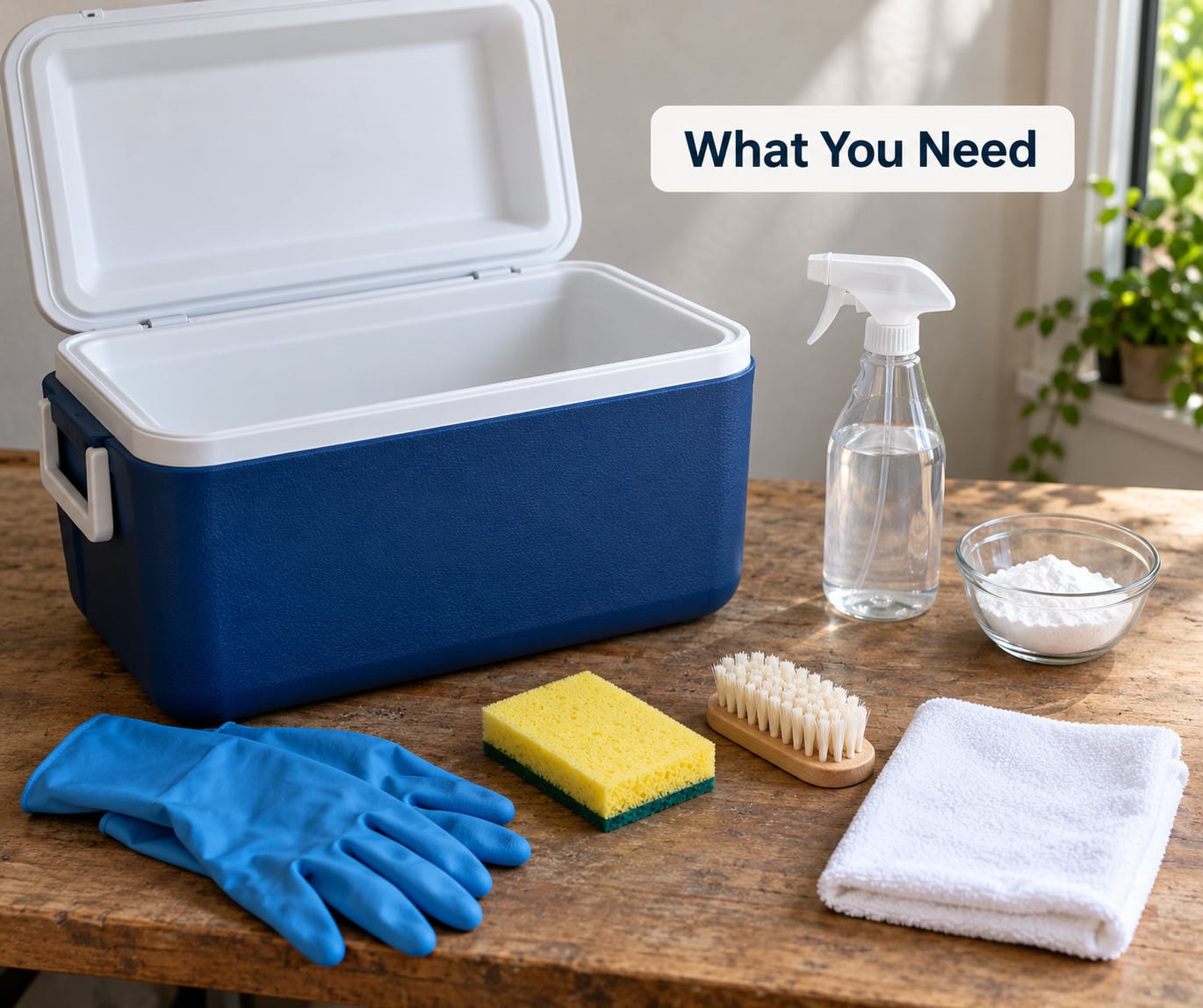
Gather everything before you start so you are not halfway through a dwell time with an empty spray bottle. Most of it is already in the house.
- Rubber or nitrile gloves and eye protection if you use bleach.
- Warm water and dish soap for the first wash.
- One active cleaner, either white vinegar or unscented liquid bleach. Pick one, not both.
- A sponge for flat surfaces and a soft-bristled brush or old toothbrush for corners and the gasket.
- Baking soda for odors and as a mild abrasive paste.
- A clean towel or rag and somewhere the cooler can drain and air out.
Skip the stiff wire brush and any cleaner with bleach in it if you are using vinegar. The vinyl or polyethylene liner inside a hard-sided cooler scuffs easily, and once it is scratched, mold has more surface to hold onto.
Step-by-Step: How to Get Mold Out of a Cooler
Five steps, in this order. Do not skip ahead to the disinfectant: soap and water first, because any cleaner applied over food residue has to fight through grime to reach the spores.
How to Get Mold Out of a Cooler Step 1: Empty and Inspect
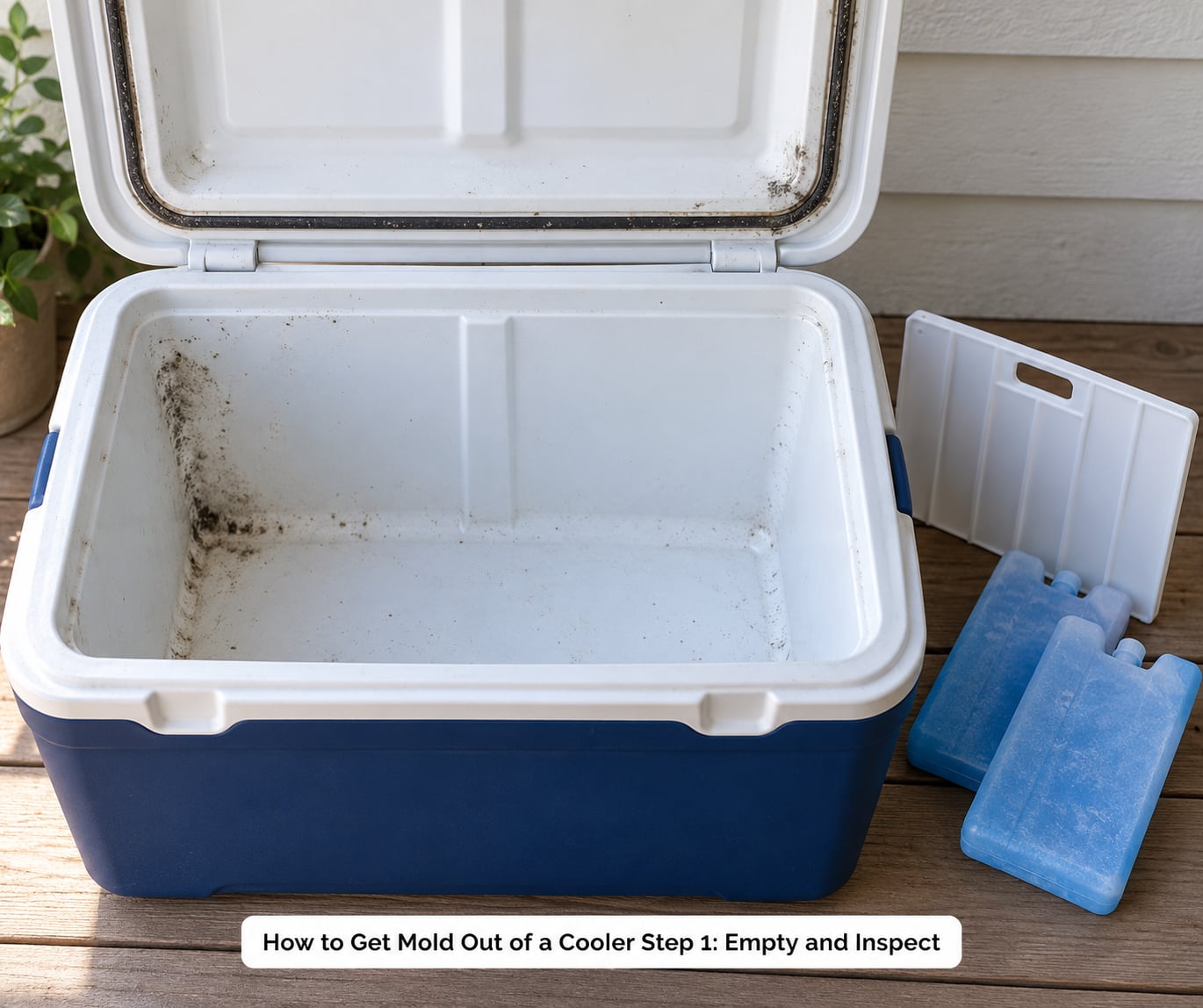
Take everything out. Ice, melted liquid, ice packs, dividers, and any leftover food go in the trash or a bin outside, not back into the sink where you will be cleaning. Liquids that sat for days often smell worse than the cooler does.
Then look before you clean. Mold shows up as fuzzy or slimy growth in black, green, orange, or white, usually in the interior corners, along the lid gasket, inside the drain plug, and in the seam where the base meets the body. Scrape loose growth into a bag rather than shaking it out indoors, and open a window if you can. Spores become airborne the moment you disturb them.
While it is empty, remove what comes out. Most hard-sided coolers have a drain plug that unscrews from the outside, and the gasket can usually be lifted out of its channel. A quick rinse of each piece now saves you later.
How to Get Mold Out of a Cooler Step 2: Wash the Interior
Fill the cooler with warm water and a couple of tablespoons of dish soap, then wipe every surface with a sponge. The soap cuts grease, and grease is what mold colonies stick to. Work the sponge along the corners where the side walls meet the base, because that is where the spongy film builds up.
Rinse and repeat if the water in the cooler comes out cloudy or filmy. Keep the pressure gentle. Forceful scrubbing on a soft liner dulls the finish and opens up micro-scratches that trap spores later.
How to Get Mold Out of a Cooler Step 3: Treat Stubborn Mold and Stains
Now the mold that survived the wash. You have three good options and one hard rule.
- Vinegar and water. Mix equal parts white vinegar and water in a spray bottle, soak a cloth in it or mist the moldy areas, and leave it for 20 to 30 minutes. Vinegar is mild, smells fine on food surfaces, and will not wreck a liner.
- Baking soda paste. Stir baking soda with just enough water to make a thick paste and spread it over black or orange staining. Leave 15 minutes, then scrub with a toothbrush. Baking soda deodorizes as it loosens residue, which is why it is the one option that helps with smell as well as stains.
- A commercial cleaner labeled for food-contact surfaces. Follow the label for dilution and dwell time, since a concentrate left on too long can haze plastic.
Never mix bleach and vinegar, in any order, for any reason. The two react and release chlorine gas, which irritates lungs and eyes in a closed space. Vinegar is the safer default for a cooler most people will use for food.
How do you know the treatment worked? The growth turns loose and chalky, stains fade, and residue lifts away when you wipe with a clean cloth. If a spot looks identical after a full second pass, move on to disinfection and check that area again while wet.
How to Get Mold Out of a Cooler Step 4: Disinfect the Cooler
Mold on a damp, porous-ish surface does not always wipe off cleanly, so the treatment step needs a disinfectant follow-up. If you used vinegar, you are already close. If you used bleach, follow its label.
For unscented liquid bleach, the common food-contact dilution is 1 tablespoon per gallon of water. Flood the wet spots, let it sit 5 to 10 minutes, then rinse with clean water until no smell remains. Undiluted bleach left on the liner will eventually dull or craze it, and any residue that carries into food is a reason to rinse more than once.
Rinse the drain plug, gasket, and any removable divider separately, and run the whole cooler under the tap for a minute if you can. Then dry the parts that will not dry on their own with the towel.
How to Get Mold Out of a Cooler Step 5: Dry and Check the Result
This is the step people skip, and it is the reason a lot of clean coolers get mold again within days. A closed, damp interior is a perfect incubator.
Set the cooler upside down or on its side with the lid propped open, out of direct sun, with air moving around it. Leave it that way until the inside is bone dry to the touch, which usually takes a few hours. A fan pointed into the opening speeds it up. For a musty smell that will not fade, put a bowl of baking soda inside overnight and tip it out the next morning.
Before loading food, check the spots that failed earlier: interior corners, the gasket channel, the screw hole under the drain plug, and the seam at the base. Look for any fuzz, orange spotting, or a slimy film. If you find residue, repeat step 3 on that spot only. A cooler that is clean-smelling and dry to the touch is ready to use for food again.
Common Mistakes
Most failed cooler cleanups come down to the same handful of mistakes, and each one is easy to avoid.
- Mixing vinegar and bleach. Chlorine gas forms in the closed interior. Choose one active cleaner and finish with a rinse.
- Using boiling water or a stiff wire brush. Heat warps plastic liners and soft-sided shells, and metal scratches leave crevices that seed the next colony.
- Spraying and wiping immediately. A disinfectant that is wiped off in ten seconds does not work. Respect the label contact time, usually 5 to 10 minutes for bleach and 20 to 30 minutes for diluted vinegar.
- Skipping the gasket, drain plug, and drain channel. That is where spores survive, so the mold comes back even though the walls look perfect. A clogged drain passage can hold enough water to keep a patch damp for weeks.
- Putting the lid straight back on. A sealed cooler holds humidity. Store it open or propped when it is not in use, and never put food back in while the liner is still damp.
- Leaving perishables in for days. If food has been sitting in juice or meltwater, the smell alone can mean the cooler needs a deep clean or, if it will not clear, replacing.
Between deep cleanings, a monthly scrub with warm soapy water and a dry with the lid open is plenty. Wipe up spills as they happen, avoid storing a cooler damp in a hot truck bed or garage, and try not to leave perishable food in a cooler for more than a couple of days when it is not packed with ice.
Frequently Asked Questions
Can I use bleach to remove mold from a cooler?
Yes, in a dilute solution and with the label contact time. For unscented liquid bleach, mix 1 tablespoon per gallon of water, flood the moldy areas, wait 5 to 10 minutes, then rinse with clean water until no bleach smell remains. Never apply it undiluted or mix it with vinegar or other cleaners. If the liner is soft-sided fabric or a soft plastic, vinegar is the safer choice.
How do I get rid of a bad smell after removing mold?
Baking soda is the simple fix. Set a bowl or a generous layer of it inside the dry cooler and leave it closed overnight, then tip it out. Air the cooler with the lid propped open for a day, out of sunlight. If the odor survives that, the smell is usually trapped in a gasket or drain channel that never fully dried, so clean and dry those parts again.
What if the mold is deep in the cooler lid or gasket and will not scrub off?
Lift the gasket out of its channel and soak it separately in diluted vinegar for 20 to 30 minutes, or in the bleach solution for 5 to 10 minutes, then scrub with an old toothbrush and rinse. Mold that stays in the rubber after two treatments has grown into the material itself, and a molded-in gasket is the usual reason people replace a cooler outright. Replace the gasket if your brand sells one before replacing the whole cooler.
How can I prevent mold from growing in my cooler again?
Dry is the whole trick. Wash with warm soapy water after each use, air-dry with the lid propped open, and store the cooler open or unsealed rather than shut damp. Avoid leaving food or meltwater sitting for more than a couple of days, wipe spills promptly, and keep the cooler out of prolonged direct sun. If it lives in a hot truck bed or garage, a quick monthly scrub keeps it ahead of the spores.
Start at the top of this list and work through it in order: empty and inspect, wash with dish soap and water, treat what is left with diluted vinegar or a dilute bleach solution, scrub the gasket and drain plug, and air-dry with the lid propped open until the liner is dry to the touch. That last part is what keeps mold from coming back in 2026. A cooler that is clean, dry, and stored open is a cooler you will not have to treat twice.