
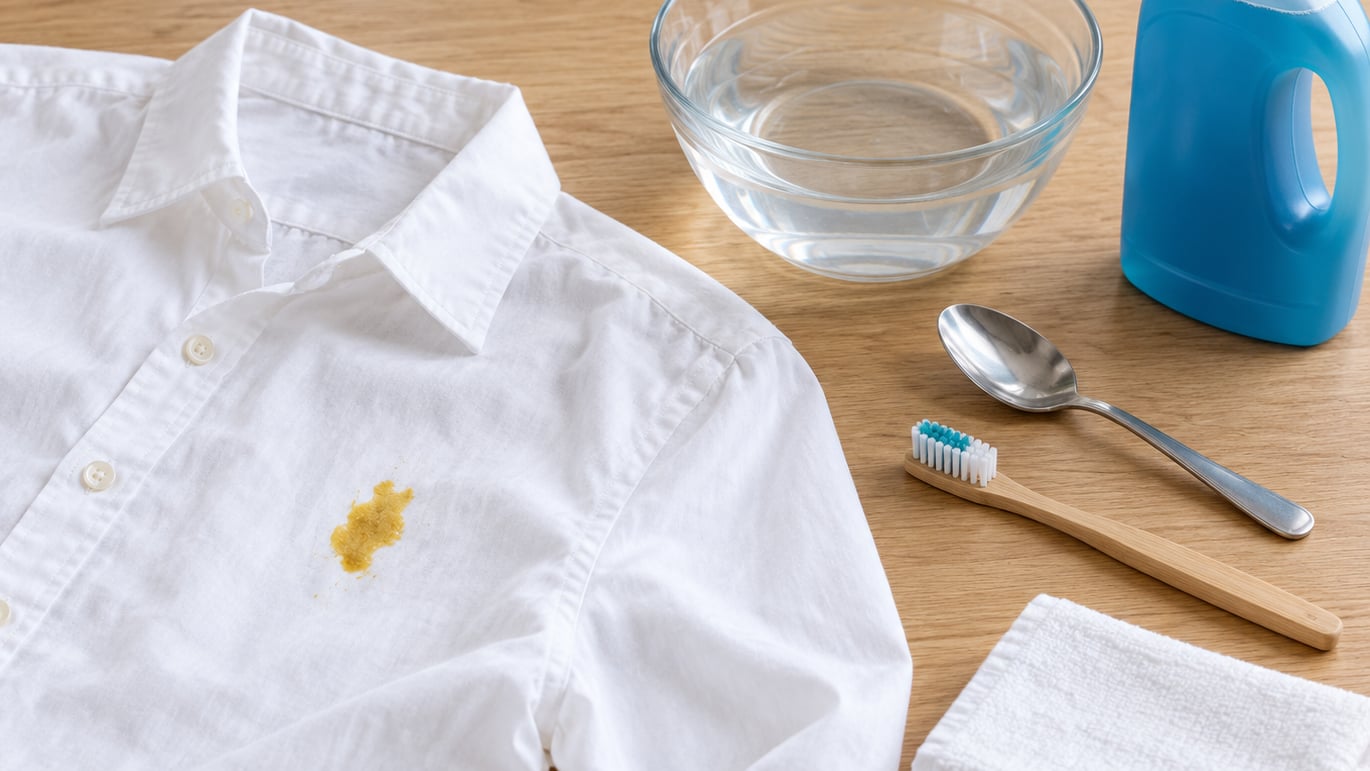
To get mustard out of clothes, lift the wet sauce with a spoon, blot from the outside of the stain inward, then rinse the back of the fabric under cool water. Work laundry detergent or an oxygen cleaner into the spot, let it sit, and wash on the hottest setting the fabric allows. The one rule that matters most: never put the garment in the dryer until the yellow is completely gone.
Mustard is one of the messiest things that happens at a burger stand, and it is also one of the harder food stains to remove. The yellow comes from curcumin, the same pigment that colors turmeric, and it soaks into cotton fibers fast. Treat it while it is still wet and you will almost certainly get it out. Let it dry for a day and you are looking at extra work.
That applies whether the mustard came off a hot dog, a wing platter, or a jar of homemade honey mustard sauce you mixed at home, because the stain does not care where it came from.
Table of Contents
- What You Need
- Step-by-Step: How to Remove Mustard Stains from Clothes
- Common Mistakes
- Frequently Asked Questions
- How do you remove a dried mustard stain from clothes?
- Does vinegar really remove mustard stains from fabric?
- Can I use hot water to get mustard out of clothing?
- How do I remove mustard stains from a white shirt?
- What should I do if mustard remains after washing?
- Can mustard stains be removed from silk or dry-clean-only clothes?
- Conclusion
What You Need

Most of this is stuff already sitting in your laundry room. A metal spoon or dull knife lifts the sauce, clean white cloths or paper towels catch it, and cool water does the flushing. An old toothbrush with soft bristles is the tool that gets detergent into the weave of the fabric without grinding it.
For the treatment itself you want a liquid laundry detergent with enzymes, or a dedicated oxygen bleach powder such as OxiClean. Both handle mustard better than anything else on a shelf. White vinegar and baking soda are optional, and I will explain below why vinegar is the one to skip.
Two things to have on hand before you start: 3% hydrogen peroxide for whites and colorfast cotton, and a dish soap if the stain is still greasy. Neither is safe on every fabric, which is why the first step is the care label, not the mustard.
Step-by-Step: How to Remove Mustard Stains from Clothes
Check the Fabric and Test the Treatment
Turn the garment over and read the care label before anything touches the stain. A W or WS code means you can use water. A circle with an X, or the words dry clean only, means you stop here and take it in. Silk, wool, rayon, and anything marked delicate get spot cleaning with a damp cloth and no soaking, no peroxide, and no oxygen bleach.
Then test. Dab a small amount of your cleaner on an inside seam that will not show and leave it for five minutes. If the dye lifts or the fabric feels slimy or stiff, you have your answer: use plain cool water and dish soap only. Peroxide gets the same test, and it earns it twice on a white shirt because it can bleach the dye right out of the fabric along with the stain.
Water temperature matters as much as the product. Hot water sets a protein or tannin stain, and mustard is a tannin, so the first rinse is always cool.
| Fabric | Safe water temperature | Best treatment | What to avoid |
|---|---|---|---|
| White cotton | Hot, up to the label maximum | Oxygen bleach or 3% peroxide | Chlorine bleach on colors, hot water before rinsing |
| Colored cotton | Warm, up to 40C | Enzyme laundry detergent | Peroxide, chlorine bleach, dryer before the stain lifts |
| Denim | Warm | Enzyme detergent, longer soak | Hot water on untreated areas, harsh brushing |
| Polyester and cotton blends | Warm | Enzyme detergent or OXY powder | Hot water, bleaching a hoodie that says do not bleach |
| Wool and wool blends | Cool | Wool-safe detergent, spot treatment | Soaking, agitation, heat, peroxide |
| Silk and rayon | Cool | Dab with a damp white cloth, no rubbing | Soak, bleach, enzyme products, the dryer |
Remove the Excess Mustard
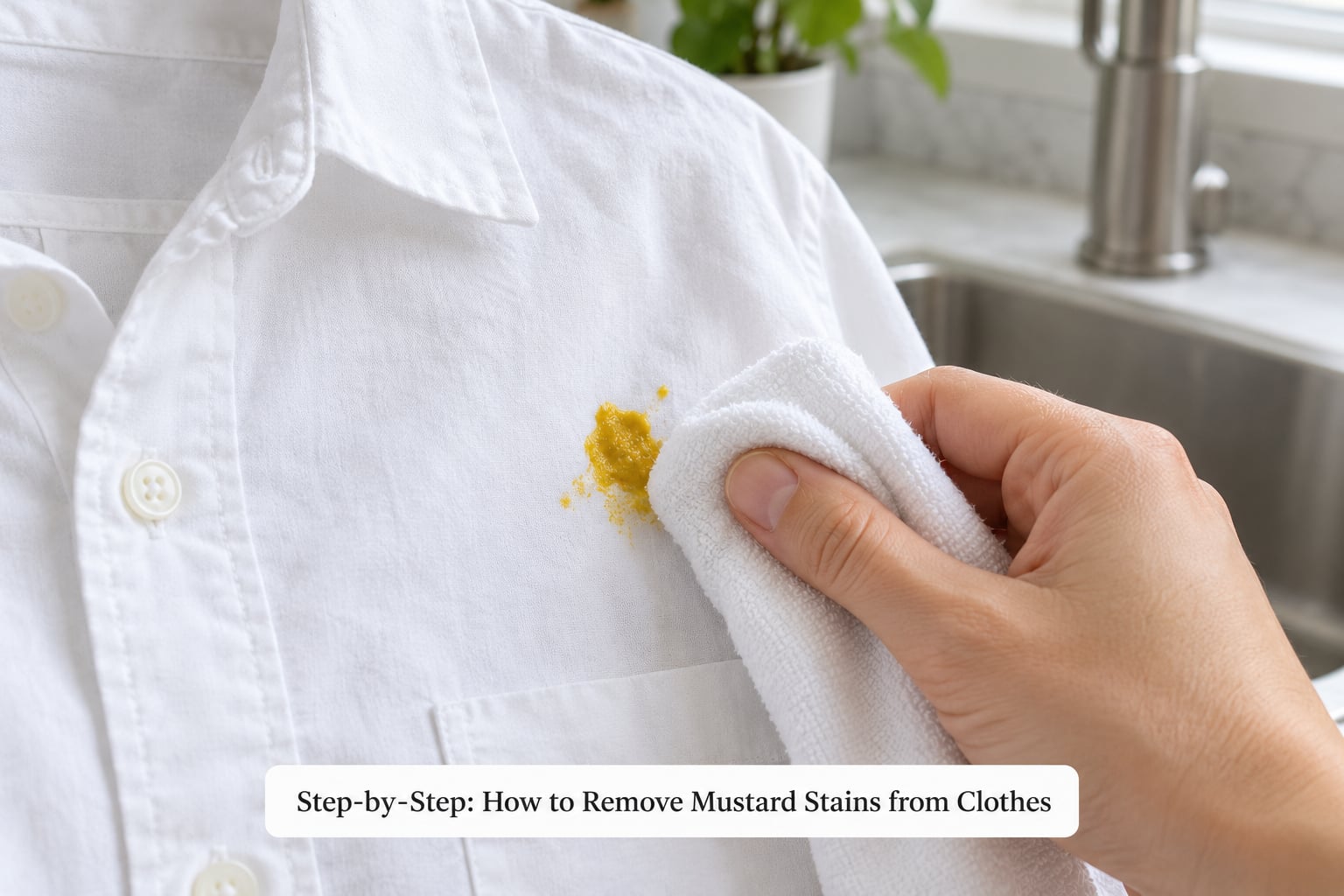
While the sauce is still sitting on the surface, scoop it up with the back of a spoon or the flat edge of a dull knife. Work around the outside of the blob and lift toward the middle. Pulling from the center outward grinds pigment into clean fibers, and that is how a small spot becomes a halo.
Follow with a clean white cloth, press straight down, and lift. Do not rub side to side. If the mustard has already soaked in, blot what is left and move on to the rinse.
Flush or Soak the Stain
For a fresh stain, hold the back of the fabric under cool running water for a few minutes and let the water carry the pigment out. Flushing from the reverse side pushes the mustard away from you instead of deeper into the fibers.
Dried stains need time instead of force. Fill a basin or sink with cool or lukewarm water, add a squirt of detergent, submerge the garment, and leave it for 15 to 30 minutes. Longer than that does not help much unless the stain has already been through a wash. Then you can soak overnight.
Whole grain mustard, Dijon, and honey mustard all need the same approach, though honey mustard adds a sugar film that responds well to warm water and detergent. Yellow mustard is the fastest of the four to lift because it carries less oil. A heavily greased spot needs a different first move, and our guide to how to remove grease stains from clothes covers that side of the problem in detail.
Apply Detergent and Gently Work It In
Lay the garment flat, squeeze a coin-sized amount of liquid laundry detergent directly onto the stain, and add a splash of cool water to turn it into a thin paste. For a greasy spot on a white or colorfast cotton garment, mix two parts 3% hydrogen peroxide with one part dish soap and apply that instead.
Let it dwell. Five minutes is the minimum, 15 minutes is better, and a person walking past the laundry room can judge it: once you can see the yellow lifting into the surrounding water, the chemistry is working. Oxygen bleach powder needs longer, often 10 to 20 minutes or an overnight soak, because it has to dissolve before it does anything.
Work the treatment in with an old toothbrush, using light strokes from the outside edge toward the center. Scrubbing hard does not extract more pigment, it just pushes it deeper and can wear the fibers so the stain looks permanent later.
Rinse, Wash, and Air-Dry to Check
Rinse the treated area under cool water until the water runs clear, then launder the garment the way you normally would, at the hottest temperature its label allows. A stain that survived one round of detergent with an oxygen soak behind it rarely survives a proper hot wash.
Now the part most people skip. Check the garment in bright light, daylight or a bathroom with strong overhead bulbs, because a faint yellow that is invisible in a dim laundry room will come back as a brownish mark after twenty minutes of dryer heat. Air-dry flat or on a hanger the first time. Once it is fully dry and the color is clean, dry it normally from then on.
Common Mistakes
Almost every permanent mustard mark is the result of one of these five mistakes, and none of them are the product.
- Hot water first. Heat locks mustard into the fiber. Rinse cool, treat, then wash hot.
- The dryer too soon. Drying is what turns a fixable yellow stain into a permanent one. Air-dry and inspect first.
- Hard scrubbing. A toothbrush is for gentle agitation, not pressure. Scrubbing drives the pigment deeper.
- White vinegar. Curcumin is a pH indicator, and alkaline vinegar pushes the pigment deeper into the fabric instead of lifting it.
- The wrong product for the fabric. Peroxide on a dyed hoodie, enzyme cleaner on silk, or a soak on a dry clean only wool coat can damage the garment more than the stain did.
| Home treatment | Verdict | Safe for colors |
|---|---|---|
| Enzyme laundry detergent | Works on most fresh stains | Yes |
| Oxygen bleach powder (OxiClean) | Works best on dried stains | Yes, test first |
| 3% hydrogen peroxide | Works, will lighten fabric over time | Test on an inside seam |
| Dish soap | Partially, good on grease | Yes |
| Baking soda paste | Partially, mild abrasive | Yes, but rinse well |
| Lemon juice | Partially, adds its own stain risk | Rinse thoroughly |
| White vinegar | Makes it worse | Not recommended |
| Milk or salt | Mostly folklore | Rinses out, achieves little |
If the stain is still there after a full treatment and a hot wash, go around again rather than reaching for something harsher. A second soak in oxygen bleach with a longer dwell time usually does more than any new idea you would try. And if you still have yellow showing in bright light, a dry cleaner or a professional cleaner with a wet-cleaning machine can often pull what home treatment cannot.
The same cooler-headed approach helps when a different sauce goes wrong. If you are working with a buffalo wing sauce from scratch, put it in squeeze bottles rather than pouring straight from the jar, and the stain problem mostly never starts.
Frequently Asked Questions
How do you remove a dried mustard stain from clothes?
Soak the garment in cool or lukewarm water with detergent for 15 to 30 minutes, then work an enzyme detergent or oxygen bleach powder into the stain and leave it for 15 minutes. An overnight soak in oxygen bleach handles anything that a same-day treatment leaves behind. Rinse cool, wash on the hottest setting the label allows, and air-dry so you can check the result.
Does vinegar really remove mustard stains from fabric?
No. Curcumin, the pigment in mustard, reacts to pH in a way that works against you. Vinegar is mildly acidic, and rather than lifting the yellow it can push the pigment deeper into the fibers, which makes the stain harder to remove later. Laundry detergent, oxygen bleach, or a diluted peroxide treatment are the remedies that actually work on mustard.
Can I use hot water to get mustard out of clothing?
Not for the first rinse. Mustard is a tannin-based stain and heat sets it into the fiber, which is why a garment that sat through a hot wash and a dryer often keeps a brownish shadow forever. Flush the stain with cool water first, treat it, then wash hot. Once you are at the wash stage, the hottest water the care label allows is exactly right.
How do I remove mustard stains from a white shirt?
Lift the sauce, rinse the back of the fabric under cool water, then apply 3% hydrogen peroxide or an oxygen bleach and leave it for 10 to 15 minutes. Work it in gently with an old toothbrush. Rinse until the water runs clear, wash on the hottest setting the label allows, and air-dry. Check the shirt in daylight before it goes near a dryer, because any yellow left behind will darken.
What should I do if mustard remains after washing?
Repeat the treatment rather than escalating to something harsher. Soak the garment in oxygen bleach solution for 30 minutes or overnight, then wash again on the hottest safe setting and air-dry. If a faint yellow survives two full rounds, it has likely been heat-set, and a professional cleaner with wet-cleaning equipment has a better chance than another cycle at home.
Can mustard stains be removed from silk or dry-clean-only clothes?
Only with care, and not at home if the label says dry clean only. Silk and rayon spot-clean with a cool damp white cloth, dabbing from the outside inward, and never soak, rub, or use bleach. For dry-clean-only garments, take the item in before washing and tell the cleaner exactly what caused the stain and how old it is.
Conclusion
Start with the least aggressive move that still works. Lift the excess mustard with a spoon, check the care label, flush the back of the fabric under cool water, work detergent or an oxygen cleaner into the spot with gentle strokes, then wash hot and air-dry. That last step is the one people skip, and it is the one that decides whether you still have a stain tomorrow.