
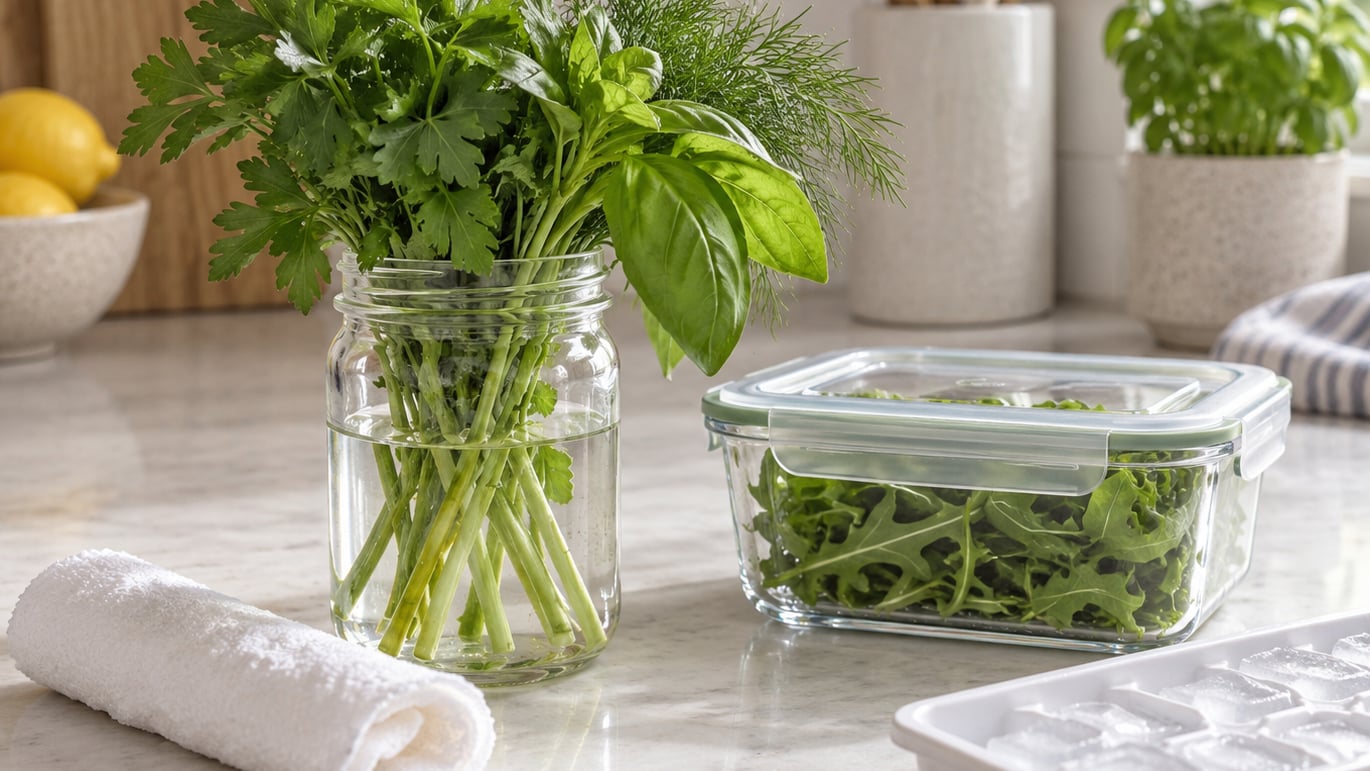
How to store fresh herbs comes down to one thing: matching the method to the herb. Tender stems like cilantro, parsley, dill and mint stand upright in a jar with an inch or two of water under a loose bag, woody herbs like rosemary, thyme and sage go in the fridge wrapped in a damp paper towel, and basil stays on the counter. Most bunches bought at the market last a week to two when you do it this way instead of wilting in a week.
The reason herbs fail is almost always moisture or warmth, not age. Cut stems drink water through the sliced end, so they keep taking it up as long as something wet is available. Leaves that dry out go limp and papery, and leaves sitting in soggy air with no airflow go slimy and black instead.
What You Need
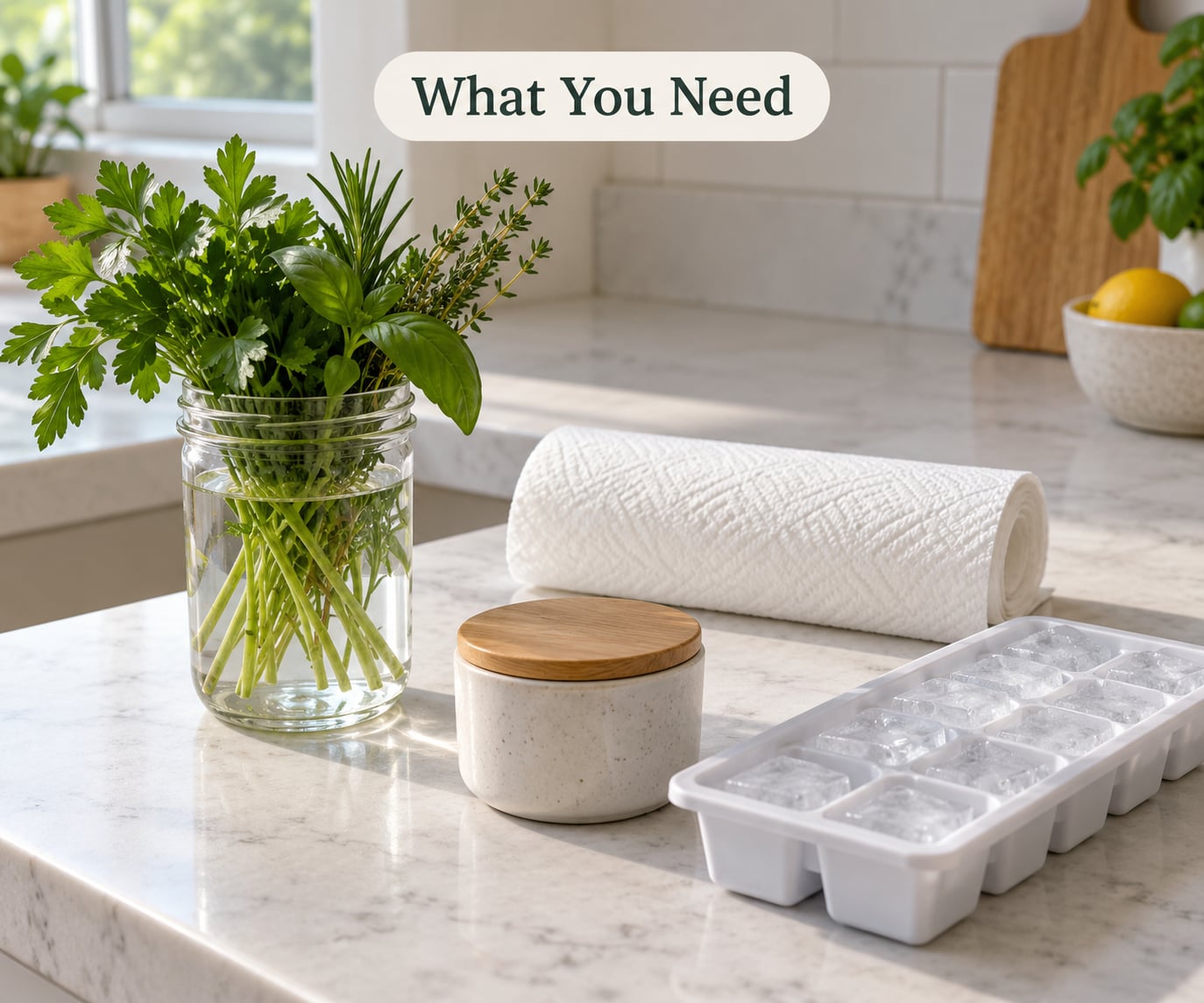
The whole setup costs almost nothing and you probably own most of it already.
- A glass jar, drinking glass or small jug with a mouth wide enough for the bunch.
- Clean kitchen paper or paper towels for the woody-herb method.
- A loose plastic bag or reusable silicone bag to tent the jar.
- A shallow airtight container for herbs bought in a plastic clamshell.
- A salad spinner or a clean towel if you wash before storing.
- Ice cube trays and a freezer bag for herbs you cannot use in time.
Step-by-Step: How to Store Fresh Herbs
1. Wash and dry the herbs only when needed
Rinse only what you are about to eat. Standing water on leaves is what turns a bunch slim, so if the herbs look clean straight from the market or garden, leave them alone and wash at the cutting board instead.
When you do wash, rinse briefly under cool running water and dry properly: spin in a salad spinner, or roll the herbs gently in a towel and pat until the towel comes out nearly dry. Any water still clinging on the leaves when they go into the fridge turns into a week of decay.
2. Choose the right storage method for the herb
Split your herbs into two buckets before you do anything else.
Tender, soft-stem herbs — cilantro, parsley, dill, mint, chives, tarragon, lemon balm — drink from their stems, so give them water. Woody or hard-stem herbs — rosemary, thyme, sage, oregano, marjoram, bay — lose their stems’ ability to take up water once cut, so give them humidity instead.
Basil is its own case. Keep it in a glass of water at room temperature, away from direct sun and away from the fridge. Below roughly 50 to 54 F, basil leaves suffer cold damage: the cell membranes break down, chlorophyll degrades and the leaves go black and limp within a day. That is chilling injury, not spoilage, and no amount of paper towel fixes it.
3. Keep herbs upright in a clean container
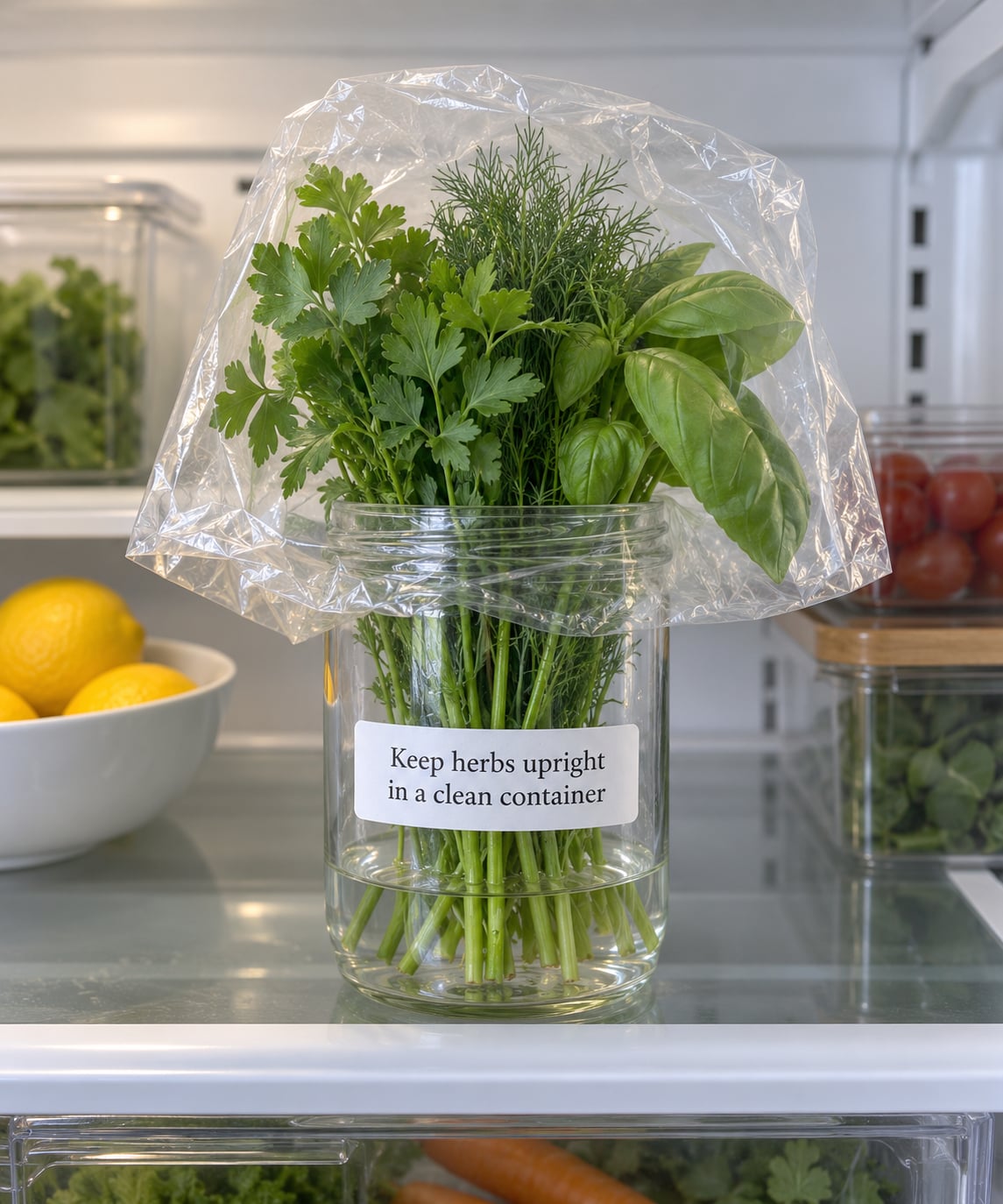
This is the jar method, and it works for every tender herb in the fridge.
- Trim about half an inch off the bottom of the stems with a sharp knife so the cut end is clean and open, not crushed.
- Stand the bunch in a jar with 1 to 2 inches of water. The stems should be submerged; the leaves must stay above the water line or they turn slimy and smelly at the surface.
- Loosely cover the jar with a plastic bag and a rubber band, or drape a bag over the top. Leave a gap so air moves. A bag clamped tight traps no moisture and no airflow, and the herbs suffocate anyway.
- Refrigerate away from raw produce. Apples, bananas, avocados and ripe tomatoes give off ethylene gas, which speeds yellowing and wilting in sensitive herbs like parsley and cilantro.
- Change the water every two or three days, and top it up whenever the jar looks low.
You know it worked when the leaves stay upright and perky at day seven. Most people skip trimming the stems, but a crushed stem end cannot drink, and that is the single most common reason a jar method fails by day four.
4. Avoid sealing herbs in wet plastic bags
A zipper bag that is shut tight traps condensation around damp leaves, and warm wet air with no circulation is exactly what turns herbs black, limp or fuzzy. If you need a bag method, put a sheet of paper towel inside first so the leaves touch paper rather than plastic, and leave the bag open or cracked.
For herbs from a plastic clamshell, the fix is simple. Pull out the soggy paper or liner, wrap the bunch in a fresh dry paper towel, and stand it in a jar as above. For woody herbs, lay the sprigs on a barely damp towel, roll the towel around them, and drop the roll into an unsealed bag in the crisper drawer.
5. Freeze or dry herbs that will not be used soon
When a bunch is past its fridge window, freezing keeps the flavor with the least fuss.
- Wash and dry the herbs thoroughly, then chop them.
- Pack the chopped herbs into ice cube trays, add a splash of water or olive oil, and freeze solid.
- Pop the cubes into a freezer bag so you can pull out one at a time. Olive oil cubes concentrate flavor and work better in sauces; water cubes are fine for soups and stocks.
Drying suits herbs that are already heading woody. Tie small bundles with twine and hang them somewhere dark, dry and with moving air until the leaves crumble, then strip them into airtight jars. Sage, thyme, oregano, rosemary and marjoram keep roughly a year this way. Home gardeners usually cut these before the first frost and dry the whole harvest at once.
How Long Do Fresh Herbs Last?
How Long Do Fresh Herbs Last in the Refrigerator?
Storage times assume the jar or paper towel method, a refrigerator at or near 37 to 40 F, and fresh herbs bought or harvested that week.
| Herb | Best method | Usable time |
|---|---|---|
| Basil | Water in a glass, room temperature | 3 to 5 days |
| Cilantro | Jar in water, loosely covered | 10 to 14 days |
| Flat-leaf parsley | Jar in water, loosely covered | 10 to 14 days |
| Curly parsley | Jar in water or damp towel in crisper | 2 to 3 weeks |
| Dill | Jar in water, loosely covered | 7 to 10 days |
| Mint | Jar in water, loosely covered | 2 weeks or more |
| Chives | Damp paper towel in a bag | 7 to 10 days |
| Tarragon | Damp paper towel in a bag | 10 to 14 days |
| Rosemary | Damp paper towel in crisper | 2 to 3 weeks |
| Thyme | Airtight container, lightly misted | 2 to 3 weeks |
| Sage | Airtight container or damp towel | 2 weeks |
| Oregano and marjoram | Airtight container in crisper | 2 to 3 weeks |
| Chopped herbs, frozen | Ice cube trays, then freezer bag | 3 to 6 months |
| Dried herbs | Stripped leaves in airtight jars | 6 to 12 months |
Throw herbs away when the leaves turn slim and mushy, smell sour or musty, or show fuzzy gray or white patches. Yellowing leaves on their own are a sign of age or cold rather than bacteria, and you can pick them off and use the rest. Wilted but clean, crisp-smelling herbs are fine to use; flavor is reduced, safety is not the issue.
Common Storage Mistakes and Quick Fixes
Washing everything the night you shop. Extra water means faster rot. Wash at the point of use unless you are blanching for freezing, and dry thoroughly when you do.
Sealing damp herbs in an airtight bag. No airflow plus trapped moisture equals black leaves within two days. Add a paper towel layer and open the bag slightly, or switch tender herbs to the jar method.
Putting the leaves in the water. Submerged leaves rot at the water line and smell up the whole fridge. Keep every leaf above the water and trim the stems an inch or so instead.
Refrigerating basil. Cold below about 50 F causes chilling injury and black leaves. Basil belongs in water on the counter, out of direct sunlight, away from the stove.
Leaving the water unchanged for two weeks. Stale water blocks the cut stem and encourages bacteria on the surface. Refresh it every two or three days.
Packing the fridge so hard nothing moves. Herbs crushed at the back of an overstuffed shelf bruise and dry out. Keep the jar at eye level where you will actually see and use it.
Treating yellow leaves as mold. Yellowing is normal aging; fuzzy patches or a sour smell are not. Strip yellow leaves and keep the rest.
Putting herbs next to fruit. Ethylene from apples, bananas and avocados speeds wilting and yellowing. Use a different shelf.
Tips for Using Stored Herbs
Store stems and leaves separately. Parsley and cilantro stems have as much flavor as the leaves and are the best thing in a stockpot; they also last longer than the greens, so keep them in their own jar.
Revive a tired bunch with an ice bath. Trim the stems, stand the herbs in a glass of cold water with ice cubes for 20 to 30 minutes, pat dry, and they usually come back for another few days.
Chop before freezing rather than after. Whole leaves hold more water, and a chopped parsley frozen with a little oil drops straight into a sauce or onto a tray of vegetables without thawing first.
Add herbs at the right moment. Soft herbs such as basil, parsley, cilantro and mint go in at the end of cooking so their flavor survives. Hardy herbs such as rosemary, thyme, sage and oregano go in early with the onions, since they need time to soften.
Herb butter, herb paste and herb salt are the easiest answers to a glut. Chop herbs into softened butter and freeze it in small portions, blend herbs with olive oil and a little lemon into a paste for freezer jars, or layer chopped herbs and coarse salt in a jar for a seasoning that keeps a year.
Skip storing homemade herb-infused oil at room temperature or for more than a few days refrigerated. Oil seals out oxygen, which lets Clostridium botulinum grow in sealed herbs. If you make it, refrigerate and use it quickly, or freeze it in ice cube trays.
Herb storage is really just one more version of the same kitchen rule: match the container and the conditions to what the item needs. Our guide to storing beer at home properly covers the same thinking for bottles and cans, and both come back to temperature, light and keeping things in the order you will actually use them.
Frequently Asked Questions
Should fresh herbs be washed before storing?
Usually not. If herbs look clean, skip the rinse and wash them at the cutting board, since any water clinging on the leaves speeds decay in the fridge. Rinse only dirty garden herbs or greens with grit in them, and dry them properly in a salad spinner or by rolling in a towel before storing.
How long do fresh herbs last in the refrigerator?
Tender herbs such as cilantro, parsley, dill and mint last 10 to 14 days standing in a jar of water under a loose bag, while hardy herbs such as rosemary, thyme and sage last two to three weeks in a damp paper towel or airtight container in the crisper. Change the water every two or three days to get the full window.
Can I store fresh herbs in a plastic bag?
Yes, as long as the bag is not sealed tight around damp leaves. Put a sheet of paper towel inside so the herbs touch paper rather than plastic, leave the bag cracked or open, and refrigerate in the crisper. Tender herbs do better in a jar of water, and basil should stay at room temperature because cold makes its leaves black.
How do I revive wilted herbs?
Trim the stems again, stand the bunch in cold water with ice cubes for 20 to 30 minutes, and pat the leaves dry before storing them loosely covered in the fridge. This gives another few days to most soft herbs. Wilted herbs that still look and smell clean are safe to eat, they simply have less aroma.
Which fresh herbs are best for freezing?
Soft, tender herbs freeze best: basil, cilantro, parsley, chives, dill and tarragon all hold their flavor well. Chop them, pack them into ice cube trays with water or olive oil, freeze, then transfer the cubes to a freezer bag. Woody herbs such as rosemary, thyme and sage keep better dried than frozen.
Should I store herbs with stems or leaves?
Store tender herbs with the stems on and standing in water so they can drink. Woody herbs are usually stored as sprigs wrapped in a damp paper towel, or as leaves stripped into an airtight container. Stems such as parsley and cilantro stalks are worth keeping separately, since they flavor stocks and last longer than the leaves.
Conclusion
Start at the sink: trim the stems, drop the bunch in a jar with an inch of water, tent it with a loose bag, and put it on a fridge shelf away from fruit. If the herb is woody instead, wrap it in a barely damp paper towel and keep it in the crisper. Anything beyond two weeks belongs in the freezer or on a drying rack, and basil never belongs in the fridge at all. For a cilantro-heavy week, our guacamole for burgers guide uses up a whole bunch in one sitting, and the same storage rules apply to any other fresh topping you keep on hand alongside it.