
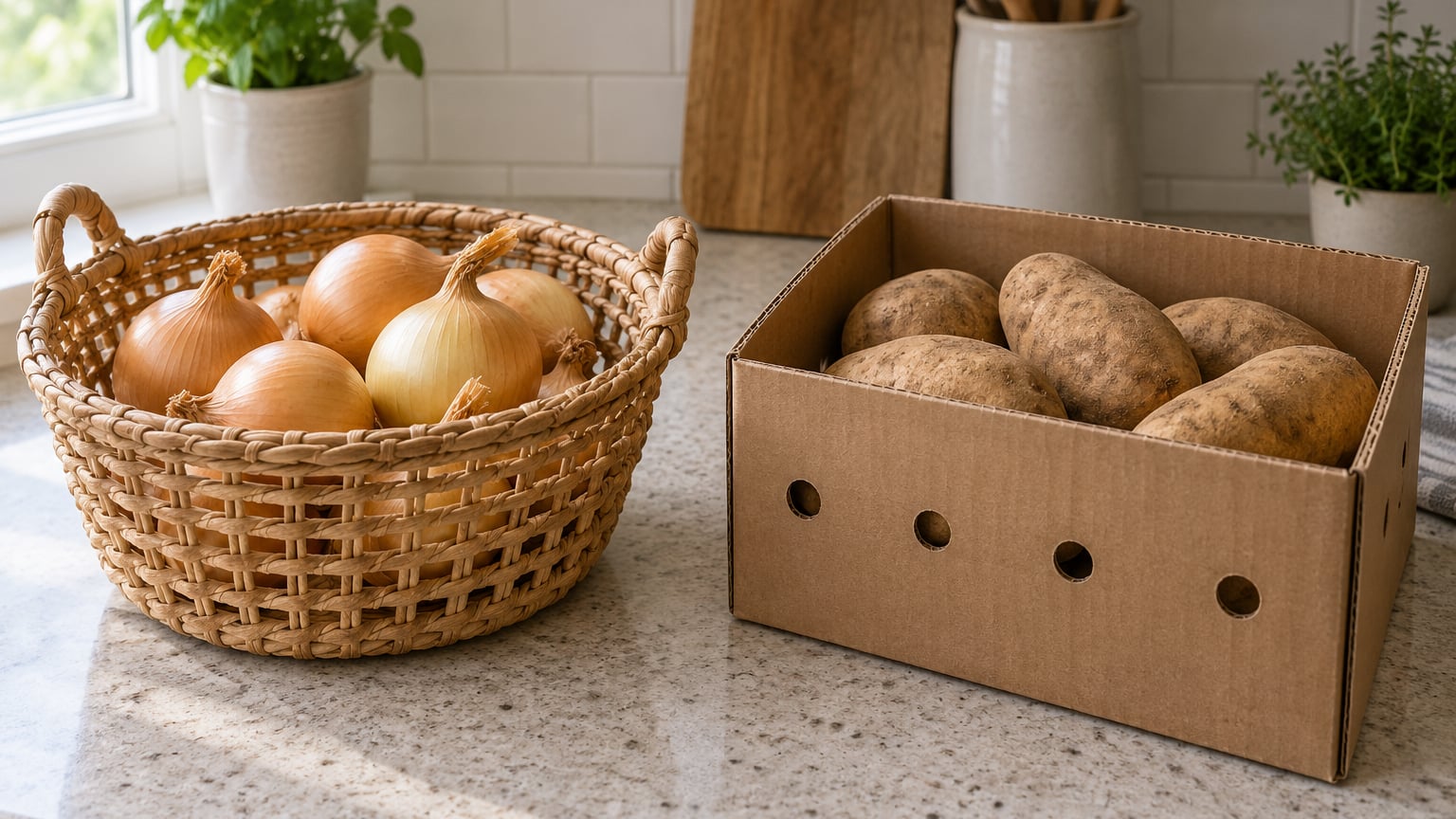
Store onions and potatoes separately: keep onions in a dry, ventilated basket or mesh bag at about 40-50°F (4-10°C), and potatoes in a dark, cool spot at 45-55°F (7-13°C), at least 3 feet apart. Skip plastic bags, skip the fridge for whole vegetables, and never wash them before they go into storage.
That is the whole system. Once it is set up, most people forget about it, which is exactly what you want from produce storage. The rest of this guide covers the containers, the four preparation steps, the mistakes that quietly ruin a bag of onions, and how long each option realistically lasts.
Last reviewed October 2026.
Table of Contents
- What You Need to Store Onions and Potatoes
- Step-by-Step: How to Store Onions and Potatoes
- Onion and Potato Storage Ideas for Small Kitchens
- Common Mistakes That Ruin Stored Onions and Potatoes
- How Long Do Stored Onions and Potatoes Last?
- Frequently Asked Questions
- A Simple Storage Routine for Longer-Lasting Produce
What You Need to Store Onions and Potatoes
Two separate homes, two kinds of container, and ten minutes of prep. Most of what you need is already in your kitchen.
- An open basket, mesh bag or small crate for onions. Wicker, wire, or a hanging mesh produce bag all work. A paper bag is fine for a few onions at a time.
- A ventilated container for potatoes. A cardboard box with holes poked in every side, a wire bin, a shallow wooden crate, or a cotton produce keep sack.
- Two separate spots in your home. Onions need airflow and dryness. Potatoes need darkness and cool. Different shelves, different cupboards, different rooms if you have them.
- A marker or masking tape. Label each container with what is inside and when it went in, so you use up the older batch instead of forgetting a bag in the back.
- Clean kitchen towels or a cooling rack. For drying onions and potatoes before they are stored.
- A soft brush or dry cloth. For brushing soil off potato skins without scratching them.
- A small bin for culled pieces. Anything soft, moldy or badly sprouted comes out of storage the day you spot it.
Step-by-Step: How to Store Onions and Potatoes
Work through these in order. Most of the failures I see come from skipping the drying step or from loading a container that is damp on the inside.
1. Cure and Dry the Onions
Curing is simply leaving onions somewhere warm, dry and airy until their skins are papery and the necks are dry. It thickens the outer skin, which is the layer that keeps moisture in and rot out.
Spread your onions in a single layer on a screen, a cooling rack or a tray lined with newspaper. Leave them for two to three weeks somewhere with good airflow and no direct sun. If you grew them, leave about an inch of stem attached, and turn them occasionally.
While you wait, pick out anything bruised, soft at the neck or already showing fuzz. One bad onion in a basket of ten will take the rest with it, which is the whole reason for a weekly look later on.
Buy onions from the store rarely need curing, but they still need a quick check. Brush off loose debris, skip any with a thick green shoot or a mushy shoulder, and set the rest somewhere dry for a day or two.
One detail worth knowing if you cook a lot: curing is also what makes an onion easier to peel and dice without slipping apart. Our guide to cutting onions without crying covers the prep side.
2. Store Onions in a Breathable Location
Once cured, put onions in an open basket, a mesh bag or a paper bag. Keep them somewhere dry, cool and dark with air moving around them, ideally at 40-50°F (4-10°C).
- Environment: dry, cool, dark, ventilated. A closed cupboard that traps humidity is the worst spot.
- Containers: open basket, wire basket, mesh produce bag, hanging mesh bag, shallow crate, or paper bag with the top folded loosely.
- No plastic: sealed plastic traps moisture, and damp onions rot in days.
- No fridge: cold plus moisture makes whole onions go soft and sometimes sprout.
- Single layer where you can: airflow matters more than capacity.
Garlic, shallots and dry herbs share this space happily. Keep the onion station away from ripening bananas, apples and avocados, since those pour out ethylene and make everything around them sprout and soften faster.
3. Prepare the Potatoes for Storage
Sort your potatoes first. Eat anything already soft, green or badly sprouted, and set aside anything with a bruise that goes into the flesh.
Do not wash them. Dirt is a dry, porous layer that helps the skin hold moisture, and rinsing puts that moisture back on a surface you are about to seal in a box for weeks. If a potato is genuinely dirty, wipe it with a dry cloth or brush it lightly.
Next, dry them thoroughly. Lay them out on a towel or a rack, ideally overnight, until the skins feel dry to the touch. If any potato has been cut or has a broken skin, give it a separate cure of a few days in a warm, airy, humid spot around 85-90% relative humidity, so the exposed flesh skins over before it goes into storage.
If you harvested them yourself, stop watering about two weeks before you dig them up, then cure them for one to two weeks before long-term storage. That dry-down step is the single biggest difference between garden potatoes that keep and ones that rot in the crate.
4. Keep Potatoes Cool, Dark, and Separate from Onions
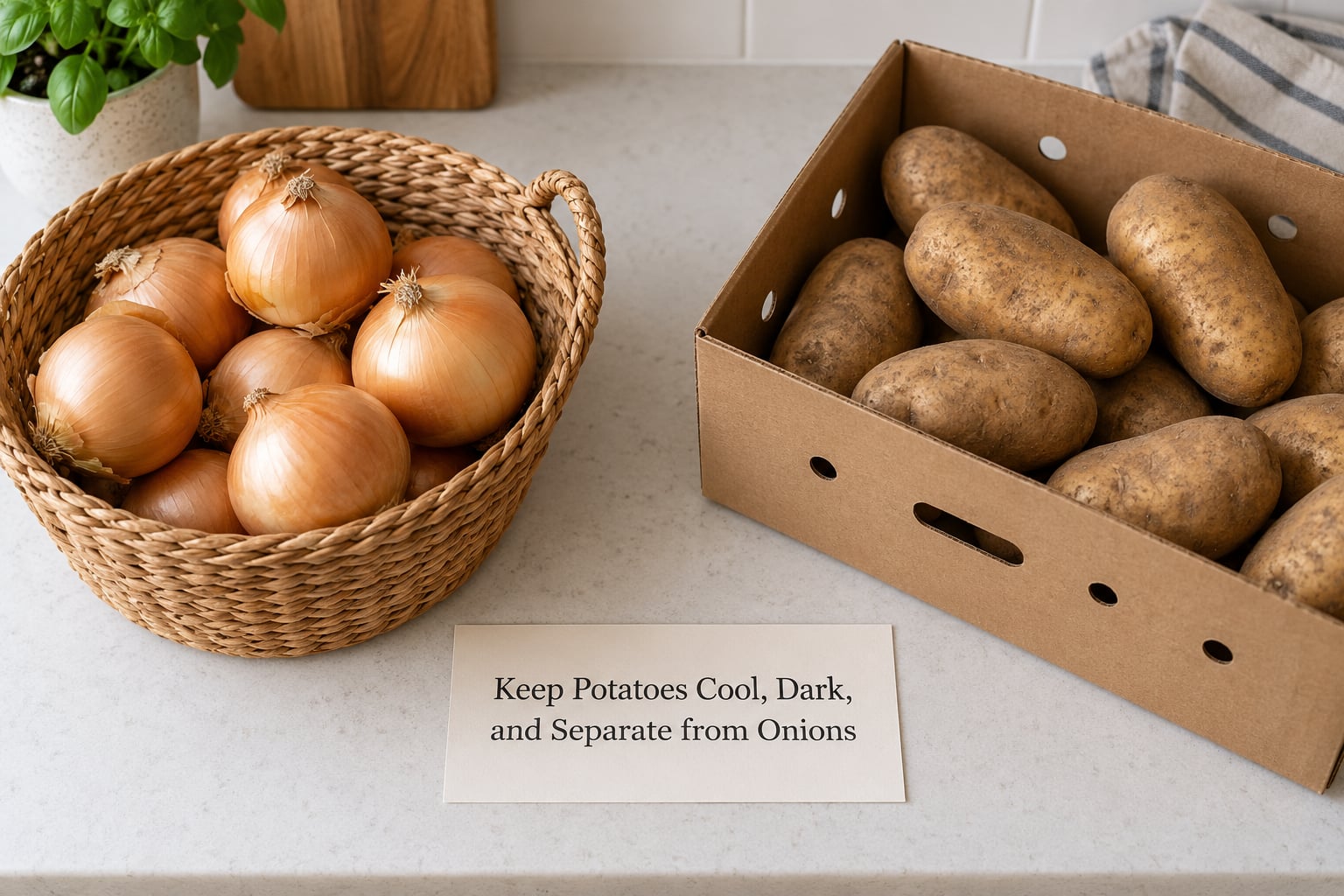
Potatoes want 45-55°F (7-13°C), a relative humidity around 90%, and zero light. Darkness matters as much as temperature, because any exposure starts chlorophyll forming in the skin and turns potatoes green.
- Environment: cool, dark, dry, ventilated. A pantry shelf, the bottom of a garage shelf, or a basement shelf all work.
- Containers: ventilated cardboard box with holes in every side, wire bin, wooden crate, or cotton produce keep sack.
- No washing: keep the skins on and dry.
- No fridge for long storage: cold turns the starch into sugar and the texture goes mealy and watery when cooked.
- Distance: keep potatoes at least 3 feet from onions, ideally on a different shelf or in a different room.
- No stacking: a single loose layer air-circumates better than a pile, and rot spreads faster through a heap.
You will know the setup is working if potatoes come out of the box firm, dull and un-sprouted, and the box interior smells like nothing much at all. The moment a potato goes soft or a green patch appears, take it out immediately.
Onion and Potato Storage Ideas for Small Kitchens
If you have no pantry, the answer is vertical space and hard separation, not one crowded cupboard. These are the setups people in kitchen forums keep coming back to.
- Hang them. A hanging mesh bag of onions on a hook inside a door takes almost no room and gets the airflow the onion needs.
- Mount a basket. A wire or wicker basket screwed to the side of a cabinet or a pegboard gives you a dedicated, ventilated home.
- Use the top of the fridge. It is dark, it is not hot, and it is usually overlooked. Line a shallow crate with newspaper.
- Split the room. Potatoes on the pantry shelf, onions in the broom cupboard or on a bedroom closet shelf. Different rooms is better than different shelves.
- Label a hole-punched box. Cheapest and most reliable container there is, and it stacks without sealing anything in.
- Under the stairs, not in the garage in summer. A garage works in winter and fails in July, when it gets hot enough to cure potatoes into nothing.
On the odour question, which is the loudest complaint I hear: a closed cupboard holding onions will smell like onions for weeks, because the sulfur compounds need air to disperse. The fix is the same as the fix for rot, more ventilation and a smaller, more open container.
Common Mistakes That Ruin Stored Onions and Potatoes
- Washing before storing. Wet skin plus a closed container equals mold within days. Wash them right before you cook instead.
- Sealed plastic bags. Plastic holds the moisture the vegetables are trying to lose. Use paper, mesh, wire or a holed box.
- Storing onions and potatoes together. The rule is at least 3 feet apart, and it is honestly more about airflow and rot-spreading than about gas. Plenty of people store them in one cupboard for years without disaster. But when one potato goes soft, a mixed bin takes the whole lot down with it.
- Leaving potatoes in the light. Open shelves and clear glass jars are the most common cause of green potatoes and bitter flavor. Green means solanine, and heavily green potatoes should be thrown out.
- Piling everything in. Stacking blocks airflow and spreads rot faster. Two shallow containers beat one deep one.
- Ignoring damaged pieces. One bruised onion or a split potato keeps spoiling the neighbors. Cull weekly and do not look back.
- Refrigerating whole vegetables. Whole potatoes turn starchy and mealy, whole onions get soft. Chopped onions and cut potatoes are a different story, and those do belong in the fridge.
One more that shows up constantly: freezing is the answer for onions you will not eat in time. Dice them, spread them on a tray to freeze solid, then bag them up. Frozen diced onions go straight from freezer to pan, no softening first.
How Long Do Stored Onions and Potatoes Last?
Storage time is mostly a temperature story. A basement shelf at 50°F beats a warm cupboard every time, and these numbers assume cool, dark, ventilated storage rather than a hot kitchen corner.
| Produce and method | Realistic storage time | Notes |
|---|---|---|
| Whole onions, cool pantry or cellar | 1 to 2 months, up to 3 months in ideal conditions | Dry, dark, ventilated. Watch the necks for softness. |
| Whole onions, on the counter | 2 to 6 weeks | Fine for a small shop, slower in a warm kitchen. |
| Whole onions, refrigerator | Not recommended | Moisture makes them soft and can trigger sprouting. |
| Peeled or chopped onions, fridge | 7 to 10 days in a sealed container | Airtight matters here, the opposite of pantry storage. |
| Frozen diced onions | 9 to 12 months | The best long-term option for cooks who buy in bulk. |
| Whole potatoes, 45-55°F cellar or pantry | 2 to 3 months typically, 3 to 6 months in good conditions | Check weekly for soft spots and sprouts. |
| Whole potatoes, warm kitchen cupboard | 2 to 5 weeks | They keep, they just sprout and wrinkle sooner. |
| Cut potatoes, fridge | 3 to 4 days | Sealed container or a bowl with plastic wrap. |
| Cooked potatoes, fridge | 3 to 4 days | Refrigerate within two hours of cooking. |
If you are buying for a specific dish rather than storage, the varietal matters more than the box. Starchy potatoes for fries and waxy ones for salads respond to storage differently, and a warm cupboard shortens the window for both.
Sweet potatoes are the exception worth knowing: they want the same dark, ventilated conditions, but refrigeration makes them turn to mush, so keep them out of the cold box.
Frequently Asked Questions
Should onions and potatoes be stored together?
No. Give them separate homes at least 3 feet apart, ideally on different shelves or in different rooms. Onions need dry airflow and potatoes need cool darkness, and a shared bin lets one soft potato spoil a basket of onions. The rule is more about airflow and rot spreading than about gas, and plenty of people store them together without immediate disaster, but separation costs nothing and buys you weeks.
Why are my stored potatoes sprouting?
Potatoes sprout when they get warmth, light, or age on their side, and warmth is usually the culprit in a kitchen cupboard. Move them somewhere cooler and darker, around 45-55F, check them weekly, and keep an apple or banana away from the box since ripening fruit releases ethylene gas. Small sprouts under about half an inch can be cut away, but heavily sprouted or green potatoes should be discarded.
Can I store onions in the refrigerator?
Not whole onions. Refrigerator humidity softens them, encourages mold in the papery skin, and can trigger sprouting. Whole onions belong in a cool, dry, ventilated basket or mesh bag between 40-50F. Chopped or sliced onions are the exception: seal them in an airtight container or bag and refrigerate for up to 7 to 10 days, or freeze them in dice for up to a year.
How can I tell whether a stored onion or potato is still good?
Onions are good when the skin is dry and papery, the root end is firm, and there is no smell of rot or sourness. Discard anything slimy, fuzzy, or leaking. Potatoes are good when the skin is firm and the flesh is hard with no green patches. Green coloring means solanine, so cut away a small spot if needed and throw out heavily green potatoes, or any that taste bitter.
Should I wash potatoes before storing them?
No. Washing puts moisture on the skin, and that moisture gets trapped in any container you close. Brush off loose soil with a dry cloth instead and let the potatoes dry fully before you load them. If a potato is cut or has a broken skin, cure it separately for a few days in warm, humid, airy conditions so the exposed flesh forms a protective layer before storage.
If you keep more onions than you can eat in a few weeks, quick-pickling red onions is the side door around the whole storage problem.
A Simple Storage Routine for Longer-Lasting Produce
The routine that works is short: cure onions fully before they go anywhere, give both vegetables a dry and breathable home, keep the two apart, look once a week, and pull anything questionable out the moment you see it.
Start today with a box and a basket. Poke holes in the sides of a leftover cardboard box for the potatoes, set it on the darkest cool shelf you have, and put the onions in an open basket or hanging mesh bag in a different part of the kitchen. Label both. That is the entire setup, and it is worth about a month of extra life on each vegetable.