
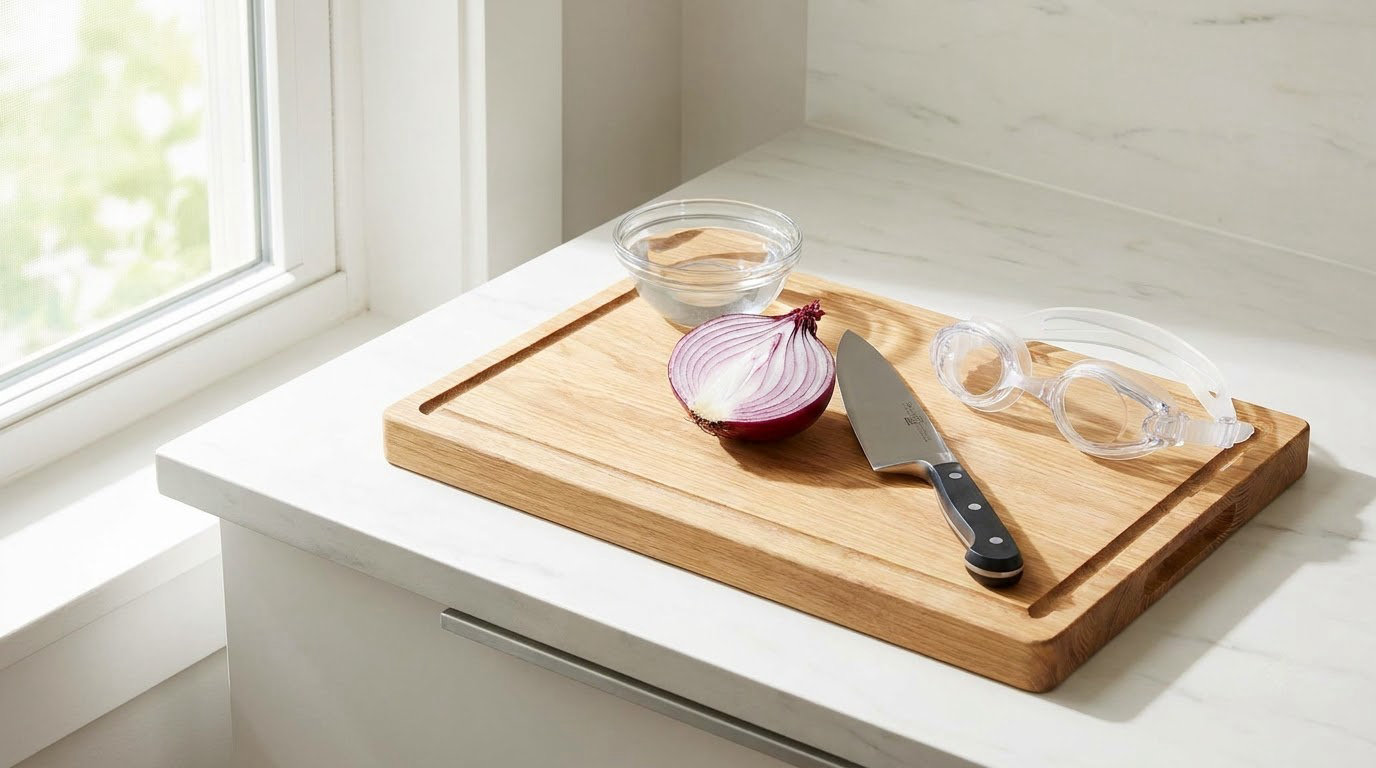
The fastest way to cut onions without crying is a three-part setup: chill the onion for 30 minutes, use a genuinely sharp knife, and leave the root end on until the very last cut. Add moving air and a damp towel behind the board and most home cooks notice the difference within a week.
Why do onions make you cry in the first place? Cutting ruptures the cells, and two compounds that sit apart inside them finally meet. The reaction between them produces a sulfur gas that drifts upward, dissolves in the moisture on your eyes and irritates it. Every method below either slows that reaction, breaks fewer cells, or moves the gas away from your face.
Most of the work happens before the knife comes out, and none of it costs anything. Allow about ten minutes of setup.
Last checked for 2026. Everything here works with a standard home kitchen, no specialty gear.
What You Need
You need very little, and almost none of it is equipment you have to buy. The list is short because the useful techniques all depend on temperature, knife quality and air movement rather than gadgets.
- A sharp chef’s knife. Eight inches is the sweet spot for onion work. This matters more than anything else on the list.
- A stable cutting board. A damp towel folded underneath stops it sliding when your hands get wet.
- Cold water and a bowl. Used either as a chill bath for the onion or a rinse for hands and board afterwards.
- A second damp towel or paper towel. Laid flat behind the onion, on the board.
- Ventilation. A working range hood, an open window, or a box fan set to one side and pointed across your cutting board.
- Eye protection (optional). Kitchen glasses work. Swim goggles work better. Neither is necessary once the basics are in place.
On safety: point a fan across the board, never into hot oil or an open flame, and keep long hair tied back before you start. If you prep onions with a kid watching, hand them the peeled onion to pull the papery skin off while you handle the knife. It keeps them involved and keeps fingers away from the blade.
Step-by-Step
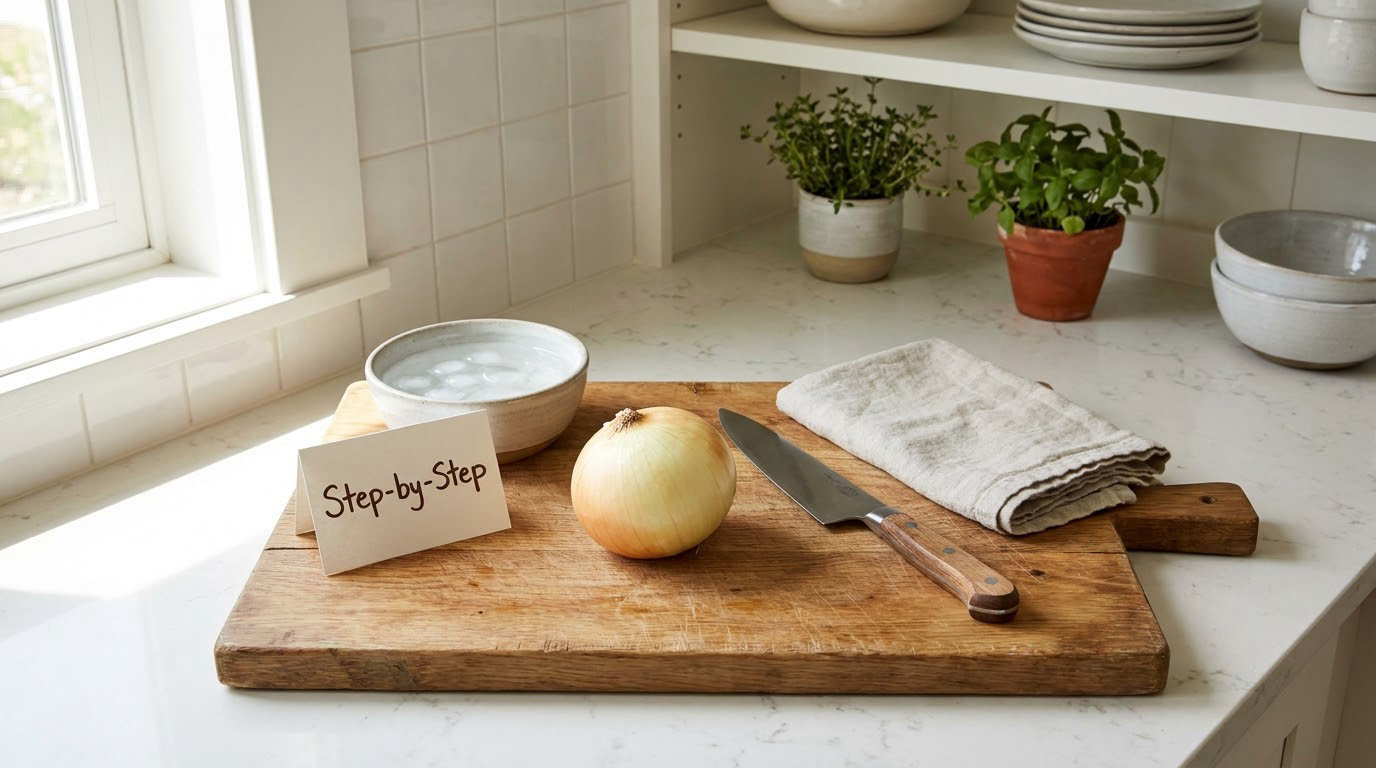
These four steps work in the order that gives you the most relief for the least work. Do the first two and most people will already be comfortable before they reach the third.
Chill the Onion Before Cutting
Put the onions in the refrigerator for 30 to 60 minutes before you start. Cold slows the enzyme reaction inside the bulb, so less of the irritant gas forms, and the gas that does form drifts more slowly instead of shooting straight up at your face.
You will know it worked because the sting never really arrives. Instead of the eyes-watering within fifteen seconds, you get a clean, dry cutting session. Half an hour is the practical minimum; an hour is better if you have other prep to do. If you are cooking at room temperature on a hot night, chill is the one method that helps more, not less.
Use a Very Sharp Knife
A sharp blade slides between the onion’s cells and leaves them largely intact. A dull blade has to press and rock, which crushes layers and ruptures far more of them at once, releasing a bigger burst of gas per cut.
The sign is in the pile, not in your eyes. Sharp-knife slices separate cleanly and hold their shape. Dull-knife pieces turn wet and translucent quickly, and you end up cutting the same onion twice. If your onion goes mushy and sticky, stop and sharpen before continuing rather than pushing through it.
Cut Near a Vent or Running Water
The gas is lighter than air and wants to go up. Give it somewhere to go that is not your face: run the range hood on high before the knife comes out, open a window, or set a box fan on the counter to one side, blowing across the board rather than up your line of sight.
Cutting beside a running tap works too, for the same reason. Position the board so the water and steam carry the fumes sideways, and rinse the knife under the tap between cuts if the sting builds. What to avoid is a hood switched on after you start, or standing directly in the plume above a hot pan of oil. Move the board a foot away from the burner and cut facing the vent, not the stove.
Try a Cold or Damp Approach
These are the comfort methods rather than the reliable ones, and it is worth knowing which is which before you rely on them. Soak a peeled onion in cold water for 10 to 15 minutes and the surface compounds wash away, so you get less gas from the first few cuts. It does nothing for the middle of the onion, so treat it as a head start, not a fix.
The damp towel is the one people place wrong. Wring out a towel, lay it flat on the board directly behind the onion, and keep it there. The idea is that the irritant binds to moisture, so you give it a wetter target than your eyes. A commenter on r/cookingforbeginners described it exactly that way, and it is why “behind” matters, tucked in front of the onion it catches nothing.
Contact lenses get mentioned constantly in cooking forums, and the reasoning is sound: a lens holds moisture in place and physically covers the cornea. If you already wear them, put them in. If you do not, that is not a reason to start. A forum regular on CookingBites put the honest version better than most articles do, calling contacts and getting someone else to chop the only two guaranteed options.
How the Methods Compare
Ranked by how much relief you can expect for the effort involved, from the methods above:
| Method | How well it works | Setup before you start |
|---|---|---|
| Chill the onion 30 to 60 minutes | High | Fridge, then waiting |
| Very sharp knife | High | Honing steel or whet stone |
| Keep the root end intact | High | None, just a habit change |
| Range hood, window or fan | Medium to high | None |
| Damp towel behind the onion | Medium | Thirty seconds |
| Cold water soak | Low to medium | 10 to 15 minutes plus a bowl |
| Goggles or contacts | High but rarely needed | Owning or wearing them |
Keeping the root on is worth its own mention because it is free and almost everyone gets it backwards out of habit. The root end is where the sulfur compounds are most concentrated, and the bulb’s structure funnels gas toward that end as you work down it. Leave the root attached, place it on the board, cut down toward it, and take the last slice off last. Trimming the root first is the single most common mistake I see, and it is the one that makes crying worse.
For a big batch, do the whole prep cold and once. The same root and sharp-knife routine applies whether you are dicing four onions for chili, slicing a stack for a burger bar, or starting a caramelize. If the caramelize is next, read how to caramelize onions for burgers so the low-and-slow stage goes smoothly after the chopping is done.
Quick red onions for a burger topping are a different job. Pickling them in a vinegar brine takes a few minutes of hands-off time and rewards a batch, and how to pickle red onions for burgers walks through the ratios. If you want crunch instead, crispy fried onions for burgers is the one to save for a weekend, and doing that prep chilled keeps the fumes out of the rest of the cook.
Common Mistakes
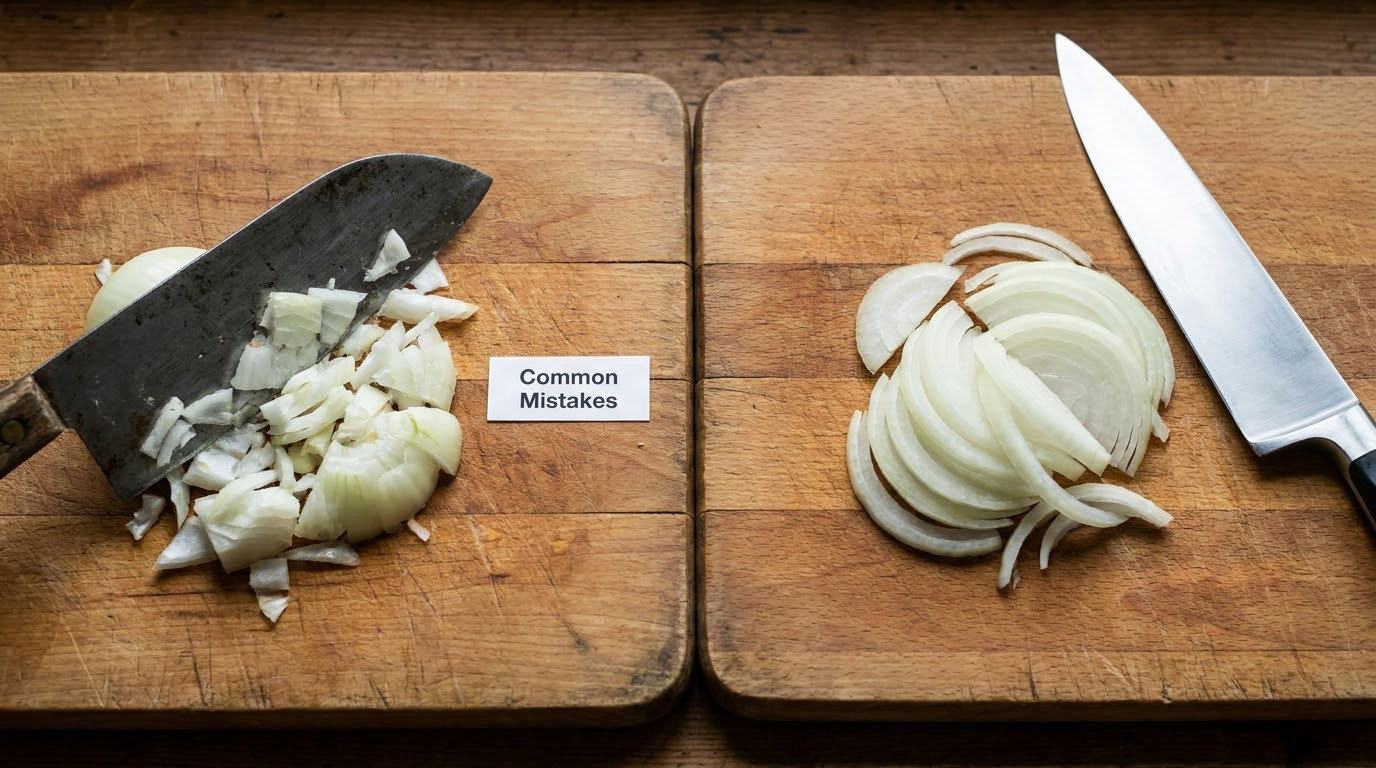
Almost every case of unstoppable onion tears traces back to one of these, and all of them are fixable before you start.
Cutting the root off first. The root is the highest-sulfur end and the exit point for the gas. Cut the other way, from the top down toward the root, and leave the root on the board until the final slice.
Using a dull knife. Crushing is the whole problem. Sharpen it, or borrow the sharpest knife in the house for the onions even if you use something else for everything else.
An unstable board. A board that slides forces you to press harder, and harder means more crushing. A damp towel underneath fixes it in five seconds.
Cutting under a hood that is not running, or directly above a hot pan. Both put the plume in your face. Start the hood first, and move the board away from the burner.
Cutting over the sink rim at an awkward height. Comfort matters more than people expect. If you are leaning and twisting, you will crush the onion and cut yourself.
Trusting the popular tricks that do not work. Holding your breath, breathing through your mouth, biting bread, chewing a breath mint, resting a cold spoon on your tongue, and staring at a fixed point all show up in every listicle, and none of them change the chemistry. Your eyes still make tears; you just feel them more. The only two things reliably in your favour are blocking the gas from reaching your eyes and slowing its production.
Forgetting the smell afterwards. Tears are half the complaint. The other half is the onion that stays on your hands, knife and breath through a whole evening. Rub your hands on the wet stainless steel of the sink for a few seconds, wash with cold water and soap, and wipe the blade with a lemon wedge or a cloth dipped in vinegar. For breath, a glass of milk or a spoonful of yogurt is more effective than mint, which mostly just changes the flavour on top of the onion.
Frequently Asked Questions
Why do onions make me cry?
Cutting an onion ruptures its cells, which lets two compounds that were kept apart finally mix. An enzyme reaction breaks sulfur compounds into sulfenic acid, and that converts almost instantly into a volatile gas called syn-propanethial-S-oxide. The gas rises, dissolves in the moisture layer on your eye and irritates it, which triggers a reflex tear response. Nobody is doing this on purpose, and the reflex is genuinely protective.
What is the best way to cut onions without crying?
Chill the onion in the fridge for 30 to 60 minutes, use a sharp knife so the blade slides instead of crushing, and leave the root end on until your last cut. Turn on the range hood or set a fan beside the board so the gas moves away from you. Those four cover it for most home cooks. The damp towel trick helps a little on top, and goggles only matter if you still fight it.
Does cutting onions in water stop the tears?
Partly. A 10 to 15 minute cold soak rinses compounds off the surface, so the first cuts sting less, but the inside of the onion is untouched and the gas keeps coming once you reach the middle. Cutting under a thin stream of running water works slightly better because it carries the gas away as you go. Neither replaces a sharp knife, a cold onion or airflow.
Are safety goggles useful for cutting onions?
They work, because they physically stop the gas reaching your eyes, and the cheapest kitchen glasses block most of it. You rarely need them once you chill the onion, use a sharp knife and cut near a fan. One CookingBites forum regular named contacts and getting someone else to chop as the only two guaranteed options, which is a fair summary of how stubborn this is for sensitive people.
Do sweet onions cause fewer tears than yellow onions?
Yes, generally. Sweet onions such as Vidalia and Walla Walla have less sulfur, so they generate less of the irritant gas, and milder red onions fall somewhere in the middle. Stronger yellow and white storage onions hit hardest, and onions grown in sulfur-rich soil will out-tear supermarket ones. Storage also matters: older onions that have been sitting have less moisture left to react with, which can make them milder to cut.
Does a sharp knife really help when cutting onions?
It is one of the two biggest levers you have. A sharp blade parts the layers and leaves most cells intact, so very little gas forms. A dull blade presses and rocks, rupturing far more cells on every stroke, and the pieces come out wet and crushed. If your diced onion turns to mush before you finish, that is a knife problem, not an onion problem.
Conclusion
Start with a cold onion and a sharp knife. Thirty minutes in the fridge, a blade that parts the layers instead of crushing them, and the root left on until the final cut will fix the problem for most people, and the fan is the two seconds of extra work on top.
No technique removes the irritation completely for everyone, and there is no honest way to promise that. Some people are simply more sensitive to the gas, and for them the towel, the running water or the goggles are the difference between a normal cook and a bad one. But if you only change one thing, stop trimming the root off first.