
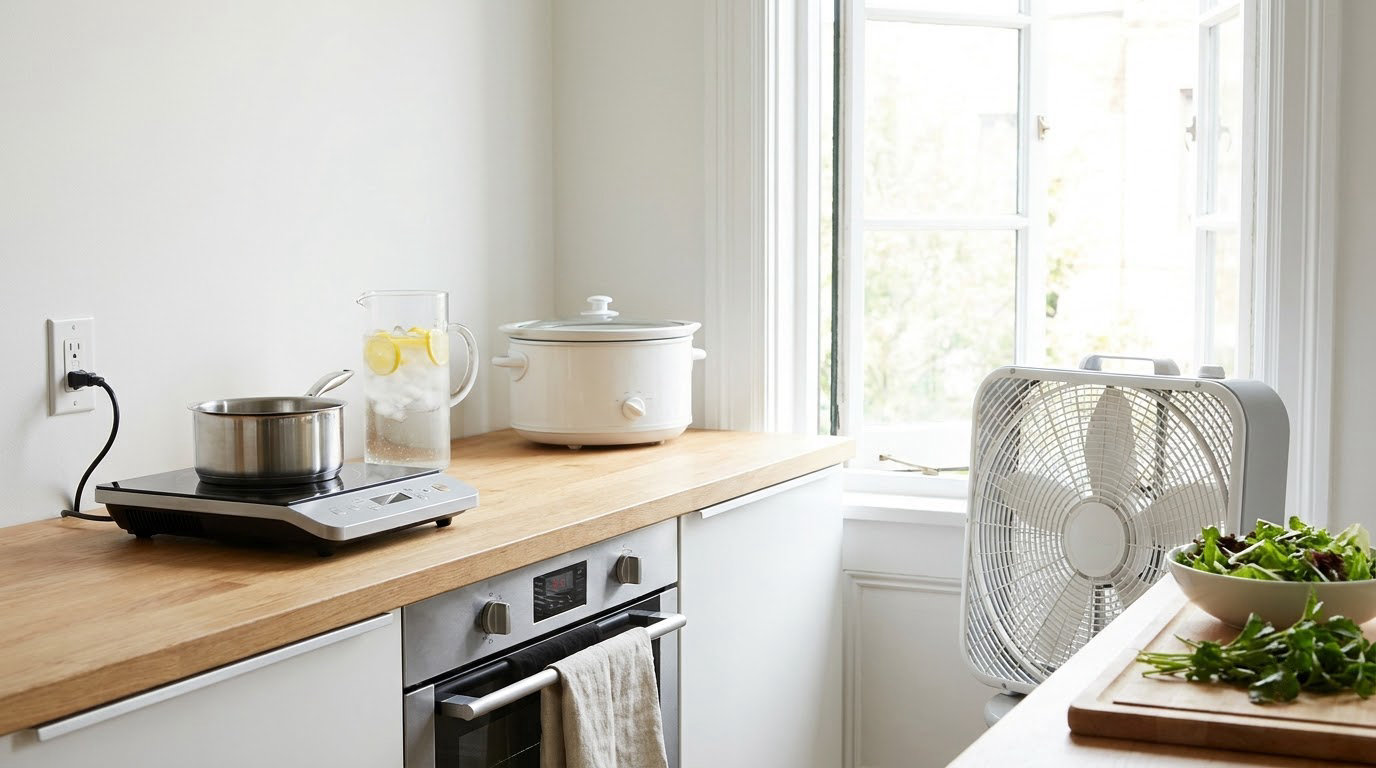
How to keep a kitchen cool while cooking in summer comes down to one habit: move the heat out before it builds up. Run the range hood on low while you prep and on high when something is searing or boiling, leave it running about 20 minutes after the burners are off, and open the uppermost window in the house so rising heat can leave instead of pooling at ceiling level. Timing and airflow beat any gadget you can buy.
Kitchens get hot because they are the only room in the house with a large heat source in it. A gas range releases roughly 40,000 BTU per hour into the room, about the same output as a window air conditioner, and an electric oven adds another 9,000 or so BTU per hour while it runs. Your refrigerator dumps 150 to 400 watts of heat every time the compressor kicks on, and a slow cooker or toaster oven adds a small constant load. That is why a cook can be dripping in a 78 degree kitchen while the living room sits at a comfortable 72.
Here is the plan I work through on the worst afternoons of the year, in the order that gives you the most improvement for the least effort.
Table of Contents
- What You Need
- Step-by-Step: How to keep a kitchen cool while cooking in summer
- 1. Air out the kitchen before you turn on the stove
- 2. Use the range hood or ventilation fan the whole time you cook
- 3. Cook during the cooler parts of the day
- 4. Keep the stove and oven work to what the recipe needs
- 5. Make the kitchen feel cooler without changing the recipe
- 6. Move hot cooking tasks away from the main kitchen
- 7. Clear heat and moisture after cooking
- Common mistakes that leave a kitchen hot
- Frequently Asked Questions
- Conclusion
What You Need
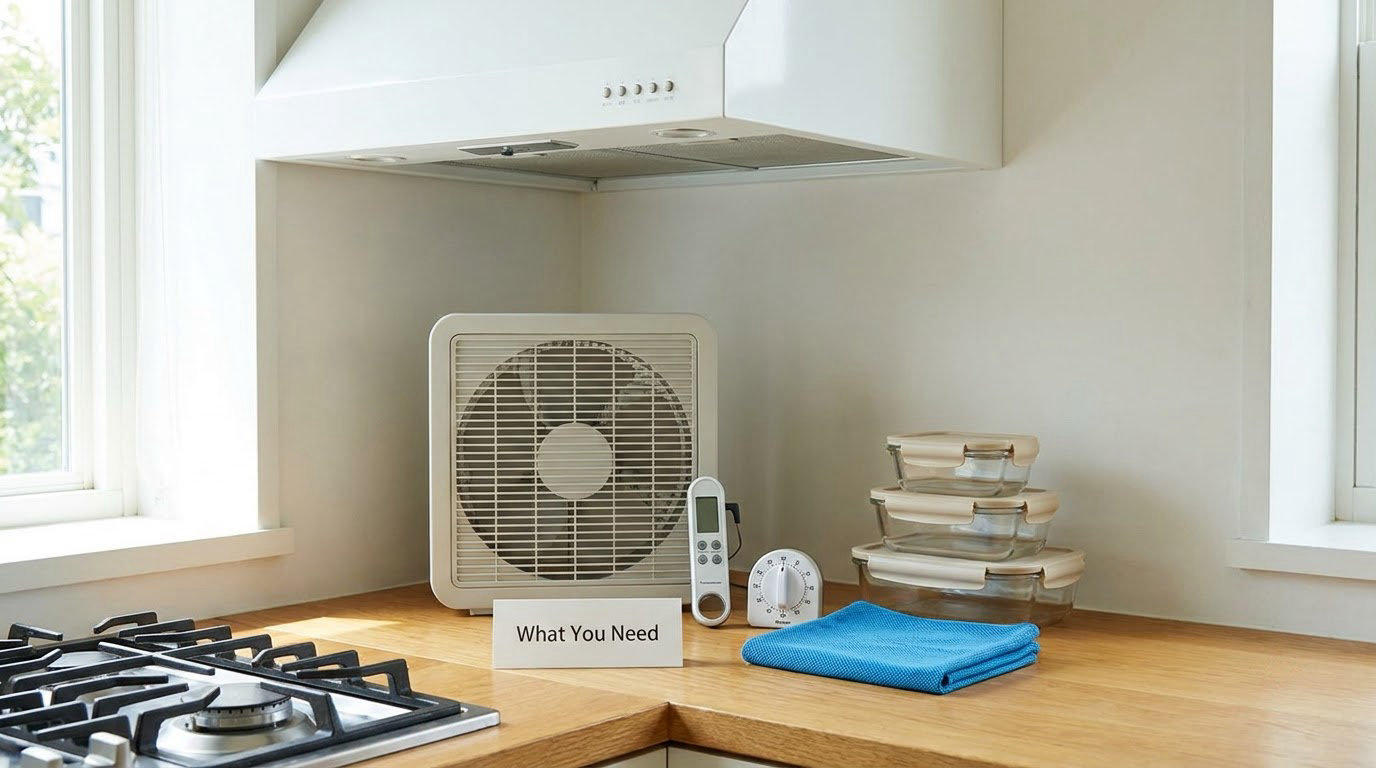
Most of this list is things you already own. The genuinely useful additions are a way to move air and a way to measure it.
- Ventilation you can reach — a working range hood or exhaust fan, plus a box fan for the window or the far corner of the room.
- A window you can use — ideally a top-hung sash or an awning window near the range. If you have no exterior window, plan on a door to the outside and a strong fan strategy instead.
- A thermometer — a cheap oven thermometer or a fridge thermometer clipped near the cook gives you a number instead of a feeling.
- A kitchen timer — so you stop checking on the oven by opening the door, and turn burners off on time.
- Pot lids — a covered pot heats the food faster, boils with less energy, and puts less moisture into the room.
- Cooling towels or reusable ice packs and a bottle of water — for the cook, who is the person actually overheating.
- Food-safe containers — shallow ones, so batch-cooked food cools fast and goes into the fridge inside the safe window.
If you want one purchase that helps most, it is a 20 inch box fan. It works in a window, on a tripod, or aimed at whoever is cooking.
Step-by-Step: How to keep a kitchen cool while cooking in summer
1. Air out the kitchen before you turn on the stove
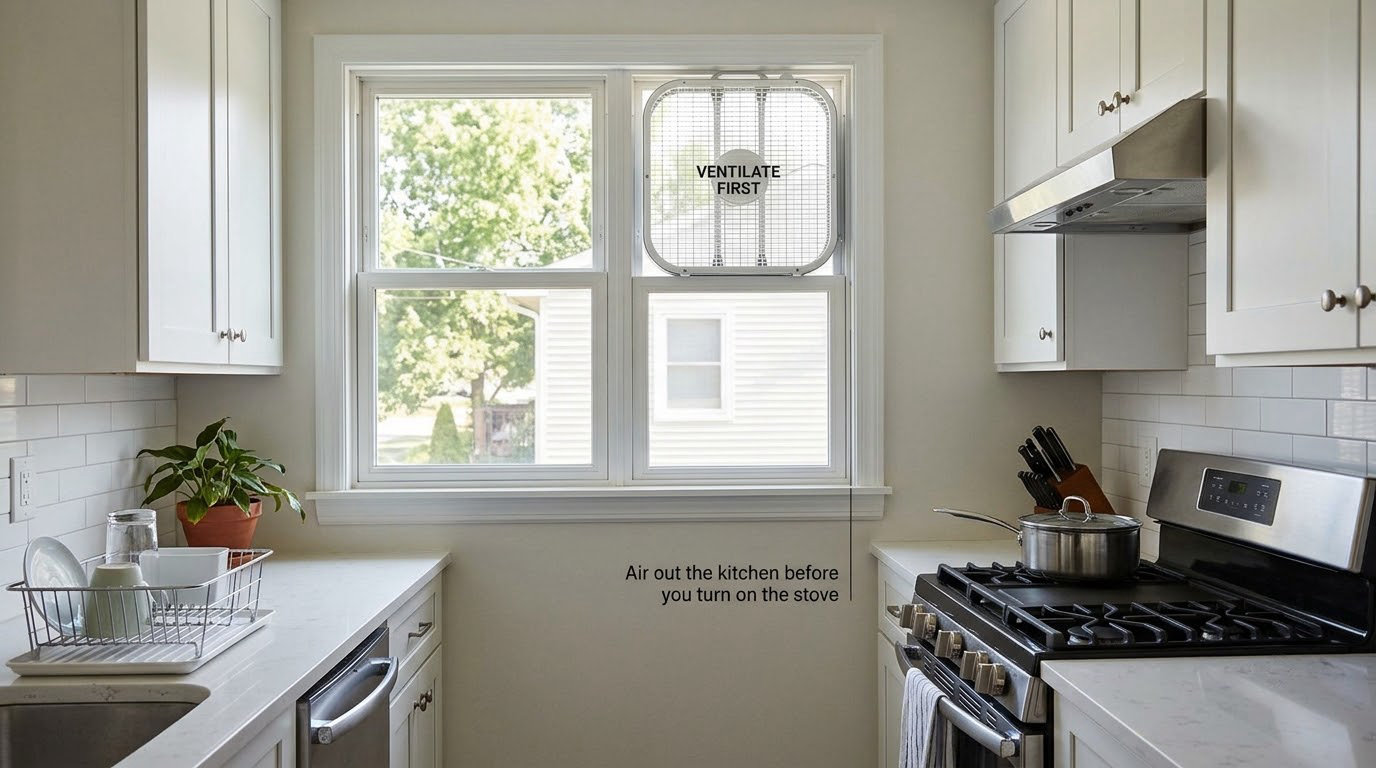
Open the top window in the room about ten minutes before you start, and only the top. Hot air rises, so a small opening high up lets heat leave while you keep the lower sash closed to hold cool air in. On a permies thread about summer utility bills, a user put it plainly: basic passive cooling comes from opening windows from the top, not the bottom, because hot air rises. The same thread suggested a window exhaust fan in that upper opening to pull more of it out.
Set the box fan in the upper window facing outward so it exhausts. If the outside air is cooler than your kitchen, this works within minutes. If it is hotter outside, shut the window and the door to the kitchen instead, and start collecting heat outdoors only during the morning and late evening. You can tell it worked by holding a hand at the top of the room and feeling air move toward the window.
2. Use the range hood or ventilation fan the whole time you cook
Start the hood before the burner lights, not after the pan smokes. Low setting for chopping, simmering and low-simmer work; high for searing, frying, or a large pot coming to a rolling boil. A Florida electric utility’s summer savings guidance puts the run time at about 20 minutes of exhaust fan use per cooking session, and leaving it on afterward clears the heat and humidity that soaked into the room while dinner cooked.
Know which kind of hood you have, because it changes the answer. A ducted hood sends air through a duct and out of the building, so heat leaves. A recirculating hood, common on microwave-over-range units, filters grease and odors and returns the air to the room, warm as it was. On Reddit, a r/HomeImprovement user described exactly that: a recirculating fan is decent at best, and the kitchen gets humid when the oven runs. Circulating moves air around your face. It does not cool the kitchen.
A recurring point in r/KitchenConfidential is worth repeating: hood ventilation is part of fire prevention, not comfort. Keep the filter clean, because a grease-clogged filter quietly chokes airflow long before anyone notices it failing.
3. Cook during the cooler parts of the day
Cooking before breakfast or after dinner moves your heat output into the coolest hours, when the house can shed it instead of storing it. The pattern that works for most households is a short morning batch: brown the meat, roast a sheet of vegetables, boil a pot of rice, portion everything into shallow containers, refrigerate. Dinner is then assembly, reheating, or something that never touches the stove.
Evening cooking is fine, but expect your kitchen to stay warm after sunset, because the building releases the heat it stored all day. Plan the heavy steps first, before the walls have soaked up hours of sun.
Grilling solves the same problem. If you are cooking outside for burgers anyway, timing and setup matter more than the recipe. How to keep burgers from puffing up in the middle is worth reading before the fire is lit, because the fixes that improve the cook also mean less time standing over a hot grill.
4. Keep the stove and oven work to what the recipe needs
Do not preheat the oven early. Most home ovens take 10 to 15 minutes to reach temperature, and every extra minute of preheating is a minute of hot air and metal radiating into your kitchen. Put the food in during preheat whenever the recipe allows it.
Use the smallest burner that will do the job. A small pot on a large burner heats the same water and dumps more wasted heat into the room. Keep lids on pots so you boil with less energy and add less steam, and stop opening the oven door to check, since each opening dumps a burst of heat you paid to make.
If you ever get the chance to choose, induction sends about 90 percent of its energy into the pan, compared with roughly half for a coil element, according to users on that permies thread. The remaining difference is heat that used to warm the kitchen and is now out the window instead.
5. Make the kitchen feel cooler without changing the recipe
Aim a fan at the cook, not at the range. It does not lower the air temperature, but moving air across damp skin speeds evaporation and you will feel it. A damp towel hung in the airflow helps more than most people expect, and a bowl of ice near the stove drops the humidity right where it is worst.
On the permies thread, a highly rated correction to the whole fan conversation was worth remembering: fans only mean something when they are blowing on skin or something you are trying to cool. The same people recommended gel ice packs wrapped in a bandana around the neck, which is a better answer than another appliance.
Wear loose light clothing, keep drinking water within arm’s reach, and put the coldest part of the meal on the table early so the oven is off sooner. None of that changes the food, and all of it is real relief.
6. Move hot cooking tasks away from the main kitchen
Any heat you produce outdoors is heat you never have to remove from the house. A grill or charcoal smoker handles burgers, chicken and corn. For a renter with no yard, a small electric grill on a balcony, a porch burner for a pot of beans, or a charcoal kettle grill does the same job.
People go further than a grill. On that permies thread, someone described setting crock pots, rice cookers and convection ovens up outside on a covered porch to keep that heat out of the kitchen. Another suggested finishing a pot of rice that started inside outdoors, wrapped in towels, once it came to a boil.
Keep it safe while you do it. Do not run a cord across a walkway or through a door, and never leave a hot burner or a grill unattended. If lightning is in the forecast or the heat index is extreme, cook inside with the ventilation steps above rather than standing in the sun. Close the door to the kitchen while you are outside, so the air conditioning you are already paying for works on the rest of the house.
7. Clear heat and moisture after cooking
Turn burners off promptly and leave the exhaust fan or hood running for another 20 minutes, which lifts the residual heat and humidity out of the room. Push heat-producing appliances, including the toaster oven and slow cooker, off the counter and onto a shelf away from the cook’s spot.
For food that is still too hot to refrigerate, the permies suggestion is a good one: set the pot in a sink full of water, then drain the water once it is warmer than the air. It cools faster than standing on a trivet and does not warm the kitchen while it does it. Get food into shallow containers and the fridge inside the safe window described below.
Common mistakes that leave a kitchen hot
Pointing a fan at the range. It blows heat around the room and creates a column of rising air you then breathe. Aim it at your face and shoulders instead, and reserve fan power for windows and exhaust.
Running fans in a closed room on a 100 degree day. A fan does not cool air, and above roughly 95 to 100 degrees outdoors it works against you. Keep windows shut and the shades down in the middle of a heatwave, and save fan use for the morning, the evening, or your skin.
Opening windows when the outside air is hotter than inside. You are inviting heat in. Shade the glass from outside with blinds, a shade cloth or an awning, and only open up when the outdoor temperature drops below the indoor one.
Blocking vents and crowding the cooking zone. A room full of gear absorbs heat and holds it. Keep the front of the range clear, run the hood, and move small appliances out of the immediate work area.
Opening the oven door on repeat. Each check dumps hot air and lengthens the cook. Set a timer instead, and it is one more reason to have a timer in your summer kitchen kit.
Cooking outdoors with no shade and no plan. A grill in full afternoon sun is worse than a ventilated kitchen. Cook early, set up near the house, keep a water bottle within reach, and do not leave it unattended.
To know whether any of this is working, put the thermometer in the kitchen before you start and check it after twenty minutes of cooking. A kitchen that climbs five to ten degrees over the surrounding rooms is adding heat faster than it can shed it. A kitchen that stays near the house average means your hood, your windows and your timing are doing their job.
Frequently Asked Questions
How should I ventilate my kitchen while cooking?
Start the range hood or exhaust fan before the burner lights and leave it running the whole time you cook. Use the low setting for simmering, prep and other gentle heat, and the high setting for searing, frying or a large pot coming to a boil. Keep it going about 20 minutes after the burners are off so the last of the heat and moisture leaves with it.
Do ceiling fans or box fans cool a room?
A fan moves air, but it does not lower the temperature of the room. What you feel is evaporation off your skin, which is why a fan aimed at the cook helps on a 90 degree afternoon and does nothing for the rest of the kitchen. The exception is a fan set in an upper window or a ducted exhaust fan, which actually carries hot air out of the building.
Should I open my windows while cooking in summer?
It depends on the temperature outside. If the outdoor air is cooler than your kitchen, open the uppermost window and let hot air leave; that is stack effect, and it is the cheapest ventilation there is. If it is hotter outside, opening windows feeds warm air in. Shade the glass from outside first so the window is not radiating heat into the room.
What can I use instead of a kitchen exhaust fan?
A window fan in the top-hung sash, a box fan set near the range, or a damp towel on a fan in the corner will all move some air. Borrowing a portable air conditioner for the hottest weeks works too. None of these carry smoke and grease out like a ducted hood, so keep the smoke alarm in reach and the window open for a clear path.
How long can food sit out in 100 degree weather?
Two hours is the limit at room temperature, and when the air is above 90 degrees it drops to one hour. That applies to cooked meat, poultry, seafood, eggs in the shell, cut produce and rice. If you are batch cooking on a hot day, portion the food into shallow containers and refrigerate it inside that window rather than leaving the pot out to cool.
Is it better to cook outside or run the air conditioning?
Cooking outside is better for the cook, because the heat never enters the house. Grill on a patio, use a porch burner for a pot, and set up close enough to the house that nobody has to stand in full sun. If you do run the air conditioning, close the kitchen door so you are not cooling the whole house to fix one room.
Conclusion
Start here: air out the kitchen through the top window ten minutes before you light anything, run the range hood from the first minute of cooking and for 20 minutes after, save the oven and the burner for the coolest hours of the day, and use the lowest heat setting that still does the job. Add a fan aimed at you rather than at the stove, and move whatever you can outside.
Ventilation is the part that keeps the room livable, and safe food handling is the part that keeps the meal safe, so keep the two-hour rule, or one hour above 90 degrees, in mind while you batch cook. A cool kitchen in 2026 is mostly a plan you follow before the heat starts, not equipment you buy after.