
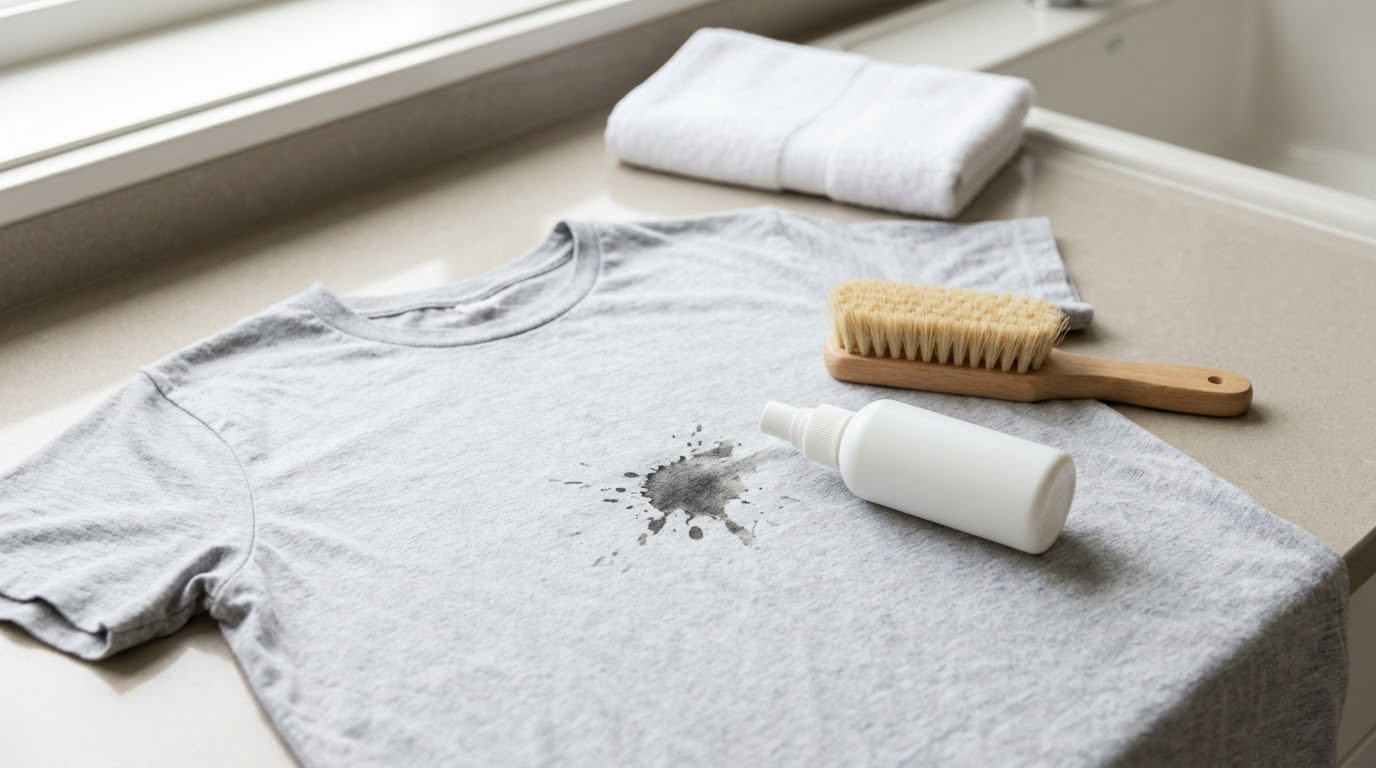
Learning how to remove grease stains from clothes comes down to one rule: treat the fabric before it ever meets heat. Blot the grease, work clear dish soap into the fibers, let it sit 10 to 15 minutes, wash on the hottest water the care label allows, and air dry.
The hands-on part takes about 20 minutes. The drying is where patience pays off, because a greasy mark that goes through a hot dryer can bond to the fibers and turn a two-minute fix into a permanent shadow.
Most of the time the stain is some kind of food: cooking oil, butter, salad dressing, a dropped burger. Lifting it takes three things working together — something that absorbs the surface grease, something that emulsifies the grease inside the fibers, and enough water motion to carry it out. Here is the whole method, step by step, plus what to do when the stain is old, the fabric is delicate, or the shirt already went through the dryer.
Table of Contents
- What You Need
- Step-by-Step
- Frequently Asked Questions
- Does baking soda remove grease stains?
- What is the best stain remover for grease stains?
- Can you get grease stains out of clothes that already went through the dryer?
- Does hot water get grease out of clothes, or does it set the stain?
- Can you remove grease stains from dry clean only or delicate fabrics?
- Can you get years old grease stains out of clothes?
What You Need
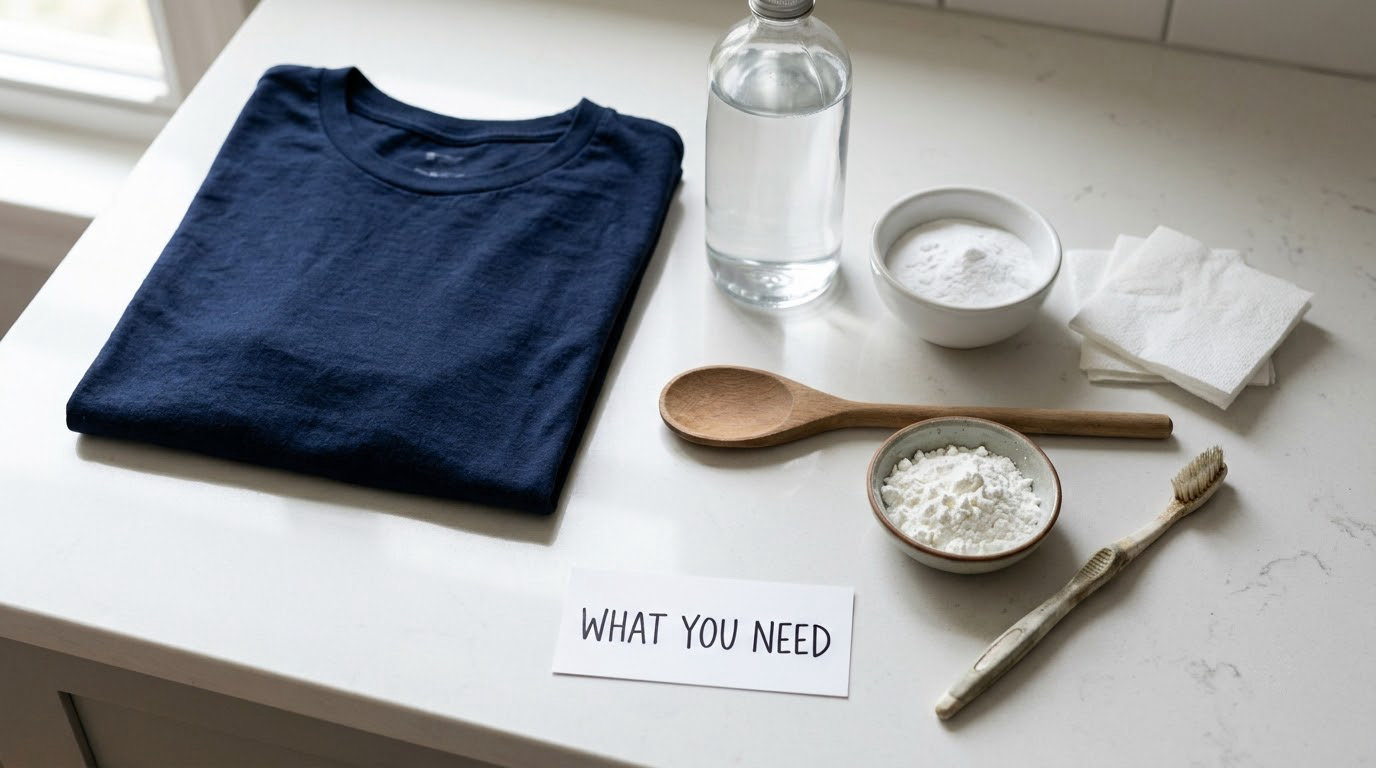
Nothing here is exotic. Grab what you already have before the stain has a chance to dry.
- The fabric care label. It tells you the hottest water the garment tolerates, and whether it is dry clean only.
- Plain dish soap. A clear, unscented one is best. Concentrated blue dish soap like Dawn is what most people reach for, and it is a legitimate surfactant-heavy degreaser.
- Paper towels and a spoon. The paper towels lift surface grease; the spoon scoops up solid fat like butter or shortening without dragging it around.
- An absorbent powder. Baking soda, cornstarch, or baby powder. Cornstarch is the gentlest and leaves the least residue, baking soda works best on a larger set-in mark.
- Warm water and a laundry detergent that says grease cutting. The detergent matters less than the pretreat, but it helps on the second and third wash.
- A soft brush or an old toothbrush. Only for sturdy fabric like denim and cotton canvas.
- Optional, for set-in marks: an enzyme cleaner or laundry degreaser, white vinegar, hydrogen peroxide for whites only, and a brown paper bag with an iron for the last resort.
For a fresh, oily mark, the dish soap and paper towels are genuinely all you need. For a mark that has dried for days, budget an hour and a second pass. Knowing which situation you are in saves you from soaking a good shirt for no reason.
Step-by-Step
Work in this order: remove the surface grease, break the grease out of the fiber, then launder. Skipping straight to the washing machine is what leaves people with a mark that comes back every time the garment gets warm.
| How old the stain is | First move | Time before washing | Realistic result |
|---|---|---|---|
| Under an hour | Paper towels, then dish soap | 10 to 15 minutes | Gone in one wash, most of the time |
| A few hours | Baking soda or cornstarch, then dish soap | 30 to 60 minutes | Gone, or a faint shadow you can finish off |
| A day old, already washed | Enzyme cleaner or laundry degreaser | Overnight soak | Usually no more than a pale outline |
| Weeks old and set in | The full treatment, repeated | Overnight between attempts | Noticeably lighter, sometimes still visible in daylight |
| Already dried in a hot dryer | Full treatment, plus an iron pass with a brown paper bag | Overnight | Lighter most of the time, rarely perfect |
Check the Care Label and Identify the Grease Stain
Start at the label, not at the stain. It tells you the maximum wash temperature and whether the garment can take a normal cycle at all. A cotton shirt and a polyester blend get very different advice from the same bottle of dish soap.
Next, work out what you are actually dealing with. Grease is translucent, slightly shiny, feels stiff or greasy when you run a finger across it, and often has a faint smell. Food coloring looks different: it carries color into the rinse water and sits on the surface. Protein stains like milk or egg smell sour and respond better to an enzyme cleaner than to detergent.
Whatever you plan to use, test it first on a hidden seam — inside a hem, under a waistband, or along a side seam — and let it sit for a few minutes. If the color shifts or the fiber looks dull afterward, stop and use a gentler product. This one minute of testing has saved more shirts than any technique on this page.
Blot and Scrape Away Excess Grease
Lay the garment flat on a hard surface, not draped in your lap. Press a paper towel down on the mark, hold it a few seconds, then lift and replace it with a clean section. Three or four presses will pull up a surprising amount of surface grease.
For solid fat, use the back of a spoon to lift the blob off rather than smearing it. Then blot again to pick up the film that remains.
Do not rub, and do not scrub a wet stain with a brush. Rubbing drives the oil deeper into the fiber and spreads the edge of the mark outward, which is exactly how a small spot becomes a shirt-sized problem. Blotting is slower and it works.
Pretreat with Dish Soap
This is the core of the method. Put three or four drops of clear dish soap directly on the mark, then work it in gently with your fingertips, from the outside of the stain toward the center, until the fabric feels slick and the color of the mark begins to spread slightly. That slight spreading is the grease emulsifying, and it is a good sign.
Give it dwell time: 10 to 15 minutes for a fresh mark, 30 to 60 minutes for one that has dried, and overnight for a set-in mark you have already washed. Dwell time is not a suggestion. The surfactants need time to get around the oil molecules and suspend them so water can carry them away.
Here is how it works, briefly. Oil is hydrophobic, which means water alone beads on it and wipes the fabric clean without lifting anything. A surfactant has one end that grabs grease and one end that likes water, so it bridges the two and holds the oil in suspension. That is why a greasy pan and a greasy shirt respond to the same bottle.
Concentrated blue dish soap is the one people argue about. It is a stronger degreaser than most people expect, and that is the point, but the surfactants are also harsher, so on a delicate or lightly colored fabric a clear, gentler dish soap is the safer pick. On a cotton T-shirt or a chef’s jacket, concentrate wins.
You will know it is working when the mark looks lighter and feels wet rather than slick. If it still feels greasy after an hour, add a little more dish soap rather than scrubbing harder.
Use Baking Soda or Cornstarch for Set-In Stains
Powders are for grease that has already dried into the fabric, or for a mark that is too large to soak. Lay the garment flat, sprinkle a generous layer of baking soda or cornstarch over the whole area, and leave it 15 to 30 minutes. Cornstarch is the gentler choice and the better one for dark colors; baking soda is the better choice for a wider, older mark.
Then lift the powder off with a soft brush or shake the garment over the sink. Do not brush the residue back into the fabric, and do not leave it on for hours, because dried powder that gets worked in later leaves its own dull patch.
The mechanism is absorption. The powder pulls free oil out of the fiber and holds it, so when you brush it away the grease goes with it. Follow up with the dish soap pretreat afterwards, because powder alone handles the loose grease while the soap handles what is bonded to the fiber.
Table sugar is not the same thing. Artificial sweetener does work as an absorbent, since its fine particles behave much like cornstarch, but it dissolves if you get it wet, so treat it as a pre-step only and always follow with soap.
Wash According to the Care Label
Wash the garment with the dish soap still on it. Use the hottest water the care label allows, because heat carries the emulsified grease out of the fibers and a cool wash mostly moves grease around in the drum.
Fabric matters here. Cotton, denim, and canvas can take hot water. Polyester and other synthetics prefer warm, since high heat can set some dyes and melt surface coatings on the fiber. Wool and silk get cool water at best, or no home washing at all.
Do not overload the washer. Clothes need room to move for detergent and water to reach the mark, and a packed drum is the most common reason a treated shirt still comes out marked. Skip fabric softener and dryer sheets on that load, since they deposit a waxy coating that can seal a stain back into the fiber.
The care label symbol tells you which of those choices to make. A tub with one dot means cold only, two dots warm, three dots hot, and a crossed-out tumble dry symbol means air dry regardless of what the machine would let you do. A bar under the tub means a gentle or permanent press cycle, which is a better choice for a treated garment because it keeps the fabric and the mark from getting agitated.
Take the garment out of the machine and look at the mark before it goes anywhere near a dryer. If the mark is visibly gone, great. If you can still see or feel a film, run the whole pretreat again rather than relying on the dryer to finish the job.
Air-Dry and Inspect the Result
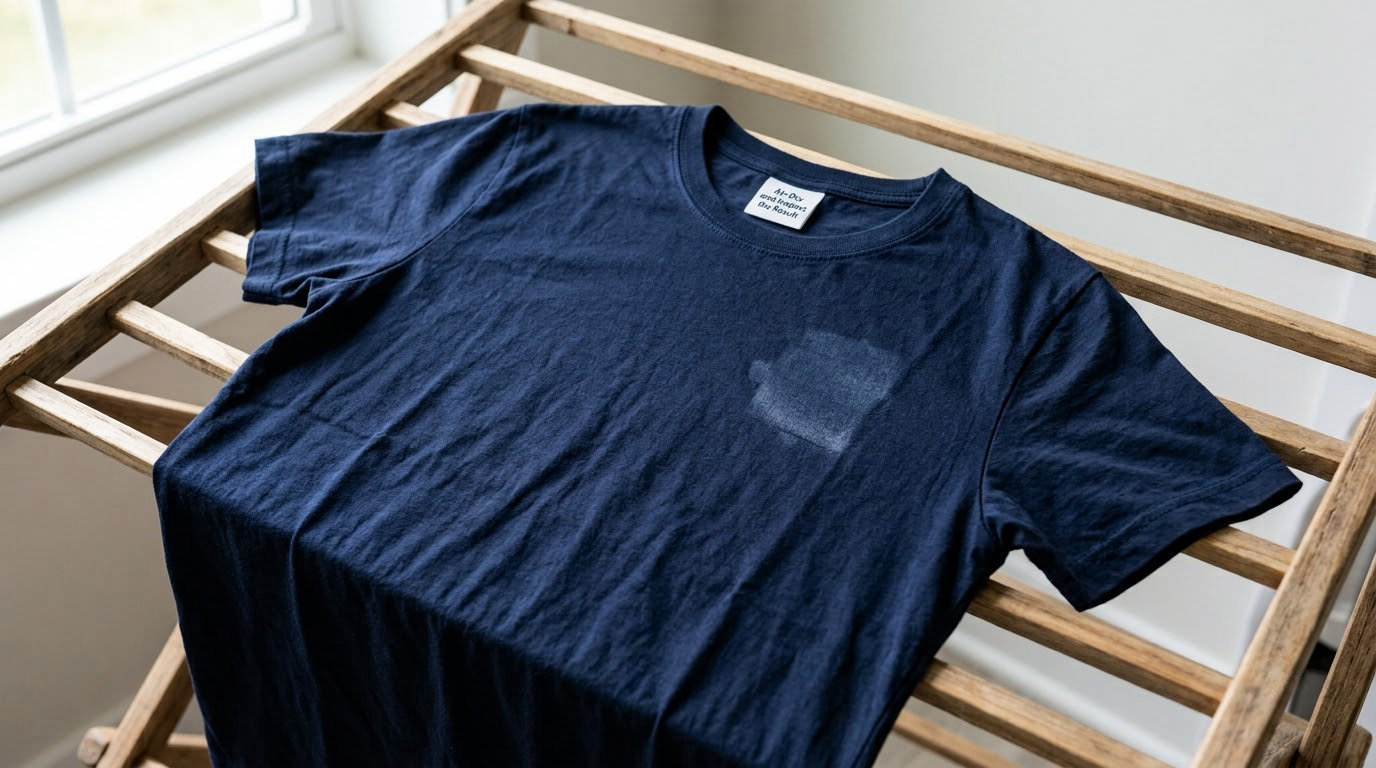
Air dry the garment, flat or on a rack, and let it dry completely. Heat is the single rule in this whole process: a hot dryer or a hot iron drives oil into the fiber and partly oxidizes it, and that is how a grease mark turns into a stain that never comes out.
Inspect the shirt in daylight, from both sides, once it is dry. Fresh marks usually leave nothing. Set-in marks often leave a faint shadow that you can only see against the light, and that shadow will come back as a permanent-looking mark if you put it through the dryer.
If a shadow remains, repeat the treatment: dish soap, 10 to 15 minutes of dwell time, wash, air dry. Two or three cycles usually does it. For a stubborn spot on a fabric sturdy enough to take heat, set the iron on low and press a brown paper bag over the dry, treated area; the paper absorbs oil that has migrated to the surface, and you change the paper as it darkens.
Common Mistakes
Almost every permanent grease mark started as one of these.
- Rubbing the stain. It spreads the oil and pushes it deeper. Blot, always blot.
- Hot water before pretreating. Heat before surfactant locks the grease in. Treat first, heat after.
- Testing nothing. A spot treatment on a colored, synthetic, or delicate fabric can lift dye or leave a bleach halo. Test a hidden seam first.
- Overcrowding the washer. The garment needs to move. Wash it with a small load.
- Drying with a stain still visible. The dryer is the point of no return. Air dry and check.
- Treating and then throwing it in the dryer because it looked close enough. A faint shadow you can feel with your fingers will still show up later, especially on a warm day.
- Brushing powder residue into the fabric. Lift it off instead, or the powder becomes its own dull mark.
The fix for all seven is the same: go back to blot, pretreat, wash with room to move, air dry, and repeat. Patience is a technique, not a personality trait.
Extra Tips for Tough or Delicate Fabrics
Silk, wool, and anything labeled dry clean only get gentler treatment. Use a tiny drop of clear dish soap in cool water, blot outward from the mark with a clean white cloth, and air dry flat. No scrubbing, no powder, no heat. If the mark is large or the color is precious, take it to a professional cleaner rather than gambling the garment on a home method.
Hydrogen peroxide works well on white cotton and other bleach-safe fabrics, but it can weaken fibers and it is not for wool, silk, or colored synthetics. Patch test it, use a 3 percent solution, and never mix it with anything else.
Technical and waterproof jackets need care too. Their membranes and coatings trap oil, and standard detergent can leave a greasy film of its own. Wash them on their own cycle with a technical wash, skip the dryer entirely, and rinse a second time if the label allows. This is the case forum readers on cycling and gear boards describe most often: olive oil on a shell jacket, and a stain that reappeared every wash until the wash was rethought.
Heavier grease is a different job. Bike chain grease, motor oil, and chain lube are not food oils, and dish soap alone often just spreads them. Degrease first with a dedicated laundry degreaser or enzyme cleaner, leave it overnight, then work a concentrated dish soap into the mark and wash warm. WD-40 will break down chain grease on a garment, and readers on mechanic forums use it that way, but it is a petroleum product that leaves its own oily film, so the garment gets a full detergent wash afterwards, and you patch test first because it can mark some synthetics.
Protein plus grease, like a milk or egg splash that landed in cooking oil, responds to an enzyme cleaner better than to more soap. Enzymes break the protein chain apart, and the loosened material rinses away with the grease.
One more thing worth knowing, because it wastes a lot of people’s time: mystery grease spots that appear on clean clothes after washing usually come from the machine, not the meal. Grease from previous loads collects in the door seal and the detergent dispenser, then transfers to the next load. Wipe the seal, pull the dispenser out and rinse it, and run an empty hot cycle with a degreaser before blaming your wardrobe.
Prevention is dull and it works. Cook with a splatter screen, keep a damp towel near the stove, and change out an apron that has soaked up oil before the oil has time to soak through. A grease spot that gets wiped in the first thirty seconds is a grease spot you never have to treat.
For people who cook most of their meals at home, treating grease as one of the normal laundry jobs rather than an emergency makes it much less of a problem. Our rule at home is simple: the paper towel and the dish soap live next to the laundry sink, not in a junk drawer. If a mark survives one full treatment cycle, we stop trying to rescue it that load and give it a second round the next day.
Frequently Asked Questions
Does baking soda remove grease stains?
Yes, and it works best as an absorbent rather than a cleaner. Sprinkle it over a dried or set-in mark, leave it 15 to 30 minutes, then lift or brush it off. The powder holds free grease pulled out of the fiber. It is not enough on its own, so follow it with clear dish soap and a wash. Cornstarch is the gentler option for dark colors and fine fabrics.
What is the best stain remover for grease stains?
For most fabrics, plain dish soap applied directly to the mark, given 10 to 15 minutes of dwell time, then washed in the hottest water the care label allows, beats almost every commercial product. Reach for an enzyme cleaner or a laundry degreaser when the mark is old or the grease is heavy, like chain lube or motor oil. The pretreat matters more than the brand.
Can you get grease stains out of clothes that already went through the dryer?
Usually yes, but expect a lighter result rather than a perfect one. Dryer heat drives oil deeper into the fiber and partly oxidizes it, which is why the mark can look worse after a cycle. Repeat the dish soap pretreat, wash warm, and air dry between attempts. On cotton and denim, a brown paper bag and a warm iron can pull remaining oil to the surface.
Does hot water get grease out of clothes, or does it set the stain?
Both, depending on timing. Hot water before a pretreat sets the grease, because it drives the oil into the fiber with nothing to emulsify it. Hot water after a pretreat removes it, since the surfactant is already holding the grease in suspension. On synthetics, stay at warm water, and on wool and silk use cool water or a professional cleaner.
Can you remove grease stains from dry clean only or delicate fabrics?
Treat those with more care and less product. Use a single drop of clear dish soap in cool water, blot outward from the mark with a clean white cloth, and air dry flat with no heat and no scrubbing. Baking soda and hydrogen peroxide are not appropriate for silk or wool. If the mark is large, the color is valuable, or the first gentle pass does not lift it, take the garment to a professional cleaner.
Can you get years old grease stains out of clothes?
Old marks can almost always be made lighter, though very old ones sometimes leave a shadow that only shows in strong light. Use an enzyme cleaner or laundry degreaser for an overnight soak, then run the dish soap pretreat and wash. Two or three full cycles, air drying between each one, is a realistic expectation. Yellowed or stiff areas that will not respond are usually the fabric itself, not a stain left to remove.
Start with the twenty seconds that matter most: blot, do not rub. Then a few drops of dish soap and a quarter hour of doing nothing. Wash the shirt on the hottest water its label allows, air dry it, and look at the mark in daylight before you ever reach for the dryer. If a faint outline survives, treat it again the same way, and keep the heat out of the process until the fabric is genuinely clean.