
The fastest way to get grease smell out of a kitchen is to boil a 1:1 mix of white vinegar and water on the stove for 30 minutes with the exhaust fan running, then attack the source: the range hood filter, cabinet tops, backsplash and walls. The smell is not a surface problem, it is grease holding onto oil film, so cleaning counters alone will not shift it.
Most of the work is the deep clean, maybe two hours the first time, and 20 minutes on a Sunday after that. If you fry, saute or cook with a cast iron pan several times a week, expect to clean the hood filter every one to two months or the odor will build back up.
What You Need
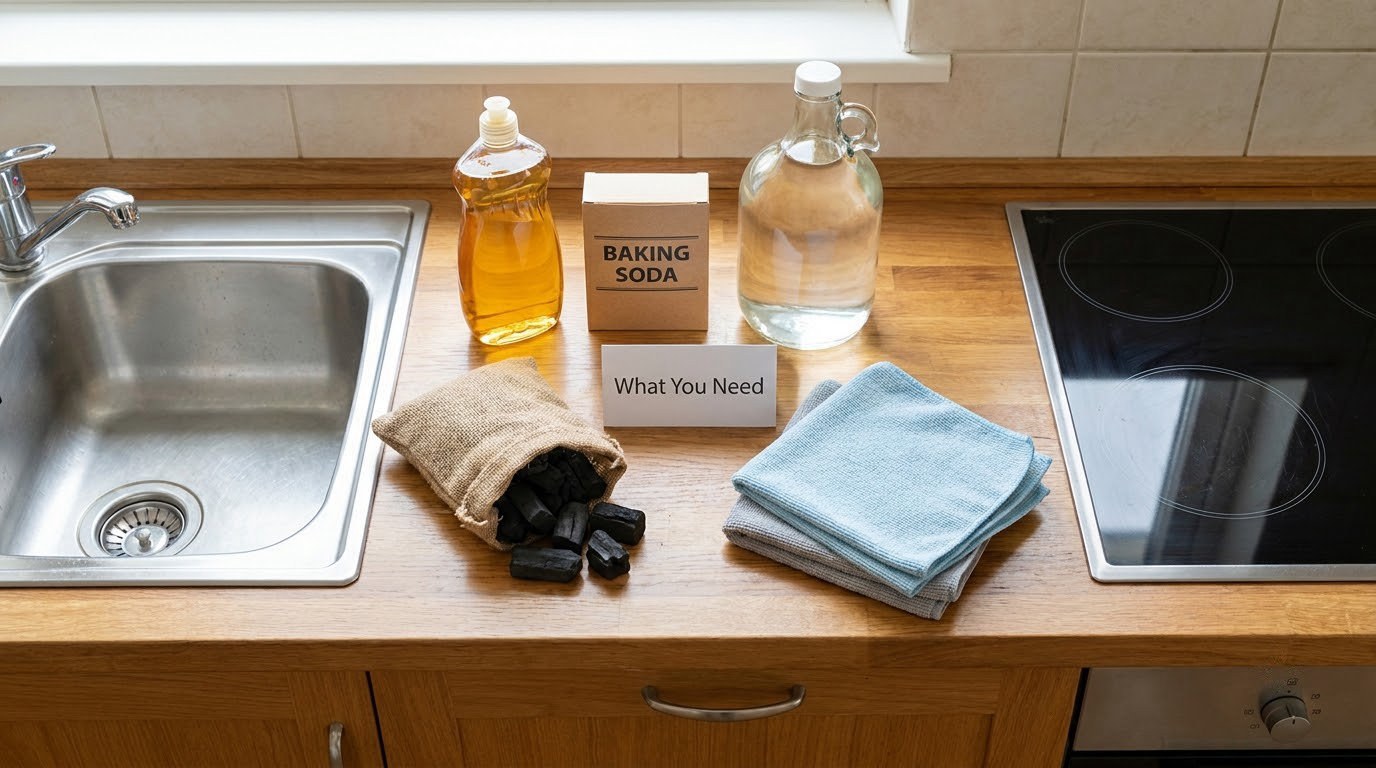
Most kitchens already have everything on this list. None of it is expensive, and none of it needs to be special.
- Ventilation. A working range hood that exhausts outdoors, plus an exhaust fan in the bathroom or another room. If your hood only recirculates air back into the room, it moves grease around without removing it.
- Dish soap or a kitchen degreaser. Any heavy-duty liquid dish soap works. A degreaser labeled for kitchens is stronger on baked-on film but the soap is enough for weekly work.
- Baking soda. Used three ways here: a soak for filters, a paste for sticky surfaces, and dry bowls to absorb odor.
- White vinegar. For the simmer and for cutting mineral film off glass and stainless.
- Absorbing materials. Activated charcoal bags, or small bowls of baking soda, used coffee grounds, or dry oatmeal.
- Absorbent cloths and a soft nylon brush. Old microfiber rags and a non-abrasive brush for filter mesh. Skip steel wool on stainless and coated finishes.
- Rubber gloves and a window fan or box fan, if you have one. A box fan is genuinely useful for pushing air out of a kitchen with no working window.
Two substitutions worth knowing. If you have no baking soda, a little plain dish soap in hot water handles light grease film, just expect to scrub longer. If you have no charcoal, coffee grounds in a shallow bowl do a similar job of catching odor molecules over 12 hours or so.
Step-by-Step: How to Get Grease Smell Out of a Kitchen
1. Find and Remove the Grease Source
Start at the range hood, because that is where most of the grease is hiding. Pull the filter out and hold it up to a window. Clean metal is bright, greasy metal is a dull brown-black film that feels tacky to the touch, and a filter in that condition has been holding grease for a long time.
Then work outward from the stove. Look at the underside and sides of the hood, the baffle plates if you have them, the stovetop edges, the backsplash seams, the wall above the tile line, the top of the cabinets directly over the range, the curtain or valance, the rug in front of the sink, and the kitchen trash can. Grease aerosolizes during high-heat cooking and settles on every upward-facing surface within a few feet of the pan.
Run the oven at 350 degrees for 20 minutes with a cup of water inside and the door cracked. Grease baked onto oven racks and door glass will loosen and smell less afterward. It is a cheap diagnostic: if the oven is a major odor source when you do it, you will notice the difference when you open the door.
Check how your hood vents. A ducted hood sends air through a duct to the outside, and grease in that duct keeps re-releasing odor every time the fan runs. A recirculating hood filters air through charcoal or a mesh and blows it back into the room, so it can cut grease-laden smoke but will never fully clear a smell. A downdraft vent pulls air down and back, which is much weaker for capturing grease.
One safety note before you keep going. A grease smell is oily and clinging. A burnt-food smell is sharp and acrid and fades within a day or two of cleaning the pan. A gas smell is sweet or rotten-egg-like, arrives without cooking, and needs the burner checked and the room aired out immediately, not a bowl of baking soda. If you smell gas, stop, leave, and call your gas utility.
You will know this step worked when the filter comes out of the sink noticeably lighter and the wall film comes off on your rag instead of just smearing.
2. Ventilate the Kitchen and Contain the Odor
Open windows before you start cleaning, and open the far side of the home too so air can actually cross through rather than stall. Run the range hood on high the whole time you are working, and keep it running 20 to 30 minutes after you finish. Short bursts while cooking do much less than a hood running before, during and after.
Contain what you can. Take down the curtain or fabric valance over the sink if it is greasy, and set rugs and removable mats outside or in the washer. Close the doors to the rest of the house so odor does not migrate upstairs or into the bedrooms, which is the part people notice first.
Two safety rules. Never leave a simmering pan of vinegar unattended, and never leave a working stovetop unattended while you are cleaning elsewhere. Never mix cleaning products either: bleach with vinegar releases toxic gas, and bleach with ammonia does the same. Baking soda and vinegar are not dangerous together, but they neutralize each other into salt water, so combining them wastes both and gives you a weak cleaner.
3. Absorb and Neutralize the Grease Smell
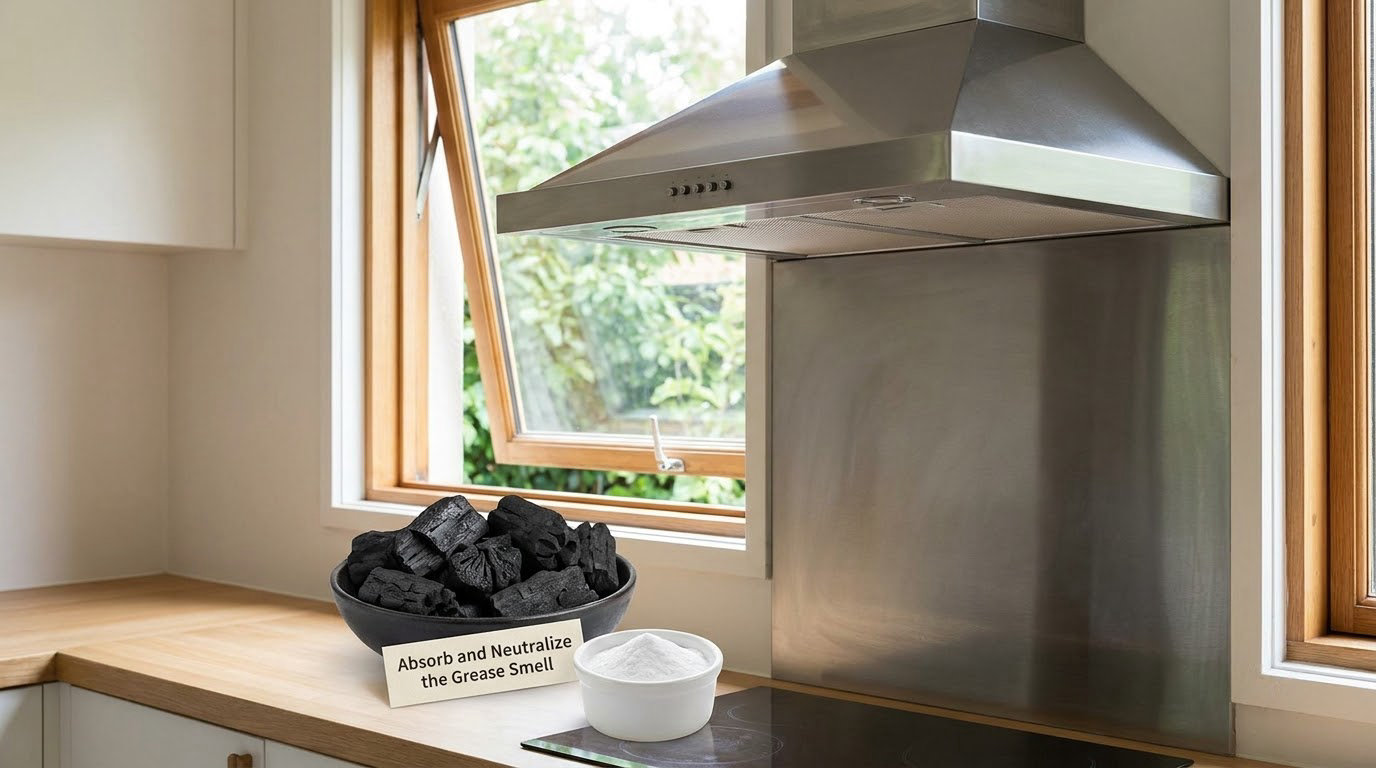
Once the source is clean, work on what is still hanging in the air. Fill a saucepan with equal parts white vinegar and water and simmer it uncovered for 30 minutes with the exhaust fan on. The steam carries acetic acid through the room and settles the last of the airborne oil. A pot of plain water with the lid ajar does something similar and gentler if you dislike the vinegar smell while it boils.
Set out absorbers in the room. Bowls of baking soda, activated charcoal bags, or shallow dishes of dry coffee grounds placed near the hood and near the trash can work overnight. Refresh them every few days while the smell is clearing, since a saturated bowl stops absorbing.
Moving air helps more than people expect. A box fan set in a doorway blowing out of the kitchen clears a lingering odor far faster than leaving the room closed. For a small apartment with no window and no working hood, that combination of vinegar simmer, open door and a fan is about as good as it gets, and a HEPA air purifier with a carbon filter helps once the source is gone.
Be honest about the limits here. Absorbers and simmered fragrances handle a residue. They cannot touch grease sitting in a duct, and if the smell is exactly as strong 24 hours later, the source is still there.
4. Clean Greasy Surfaces Thoroughly
Mix 1 part baking soda to 3 parts warm water and let the filters soak 15 to 20 minutes. Scrub with a soft nylon brush, rinse in hot water, and dry fully before they go back in. For filters that have gone caked solid, fill the sink with very hot water and a generous amount of baking soda and let them soak for an hour or more. Do not put greasy filters in the dishwasher: grease lodges in the spray arms and drain and comes back worse for it.
For sticky film on the hood, backsplash, cabinet doors and cabinet tops, work a baking soda paste into the grease and let it sit 10 minutes before scrubbing. The paste releases old sticky grease on wood and painted surfaces where a stronger solvent would dull the finish.
Match the cleaner to the surface. Warm water and dish soap handle stainless, glass and most tile. On unfinished or sealed wood, use the gentlest option that works, and dry it promptly, because standing water swells the grain. On painted drywall, dilute laundry bleach at about one quarter cup per gallon of water works on washable paint, but patch-test a hidden spot first and never use it on a surface that will get wet regularly. Skip the dishwasher on the hood body and control panel entirely.
Check the hood fan and duct next. Switch off the breaker before touching anything electrical, and leave riveted fan blades alone. If pulling the filter reveals a thick, tar-like layer inside the duct opening, that is a professional job, not a weekend one.
You will know the surfaces are done when a dry microfiber cloth dragged across them comes away clean, and when the wall no longer looks darker in patches.
5. Keep the Grease Smell from Coming Back
Run the hood on high before you preheat the oven, and keep it running 20 to 30 minutes after cooking. That habit does more for odor than any product you can buy.
Wipe splatters while the surface is still warm rather than letting them harden into film. Wash grease-catching trays and drip pans on a weekly rotation, and launder fabric liners and the sink curtain every couple of weeks during heavy cooking.
Clean the hood filter every one to two months. Deep clean the hood, backsplash and cabinet tops on the same schedule, and put a repeating reminder in your calendar because this is the step people skip until the smell is back.
Take indoor trash out daily, keep the fridge door seals wiped down, and clean the oven on the same cycle. If the smell comes back after a fry-up, run the whole five-step process again in a reduced form: simmer, filter soak, hood wipe, bowls of charcoal, and a long fan session.
Common Mistakes
Masking instead of cleaning. Air fresheners, candles and sprays cover the odor for minutes while the grease keeps releasing it. Fix: absorb and clean, and use fragrance only at the end if you like it.
Spraying cleaner into lights or the hood fan. It gets into the motor and the light fixtures and creates a new problem. Fix: turn off the breaker first, and clean the housing with a damp cloth rather than a spray bottle.
Combining bleach with vinegar or ammonia. Both combinations release toxic gas. Fix: one cleaner at a time, and rinse thoroughly before the next product goes on.
Forgetting the filter. This is the single most common miss. A caked filter is a grease reservoir that re-releases odor every time the fan switches on. Fix: soak it in hot water and baking soda every one to two months.
Cleaning with a grease-heavy cloth. A rag used on the stovetop just moves the film around. Fix: use a degreaser solution on a separate cloth, and never put that cloth back in the laundry with your dishes or towels.
Skipping the vent check. If your hood recirculates, no amount of cleaning changes the outcome because the air goes right back into the room. Fix: confirm whether it is ducted outside, and if it is recirculating, lean harder on simmer, absorbers and a fan.
One last odor-control tip worth more than the rest: grease is porous into painted walls and wood, so even a spotless kitchen can hold a faint smell for weeks. A fresh coat of washable paint on the wall behind the stove is the only fix that truly resets it.
Frequently Asked Questions
How long does it take to get grease smell out of a kitchen?
With the source cleaned, the air clears in a few hours when you can open windows or run an exhaust fan. In a closed room with no working hood, expect 12 to 48 hours, and set out bowls of baking soda or charcoal for the first 24. If the smell is just as strong two days later, the filter, duct or cabinet tops still hold grease and the odor will keep returning.
Does baking soda really remove grease odors?
Yes, in two ways. As a paste of one part baking soda to three parts warm water, it loosens baked-on grease film on hoods, backsplashes and cabinet tops when left for 10 minutes. As dry powder in shallow bowls, it absorbs odor molecules from the air overnight. It does not touch grease trapped in a duct, so it works only after you have cleaned the source.
Is vinegar safe to use in a kitchen with a gas stove?
Vinegar itself is safe, and the 1:1 vinegar and water simmer is a common way to clear cooking odors. The precautions are about the flame, not the vinegar. Never leave the pan unattended, keep it on a back burner away from the open flame, and keep the hood running so steam clears the room. Never mix vinegar with bleach or with ammonia.
How do I get grease smell out of curtains and fabric liners?
Take them down, shake off loose dust outdoors, and wash them on the hottest setting your fabric allows with a heavy dose of liquid detergent, which breaks grease down better than powder. Soak them in warm water with dish soap for 30 minutes first if the smell is severe. Grease-heavy fabric can retain odor permanently, so if it still smells after two washes, replace it.
When should I call a professional to clean a greasy range hood?
Call one when the duct is the problem, not the filter. Signs are a thick tar-like layer inside the duct opening, grease on the fan blades and housing, a smell that returns within days of a good clean, or reduced airflow. The filter, housing and light covers are all things you can do yourself with this guide. Anything behind a wall or up a rooftop duct needs someone with access equipment.
Start With the Filter, Not the Fragrance
Do these in order tonight: simmer one part white vinegar with one part water for 30 minutes with the fan on, pull and soak the hood filter in hot water and baking soda for 20 minutes, scrub the hood and backsplash with a baking soda paste, and set out charcoal or baking soda bowls overnight. That handles the great majority of kitchens.
If the smell is still there in a day, the grease is somewhere the countertop wipe never reaches, and it is in the cabinet tops, the walls, or the duct.