
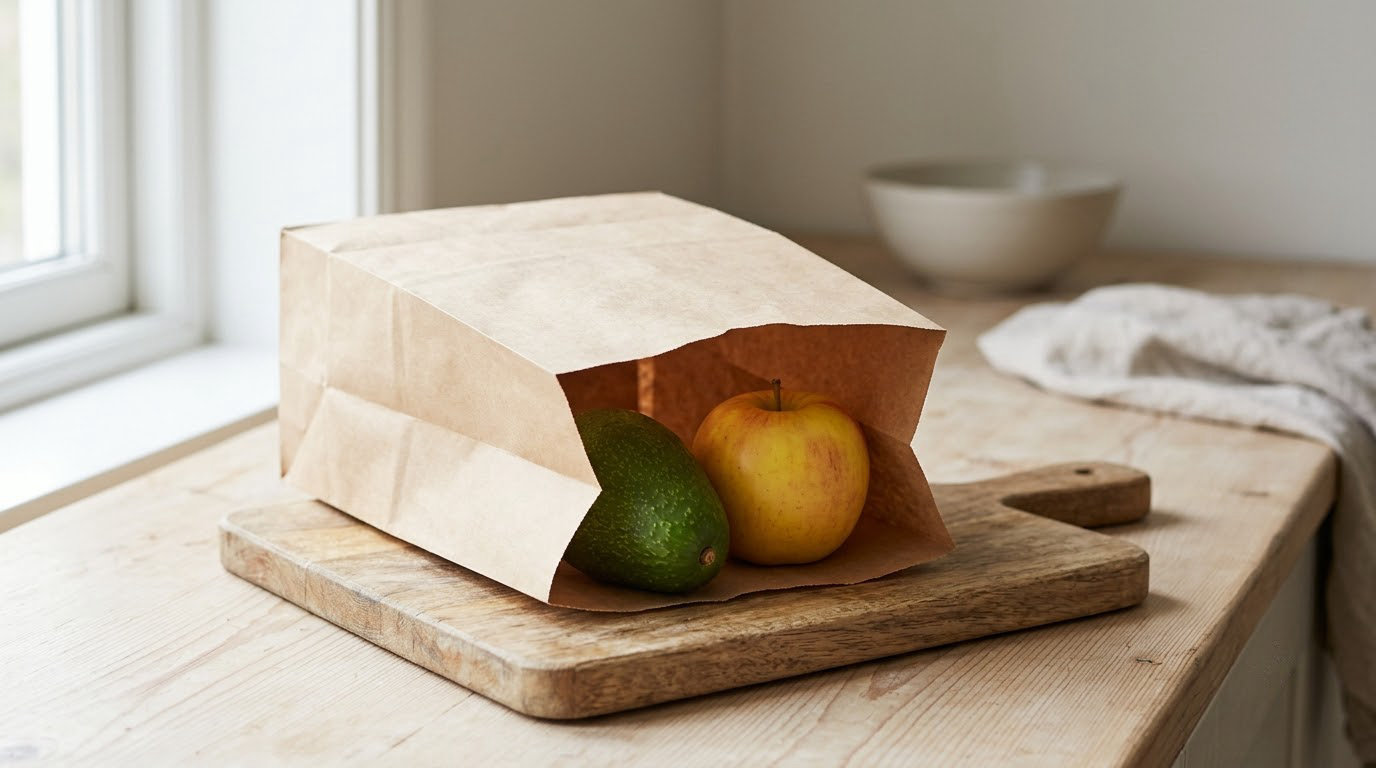
To ripen avocados fast, put them in a brown paper bag with a ripe banana or apple, fold the top loosely, and leave the bag at room temperature for 24 to 48 hours, checking once a day. That traps the ethylene gas the fruit releases, and ethylene is the natural plant hormone that drives ripening. If you need one tonight, a low oven or a few microwave bursts will soften it in minutes, though heat softens the flesh without building the flavor a naturally ripened fruit gets.
The honest version of how to ripen avocados fast: most of the “5 minute” tricks circulating online are cooking the fruit rather than ripening it, and people notice the difference on the first slice. What follows is the method that works, how to tell when the fruit is ready, and where the fast shortcuts stop being worth it. If you are prepping for burger night and the meat is the other bottleneck, I wrote up how to thaw ground beef fast and safely while you wait.
What You Need
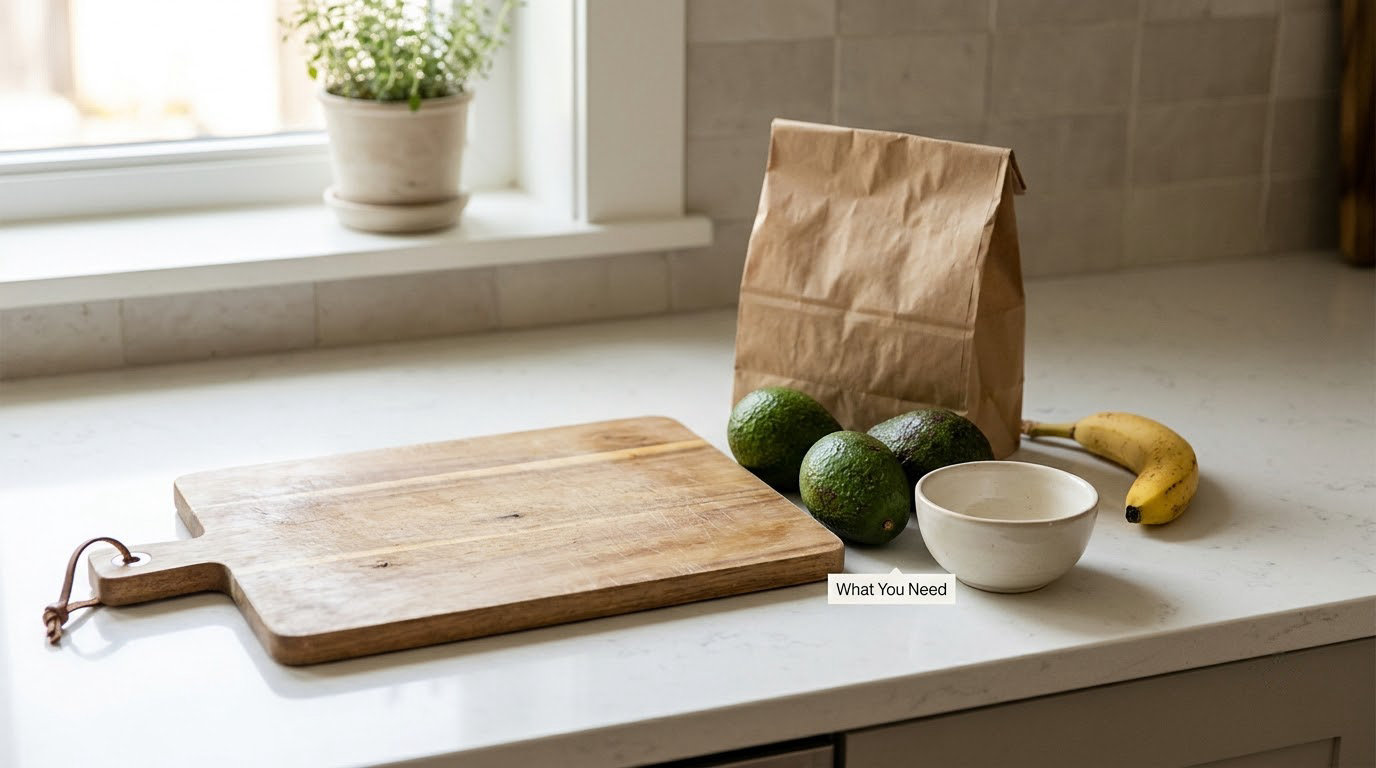
None of this is equipment you do not already own. The paper bag method needs a brown paper bag you can close loosely with a rubber band or a fold, plus one ripe banana or apple from the fruit bowl.
The oven method adds a baking sheet and a roll of foil. The microwave method needs a microwave and a fork, and a bowl of ice water if you want to stop the flesh from going hot and mushy.
A few things worth knowing before you start. Avocados are climacteric fruit, which means they keep ripening after they are picked, so the fruit in your kitchen is unripe rather than spoiled. Ripening runs on warmth and air, so a counter around 68 to 72F is ideal, and a hot car or a sunlit windowsill is better than a cool pantry.
Step-by-Step: How to Ripen Avocados Fast
Step 1: Use a Paper Bag With Fruit
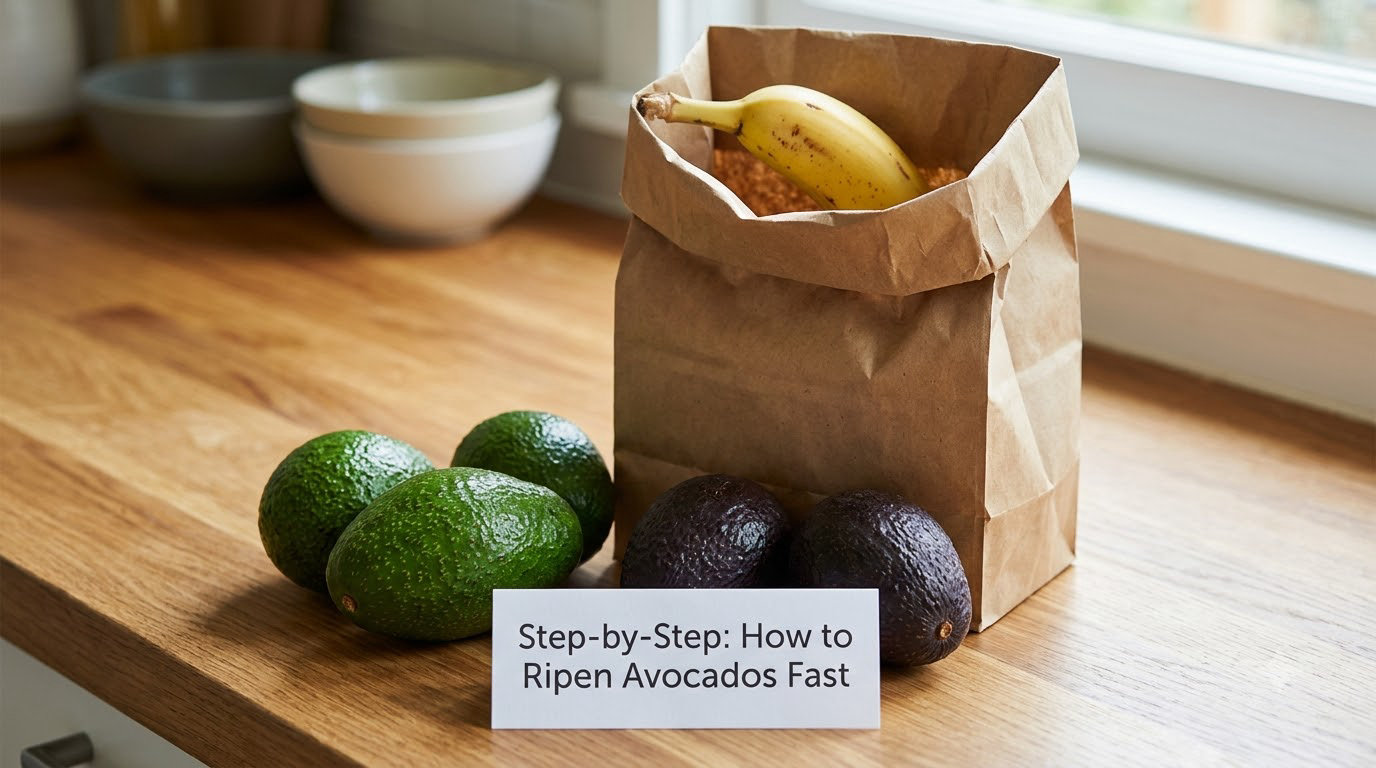
This is the method that actually ripens fruit, and it is the one to start with if you have a day or two. Put two or three avocados in a brown paper bag, add a ripe banana or apple, then fold the top over loosely so air can still get in and out.
The fruit companion matters because bananas and apples are the biggest ethylene producers in a normal kitchen. The paper is porous enough to hold the gas around the avocados while still letting carbon dioxide escape, which is why a plastic bag is a worse choice: it traps gas and moisture until the fruit turns soggy and sometimes mouldy at the stem end.
Leave the bag on the counter, out of direct sun, and check every 12 hours or so. Most firm avocados need 24 to 48 hours this way, and a rock-hard one bought straight from a cold store can take closer to three days. Reddit cooks using this method consistently report one to three days rather than hours, so plan dinner accordingly.
You know it is working when the fruit gives slightly at the shoulder and smells like avocado when you press near the stem end.
Step 2: Warm the Avocados in the Oven
Warmth speeds things up because ripening is a chemical process that runs faster in a warm environment. Set your oven to 200F, wrap one avocado in foil, and put it on a baking sheet for 10 to 15 minutes.
This works best on an avocado that is already dark green or nearly black but still firm. A bright green avocado will barely change in 15 minutes, and no amount of oven time turns it creamy. Let the fruit cool on the counter for several minutes before you handle it, since the inside will be hot enough to soften your hands.
Be clear with yourself about what just happened. You softened the flesh. Sugars and starch did not convert the way they do in a slowly ripening fruit, so expect a blander, slightly pasty texture. It is a fine last resort, not a first choice.
Step 3: Use the Microwave for a Quick Softening
For an avocado you need in the next ten minutes, pierce the whole fruit several times with a fork so steam can escape, set it on a plate, and microwave in 30-second bursts. Test it between bursts, and stop as soon as the skin gives under your thumb.
Most firm avocados land somewhere around 60 to 90 seconds of total microwave time. Longer than that and the flesh turns watery and grey at the edges, which is the disappointing result people describe in kitchen forums after trying the viral version of this trick. Drop the fruit into a bowl of ice water for a minute to stop the cooking, then pat it dry and slice.
Only do this with one or two avocados at a time. It is a softening step, not ripening, and the flavour will never catch up with a paper-bagged fruit. If you are making guacamole, mash it immediately and serve it the same day.
How to Tell When an Avocado Is Ripe
Test with your hand, not the skin. Cup the avocado in your palm and press gently around the stem end; ripe fruit yields slightly to gentle pressure, like the give of a ripe peach. Rock hard means several days more, no give at all with a small dent means tomorrow, and a mushy collapse under a light squeeze means you are late.
The stem nub is the more reliable check. Hold the fruit with the stem toward you, pop it off with a knife tip, and look at the spot underneath. Bright green means ready to eat, brown means it is overripe and better suited to guacamole or baking, and an off, slightly bitter smell on the cavity means it has turned.
Skin colour alone is the most common reason people get this wrong. Some avocados stay bright green when perfectly ripe, and plenty go nearly black while still rock hard inside. Use colour as a hint and pressure as the answer.
For burgers and sandwiches, aim for the moment the fruit gives slightly but still holds a clean slice. That is a window of roughly a day, so time your slicing around the meal rather than the shopping trip.
How to Ripen Avocados Without Making Them Mushy
Check early and often. Most people ruin fast-ripened avocados by waiting until the third day, and a bag left alone for four days is a bag of mush. Twice-daily presses cost nothing and stop the overshoot.
Use one companion fruit, not four. Two bananas in a small bag can push the gas concentration high enough that the avocados go soft unevenly while the outsides turn dark and the inside stays firm.
Pull each avocado out as it becomes ready and refrigerate it whole. Cold slows ripening sharply, so a fruit that is perfect at lunch will still be usable two days later. You cannot un-ripen an avocado, only pause it.
If you are splitting a pack, keep the unripe ones in the bag and move the ready ones to the fridge. Nobody wants to cut one open to find it underripe while the others are already soft.
Common Mistakes
Using high heat. An oven at 350F or higher cooks the fruit. Flavour never develops, the flesh goes watery, and the texture is wrong for anything you would spread on toast. If you use heat at all, keep it at 200F and short.
Leaving the fruit unchecked. The paper bag does its job, then keeps going. Nobody is going to call.
Judging by skin colour. Black does not mean ripe, and green does not mean unripe. Press the fruit.
Refrigerating too early. Cold fruit picked straight from the store will sit rock hard for a week or more. Ripen at room temperature first, then move it to the fridge.
Assuming the microwave ripens. It softens. If you want ripe flavour, only time and ethylene will get you there.
Burying avocados in rice or flour. The rice trick is popular and widely repeated, but the rice does nothing to produce ethylene, and you end up wasting a bowl of dry grains to get the same result as leaving the fruit on the counter. The bag works because of the gas inside it, not because of what it sits in.
Using a sealed plastic bag. Trapped moisture and gas encourage rot. Paper or a loose paper towel in a bowl breathes better than a sealed plastic bag.
Frequently Asked Questions
How long does it take to ripen an avocado in a paper bag?
With a ripe banana or apple in the bag, most firm avocados need 24 to 48 hours. Fruit picked very green from a cold store can take up to three days, which is why cooks who use this method usually report one to three days rather than hours. Check twice a day and pull each fruit out the moment it gives slightly under gentle pressure near the stem.
Will putting a banana in a paper bag make an avocado ripen faster?
Yes. Ripe bananas and apples release large amounts of ethylene, the natural plant hormone that triggers ripening in climacteric fruit like avocados. A brown paper bag holds that gas around the fruit while still letting air circulate, which concentrates the ripening signal. One banana is plenty; a small bag with two can push the fruit past ripe and into mush before you notice.
Can you microwave an avocado to ripen it?
You can soften one in the microwave, but it will not ripen. Pierce the skin, microwave in 30-second bursts, and stop as soon as the fruit gives under pressure, usually within 60 to 90 seconds. The flesh softens and the starch converts somewhat, but the flavour does not develop the way it does in a slowly ripening fruit, and going longer makes the edges watery and grey.
Why are my avocados still hard after five days?
Three usual reasons. Fruit picked green from a cold store simply needs longer, and five days is not unusual for a rock-hard start. If the fruit has been in the fridge, cold has paused ripening almost completely. And if it was sitting alone on the counter with no companion fruit, it is getting the slowest possible version of the process. Bag it with a banana, keep it warm, and wait two more days.
I accidentally cut open an unripe avocado. Will it still ripen?
Not really, but you can rescue the texture. Spoon the flesh out, coat it with lime or lemon juice, press plastic wrap directly onto the surface to remove the air, and refrigerate. The acid slows browning, and the cold slows the flesh, so it firms up enough for guacamole or a smear. You will not get a properly ripened fruit back, so plan on blending or baking it rather than slicing.
Is ethylene safe to eat?
Yes. Ethylene is a natural gas plants produce, and it is what makes a banana go sweet on a kitchen counter. Commercial warehouses use ethylene gas to ripen fruit after shipping, including avocados, before it goes to stores. Nothing is sprayed on your fruit at home. The banana in the paper bag is doing the same job as a controlled commercial ripening room, just slower and smaller.
Conclusion
Start with the paper bag, a ripe banana, and a 24 to 48 hour window. That is the only method here that genuinely ripens an avocado, because the gas the companion fruit releases is what triggers the change. Check twice a day with your palm, pull the fruit as soon as it gives slightly at the stem end, and move it to the fridge to hold it there.
When you need an avocado the same hour, use gentle warmth instead: foil and a 200F oven for 10 to 15 minutes, or 30-second microwave bursts stopped the moment the fruit yields. Neither develops flavour, and both turn to mush if you overdo them. Judge every avocado by feel rather than colour, and your burgers get a clean slice instead of a disappointment. Updated for October 2026.