
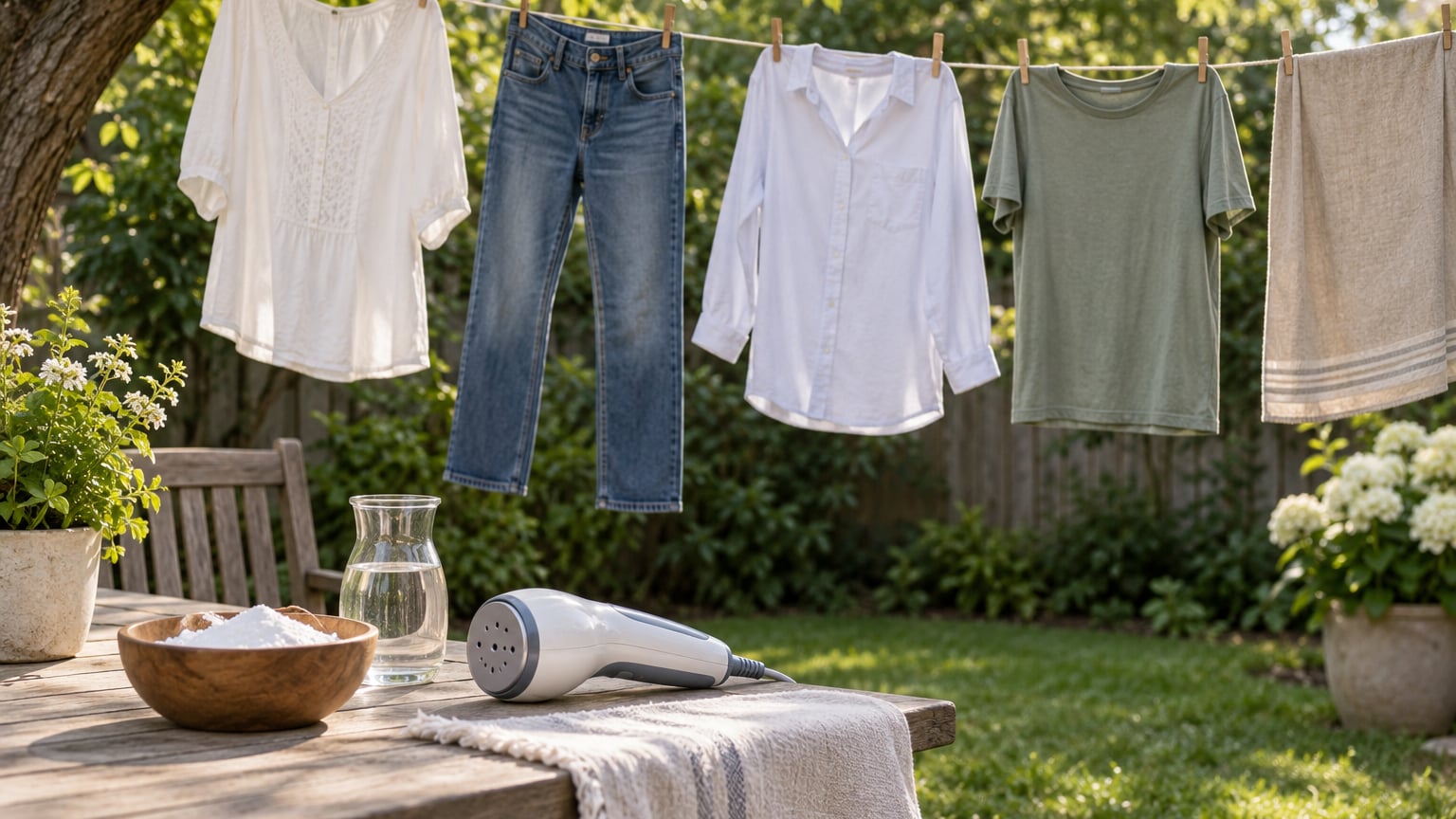
The fastest way to get smoke smell out of clothes is to air them outdoors, absorb what remains with baking soda, then wash at the warmest temperature the care label allows, with baking soda in the wash and white vinegar in the rinse. Light campfire or bar smoke usually clears in one cycle. House-fire smoke and clothes that sat in a smoky apartment for months take three or four washes with a sealed-bag treatment in between.
The order matters more than the products, and drying comes last. Skip the machine dryer until the clothes smell clean, because heat can set smoke odor into fibers and undo a whole afternoon of work.
Smoke is not really a smell sitting on top of fabric. It is microscopic particles of burned material, nicotine, tar, soot and ammonia, that bond to the fibers themselves. Natural fibers such as cotton, linen and wool hold that smell longer than synthetics like polyester and nylon, which is why a synth fleece jacket often recovers in a single wash while a cotton hoodie takes two.
Table of Contents
- What You Need
- Step-by-Step
- Common Mistakes
- Frequently Asked Questions
- Does baking soda remove smoke smell or just mask it?
- Is white vinegar safe to use on all clothes?
- How long should I air out smoky clothes before washing?
- Can you get smoke smell out of clothes without washing them?
- Will dry cleaning get smoke smell out of clothes?
- Does the dryer set smoke smell in permanently?
- How to Get Smoke Smell Out of Clothes: Start With Air and Absorb
What You Need
You probably already own everything this takes:
- Moving outdoor air — a clothesline, a rail or a shower rod where garments can hang separately instead of touching.
- Baking soda — for soaking, for the wash, and for absorbing odor inside a closed bag or box.
- White vinegar — for a diluted soak or the rinse cycle.
- A breathable container — a cotton laundry bag, a cardboard box or a bin with a loose lid. Skip a sealed plastic bag unless you add an absorber, because damp fabric plus trapped moisture grows mildew.
- Your usual detergent, plus an enzyme or oxygen-based laundry booster if you already own one.
- A handheld steamer — optional, but the best option for lined coats, knits and dry-clean-only labels.
- A fan — optional, and worth having if the clothes have to dry indoors.
One safety rule governs everything below: never mix vinegar with bleach or a detergent containing chlorine. The two react and release toxic chlorine gas. Read the detergent label before you add vinegar to any load.
Step-by-Step
Work through these in order and stop as soon as the smell is gone. Each step costs a few minutes to a couple of days, and every step after the first assumes the earlier ones happened.
1. Air Out Clothes Outdoors

Hang smoky clothes on a line or rail with space between each one, so air moves through the fabric rather than around a pile. Shade beats direct sun for synthetics and dark dyes, which can fade and weaken in strong light. A few hours in a breeze handles a light smell; overnight handles most bar and campfire odor.
To check whether it worked, bring one garment right up to your nose and smell the fabric instead of the air around it. If the smell has dropped from something you notice across a room to something you only notice with your nose against the collar, move on to the next step.
Worth noting where the smoke came from. If it was a frying pan rather than a campfire, how to make burgers on the stove without smoke stops the problem at the source instead of deodorizing a hoodie afterwards.
2. Absorb the Smell With Baking Soda
For clothes not going straight into the wash, or for a smell that survives the first wash, put the garments in a breathable bag or box with baking soda underneath. Half a cup per load is plenty, and more than that just ends up shaken into your washing machine later. Close it loosely and give it 24 to 48 hours, then shake the powder out outdoors or brush it off with a soft brush.
Repeat the treatment if the smell is still there after a day, and always let the garment dry fully before wearing it. If you have activated charcoal, a couple of small sachets work better than soda on heavy smoke because charcoal traps what baking soda only holds loosely.
3. Use White Vinegar for a Fresh Rinse
Mix one part white vinegar with four parts cool water, submerge the garment and soak for about an hour. Rinse thoroughly in cold water until the vinegar smell disappears from the running water. The acetic acid neutralizes odor compounds rather than covering them with a fragrance, which is why the smell stays gone after the wash.
Two cautions. Test the diluted solution on a hidden inside seam and wait a few minutes, because acid can mark silk and it breaks down lycra and spandex. And add vinegar to the rinse cycle rather than a long soak whenever the fabric should not be immersed.
4. Steam the Fabric
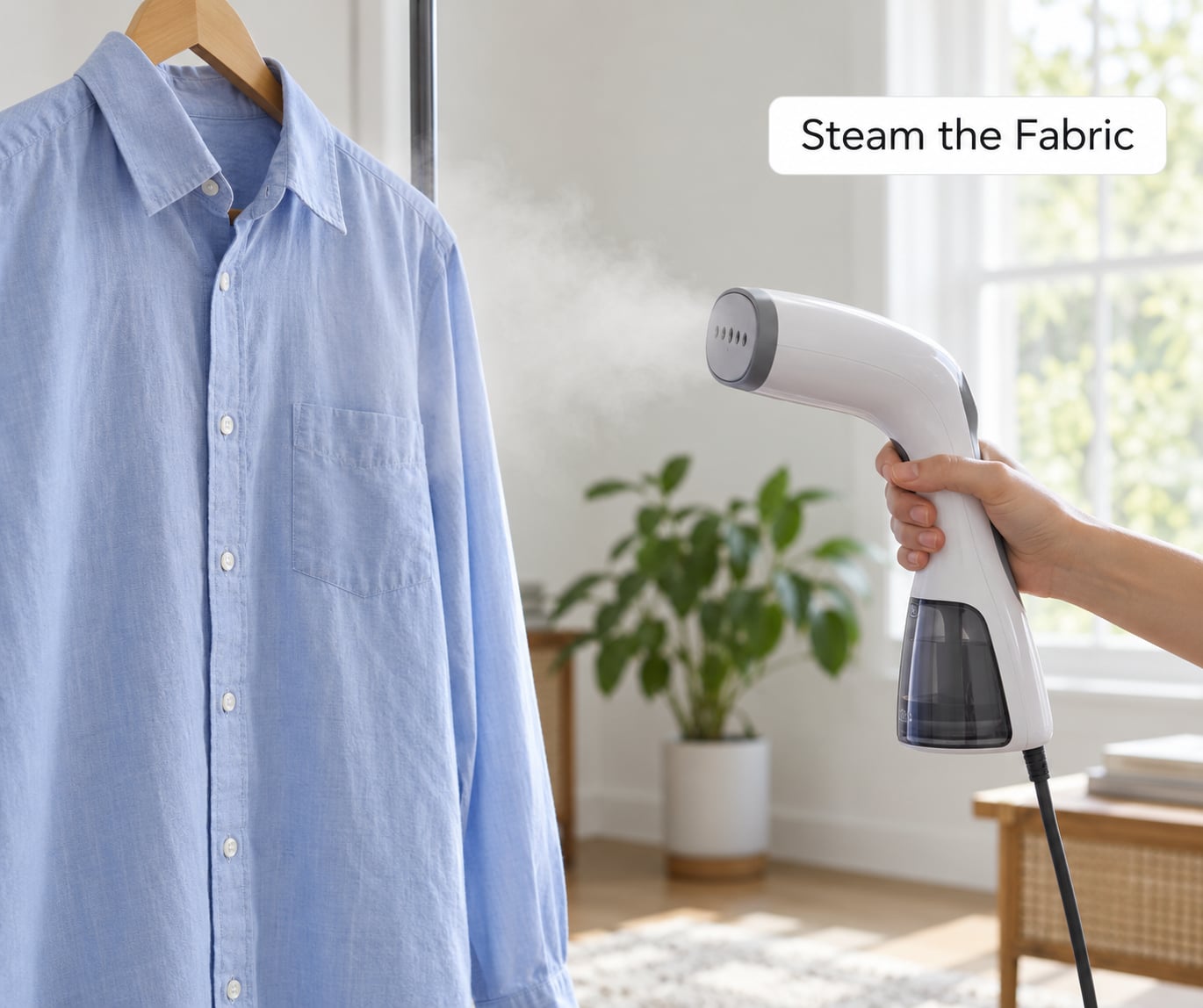
A handheld steamer loosens trapped smoke particles from the fibers without soaking anything. Hang the garment, hold the steamer a few inches away, and work slowly from top to bottom until the fabric is warm and lightly damp rather than dripping.
Steaming suits lined coats, knitwear, and anything carrying a dry-clean-only label that you are not ready to pay a cleaner to handle. Let the garment dry completely on a rack with a fan nearby, because damp fabric holds on to whatever you just loosened.
5. Wash the Clothes the Right Way to Kill Smoke Smell
Wash smoky clothes on their own rather than mixed into a normal load, so the odor does not spread to your good shirts and your detergent is not diluted. Add half a cup to one cup of baking soda to the drum with your detergent, and use the hottest water the care label permits, up to 130 F or 54 C for cotton and linen. Add an extra rinse cycle, because most machines hold the deodorizer back otherwise.
Put a cup of white vinegar in the rinse cycle on the last load of baking soda clothes. They work in sequence, not together: mixed in the same cycle, vinegar and baking soda turn into salt, water and carbon dioxide, and neither one does its job.
Line dry or air dry on a rack, outdoors or in front of a fan. Once the fabric is completely dry, smell it again. A faint trace gets one more wash; a strong smell gets a night in the baking soda bag and another cycle. For stubborn odor, an oxygen-based laundry booster such as OxiClean added to the wash is worth the extra cycle, because its peroxide oxidizes the organic compounds that vinegar neutralizes. Enzyme detergents work the same way, digesting residue rather than masking it.
Smoke often arrives alongside a grease splash, and the two clean up differently. If the stain is the problem, how to remove grease stains from clothes covers pre-treating the mark so it does not set during the wash you just described.
Common Mistakes
Almost every garment that stays smoky has one of these problems:
- Machine drying before washing. Heat drives smoke particles deeper into the fibers. If a dryer is unavoidable, use it only after a full wash and on the lowest setting.
- Bunching clothes in a closed closet. Smoke odor needs moving air to escape. Hanging everything together in a sealed space just traps it.
- Using undiluted vinegar. Straight vinegar can discolor fabric and destroy elastic fibers. Always dilute it, one part vinegar to four parts water.
- Overdoing the steam. Hold the steamer back a few inches and keep it moving, or you will leave water spots on the garment.
- Washing one big mixed load. Smoky clothes transfer odor to everything else, and a full drum means far less water per garment.
- Ignoring the care label. Wool, silk, viscose and anything marked dry-clean-only can be ruined by hot water or a long soak. Check first.
- Trying to cover the smell with fragrance. Fabric freshener and dryer sheets mask smoke for an hour or two and remove nothing at all.
One more thing worth ruling out: freezing clothes in a sealed bag overnight. The idea comes from an old denim experiment and it does not work for smoke, because cold does not break the bond between soot and fiber. Air and water do.
If the odor is in the room rather than the fabric, that is a different job. how to get grease smell out of a kitchen handles the source, which stops fresh smoke from landing on clean laundry in the first place.
Frequently Asked Questions
Does baking soda remove smoke smell or just mask it?
Baking soda absorbs odor compounds instead of covering them, which is why it keeps working after the wash rather than fading within an hour. Use half a cup to one cup in the drum, or put half a cup in a bag with the clothes for 24 to 48 hours. On its own it will not strip heavy soot from a garment, so always follow it with a proper wash.
Is white vinegar safe to use on all clothes?
No. The acetic acid can mark silk, dull some dyed fabrics and break down lycra and spandex, so care guidance always flags it. It is generally fine on cotton, linen and most synthetics. Test a diluted one-to-four solution on a hidden inside seam first, and never combine vinegar with bleach or chlorine detergent.
How long should I air out smoky clothes before washing?
A few hours in a moving breeze handles light smoke, and overnight handles most bar and campfire smell. Spread the garments apart on a line or rail so air passes through them, and use shade instead of direct sun. Bring one item close to your nose when you check: if you can only smell it with your nose against the fabric, wash next.
Can you get smoke smell out of clothes without washing them?
Yes, for anything you cannot machine wash: seal the clothes with baking soda or activated charcoal for 24 to 48 hours, or steam a lined coat, a knit or a dry-clean-only garment. None of those beat a real wash on heavy smoke, but they are the right answer for wool coats, suede, mesh panels and secondhand finds you would rather not risk.
Will dry cleaning get smoke smell out of clothes?
Often, yes, because dry cleaning solvents pull out oily residue and odor compounds that water leaves behind. Say the word smoke at the counter, since odor removal is a separate service in most shops and is priced separately from a standard clean. Expect a higher bill and give the garment a day of air before wearing it.
Does the dryer set smoke smell in permanently?
Heat is what pushes smoke particles deeper into fibers, so drying smoky clothes before washing them is the one mistake that makes every later method harder. Line dry or use a rack and a fan instead. After a garment has been through a proper wash, a short tumble on the lowest setting is low risk, especially with the door cracked open.
How to Get Smoke Smell Out of Clothes: Start With Air and Absorb
Start outdoors. Hang the clothes in a breeze for a few hours, then seal them with baking soda overnight if the smell is still there. From there, wash on the care label’s warmest setting with baking soda, rinse with vinegar, and air dry. That sequence clears most campfire, grill and bar smoke in one evening, and it is the same opening move whatever fiber you are dealing with.
Three washes with a sealed-bag treatment between them, and a professional cleaner after that, is a fair expectation for heavy or house-fire exposure. When a garment still smells through all of it, the particles have bonded too deeply for any pantry trick, and the honest answer is that it is time to let the garment go.