
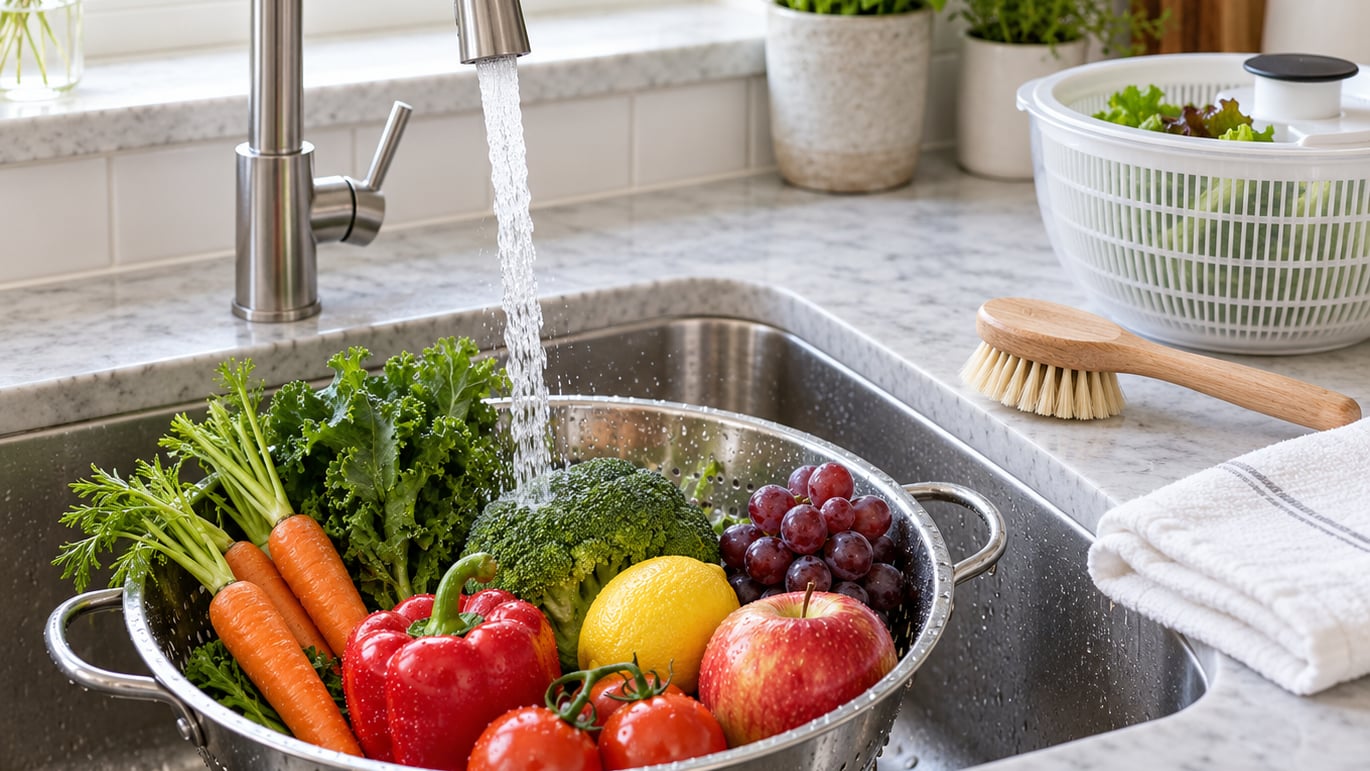
To wash produce properly, rinse it under cool running water just before you eat or cook it, rub or scrub the surface, and skip soap, dish detergent, and bleach entirely. Scrub firm items like potatoes and melons, swish leafy greens gently, dry everything thoroughly, then refrigerate. The whole routine takes a couple of minutes for a week’s worth of fruit and vegetables.
I do this at the kitchen sink with nothing more exotic than a colander and a soft brush, and it is genuinely the step most people skip. Fresh produce passes through a lot of hands and surfaces before it lands in your kitchen, so rinsing is not a paranoid extra. It is basic hygiene, and the FDA, USDA, and CDC all frame it the same way: cool running water, no chemicals.
What You Need to Wash Produce Properly

You need less than most people expect. A clean sink or a colander set inside a basin, cool running water, a soft-bristle vegetable brush for firm skins, and a clean towel or salad spinner for drying will cover everything.
- A colander, sitting in the sink so nothing sits in a pool of used water
- Cool or cold tap water
- A soft-bristle produce brush for potatoes, carrots, melons, and other firm items
- A clean dish towel or a salad spinner
- Plain soap for your hands, used before you start
Timing is realistic, too. A handful of grapes takes about a minute. A whole cabbage takes closer to twenty, and most of that is turning the leaves over so water reaches every layer.
Step-by-Step
Step 1: Check the Produce and Prepare the Sink
Start by throwing out anything slimy, moldy, badly bruised, or leaking. Those items can contaminate the rest of the pile through contact, and no rinse fixes them. Trim small bruises off otherwise sound produce.
Then wash your hands with soap for at least 20 seconds, and clean the sink, colander, and brush. Scrubbing produce with dirty hands or a sink that has seen raw chicken defeats the purpose. Keep produce well away from raw meat and poultry in the fridge, and never rinse raw poultry or meat in the sink, because the splashing spreads raw juices across surfaces that later hold ready-to-eat food.
Step 2: Rinse Under Cool Running Water
Put the produce under cool running water and rotate it so every surface gets hit. Rub gently with your fingers as the water flows. Soap, bleach, and household detergent all leave residues that your body cannot digest, and regulators including the EPA treat them as pesticides on food, which is exactly what nobody wants.
Keep the water cool. Hot water can drive bacteria and dirt into the produce’s cells and pores, and warm soaking water makes firm produce take on water like a sponge, which shortens its life. Cool water, no soap: that is the whole rule, and every mainstream food-safety body lands on the same wording.
Step 3: Scrub Firm Produce and Handle Delicate Items Gently
Thick-skinned items such as potatoes, sweet potatoes, carrots, beets, cucumber, melon, and winter squash benefit from a clean soft brush. Scrub for at least 20 seconds, concentrating on the creases and the ends where soil hides. Firm produce holds dirt in its skin, so friction does real work here.
Leafy greens and fresh herbs need a different approach. Separate the leaves, drop them into a bowl of cool water, swish them around, then lift them out of the water instead of pouring the water off, because that lifts grit and insects out with the water. Soft berries like strawberries, raspberries, and blueberries get a quick, gentle rinse and nothing more. Soaking them makes them mush and cuts their shelf life short.
Pre-cut produce and packaged salads are a special case. If the bag says triple-washed or ready-to-eat, the produce was washed in a controlled facility and rinsing it again mainly moves your kitchen bacteria onto food that was already clean. Open the bag, use it, and refrigerate it promptly. Sprouts and cut melon are the exceptions worth extra care, since they carry a higher share of contamination and people who are pregnant, elderly, young, or immunocompromised should consider skipping raw sprouts entirely.
Rinse before you peel or cut, not after. A knife that has already dragged contaminated skin across the inside of a potato moves that contamination into the flesh.
| Produce | Best Method | Time | Tool |
|---|---|---|---|
| Potatoes, sweet potatoes | Scrub under running water | 20 seconds | Produce brush |
| Carrots, beets, celery | Scrub or rub firm surfaces | 20 seconds | Produce brush |
| Broccoli, cauliflower | Soak briefly, then rinse florets | 2 minutes | Bowl and colander |
| Cabbage | Separate leaves, rinse each side | 5 minutes | Colander |
| Lettuce, romaine | Soak, swish, lift out of water | 3 minutes | Bowl |
| Spinach, kale, chard | Soak in cool water, lift out | 3 minutes | Bowl |
| Parsley, cilantro, dill | Swish in a bowl, shake dry | 1 minute | Bowl |
| Strawberries, raspberries | Quick gentle rinse, no soak | 30 seconds | Colander |
| Blueberries | Rinse and dry right away | 30 seconds | Colander |
| Grapes | Rinse, then separate from stems | 1 minute | Colander |
| Apples, pears | Rub under running water | 20 seconds | Hand |
| Mangoes, papayas | Rub firmly, rinse well | 30 seconds | Hand |
| Cantaloupe, watermelon | Scrub rind before cutting | 30 seconds | Produce brush |
| Avocados | Rinse skin before cutting | 15 seconds | Hand |
| Tomatoes | Quick rinse, rub gently | 20 seconds | Hand |
| Cucumbers, bell peppers | Rub and rinse | 20 seconds | Hand |
| Onions, garlic | Rinse outer skin, then peel | 15 seconds | Hand |
| Corn in the husk | Peel husk, rinse kernels | 1 minute | Hand |
| Mushrooms | Quick rinse or wipe, do not soak | 15 seconds | Paper towel |
| Bananas, citrus, limes | Peel, then rinse if desired | 15 seconds | Hand |
| Pre-washed salad bags | No washing needed | 0 | None |
| Pre-cut melon, sprouts | Rinse just before eating | 30 seconds | Colander |
One note on sprays and commercial washes. Popular Science, citing FDA advice, reports that rinsing and scrubbing under cold running water works as well at reducing bacteria as vinegar, lemon juice, baking soda, or store-bought produce washes. Washing is also not a claim of total removal. It lowers surface contamination; proper cooking kills more pathogens than rinsing ever does.
Step 4: Dry and Store Properly
Drying is the step people skip, and it is the one that decides whether your greens survive the week. Surface moisture is what mold and bacteria need to multiply, so spin washed greens in a salad spinner or pat everything dry with a clean towel. Then let produce air-dry on a rack or spread it in a single layer rather than piling it into a closed container while wet. Moving air, including a fan pointed at the drying rack, speeds things along.
Refrigerate cut produce and anything highly perishable right away. Whole items with protective skins like onions, potatoes, and winter squash keep better in a cool, dry, ventilated cupboard or pantry than in the fridge. Once you start labeling containers and freezing extras, our guide to labeling frozen food properly for safe storage covers the date-marking side.
On whether to wash before storing, the honest answer is: for things you will eat raw within a few days, washing at the moment of use keeps more texture. For sturdy produce you rarely touch raw, wash when you need it. Wash before storing only if it means you will actually eat it, and dry it perfectly first. If your storage problem is temperature and humidity rather than cleanliness, our piece on storing beer at home properly covers the other side of the fridge, since both jobs come down to stable conditions.
Common Mistakes to Avoid When You Wash Produce Properly
Most produce-washing mistakes come from adding steps rather than improving them. Here are the ones that come up again and again, with the fix for each.
- Using soap, dish detergent, or bleach. The fix: cool running water only. None of those belong on food.
- Soaking firm produce for minutes. The fix: a quick soak works for leafy greens and broccoli. Whole dense items get a rinse and a scrub.
- Scrubbing delicate fruit. The fix: berries, grapes, and soft stone fruit get a gentle rinse under running water. The brush is for thick skins.
- Storing greens wet. The fix: spin or pat dry before the fridge. Wet leaves turn limp and slimy within days.
- Rinsing raw poultry or meat in the sink. The fix: contain and cook it, then clean the sink. That splashing is a cross-contamination route.
- Re-washing prewashed salad bags. The fix: use the contents as packaged. Triple-washed means washed in a controlled facility.
- Cutting produce before rinsing it. The fix: rinse first, so the knife does not carry contamination inward.
- Treating washing as a substitute for storage. The fix: refrigerate cut and perishable items promptly, and cook to the safe internal temperature, including 165°F for poultry.
Two more worth naming. Vinegar soaking leaves a sour smell on some items, which is why cool running water is the default and vinegar is optional. And mixing vinegar with baking soda in the same wash neutralizes both, so it accomplishes nothing beyond ordinary water.
Frequently Asked Questions
Is it better to wash produce with vinegar or baking soda?
Neither is necessary. The FDA’s position, reported by Popular Science, is that rinsing and scrubbing under cool running water reduces bacteria just as effectively as vinegar, lemon juice, baking soda, or store-bought produce washes. A diluted vinegar soak, roughly one part white vinegar to three parts water for a few minutes, is a reasonable option if you want extra peace of mind, but do not combine it with baking soda in the same wash, since the two neutralize each other into plain salt water.
Is Dawn dish soap safe to wash vegetables?
No. Regulators treat dish detergent residue on food the same way they treat any other pesticide, and soap does not rinse off produce the way it rinses off a pan. Washing hands with soap before you start is exactly right, because that soap goes down the drain with your hands. On the produce itself, use cool running water and nothing else.
Should you wash produce before storing in the fridge?
Usually not. Washing before storing adds moisture, and moisture is exactly what speeds up spoilage and mold in leafy greens. For produce you will eat raw within a few days, wash it right before you eat. Wash before storing only when the convenience is worth the texture loss, and always dry it completely first. Sturdy items like onions and potatoes do not need a fridge at all.
What fruit should not be washed?
Skip the produce already washed for you. Bagged salad mixes labeled triple-washed or ready-to-eat were cleaned in a controlled facility, and rinsing them again mainly transfers your kitchen bacteria onto food that was already clean. Bananas and avocados that you peel before eating need no water at all, and delicate berries should get a quick rinse rather than a soak, since soaking makes them mush.
What is the healthiest way to wash produce?
Cool running water, gentle rubbing, and a soft brush on firm skins. Scrub potatoes, melons, and carrots for at least 20 seconds, swish leafy greens in a bowl and lift them out, then dry everything thoroughly. No soap, no bleach, no commercial wash. Wash right before eating or cooking, rinse before you peel or cut, and refrigerate anything cut promptly.
What are some common fruit washing mistakes?
The big four: using soap or detergent, soaking firm produce so long it turns soft and watery, scrubbing delicate berries and grapes, and storing greens before they are dry. Beyond that, rinsing raw poultry in the sink and re-washing prewashed salad bags are both cross-contamination risks. The pattern behind most of them is adding steps instead of improving the basics.
Conclusion
Inspect it, rinse it under cool running water, scrub only the firm stuff, dry it well, and refrigerate promptly. That is the whole routine, and no chemical wash improves on it. For prewashed or packaged produce, follow the label instead, and let proper cooking and safe storage handle the rest.