
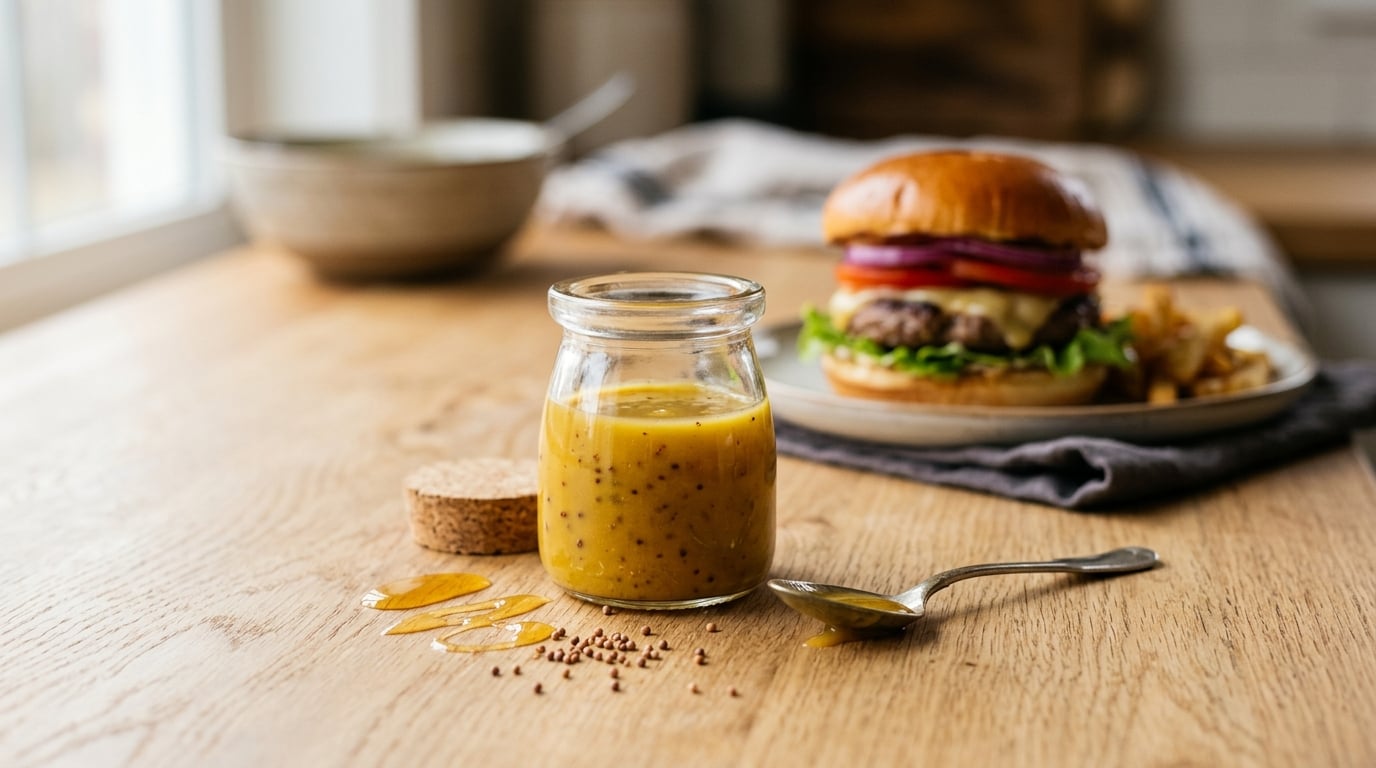
How to make honey mustard sauce takes about five minutes and no cooking at all: whisk honey, mustard, mayonnaise and a splash of vinegar together until smooth, then season and taste. The mayonnaise is what makes it creamy and dippable rather than thin, and the ratio is yours to adjust once you know the starting point.
Prep time is 5 minutes, cook time is 0, and the yield is roughly three-quarters of a cup. That is enough for a basket of fries, a few chicken tenders, or a stack of burgers at a small gathering.
For the shortcut version, the whole process is three moves:
- Whisk the mustard, vinegar, salt, pepper and seasonings together in a small bowl.
- Add the mayonnaise, then the honey a spoonful at a time, whisking until glossy and smooth.
- Taste, adjust with more vinegar for tang or more honey for sweetness, then serve or refrigerate.
Table of Contents
- What You Need
- How to Make Honey Mustard Sauce Step by Step
- Easy Honey Mustard Sauce Variations
- Common Mistakes
- Frequently Asked Questions
- What is the best ratio of honey to mustard for honey mustard sauce?
- Can I make honey mustard sauce without mustard?
- Why is my honey mustard sauce too sweet?
- Can I use Dijon mustard in honey mustard sauce?
- How long does homemade honey mustard sauce last in the refrigerator?
- Can honey mustard sauce be used as a marinade or glaze?
- Conclusion
What You Need
The base is four ingredients. Everything after that is seasoning or texture, which is what lets you make the same recipe ten different ways without a second trip to the store.
- Mayonnaise, 1/2 cup (120 g) — the emulsifying base. It suspends the honey and mustard, gives the sauce body, and is what separates a homemade version from the watery stuff in the bottle. Full-fat works best.
- Honey, 2 tablespoons (30 ml) — sweetness with enough body to stay emulsified. Raw or clover honey both work; very dark honey makes the sauce more molasses-forward.
- Dijon mustard, 1 tablespoon (15 ml) — mild, smooth heat that rounds out the honey instead of fighting it.
- Yellow mustard, 1 tablespoon (15 ml) — sharp acidity and the classic sweet-sour note people expect from honey mustard.
- Apple cider vinegar or white vinegar, 1 to 2 teaspoons (5 to 10 ml) — cuts the richness of the mayonnaise and stops the sauce from tasting flat.
- Garlic powder, 1/2 teaspoon and kosher salt and freshly cracked black pepper, to taste — savory depth against all that sweetness.
- Smoked paprika or cayenne, 1/4 teaspoon — optional, for a barbecue-leaning or spicy version.
Which mustard you reach for changes the finished sauce more than anything else, and plenty of home cooks only own one jar at a time.
| Mustard | Flavor | Heat | Best for |
|---|---|---|---|
| Yellow | Sharp, acidic, mildly sweet | None | The sweet-sour dip people expect with burgers and fries |
| Dijon | Smooth, tangy, wine-vinegar based | Low | A more restaurant-style sauce with a clean finish |
| Spicy brown | Coarse, deep, molasses-like | Medium | Bolder versions and fans who find Dijon too soft |
| Whole grain | Crunchy seeds, mild-moderate tang | Low | Texture contrast on sandwiches and grain salads |
A word on the Dijon question, since plenty of recipes insist on it: Dijon alone gives a thinner, more vinegar-forward sauce, not the sweet yellow-mustard dip most people picture. The version below uses both, which is why it lands in the middle.
You need nothing more than a bowl, a fork or small whisk, and a spoon. A blender or mini food processor works if you are doubling the batch, and a rubber spatula helps scrape mayo off the sides of the bowl.
How to Make Honey Mustard Sauce Step by Step
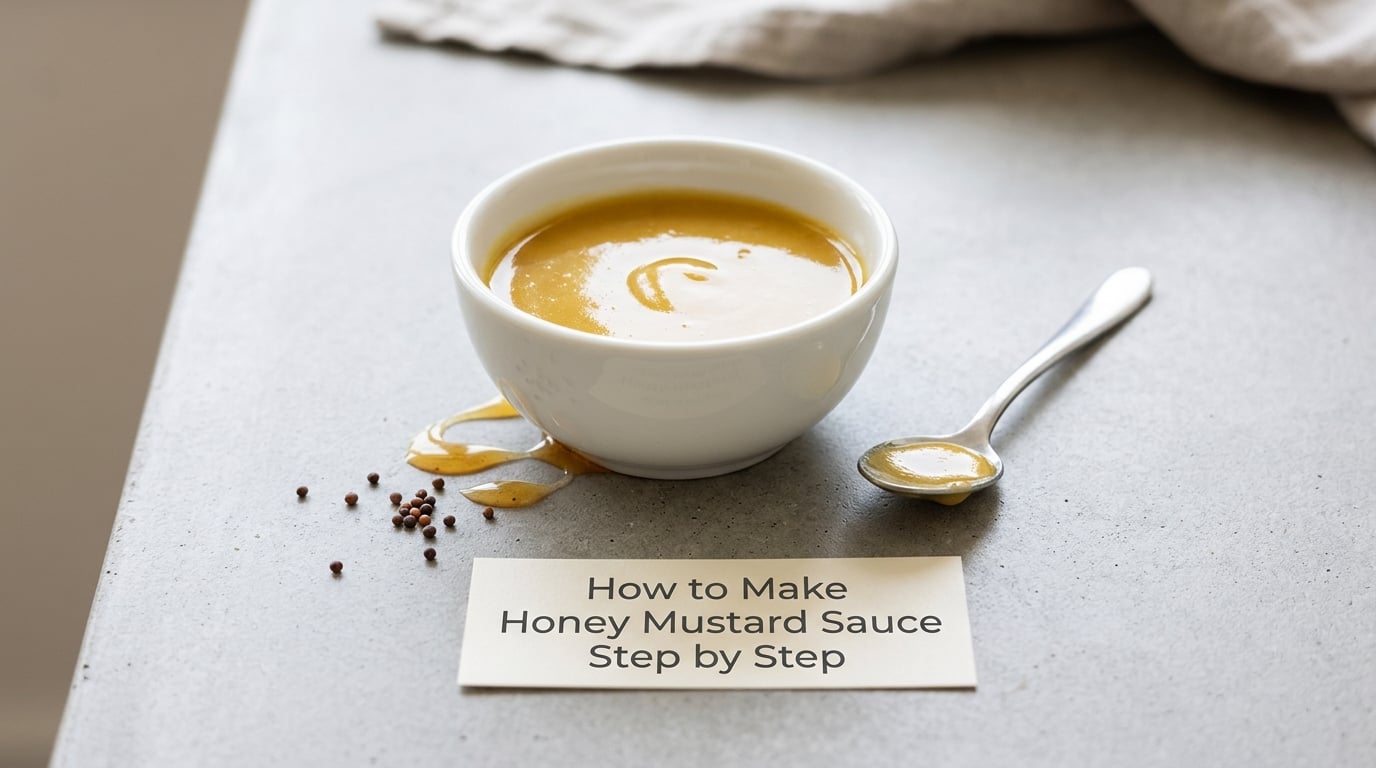
Set everything out before you start, because the whole recipe takes about as long as measuring. Keep the honey close but off the heat, and use room-temperature ingredients so the mayonnaise emulsifies instead of seizing.
Mix the Mustard, Vinegar, and Seasonings
Whisk 1 tablespoon each of Dijon and yellow mustard with the vinegar, 1/2 teaspoon garlic powder, a pinch of salt and a few grinds of pepper in a small bowl. The mixture will look thin and slightly grainy, which is expected. Stir for about 30 seconds until the mustard is fully dispersed with no streaks at the bottom.
Add the Honey Slowly
Stir in the mayonnaise first, then add the honey one spoonful at a time while whisking. Adding all the honey at once is the most common reason homemade honey mustard ends up streaky and thick in spots. Slow addition gives the liquid time to fold evenly into the fat base, and the sauce should look glossy and pale gold when it is done.
Adjust the Thickness
For a dipping consistency that clings to food, stop where you are. If it runs thin, add more mayonnaise a teaspoon at a time. If it is thicker than you want for a drizzle, loosen it with water or a splash of extra vinegar. To get a true glaze, simmer the finished sauce over low heat for 3 to 5 minutes, stirring constantly, until it coats the back of a spoon.
Taste and Balance the Flavor
Dip a clean spoon in and check four things in order: sweetness, acidity, mustard heat, and salt. Too sweet means add vinegar or lemon juice, a half teaspoon at a time. Too sharp means more honey, and more salt if the honey is flattening it. Adjust in small increments and taste again rather than dumping in a big splash.
Use the Sauce
As a dip, it is built for chicken tenders, nuggets, soft pretzel bites, fries and vegetables, where the thickness matters. As a drizzle, thin it slightly so it runs over roasted vegetables, a grain bowl or a burger without tearing the bun. As a spread, it works on a BLT, ham and cheese, or a turkey sandwich. As a glaze, brush it on chicken or pork in the last few minutes of cooking; keep poultry at 165F (74C) and ground meat at 160F (71C). As a marinade, it is fine overnight on chicken or pork tenderloin, but add the vinegar only when you are ready to cook, because acid breaks down meat over long marinades.
Store It Safely
Transfer to a jar or airtight container and refrigerate promptly, within two hours of mixing. Because there are no preservatives in homemade sauce, plan on five to seven days, and use it within about four days if the weather or your kitchen is warm. Reheat is unnecessary for a dip; to loosen it, stir in a teaspoon of warm water. It does not freeze well, since the honey and mayonnaise separate and turn grainy on thawing, so make a fresh batch instead of banking a large one.
Easy Honey Mustard Sauce Variations
Once the base is down, the adjustments are small and specific.
- Dijon-style. Drop the yellow mustard, use 2 tablespoons of Dijon, and add 1 teaspoon extra white vinegar. Cleaner and sharper, good on grilled salmon or a crudite plate.
- Spicy. Add 1 teaspoon sriracha or hot sauce, or 1/4 teaspoon cayenne. The heat sits under the honey rather than on top of it.
- Smoky barbecue. Swap in 1 teaspoon smoked paprika for the same amount of garlic powder. This is the tweak readers reach for when they want it to taste closer to a fast-food sauce.
- Creamy thick. Blend in 1 tablespoon sour cream or Greek yogurt, or two tablespoons softened cream cheese, for a dip that will not slump on a plate.
- Tangier. Add 1 teaspoon lemon juice or balsamic vinegar and a small pinch of sugar to round the edge. Good on leafy salads with chicken.
- No-mayo or vegan. Use silken tofu blended smooth, or plain vegan mayo. The texture is a little lighter and the sauce is slightly looser, so give it a minute less vinegar.
Common Mistakes
Most bad batches are fixable without starting over.
- Too sweet. Add 1/2 teaspoon vinegar or lemon juice and taste again. Repeat once if needed rather than correcting it with more honey.
- Too sharp or sour. Sweeten with a teaspoon of honey, and add a pinch of salt, which blunts acidity more effectively than sugar alone.
- Too thin and it runs off the food. Add mayonnaise a teaspoon at a time, or reduce the sauce gently on the stove until it coats a spoon.
- Too thick to drizzle. Whisk in water or vinegar one teaspoon at a time. Thick sauce is the easier problem to fix, since the reverse is not true.
- Grainy or gritty. That is mustard starch that did not dissolve, usually from dumping honey or mustard in at once. Whisk longer, or strain through a fine sieve.
- Separated or curdled. The mayonnaise broke, often from very cold ingredients. Bring the jar back to room temperature, add a tablespoon of warm water, and whisk hard until it comes together.
If you want it thicker without wrecking the flavor, reach for more mayonnaise first and reduction second. Thickening with extra mustard starch muddies the taste, and reducing concentrates the vinegar, which is usually not what went wrong in the first place.
Frequently Asked Questions
What is the best ratio of honey to mustard for honey mustard sauce?
Start with 2 tablespoons of honey to 1 tablespoon each of Dijon and yellow mustard for about three-quarters cup of sauce. That lands in the sweet-sour spot most people expect from a dip. If it tastes too sweet to you, add a half teaspoon of vinegar rather than cutting the honey, since honey is what gives the sauce its body.
Can I make honey mustard sauce without mustard?
Technically yes, but you get a sweet glaze rather than honey mustard, because the mustard is what supplies the tang and the emulsifying starch. If you only have honey and mayo, add vinegar and lemon juice to imitate the sharpness. For a quick shortcut with no mustard at all, whisk honey with a little mayonnaise and a pinch of salt for a simple honey cream.
Why is my honey mustard sauce too sweet?
The usual cause is using honey by taste rather than by volume, since it pours slowly and looks like far less than it is. The second cause is skipping the vinegar, which exists to cut the sweetness. Fix either by adding half a teaspoon of apple cider vinegar or lemon juice at a time. Do not add more honey trying to correct it, which is how batches get worse.
Can I use Dijon mustard in honey mustard sauce?
Yes, and many people prefer it. Dijon is smoother and less sweet than yellow mustard, so the sauce leans more tangy and wine-vinegar-forward. For the classic burger-dip flavor, use one tablespoon of Dijon plus one tablespoon of yellow mustard. Using Dijon alone works well, but expect a thinner sauce and add a little more honey to compensate.
How long does homemade honey mustard sauce last in the refrigerator?
Five to seven days in an airtight container, refrigerated within two hours of mixing, is a realistic window for a sauce with no preservatives. Use it within about four days if your kitchen runs warm. When in doubt, smell it first; honey and mustard both smell sharply when they turn. Freezing is not recommended, as the sauce separates and turns grainy on thawing.
Can honey mustard sauce be used as a marinade or glaze?
Both work. For a glaze, brush it on chicken or pork during the last few minutes of cooking and keep poultry at 165F (74C) and ground meat at 160F (71C). For a marinade, it suits chicken and pork tenderloin for several hours or overnight, but hold the vinegar back if it sits longer than that, since acid tenderizes the meat and can make it mushy.
Conclusion
Start with the simple ratio: two tablespoons of honey, a tablespoon each of Dijon and yellow mustard, half a cup of mayonnaise and a teaspoon of vinegar. Taste before you serve, add liquid a little at a time to reach the thickness you want, and the rest is just deciding whether it goes on fries, a burger bun or a brush of glaze. Once you have the balance you like, write it on the jar, because the version you adjust yourself is the one you will keep making.