
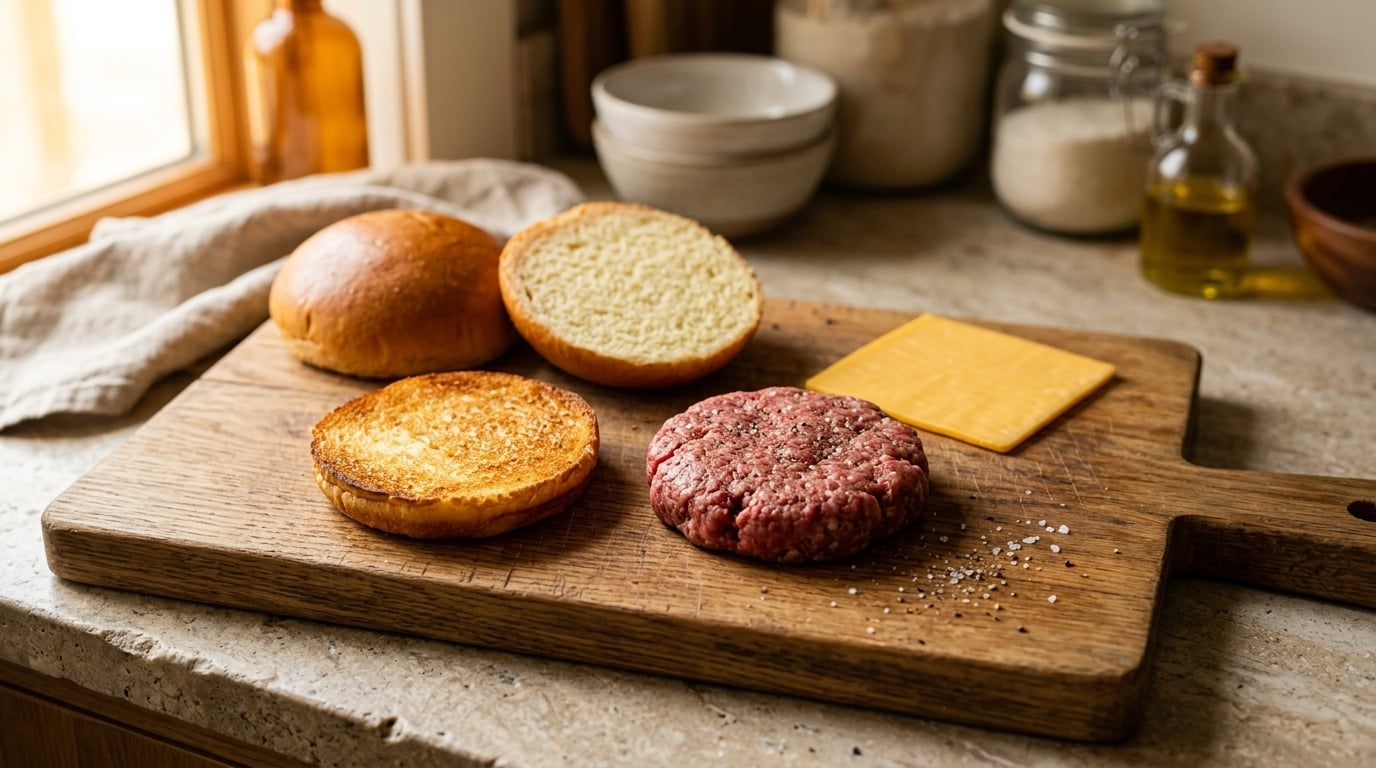
The burger buns that do not fall apart are the dense ones with a tight crumb, like potato rolls, sturdy brioche, pretzel buns and kaiser rolls. A tight crumb absorbs meat juice without dissolving, so the bun still holds its shape fifteen minutes into the meal. Picking the right one takes about five minutes in the bakery aisle and works for everything from a thin smash patty to a double cheeseburger.
The failure almost always comes down to two things: a loose crumb that soaks up juice and turns to paste, or a bun that is so soft it compresses under a heavy filling. Learn to read structure, and the soggy bottom bun problem mostly takes care of itself.
Table of Contents
- What You Need
- Step-by-Step
- Common Mistakes
- Frequently Asked Questions
- What type of burger bun is least likely to fall apart?
- Are potato buns better than brioche buns for juicy burgers?
- Should I toast burger buns before adding the patty?
- How do I keep a burger bun from getting soggy?
- Can I use frozen burger buns without thawing them first?
- How thick should a bun be for a double cheeseburger?
- Choose Your Bun First
What You Need
Before you compare any two buns, know what you are actually judging. Six factors decide whether a bun survives a real burger.
Internal structure. A fine, tight crumb with lots of small cells resists liquid far better than an open crumb with big air pockets. This is the single biggest predictor of durability.
Density. Dense is not the same as hard. A dense bun still compresses under your thumb, but it pushes back and springs rather than collapsing.
Surface moisture. A bun that feels damp or tacky on the bottom has already absorbed moisture from packaging. It will go soggy faster in the burger.
Ingredient list. Fats, sugar, syrups and emulsifiers tenderize dough, which is delicious and structurally weaker. Whole grains and a higher protein flour blend build backbone.
Size and shape. Diameter, base width, heel height and crown height decide whether a patty, a slice of cheese and a stack of toppings stay inside the bun or slide out the side.
Load tolerance. Ask whether the bun can carry what you are putting in it. A lettuce-and-mayo sandwich and a double patty with pickles and special sauce are very different structural problems.
Keep in mind that the bun is only half the equation. Heat and handling decide the rest, which is why the last step in the process below is a test with a real patty.
Step-by-Step
1. Match the Bun to the Filling
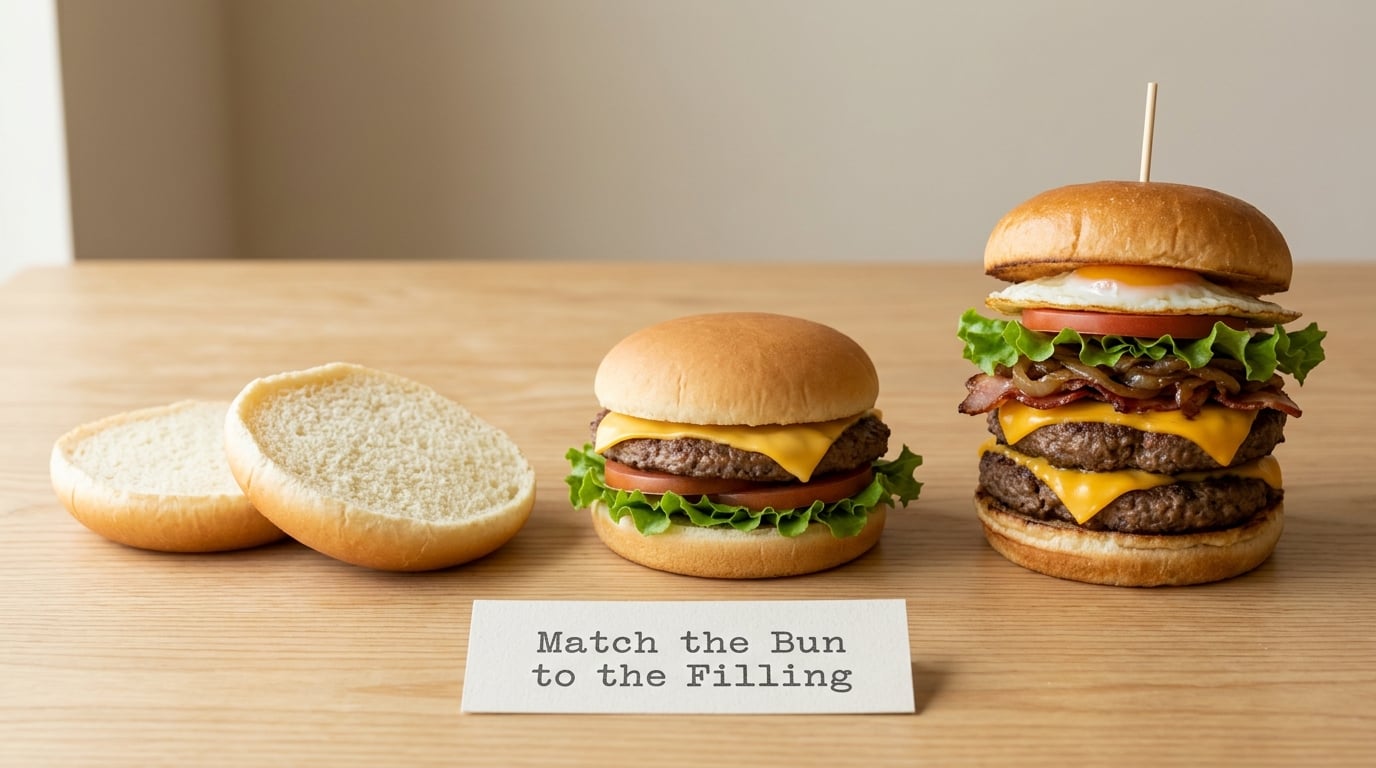
Start with the burger, not the bun. A thin smash patty on a bed of lettuce barely weighs anything, so a light, tender bun works fine. A double cheeseburger with pickles, onions and a heavy sauce is a different job entirely, and it needs a bun with a taller heel and a firm base.
Wet condiments raise the demand the most. Mayo, ketchup, barbecue sauce and rendered fat migrate straight into the crumb, and a bun that drinks them up loses its grip within a couple of bites. Dry toppings like shredded lettuce, pickles and raw onion barely touch the structure at all.
A quick rule: the juicier and heavier the filling, the denser and drier the bun you want. If your burger has two patties, treat it as a stacked meal rather than a sandwich.
2. Look for a Dense, Cohesive Crumb
A dense, cohesive crumb is the target, and you can often judge it without cutting the bun open. Hold it in your palm and press the heel and the crown. The surface should dent slightly and come back, with no visible cracks radiating from the pressure point.
Look at the cut face on a bun that is already sliced, and on the bottom of the heel where the crumb is most compressed. Small, closely packed cells mean strength. Large irregular holes mean a fragile bun that will shed crumbs into your hand as soon as the patty goes on.
Bun types differ a lot here. Potato rolls are made with a portion of potato flour, which tightens the crumb and gives it a slightly springy, almost marshmallow resistance. Sturdy brioche is soft but cohesive when it is made with a higher protein flour. Pretzel and kaiser rolls have a dense interior under a firm crust, which is where most of their strength comes from.
| Bun type | Crumb density | Handles wet toppings | Sweetness | Best for |
|---|---|---|---|---|
| Potato roll | High, tight crumb | Very good | Low | Juicy single or double burgers |
| Brioche bun | Medium to high when sturdy | Good, with a toasted base | Medium to high | Classic sandwiches, moderately loaded burgers |
| Pretzel bun | High, dense center | Excellent | Low | Heavy, saucy, loaded burgers |
| Kaiser roll | High, firm crust | Excellent | Low | Grilled patties, fried chicken sandwiches |
| Sourdough bun | Medium, irregular | Good, chewy resistance | Low, tangy | Cheeseburgers, burgers with sharper toppings |
| Sesame-seeded bun | Medium | Fair | Medium | Deli-style burgers, lighter fillings |
| English muffin | Very high, firm | Excellent | None | Smash burgers, anything split and griddled |
| Gluten-free bun | Low to medium, varies widely | Fair, needs a toasted base | Low | Gluten-free burgers with lighter, drier fillings |
| Lettuce wrap | Not applicable | Excellent | None | Very heavy or very saucy burgers |
Freshness matters more than people think. A stale bun crumbles instead of bending, so it shreds under a patty even when its crumb started out tight. Pick buns that feel springy and alive, not hard in the bag and flat on the counter.
3. Avoid Buns That Feel Wet or Fragile
Turn the bun over and check the heel. Excess moisture shows up as a slightly glossy or tacky base, a darkened patch where the bun sat, or a wrapper that clings to the surface. Any of those and the bottom bun is starting its sogginess before the grill is even hot.
Check the crown for hairline cracks and for a squashed or dented shape. A compressed edge means the bun spent time stacked under heavier items, and the cell structure there has already collapsed. Those edges tear first when you try to lift the burger.
Distinguish soft from weak. Oven-fresh buns compress deeply and stay springy, and that is fine. A structurally weak bun compresses deeply and stays compressed, and the surface feels pasty or sticky rather than slightly tacky and springy. The first one is fresh, the second one is fragile.
Skip any bun where the heel separates from the crown when you bend it, and skip seeded buns where the seeds lift off in patches. A seed that releases with the crust takes a layer of crust with it.
4. Check the Ingredients and Construction
The ingredient panel tells you how the bun will behave in the burger. Enriched doughs with butter, egg, whole milk and sugar produce a richer, sweeter, more tender crumb, which is lovely and less reliable under a heavy patty. Watch for syrups like high fructose corn syrup, corn syrup or honey, which push the same tenderness further.
Emulsifiers such as mono- and diglycerides, polysorbate 60 or monocalcium citrate are the real softeners. They slow staling and keep a bun pillowy for days, and the same compounds keep the crumb from setting around moisture. A bun with several of them on the label will feel wonderful at the moment you buy it and disappoint you halfway through the burger.
Fiber works in your favor. Whole wheat flour, oat flour, psyllium husk, flax and cellulose all add structure with less free water, so whole-grain buns tend to hold their shape better than a refined white bun of the same apparent softness. They also taste nuttier, which is a fair trade for a burger loaded with cheese and sauce.
Gluten-free buns use rice, tapioca and sorghum flours, and those doughs genuinely lack the gluten network that does the holding. To compensate, look for added fiber or egg and expect to toast the cut face until it is properly browned. Cook ground beef patties to an internal temperature of 160°F (71°C), and treat a crisp toasted base as the replacement for the structure that is missing.
5. Choose a Size and Shape You Can Handle
Diameter is the easy number and the least useful one on its own. What decides whether a burger holds together is how much of the patty the bun actually supports. A three-quarter pound patty sitting on a four-inch bun overhangs on every side, and you are eating it with your hands, not holding it.
Check the base width instead. A patty should sit inside the footprint of the bun, with roughly a quarter inch to spare on each side. Then check heel height, because that is what holds the sauce and the juices. A tall heel on a domed crown is more forgiving than a flat, wide bun with a low heel.
Shape follows the style. A domed bun suits a classic stacked burger. A flat, sturdy roll or a kaiser suits a smashed patty, since the flat top takes heat evenly on a griddle. A round, squat English muffin is the most forgiving of all for a very wet filling, because the chopped surface is horizontal and the juice stays put.
Slice cleanly if you plan to cut the burger in half. A dense crumb with a fine cell structure holds a clean cut, while an open crumb shaves and tears under the knife and drops the patty.
6. Test the Bun Before Assembly
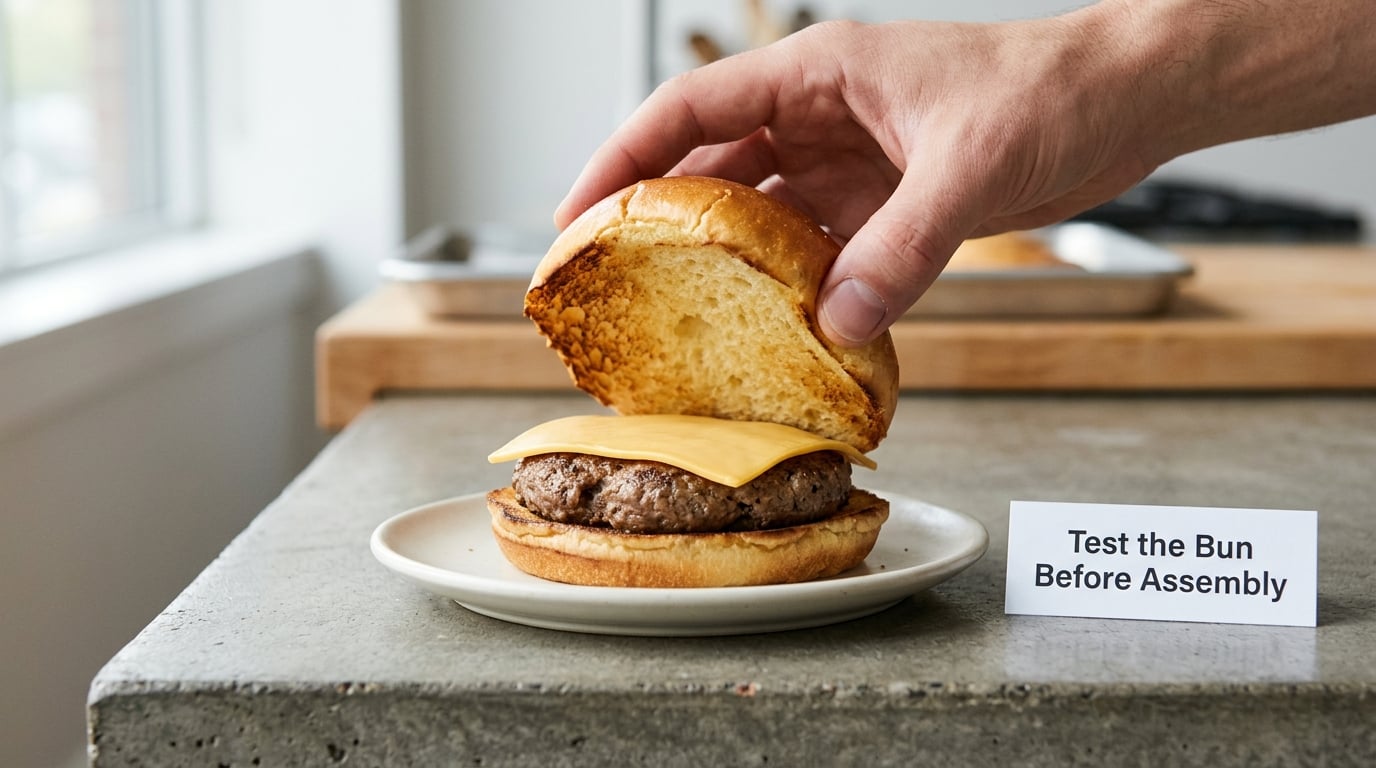
Test one bun before you commit to the whole pack. Split it, set it cut side on a hot dry pan or under a broiler for a minute until the cut face is lightly golden, then lay a cooked patty and a slice of cheese on it.
Pick the whole thing up with your fingers. A good bun bends and stays in one piece, with the heel pulling down without cracking at the base. The toasted face should feel dry and slightly rigid rather than spongy, because that crust is what resists the juice coming off the patty.
Wait a minute before eating it. Watch whether a dark wet patch appears on the toasted face. If moisture beads on the surface, the crumb is too open for a juicy burger and you want a denser one. If the bun stays matte and the heel is intact, you have found a bun that will still be in one piece at the end of the meal.
Do that test on two or three different buns in the aisle, or once you are home with the bag open. It takes under two minutes and it settles the question faster than any label.
Common Mistakes
Toasting too hard. A blackened cut face is brittle, and brittle bread cracks when you bend it. Toast until the face is golden and dry, not dark, and keep the broiler on short pulses rather than a long set.
Stacking a heavy filling onto a light bun. The fix is structural, not clever stacking. Two thin patties in one bun stay together; two thick patties on a soft bun rarely will. Choose the bun for the total weight, not for the patty count.
Letting sauce and juice reach the interior. Put the wetter layer where it presses on toasted bread, and keep thick sauces on the top bun so they never soak the underside of the bottom half. Some cooks add a thin scrape of the toasted bun back, or a lettuce leaf, as a barrier between patty and bottom bun.
Soaking the interior. Never pour juice, drippings or melted butter over the cut face of the bottom bun. A light brush of butter or mayo on the toasted face adds flavor without turning the crumb to paste.
Storing buns badly. Buns go stale in open bags and go damp in sealed ones. Keep them at room temperature in the original bag, or in a sealed bag in the freezer, and refresh them for five minutes in a 350°F (175°C) oven. Freezing also helps with the crumbling problem, since frozen buns reheat into something pliant instead of dry and dusty.
Serving too late after building. A burger that sits for fifteen minutes loses structure no matter what the bun is made of. Build close to the table, and give guests the option to top their own, which is how restaurants keep a loaded burger from collapsing on the way to the table.
Frequently Asked Questions
What type of burger bun is least likely to fall apart?
Potato rolls are usually the least likely to fall apart, because potato flour tightens the crumb and gives the bun a slightly springy resistance to moisture. Sturdy brioche, pretzel buns and kaiser rolls are close behind, and kaiser rolls add a firm crust that slows liquid penetration. Any of these will still fail if you skip toasting the cut face and load the bun with a heavy, wet filling.
Are potato buns better than brioche buns for juicy burgers?
For a genuinely juicy burger, yes. Potato buns have a tighter, denser crumb that drinks up juices without losing its shape, and they are noticeably less sweet. Brioche wins on flavor if you like an egg-enriched, buttery crumb, but the fat, milk and sugar that make it delicious also make it more tender and more prone to compressing under a heavy patty. Toast brioche well and keep the filling moderate.
Should I toast burger buns before adding the patty?
Yes, and toast the cut face for one to two minutes until it is dry and lightly golden. That dry, slightly rigid surface is the layer that resists patty juice and sauce, and it stops the bottom bun from turning to paste. Toast until golden rather than dark, because a heavily browned or blackened face turns brittle and cracks the moment you bend the burger.
How do I keep a burger bun from getting soggy?
Toast the cut face, drain the patty on a rack or paper towel before it goes in, and keep thick sauces on the top bun. A thin lettuce leaf or a scrape of extra toasted bun between the patty and the bottom half works well as a barrier. Building the burger close to serving time also helps, since a burger that sits for fifteen minutes loses structure no matter how good the bun is.
Can I use frozen burger buns without thawing them first?
Thaw them in the package at room temperature, then refresh for about five minutes in a 350°F oven. Do not microwave them, since the moisture that creates sits unevenly and makes the crumb patchy. Freezing is actually good for structural soundness, because a frozen bun rehydrates into something pliant instead of dry and crumbly, which is the opposite of the stale-bun problem.
How thick should a bun be for a double cheeseburger?
Look for a heel around an inch tall and a bun wide enough that the patties sit fully inside the footprint, with about a quarter inch of margin on each side. A domed bun with a tall heel is more forgiving than a flat, wide roll. If your patties overhang the base, the burger will shed filling no matter how sturdy the crumb is, so size the bun to the total weight of the stack.
Choose Your Bun First
If you only remember one rule for how to choose burger buns that do not fall apart, make it this: pick a dense, dry, sturdy bun with a tight crumb whenever the filling is juicy or heavy. Toast the cut face until it is golden, keep wet sauce away from the bottom half, and build the burger right before you eat it. That combination holds a burger together far longer than a softer bun will.