
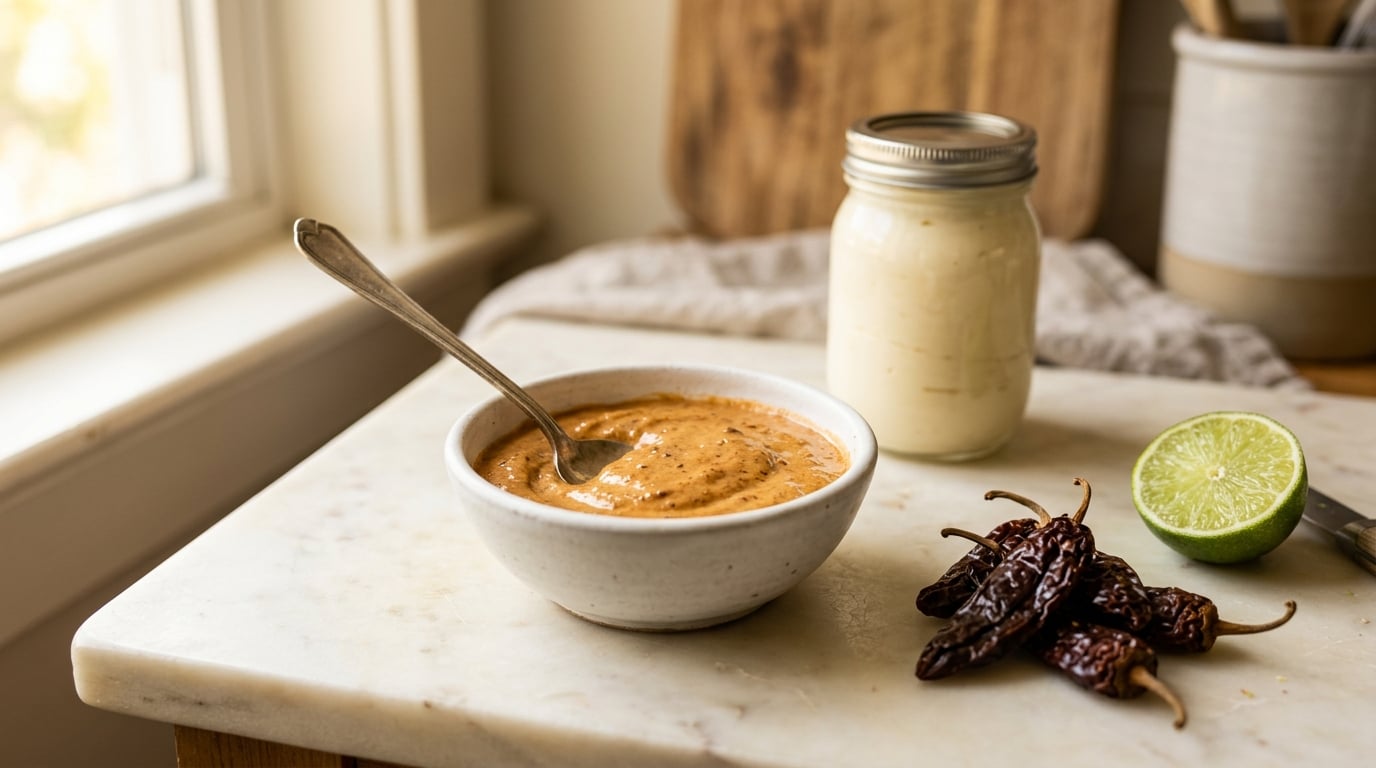
How to make chipotle mayo takes about five minutes and needs no cooking: stir one chipotle pepper in adobo, a teaspoon of its sauce, and a squeeze of lime into a cup of mayonnaise. The result is a smoky, creamy spread that tastes fresher and hits harder than anything from a jar.
I keep a can of chipotles in adobo in the pantry for exactly this reason. It is the fastest burger topper I make, and the same sauce works on sandwiches, as a dip for fries and tacos, or thinned with a splash of water into a drizzle.
Refrigerate the finished sauce and use it within 7 to 10 days, and it will hold up better than most homemade emulsions because the adobo is vinegar-based.
Table of Contents
- What You Need
- How to Make Chipotle Mayo Step by Step
- Frequently Asked Questions
- How long does homemade chipotle mayo last in the fridge?
- Can I freeze chipotle mayo, and should I thaw it in the refrigerator?
- How can I make chipotle mayo less spicy without losing the smoky flavor?
- What can I serve chipotle mayo with besides burgers?
- Why did my chipotle mayo turn watery, and how can I fix it?
- Conclusion
What You Need
The base recipe is three ingredients and a bit of seasoning. Everything past the first list is optional, so you can make a small batch and taste your way from there.
- 1 cup mayonnaise, full-fat if you can get it
- 1 to 2 chipotle peppers in adobo
- 1 teaspoon adobo sauce from the can
- 1 tablespoon fresh lime juice
- 1 garlic clove, minced or peeled and pressed through a press
- 1/4 teaspoon fine salt, plus more to taste
Optional additions change the sauce in specific ways rather than just making it bigger. Sour cream or plain Greek yogurt softens the heat and lightens the texture. Honey balances a sharp batch, and a small pinch of smoked paprika deepens the smoke when you have used adobo sauce sparingly.
- 2 tablespoons sour cream for a lighter, less fiery sauce
- 1/2 teaspoon honey or a pinch of sugar
- 1/2 teaspoon smoked paprika, cumin, or chili powder
- A pinch of MSG, which sharpens the smoky note without adding heat
- 1 tablespoon neutral oil if you need to loosen a thick batch
- Fresh cilantro, chopped, stirred in at the end
Canned chipotle in adobo is what most cooks reach for. The peppers are smoked jalapenos sitting in a vinegar, spice and oil sauce, and that sauce is flavor, not a garnish.
Fresh chipotles work too, with two adjustments. A fresh pepper is wetter and hotter than the canned version, so start with half of one and let the sauce sit before you add more. Roast it first under a broiler for 5 to 8 minutes a side until the skin blackens, or in a dry skillet with the lid on, then scrape or peel the skin if you want a cleaner sauce.
You need almost no equipment: a knife, a fork, a small bowl and a whisk or spoon. A food processor or blender gives you the smoothest result in about fifteen seconds of pulsing, and it is the shortcut most people in cooking forums reach for.
How to Make Chipotle Mayo Step by Step
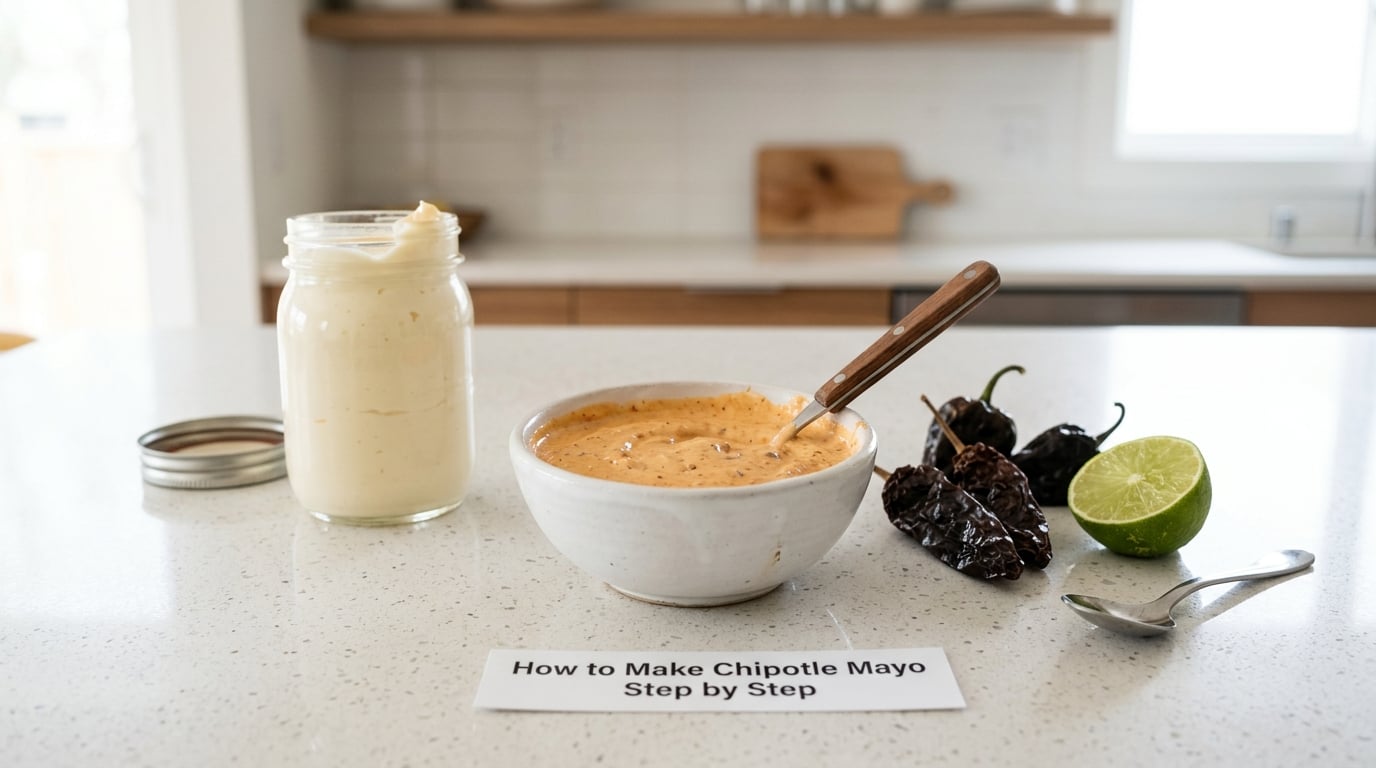
Here is the whole method in four steps: drain and prepare the pepper, mash or blend it into a paste, stir in the mayo, then season and chill. Each step takes under two minutes.
Step 1: Prepare the Chipotle Peppers
Pull the peppers out of the can with a fork and let the excess adobo drain off in the strainer for a minute. That draining step is the single most common reason a homemade batch turns watery.
Slice the pepper open lengthwise and scrape out the seed cluster if you want a milder sauce. The seeds carry most of the heat; the smoky flavor sits in the flesh and the adobo. Pat the pepper dry with a paper towel.
Rinsing the pepper under cold water is optional. Do it if the canned adobo tastes overtly vinegary to you, and accept that you are washing away some smoke along with the sharpness. Most people keep the sauce, because that tangy edge is what makes the finished mayo taste bright instead of flat.
Step 2: Blend or Mash the Chipotle
Mince the pepper as finely as you can, then add the teaspoon of adobo sauce and mash it with the back of a spoon until it turns into a rough paste. The paste should have no chunks bigger than a lentil.
In a food processor, pulse the pepper and adobo for 10 to 15 seconds, scraping down the side once. Stop while it still looks slightly coarse. A blender works too, on a low speed, and long enough to turn the pepper into a wet purée rather than a dry powder.
Do not dump the mayonnaise in yet. Mixing the pepper into a paste first, while there is still liquid to move, is what keeps the finished sauce smooth instead of flecked with whole pepper pieces.
No processor? Chop finely with a knife, then mash thoroughly with a fork. The texture will be a little more rustic, and pressing the mash through a fine sieve afterwards gives you the smooth, spoonable result people are usually after.
Step 3: Stir in the Mayo
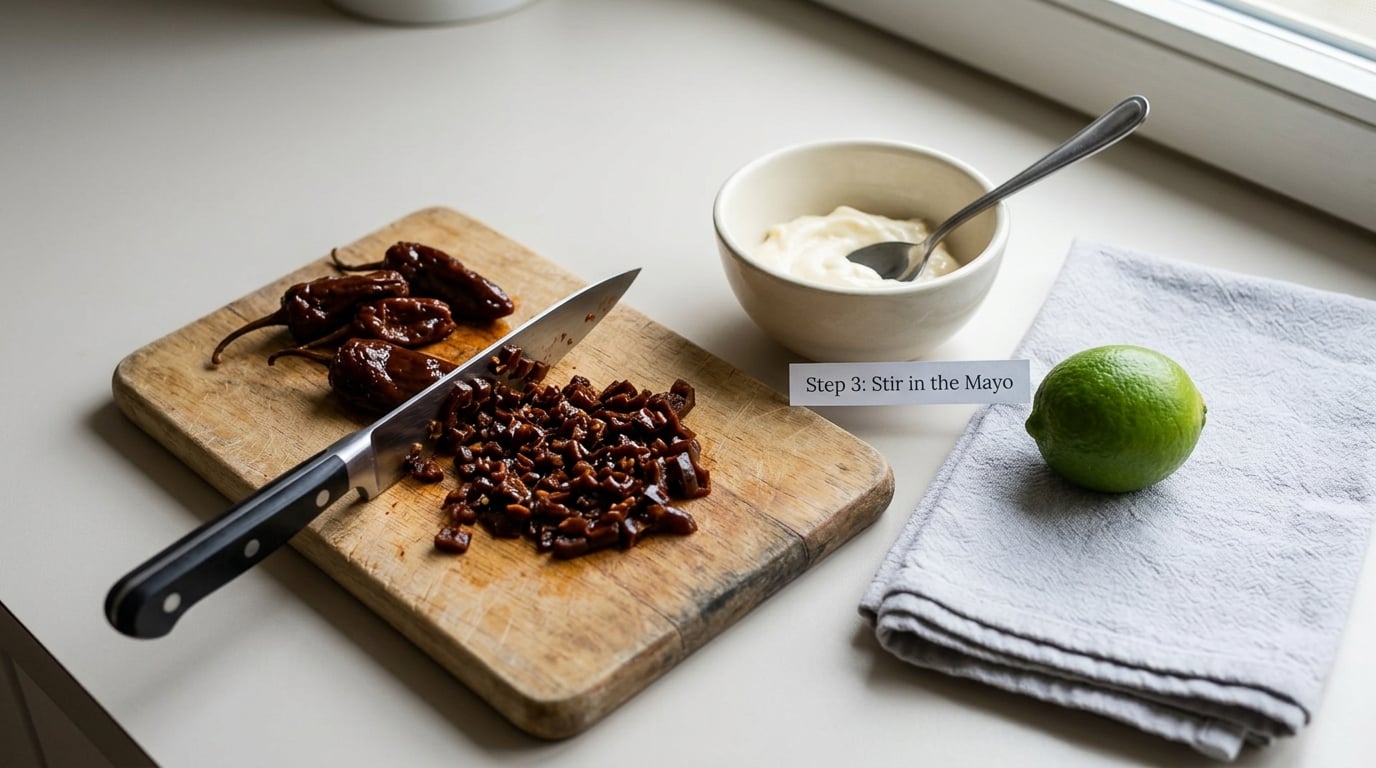
Add the mayonnaise in two additions, stirring gently between them. You are looking for a sauce that is smooth and creamy, evenly orange-brown, and pourable off a spoon, with no whole pepper pieces remaining.
Mayonnaise is already an emulsion of oil and water held together by egg yolk, so a light hand keeps it stable. Stirring hard or whipping it fast can break that structure and leave you with a separated, watery result.
If the batch is thicker than you like, loosen it a teaspoon at a time with water, extra lime juice, or a teaspoon of neutral oil. Thin it more than you think you need, because the sauce thickens noticeably after it chills.
For an even lighter version, blend equal parts mayonnaise and sour cream first, then stir in the chipotle paste. That fifty-fifty ratio comes up more than any other in home cooking forums, and it holds up to a heavier dose of pepper without tasting fierce.
Step 4: Season, Taste, and Chill Your Chipotle Mayo
Taste with a clean spoon every time, working from a small dab rather than a full spoonful. Add salt first, then more lime, then honey if it tastes sharp rather than bright.
Garlic, cumin, or a pinch of chili powder goes in after the base balance feels right. Adding them earlier tends to bury the chipotle, and once the sauce is finished you can no longer tell whether the sharpness is from the garlic or the adobo.
Warm the sauce in your hand before you judge the heat, or taste it straight from the fridge and then again at room temperature. Cold food reads hotter and thinner than it will taste on a plate.
Chill it for 30 to 60 minutes before serving. The salt and lime need time to settle into the mayonnaise, and the smoke integrates more fully overnight. Take the jar out about 10 minutes before serving so it is not fridge-cold on the burger.
Common Mistakes
A watery sauce almost always means undrained peppers or a processed batch with too much adobo still in it. Drain the pepper properly, use the teaspoon of sauce as a starting point rather than a minimum, and add more liquid only at the very end.
A bitter or overly smoky result comes from using more pepper than the mayo can carry, or from roasting fresh peppers until the flesh burns. Blackened skin is fine, charred flesh is not.
Heat that overwhelms everything is a matter of tasting too late. Start with one pepper for a cup of mayo, and add a second only after the first has been mixed in and tasted.
A separated or broken texture comes from over-mixing, from pouring hot liquid into the mayo, or from thinning it in one big gulp. Stir slowly, keep everything cool, and add the water a teaspoon at a time.
Sauce served straight from a cold jar tastes hotter and less creamy than the same sauce at room temperature. That is a serving problem, not a recipe problem.
Tips for the Best Results
Use full-fat mayonnaise. The fat carries the chipotle oils and gives you the restaurant texture, while a light mayo leaves you with a thin dressing that tastes mostly of vinegar.
Choose chipotles in adobo rather than plain chipotle peppers when you want depth. The adobo is the smoky backbone of the sauce, and the extra teaspoon is what separates a good batch from one that just tastes hot.
Make a double batch. The quantities are small, the sauce keeps about a week, and it turns into a dip, a drizzle and a burger topper from the same jar.
For a table with mixed heat tolerance, hold the pureed chipotle back and let each person add heat to their own bite with extra adobo sauce, a few drops of hot sauce, or a pinch of chili powder.
To go dairy-free, swap the mayonnaise for silken tofu blended smooth, or use a vegan mayonnaise. Add the lime and a touch of sugar, since the tofu version is less rich and benefits from a sweeter finish.
Frequently Asked Questions
How long does homemade chipotle mayo last in the fridge?
Refrigerate it covered and use it within 7 to 10 days, which is the window most cooks quote. Because the adobo is vinegar-based, it holds a little longer than a plain mayo-based dressing, but treat the ten-day mark as the limit. Keep it in a clean jar rather than the original dip container, and discard it if the lid was left open on the counter for more than two hours.
Can I freeze chipotle mayo, and should I thaw it in the refrigerator?
Yes, and yes, thaw it in the refrigerator. Mayonnaise-based sauces freeze acceptably, and the chipotle flavor is strong enough that a slight change in texture is easy to hide. Freeze in a jar with headroom, or in an ice cube tray for portioning. Thaw overnight in the fridge and stir hard before spreading. Blending in a spoonful of fresh mayo afterward brings the creaminess right back.
How can I make chipotle mayo less spicy without losing the smoky flavor?
Scrap the seeds from the pepper before chopping, use one pepper instead of two per cup of mayo, and blend in two tablespoons of sour cream or plain Greek yogurt to dilute the heat. For extra smoke with no extra fire, add half a teaspoon of smoked paprika or a spoonful of strained adobo sauce, which is mostly liquid and spice rather than capsaicin.
What can I serve chipotle mayo with besides burgers?
It works as a spread on fried chicken and grilled cheese sandwiches, a drizzle over fish tacos, tostadas, burrito bowls and black bean burgers, a dip for nachos, fries, potato wedges and corn on the cob, a base for potato salad and deviled eggs, and a mix-in for a burger patty. Thin it with a spoon of water or lime to turn the same batch into a pourable sauce.
Why did my chipotle mayo turn watery, and how can I fix it?
Watery chipotle mayo usually means the peppers were not drained, or the blender was run with too much adobo still clinging to them. Strain the pepper for a full minute and use the teaspoon of sauce as a starting point. If the batch is already thin, chill it for 20 minutes, then stir in a spoonful of thick mayonnaise. Over-mixing with a whisk also breaks the emulsion, so stir slowly next time.
Conclusion
Start with a small first batch: a cup of full-fat mayonnaise, one chipotle pepper in adobo, a teaspoon of the sauce, and a squeeze of lime. Blend or mash it smooth, taste it, and adjust the salt, lime and heat from there. Five minutes of work gets you a smooth, balanced, creamy sauce that beats anything you can buy in a jar.