
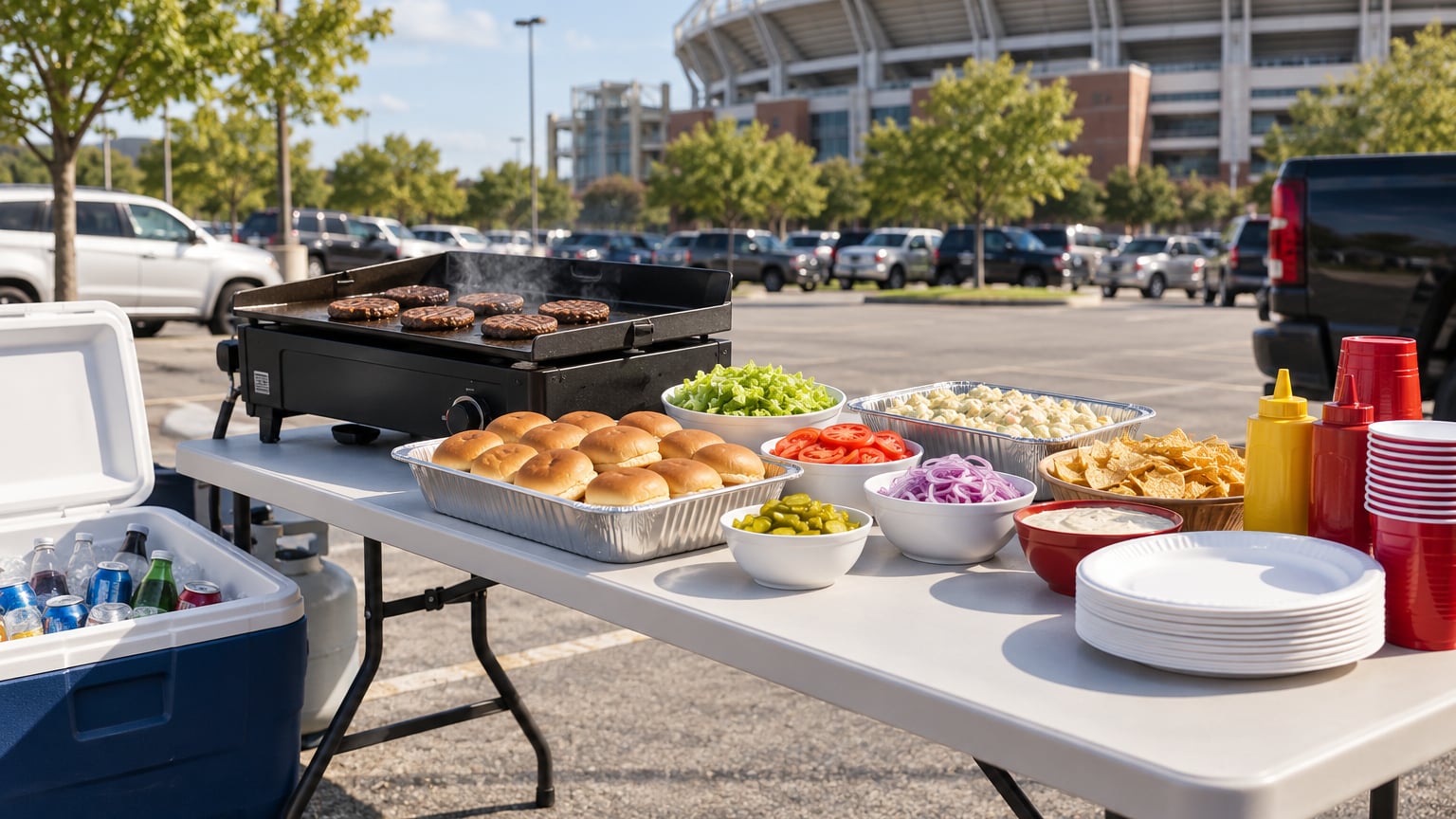
A tailgate menu works best when it is planned around three things: how many people are eating, what time the game starts, and whether you can cook on site. Pick one signature hot dish, two or three handheld options, two cold sides, one dessert and drinks, then buy with a small buffer. The whole plan takes about 20 minutes at your kitchen table and saves you from the usual parking-lot disasters: running out of one dish everybody wanted, and serving food nobody can eat standing up.
The tricky part isn’t picking recipes. It’s portion math, holding temperatures, and knowing what your parking spot actually allows. Below is the process I walk through every season, whether the group is eight friends in a driveway or fifty coworkers in a stadium lot.
What You Need
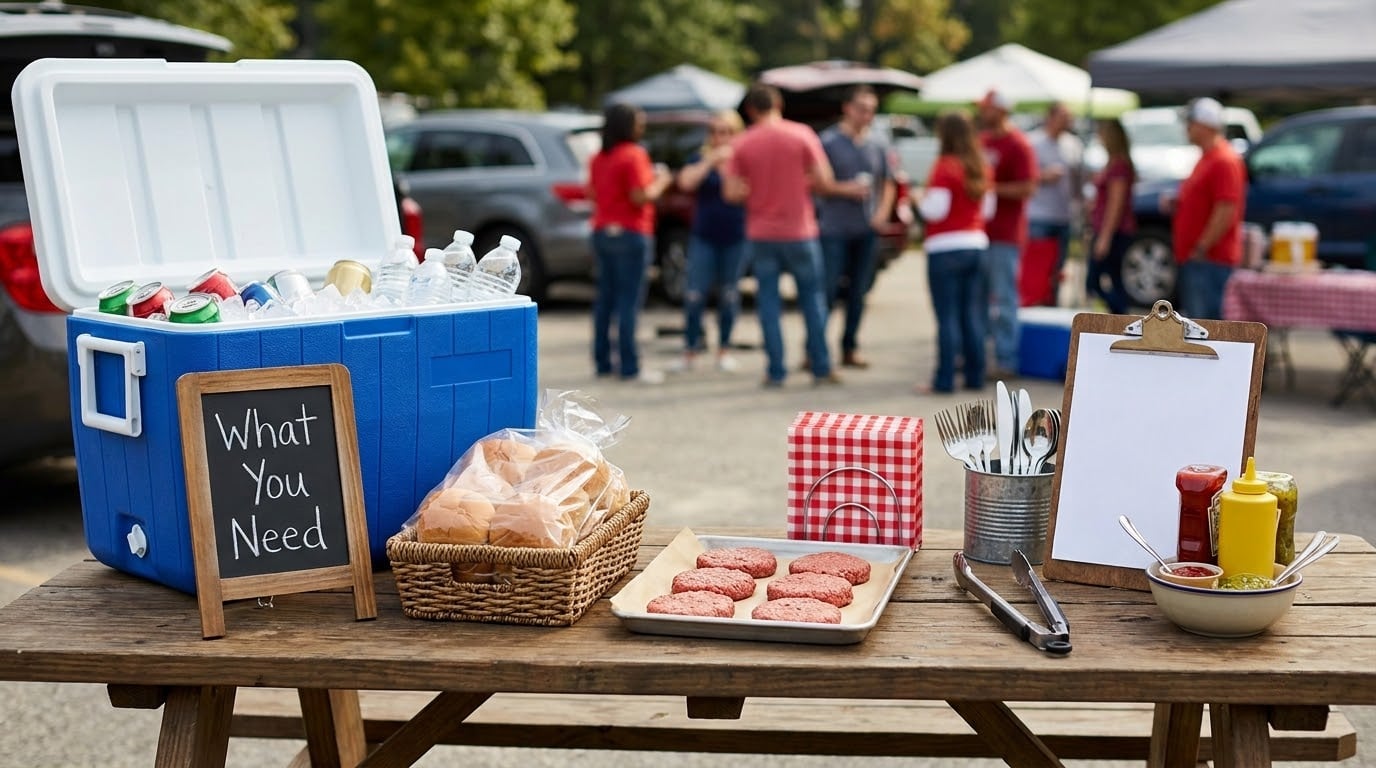
Before you shop for food, settle these four inputs: a confirmed guest count, the kickoff time, the site, and a rough spend per person. Everything on the shopping list follows from them.
Planning materials
- A guest count you commit to, including kids as separate eaters and plus two extra for whoever texts late
- The kickoff time and how long you’ll be out there, which is usually two hours before the game plus three hours of game time
- A spot check: distance to restrooms, whether there’s an electrical outlet, shade, and how far your car is from the tailgate space
- A list of dietary needs, collected in the group chat a week ahead instead of guessed on the morning of the game
Serving equipment
- Two coolers, not one: one for food, one for drinks, so people opening beer all afternoon aren’t letting your potato salad warm up
- A folding table and a second surface for condiments, because a serving line with no landing space stalls within ten minutes
- A slow cooker or insulated carrier for the hot dish, and foil pans with tight lids for anything else hot
- Paper plates, napkins, forks for the few dishes that need them, wet wipes, a trash bag per cooler, and hand sanitizer
Food safety supplies
- A reliable instant-read thermometer, which is the single most useful tool in the whole setup
- Ice or frozen gel packs, enough to keep the food cooler under 40F for the full afternoon
- Separate tongs and utensils for each dish so nobody dips a used spoon back into a cold side
- A few small signs or a marker and index cards, so guests can tell a gluten-free bun from a regular one without asking
You don’t need most of this new. Borrow the table, use cardboard trays if you’re bringing chili, and buy the ice in the morning. What you can’t skip is the thermometer and the second cooler.
How to Plan a Tailgate Menu: Step-by-Step
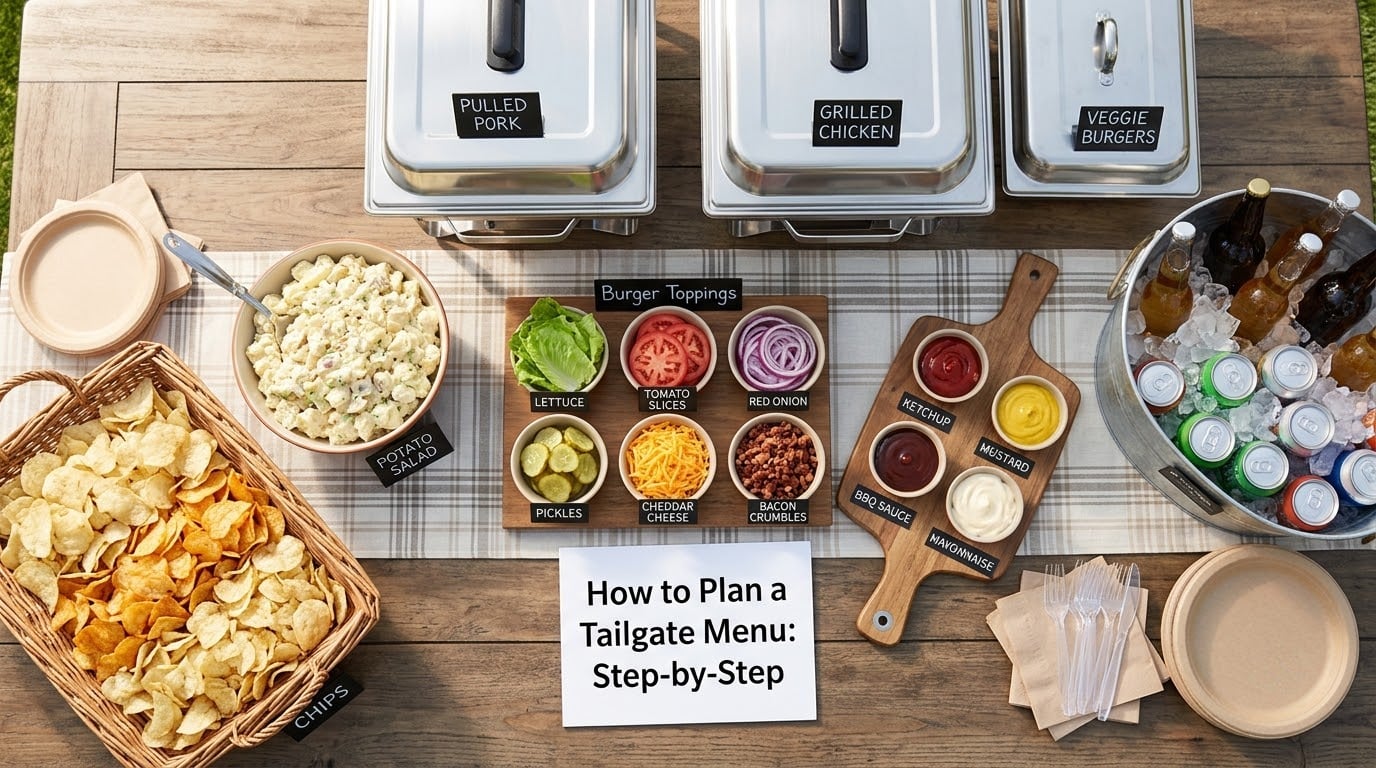
Here is the whole method in seven steps. Skip any of them and one of the three classic failures shows up: not enough food, all the food in one category, or food nobody wants to eat in a parking lot.
1. Count your guests and lock the number. Ask for a headcount, then add 10 to 15 percent. The guests who show up unannounced are always adults with big appetites. Write the number down, because every quantity after this point comes from it.
2. Set a spend per person and pick a tier. Three tiers cover almost every tailgate. A budget tier leans on chili, hot dogs, a bag of chips and a dessert tray. A middle tier adds one cooked hot dish and a couple of store-bought sides. A generous tier buys fresh burger patties, a build-your-own topping bar and a real dessert. Decide this before shopping, because the tier drives the menu, not the other way around.
3. Match the menu to the kickoff time. A morning game needs a completely different lineup than a night game, and the difference is mostly coffee and heat. Early kickoffs work best with breakfast handhelds, one griddle item and pastries, plus one insulated drink dispenser per four adults. Afternoon games lean on burgers, chili and cold sides. Night games justify a hot dish that needs a slow cooker, because you can set it before you leave and check it once before kickoff.
4. Balance hot and cold, one-handed and messy-free. Plan roughly half the menu as items eaten standing up with no plate, no knife and no dripping sauce. Burgers, sliders, hot dogs, chicken bites and wraps qualify. Cold sides and dips should be spread in shallow containers people can scoop from with a single plastic spoon. If a dish needs a knife and a plate, it does not belong at a tailgate.
5. Calculate portions from the table below.
| Category | Per adult | Per child | 10 guests | 20 guests | 50 guests |
|---|---|---|---|---|---|
| Main handheld (burgers, hot dogs, sliders) | 2 | 1.5 | 24 | 48 | 120 |
| Signature hot dish (chili, pulled pork, wings) | 0.75 cup | 0.5 cup | 8 cups | 16 cups | 38 cups |
| Cold side (salad, slaw, dip) | 0.5 cup | 0.5 cup | 5 cups | 10 cups | 25 cups |
| Chips and crackers | 1 bag per 4 | 1 bag per 4 | 3 bags | 5 bags | 13 bags |
| Dessert | 1 piece | 1 piece | 12 pieces | 24 pieces | 60 pieces |
| Drinks | 2 to 3 | 1 to 2 | 25 | 50 | 125 |
Two things the math won’t tell you. Seasoned grillers eat more than average, and half the crowd will be satisfied with a dog and a handful of chips. Cook for the hungry half and the group still finishes the food, which matters when the site charges for trash bags or you haul everything home.
6. Split the cooking into three buckets.
- Night before: chili or pulled pork started in a slow cooker, cookies or brownies baked, cold sides mixed and chilled, buns and hot dogs packed
- Morning of: patties formed and frozen solid on a sheet tray, toppings chopped into small containers, foil pans assembled, coolers loaded with ice packs
- On site: griddle or grill work, reheating the slow cooker, and nothing else that takes more than ten minutes
Anything that only tastes good fresh is the wrong dish for a tailgate. If it goes soggy, rubbery or sad sitting in a container for an hour, take it off the list.
7. Pack, load and set the serving line. Load cold food on top, since that’s what gets dug into first, and keep raw meat separate from anything ready to eat. At the lot, put the condiments at the end of the line, not the start, so people aren’t crossing the whole table for ketchup. Keep the slow cooker closed until service begins. Every extra opening costs you about ten minutes of safe holding time.
If burgers are the centerpiece, spend a few more minutes on the setup itself: how to plan a burger themed party menu covers topping bars and batch cooking patties for a crowd.
How to Plan a Tailgate Menu for Your Group
Once you have a number, the menu follows from it fast. Under 10 people, keep it to burgers or hot dogs, one pot of chili, chips and dip, and brownies. Ten to 20 people is the sweet spot for a build-your-own burger bar with six toppings and one hot side. Twenty to 50 people needs a second protein and two cold sides, because at that size one dish running out is what people remember.
Adjust from there:
- Children present: drop burgers for sliders with plain ketchup on the side, add a mild chicken option, and pack fruit or a snack box. Kids eat fast and get bored sooner than adults.
- Vegetarian or vegan guests: plan one clearly labeled hot option, usually chili with a bean base or grilled vegetable skewers, and give it its own utensils so nobody cross-contaminates.
- Allergy or gluten-free guests: buy the one specialty item separately, keep it sealed, and write the name on a card next to it. An unlabeled bun is an accident waiting to happen.
- Hot weather above about 85F: shift the balance to cold. Fruit salad, coleslaw, chilled pasta salad and frozen fruit hold up far better than anything off a griddle.
- Cold weather under about 40F: add one more hot dish and skip the raw cold salad. Chili, soup and hot dips do the work.
- Bring-your-own potluck: assign categories rather than dishes. One person takes the hot main, one the salad, one dessert, one drinks, and nobody leaves with duplicate potato salad.
Common Mistakes
Most bad tailgates come down to the same eight errors. Each one has a straightforward fix.
Buying five kinds of chips and one entree. Variety in one category is not variety. Fix it with one of each category and a second helping of whatever people actually finish. Watch where the pile thins during the first hour and refill that, not the tray nobody touched.
Holding cooked food out too long. This is the one with a real consequence. Perishable food sitting in the 40F to 140F danger zone should be eaten or discarded within two hours, or within one hour when it’s above 90F. Put perishables back on ice before you head inside for the game, and throw away anything that sat out past the limit. Ground beef and sausage need to hit 160F internally, poultry 165F, and whole cuts of beef, pork and lamb 145F, with a rest of three minutes.
Packing the cooler wrong. Food buried under heavy containers stays cold while the surface layer warms. Fill empty space with ice packs, put cold food nearest the top, and add a cheap thermometer so you can check instead of guessing. Open the food cooler as rarely as possible.
Preparing unsafe cold dishes. Mayonnaise-based potato salad and tuna sit in the same risk zone as anything else. Make them the night before, keep them buried on ice, and keep raw meat on a separate tray that never touches the finished salads.
Forgetting the small stuff. No utensils, no napkins, no trash bags, no serving spoons. It sounds obvious, yet a tailgate without them means nobody eats. Pack a kit: plates, napkins, a stack of spoons, condiments, a can opener, a wet wipe bag and one trash bag per cooler.
Leaving no serving space. If condiments sit on the same table as the food, the line collapses. Give drinks their own cooler and their own table corner, keep condiments at the line’s end, and give each hot dish a lid that opens with one hand.
Not labeling the dietary options. Guests avoid dishes they’re unsure about, so a perfectly good gluten-free tray sits untouched. Label every special item with a short written card, and use a separate utensil for each one.
Ignoring the site. No restrooms, no power, a long walk from the car, and no shade can ruin a good menu. Scout the spot the week before, and check the lot rules on alcohol and open flames. If there’s no electricity, plan food that runs on a slow cooker or arrives already hot in an insulated carrier.
Leaving a mess and a cooler of perishables behind. Bring a bag for wet trash and a second for empties, load the cooler in reverse order of use so nothing gets buried, and empty perishables before you head in. Washing a food thermometer in warm soapy water after the game keeps it accurate for the next one. Thinking about cost per guest is easier when you compare it against restaurant burger pricing guides like how to read a restaurant menu for value, since restaurant menu prices move a lot and grocery pricing changes just as fast.
Frequently Asked Questions
How much food do I need per person at a tailgate?
Plan two handheld items and one hot dish per adult, plus about half a cup of each cold side, one dessert piece and two to three drinks. Children eat roughly two-thirds of an adult portion. Add a 10 to 15 percent buffer on your headcount, and expect adults to eat more than the average when the grill is going and the beer is cold.
What foods travel best to a tailgate?
Burgers, hot dogs, sliders, chicken wings, chips with dip, olives, cut fruit, sandwiches and brownies all survive a four-hour sit without a fridge. Chili and pulled pork travel well in a slow cooker or foil pan with a tight lid. Skip anything that goes soggy, crispy foods that lose their crunch, or dishes that need a knife, a plate or a slow serve window.
How do you keep burgers and hot food warm at a tailgate?
Cook patties in batches so you are not holding finished burgers for more than 15 minutes at a time, then move them straight into a foil pan wrapped in towels inside an insulated carrier. A slow cooker on warm works well for chili and pulled pork. Keep lids closed until service starts, and stash hot pans back in a warm car only as a backup, never as the primary plan.
How long can cooked food sit out safely at a tailgate?
Perishable food should not sit in the 40F to 140F range for more than two hours, or one hour if the outdoor temperature is above 90F. That window includes the drive over. Keep cold dishes under 40F with ice packs, return perishables to a cooler before the game, and discard anything that has been in the danger zone past the limit.
What are good no-cook foods to serve at a tailgate?
Skip the grill entirely with a spread of cold sandwiches and wraps, chips and layered dip, olives, pickles, coleslaw, chilled pasta salad, deviled eggs, cut fruit with dip, trail mix, cookies and brownies. Load it all into two coolers, keep one closed until people ask for it, and it stays solid for an afternoon with no heat and no parking-lot smoke.
What should I do with leftovers after the game?
Pack a separate bin with a bag inside so you are not sorting trash at midnight. Anything perishable that stayed under 40F or above 140F for the whole event goes straight into the fridge within two hours, and anything in the danger zone past the limit gets discarded rather than donated. Slice leftover chili and roast meat, freeze what you will not eat, and toss the packaging before you load the car.
Conclusion
Start with four things: lock a guest count, choose one burger-and-sides lineup instead of a long menu, buy with a 10 to 15 percent buffer, and pack the cooler kit, thermometer and serving utensils before you shop for anything else. If you want the flavor side sorted first, how restaurants price a burger on the menu is a useful reference for comparing what you buy against a menu. The rest is timing, and timing is the easy part.