
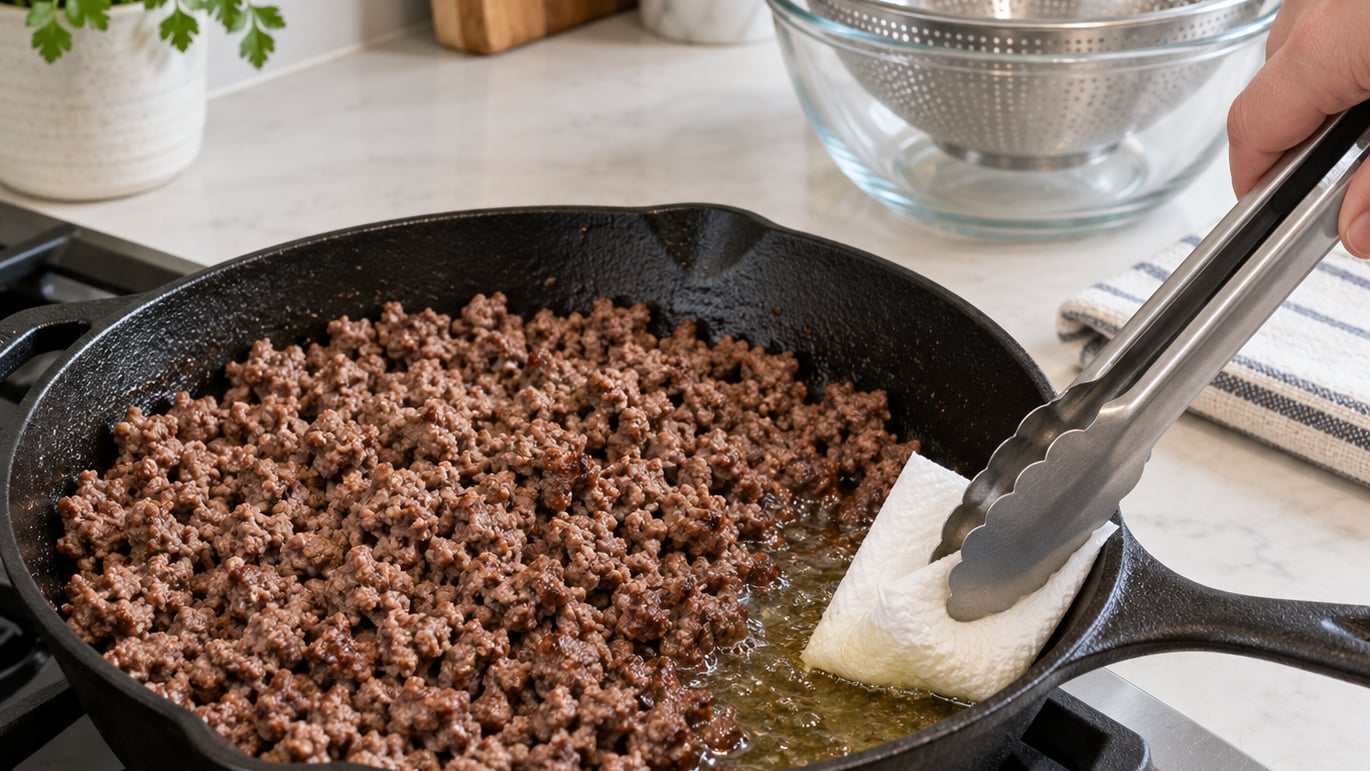
The fastest way to drain grease from ground beef is to push the meat to one side of the skillet, tilt the pan so the rendered fat pools, and press a folded paper towel held in tongs into the liquid. It takes under a minute, there is no hot pour, and nothing splashes. For bigger batches, move the beef and fat through a colander over a bowl instead.
Both approaches only work on cooked beef. Raw meat holds its fat inside the tissue, so you handle it differently, and more on that below. First, a word on what is actually in the pan.
Rendered fat is the melted fat that heat pushed out of the meat as it browned. It floats on top of the pan juices, which means gravity alone separates it from the solids. You do not need a strainer, a funnel, or any special equipment to take advantage of that.
Table of Contents
- What You Need
- Step-by-Step: How to Drain Grease from Ground Beef
- How to Dispose of Ground Beef Grease Safely
- Common Mistakes
- Frequently Asked Questions
- Should I drain ground beef before or after cooking?
- How much grease should I remove from ground beef?
- Does draining grease make burgers taste less flavorful?
- What is the easiest way to drain grease from cooked ground beef?
- Can I pour ground beef grease down the sink?
- How should I store ground beef that has had grease drained out?
- Conclusion
What You Need
The whole setup fits in one drawer. Most of it you already own.
- A skillet with a heavy base. A separate colander is optional.
- Paper towels, folded into a pad. This is the fastest tool in the kitchen for the job.
- Tongs, so your hand stays away from the heat.
- A slotted spoon or a metal spatula to lift the beef out.
- A heat-safe container such as a metal can, a glass jar, or a heatproof bowl lined with foil.
- A colander, only if your batch is bigger than about a pound.
Nothing here is specialized, and every method works on cast iron or nonstick. What does change is the risk of a hot pour. The paper towel method carries none. The colander method carries a little. The foil-liner method carries the most, so it is the one to save for large batches done calmly.
If you are only draining after cooking, you never need a colander. If you want to cut the fat before cooking, a colander or a fine mesh strainer earns its space. Choosing the right lean-to-fat ratio up front also changes how much draining you need to do; our guide to the best beef to fat ratio for juicy burgers breaks down what each percentage actually gives you.
Step-by-Step: How to Drain Grease from Ground Beef
Cook the Beef Until the Excess Fat Is Released
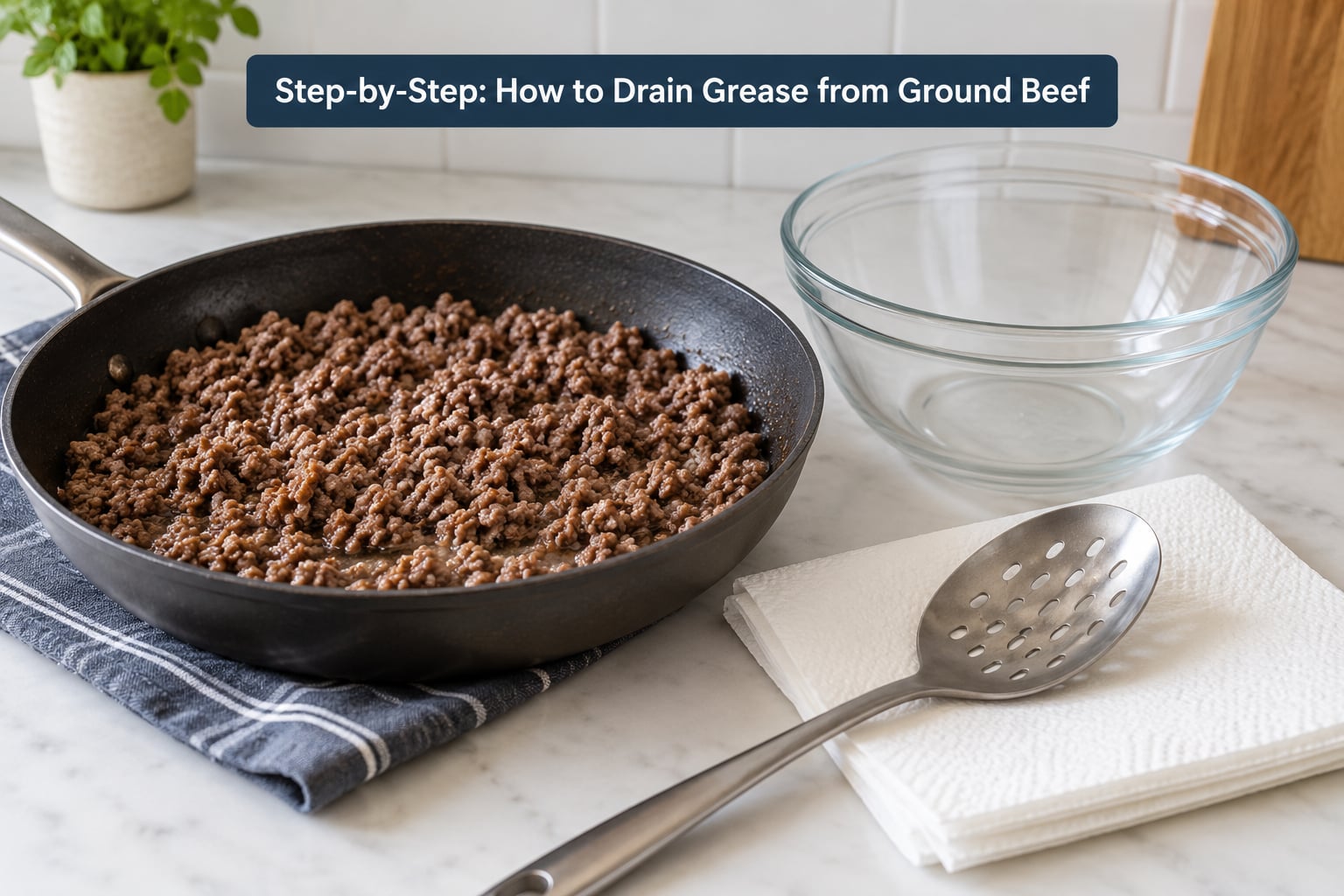
Heat a skillet over medium or medium-high heat and add the beef. Break it up with a spatula and spread it into a thin layer so it browns rather than steams. Leave it alone in the pan to let the fat render out.
Cook ground beef to 160 F (71 C) as the USDA recommends, then check the color. Clear rendered fat collects at the edge of the pan while the solid bits stay in the middle. When you see that clean pool of fat, the job is done. For more on breaking down the meat properly, see how to grind beef with a food processor for a finer texture.
Let the Fat Pool or Solidify
Tilt the skillet away from you and the fat runs downhill into a shallow lake at the low edge. Push the beef to the opposite side with a spatula and hold it there. That single tilt is what makes the paper towel method work.
For larger amounts, transfer everything into a heat-safe container and refrigerate it until the fat firms up, usually one to two hours. Cold fat is solid enough to scoop out with a spoon, which is easier and safer than pouring a hot stream. This is also the answer for anyone who has to drain one-handed, since there is no tilt to hold and no hot liquid to control. Let it cool first if the container is plastic; hot grease will warp or melt most plastic tubs.
Remove the Grease Without Losing the Juices
Fold a paper towel into a flat pad, grip it with tongs, and press it down into the pooled fat. Hold it for a few seconds, lift, and set it aside. Repeat with a fresh section of towel until the pan looks matte rather than glossy.
That is the whole trick. You want to remove the big pool, not every trace. A thin film of fat left in the pan is what keeps taco meat tender and chili rich. Strip it completely and the beef tastes dry, and any burger built from it loses the thing that makes it good; sticky grill tips for burgers aside, fat is what seasons the crust.
Use the Right Method for Uncooked Ground Beef
You cannot drain raw beef the way you drain a cooked pan. The fat is still locked inside the muscle tissue and there is nothing pooled to lift out.
What you can do instead is reduce it before cooking. If you bought an 80/20 or 85/15 blend for taco meat or sloppy joes, put the raw beef in a colander set over a bowl, leave it in the refrigerator for 20 to 30 minutes, and let gravity pull what it can. Some people rinse browned beef under hot water in a second pot, which shifts an 80/20 batch toward leaner. Skip it for burgers, because it strips the flavor that makes a good patty taste like beef.
Pick the Right Method for the Dish
How much grease you should take out depends entirely on what you are making.
| What you are making | Drain it? | How much to leave |
|---|---|---|
| Burger patties | No | All of it. The fat is the flavor. |
| Taco meat, burrito filling | Yes | A thin film, or tortillas go soggy |
| Chili, sloppy joes, meat sauce | Yes | A little, for richness |
| Hamburger helper, cheeseburger soup | Yes | Most of the pool removed |
| Meat going into a stew | No | All of it, the fat seasons the pot |
Lean ratio decides the rest. 90/10 lean usually renders a small amount that most people leave alone. 80/20 gives you a real pool worth removing for anything but burgers.
Use a Colander When the Batch Is Big
Over a pound of beef, a colander beats a towel because you remove everything at once. Set a colander over a heatproof bowl, ideally with a sheet of foil or a couple of paper towels crossed in the bottom so grease running up the sides wicks instead of pooling.
Tip the contents in, let it drip for 30 seconds, then lift the beef out with the slotted spoon. Never use a thin plastic tub for this; hot grease softens it and the whole thing can go. If you do not own a colander, a fine mesh strainer over a bowl works, or simply use the cold-fridge method above and skip the pour entirely.
How to Dispose of Ground Beef Grease Safely
Never pour ground beef grease down the sink, hot or cold. Liquid fat runs along the pipe, cools, and hardens into a solid plug that catches food particles and soap scum. That is how clogs and sewer backups start, and running hot water after it only pushes the problem deeper into the line.
Pick one receptacle and keep it by the sink. An empty metal can from the pantry works well. A foil liner pressed into a bowl shape and set over the drain works too. A sour cream or yogurt tub is fine once the fat has cooled and you can carry it without it sloshing. When the grease has fully set, scrape the solid fat into the trash and wash the container with hot, soapy water.
The trick with plastic liners is timing. Hot grease melts a thin bag and leaks, so let the fat cool and thicken in a rigid container first, then scrape it into the bin. If you like cooking with fat, a jar of strained beef grease in the fridge is skillet lard, and it seasons fried eggs, potatoes, and cornbread better than butter does.
Common Mistakes
Pouring grease down the drain. Fix: use a can, a foil liner, or a disposable container, and wait for the fat to set before scraping it into the trash. Tip: keep a metal can in the sink permanently so the decision is already made when the pan is hot.
Draining the beef into the sink. This is the most common complaint on cooking forums, and it happens the moment you tip a full pan toward a colander. Fix: hold the meat back with the pan lid or a slotted spoon while the fat runs off, or drain in place with the paper towel method. Tip: if you must pour, set the colander in the sink first and keep the meat piled high on the far side of the pan.
Removing every bit of fat. You will end up with dry, dull beef. Fix: wipe out the visible pool and stop there. Tip: for taco meat, a thin film is the difference between tender filling and dry crumbles.
Using a container that cannot take the heat. Thin plastic tubs warp instantly and leak hot fat. Fix: use metal, glass, or a foil-lined bowl. Tip: if you only own plastic, let the pan cool first and scrape the fat out solid.
Rinsing beef under the tap. This one shows up constantly on social video and it is the worst advice in the topic. Rinsing cooked ground beef washes away the browned bits and flavor, leaves the meat dry, and sprays raw or undercooked meat juices across your sink and hands. Fix: drain in the pan or through a colander instead. Tip: the same logic rules out rinsing raw beef before cooking.
Salting and draining in the wrong order. Salt pulls moisture and fat out of the meat. Fix: season after you drain if you want the leanest result, or season first if you want the fat pulled out during cooking. Tip: for macros, drain first, then salt, then weigh.
Trying to tilt a multicooker insert. The Instant Pot liner sits flat in the base and will throw hot contents everywhere if you tip it. Fix: use the sauté setting to brown in an open pot, or set the insert on a trivet once the cooking cycle is finished and scoop the fat off the top. Tip: chilling it flat in the fridge works too, since the liner does not tilt.
Frequently Asked Questions
Should I drain ground beef before or after cooking?
After cooking, almost always. Raw beef holds its fat inside the tissue, so there is nothing to remove before the pan. Once browned, the melted fat floats on top of the juices and can be lifted out with a folded paper towel and tongs. Before cooking you can only skim what rises in the pan, which is a small amount and not worth the effort.
How much grease should I remove from ground beef?
Remove the visible pool and leave a thin film behind. For taco meat and sloppy joes, take out most of it so the filling stays dry. For chili and meat sauce, a little fat adds richness you cannot replace. For burger patties, drain nothing. The fat in a patty is what gives the crust flavor and keeps the middle from going dry.
Does draining grease make burgers taste less flavorful?
It can, if you take out all of it. Ground beef carries most of its flavor in the fat, and a burger with none of it left tastes flat no matter how well you season it. Most cooks wipe out the pooled fat after boning taco meat or sauce, but leave the patty untouched. If you want less fat in a burger, buy a leaner blend rather than draining after cooking.
What is the easiest way to drain grease from cooked ground beef?
Push the browned beef to one side of the skillet, tilt the pan so the fat pools, and press a folded paper towel held with tongs into the liquid. Lift, set it aside, and repeat with a fresh section. It takes under a minute, needs no strainer, and avoids a hot pour entirely, which is why it has become the default method in home kitchens.
Can I pour ground beef grease down the sink?
No. Hot grease solidifies as it cools inside the drain line and bonds with food particles and soap residue to form a blockage. Running hot water after it does not clear it out, it moves the clog deeper. Pour the fat into a metal can, a foil liner shaped like a bowl, or a disposable container, let it cool until solid, then scrape it into the trash.
How should I store ground beef that has had grease drained out?
Refrigerate it in a sealed container and use it within three to four days, or freeze it for longer storage. If you browned the beef first, let it cool uncovered for no more than an hour or two before sealing. Keep raw beef on a separate tray from ready-to-eat food, and wash hands and surfaces with hot soapy water after handling it.
Conclusion
Brown the beef until it reaches 160 F and clear fat pools at the edge of the pan, collect it with a folded paper towel held in tongs, and stop before the pan looks dry. For batches over a pound, use a colander lined with towels over a bowl, or chill the mixture first and lift out the solid fat. Either way, put the grease in a metal can or foil-lined container, let it set, and scrape it into the trash rather than the sink. Leave a thin layer of fat behind, keep it all for patties, and start with the towel method for everything else.