
Learning how to make shepherd’s pie comes down to two things: a filling that has actually reduced, and mashed potatoes spread thin enough to brown. Brown the meat, cook the flour for a full minute, let the gravy simmer until it coats a spoon, then seal the potatoes to the rim of the dish and bake at 400°F (200°C) for 25 to 30 minutes. That is the whole technique. Everything else is ingredients.
A good shepherd’s pie takes about an hour and fifteen minutes from cold counter to first slice, most of it hands-off once it goes in the oven. It is the kind of dinner that fills a house on a cold night, and it reheats better than almost anything else in the freezer.
Worth saying before we start: shepherd’s pie is traditionally made with lamb, and the same dish made with ground beef is usually called cottage pie. In American kitchens the names get swapped constantly, and nobody is going to argue with you at dinner. Use whichever meat you actually want to eat.
What You Need
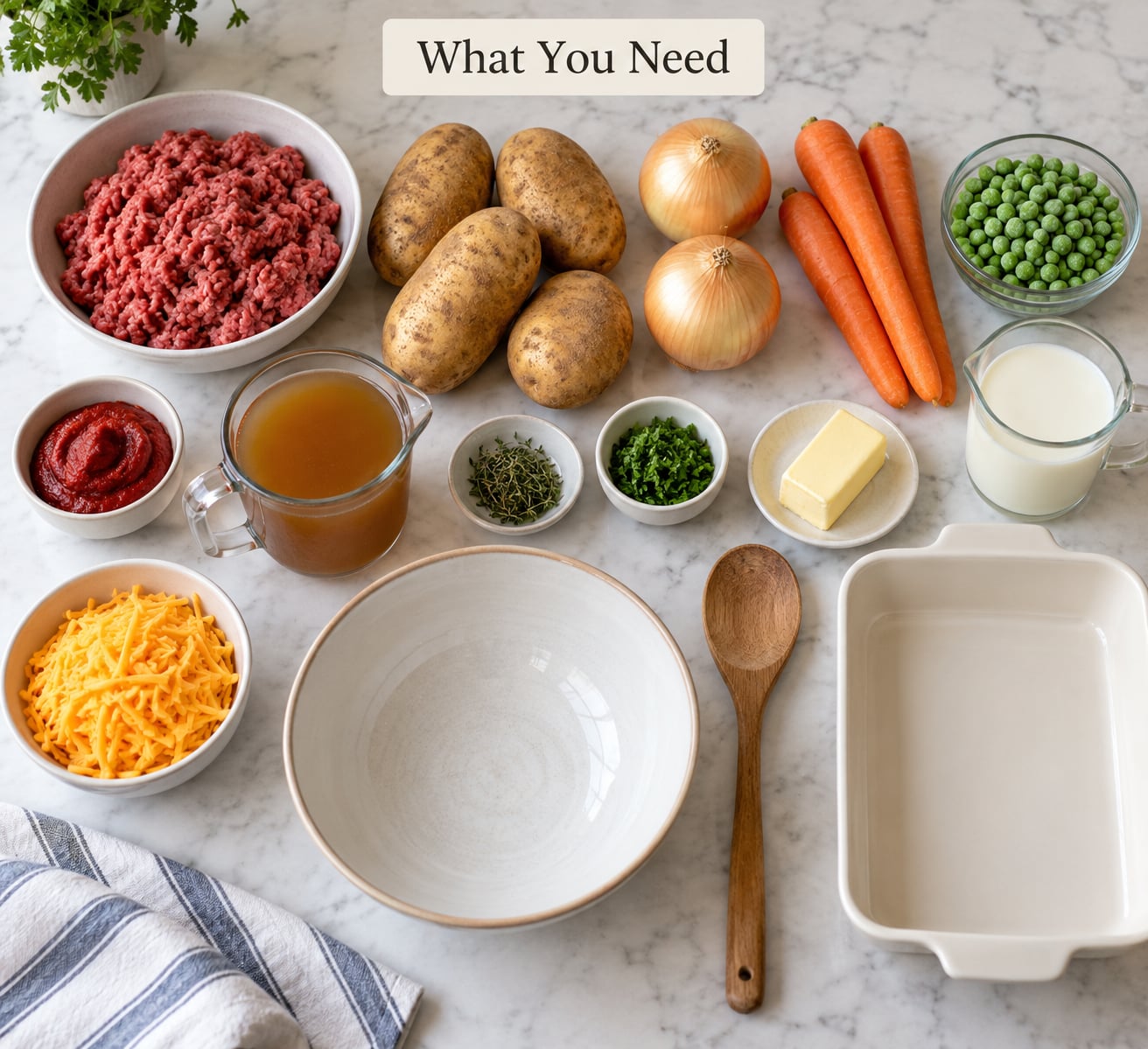
The quantities below fill a 9×13-inch (23×33 cm) casserole and serve six to eight people. Everything is a pantry staple except the meat and the potatoes, which is why this is one of the cheapest dinners you can make from scratch.
For the filling:
- 1.5 lb (680 g) ground lamb, ground beef, or a mix of the two
- 1 large yellow onion, diced
- 2 carrots, diced
- 2 cloves garlic, minced
- 2 tbsp unsalted butter
- 2 tbsp all-purpose flour (or 3 tbsp cornstarch for a gluten-free version)
- 1.5 cups (360 ml) beef broth, plus more if needed
- 2 tbsp tomato paste
- 1 tbsp Worcestershire sauce
- 1 tsp dried thyme, or 1 tbsp fresh thyme leaves
- 1 bay leaf
- 2 cups (300 g) frozen peas and carrots, or 1 cup each of frozen peas and diced carrots
- Salt and black pepper
For the potato topping:
- 2.5 lb (1.1 kg) russet or Yukon Gold potatoes, peeled and cut into 1-inch chunks
- 4 tbsp (60 g) unsalted butter
- 3/4 cup (180 ml) whole milk or heavy cream, warmed
- 1 egg yolk, beaten (optional, but it helps the top hold its shape)
- 1/4 cup (25 g) grated Parmesan (optional)
- 1 tsp salt and a few grinds of black pepper
- 1 to 1.5 cups (120 to 180 g) grated sharp cheddar (optional)
Equipment: a 9×13-inch casserole or deep pie dish, a large skillet or Dutch oven with a lid, a potato masher or ricer, and a colander. A sheet pan lined with foil set under the casserole catches boil-over, which is worth doing if your oven runs hot.
Pan size and scaling: a 9×9-inch square pan works but feeds four and bakes in about 25 minutes. An 11×7-inch pan is the sweet spot for six. A 9×13 holds the full recipe for six to eight. For a crowd of twelve, double everything and use two 9×13 dishes rather than one deep dish, because a filling stacked more than two inches deep will not heat through in the same time.
What to prep ahead: dice the onion, carrots, and garlic the night before and keep them in a container in the fridge. Peel and cut the potatoes too, submerged in cold water. Both jobs take fifteen minutes and save you twenty on the night.
How to Make Shepherd’s Pie Step-by-Step
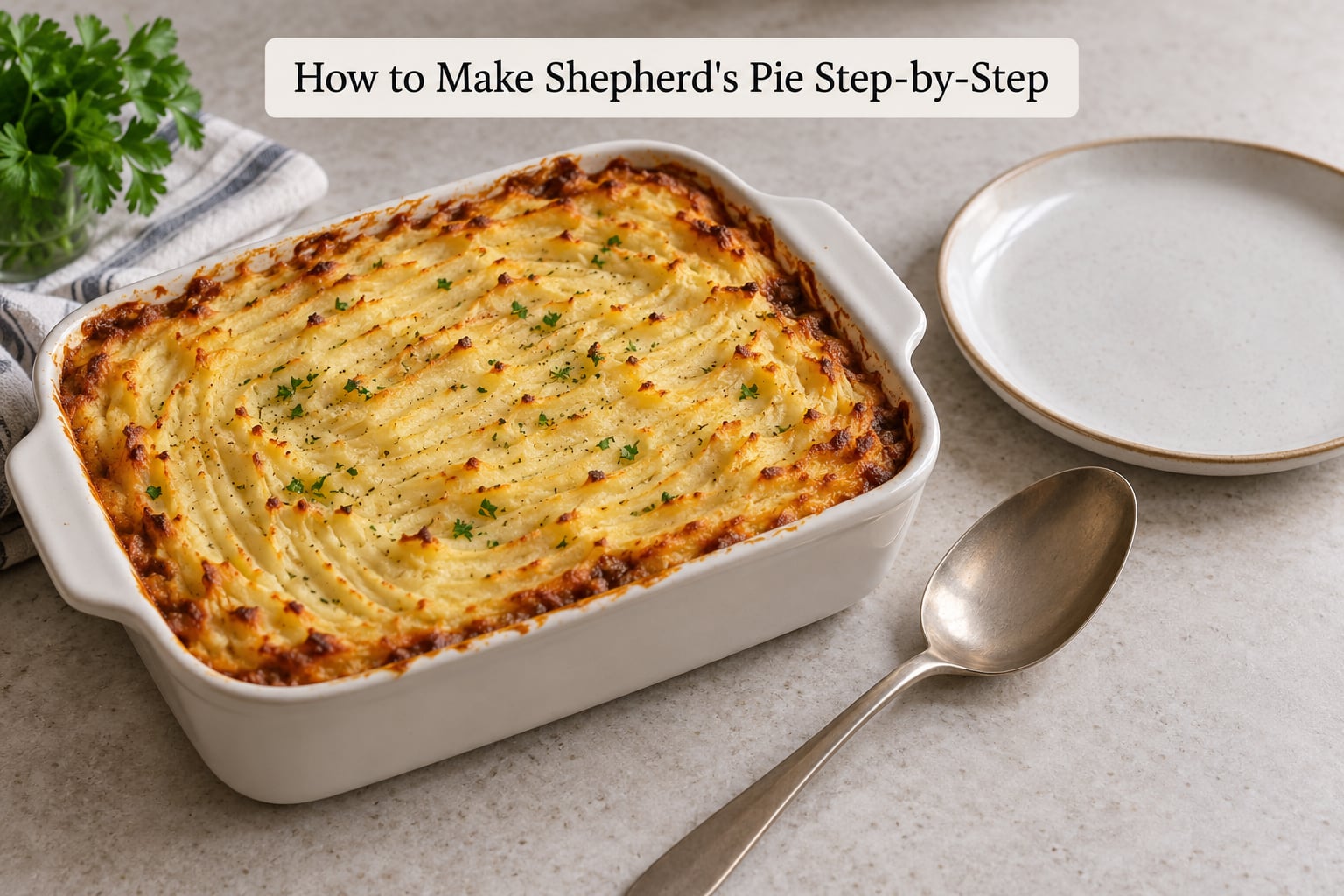
The order matters. If you make the mashed potatoes first, they sit and glue together while you cook the filling. Cook the filling first, then boil the potatoes, then mash, then assemble. The timing feels effortless once you have done it once.
Cook the Filling Without Making It Watery
This is where most pies go wrong, so give it the most attention. A thin, pooling gravy turns the bottom of the dish into a soggy layer that steams instead of baking.
- Brown the meat in a dry pan. Heat the skillet over medium-high heat with no oil. Add the ground meat in a single layer and leave it alone for two to three minutes. Nonstick pans cannot develop fond, and fond is the browned, meat-flavored residue on the bottom of the pan that gives the gravy its backbone, so use stainless steel or cast iron if you have it.
- Break it up and season. Add a pinch of salt, then brown for another four to five minutes, breaking the meat into chunks as it colors. When it is deeply browned with a few crisp edges, move it to a plate. Do not drain the fat.
- Soften the vegetables. Turn the heat to medium. Melt the butter in the same pan, add the onion and carrots, and cook for six to eight minutes until soft and translucent with the first hint of color at the edges. Add the garlic and thyme for the last minute, then stir in the tomato paste and cook it for 30 seconds until it darkens to brick red.
- Cook out the flour. Sprinkle the flour over the vegetables and stir constantly for a full minute. Sixty seconds is the difference between a nutty gravy and one that tastes of raw paste. Keep it moving.
- Deglaze and simmer. Pour in the broth and scrape the bottom of the pan with a wooden spoon to lift every browned bit. Add the Worcestershire sauce and bay leaf. Bring to a simmer, return the meat, add the frozen vegetables, and simmer uncovered for 10 minutes.
- Test the thickness. Tilt the pan and drag a spoon through it. The sauce should leave a clean trail that holds for a second before closing. If it runs like milk, simmer it another three to five minutes. If it is thicker than you want, stir in a splash of broth. Season with salt and pepper and turn off the heat.
If your gravy still will not thicken, whisk 1 tbsp cornstarch with 2 tbsp cold water in a small bowl and pour it into the simmering pan while stirring. Give it a minute and check again. Cornstarch gives a shinier, clearer gravy than flour, which is why it is the standard move for a rescue.
Mash the Potato Topping for a Golden Finish
Good mashed potato topping is uneven on purpose. You want soft ridges and peaks that catch the heat, not a smooth paste that dries out and cracks in the oven.
- Start in cold salted water. Put the cut potatoes in a large pot, cover with cold water by an inch, and salt it until it tastes like the sea. Starting in boiling water cooks the outsides before the centers and gives you the gluey, gummy texture people complain about.
- Boil 15 to 20 minutes. Bring to a boil and simmer until a knife slides into a chunk with no resistance. Drain in a colander and let them sit for two minutes so the excess water drains off.
- Mash while hot. Put them back in the warm pot with the butter and mash. A ricer gives the lightest texture, but a masher is fine as long as you stop while some lumps remain.
- Add the liquid gradually. Pour in the warmed milk a little at a time, stirring, until the mash is soft and spreadable but still holds a shape when you scoop it. More milk than you think is the usual culprit behind gluey potatoes.
- Season it like you mean it. Stir in the egg yolk, Parmesan if using, the salt, and the pepper. Taste it. The topping is the biggest bite on the plate, so it should be seasoned noticeably more than feels necessary.
Assemble and Bake the Shepherd’s Pie
Assembling is where shepherd’s pie either seals properly or boils over your oven. Start the potatoes at the edge of the dish and work inward.
- Spread the filling first. Spoon the meat and vegetable mixture into the casserole and smooth it into an even layer about two inches deep.
- Seal the edges. Drop the first spoonfuls of potato at the rim and press them firmly against the sides of the dish so they meet the filling with no gap. That seal is what keeps the gravy from pushing up through the top.
- Fill in the middle. Add the remaining mash in dollops, leaving them lumpy rather than flattening them. Rough peaks brown better than a smooth sheet.
- Ridge and glaze. Drag the back of a fork lightly across the surface, no deeper than a quarter inch. Brush with a little melted butter or a beaten egg for extra shine and color. Scatter over the cheddar if you are using it.
- Bake at 400°F (200°C) for 25 to 30 minutes. Put the dish on the center rack. It is done when the potato peaks are golden brown, the edges are bubbling, and the center of the dish is hot. Ground beef and lamb need to reach 160°F (71°C) for food safety; a probe into the center of the filling should read that.
- Rest 10 to 15 minutes before slicing. The filling needs that time to set so the slices hold together. If you want an extra-deep golden top, move the dish under the broiler for the final two minutes and watch it closely.
Two shortcuts work well if you need them. You can skip the oven entirely and brown the assembled pie on the stovetop in a covered skillet over medium-low heat for about 25 minutes, which is how a lot of British cooks do it. And you can assemble the pie up to three months ahead, freeze it unbaked, then bake from frozen at 350°F (175°C) for about 45 minutes, or overnight in the fridge and then at 400°F for 30 minutes.
Leftover roast meat works too. Shred any beef, lamb, or chicken you have left over from the weekend and swap it in for the ground meat, browning it briefly before the vegetables go in. My oven pulled pork is the one I reach for most, shredded fine so it behaves like ground meat in the filling.
Common Mistakes
Almost every disappointing shepherd’s pie traces back to one of these. Run down the list before you blame the recipe.
- The filling is watery at the bottom. The gravy did not reduce. Simmer it until it coats the back of a spoon before it goes in the dish, and remember that liquid keeps releasing from vegetables as they bake. A cornstarch slurry of 1 tbsp cornstarch to 2 tbsp cold water, stirred in while the pan simmers, fixes it fast.
- The gravy boiled up through the top and made a mess. The potato layer did not reach the sides. Press the first potatoes firmly against the rim of the dish, and set the casserole on a foil-lined sheet pan so the overflow lands on foil.
- The potatoes are gluey and gummy. Two causes: the potatoes went into already-boiling water, or they were overworked. Start in cold salted water, drain well, and mash with a light hand. A ricer is the safest tool if your masher tends to turn to paste.
- There is a thin, burnt-looking layer under the filling. The dish sat on a cold burner too long, or the filling was loose. A hot oven preheated for a full 10 minutes and a properly reduced filling fix both.
- The gravy tastes of raw flour. The roux did not cook. Stir the flour into the vegetables for a full minute before any liquid goes in. If you already missed it, simmer the finished gravy for five more minutes.
- Everything tastes bland. Salt the meat, salt the gravy after it reduces, and season the mash on its own. Three separate seasoning points beat one heavy-handed pass at the end.
- The top is pale and flat. You smoothed it too much, used too little butter, or did not bake long enough. Fork ridges, a butter or egg glaze, and a genuine 25 to 30 minutes in a hot oven give you that craggy golden crust everyone is after.
- The slices fall apart when lifted. The pie was cut straight out of the oven. Rest it 10 to 15 minutes, or chill it for 20 minutes first if you are serving a crowd, and use a wide spatula to lift from the bottom.
Tips worth keeping: Russet potatoes give the fluffiest, driest topping, which is what you want for a crust. Yukon Gold makes a creamier one with more flavor. For make-ahead, assemble unbaked, cover tightly, and refrigerate up to two days or freeze up to three months. Refrigerate cooked leftovers within two hours and use them within three to four days; reheat to 165°F (74°C). Serve it with a sharp green salad, steamed peas, or nothing more complicated than buttered bread, since a quick batch of chili sauce on the side covers the same crowd on a game night.
Frequently Asked Questions
Should shepherd’s pie use beef, lamb, or both?
Traditionally it uses ground lamb, which is why lamb is the classic choice and gives the filling a rich, slightly gamy flavor. Ground beef is the version most American cooks make and what the name cottage pie originally referred to. A half-and-half blend of the two is a good middle ground for a first time cook. Turkey and chicken work too, but they need more Worcestershire sauce and a longer simmer to taste seasoned.
Why is my shepherd’s pie watery at the bottom?
Almost always because the filling was not reduced before assembly. Simmer the gravy uncovered until it coats the back of a spoon and leaves a clean trail when you drag a spoon through the pan. If you are already assembled, lift the potatoes carefully and simmer the filling on the stove until it thickens, then re-cover. A slurry of 1 tablespoon cornstarch whisked with 2 tablespoons cold water, poured in while simmering, thickens it in about a minute.
Can I make shepherd’s pie ahead of time?
Yes, and it is one of the best reasons to make it. Assemble the pie unbaked, cover it tightly with plastic wrap or foil, and refrigerate for up to two days. Bake from chilled at 400°F (200°C) for 35 to 40 minutes, since a cold dish takes longer to heat through. If you are baking from refrigerated, let it sit on the counter for 20 minutes first so it does not shock the glass dish.
Can shepherd’s pie be frozen?
Shepherd’s pie freezes well unbaked. Assemble it, cover tightly in foil, and freeze up to three months. Thaw overnight in the refrigerator and bake at 400°F (200°C) for about 30 minutes, or bake straight from frozen at 350°F (175°C) for 45 minutes. Freezing cooked pie works too, but the potato topping turns a little grainy, so unbaked is the better option if you can.
What is the best way to reheat shepherd’s pie?
For a single portion, cover it with foil and bake at 350°F (175°C) for 20 to 25 minutes, or microwave on half power in three minute bursts until the center reaches 165°F (74°C). From frozen, go straight to a covered 350°F bake for 40 minutes. If you have leftover gravy, spoon a little over the top before reheating and it will not dry out. Loosely cover the top with foil if it is browning too fast.
Can I use mashed sweet potatoes instead of regular potatoes?
Yes, and it is a common variation, especially for a side dish at Thanksgiving. Roast or boil the sweet potatoes the same way, mash with butter and a little milk, and expect a sweeter, softer topping that browns faster, so pull it from the oven a few minutes early. Cauliflower mash also works well and is much lower in starch. Use the same method either way, and make sure whichever mash you choose is seasoned on its own.
Conclusion
Good shepherd’s pie is one technique repeated: cook the filling until it is no longer watery, season it in three places, spread a rough layer of well-seasoned mash that touches the sides of the dish, and bake until the peaks are golden and the center hits 160°F (71°C). Start there and the rest takes care of itself.
If you are making it tonight, begin by browning the meat in a dry stainless pan and letting it sit untouched for two full minutes before you touch it. That browning, plus a full minute of cooking time for the flour, is where the flavor lives. The rest is just baking, resting, and cutting into generous squares.