
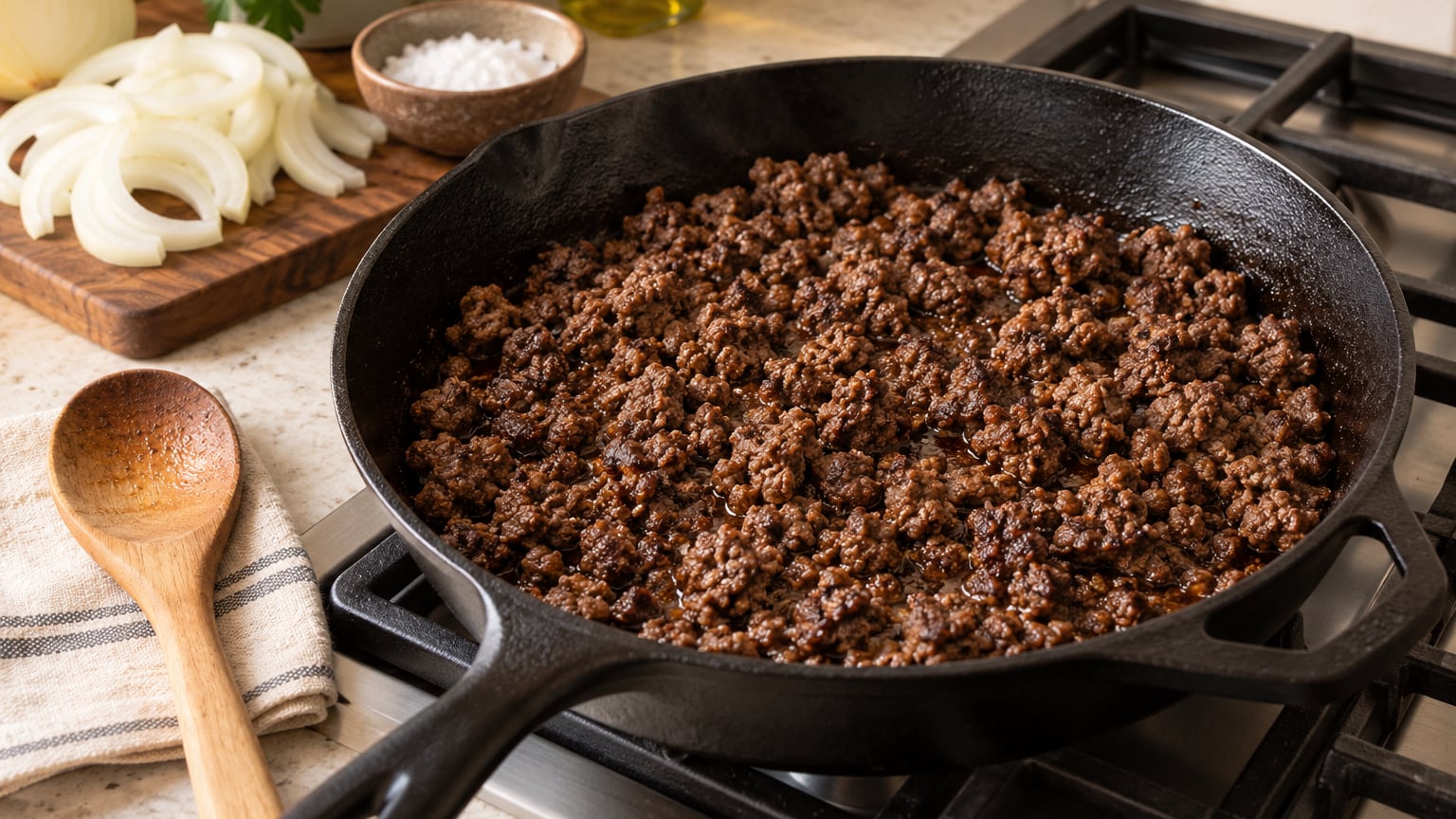
How to brown ground beef properly comes down to three things: a wide pan hot enough to sear, meat that touches that pan in one loose layer, and patience. Break the beef into big pieces, leave it alone for 3 to 4 minutes, then chop it down and let it sit again between stirs. Finish at 160F / 71C with no pink left.
The whole thing takes about 10 minutes of active cooking. I do it most weeknights for taco filling, chili base, and sloppy joes, and the difference between well-browned beef and grey beef is the single biggest flavor jump in the pan.
What You Need
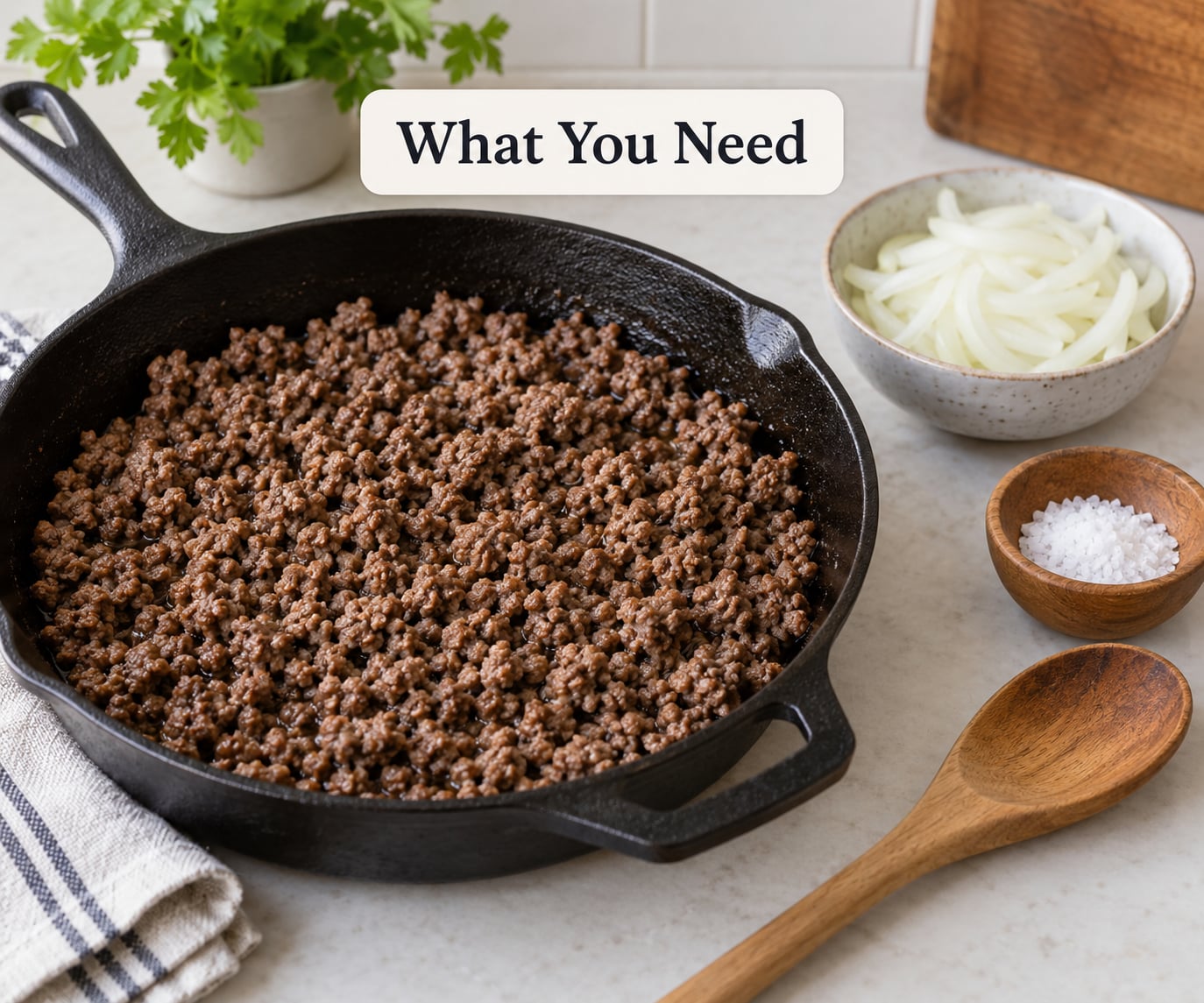
A wide pan is the first requirement, and width matters more than material. Give yourself roughly one pound of beef per 10- or 12-inch skillet so the meat sits in a single loose layer with a little space between the pieces.
Cast iron and stainless steel both hold heat well and brown ground beef the way a restaurant line does. A nonstick skillet works too, but its coating releases browning at slightly lower temperatures, so the crust develops a bit more slowly and a little less deeply.
- Pan: 10- or 12-inch cast iron or stainless steel skillet, with a lid nearby for the splatter.
- Utensil: A wooden spoon or a thin metal spatula that can chop and scrape. A fish spatula works well because it slides under crust without tearing it.
- Seasoning: Kosher salt, plus anything else you build flavor with, garlic powder, cumin, chili powder, or black pepper.
- Fat: Optional. 80/20 beef renders enough fat on its own; lean 90/10 usually wants a tablespoon of neutral oil with a high smoke point.
- Grease control: A heatproof bowl or a splatter screen, plus tongs for pulling out big fat chunks.
If you grind your own, the fat ratio you set there carries straight into how it browns. Our guide on how to grind your own beef for burgers at home walks through picking a fat percentage for browning.
Step-by-Step: How to Brown Ground Beef Properly
Step 1: Prepare the Beef and Pan
Pat the beef dry if you can. Loose surface moisture is the enemy of browning, and squeezing out water with a paper towel takes 20 seconds and removes the single most common reason ground beef turns grey.
Heat the empty skillet over medium-high for 2 to 3 minutes until it is hot enough that a drop of water skitters and vanishes. For fatty beef, skip the oil. For lean beef, add a thin layer of oil now so the meat does not weld itself to the metal.
Step 2: Start Cooking Without Disturbing the Beef
Drop the beef in as 2 or 3 large chunks with space between them, or press it into one loose brick about an inch thick. This is the move a Facebook cooking group post with 81.5K reactions pushed, and the same idea behind the 3.6M-view brick-of-beef video that keeps circulating: heat needs flat surface contact to work.
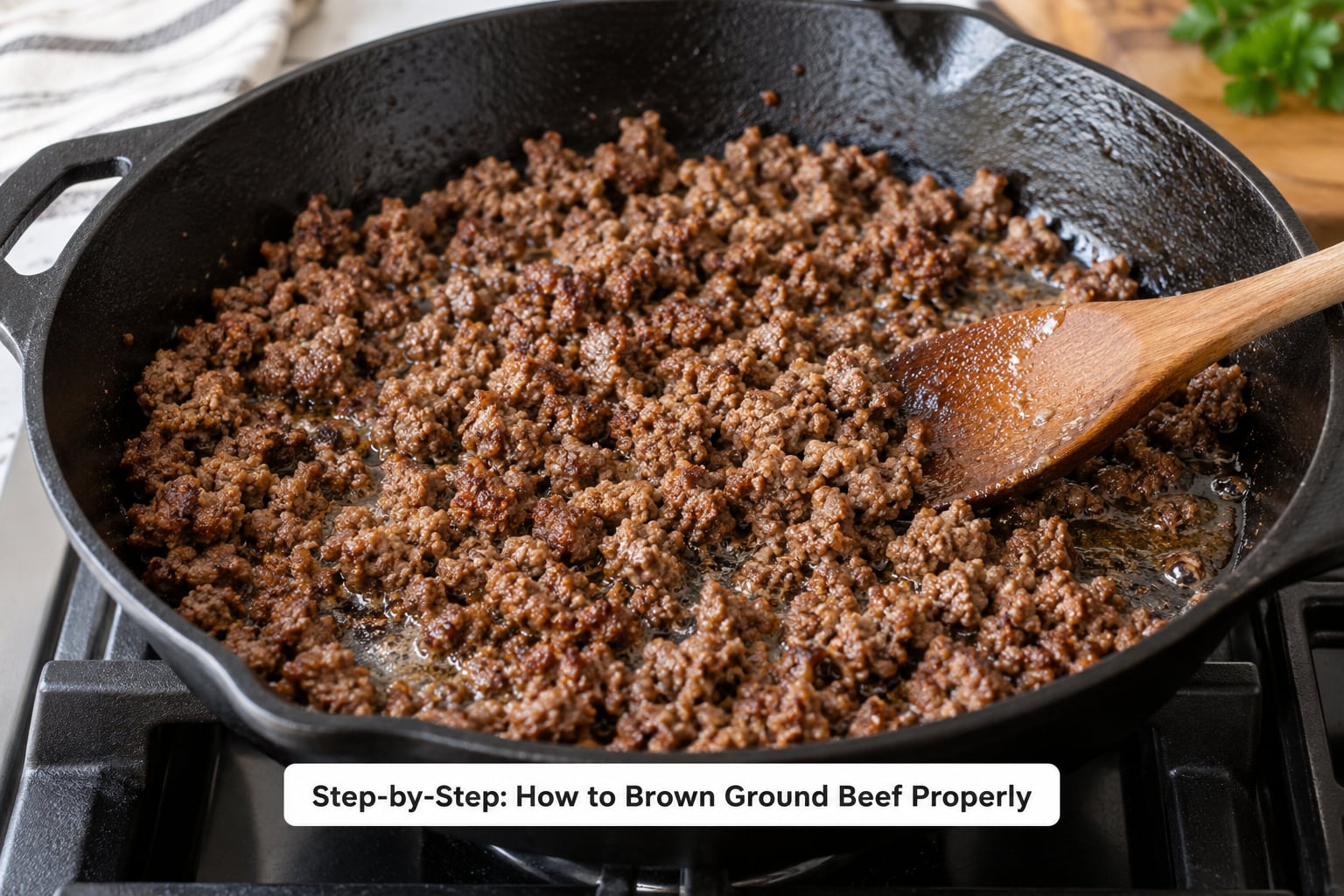
Then walk away for 3 to 4 minutes. Do not stir, do not press, do not check. You are looking for the underside to turn deep brown and the edges to go dark red-brown, not grey.
Step 3: Break It Up and Build Browning
Flip the chunks or cut them in half with the edge of the spatula, then let them sit another 2 to 3 minutes. Only after those surfaces have colored should you chop the meat into smaller crumbles.
Keep chopping in batches rather than all at once. Each new crumble face hits the hot pan, sizzles, and holds for a minute or two before you move it again. Constant stirring is what turns a good sear into grey boiled beef.
Cook in batches if you must. Two pounds of beef in a 10-inch skillet piles into a steam bath, and that is the most common fix needed in home kitchens with one big family.
Step 4: Season and Finish Cooking
Add salt after the browning, not before, along with any spices. Salt applied at the start pulls moisture out of the surface and slows exactly the crust you are trying to build. Experienced cooks on Reddit’s r/Cooking thread about seasoning ground beef make the same call for the same reason.
Onions and garlic go in now, once the meat has color, so they brown rather than burn. Cook until there is no pink left anywhere, then check the largest crumble with an instant-read thermometer. USDA guidance puts the safe minimum internal temperature for ground meat at 160F / 71C.
Tilt the pan and spoon off the excess rendered fat, or lift out big chunks with tongs, before serving. That grease is the reason a taco filling tastes heavy rather than clean.
Why Grey Beef Happens and What It Means
Grey ground beef is beef that boiled in its own liquid instead of searing. When you crowd the pan, crowd it with cold meat, or stir constantly, the surface moisture has nowhere to go. It pools, the pan temperature crashes, and the meat sits in steam rather than reaching the roughly 300 to 400F surface temperature the Maillard reaction needs.
Plenty of people ask whether grey beef is safe to eat. It is. Colour on cooked ground meat is not a doneness test. Temperature is, and 160F / 71C is the number that matters. Grey beef is simply pale and flat tasting, which is a flavor problem, not a health one.
Dark red or chocolate brown is also fine, and it is the sign you are after. The crust on well-browned beef is deeply browned with a reddish edge, nutty and roasted rather than acrid. Burnt tastes bitter and smoky and smells acrid, which is different from rich. If it tastes clean and savory, it browned. Reddit’s r/cookingforbeginners has a long thread on exactly this dark red versus burnt confusion, and the answer there lands the same way.
Crumble Method vs Brick Method
Both techniques work. They trade crumbles for crust, and the right one depends on how much time you feel like standing at the stove.
| Technique | Pan space needed | Time to brown | Best for |
|---|---|---|---|
| Loose crumbles from the start | Full pound per 10-inch pan | 8 to 10 minutes | Quick weeknight taco filling |
| Brick, then chopped | Half the pan, one slab | 10 to 12 minutes | Chili, sloppy joes, sauces where flavor leads |
| Shallow patty, flipped | Full pan | 6 to 8 minutes | Crumbs with maximum surface area |
Cooks on Reddit’s r/carbonsteel argue for the patty approach because flattening the meat maximizes the surface touching the pan. They are right, and it is also the version that dries lean beef fastest, which is why I do not use it for 90/10.
Browning Lean Beef Without Drying It Out
Lean beef browns in half the time and drains in half the time. 90/10 has almost no fat to render, so it can scorch and tighten before you have built any crust at all. The adjustments are small: add a tablespoon of oil, work in batches so the pan stays hot, pull it off the heat the moment it colors, and season right away.
For a taco filling that stays juicy, 80/20 is the easier path. Its fat renders into the pan and bastes the crumbles from below, which is a technique r/burgers cooks like to point out, sometimes alongside a small pinch of baking powder in the raw beef to raise the surface pH and speed browning.
Fat ratio matters for the rest of the cook too. If you are forming patties rather than crumbles, our piece on the best beef to fat ratio for juicy burgers breaks down what each percentage does in the pan and in the burger.
Common Mistakes
Crowding the pan is mistake number one, and it has an easy fix: one pound per 10- to 12-inch skillet, cooked in batches if you have more. A second layer never touches the metal, so it can only steam.
A cold pan is mistake number two. Meat hits cold iron and sticks, then releases a layer of its own surface with it. Preheat empty for a few minutes, and test with a drop of water.
Constant stirring is mistake number three, and the most stubborn one. Every stir dumps warm liquid back onto a hot surface and resets the clock. Aim for a chop every 2 to 3 minutes, not a stir every 20 seconds.
Wet beef is mistake number four. Pat it dry, and if you rinsed it, let it drain on a rack. Surface moisture has to boil off before browning can start.
Salting too early is mistake number five. It draws moisture to the surface and slows the crust. Season near the end instead.
Burning the fond is mistake six, and it happens when you crank the heat to chase color after the beef is already done. Those browned bits at the bottom are the best flavor in the pan. If they go black, scrape them out and start the pan over.
Leaving all the grease in is mistake seven. Tilt and drain before serving, or the finished dish tastes heavy.
Frequently Asked Questions
Do I add oil before browning ground beef?
Only if the beef is lean. 80/20 and 85/15 render enough fat to cook in a dry pan, and added oil just gives you more grease to drain at the end. For 90/10, add about a tablespoon of a neutral oil with a high smoke point once the pan is hot, before the meat goes in. Bacon fat works too if you want extra flavor. Cast iron and stainless steel need it more than nonstick.
Why isn’t my ground beef browning in my pan?
Four things cause it: the pan is too crowded, it was not hot enough, the beef surface was wet, or you stirred too often. Each one puts liquid on the meat or drops the pan temperature, so the beef steams instead of searing. Use a 10- or 12-inch skillet for about a pound of beef, preheat it empty, pat the meat dry, and leave each side alone 3 to 4 minutes before chopping.
Is ground beef okay to eat if it turns grey?
Yes. Grey cooked ground beef is usually under-browned, not undercooked, and color is not a reliable doneness test for ground meat. Check temperature instead: USDA guidance gives 160F / 71C as the safe minimum internal temperature. Grey beef simply has no crust and tastes flat, so treat it as a technique problem rather than a safety one.
Should I salt ground beef before or after browning it?
After. Salt applied before cooking pulls moisture out of the surface and slows the crust you are trying to build, which is why many experienced cooks season at the end. Once the beef is deep brown with no pink left, salt it in the pan along with garlic powder, cumin, or pepper, and toss so it coats evenly before you drain the grease.
Can I brown ground beef in a cast iron skillet?
Yes, cast iron is one of the best pans for it. It holds heat better than most nonstick surfaces, so the beef keeps searing instead of cooling the pan down. Heat it empty first, use a little oil for lean beef and none for 80/20, and deglaze with water or stock after cooking to lift the browned bits. Avoid acidic tomato-based sauces sitting in bare cast iron for long stretches, since the acid can strip the seasoning.
How long does it take to brown ground beef?
About 8 to 12 minutes of active cooking for a pound, depending on fat content and how well you manage the pan. Lean beef colors in roughly 5 to 6 minutes and pulls off the heat early. Fatty 80/20 takes closer to 12, and the brick method adds a few minutes because you are browning each side separately. Internal temperature at 160F / 71C with no pink is the finish line, not the clock.
Conclusion
Start with the first move: heat a wide pan until it is genuinely hot, keep the beef dry, lay it down in one loose layer, and give it 3 to 4 minutes without touching it. Everything after that is adjustment.
Add oil and batch-cook for lean 90/10, skip both for 80/20, go heavy on the browning stage for chili and sloppy joes, and keep it moving for a fast taco filling. Browned beef you can use right away or refrigerate within two hours, though our guide to how long ground beef lasts in the fridge covers the storage window in detail.