
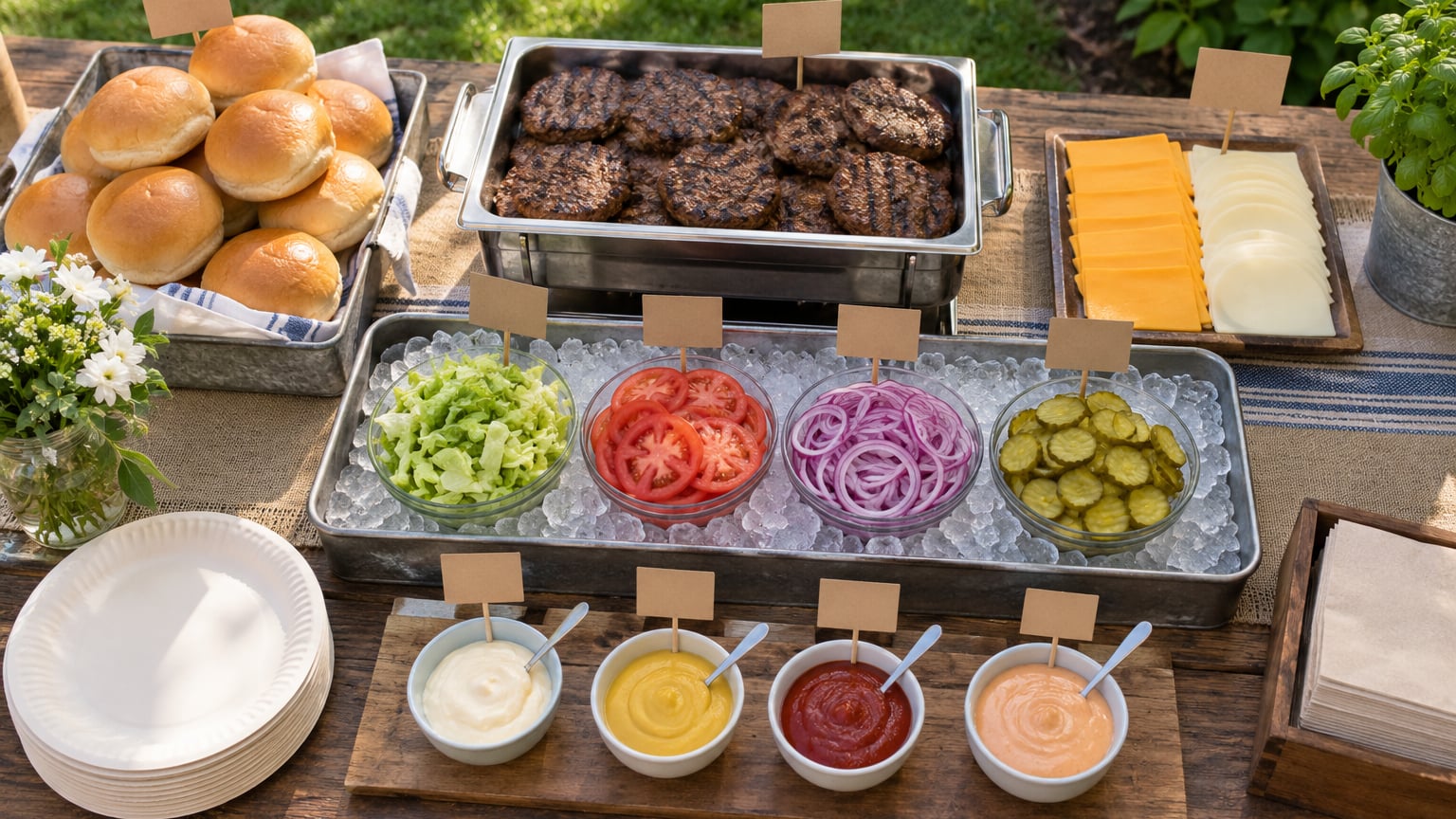
How to set up a burger bar at a party comes down to order: cook the patties ahead of time, then lay out buns, cheese, toppings and condiments in one left-to-right line so guests build their own burgers without queueing at the grill. It is the least stressful way I know to feed fifteen to forty people, and the whole setup takes about an hour once you know the sequence.
The trick is doing the work backwards. Decide how many patties, then think about where they will be held, then work out where the plates and napkins go first, because that is where every guest starts. Get that sequence right and the line moves on its own all afternoon. Get it wrong and you get a traffic jam at the buns while somebody’s fourth burger sits cold next to the grill.
What You Need
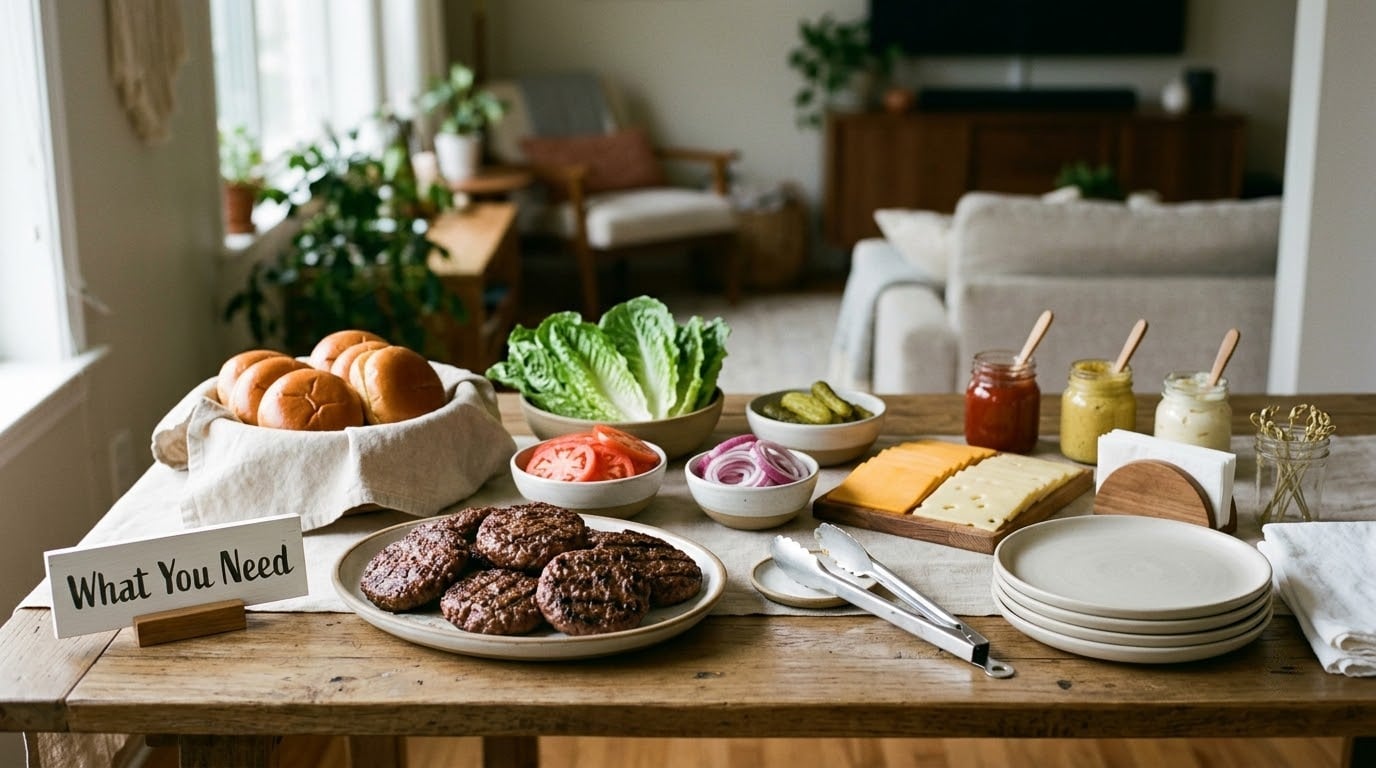
The core of a burger bar is simple: something to build with, something to put in it, something on top, and something to squeeze on. Everything else is logistics. Scale the list below for the size of your party.
Patties, buns and cheese
- Patties: 1.5 to 2 per adult guest, 1 per child. A third-pound patty is the standard serving size; three-ounce patties work for sliders.
- Buns: Buy one more than your patty count. Some guests build two small burgers instead of one large one, and running out of buns is the fastest way to end a burger bar.
- Cheese: One slice per patty plus 20 percent. Offer two or three kinds, no more. Cheddar and provolone cover most people; blue cheese crumbles go in their own small bowl with a dedicated spoon.
- Bun options: Brioche for the standard burger, plus a gluten-free bun or lettuce wraps on a separate plate if anyone needs them.
Toppings and condiments
- Classic: lettuce, sliced tomato, red onion, dill pickles, raw onion.
- Premium: caramelized onions, sautéed mushrooms, roasted green peppers, bacon, avocado, guacamole.
- Condiments: ketchup, yellow and spicy mustard, mayonnaise, a house special sauce, and one unexpected option like chipotle ketchup or pesto aioli.
- Seasonal extras: grilled onions, roasted red peppers, bruschetta tomatoes, sauerkraut, jalapeños.
Equipment and service ware
- Chafing dish, slow cooker on low, or a preheated oven at 200F to hold cooked patties
- Large ice bed or a couple of trays of ice to keep raw toppings cold
- Separate tongs and spoons for every topping bowl, so nobody doubles-dips and so allergens stay separated
- Small bowls or ramekins for condiments and a spoon for each one
- Wooden craft sticks or small labels for naming condiments
- Paper plates, sturdy plates if you want to save the landfill, napkins and a stack of wet wipes
- A small side table for bun wrappers and a trash or compost bin within a few steps of the line
How much to buy
For a small party of about 10 people, plan 15 patties, 16 buns, 18 cheese slices and 8 topping options. For 20 guests, go to 32 patties, 34 buns, 38 cheese slices and 10 toppings. For 30 to 40 guests, most hosts land on 50 to 60 patties, 55 buns, 65 cheese slices and 10 to 12 toppings, which usually means borrowing a second chafing dish.
One more consideration: if you offer two burger types, most guests will still choose beef. Split the total patty count roughly 70 percent beef and 30 percent alternatives rather than cooking two equal piles and watching half of them sit.
Step-by-Step: How to Set Up a Burger Bar at a Party
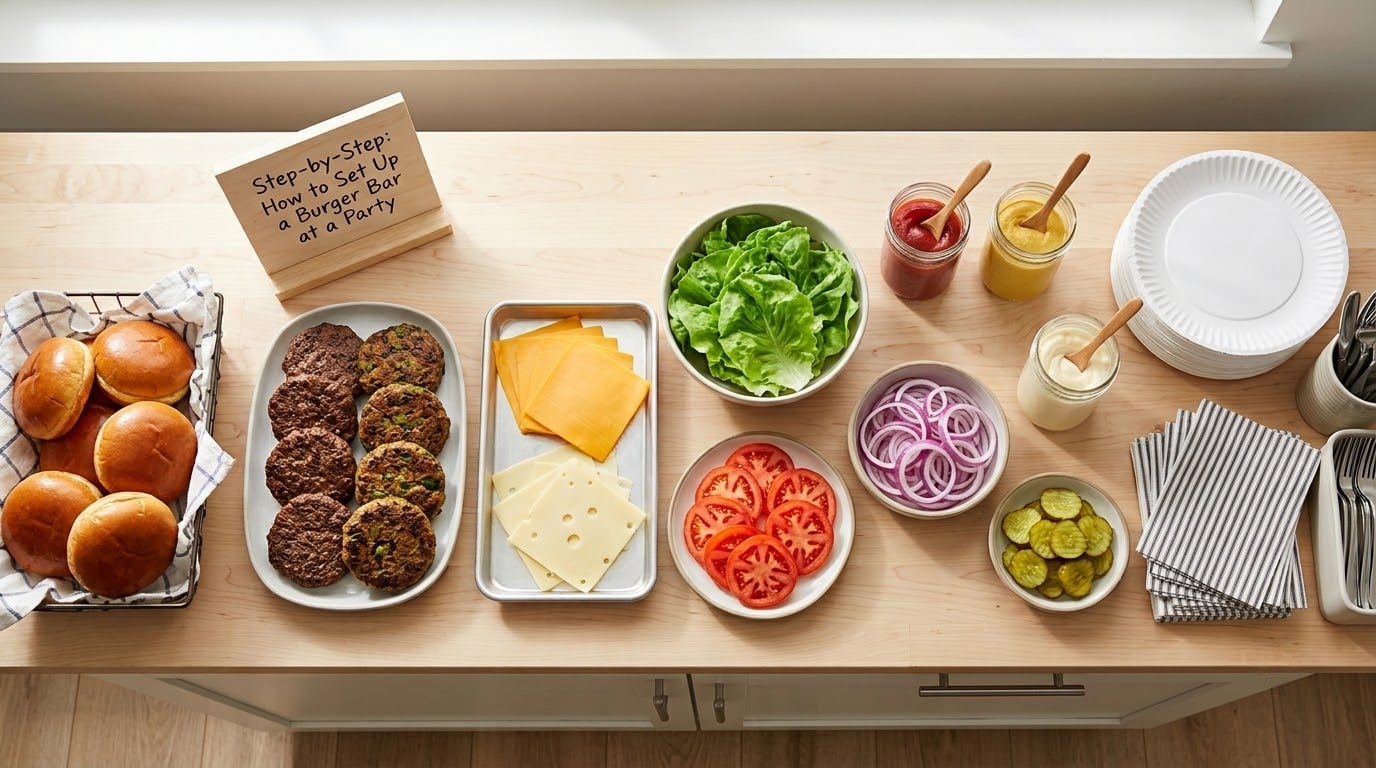
Six steps, in this order, and the bar runs itself. Budget 60 to 90 minutes on site, plus the cooking time for the patties, which happens earlier.
1. Choose the Burgers and Main Ingredients
Pick your patty mix first, because it drives everything else. An 80/20 blend of chuck and brisket handles a grill or a griddle, while a leaner 85/15 blend is easier to cook on a flat top without burning the fat out of it.
Offer one alternative if you have mixed eaters: black bean, portobello mushroom cap, turkey, or a thin chicken patty. Turkey and chicken need to hit 165F internally, beef needs 160F. If your guest list is complicated, work through how to plan a burger themed party menu before you shop.
Count again with the menu in mind. If there are three cheese options and premium toppings, people eat more. Add one extra patty per ten guests over your base count when the spread is generous.
2. Map the Serving Flow
Build the line in the order a burger gets assembled, and guests will walk it without being told. The sequence is: plates and napkins, then buns, then patties, then cheese, then toppings, then condiments, then a trash bin and a side table at the exit end.
Plates first matters more than it sounds. Guests who grab a plate first move at the speed of that person instead of blocking the bun basket while they dig through napkins. Professional kitchens organize lines the same way, which we break down in how restaurant kitchens organize a burger line.
Give yourself about three feet of table per guest for the full line. Twenty guests means roughly 60 feet of table, which usually means borrowing folding tables and pushing them together. Space is the part people miss when they search how to set up a burger bar at a party, and it decides whether the line moves. If you have less room than that, cut the number of toppings rather than compressing the line.
3. Prepare and Arrange the Toppings
Wash and slice all vegetables the day before, then store them separately. Drain pickles in a colander overnight so they do not leak onto everything below. Cook the caramelized onions and sautéed mushrooms a day ahead too; they reheat fine and taste better than raw onion competing with everything else.
Set the toppings out in separate bowls in a shallow ice bed, from coldest to warmest. Put the mayo-based condiments in squeeze bottles or on ice and leave the ketchup at room temperature, since cold ketchup is unpleasantly thick.
Give every bowl its own tongs or spoon. That single habit is what keeps a build-your-own burger bar sanitary, and it also means the avocado stays out of the tomato bowl.
4. Keep Burgers Safe and Juicy
Cook ground-meat patties to 160F internal temperature, verified with a food thermometer in the thickest part. Poultry patties need 165F. That number is the floor, not the target, and it is worth more than any seasoning.
Rest cooked patties for five minutes before you move them, then hold them in a preheated oven around 200F or in a chafing dish over a low flame. Do not stack patties more than two deep; the steam from a tall pile dries them out and you end up with rubber.
Keep cold toppings on ice and use clean serving utensils on every replenishment. Follow the two-hour rule: perishables sitting out longer than two hours get tossed, and it drops to one hour when the outdoor temperature is above 90F. A half-eaten burger left on the table all afternoon is not a leftover, it is waste.
5. Finish the Bar with Simple Party Details
Add a few things that cost nothing and make it look intentional. Flip a sturdy bowl upside down under a large platter to raise the centerpiece, tent a card over the condiments with each sauce named, and run a short string of lights above the table.
Drinks belong at the start or end of the line, never in the middle. A cooler with sodas and water at the entrance frees the table for food and keeps people from walking through the line twice.
If kids are building their own, give them their own smaller station at a lower height with slider buns, pre-sliced toppings and no sharp utensils. Our guide to burgers for a kids party covers the sizing and timing in more detail.
6. Time It So Everything Finishes Together
Cook in batches and start earlier than feels comfortable. A standard home grill handles roughly 12 to 16 six-ounce patties per batch, while a flat-top griddle can do 20 to 30 in the same window. For 40 patties on a single grill, that is three rounds of about 10 minutes plus flip time and rest.
Work backwards from when you want the bar open. Two hours of cooking, 30 minutes for setup and 30 minutes of buffer means start the first batch about three hours before guests arrive. The advice that comes up again and again from hosts feeding thirty-plus people: cook in batches and hold them warm, never grill to order while the party is going on.
Everything else can be cold and set out early. Only the patties are on a clock, so that is the only thing you need to time carefully.
7. Do a Dry Run
Before anyone arrives, walk your own line end to end and build a burger exactly as a guest would. You will find the missing tongs, the bun basket that is too small, the cheese plate buried under the toppings and the sauce that squirts everywhere. Ten minutes now saves the whole party.
Common Mistakes
Too many toppings. Twelve toppings sounds generous and ends up scattered, forgotten and cross-contaminated. Pick six to eight and put the extras out after the first rush if there is interest.
Soggy buns. This is the complaint I hear most often. The fix is timing: do not set the bottom bun on the plate until the patty is ready, or keep buns in their sealed bag and have guests open their own. Top people who plan a burger bar also hold the patty off the bun until the very last moment.
Cold or dry patties. Usually a holding problem, not a cooking one. Hold at 200F in shallow trays, loosely covered with foil, and swap out the whole tray rather than stacking leftovers on top.
A blocked line. Twenty people reaching for buns at once jams everything behind them. Put the plates at the front, space the buns across two platters, and, past 25 guests, put a second, duplicate condiment station at the far end.
Messy condiments. Ketchup out of an upright bottle on a burger bar is a problem waiting to happen. Squeeze bottles, small bowls with spoons, or a squeeze-top dispenser solve it.
Allergen confusion. If you are serving anything with nuts, dairy, gluten or shellfish, label it clearly and keep it on a separate plate with its own utensils. Mixing a peanut sauce into the mayo jar is how somebody ends up in the hospital instead of the story you tell later.
Forgotten small things. Plates, napkins, forks, extra bun bags, a trash bag and a bottle of sanitizer. Put them in a bin behind the table so you are not opening drawers mid-party.
My final tip is the dry run. Build a full burger yourself, standing where your least coordinated guest will stand, and time how long it takes. If it takes you longer than three minutes, your line is too complicated.
Frequently Asked Questions
How much food do I need per guest at a burger bar?
Plan on two patties per adult and one per child, plus about 20 percent extra when you are serving a lot of premium toppings. For 20 guests that works out to roughly 40 to 45 patties, 10 to 11 pounds of ground beef, 41 to 45 buns and 50 cheese slices. Condiments need about one tablespoon per guest per sauce, and vegetables around a quarter cup each per person.
Can I make the burgers ahead of time?
Yes, and it is the recommended approach. Cook all patties two to three hours before guests arrive, check the thickest one hits 160F, rest them five minutes, then hold in a preheated oven around 200F or a chafing dish over low heat. Keep them one or two layers deep in shallow trays and swap trays rather than piling them up, which is what dries them out.
How should I organize the toppings at a burger bar?
Arrange everything in the order a burger is built: plates and napkins, buns, patties, cheese, toppings, then condiments at the end. Put each topping in its own bowl or tray with its own tongs, set the cold items in a shallow ice bed, and label anything with dairy, gluten, nuts or eggs in it. Keep raw produce prepped and refrigerated the day before.
How do I handle guests with dietary restrictions?
Ask in advance rather than guessing. Stock at least one clearly gluten-free option such as a gluten-free bun or lettuce wraps on a separate plate, and offer one plant-based patty such as black bean or portobello. Keep those items away from the beef patties and use separate utensils so cross-contact does not happen. Label every topping, including the bread and the sauces, since soy and dairy hide in both.
What should I do with leftover burgers and toppings at the end of the night?
Cooked patties left out longer than two hours should be discarded, one hour if it is above 90F outside. Refrigerate anything that was kept cold the whole time and use it within three to four days, or freeze it. Cooked patties reheat well in a skillet or oven, and leftover caramelized onions make a good topping for eggs or baked potatoes. Compost or bin the toppings that sat out.
Start with the part most people get wrong: put the plates and napkins at the front of the line, decide your patty count before you shop, and cook the burgers a couple of hours ahead rather than during the party. Those three decisions are most of how to set up a burger bar at a party done right. Everything else, the labels, the ice beds and the themed topping clusters, is just making it look like you meant it.