
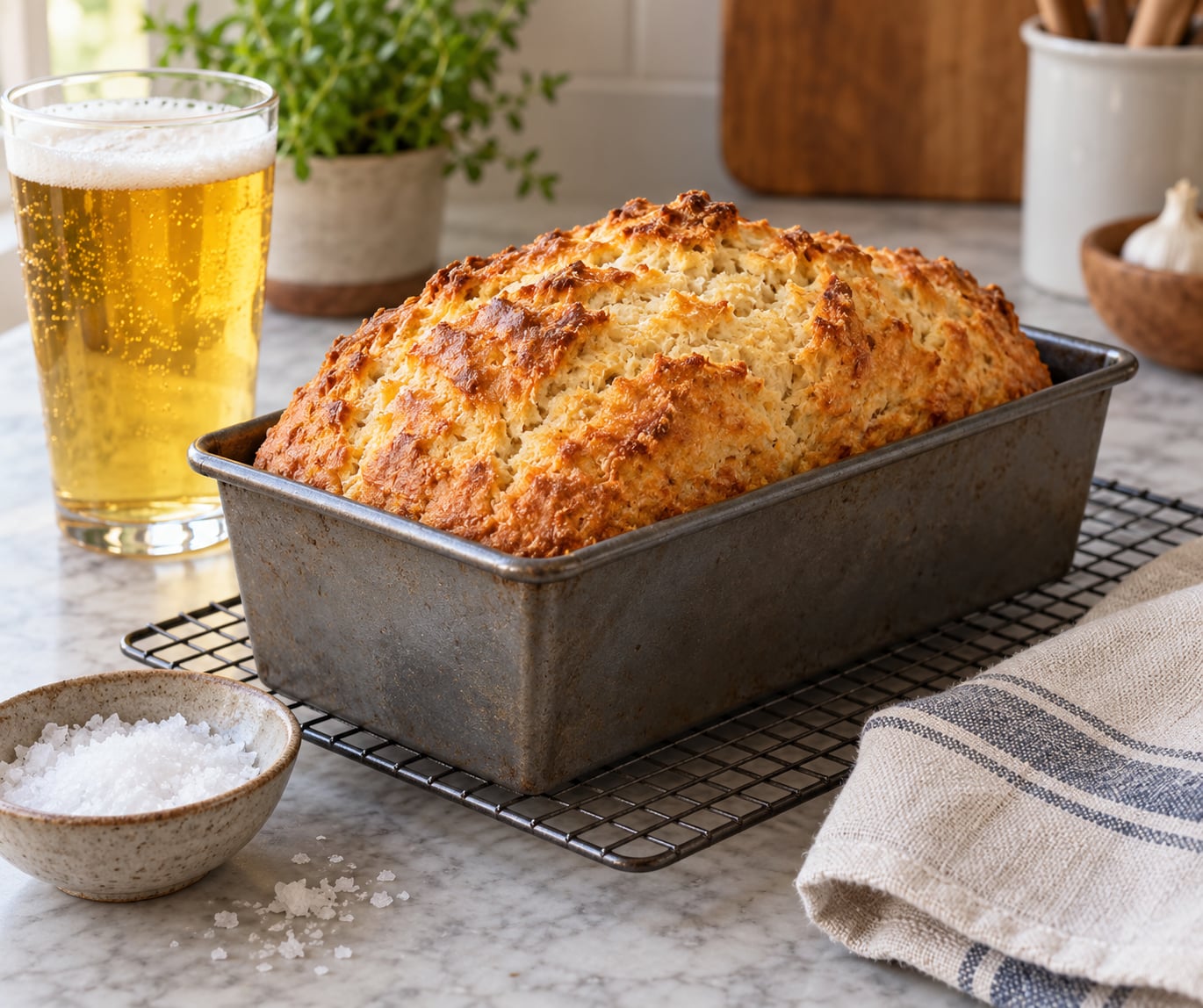
Beer bread is a no-yeast quick bread: you mix 3 cups of flour with a 12-ounce can of beer, leaven it with baking powder instead of yeast, and bake it about 45 to 55 minutes at 350°F. There is no kneading, no proofing, and nothing to kill, so if you can stir and pour, you can make it. Prep takes roughly ten minutes and the loaf is done before your oven preheats from scratch twice.
The beer replaces the water and does two jobs at once. Its carbonation gives the crumb a small extra lift, and its malt sugars add flavor and a deeper crust color than plain water ever would. Baking powder supplies the rest of the rise chemically, which is why the loaf goes from pale batter to a domed, golden loaf in a single oven session.
That makes it a genuinely good first bread. A lot of people who have never baked before start here, because the only real skill involved is measuring properly.
What You Need
Six ingredients, one bowl, and about ten minutes of measuring. This is the full list, kept short on purpose:
- 3 cups all-purpose flour, sifted (about 360 grams)
- 1 tablespoon baking powder
- 1 teaspoon salt
- 3 tablespoons sugar
- 12 ounces room-temperature beer (one standard can)
- 2 tablespoons melted butter, plus more for the pan
The ratio that matters is 3 cups of flour to a 12-ounce can of beer. It scales cleanly: for a smaller loaf use 2 cups flour and 8 ounces of beer, for a double use 6 cups and two cans. Hold the baking powder to about 1 tablespoon per 3 cups of flour, and never scoop flour straight from the bag if you can scoop and sweep it instead.
A few optional additions change the loaf without adding work. Fold in a cup of shredded cheddar and scatter the rest on top for a cheesy version that tastes like a pub side dish. A tablespoon of caraway or sesame seeds gives you the seeded-crust look. Fresh rosemary or thyme goes in with the dry ingredients. A tablespoon of honey in place of some of the sugar, or a cup of cooked oats in place of a cup of flour, both work.
For equipment you need a 9 by 5 inch loaf pan, a whisk or fork, and a wire rack. A stand mixer with a paddle is nice but not necessary, and if you are using one, stay on the lowest speed for the same reason you would not use a whisk vigorously: over-mixing is the number one cause of a dense loaf. A cake tester or a thin skewer tells you when the middle is actually set, which is more useful than any timer. Last updated: October 2026.
Step-by-Step: How to Make Beer Bread
Heat the oven to 350°F first and let it come to temperature while you mix. A cold oven plus a wet batter is a recipe for a pale, gummy middle, so give it 15 to 20 minutes if you are starting from cold.
Step 1: Combine the Dry Ingredients
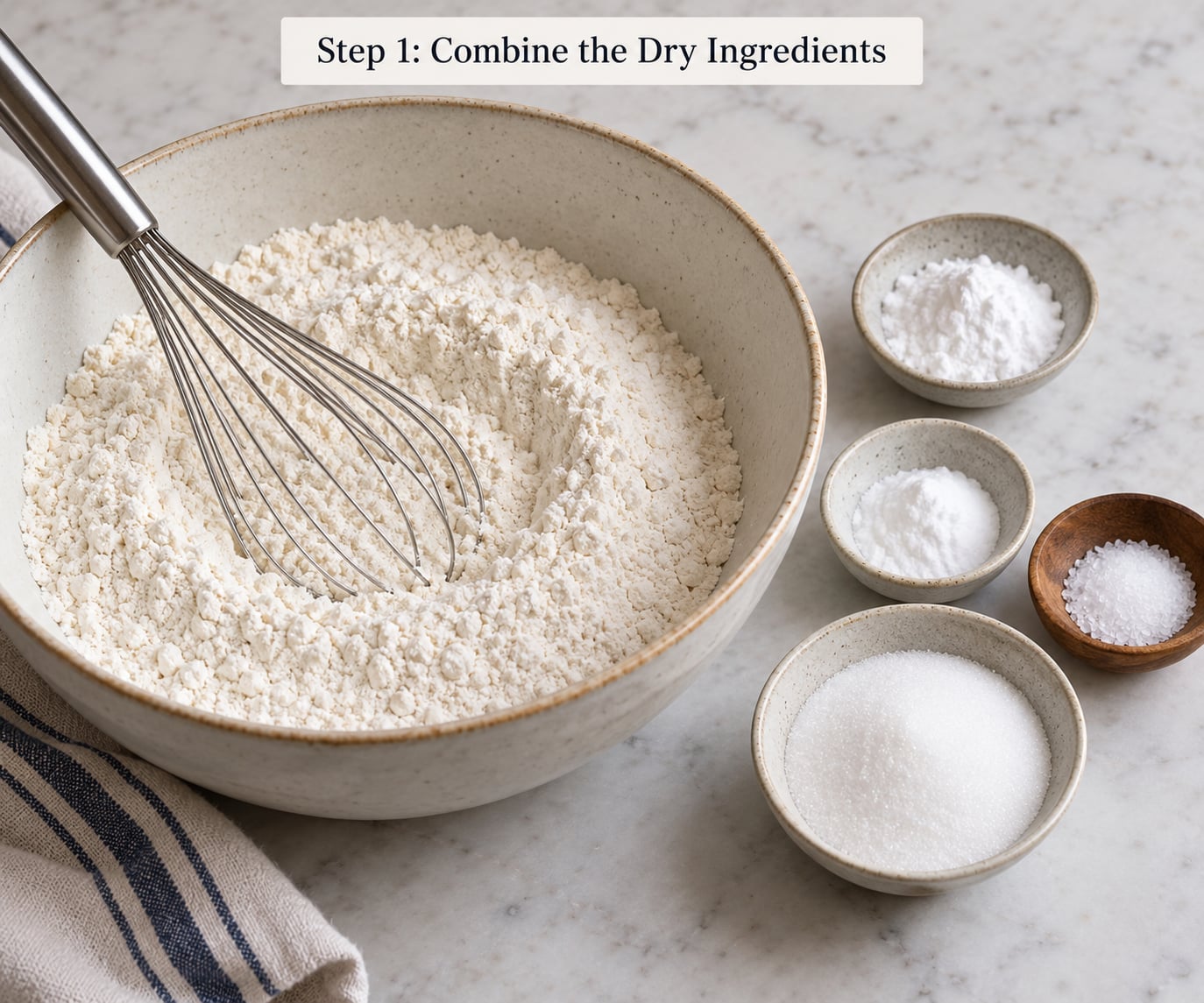
Whisk the flour, baking powder, salt, and sugar together in a large bowl until there is no streak of baking powder left in the flour. Baking powder that sits in one spot creates a bitter pocket and a weak spot in the loaf, and whisking it through the flour first is what keeps the rise even from end to end.
If you skipped the sifter, scoop the flour into the measuring cup and level it with the back of a spoon or a straight edge of a knife. Scooping and sweeping gives a lighter, more open crumb than dipping the cup straight into the bag, and that difference shows up in a recipe with no other structure to hold the crumb together.
Step 2: Mix the Wet Ingredients
Warm the beer first. Room-temperature liquid is the difference between a good loaf and a flat one, because cold beer slows the baking powder reaction on contact and the outer set happens before the center can catch up.
Melt 2 tablespoons of butter and let it cool a few minutes so it is liquid rather than smoking hot. Pour the beer and the melted butter into the dry ingredients. Before you stir, the mixture should look messy and wet, with beer pooling slightly around the edges. That is correct, and it is why you do not add any more liquid even if it seems thin.
Step 3: Make the Dough Without Over-Mixing
Stir with a spoon or spatula until no dry flour is visible, then give it four to six turns with a whisk. The dough will go from shaggy and sticky to thick, scoopable, and slightly tacky. That sticky stage is normal for a beer bread, since the wet beer and melted butter make a richer batter than a typical quick bread.
Stop there. Flour has only two parts that matter for structure: proteins that link together when you hydrate them, and starches that set as they cool. Vigorous mixing develops the first too far before the loaf reaches the oven, which gives you a tight, chewy, heavy crumb instead of a tender one. This is the single most common complaint about beer bread, and it is almost always mixing, not flour.
Step 4: Shape and Top the Loaf
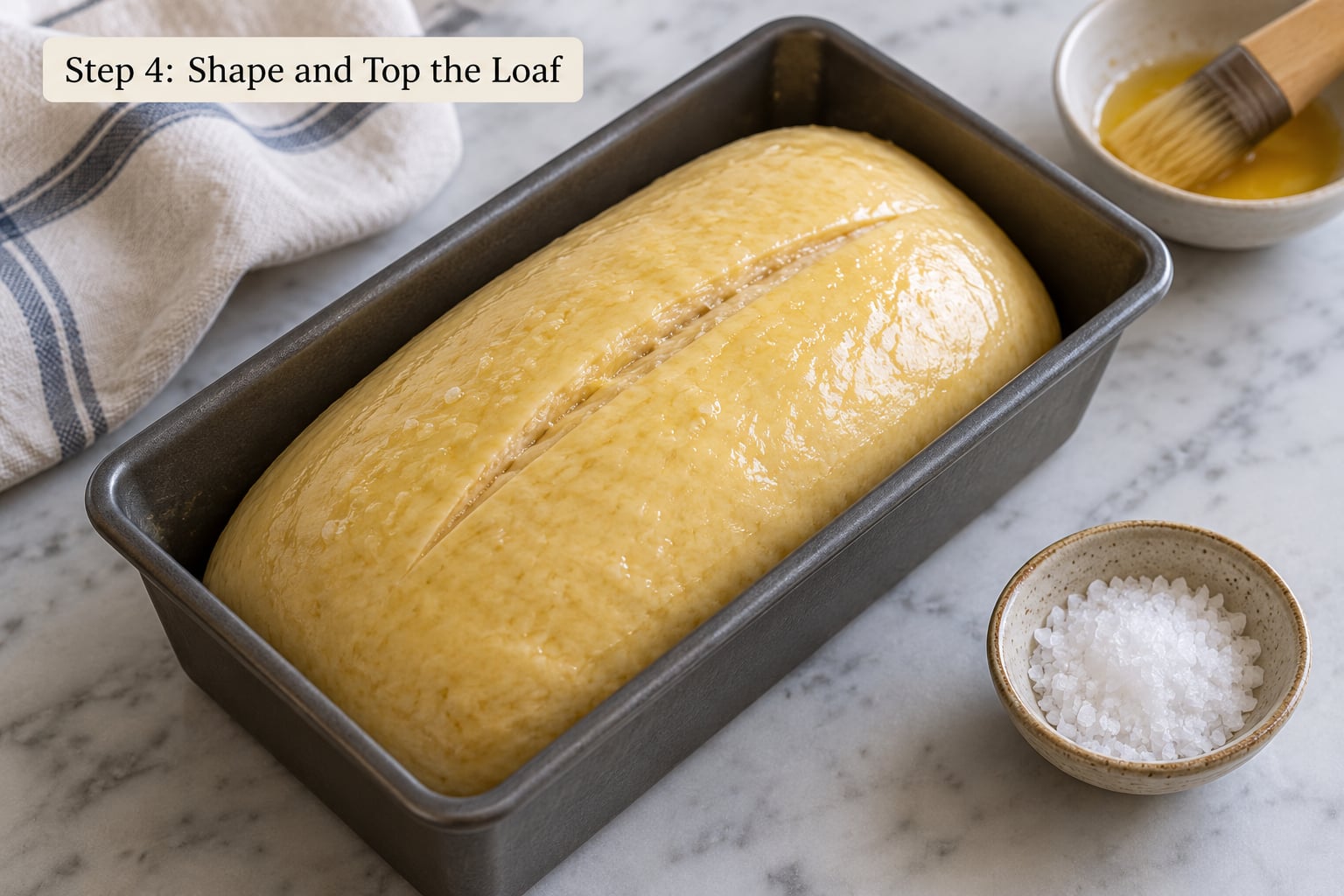
Grease a 9 by 5 inch loaf pan with butter or oil and line the bottom with parchment if you plan to serve it whole. Scrape the dough in and press it down into the corners with a wet hand so there are no big air pockets along the sides. The top should look roughly level and a little wet, not domed.
Brush the top with the rest of your melted butter. Some bakers make one shallow slash down the center, which gives a cleaner crack as the loaf expands, and some scatter coarse salt or seeds at this point. If you are going the cheesy route, reserve a cup of shredded cheddar for the top after it has baked for 15 minutes so the cheese actually melts and browns instead of drying out.
Step 5: Bake and Cool the Beer Bread
Bake at 350°F for 45 to 55 minutes, and start checking at 40. A light loaf in a dark metal pan can finish in 40; a heavy or whole-grain version in a glass pan can run past 55. Pan material and size shift the timing by 10 to 15 minutes either way, which is why a fixed time from a recipe you found online is worth less than a test.
Test with a cake tester in the deepest part of the loaf, not the raised middle. It is done when it comes out with a few moist crumbs clinging to it. A tester that comes out perfectly clean usually means the loaf is overdone, and one with wet dough on it means another 10 minutes.
About alcohol: it does not fully disappear. Roughly 85 percent of the alcohol in a can of beer can be driven off during an hour in a hot oven, but not all of it, and light beers lose what they lose faster than strong ones. Adults will not detect it in a loaf this size, so if the alcohol matters to you, use non-alcoholic beer, which swaps in cleanly at the same 12 ounces.
Cool the loaf in the pan for 10 to 15 minutes, then turn it onto a wire rack and let it cool fully before slicing. Beer bread keeps setting as it cools, and cutting it early leaves the center gummy no matter how well it baked.
Common Beer Bread Mistakes and How to Fix Them
Almost every disappointing beer bread comes down to one of five things. Work down the list in order, since density is the most reported problem by a wide margin.
Dense, heavy, or chewy crumb. Over-mixing is the usual cause, followed by packed flour and cold ingredients. Use four to six turns, scoop and sweep the flour, and bring the beer and butter to room temperature. If you live above 5,000 feet, baking powder loses strength in thin air and this is where high-altitude bakers see the worst results; reduce the baking powder by about 25 percent at 7,500 feet and by a third at 10,000, and check the loaf ten minutes early.
Gummy or doughy center. This is a different problem from density, and more time in the oven usually makes it worse while drying the crust. In order of likelihood: the batter is too heavy for your pan, so use a smaller pan or more flour; the pan is glass or dark ceramic, which slows the center, so drop the temperature 25°F and add 10 minutes; or you tested in the domed part. Test low and deep, and if the whole bottom is dark while the middle is wet, tent the loaf in foil.
Flat loaf that never rose. Baking powder that has been open in the cabinet for a year or two has lost its lift. Test it by mixing a teaspoon of it with hot water: it should foam hard immediately. Also check that your pan is deep enough and that the oven was actually at 350°F, which is the temperature most bakers run hot by about 25 degrees.
Beer flavor that hits too hard. It is supposed to taste faintly of beer, not like a glass of it, and the intensity tracks the beer. Light lagers are the quietest option, pale ales and witbiers sit in the middle, and IPAs or stouts push hop and roasted bitterness into the loaf where it can taste harsh. Reviewers who used stronger beers report exactly that, so if you have any choice, start with a light lager. Cutting the sugar to 1 tablespoon also softens the finish.
Pale or scorched crust. Pale means the oven was cool or the loaf went in before the pan was hot; a hot empty pan helps. Scorched means it was too close to the top element, so move the rack to the lower third after the first 20 minutes.
Crumbly texture. This one is part of the recipe rather than a fault, which surprises people. A crumbly, slightly tender crumb is normal because there is no gluten development to bind it, and it firms up a little overnight. Serve it the same day with butter, and slice it thick for dipping in chili or soup. If you want more tenderness, swap 1 cup of the flour for cake flour, or stir in a tablespoon of honey.
Beer bread goes with almost anything savory. It works as a game day side beside chili, in place of cornbread, or with a bowl of soup and a slab of salted butter. If you are pouring beer alongside it, our guide to pairing beer with burgers covers styles that sit well with a savory loaf, and how to make a root beer float makes a fun zero-proof finish if you are not drinking.
Frequently Asked Questions
What kind of beer is best for beer bread?
A light lager is the safest and most crowd-pleasing choice, because its flavor stays quiet in the crust and crumb. A pale ale or witbier works nicely if you want a little malt character, while an IPA or stout adds hop bitterness and roasted notes that can read as harsh. Whatever you pick, use it at room temperature and measure the full 12 ounces rather than pouring by feel.
Can I make beer bread without yeast?
There is no yeast in this recipe and you should not add any. Baking powder leavens the loaf through a reaction with moisture and heat, and the beer’s carbonation contributes a small extra lift. That is what makes it a quick bread: no proofing, no kneading, and no warm waiting period. Adding yeast on top of baking powder can throw the rise off and leave the crumb dense and gummy.
Can I use a bread machine for beer bread?
Yes, and it works better than most people expect. Use the basic or quick-bread cycle, add the melted butter and room-temperature beer with the dry ingredients, and set the loaf size to medium. Many machines shorten the bake for quick breads, so check the loaf early with a cake tester. You can also make a bread-machine version with just flour, self-rising flour, and a can of beer.
How long should beer bread cool before slicing?
Let it sit in the pan for 10 to 15 minutes so the crumb can set, then turn it onto a wire rack for another 30 to 45 minutes before slicing. Beer bread finishes setting as it cools, so cutting too early is the usual reason the center feels doughy straight out of the oven. Letting it rest also firms up the crumb, which is crumbly but fragile when warm.
Why does my beer bread come out dense?
Over-mixing is the leading cause, followed by packed flour and cold ingredients. Whisk the dry ingredients together first, scoop and sweep the flour rather than dipping the cup, and limit mixing the wet into the dry to four or six turns. Use room-temperature beer. Above 5,000 feet, reduce the baking powder by roughly a quarter so the thin air does not cause an over-rise that then collapses.
How do I store beer bread so it stays fresh?
Let the loaf cool completely, wrap it tightly in plastic or foil, and keep it at room temperature for up to two days. Do not refrigerate it, since cold air dries the crumb faster. For longer storage, slice it, freeze the slices in a bag, and thaw them in the pan or toast them straight from frozen. Reviewers find the flavor improves overnight even though the crumbly texture does not.
Conclusion
If you only get one thing right, measure the flour and the beer accurately. Scoop and sweep the flour, use a full 12 ounces of room-temperature beer, and resist the urge to stir longer than it feels necessary. Everything after that is forgiving.
Bake until a cake tester in the deepest part of the loaf comes out with a few moist crumbs, then cool the bread on a wire rack before you slice it. From there it is chili, soup, game day, or a side for whatever you already planned to drink.