
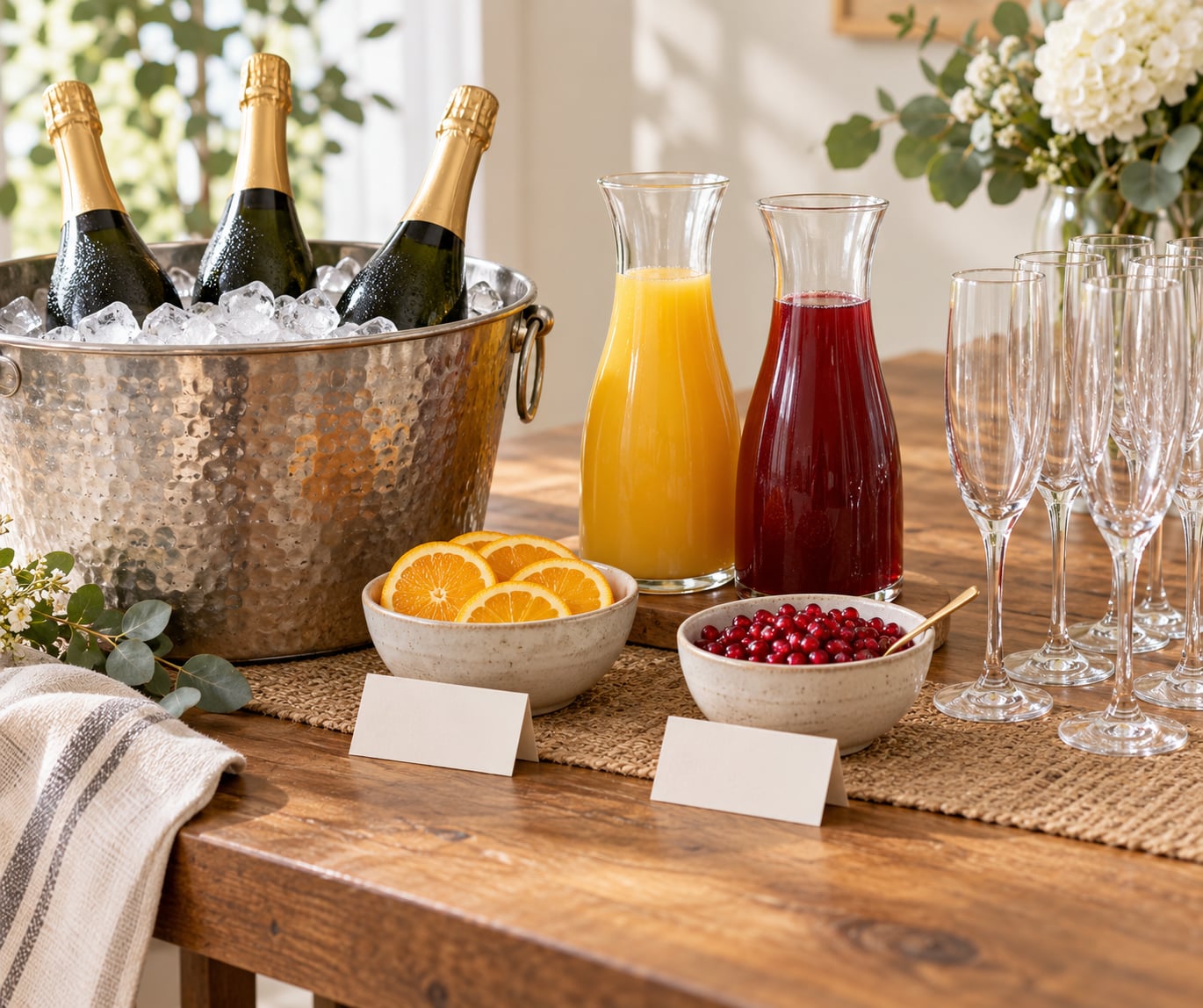
A mimosa bar is a self-serve table where guests build their own drinks: chilled sparkling wine, a spread of juices in carafes, and bowls of fresh fruit for garnishing, with ice buckets, champagne flutes and small labels. Learning how to set up a mimosa bar for brunch takes about 20 minutes of arranging and the rest is chilling and chopping, which makes it the easiest thing you can put on a self-serve table. This guide is updated for 2026 and covers quantities for 6 to 40 guests, which sparkling wine to buy, and the setup order that keeps the line moving.
The reason to build one rather than pour drinks yourself is simple. You fill the carafes once and the table runs itself for two hours, so you can stay in the kitchen instead of playing bartender. It also solves the brunch problem of serving three generations at one table: the kids and the pregnant guests get the same construction kit, just with a different bottle in the ice.
What You Need for a Mimosa Bar
Budget roughly three mimosas per guest for a two-to-three hour brunch. A standard 750ml bottle pours about six glasses, which works out to one bottle for every two guests. Forum hosts land in the same place: half a bottle per person for moderate drinkers, closer to a full bottle when the crowd is celebrating.
Here is the shopping list, scaled by guest count. Juice figures assume two juice options plus a non-alcoholic option.
| Guests | 750ml bottles | Juice (cups) | Fresh fruit | Non-alcoholic bottles |
|---|---|---|---|---|
| 6 | 3 | 6 cups | 1 pint | 2 |
| 8 | 4 | 8 cups | 1 pint | 3 |
| 12 | 6 | 12 cups | 2 pounds | 4 |
| 20 | 10 | 20 cups | 3 pounds | 7 |
| 40 | 20 | 40 cups | 6 pounds | 14 |
For forty guests you are looking at twenty bottles of sparkling wine, so start that run the day before and split it across two ice tubs. Buying thirty for forty people is the most common over-buy I see, and leftover sparkling wine keeps a few days with a stopper in the fridge.
Which sparkling wine to buy for mimosas
Prosecco or cava. Neither is champagne, and that distinction is worth getting right because it changes the price without changing the drink. Champagne is a protected term from one region of France; everything else is sparkling wine. Mimosa masks sweetness and lower fruitiness well, so the value bottle does the same work as the fancy one at a fraction of the cost per glass.
Buy brut or extra brut rather than anything labeled sweet or demi-sec. Sweeter styles taste cloying once juice goes in, and dry sparkling wine keeps its own character when a guest pours half orange juice. For a bigger party, sparkling rose is a nice second option because it visually widens the table without needing a third juice.
Juices and fresh fruit
Pick two juices and make them good, rather than five and make them mediocre. Orange juice is the default. Grapefruit juice is sharper and pairs with rosemary or a sugared rim. Pineapple juice reads tropical and works with fresh mint. Cranberry juice is the biggest visual win of the bunch, bright red in a flute, and pairs with pomegranate seeds. Mango nectar is sweet enough that guests pour less of it. Blueberry and watermelon juice are worth having if you are hosting a shower rather than a Sunday brunch.
Use 100 percent juice, not a blend. Blended orange juice is noticeably thinner and the flavour fades after you add sparkling wine. Fruit is a garnish, not the main event, so buy what looks good: whole oranges or grapefruit cut into wheels, a pint of strawberries, a handful of pomegranate arils. Skip anything that needs a knife at the table.
Non-alcoholic bottles that still work
Do not hand a non-drinker a glass of plain juice while everyone else has a cocktail. Put the same juice in a carafe at the front of the line, and put sparkling water, sparkling cider or non-alcoholic sparkling wine in the ice tub beside the real bottles. Same glass, same fruit, same pour. Two bottles covers about six guests who are not drinking alcohol.
Gear
You need one ice bucket or beverage tub per six bottles, one glass carafe or pitcher per juice, roughly one champagne flute per guest plus a few spares, small bowls with their own serving spoons for each garnish, a stack of napkins, and something to write on. Index cards and a marker make perfectly good labels, and they beat nothing at all. Clear glass pitchers matter more than decorative ones because guests can see how much juice is left.
How to Set Up a Mimosa Bar for Brunch: Step by Step
1. Estimate drinks and choose your mimosa bar layout
Multiply your guest count by three drinks, then divide by six glasses per bottle. Put the table where people can form a line on one side, not in a corner where the flow has to squeeze past seated guests. A six-foot table handles up to twelve guests comfortably; past that, use two tables or two separate stations. One station for a big group, or split it into a sparkling wine side and a juice side so two people can pour at once.
If half your guests would rather have a savoury brunch cocktail, a blood mary station next door keeps everyone served from one table. Our guide to how to make a Bloody Mary for brunch covers the mix.
2. Chill and prepare the components
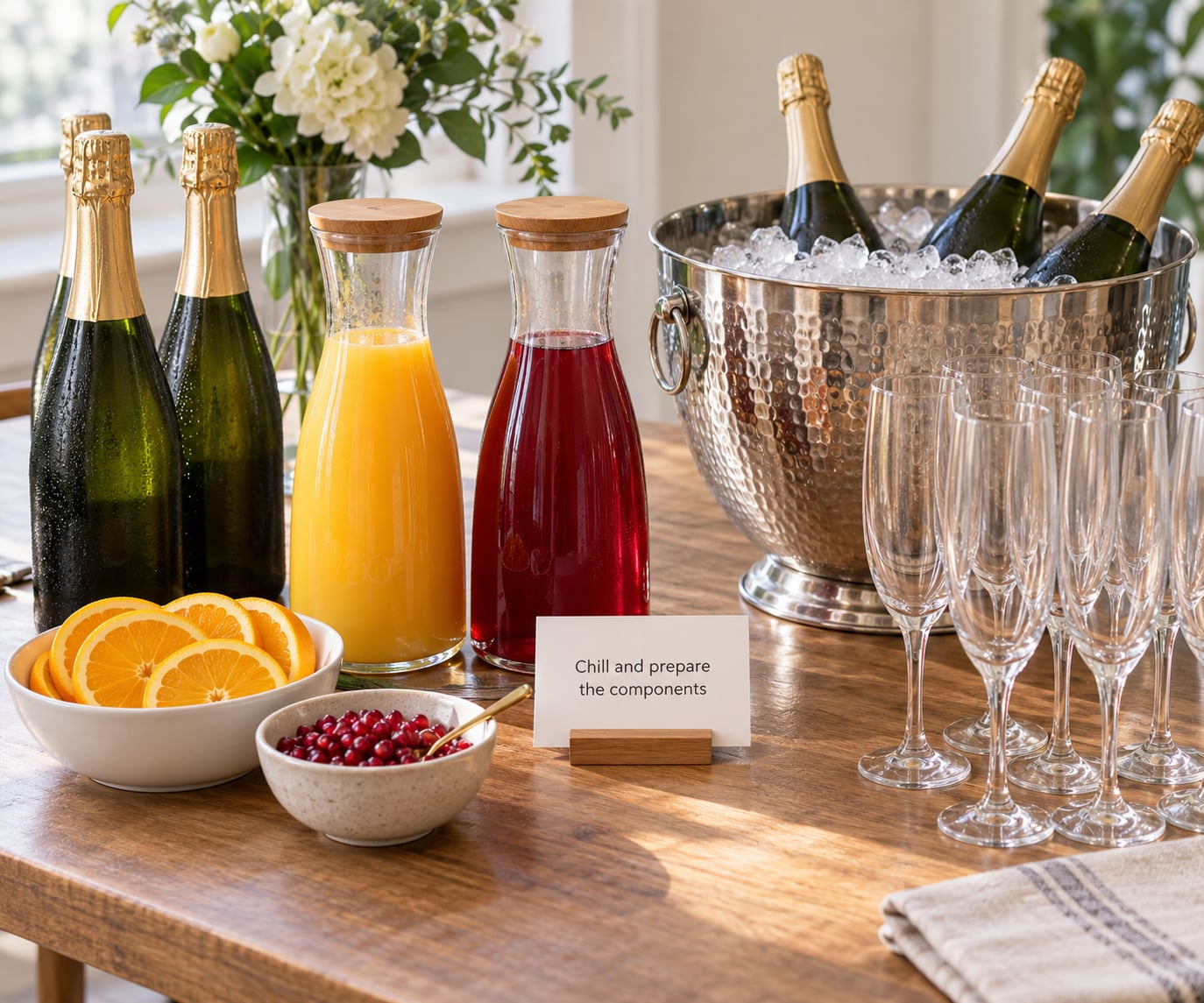
Chill everything for at least four hours. Sparkling wine that goes into a warm tub comes out warm, and the first thing a guest does is complain about it. Refrigerate the juice, the bottles and the carafes themselves. If you are outside, keep backup bottles in the fridge rather than the tub and swap them in as needed.
Pour the juice into carafes ahead of time but leave them in the fridge until about ten minutes before guests arrive. Write the labels now, while you are standing at the counter with the juice in front of you.
Cut the fruit the day before and refrigerate it covered. Keep it at 40°F or below, and take perishable fruit off the table after two hours in a room, or after one hour if it is above 90°F outside.
3. Build the mimosa bar
Fill the ice tub first, then nestle the bottles into it at an angle so the labels face the guests. Put the juice carafes beside the tub, not on the far end, so the line reads wine, juice, garnish, glass. Stack flutes at the start of the line and napkins at the end. Put a small trash bowl or a bus tub within reach, because most of the mess is stems and citrus rinds rather than spilled drinks.
Raise the back row. Inverted glasses, a couple of cake stands, or an empty crate under a cloth makes a two-row table read as one arrangement instead of a pile. Keep food off this table entirely, so plates stay where they belong. If you are doing the cooking yourself, crispy hash browns or brunch burgers topped with a fried egg are both better made ahead and plated as guests come up, not standing at the station.
4. Set up the garnish station
Three bowls is plenty. Citrus wheels, berries or pomegranate arils, and one herb or spice. Give every bowl its own spoon and place them away from the juice carafes so nobody dunks a used spoon in the juice. Fruit skewers are easier to eat at a standing brunch than a wheel of orange, and they double as decor.
Skip strong garnishes. Fresh basil crushes into the juice and turns it murky, and anything heavily spiced takes over the drink. Rosemary and mint sprigs are the safe picks, and a small dish of flaky salt for grapefruit mimosas is worth the extra bowl.
5. Teach guests the build
Start with four fluid ounces of sparkling wine and top with two fluid ounces of juice. Sparkling wine first, always, because the bubbles get a head start and the drink keeps its fizz. Write the ratio on a card and stand it next to the glasses, because most guests default to pouring half and half, which doubles the strength without tasting different.
Tell people they can go lighter or stronger. One ounce of juice gives a proper champagne-and-orange combination, and four ounces of juice turns it into a screwdriver with bubbles. Guests like having that permission more than you would expect, and it is the simplest way to control pour strength at a self-serve table.
6. Refill and close the bar
Check the tub and the carafes every twenty minutes while guests are drinking. Top up juice before it runs low, add ice as it melts, and pull empty bottles out of the tub so they do not tip the whole thing over. Once you are down to the last two bottles, open a fresh one and hide the empties in a bus tub behind the table; nobody speeds up because they can see the last bottle.
When the brunch winds down, move the fruit off the table first. Then the juices, then the tub. Keep open bottles, stopper them, and refrigerate them for the next morning or a dinner later in the week.
Common Mistakes
Warm bottles
Sparkling wine straight from a room-temperature shelf pours flat and warm. Chill for four hours, and keep half your stock in the fridge as backup.
Pre-mixed mimosas
This is the mistake that ruins the most brunches. Mixed sparkling wine loses its bubbles within the hour, so guests drink two flat drinks before the second round even starts. Juices can be poured ahead; the wine never can.
Too many juice options
Five juices means five decisions, a longer line and half-finished carafes. Two juices plus one non-alcoholic option gives the same feeling of variety.
Dirty glasses
Put glasses out clean and dry, with no fingerprints and no water spots from the dishwasher. Wipe the rims, and stash a supply of extras because one dropped flute at a standing table is enough to empty the whole stack.
Slow lines
One person pouring for twelve guests turns into a queue that crosses the room. Split the station, or accept a second round rather than trying to hold everyone at one table.
Overfilled glasses
A full flute is nearly all foam and gets carried carefully instead of sipped, which wastes a glass and a drink. Leave a couple of inches at the top.
Perishable fruit left out
Cut fruit sitting in a warm room for three hours is a food-safety problem, not a garnish problem. Keep it chilled behind the front line and swap the bowl every hour.
Frequently Asked Questions
What does a mimosa bar consist of?
A mimosa bar is a self-serve brunch station with chilled sparkling wine held in an ice tub, two or three juices in glass carafes, and bowls of fresh fruit for guests to garnish their own drinks. Add champagne flutes, napkins, small labels for each juice, and a spot for glasses at the start of the line. The host fills it once and never pours again.
How many bottles of sparkling wine do I need for 40 guests?
For forty guests you need about twenty 750ml bottles of sparkling wine, based on three mimosas per guest and roughly six glasses per bottle. That is 120 drinks, so buy a little extra rather than exactly twenty. Chill the bottles for four hours and plan two ice tubs, since one tub holds about six bottles.
How many mimosas can one bottle of sparkling wine make?
A standard 750ml bottle pours about six mimosas at a four ounce wine and two ounce juice serving. That is roughly 25 fluid ounces of total drink, which is why one bottle covers two guests who each have three. For a larger glass, expect five rather than six.
What is the best ratio for a mimosa?
Four fluid ounces of sparkling wine to two fluid ounces of juice is the standard starting ratio. Pour the wine first so it keeps its bubbles, then add juice. Guests who want something lighter use one ounce of juice, and those who want it stronger use three or four. Standing at a self-serve table, this ratio keeps the strength predictable.
What kind of sparkling wine works best for mimosas?
Dry prosecco or cava, labeled brut or extra brut. Champagne is a protected term for wine from one French region, so most mimosa bars run on sparkling wine that costs less per glass and performs the same way, since juice covers the difference in fruitiness. Sweet and demi-sec styles taste cloying once juice is added.
Can I set up a mimosa bar ahead of time?
Set up almost everything ahead. Chill the sparkling wine for four hours, cut the fruit the night before and refrigerate it covered, pour juice into carafes and label them the day before. Just before guests arrive, fill the ice tub and put the bottles in. Never mix sparkling wine with juice in advance, because it goes flat within the hour.
A Simple Brunch Bar Is Easy to Run
Start with the numbers, because that is the part hosts agonise over. Three mimosas per guest, one bottle for every two guests, one ounce of juice per guest, and six fluid ounces of fresh fruit per six guests. Then buy dry prosecco or cava instead of champagne, choose two juices, and put a non-alcoholic bottle right beside the real ones in the ice.
From there it is arranging. Ice tub in the middle, juice beside it, three garnish bowls with spoons, flutes at the start of the line, napkins at the end, and a card telling people to pour wine first. Chill everything for four hours, cut fruit the night before, and never mix sparkling wine with juice ahead of time. That is the whole bar, and it will run itself while you stay with your guests.