
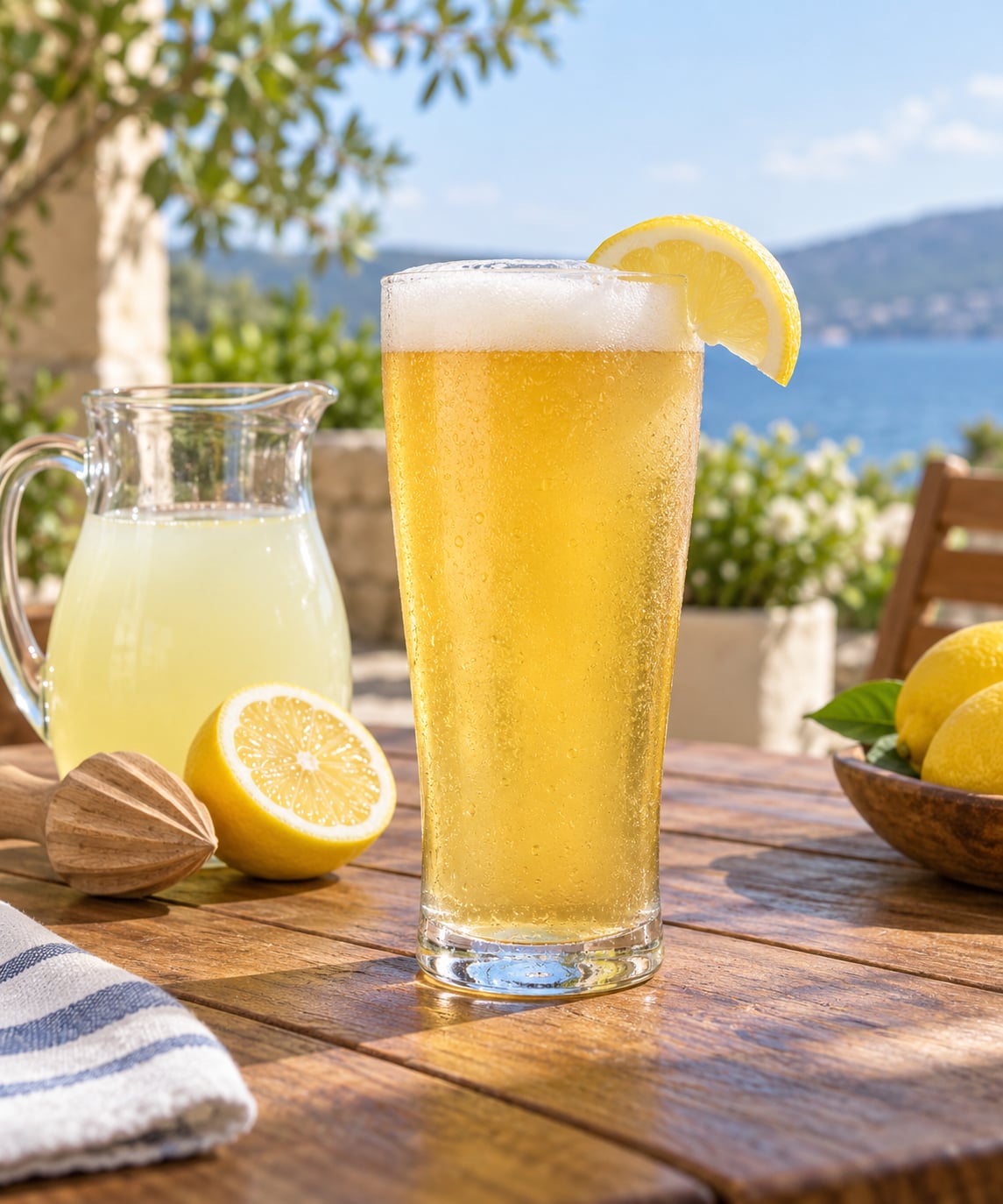
How to make a shandy? Mix equal parts light lager and cold lemonade, pour it ice cold, and you are done. That is the whole recipe: chill the beer, the lemonade and the glass, pour one part beer into the glass, top it with one part lemonade, and give it the lightest stir you can manage.
It takes about three minutes and there is no cooking, which is why I make it the second week of May and keep going until the weather turns. The drink sounds too simple to have opinions about it, and then you make one with a heavy amber ale and understand that the beer and the ratio are doing all the work.
The honest version also deserves a minute, because the word means different things across borders. In Britain a shandy is a mixed drink of bitter or lager with lemonade, while a German radler leans harder on the soda, and the American “Summer Shandy” brands people buy for cookouts are malt beverages brewed with lemon, not something you pour yourself.
What You Need
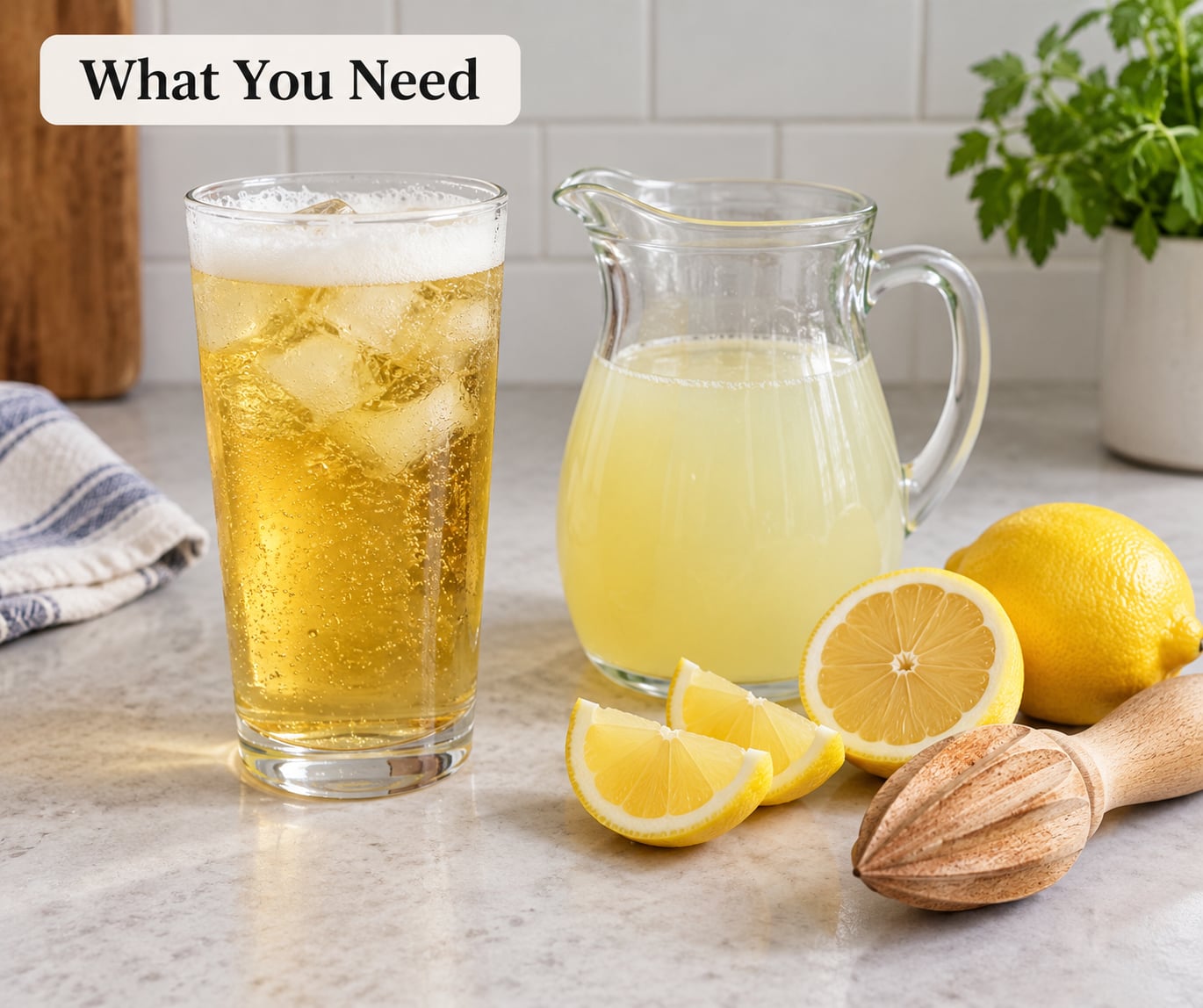
Two ingredients do the actual work. Everything else is temperature, glassware and timing.
- Beer: 12 ounces of a light lager or pilsner around 4 to 5 percent ABV. Pale lager, pilsner and a wheat beer all work. Anything dark, roasty or heavily hopped fights the lemonade.
- Lemonade: 12 ounces of cold lemonade. Fresh-pressed and lightly sweetened is my preference, but good bottled lemonade works fine. Avoid anything with artificial sweetener, which reads as flat and slightly chemical once it meets the beer.
- Glass: a tall 12 to 16 ounce glass. A pilsner glass, a collins or a plain highball all hold the proportions well and give you room for foam.
- Ice: optional, and there is a real argument either way. See the mistakes section below.
- Garnish, optional: a lemon or lime wedge, a thin cucumber ribbon, or a small sprig of mint or thyme.
- Useful tools: a long spoon for the gentlest possible stir, and a citrus juicer if you are squeezing your own lemonade.
One habit matters more than any gadget: put the beer and the lemonade in the fridge, not just the bottles on the counter. A room-temperature beer poured into a cold glass warms the glass in about thirty seconds, and cold is the entire point of this drink.
Step-by-Step
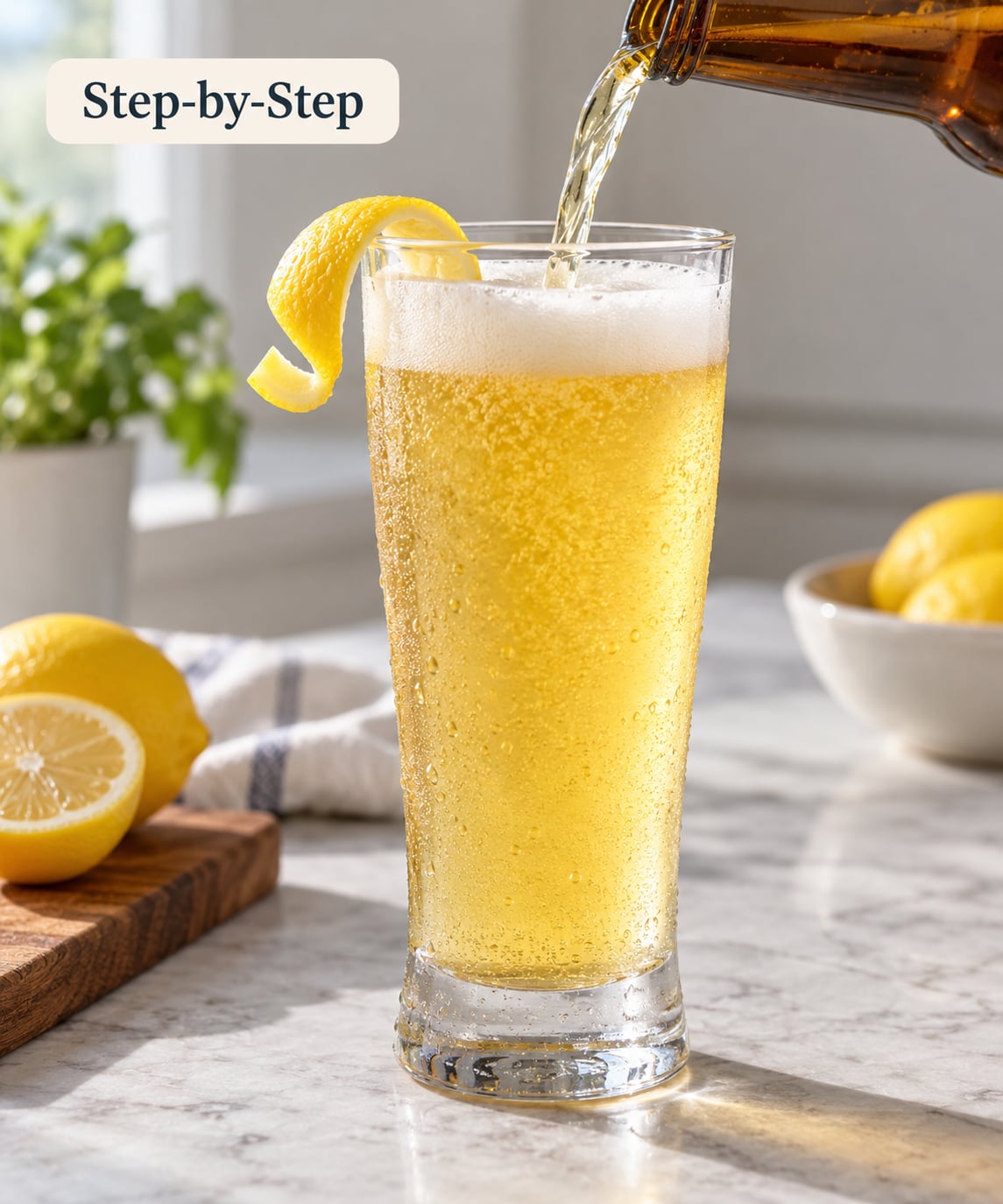
Five steps, and the order is not negotiable if you want the foam and carbonation to survive.
- Chill everything first. Put the beer, the lemonade and the glass in the fridge for at least twenty minutes. You will know the glass is ready when it is too cold to hold comfortably for more than a few seconds.
- Decide on ice. For the cleanest, most beer-forward glass, skip it and pour straight into the chilled glass. For a long afternoon on the patio, fill with ice first. You will know it worked if a finger of foam rises when the beer hits the glass and stays there instead of collapsing in five seconds.
- Pour the beer first, filling the glass about two-thirds. Beer first is the standard and it is the answer to the most argued-about question in shandy making: pouring beer before lemonade protects the carbonation, because the lighter liquid sits on top rather than knocking the gas out of the way.
- Top with lemonade down the side of the glass. Slow, steady, aimed at the inside wall just above the surface. Slow pouring is what keeps the fizz alive and stops the head from turning into a mountain of foam.
- Stir once, gently, then garnish. One or two strokes with a long spoon is plenty. If you are stirring hard enough to build a whirlpool, you have already flattened it. Drop in a lemon wedge and serve immediately.
The visual cues are simple: a clear layer boundary when it lands, a thumb of foam, and a glass that feels cold through your fingers. If the drink looks flat or hazy, you either poured too fast or mixed too hard.
How to Make a Shandy With the Right Beer-to-Lemonade Ratio
The classic starting ratio is 1:1, equal parts beer and lemonade, and that is where most people should start. It scales to a pitcher by the same math, so a batch for six is three bottles of lager and the same amount of lemonade.
For a stronger shandy, go two parts beer to one part lemonade. House shandies in a lot of British pubs lean this way, and it is what you want when the drink is a dinner accompaniment rather than the afternoon’s main event.
For a lighter, cooler drink, drop to one part beer and two parts lemonade. This is close to the German radler proportion, and it tastes less like a beer with juice added. On a hot day or at a picnic this version disappears faster.
Style changes the result more than most people expect. A pale lager or pilsner is neutral, so the lemonade reads clean and sharp. A hefeweizen adds banana and clove, which turns the drink tropical and works well with lime rather than lemon. People on beer forums lean hard toward wheat beer for that reason, with pale ale as the next choice when you want more bitterness to cut the sweetness. A stout, a brown ale’s roasted edge, or an aggressively hopped IPA will make the lemonade taste thin and sour by comparison.
Common Mistakes
Almost every disappointing shandy I have been handed traces back to one of four things.
Warm beer. This is the most common and the easiest to fix. Beer straight from the pantry is around 65 degrees and warms the glass immediately. Refrigerate it and let the glass chill for a full twenty minutes rather than running it under the tap for five seconds.
Too much foam, or no foam at all. A head that goes an inch thick and stays is good. A two-inch foam cap means you poured the lemonade straight down the middle instead of down the side, and that foam is where your carbonation went. Pour slow and low.
A flat, watery drink. That is either ice melted before serving or a mixer that went flat. Skip the ice if you are serving immediately, and skip anything fizzy that has been open since yesterday.
A too-sour or too-sweet result. Both come from the ratio, not the recipe. Too sour means the lemonade is thin and sharp and the beer is weak, so add more beer. Too sweet means you went easy on the mixer, so top it up with a splash of cold beer.
So, should the glass have ice? No ice gives you the brightest flavor and the most carbonation, which is why bars pour it that way. Ice is fine when the drink needs to last an hour on a warm patio, and it is fine in a tumbler. Just expect the last twenty percent of the glass to be more diluted than the first.
If you want the same drink in volume rather than per glass, a pitcher of about eight servings takes ten 12-ounce bottles of lager and the same amount of lemonade. Mix it in a pitcher you can seal, pour it cold into glasses rather than serving from the table, and expect to use it within a couple of hours.
Two other drinks on this site follow the same logic of a simple base plus a bright mixer, so they are worth a look if you enjoy the same balance: how to make sweet tea properly and how to make a chocolate malt.
Frequently Asked Questions
What sort of drink is a shandy?
A shandy is a mixed beer drink, not a brewed one. It combines a light lager, pilsner, or bitter with an equal amount of lemonade or lemon-lime soda, poured cold and served over ice or straight into a chilled glass. The result is a lower-alcohol, sweeter, more refreshing drink than the beer it started as.
Do you put the lemonade or the lager first?
Pour the beer first. Filling the glass two-thirds full with chilled lager and then topping it with lemonade down the side keeps the carbonation intact and produces a modest head. Pouring the mixer first agitates the beer from the start, and you lose bubbles before the glass ever reaches the table.
What is the ratio of beer to lemonade in a shandy?
The classic ratio is 1:1, equal parts beer and lemonade. For a stronger drink, use two parts beer to one part lemonade, which is common in pub versions. For a lighter drink closer to a German radler, use one part beer to two parts lemonade and expect it to taste less beery.
Which beers work best for a shandy at home?
Light lagers and pilsners are the safest picks because they are neutral and crisp. A hefeweizen or other wheat beer adds banana and clove notes that pair well with lime. A pale ale works if you want more bitterness against the sweet mixer. Dark ales, stouts and heavily hopped IPAs will make the lemonade taste sour.
How strong is a shandy?
A 1:1 shandy made with a 5 percent lager lands at roughly 2.5 percent ABV once the lemonade is mixed in, so it carries about half the alcohol of the beer. A two-to-one beer version sits closer to 3.3 percent. Neither is a low-alcohol drink in any meaningful sense.
What is the difference between a shandy and a radler?
A shandy and a radler are the same idea in different countries, and the ratio is the main difference. British and American shandies are usually equal parts beer and lemonade. A German radler uses a larger proportion of lemon soda, often one part beer to two parts soda, and is usually built with a helles lager.
Conclusion
Start with the simplest version: one part light lager, one part cold lemonade, poured beer first into a glass that has been in the fridge for twenty minutes. Stir once, add a lemon wedge, and drink it before the ice melts.
Then adjust to taste. More beer if it tastes thin, more lemonade if it tastes heavy, and swap lager for a wheat beer with lime if you want something less plain. Once you know how to make a shandy the basic way, the ratio is the only dial you ever need to turn.