
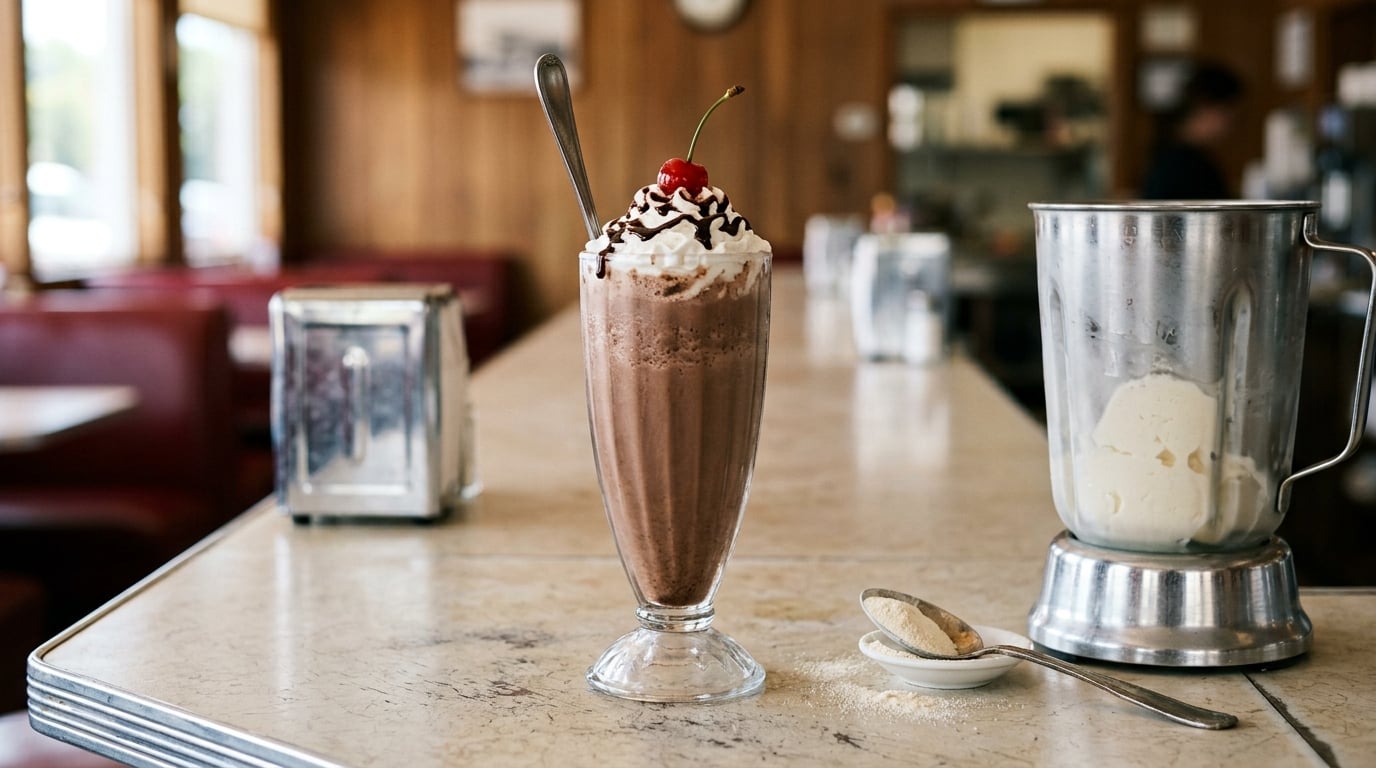
A chocolate malt is a diner-style milkshake blended from vanilla ice cream, milk, chocolate syrup and malted milk powder, and the last of those is what makes it a malt instead of an ordinary chocolate shake. Learning how to make a chocolate malt at home takes about five minutes of blending and one decision that decides everything: how thick you want it. A quick note before we start, this is the drink, not chocolate malt extract for brewing beer and not chocolate malt cake.
The trick most home recipes skip is the order. Dump the powder onto dry ice cream and you get grit; add the milk first and it melts straight through. I have made this more times than I care to admit, and the version below is the one that has never let me down.
Table of Contents
- What You Need
- Step-by-Step
- Common Mistakes
- Frequently Asked Questions
- What is the difference between a chocolate malt and a chocolate milkshake?
- Do I need malted milk powder to make a chocolate malt?
- Can I make a chocolate malt without ice?
- How do I make a chocolate malt thicker?
- Can I make a chocolate malt without dairy milk?
- How long can a homemade chocolate malt be stored?
- Conclusion
What You Need
Everything here is pantry or freezer stuff. The only real tool decision is a blender with a decent blade, since thickness comes from air and ice, not from the powder.
- Blender — a countertop blender is best. An immersion blender in a tall jar or a covered mason jar shaken hard both work.
- Measuring cups and spoons — volume matters more than instinct here, because a heaped third of a cup of malt powder is a different drink entirely.
- Two tall chilled glasses — soda-fountain style if you have them, otherwise any 12-ounce glass.
- Long spoon or straw — for the thickness test.
For roughly two 12-ounce servings:
- 2 cups tightly packed vanilla ice cream
- 1/2 cup cold whole milk
- 3 tablespoons chocolate syrup
- 3 tablespoons malted milk powder (Carnation or Ovaltine both work)
- A small pinch of salt, which sharpens the chocolate and takes the edge off the sweetness
- Whipped cream, chocolate syrup for a drizzle and a maraschino cherry, all optional
Pack the ice cream tightly. A loosely filled cup is mostly air, and air is the whole reason your malt pours like cold coffee. If you want it richer, drop the milk to a third of a cup. If you want it lighter and drinkable, raise the milk to three quarters of a cup and hold back a scoop of ice cream. For a dairy-free version, use a thick plant milk such as oat or almond, and expect a slightly lighter body since they hold less protein than cow’s milk.
Malted milk powder is the ingredient people substitute without thinking. Ovaltine and Horlicks are sweetened chocolate-adjacent drinks, so using them in place of plain malt powder pushes the drink sweeter and more chocolate-forward. Milo is a malted barley drink powder and sits closer to the real thing, just greener in flavor. If you have no malt powder at all, use one extra tablespoon of chocolate syrup and a small pinch of instant coffee, and accept that the malty, toasted note is missing.
Step-by-Step
Six steps, and the order matters more than any of them.
- Scoop the ice cream first. Two tightly packed cups into the blender jar. Level it off with the back of the scoop.
- Pour in the cold milk. Half a cup. It looks like far too little to loosen two cups of frozen dessert, and it is exactly right.
- Add the syrups and powders. Three tablespoons chocolate syrup, three tablespoons malted milk powder, the pinch of salt. Drop them on top rather than stirring, so they hit liquid and ice at the same time.
- Blend low for ten seconds. This just gets the blades moving and pulls the powders into the melt. Skip this and powdery pockets stick to the sides.
- Go high and watch closely. Twenty to thirty seconds, stopping once the color goes even and no white streaks remain. Run the jar for a few seconds, then blend again, because thick mixes hide unmixed pockets against the wall.
- Taste, adjust, pour. It should hold a spoon upright with a soft peak. Too stiff, splash in milk. Too loose, add a scoop of ice cream and pulse five seconds. Pour into chilled glasses and top with whipped cream, a drizzle and a cherry.
A two-serving mug of the version above lands somewhere around 550 to 650 calories, most of it sugar and fat from the ice cream and syrup. Treat that as a rough estimate rather than a label.
How to Make a Chocolate Malt with the Right Texture
The right endpoint is soft-serve consistency: the drink mounds in the glass and a spoon pushed into the top leaves a clean trench instead of a puddle. That is the entire test, and it takes three seconds. Most thin malts fail on ingredient order, not on ratios, so keep the milk in before the powder and you are halfway there.
If you want a genuinely thick, spoon-standing malt, the same ratio works with two adjustments: use one and a half cups of ice cream instead of two and cut the milk to a third of a cup. The powder is doing real work here too, since dried malt dissolves into dissolved sugars and proteins that thicken the body slightly on top of adding that toasted, caramel-like note a plain chocolate shake never has.
How to Make a Chocolate Malt Without a Blender
A whisk gets you there, it just takes longer. Soften half the ice cream in a bowl until it slumps, then whisk in the malt powder and syrups with a splash of milk until no dry streaks remain. Stir the remaining ice cream in at the end in two or three additions, and stop while some lumps survive. You are chasing the same texture, not a perfectly smooth one.
An immersion blender in a narrow jar is nearly as good as a full blender, since the tall narrow shape creates the same vortex. The mason jar method is last and least reliable: mash the ice cream down with a fork, add everything, screw the lid on tight, and shake hard for a full minute wrapped in a towel. Expect a slacker drink, and add a tablespoon of ice cream if it does not hold.
How to Make a Chocolate Malt from Scratch
There is a version with no malt powder at all, and it starts by building the base on the stove. Warm one cup of milk with two tablespoons of unsweetened cocoa, two tablespoons of malted milk powder, one tablespoon of sugar and a pinch of salt. Whisk constantly over medium-low heat for three to four minutes until it thickens enough to coat the back of a spoon.
Pour that base into a blender with two cups of vanilla ice cream and blend until smooth. The cooked base is what carries the deep cocoa flavor, and it leaves you a drink that tastes more like a chocolate malt and less like a sweet shake. Chill the leftover base in a covered container and keep it in the refrigerator for up to three days; it is also excellent over ice with a drizzle of cream.
Common Mistakes
Almost every disappointing home malt comes down to one of five things.
Watery malt. The ice cream was scooped loose, or the milk went in before anyone thought about volume. Pack the scoops firmly and measure the milk. If it is still loose after blending, add ice cream in half-scoop increments rather than more syrup, which only sweetens without thickening.
Foamy, aerated malt. A long high-speed blend beats air into the mix. Short pulses, with a scrape-down in between, keep it dense. Pour it slowly and it will not foam in the glass either.
Bitter chocolate malt. Most of the time this is cocoa powder with no fat to carry it, or syrup that has scorched on the stove. Use chocolate syrup, and keep the from-scratch base under a simmer.
Too sweet. Three tablespoons of syrup plus sweetened malt powder plus whipped cream is a lot. Cut the syrup to two tablespoons, use unsweetened malt powder if you can find it, and let the salt do some work. Hold the cherry and the drizzle for the top only.
Gritty or powdery malt. The dry ingredients sat too long without liquid. Blend the malt powder into the milk in the jar first for a full fifteen seconds, then add the ice cream.
The blender stopped moving. Overpacked jars and long high-speed runs are the usual cause. If the blades stall, let the jar sit for two minutes, add a splash of milk, and work in smaller batches. Half the mix, blend, pour it into the second half, blend again.
Tips for the Best Results
Chill everything first, glass included. A warm glass melts the outside of the drink within a minute and you end up chasing foam instead of enjoying it.
For more malt flavor without more sugar, bump the malt powder to four tablespoons and drop the chocolate syrup to two. The powder dissolves into the drink rather than sitting on the tongue.
Stir the malt powder into the milk before the ice cream goes in, and give it fifteen seconds. That single change removes almost all grit.
Whipped cream holds a stable foam on a malt better than on a plain shake because the drink underneath is already dense. Pipe it on rather than spooning it, and dust a little extra malt powder over the top for the soda-fountain look.
Blending two servings at a time keeps the ratio right and the texture consistent. A single large serving needs the same 2-to-1 ice cream to milk, just scaled down, and nothing more.
Any dairy-based mixture you do not drink straight away belongs in the refrigerator, covered, for no more than a day or two. Never refreeze it, since the texture goes icy and grainy on the second blend.
Frequently Asked Questions
What is the difference between a chocolate malt and a chocolate milkshake?
A chocolate milkshake is ice cream, milk and flavor blended together. A chocolate malt adds malted milk powder, which thickens the drink slightly and brings a toasted, nutty, caramel-like note the shake does not have. Malt powder is the only real difference, and it is why a malt is denser and less sweet-tasting than an equivalent shake.
Do I need malted milk powder to make a chocolate malt?
No, but the drink will taste like an ordinary chocolate shake. Plain malt powder supplies the malty flavor and a little extra body. Ovaltine and Horlicks work as stand-ins, though both add chocolate and sugar, so cut the chocolate syrup to two tablespoons when you use them. Milo is the closest substitute to plain malt powder.
Can I make a chocolate malt without ice?
You can, and the result is a thick chocolate malt drink closer to a dessert soup than a fountain malt. Use a cup and a half of ice cream, blend it with the milk and powders until smooth, then add eight to ten ice cubes and pulse briefly. The cubes chill the drink without the milk thinning it out.
How do I make a chocolate malt thicker?
Reduce the milk first. Cut it from half a cup to a third of a cup, add a half scoop of ice cream, and pulse for five seconds rather than blending long. You can also add an extra tablespoon of malt powder for body. Test with a spoon: it should hold a soft peak and leave a clean trench when you pull the spoon away.
Can I make a chocolate malt without dairy milk?
Yes. A thick oat or almond milk works well, and coconut milk adds a richness that mimics the dairy version. Blended coconut cream is the closest plant-based swap for half the milk if you want body, since it carries more fat and protein. Expect a slightly lighter drink and check the malt powder label, since many contain milk powder.
How long can a homemade chocolate malt be stored?
Keep it in a covered container in the refrigerator for up to a day or two, and give it a quick blend before pouring, since it firms up overnight. Freezing does not work well. The ice cream and milk separate and come back grainy. If you want to plan ahead, make the from-scratch chocolate base instead; it keeps three days and pours over fresh ice cream.
Conclusion
Start with two tightly packed cups of vanilla ice cream, half a cup of cold milk, three tablespoons of chocolate syrup and three tablespoons of malted milk powder, and get the liquid in before the powder. Blend low, then high in short bursts, and stop when a spoon leaves a soft peak behind. After that, ice and sweetness are yours to adjust, and they should be.