
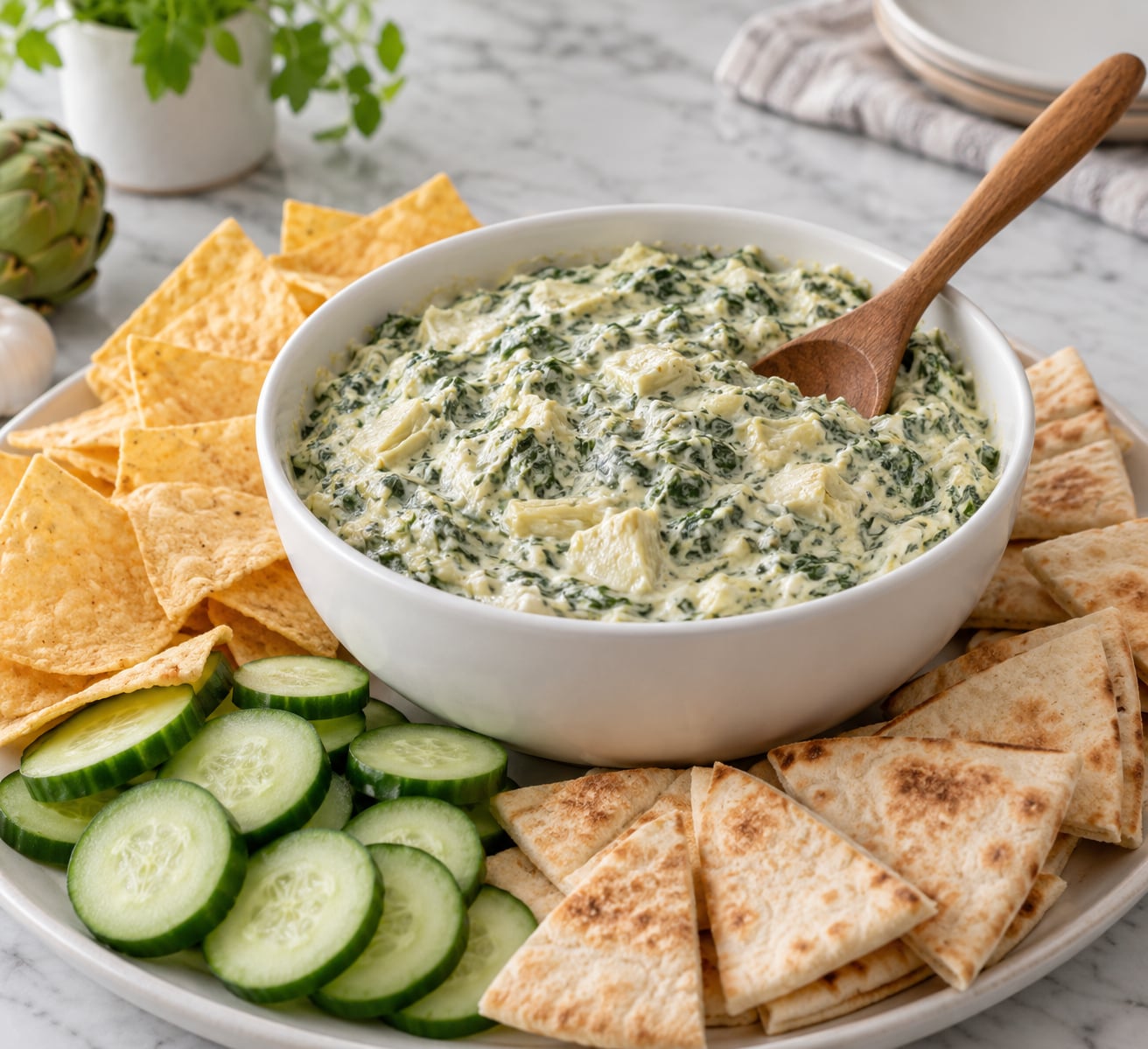
How to make spinach artichoke dip comes down to four things: softened cream cheese, well-drained vegetables, garlic, and a hot oven. Mix the creamy base with chopped artichoke hearts and squeezed-dry spinach, spread it into a small baking dish, and bake at 350 F for 20 to 25 minutes until the top bubbles. The whole thing takes about 35 minutes and makes enough for eight to ten dippers.
There are two versions worth knowing. The cold, restaurant-style version gets chilled for an hour so it scoops like a spread. The hot version goes into the oven until the cheese melts and the edges pull away from the dish. I make the cold version for summer cookouts and the baked one when people are hovering in the kitchen.
What You Need
The ingredient list is short, and every item earns its place. Here is the base recipe for an 8×8 inch (20 cm) baking dish or a 1-quart round casserole.
- 8 ounces (225 g) cream cheese, softened to room temperature. This is the body of the dip and the reason it holds a shape on a chip.
- 1/2 cup (120 ml) sour cream, which adds tang and keeps the texture light.
- 1/3 cup (80 ml) mayonnaise, for richness and a smoother mouthfeel.
- 1 cup (240 ml) shredded mozzarella, divided. Half goes in the mix for melt, half goes on top for the browned, bubbly crust.
- 3/4 cup (45 g) freshly grated Parmesan, plus extra for the top. Grating it yourself rather than using the bagged stuff makes a real difference in flavor.
- 14 ounces (400 g) artichoke hearts, drained and chopped.
- 10 ounces (285 g) frozen spinach, thawed and squeezed completely dry, or about 5 ounces (140 g) of fresh baby spinach, wilted.
- 3 cloves garlic, minced, or 1 tablespoon of paste.
- Salt, black pepper, and a pinch of red pepper flakes to taste.
- 1 tablespoon lemon juice, optional but recommended.
For canned versus fresh artichokes: canned artichoke hearts are what nearly every restaurant recipe uses, and they are hard to beat for a reliably tender result. Canned marinated artichokes work too, but rinse them first or the dip turns noticeably tangier. Quartered or whole hearts are easier to chop than halves.
On the dairy side, Greek yogurt works in place of sour cream for a lighter version, and it can stand in for both sour cream and mayonnaise. To leave the mayo out, swap in an equal amount of sour cream. Skip the cheese entirely and use whipped cottage cheese for a high-protein dip, accepting that it will not brown the same way.
A 5-ingredient version is possible if you want the shortest path: cream cheese, Parmesan, garlic, artichoke hearts and spinach. Add sour cream only if the mix looks stiff after a minute of stirring. A true 3-ingredient version uses cream cheese, Parmesan and marinated artichokes, served cold, with the spinach treated as a fourth optional addition.
Step-by-Step
How to Make Spinach Artichoke Dip: Prep the Ingredients
Drain the artichoke hearts in a colander, then spread them on a towel and roll gently to knock off the extra brine. Rinse them once under cold water so they do not carry a salty edge.
Thaw the spinach in a strainer set over the sink and press down hard with your palms until it stops dripping. Squeeze it in handfuls. This is the single step that decides whether your dip is creamy or watery, and skipping it is the most common reason a homemade batch turns out thin.
Chop the artichokes into small pieces, about the size of a lima bean, so every spoonful has some. Leave the spinach in loose chunks rather than puréeing it, since texture is what separates this from a soup.
How to Make Spinach Artichoke Dip: Cook the Spinach and Garlic
Warm a tablespoon of olive oil in a skillet over medium-low heat. Add the minced garlic and cook for 30 to 45 seconds, just until it smells fragrant and turns pale gold. Browned garlic turns bitter fast, and bitterness does not fade once it is mixed into dairy.
Add the squeezed spinach and toss until it is wilted and dark green, about 1 minute. Transfer it to a plate and let it cool for a few minutes so it does not melt the cream cheese when you combine everything.
If you are using fresh baby spinach, skip the raw pile and wilt it straight in this pan with the garlic until it collapses, then cool. Fresh spinach gives you a brighter, less briny result, and the color stays greener than frozen does.
How to Make Spinach Artichoke Dip: Blend the Creamy Base
Beat the softened cream cheese, sour cream, mayonnaise, Parmesan, half the mozzarella, the salt, pepper and lemon juice until smooth. Give it 60 to 90 seconds of actual mixing, longer if you are using a hand mixer. Lumps of cold cream cheese are the reason some batches taste grainy.
Fold in the cooked spinach, the chopped artichokes, the minced garlic and the red pepper flakes. Stir just until everything is evenly distributed. The dip should look loose in the bowl and thicken considerably in the oven.
Scrape it into your dish and smooth the top. Scatter the remaining mozzarella and a few spoonfuls of Parmesan over the surface. That top layer is what gives you the browned, blistered crust that people photograph.
How to Make Spinach Artichoke Dip: Adjust the Seasoning and Texture
Taste the mixture before it goes in the oven. Canned vegetables are much saltier than fresh ones, so you may need only a pinch of added salt. Dip the tip of a clean spoon in and go in with intention rather than dumping in the grinder.
If it tastes flat, fix it in this order: a squeeze of lemon juice, a pinch more salt, a small amount of MSG or a few extra grated Parmesan, then a few drops of hot sauce. The savory edge from a little MSG costs nothing and rounds out the dairy, and the fix takes seconds.
If the mixture looks thicker than pancake batter, loosen it with a tablespoon of milk or chicken broth at a time. Sour cream is another option, though it adds tang. Adding liquid after baking rarely works well because the mixture has set; adjust before it goes in.
How to Make Spinach Artichoke Dip: Chill and Serve
For the cold version, cover and refrigerate for at least 60 minutes, or up to 4 hours. The dip firms noticeably once fully chilled and spreads cleanly on crackers or toasted bread.
For the hot version, bake at 350 F for 20 to 25 minutes until the edges bubble and the top shows golden spots. Let it stand 10 minutes before serving, since the center stays molten longer than the surface suggests. A 9×13 inch pan works fine too, and a cast iron skillet gives you the same bubbly edges with a heavier crust.
Good dippers run from sturdier to softer: sturdy tortilla chips, pita wedges, baguette crostini, grissini and sturdy crackers hold up best. Softer options include carrot, cucumber and celery sticks, bell pepper strips, and warm sliced bread. For a burger night spread, this sits well next to how to make guacamole for burgers and how to make jalapeno poppers for a burger night. Grilled veggie sticks from how to make grilled vegetables for a burger night make a natural dipper plate too.
Store any extra portion covered in the refrigerator at 40 F or below and use it within 3 to 4 days. Because it is a dairy dip, do not let it sit at room temperature for more than 2 hours, and skip the bowl that has been sitting out on the counter since kickoff. Reheat small portions in the microwave for 20 to 30 seconds, or in a pan over low heat, stirring often.
Common Mistakes
The dip is watery. The spinach was not dry enough, or the artichokes were not drained. There is no fix after baking; squeeze harder next time. For a current batch, chill it uncovered for 30 minutes so the surface moisture can escape, then stir.
The spinach tastes dull or bitter. Dull means underseasoned or cooked too long in a hot pan. Bitter means overcooked garlic or spinach that sat in the pan until it went dark olive. Cook over medium-low and stop when the greens are just wilted.
The texture is grainy. Cold cream cheese never fully emulsified. Beat it longer, with the sour cream and Parmesan, before you add anything else. Shredding your own mozzarella also helps, since pre-shredded cheese is coated with starch that keeps it from melting smoothly.
The dip is too thick to scoop. Stir in milk, broth or sour cream a tablespoon at a time until it relaxes. Too thin is the more common problem, and thickening it after the fact means chilling it uncovered or folding in more grated Parmesan.
Everything tastes like garlic. Three cloves is right for a balanced dip; four or five turns it into a garlic spread. If you have already gone too far, a generous spoonful of sour cream and a squeeze of lemon will pull the balance back.
You made it too early. Assemble the dip up to a day ahead and refrigerate it unbaked. Bake from cold, adding 5 extra minutes, since a cold dish takes longer to heat through. Waiting until the day of is only necessary if you want the freshest browned crust.
Frequently Asked Questions
Can I make spinach artichoke dip ahead of time?
Yes. Assemble it up to 24 hours ahead, cover it and refrigerate it unbaked, then bake from cold with about 5 extra minutes. If you only need it for later the same day, mixing it two hours ahead and chilling gives you the best texture. Keep the mozzarella and Parmesan on top until baking so the crust does not turn soggy under the fridge.
How long does spinach artichoke dip last in the refrigerator?
Covered and kept at 40 F or below, it stays good for 3 to 4 days. Because it contains cream cheese and sour cream, treat it as a perishable dairy food: do not leave it on the counter longer than 2 hours, and discard it if it has sat out warm for longer than that.
Should I use fresh or canned artichokes in spinach dip?
Canned artichoke hearts are the standard choice and give the most consistent, tender result. Rinse and dry them well to knock off the brine. Marinated artichokes work too, but rinse those first or the dip turns noticeably tangier. Fresh or frozen artichoke hearts need longer cooking to soften before they go into the mixture.
How can I make spinach artichoke dip thicker?
The fix happens before baking, not after. Squeeze the spinach dry harder, drain the artichokes thoroughly, and use the full amount of cream cheese. If the mixture already looks right going into the dish but relaxes in the oven, use a smaller 8×8 inch pan and pull it out the moment the top blisters. Chilling it uncovered firms it further.
What can I serve with spinach artichoke dip?
Sturdier dippers hold up best: tortilla chips, pita wedges, crostini, grissini and thick-cut crackers. For a lower-carb plate, use carrot and cucumber sticks, celery, bell pepper strips, or warm slices of grilled bread. Pickles and antipasto olives work on the side, and any extra dip thinned with pasta water makes a quick creamy sauce for noodles.
Can I freeze spinach artichoke dip?
You can freeze the unbaked mixture in an airtight container for up to two months. Thaw it in the refrigerator overnight, stir well, then add the cheese topping and bake as usual. The texture is slightly softer than fresh, so give it a stir and let it come to room temperature for a few minutes before serving.
Conclusion
Good spinach artichoke dip is mostly about water. Drain the artichokes, squeeze the spinach until it stops dripping, soften the cream cheese properly, and the rest is easy. Mix, top with cheese, then either bake at 350 F for 20 to 25 minutes or chill for an hour. Start by squeezing the spinach harder than you think you need to. That one habit fixes most of the disappointing batches I have had.