
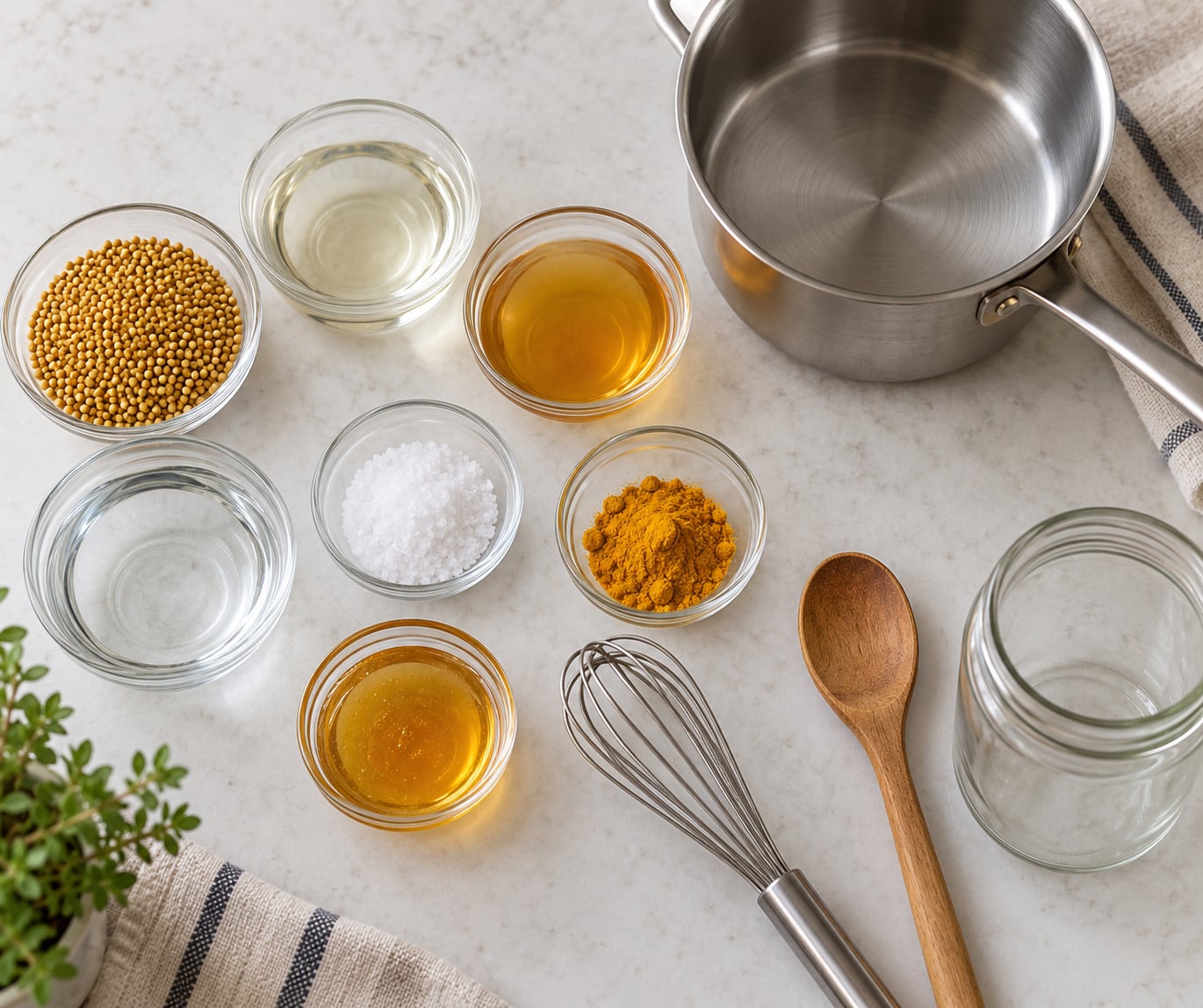
To make homemade mustard you combine mustard seeds or mustard powder with an acidic liquid like vinegar, sweeten and salt it, then cook it down or blend it until thick. The quick version takes about 20 minutes of active time and gives you the bright yellow, tangy condiment you expect on a burger. The traditional seed version takes days of soaking and simmering, and the flavor is worth the wait.
Mustard is one of those condiments that tastes better at home mostly because you control three things: the vinegar, the sweetener and the salt. Store-bought yellow mustard is mostly vinegar, water and mustard powder, so the recipe is short. I’ve been making it for burgers, brats and sandwich meat for years, and the same base recipe covers honey mustard, Dijon-style and whole grain once you know where to change the liquid.
One warning before you start. If you’re working with a stovetop method, put a window open or run a range hood. Boiling mustard releases sulfur compounds, and in a small kitchen the fumes are genuinely unpleasant. Open the lid, keep the heat low, and step back when you first add the seeds.
What You Need
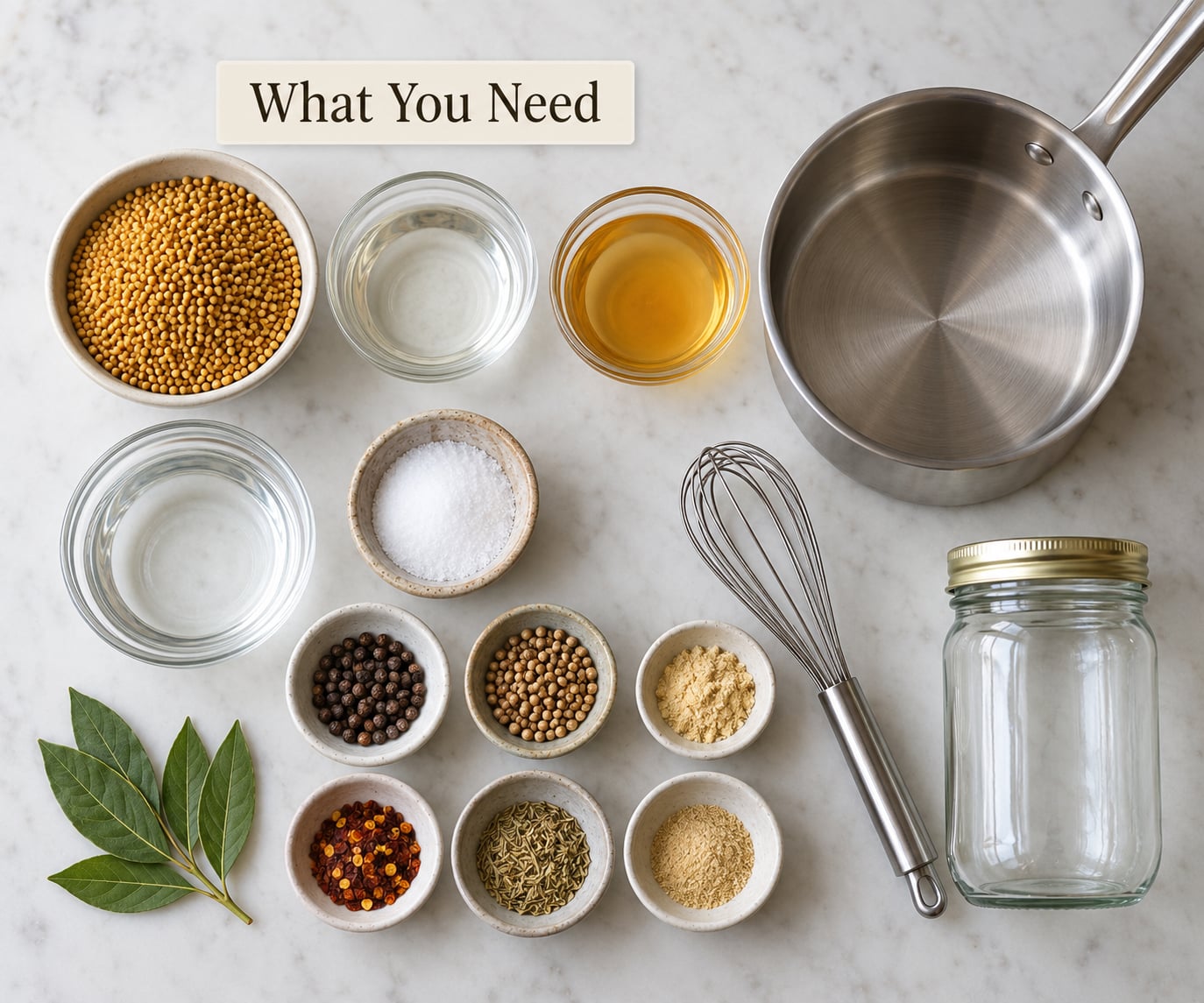
A basic cooked homemade mustard needs five ingredients, and four of them are probably already in your cupboard.
- Mustard powder or seeds. For the fast method, 1/2 cup dry yellow mustard powder. For the slow method, 1/2 cup yellow, brown or black seeds.
- Vinegar. 1/2 cup white distilled vinegar for a sharp ballpark taste, or apple cider vinegar for a softer, fruitier edge.
- Water. 1/2 cup, plus more if you need to loosen the mixture.
- Salt. 1 teaspoon, and more to taste at the end.
- Spices. 1/2 teaspoon ground turmeric for yellow color and warmth, 1/4 teaspoon paprika for smoke, 1/4 teaspoon garlic powder, 1 teaspoon honey or sugar for balance.
For equipment, a stainless steel or enamel-coated saucepan works well. Avoid aluminum and bare cast iron, both of which react with acidic mixtures and can dull the flavor over time. A whisk, a fine-mesh strainer for the seed method, and an airtight glass jar for storage cover the rest. An immersion blender is useful if you want a fully smooth mustard, though a regular blender works if you give it enough pulses.
Three substitutions do most of the work. Swap white distilled vinegar for apple cider vinegar and you get a rounder mustard. Swap water for wine or beer, part or all of it, and the mustard picks up depth you can’t get from vinegar alone. Swap honey for sugar if you want a cleaner sweetness that lets the vinegar lead. If your mustard is too thick, whisk in cold water a teaspoon at a time. If it’s too sharp, add a small pinch of sugar and let it sit for a day before judging it again.
Step-by-Step: How to Make Homemade Mustard in 3 Steps
The cooked method runs on three steps: mix the powder into cold liquid, simmer it down, then fix the seasoning and thickness. Cold water matters here, because mustard powder clumps badly when it hits hot liquid.
Step 1: Whisk the powder into cold water and vinegar
Put 1/2 cup cold water in a saucepan and whisk in 1/2 cup mustard powder until the mixture looks like smooth paste with no dry pockets. Add 1/2 cup vinegar, 1 teaspoon salt, 1/2 teaspoon turmeric, 1/4 teaspoon paprika and 1/4 teaspoon garlic powder, plus 1 teaspoon honey or sugar.
Step 2: Simmer until it thickens
Bring the pan to a bare simmer over medium-low heat and stir often. The mustard will loosen first, then start to thicken noticeably at around 10 minutes. When it coats the back of a spoon and drags a clean line, it’s done. Turn off the heat and let it cool for a few minutes.
Step 3: Adjust the seasoning and thickness
Taste it once it’s cooled to room temperature. Mustard tastes sharper warm and milder cold, so judging it hot leads people to over-salt. Add salt, a splash of vinegar, or a spoonful of water until it tastes right, then pour it into a clean jar and refrigerate.
How to Make Sharp Yellow Mustard
For the fastest route, skip the seeds entirely. Use 1/3 cup prepared yellow mustard as a base and thin it with 2 tablespoons white distilled vinegar and 2 tablespoons water, then stir in 1/2 teaspoon turmeric, a pinch of paprika and a pinch of salt. This gives you the classic hot-dog mustard in under five minutes with no cooking, no fumes and no risk of scorching the pan. It’s a good trick when you want the flavor fast and don’t care about a homemade-from-scratch story.
How to Make Homemade Mustard from Seeds
The seed method is the traditional one, and it’s the one worth doing once you know the ratio. Weigh 75 grams mustard seeds and combine them with 100 grams vinegar and 100 grams water or non-vinegar liquid. Many home brewers on r/Mustard use exactly this three-part ratio, and weight beats volume because seeds pack differently from one batch to the next.
Soak the seeds for 24 hours to five days, stirring once a day. The seeds swell and soften as they take up liquid, and they’re ready when they crush easily between your fingers. Home cooks commonly land on around five days, but a room-temperature kitchen may get there sooner.
Simmer the soaked seeds in their liquid over low heat for 20 to 30 minutes until the seeds pop and soften and the liquid turns cloudy and slightly thick. Then strain it for a smooth mustard, or blend it for whole grain. A blender struggles with seeds that haven’t softened enough, which is the most common complaint from beginners, so don’t rush the soak. The heat will be fierce in the first couple of days and mellow noticeably over about two weeks in the refrigerator.
How to Make Dijon-Style Mustard
Dijon leans on wine vinegar and a little white wine rather than distilled vinegar. Replace the water in the base recipe with 1/3 cup dry white wine and use 1/2 cup white wine vinegar or Champagne vinegar instead of the distilled. Add 1/4 teaspoon extra garlic powder, a small splash of dry white wine, and a teaspoon of Dijon seeds if you can find them. The result is sharper and more complex than yellow mustard, with the alcohol cooking off during the simmer.
Keep the heat level low and give it the same 10 minutes. Dijon-style mustard benefits from a longer rest than yellow, and many recipes let it sit a full week before serving.
How to Make Honey Mustard From Scratch
Honey mustard is the base mustard plus honey, and the only real skill is balance. Start with 1 teaspoon honey per 1/2 cup of finished mustard, stir it in after the pan comes off the heat, and taste again once it’s cool. Honey varies enormously in intensity, so measure rather than pour.
Adding honey too early and at too high a simmer makes it thin and sticky-sweet, because the heat drives off delicate aromas. Stirring it in at the end keeps the flavor round and the texture spoonable. For a thicker dip-style version, whisk in an extra tablespoon of mustard powder after cooling. If you want the sweet-sharp version that works best on burgers, our guide to honey mustard sauce for burgers goes further with the ratio.
Common Mistakes
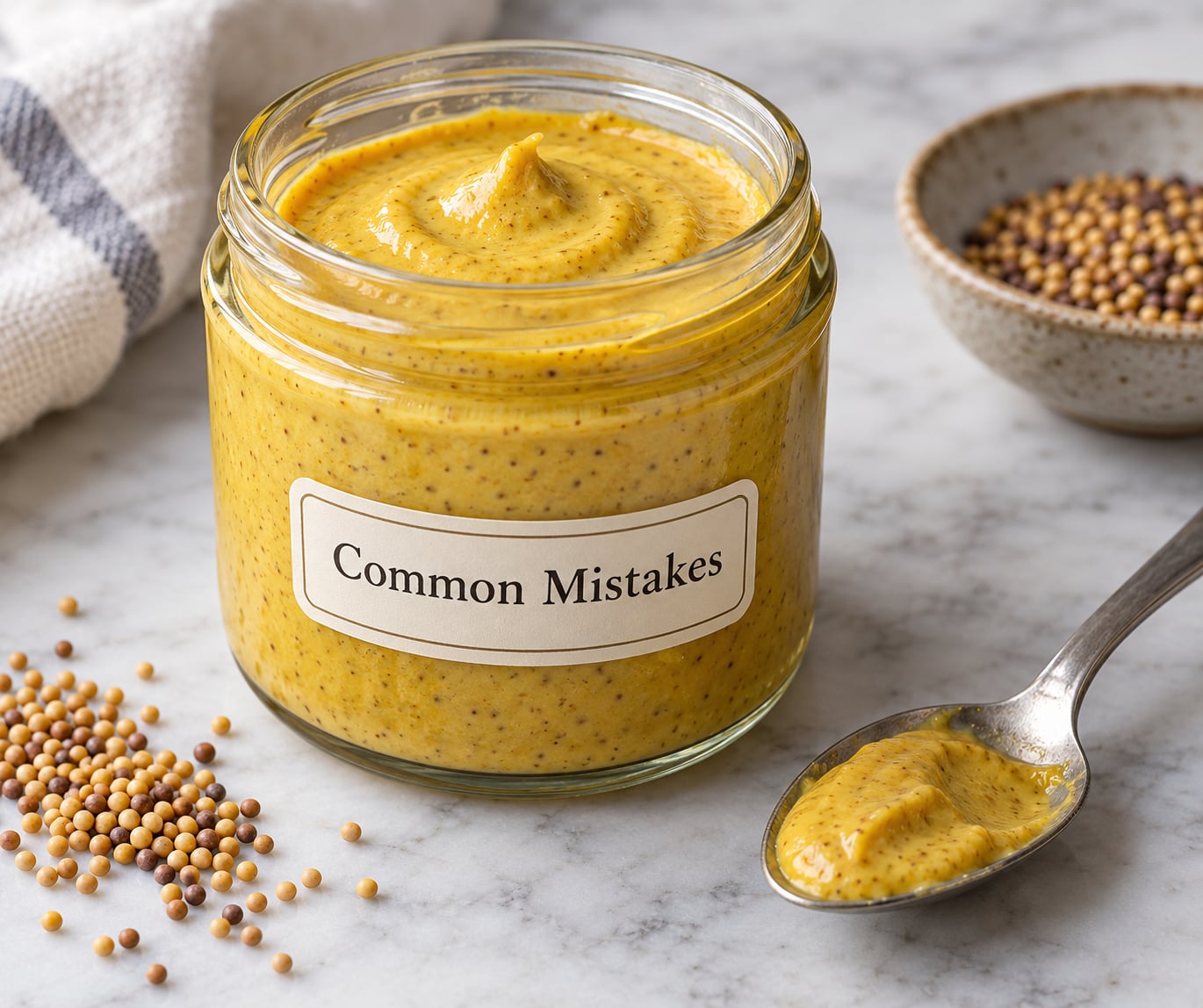
Most disappointing batches trace back to one of five things, and each has a simple fix.
Too much water. The most common complaint. Fix it by simmering the mustard uncovered a few minutes longer, or by mixing in an extra tablespoon of mustard powder. If you already added too much water, gentle heat plus time will pull it back; you cannot boil the water out completely, but reduction gets you close.
Skipping the strain. Seed mustard with husks left in tastes gritty, especially on a burger. Pass it through a fine-mesh strainer for smooth mustard, or blend thoroughly if you want the texture.
Making it too thin. Store-bought yellow mustard is looser than most homemade versions, so a mix that looks thin in the jar is often right. Test a smear on a piece of bread before adding more powder.
Skipping the resting period. Fresh mustard is aggressively hot because the mustard seed enzyme myrosinase is converting stored compounds into pungent oil. That reaction peaks in the first days and then breaks down, which is why mustard mellows. If you can stand it, wait a week. Many home cooks taste daily and refrigerate it once the heat feels right.
Overpowering the mustard. Too much garlic, paprika or spice crowd out the seed flavor. Add spices in half quantities, taste, and add more. One extra tip: mustard mellows as it ages, so season it a little sharper than you want it to taste in week one and let the rest period soften it down.
How to Store and Use Homemade Mustard
Refrigerated in an airtight jar, homemade mustard keeps three to four months in the fridge, and vinegar-heavy seed batches often last longer because the acidity discourages spoilage. If you see mold, a pink ring or an off smell, throw it out rather than skimming the top.
Freezing works well for mustard powder batches. Leave headroom in the jar or freeze in small portions, then thaw overnight in the fridge. Frozen mustard loses some of its nose, but the taste holds up fine in cooked dishes.
If a batch separates, whisk it hard or buzz it with a tablespoon of cold water. If it thickens in the fridge, the same fix works in reverse: loosen with water or vinegar, one teaspoon at a time. If it got too hot during the simmer, stir in a little honey or sugar and let it rest; bitterness fades but doesn’t fully disappear.
Use it on burgers, especially with beef, sausage and pulled pork. Add it to a vinaigrette or a mayo-based sauce, mix it into deviled eggs, spread it on ham before baking, or thin it with oil and vinegar for a dipping sauce for roasted vegetables. It also works as a base for a barbecue sauce or a glaze for a ham. If you want the same tang on homemade fries and onion rings, the reason restaurant burgers taste different from homemade is usually sauce balance, which we cover in why restaurant burgers taste different.
Fresh garlic in a mustard is delicious but adds spoilage risk for anything stored at room temperature, and fresh garlic purée is not recommended for water-bath canning since low-acid garlic can raise botulism risk. For home canning, follow a tested recipe from a current extension service or the National Center for Home Food Preservation rather than improvising one.
Frequently Asked Questions
Do I need mustard seeds to make mustard?
No. Mustard powder and prepared mustard both work. Dry powder gives you the classic hot-dog yellow mustard with about 20 minutes of cooking, and prepared mustard mixed with vinegar and spices takes five minutes with no heat at all. Seeds are worth the extra days only if you want whole grain texture or the deeper flavor that soaking and simmering develop.
Can I make homemade mustard without cooking it?
Yes. Combine mustard powder or prepared mustard with cold water, vinegar, salt and spices, then let the mixture sit in the fridge overnight. It thickens as it hydrates. Some cooks let the powder swell in water alone for an hour before adding vinegar, which reduces clumping and gives a smoother result without any stovetop time.
Why is my homemade mustard too watery?
Most often you used too much liquid or not enough mustard. Fix it by simmering uncovered for a few more minutes to reduce, or whisk in an extra tablespoon of mustard powder after cooling. Going forward, use roughly equal weights of seeds and liquid, and remember that mustard thickens noticeably more once it chills in the fridge.
How long does homemade mustard keep in the refrigerator?
Store it in an airtight jar and expect three to four months refrigerated, sometimes longer for vinegar-heavy seed batches. Aroma and heat fade over the first two weeks as the mustard mellows, which is normal rather than a sign of spoilage. Discard any jar with mold, a pink ring, a swollen lid or an unpleasant smell.
Can I use prepared mustard instead of mustard seeds?
You can, and it is the fastest route to a sharp yellow mustard. Mix about a third of a cup of prepared yellow mustard with 2 tablespoons white distilled vinegar, 2 tablespoons water, a pinch of turmeric and a small pinch of salt. It will not have the depth of a seed batch, so use it for hot dogs and burgers rather than for a cheese board.
Start With the Powder Method Tonight
If you want mustard for burgers this week, whisk 1/2 cup mustard powder into 1/2 cup cold water, add 1/2 cup vinegar, salt, turmeric and honey, then simmer for about 10 minutes. It’s the fastest route to a jar you’ll be happy to serve. Save the seed method for a weekend when you can let it soak for five days and appreciate what slow food actually buys you.
Related reading: our homemade ketchup recipe follows the same build-from-paste logic and works well as a burger topping next to your mustard.