
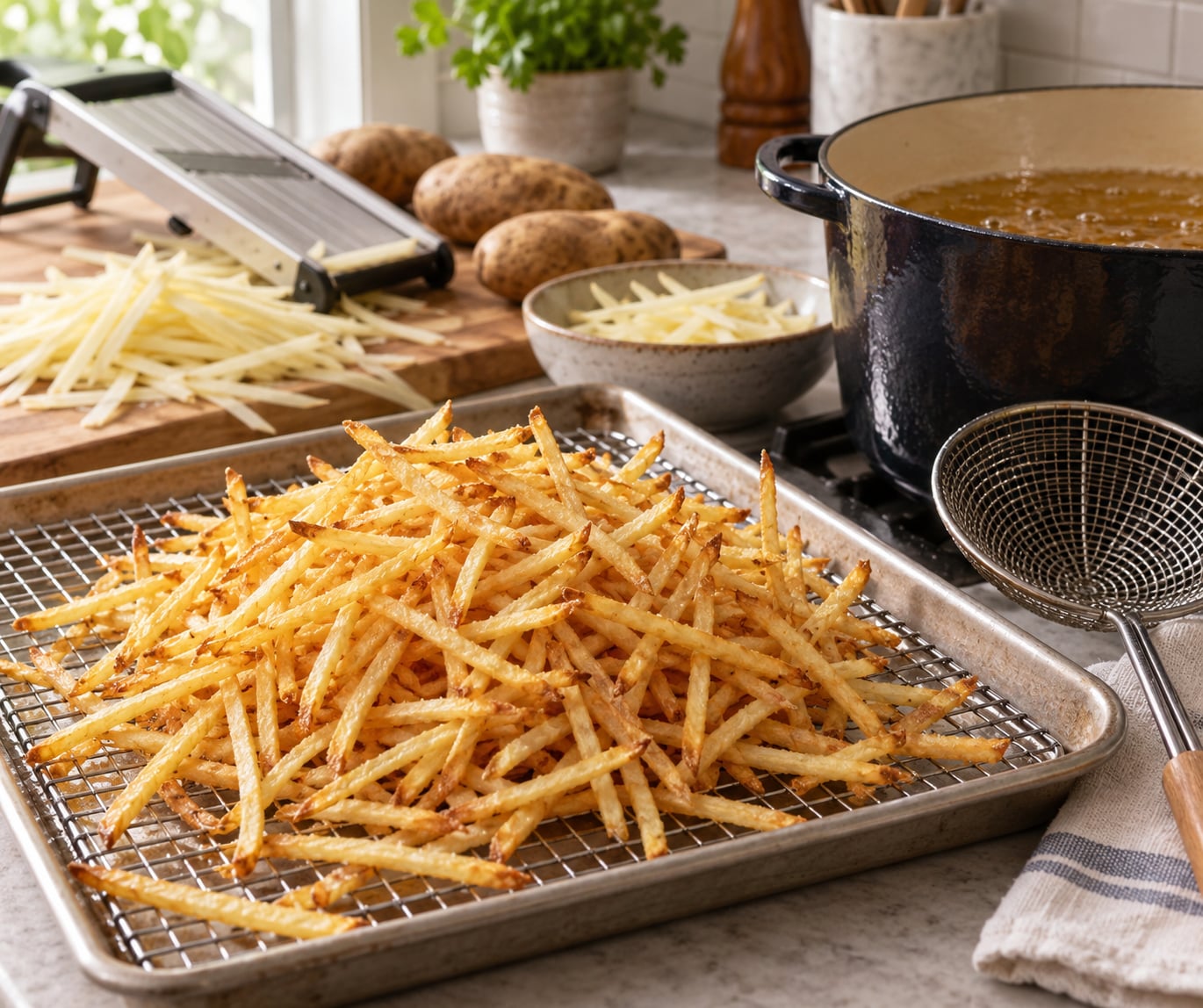
Shoestring fries are thin-cut potatoes, roughly 1/8 inch thick, fried until the outside is deeply golden and the middle stays soft. To make shoestring fries that stay crisp, cut them evenly, rinse off the surface starch, dry them completely, and fry in small batches at about 350°F. The whole batch takes around 30 minutes and the knife work is the only fiddly part.
I make these roughly once a week, usually alongside steak fries when the grill is going. Once you stop skipping the drying step, the results change completely.
What You Need
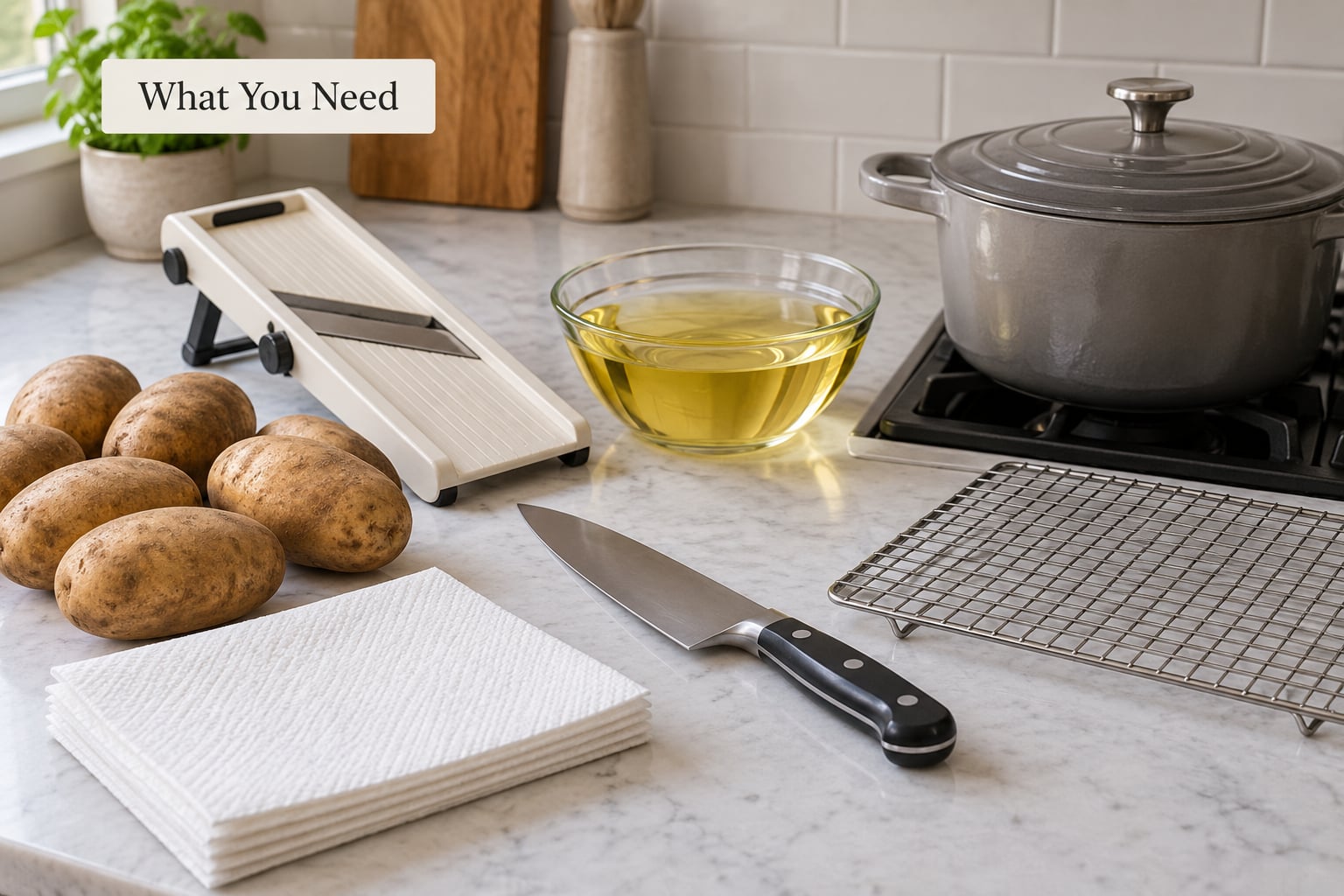
Two pounds of russet potatoes yields a serving that disappears fast, so plan on that if you are feeding more than three people.
- 2 pounds russet potatoes (about 5 medium potatoes)
- 4 to 5 cups neutral oil for deep frying, such as canola, peanut, or avocado
- Kosher salt for the water and for finishing
- A mandoline slicer with a julienne blade, or a sharp chef’s knife
- A heavy-bottomed pot or Dutch oven, 4 quarts or larger, filled about halfway with oil
- A wire spider or spider skimmer
- An instant-read thermometer clipped into the oil, or one you can read without dunking
- A wire cooling rack set over a baking sheet, plus paper towels
The pot matters more than people expect. A thin-walled saucepan lets the oil temperature swing wildly, and shoestring fries are thin enough that a 20-degree drop changes the result. A wire rack matters even more. Fries piled on paper towels trap steam underneath and go soft in the middle within a couple of minutes.
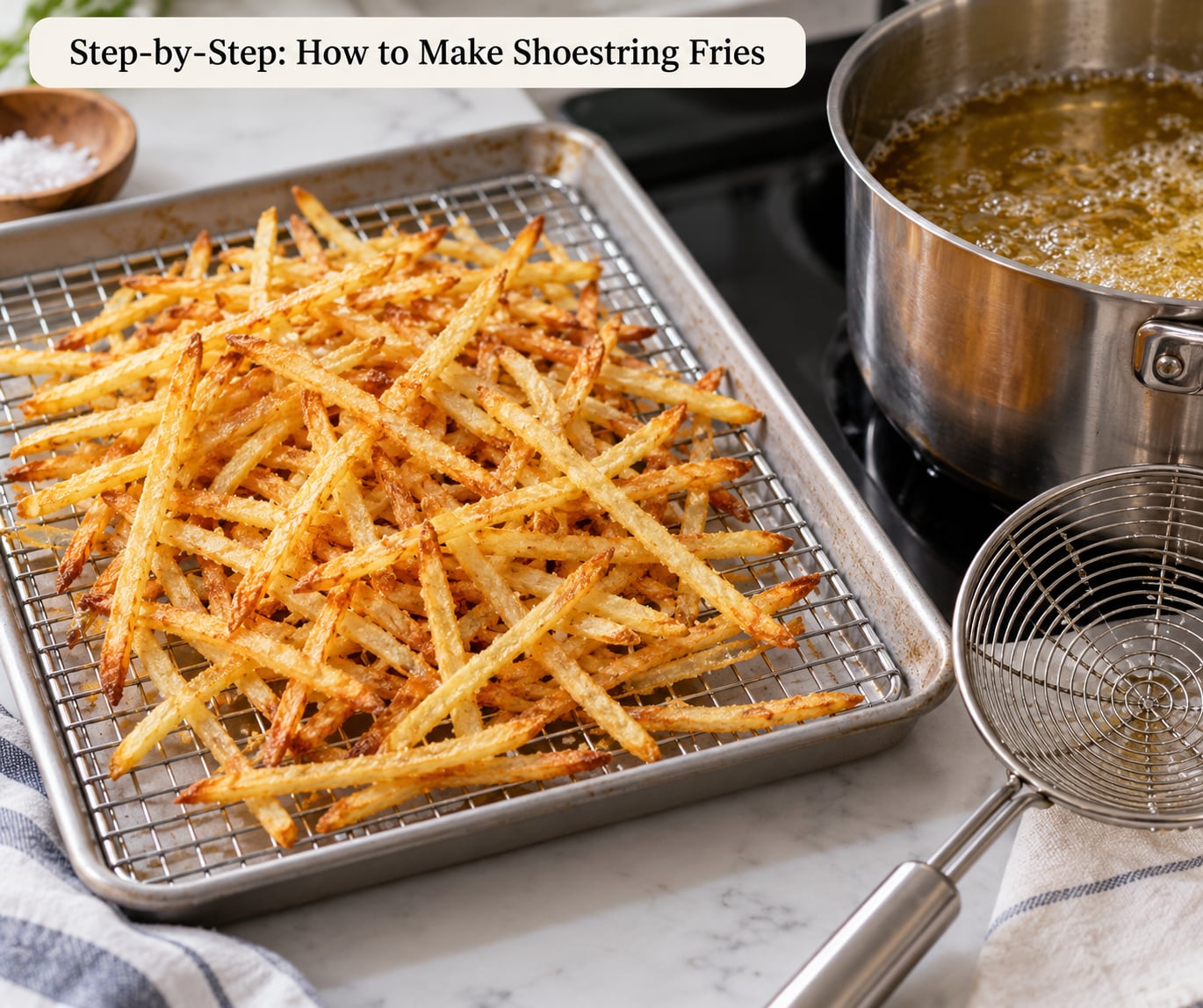
Step-by-Step: How to Make Shoestring Fries
How to Cut the Potatoes Into Thin, Even Sticks
Peel the potatoes if you want the smooth restaurant look, or leave the skins on for a rustic fry with more texture. Scrub them well either way.
Slice each potato into 1/4-inch-thick planks, then stack three or four planks and cut them into 1/8-inch sticks. The consistency matters more than any trick. If your sticks range from paper-thin to pencil-thick, the thin ones burn before the thick ones soften.
A mandoline with a julienne attachment gives you identical widths in a few passes, and it is far faster than knife work for this volume. Use the guard, cut away from your body, and keep fingers clear of the blade plate. If you cut by hand, steady the potato with your fingertips curled in and let the knife blade do the work slowly.
Drop any sticks that are noticeably wider than the rest into a separate batch. They will cook as thick fries and slow everything else down.
Soak or Rinse the Fries
Fresh-cut potatoes carry a layer of surface starch that turns gummy in hot oil. It makes the fries stick to each other, brown unevenly, and go limp fast.
A quick rinse under cold running water scrubs off most of it and takes about a minute. A soak is better. Put the fries in a large bowl of cold water, move them around with your hands, and let them sit 30 minutes. The water turns cloudy as starch washes away. Change the water once if you have time.
Some cooks add a tablespoon of white vinegar to the soaking water. It firms up the potato’s outer structure so the fries hold their shape through the fry. It is not required, but it makes a difference on thin cuts.
Heat the Oil and Test the Temperature
Fill your pot about halfway with oil and set it over medium-high heat. Use an oil with a high smoke point, which rules out olive oil and anything labeled “extra light.” Peanut, canola, vegetable, and avocado all hold up at frying temperatures and taste neutral enough not to fight the potato.
Heat to 350°F. If you have no thermometer, drop one dry potato stick into the oil. It should sink slowly and bubble steadily on the way down. If it shoots to the surface and fizzles immediately, the oil is too hot. If nothing much happens, wait a couple more minutes.
Do not put salted water-washed fries into the oil until you have dried them. Wet potatoes make the oil spit, which is the most common cause of burns in home frying.
Fry in Small Batches
Pat the fries dry on paper towels or roll them in a clean towel. They need to look dry, not just feel less wet.
Lower a single layer into the oil with your spider. Bubbling should start immediately and stay lively. If the bubbling dies down fast, the oil is too cool or you added too many at once.
Fry for 3 to 4 minutes at 350°F, stirring occasionally with the spider so the pieces separate and brown evenly. They should be pale gold and slightly soft, not crisp yet. Lift them out and let them drain on the rack for 5 to 10 minutes while the oil recovers to 375°F.
Raise the oil to 375°F and fry the same batch a second time for 1 to 2 minutes. This is the double fry that gets you a crisp shell with a soft center. Watch closely on the second pass, since these thin fries go from golden to burnt fast.
Fry one handful per batch. A crowded pot drops the temperature, which makes the fries soak up oil and come out greasy.
Drain and Season Immediately
Move the fries straight to the wire rack over a baking sheet. Season with flaky kosher salt while they are still hot; the salt sticks better and the crust is still releasing moisture.
Serve them right away. Shoestring fries have more surface area than thick-cut fries, so they lose heat and crispness faster than you would expect.
Common Mistakes and How to Fix Them
Soggy fries. Almost always one of three things: wet potatoes, oil that was too cool, or too many fries in the pot at once. Fix all three and the problem goes away. Dry the fries thoroughly, hold 350°F, and keep batches small.
Greasy fries. Oil temperature fell below 330°F during cooking, so the potatoes absorbed oil instead of sealing. Do not salt before frying, since salt pulls moisture to the surface and encourages sogginess. Salt only after.
Uneven cooking, some burnt and some raw. Your cut is inconsistent. Sort the sticks by hand before soaking and pull out the odd ones. Second cause: skipping the stir in the first fry.
Fries stuck together in clumps. Starch on the surface, plus crowding. Rinse or soak, lower the fries in one layer, and separate them gently with the spider during the first fry.
Oil bubbling over the pot. Too many potatoes at once, or wet ones going in. Both are avoidable. Use a pot with at least two inches of headroom and dry every piece before it touches oil.
Fries go limp within minutes. They are sitting on paper towels or in a closed pile. Use a wire rack, spread them out, and do not cover them.
Raw center, browned outside. The sticks are much thicker than 1/8 inch, or the first fry was cut too short. Give thick pieces more time at 350°F before the high-heat finish.
Oil temperature keeps dropping. The burner is too small for the pot, or the pot is too wide. Heat more oil than you think you need; a deeper pot holds and recovers temperature better than a shallow one.
Tips for Extra-Crispy Shoestring Fries
Freeze the cut, soaked, dried sticks in a single layer on a tray, then bag them once frozen. Fry from frozen at 350°F, adding a minute for the first pass. They come out of the freezer with the same crispness as fresh-cut ones.
For an air fryer, follow our air fryer fries guide at 400°F for 8 to 10 minutes, shaking the basket every 3 minutes. The basket must stay a single layer. Thin shoestring cuts brown faster in an air fryer than in oil, so check early.
In the oven, toss the dried sticks with a little oil, spread them on a hot sheet pan in one layer, and bake at 425°F for 25 to 30 minutes, turning halfway. You get good color but never quite the same crunch as deep frying.
Sweet potatoes work with the same method. Cut them thinner, around 1/10 inch, soak them for the full 30 minutes, and shorten the second fry to about 90 seconds since they brown faster.
For a group, par-fry the first batch while the last one soaks, and hold the finished fries on a rack in a low oven with the door cracked. Never hold them in the hot oil.
Seasoning blends worth trying: salt with garlic powder and onion powder, salt with smoked paprika and cayenne, salt with grated parmesan and black pepper, or salt with dried rosemary and flaky salt. Toss immediately after draining.
If you want the skin-on look and a rougher cut, hand-cut fries like our hand-cut french fries method work well here too, just cut them closer to 1/8 inch.
Frequently Asked Questions
What are shoestring fries?
Shoestring fries are very thin french fries, cut to roughly 1/8 inch (about 3mm) thick. That is close to half the width of a standard french fry. The thin cut gives you a high ratio of crisp surface to soft center, so they are crisp all the way through instead of only on the outside. They cook faster than thick fries too, usually 3 to 4 minutes on the first fry.
What is the best potato for making shoestring fries?
Russet potatoes are the top choice because their high starch content turns fluffy inside and crisps well outside. Yukon Gold works fine and gives a creamier, more buttery center, but it browns faster, so watch the color closely. Avoid waxy varieties like red bliss or new potatoes, which stay waxy and do not develop a crisp crust on such a thin cut.
What oil temperature should I use for shoestring fries?
Fry shoestring fries at 350°F for the first fry, then raise the oil to 375°F for a 1 to 2 minute finish. This double fry cooks the center through and then crisps the outside. Use peanut, canola, vegetable, or avocado oil, all of which have a high smoke point. Skip olive oil and lower-fat oils, which smoke and taste bitter at these temperatures.
How thin should shoestring fries be cut?
Aim for about 1/8 inch thick, which is roughly 3mm. If you want them noticeably thinner and more delicate, go to 1/10 inch, but be aware they brown very quickly in the second fry and go from golden to burnt in under a minute. Consistency matters more than the exact number, so sort your sticks and set aside any that are much wider than the rest.
Can I make shoestring fries in the oven instead of deep-frying?
Yes, and it is a good option if you want to skip the pot of oil. Toss the dried, soaked sticks with a little oil, spread them on a hot sheet pan in a single layer, and bake at 425°F for 25 to 30 minutes, turning halfway through. The color will be good but the texture is slightly drier and softer than deep frying, so toss them again just before serving.
How do I keep shoestring fries crispy after frying?
Drain them on a wire cooling rack set over a baking sheet, never on paper towels or a pile, so steam escapes instead of softening the crust. Salt them while they are still hot, and serve within a few minutes. If they must wait, hold them in a single layer in a low oven with the door left slightly open. Never leave them sitting in the hot oil.
Conclusion
Before you heat anything, cut your potatoes to an even 1/8 inch, rinse or soak them to pull off the surface starch, and dry them until they look dry. Those three steps decide most of the outcome. Then heat oil to 350°F, fry one small batch at a time, raise the oil to 375°F for the short finishing fry, and drain on a wire rack. Salt them hot and eat them fast.