
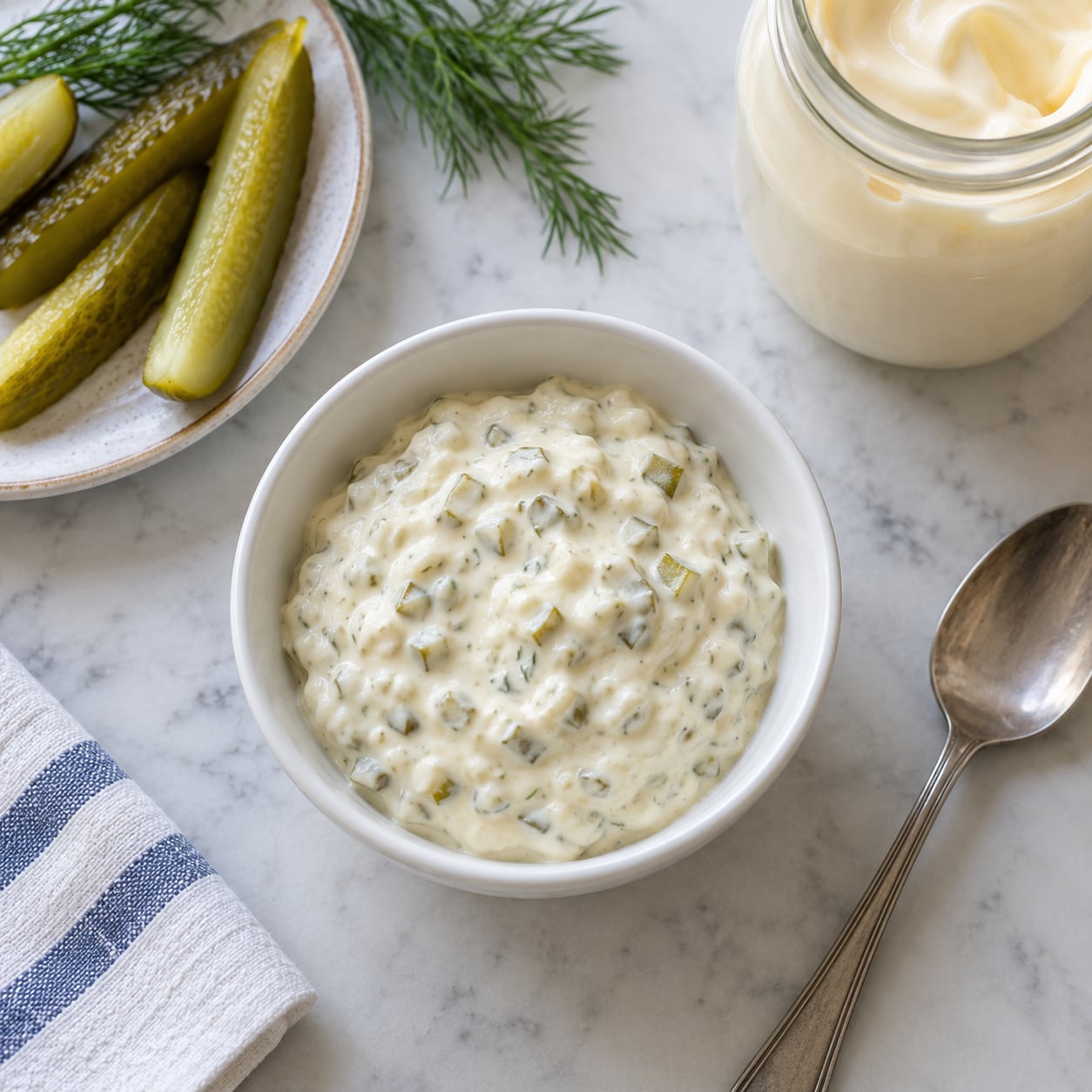
How to make tartar sauce at home is a five-minute job: mash or finely dice about half a cup of dill pickles, stir them into a cup of mayonnaise with a spoonful of mustard, a squeeze of lemon, and a pinch of dried dill, then let it sit in the fridge for an hour. That is genuinely all it takes, and the result is brighter and crunchier than anything from a bottle.
Store-bought tartar sauce leans on corn syrup and thickeners, which is why it often tastes more sweet than tangy. A homemade batch costs nothing extra, keeps for about a week, and lets you dial the pickle size to exactly how you like it.
Table of Contents
- What You Need
- Step-by-Step: How to Make Tartar Sauce
- Common Mistakes
- Frequently Asked Questions
- What is the best base for tartar sauce?
- Can I make tartar sauce without mayonnaise?
- Should tartar sauce be made with sweet or dill pickles?
- How do I keep tartar sauce from becoming watery?
- How long does homemade tartar sauce last in the refrigerator?
- What can I serve tartar sauce with besides french fries?
- Conclusion
What You Need
These amounts make roughly one cup of sauce, enough for four to six servings.
- 1 cup mayonnaise — the base. Any full-fat mayo works; nothing fussy required.
- 1/2 cup finely diced dill pickles — plus 1 tablespoon of the pickle brine.
- 1 tablespoon Dijon or yellow mustard — adds a gentle heat and emulsifies.
- 1 tablespoon lemon juice — fresh is better than bottled.
- 2 teaspoons sweet pickle relish (optional) — rounds out the sharpness for a restaurant-style result.
- 1 teaspoon dried dill weed (optional) — or a tablespoon of fresh dill, chopped.
- 1 teaspoon garlic powder and 1/2 teaspoon onion powder (optional) — for savory depth without raw onion bite.
- 1 tablespoon capers (optional) — rinsed and chopped. This is the single biggest upgrade if you like a briny edge.
As for tools, all you really need is a small bowl, a whisk or fork, and a sharp paring knife. A box grater also earns its keep if you plan to add grated onion instead of chopped shallot.
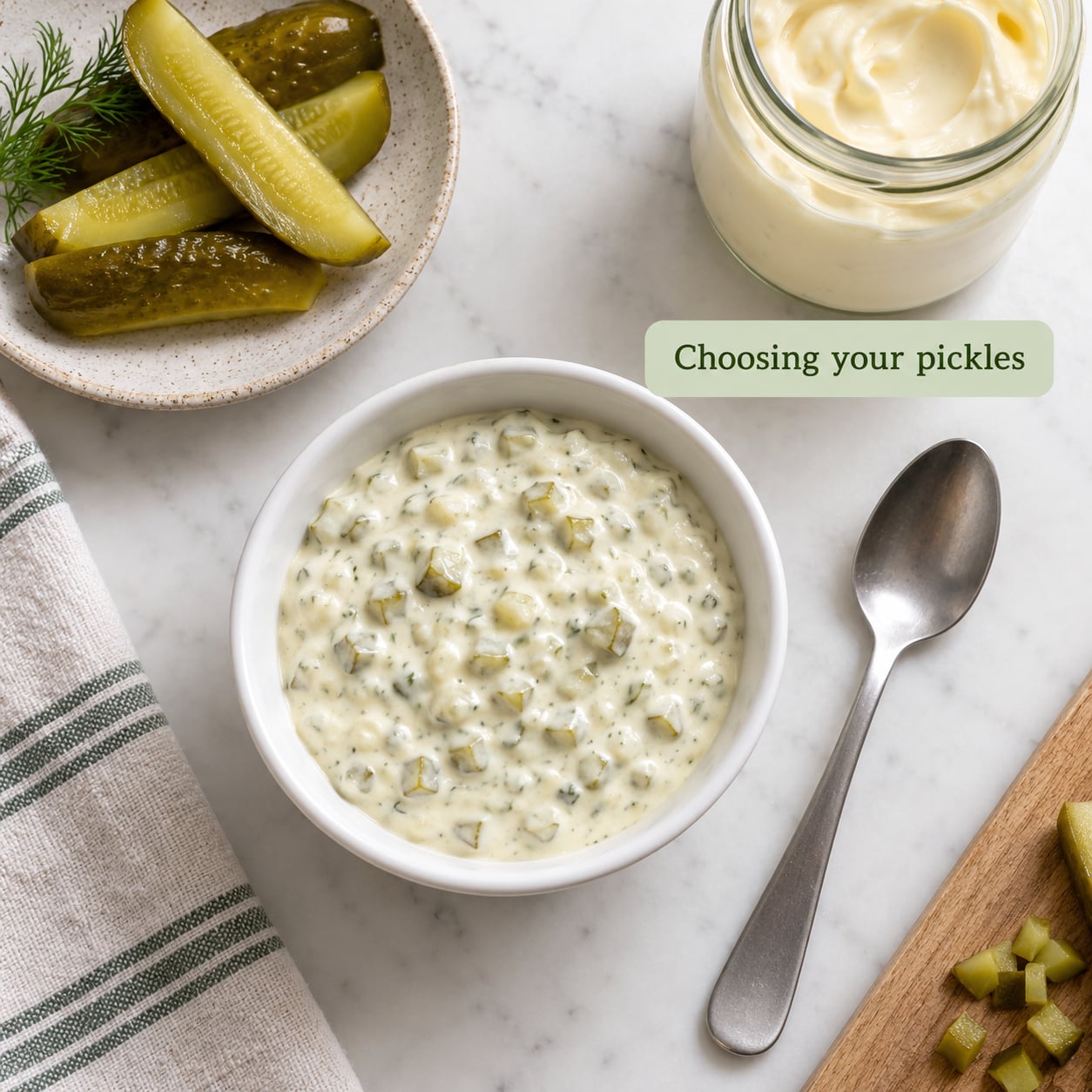
Choosing your pickles
Dill pickles give the most savory, briny flavor, and they are the standard choice for fried fish. Sweet pickle relish works too, though on its own it pushes the sauce toward sugary. Cornichons are small and firm, which makes them the easiest to dice into a consistent, fine texture.
Step-by-Step: How to Make Tartar Sauce
Step 1: Dice the Pickles Finely
Drain half a cup of dill pickles and lay them on a paper towel. Pat them dry, because surface brine is the single biggest reason homemade tartar sauce turns watery in the fridge overnight.
Cut them into pieces about 1/8 inch across, roughly the size of a corn kernel. Bigger chunks slide around the spoon and dominate the bite; crumbs disappear entirely. If you want the smoothest possible texture, mince the pickles in a small food processor with a couple of pulses.
Step 2: Mix the Creamy Base
In a bowl, combine the mayonnaise, mustard, lemon juice, pickle brine, dried dill, garlic powder and onion powder. Whisk until the base looks completely smooth and one color, with no streaks of mayo sitting at the bottom.
Getting the seasoning into the base before the pickles matter, because the saltier pieces distribute unevenly if you dump everything in at once. Taste it here. It should read as slightly too sharp on its own, since the pickles add more tang.
Step 3: Fold in the Pickles
Add the diced pickles, the optional relish, and the capers if using. Fold with a spatula in about four slow turns rather than beating them in. You want visible pickle in every spoonful, not a uniform gray blend, so scrape the sides and the bottom as you go.
Cover and refrigerate for at least an hour, overnight if you can. Home cooks are consistent about this one: the flavor genuinely improves after a night in the fridge as the pickles mellow into the mayo.
Step 4: Taste and Adjust the Tartar Sauce
Spoon a little onto a cracker and actually taste it before serving. Four things usually need attention.
- Too sharp or flat: add a half teaspoon more lemon juice, a few drops of pickle brine, or a pinch of sugar.
- Too salty: stir in another tablespoon of mayonnaise. Dill pickles and capers carry plenty of salt, so most recipes need none at all.
- Too thick: loosen with water, a teaspoon of pickle juice, or a splash of lemon juice, one teaspoon at a time.
- Not enough pickle flavor: add another tablespoon of finely diced pickle. Blending is not a fix here, since it flattens the flavor instead of deepening it.
Once it tastes right, put it back in the fridge for another 20 minutes so it firms up slightly before serving.
Common Mistakes
The sauce turned watery. The pickles released brine and the mayo thinned out. Next time, pat the diced pickle dry, squeeze it lightly in a clean towel, and keep the finished sauce in a sealed container so condensation can’t drip back in.
The pickle pieces were too big. Anything larger than a corn kernel reads as a chunk rather than a texture. A quick second pass with the knife fixes it without any extra work.
It tastes like vinegar. You went heavy on the lemon juice or used a tart pickle like a gherkin. Pull it back with more mayonnaise and a teaspoon of relish, and switch to cornichons or mild dills next time.
It tastes too sweet. The culprit is almost always sweet pickle relish used in place of dill pickles, or a sugar in the mix. Double the dill pickle and skip the sugar.
It is thick enough to stand on a spoon. Straight mayonnaise can do that. Loosen it with pickle juice or a splash of cold water, a teaspoon at a time, until it drapes off the spoon in a slow ribbon.
Serving suggestions and storage
Tartar sauce belongs with fried fish, fish and chips, fish sticks, crab cakes, fried shrimp, fish sandwiches, fish tacos, baked cod and pan-seared salmon. It also works as a dip for fries, onion rings and potato salad, or a drizzle over a chopped burger. If you want two more burger sauces to keep on hand, how to make burger sauce at home and how to make comeback sauce both start from the same pantry base. For something sweeter, how to make honey mustard sauce pairs well with the same fish.
Store the sauce in an airtight container in the refrigerator for up to five days. Keep it away from raw fish: if the sauce touched a platter of raw salmon, discard it. Freezing works, but the mayo-based sauce separates and turns grainy once thawed, so freeze it only if you plan to blend it smooth again.
For a big event like a backyard fish fry, the working ratio that home cooks use is roughly two and a half parts mayonnaise to one part acid to two parts relish, then season to taste. Make it the night before so the flavor has time to settle.
Frequently Asked Questions
What is the best base for tartar sauce?
Mayonnaise is the classic base and the one most recipes use. It gives tartar sauce its creamy body and holds the diced pickles in suspension. Any full-fat brand works, since the flavor comes from the pickles, mustard and acid rather than the mayo itself. Greek yogurt or sour cream make a lighter, tangier version, though they tend to thin out slightly after a day in the fridge.
Can I make tartar sauce without mayonnaise?
You can, and it will not taste like the jarred version. Sour cream, Greek yogurt or plain yogurt all work, and each adds its own tang. Combine them with the same pickles, mustard and lemon and the result is closer to a European-style seafood sauce. Just keep the total liquid similar to what mayonnaise would provide or the sauce will be too thin to cling to fried food.
Should tartar sauce be made with sweet or dill pickles?
Dill pickles, almost every time. Sweet pickle relish is a useful addition in small amounts because it rounds out the sharpness, but using only sweet relish leaves you with a sweet, heavy sauce that does not cut through fried food. If you like a little sugar, add a teaspoon at the end instead. Cornichons are the best in-between option: sweet enough to soften the edge, firm enough to dice finely.
How do I keep tartar sauce from becoming watery?
Pat the diced pickles dry on a paper towel before they go into the mayo, and squeeze out any brine you can with a clean towel. Keep the finished sauce in an airtight container, since condensation dripping back in is a common culprit. If it still loosens after resting, stir in a spoonful of extra mayo and refrigerate it again for twenty minutes.
How long does homemade tartar sauce last in the refrigerator?
About five days in a sealed container, and it tastes best within the first two. That is shorter than a commercial jar because there are no preservatives or stabilizers in it. Chill it within two hours of making it, and throw it away if it has been sitting out near raw fish or at room temperature for more than two hours.
What can I serve tartar sauce with besides french fries?
It is a fish sauce first, so put it with fried fish and chips, fish sticks, crab cakes, fried shrimp, fish sandwiches, fish tacos, baked cod and pan-seared salmon. It also works as a dip for onion rings, a spread on a chopped cheeseburger, a drizzle over a baked potato, or a folded into potato salad. Any sauce you enjoy on fries is worth trying here.
Conclusion
Start by cutting the pickles small and patting them dry, because that one habit separates good tartar sauce from the watery kind. Mix the creamy base, fold the pickles in, then taste it before it goes anywhere near a plate.
Once you get the seasoning right, keep the recipe flexible. A spoonful of capers, a little grated onion, or smoked paprika for a smoky version all build on the same base. Then set it out with fried fish, shrimp, crab cakes, fries and onion rings, and expect it to disappear before the main course does.