
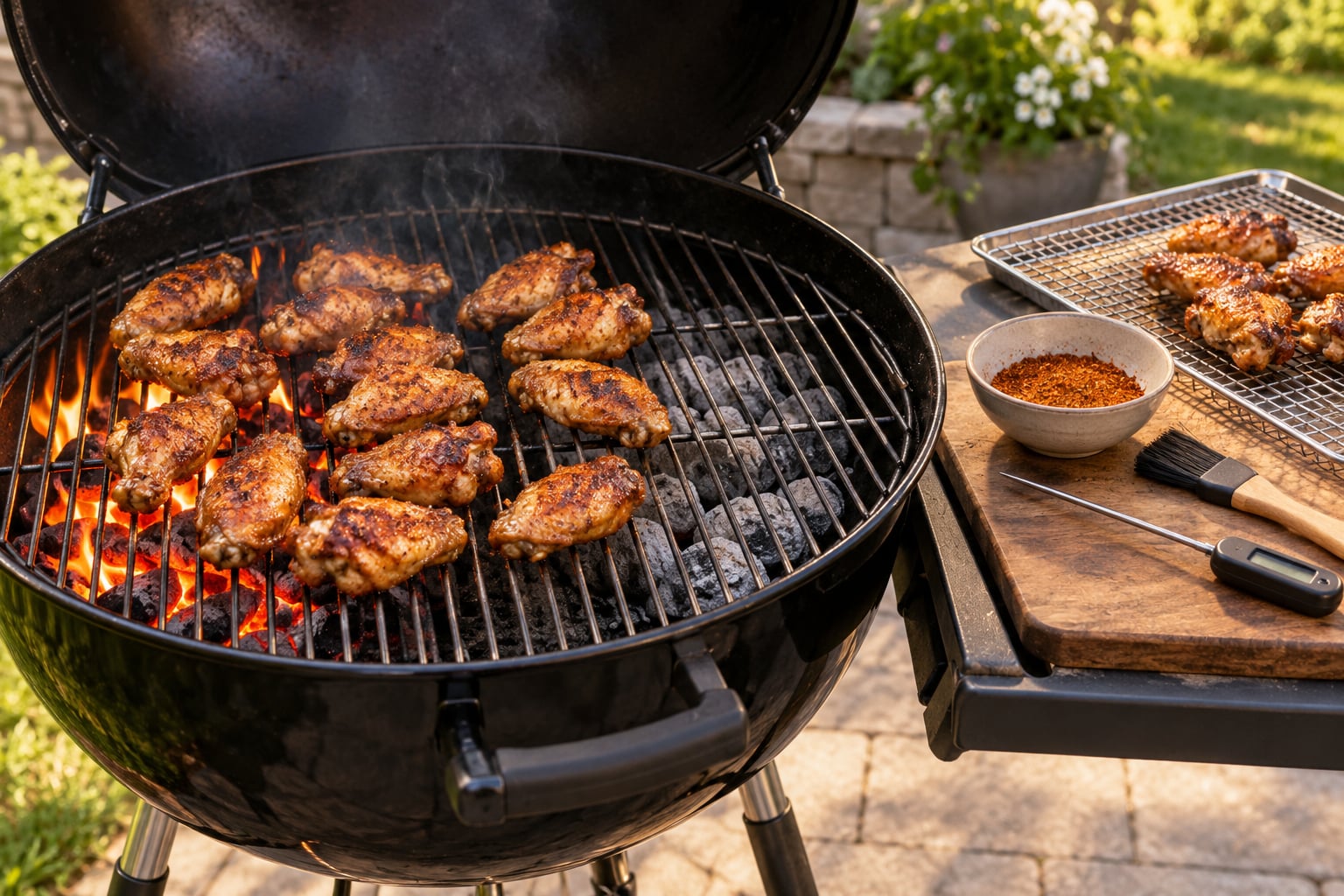
To grill chicken wings well, set up a two-zone fire, pat the wings dry, coat them in oil and season, then cook them over indirect heat with the lid closed until they hit 170°F to 175°F inside. Finish over direct heat, turning every three to five minutes, and add barbecue sauce in the last five minutes so it caramelizes instead of burning.
Budget 30 to 40 minutes for a full batch on a gas grill. It is a low-effort cook once the fire is right, and most of the work happens in the first ten minutes, before the wings ever touch the grate.
Wings are a strange piece of chicken. There is very little meat and a great deal of fat and skin, so they scorch long before they finish cooking. Nearly every disappointing plate of wings traces back to the same three problems: wet skin, uneven heat, or sauce applied too early.
Get those three right and the rest is straightforward. My own rule is that I never put sauce on wings until they have already passed 165°F inside, and I have never once regretted it.
What You Need
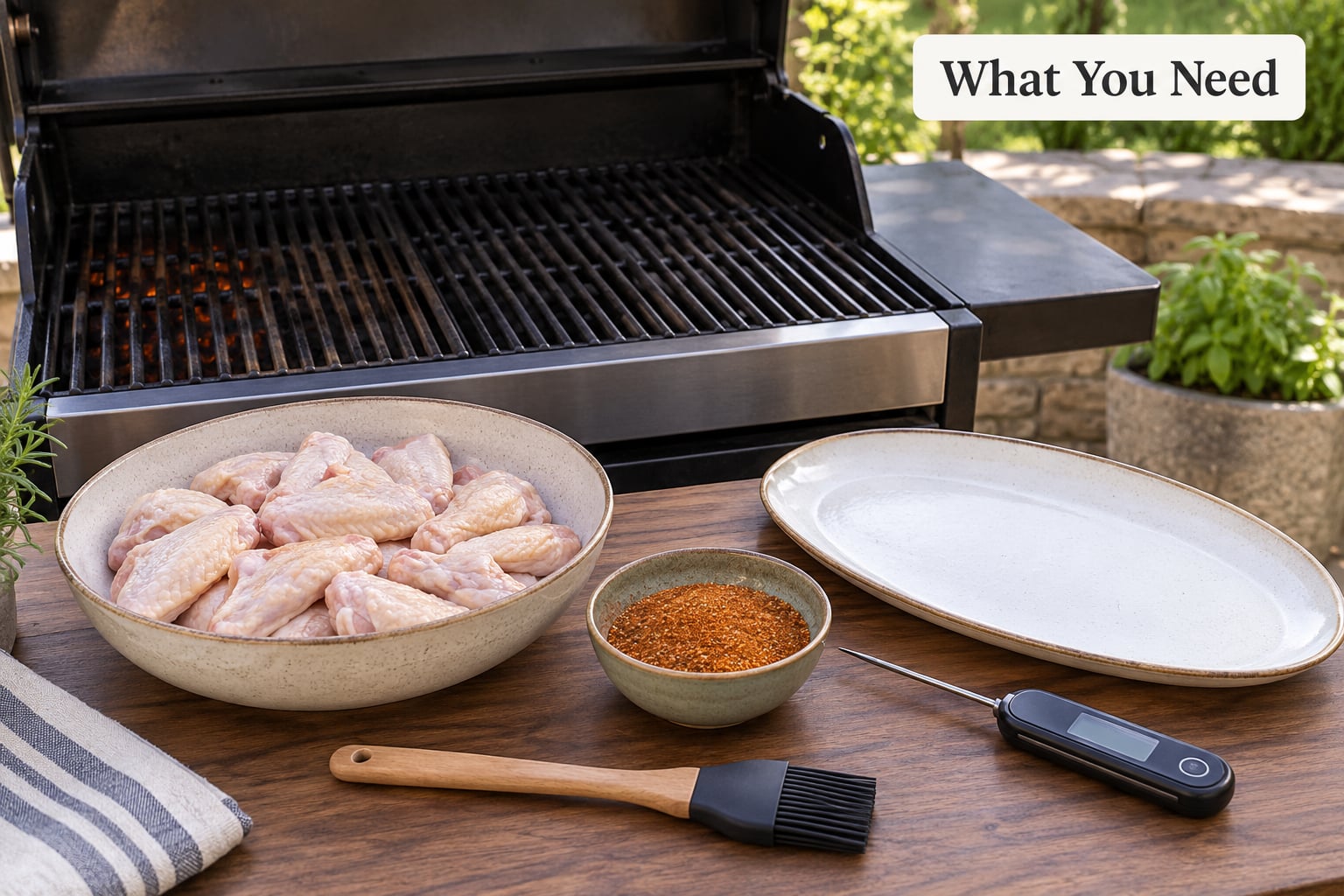
You need less than you might expect. A gas or charcoal grill of any size, a pair of tongs, and an instant-read thermometer will get you through this cook. Everything else is a seasoning decision.
- A grill with a lid. The lid is what turns the indirect zone into an oven. If you are grilling on a portable grill with no lid, cook in smaller batches and stay closer to them. Our guide to how to grill burgers on a portable grill covers the setup differences in more detail.
- An instant-read thermometer. This is the single tool that separates good wings from guesses. Push it into the thickest part of a drumette, close to the bone, without touching it.
- Tongs with a scalloped or flat grip. A springy pair lets you lift a wing without tearing the skin off the grate.
- High smoke point oil. Avocado oil is the first choice, and grapeseed or canola work fine too. Olive oil is acceptable if you are grilling below its smoke point. Avoid butter, which burns.
- A base seasoning trio. Kosher salt, coarse black pepper, and garlic powder covers almost everything. Beyond that, add a dry rub, or use the sauce for flavor.
- A basting brush and a sauce. Keep the sauce in a separate bowl so you control when it goes on. Thin sauces caramelize faster than thick ones.
A wire rack and a sheet pan earn their keep if you have ten minutes. You use them to dry brine the wings before they go near the grill, which is the technique most often credited for restaurant-level crunch.
Step-by-Step: How to Grill Chicken Wings
Step 1: Prep the Wings for Maximum Crispness
Pat every wing dry with paper towels. Moisture on the skin turns to steam on the grate, and steaming is the opposite of crisp.
Trim off the wing tips if you like, since they burn before anything else does. Do not trim the wingettes or flats, because that exposed skin is where you want the browning.
Toss the wings with a tablespoon or two of oil so the oil coats evenly, then season with salt, pepper, and garlic powder. Season right before they hit the grill, not earlier, so the salt does not pull moisture back out of the skin.
If you have time, dry brine instead. Salt the wings and leave them uncovered on a wire rack in the refrigerator for a few hours or overnight. The salt draws moisture out of the surface and the circulating air dries the skin. Pitmaster Club users report this one change alone fixes rubbery wings, and I agree with them.
Step 2: Set Up Two-Zone Heat
Build a two-zone fire: one side hot and direct, one side cooler and indirect. On a gas grill, preheat to 425°F and turn off one burner. On charcoal, bank the coals to one side and let them burn down until the bare hand hovers comfortably over the indirect side.
Our walkthrough of how to set up two zone heat on a grill has the burner and coal arrangements if you have never done it.
Let the grill fully preheat before the wings go down. Ten minutes at temperature is worth the wait, because a cold grate is the reason wings stick and the reason the first side turns pale instead of golden.
The direct zone is for the last five minutes only. Everything before that happens on the indirect side with the lid closed.
Step 3: Cook Unsauced Wings Indirectly
Place the wings skin side down on the indirect side, spaced so no wing touches another. Close the lid and cook for 15 to 20 minutes. This stage is about rendering the fat and drying the skin, not about browning.
Turn the wings every three to five minutes. Frequent turning is not the enemy here; a stationary wing sits over one hot spot and scorches while its neighbors cook slowly.
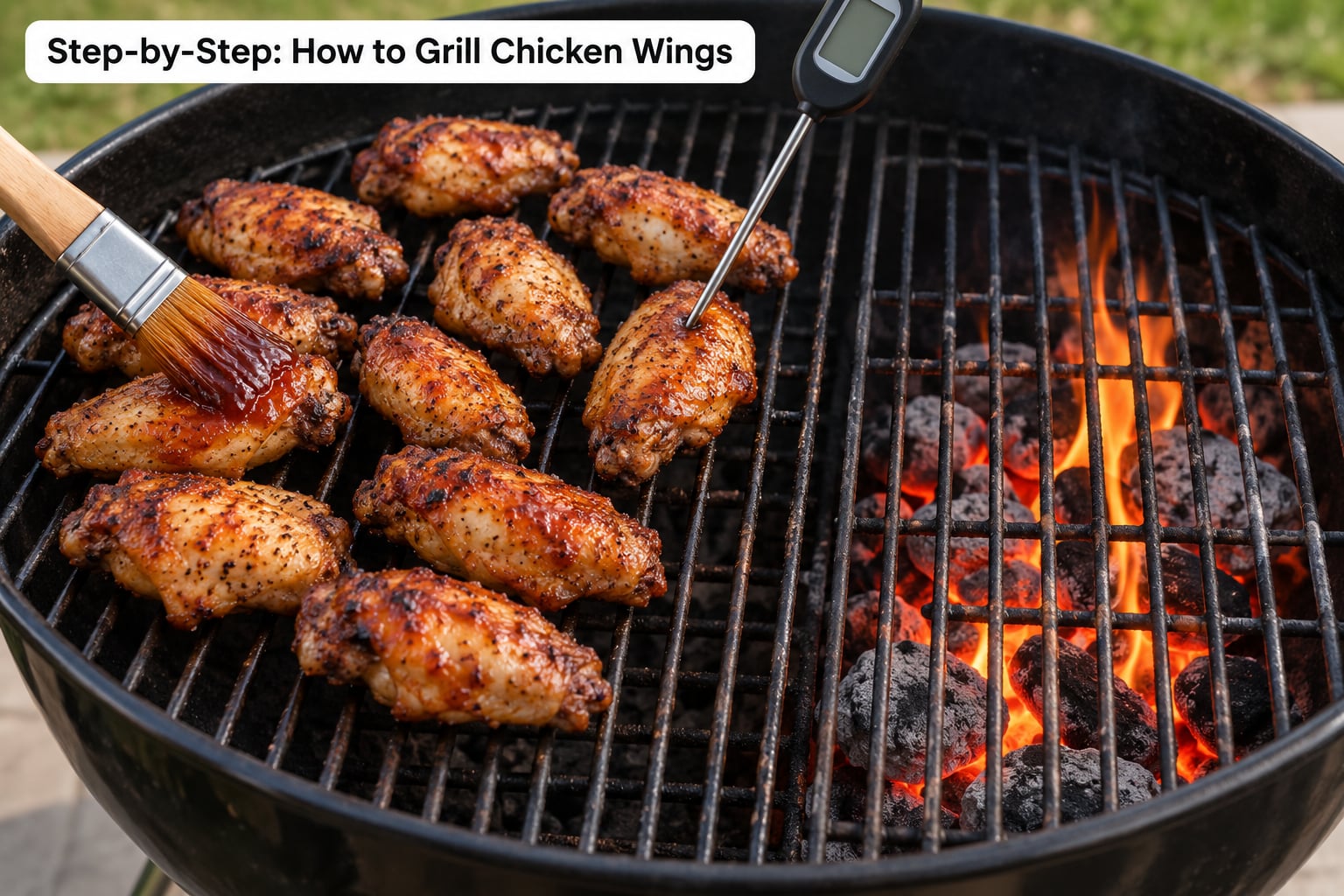
You are looking for the skin turning opaque and slightly firm, with rendered fat collecting on the surface. Wings are done when an instant-read thermometer reads 165°F in the thickest part, the USDA safe minimum for poultry, and most cooks push to 170°F to 175°F because the extra heat tightens the skin and pulls the meat off the bone cleanly.
Skip cutting a wing open to check. You lose the juices, and the thermometer already told you what you needed to know.
Step 4: Crisp the Skin Over Direct Heat
Move the wings to the direct zone and leave the lid open. Direct dry heat is what drives the Maillard reaction, the browning that creates char and most of the flavor people associate with grilled wings.
Stay close and keep turning. Two to four minutes is usually enough, and you are watching for deep golden-brown patches and crackling skin rather than blackened edges.
Rendered fat dripping onto coals is what causes flare-ups, so when one starts, move the wings away rather than spraying water on them. Our flare-up control guide covers the rest of the technique.
Step 5: Add Sauce at the Right Time
If you are using a dry rub only, the wings are finished. For sauced wings, brush on a thin coat during the final three to five minutes with the lid closed, then check them every minute until the sauce darkens and starts to bubble.
Sauce carries sugar, and sugar burns well before chicken does. That is why restaurant wings are always cooked plain first and tossed at the end.
A two-stage method gives you both textures. Toss the wings in sauce after they come off the grill for a wet finish, and keep a second batch sauced on the grate for people who like caramelized edges.
Buffalo, garlic parmesan, honey barbecue, lemon pepper, and Nashville hot all work under the same rule. If the sauce is thick and sweet, give it less time on the grate than a thin vinegar-based sauce.
Common Mistakes When Grilling Chicken Wings
Wings sticking to the grate. The skin is wet or the grill was not hot enough. Dry the wings properly, preheat the grate for ten full minutes, and oil the wings rather than the grate.
Burnt outside, raw inside. You are cooking over direct heat too long or crowding the grate. Wings need airflow around them, and stacked wings cook unevenly and drip fat onto the fire.
Skin that never crisps. Usually a moisture problem. Pat the wings dry, skip the marinade, and dry brine ahead of time. A wet marinade adds exactly the moisture you are trying to remove.
Flipping every thirty seconds. Constant flipping keeps the skin too cool to brown. Every three to five minutes is enough to render fat without resetting the cooking.
Saucing too early. Barbecue sauce added in the first ten minutes scorches and turns bitter. Wait until the wings are cooked through, then glaze for the last few minutes.
Flare-ups burning the meat. Move the wings to the indirect side for a minute instead of fighting the fire. Once the flare dies down, bring them back.
Cutting into wings too soon. You lose moisture and the flesh tightens up. Rest them three to five minutes in a single layer so the juices redistribute.
A couple of practical notes for larger cookouts. Preheat longer than feels necessary, and never crowd the grate; two batches beat one dense layer. If you are grilling for a crowd, cook a first batch plain and hold it on a warm rack in a low oven, then sauce each batch right before serving so nothing sits in liquid going soft.
Also keep flats and drumettes apart if you can. The joint where they meet is the part that never quite crisps, and separating them makes both shapes easier to cook evenly.
Frequently Asked Questions
Can I grill chicken wings on a gas grill?
Yes, and a gas grill is the easiest way to learn this method. Preheat to 425°F, then turn off one burner so the remaining lit burner sits over a two-zone fire. Cook the wings on the side opposite the flame with the lid closed for 15 to 20 minutes, turning every three to five minutes. Finish them over the lit burner, lid open, for two to four minutes, then sauce in the final three to five minutes.
How long does it take to grill chicken wings?
Expect 30 to 40 minutes total for a batch on a gas grill. That breaks down into 15 to 20 minutes over indirect heat with the lid closed, two to four minutes over direct heat to crisp the skin, and three to five minutes to glaze with sauce. Wings cook slower on charcoal or when you are running a cooler fire. Check temperature rather than the clock, and pull them at 165°F minimum.
What temperature should chicken wings be grilled at?
Preheat the grill to 425°F and use that for the indirect cooking stage, then move the wings over direct heat for the final crisping. If you prefer a gentler fire, cook at 350°F to 375°F and allow roughly 40 to 45 minutes. Internal temperature matters more than the grill setting: wings are safe at 165°F, and 170°F to 175°F gives the best texture.
How do I get crispy skin when grilling wings?
Dry the skin, keep the fat moving, and use dry heat at the end. Pat the wings thoroughly dry, dry brine them for a few hours if you can, and avoid wet marinades. Cook them over indirect heat first so the fat renders without burning, then finish over direct heat with the lid open, turning often. Sauce goes on last so the sugar does not scorch the skin.
Should I sauce chicken wings before or after grilling?
After, or in the last few minutes of grilling. Barbecue sauce is full of sugar, and sugar burns at a much lower temperature than chicken reaches, so an early coat turns bitter and black long before the meat is done. Cook the wings plain until they hit 165°F, then brush on sauce and close the lid for three to five minutes, or toss them in a bowl after they leave the grill.
Can I grill frozen chicken wings without thawing them first?
You can grill from frozen, but plan on more time and expect less crisp skin. Frozen wings hold ice in the joints, so they need roughly 45 to 60 minutes and benefit from a two-zone fire with more time on the indirect side. Let them sit at room temperature for 15 minutes before grilling if you can. Check temperature frequently, since the outside can brown well before the center thaws.
Conclusion
Start by drying and seasoning the wings, then build a two-zone fire and preheat it properly. Cook them over indirect heat with the lid closed until the thermometer reads 165°F, finish over direct heat for a few minutes to crisp the skin, and add sauce only at the very end.
Those four moves are the whole method. Everything else on this page is a variation on them.