
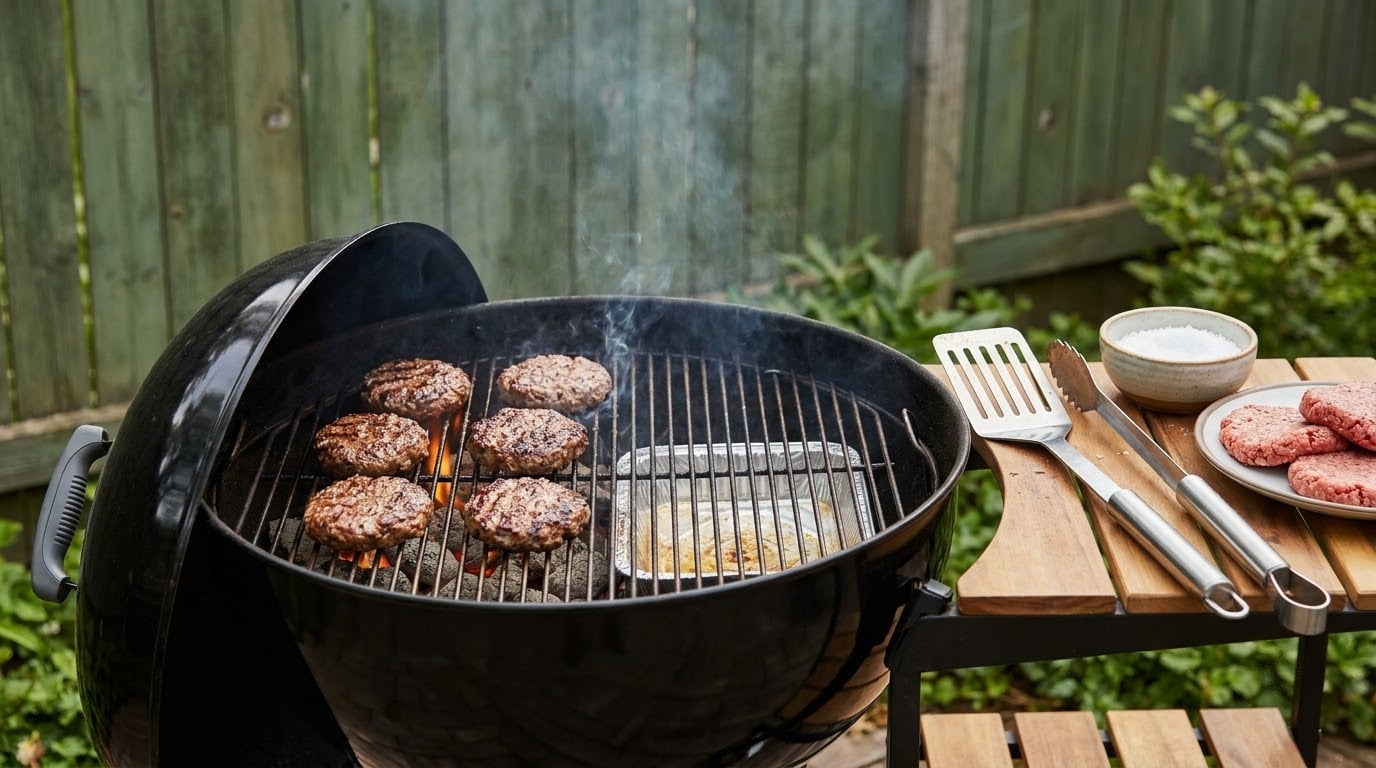
To control flare ups on a grill, remove one of the three things a fire needs. Close the lid to cut off the oxygen, or slide the patties to a cool zone where nothing drips into flame. Either move takes about five seconds and neither one costs you the sear.
A flare-up is the burst of flame that appears when rendered fat and juices fall from the food into coals or a gas burner. It is not a malfunction. Something in the fat content of the food, the grease sitting on the grates, or the airflow around the grill is feeding it.
Here is the routine I use. Build a two-zone fire before the burgers go on, prep the patties so they drip less, keep every drip off the flame source, and have a plan for the second a burst shows up. Grab a cold drink, because once the patties are down you are working, not reading.
Updated for October 2026.
What You Need
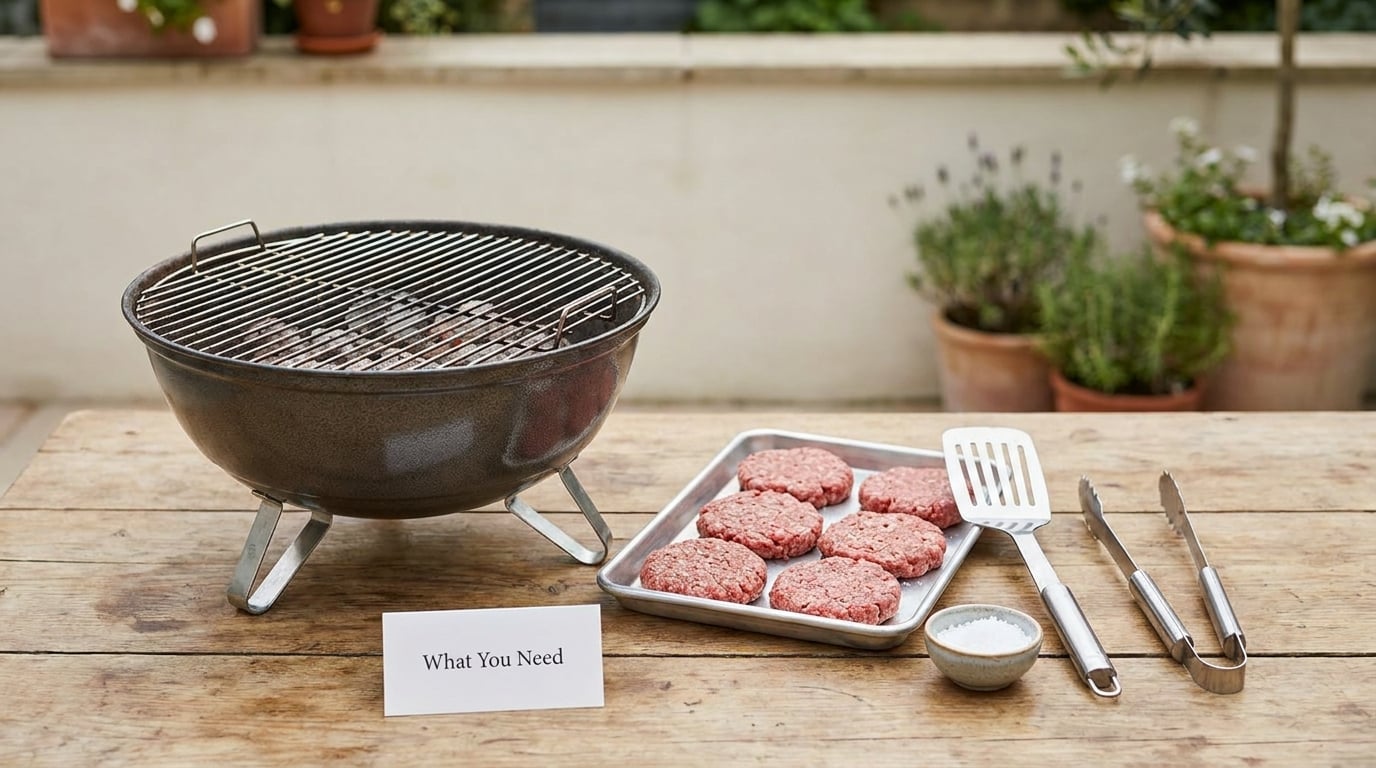
How to control flare ups on a grill mostly comes down to what is within arm’s reach when the flame jumps. None of this is specialty gear, and none of it needs to be bought before your next cookout, but it does need to be in place first.
Grill tools
- Long-handled tongs or a slotted spatula with a handle long enough to keep your knuckles back from the fire
- A wire grill brush, kept near the grill rather than in the garage
- A shallow drip pan that fits under the grate on your model
- The lid itself, which works as a quench for a flare-up on kettle-style grills
Food prep
- A sharp paring knife and a cutting board for trimming the fat cap off a burger
- Paper towels to pat the patties dry before seasoning
- A plate with no standing oil on it, since every drop of oil on the patty becomes fuel on the grate
Safety gear
- A heat-resistant glove, on your hand not hooked on the fence
- A box of coarse kosher salt or baking soda for smothering a small flare
- A fire extinguisher. Water on a charcoal fire is acceptable once coals are fully ashed over; water is never acceptable on a gas or grease fire
An instant-read thermometer earns its place here too. Ground beef reaches a safe 160°F / 71°C internal, and knowing that number takes guessing out of the last two minutes of a cook, which is exactly when people get distracted and leave a patty too long on a hot zone.
Step-by-Step
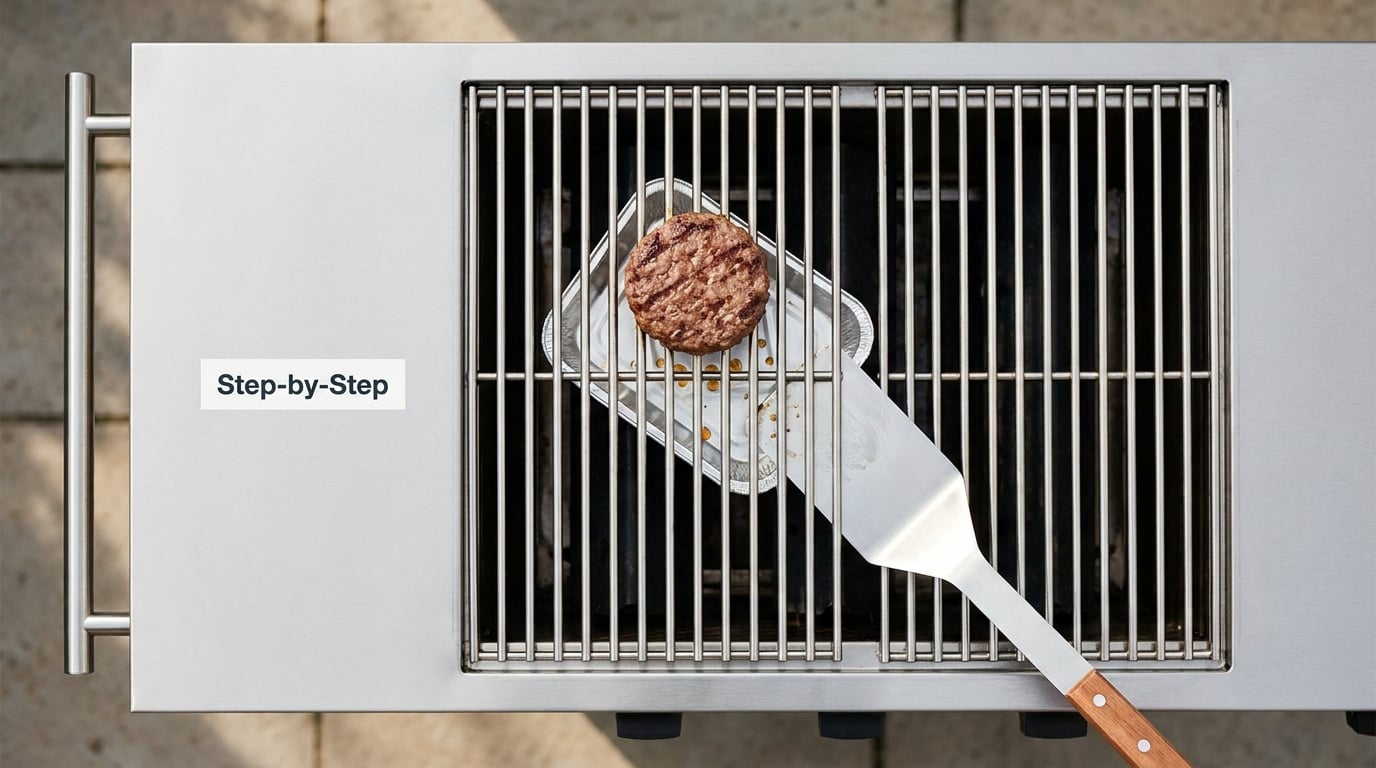
1. Set Up the Grill for Indirect Heat
Divide the grate into a hot side and a cool side before anything is cooked. The hot side is where you sear and build crust; the cool side is where food goes when you need it away from flame in two seconds flat.
On a gas grill, light one burner and leave the others off. On a three-burner, the middle one off gives you a genuine cool strip; on a two-burner, light only one and use the far end of the grate, or light both and cook only over one while the other side cools. On charcoal, push the lit coals to one side of the kettle and let the empty half of the grate be your parking spot.
You can tell the zones are set by hovering your hand about an inch over each side. The hot side feels like a furnace, the cool side like warm air. Ten seconds of checking beats guessing mid-cook.
2. Trim and Prepare the Burger
Trim the fat cap down to about a quarter inch and leave the marbling inside the patty alone. The marbling is flavour; the outer cap is nothing but fuel. A dull fat edge is the single biggest cause of flare-ups on burgers.
Pat the patties dry with paper towels, then season. A wet surface drips; a dry surface crusts. Skip oil on the patty and skip sweet sauces and sugary glazes until the burgers are off direct heat, because sugar burns in seconds and turns bitter long before the meat is in trouble.
3. Light the Grill and Stabilize the Temperature
Give the grill 15 to 20 minutes to come up and settle. A grill that has just been lit has uneven hot spots and a spike of heat that pushes fat into flame the moment the first patty lands. This step feels like dead time, and it is the step that prevents the most flare-ups.
On gas, start the burner on high for the preheat, then drop to medium. On charcoal, let the coals ash over so the grey ash coating forms on the outside, which means the burn is steady instead of producing black smoke. Cook with the lid closed for burgers so the heat stays even, and open it only to check the temperature or take a look at the underside.
4. Control Where Dripping Fat Falls
Put a drip pan in place under the hot zone on a gas grill, or on the side of the firebox on charcoal. Drippings hit the pan instead of the burner tube or the coals, and that single change removes the ignition source from under every patty you cook.
Leave the pan handle out of the flame path and check it is not too full. If you cannot get a pan under the grate, park fatty food toward the back of the grate where drippings fall clear of the fire, or cook fatty cuts over a low, steady flame rather than a ripping one. Low flame gives you control; high flame gives you a bonfire.
Position matters too. Set the grill out of the wind so flames do not get fanned, and keep the lid on for long enough for heat recovery between batches.
5. Respond When Flare Ups Happen
The moment a flame jumps, you have about three moves and no time to think. First, move the food to the cool side with long tongs. If it is a small flare, that is the whole job.
If flames are still licking after the food moves, close the lid and leave it shut for 15 to 30 seconds, then open it and check. On a gas grill, turn the burner off and wait for the flame to stop. If the fire is still going after 30 seconds with the lid closed, smother it with a heavy handful of baking soda or coarse salt poured from the side.
Never spray water on it, never reach over the fire, and never leave the grill to fetch something. A spray bottle flash-boils on contact with hot grease, throws the burning fat back at you and coats the food in ash. The grey, sooty off-flavour people chase for years is usually just the water myth.
6. Finish Burgers Without Burning Them
Once the crust is set, the rest of the cook belongs on the cool side with the lid closed. A closed lid on a low flame is indirect heat: the burger finishes cooking in its own trapped steam without the underside charring.
Add cheese only in the last 30 to 60 seconds, off direct heat, so it melts without the fat underneath catching. Check temperature at the thickest part, not the edge, and pull burgers at 160°F / 71°C. Let them rest a couple of minutes on the cool side before topping them, and the juices stay in the meat instead of running onto the plate and onto the fire on the next patty.
Common Mistakes
Cooking the first patty while the grill is still coming up. Freshly lit fires have hot spots. The patty over the hot spot drips fat straight into flame and you get a flare-up before the burgers are even browned. Fifteen to 20 minutes of preheat fixes it.
Leaving the fat cap on. A quarter inch or less of edge fat is the practical line. Thick cap, thick flare, and the flames come right at the moment of the flip because the accumulated top-side fat all falls at once. Flip and move in the same motion.
Glazing early. Barbecue sauce, honey glazes and sugary rubs burn in a flare-up and turn acrid. Brush them on after the patties are off direct heat, in the last minute of the cook.
Crowding the grate. Stacked patties and patties touching each other drip fat sideways into somebody else’s flame, and the sear stops working. Space them an inch apart, or cook in two batches.
Skipping the drip pan and the post-cook clean. A grease-slick grate catches a drip the first time and catches every drip after that. Turn all burners to high with the lid open after cooking to burn off residue, brush the grates while they are warm, and empty the grease pan. Grillers on the smoking meat forums say the same thing: flare-ups get worse across a season even though nothing changed, because the grates keep more fat each time.
Leaving the lid fully open during a big fire. The lid is the fastest oxygen cut you have. Open lid feeds a flare; closed lid smothers it in seconds.
Frequently Asked Questions
How do I avoid flare ups when grilling burgers?
Trim the fat cap to about a quarter inch, pat the patties dry, and skip oil on the surface. Cook them on a two-zone fire with the drip pan under the hot side, and keep sugary sauces off until the patties move to the cool zone. A well-set two-zone fire and a trimmed patty eliminate most flare-ups before the food ever hits the grate.
Should I cook burgers on a gas grill with the lid open or closed?
Closed, for the cook. A closed lid holds steady heat, helps recovery between batches, and gives you an instant way to smother a flare-up if one starts. Open the lid only to place patties, check temperature, or take a look at the crust. Leaving it open the whole time also feeds flames with a steady stream of oxygen.
Can I use a spray bottle of water to put out a grill flare up?
No. Water flash-boils instantly on contact with grease at grill temperature, and the steam throws burning fat back out of the fire. It is also the reason burgers end up tasting ashy and of lighter fluid. Close the lid, move the food to a cool zone, or smother a small flare with baking soda or coarse salt instead.
Will a grease fire on a grill burn out on its own?
Sometimes, but do not plan around it. A small flare-up that stays under the lid for 30 seconds usually dies on its own. A grease fire in the firebox or on the drip pan will not, and it can spread to the grease pan and the cabinet. Turn the burners off, close the lid, and if it is not out in 30 seconds, get clear and call emergency services.
What is the two-zone grilling method and how do I set it up?
Two-zone grilling means cooking on one hot side and parking food on one cool side of the same grate. On gas, light one burner and leave the rest off, or light two and use only one. On charcoal, push the lit coals to one side of the kettle. The cool zone is where burgers and fatty cuts go when a flare-up starts, and where they finish cooking after searing.
Conclusion
If you only remember four things, make them these. Build the two-zone fire before the coals or burners are hot, so there is a cool side to move to. Trim and dry the patties so there is less to drip. Put a drip pan under the hot side so fat never reaches the flame. And when a flare-up happens, move the food, then close the lid, calmly, without reaching for the spray bottle.
Most flare-ups on burgers are not bad luck or a faulty grill. They are fuel, oxygen and heat stacking up in one spot, and any one of the three removed puts the fire out. Set up the zones, keep the grate clean, and you will mostly just watch other people’s burgers catch fire.