
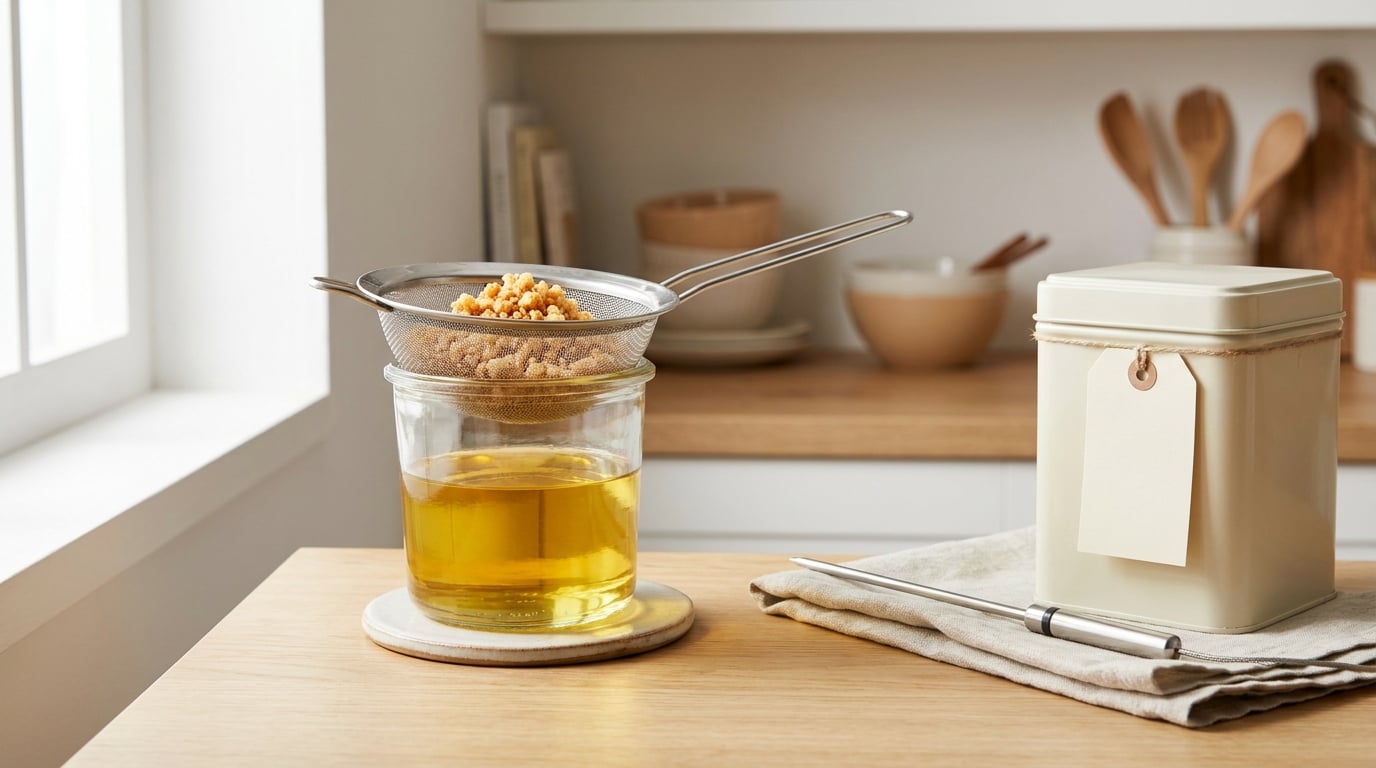
You can reuse frying oil safely as long as you cool it, strain out every crumb, store it covered in a cool dark place, and throw it away the moment it smells off. Most home cooks get 3 to 5 uses from oil used for plain-fried food, and 1 to 2 uses from oil used for breaded or battered food. The whole process takes about 15 minutes once the oil is cool.
That last part matters more than the number. Reused oil goes wrong gradually, then all at once, and the smell is almost always the first signal that arrives. If you handle the cooling and filtering properly, you get crisper food for several sessions instead of one.
What You Need
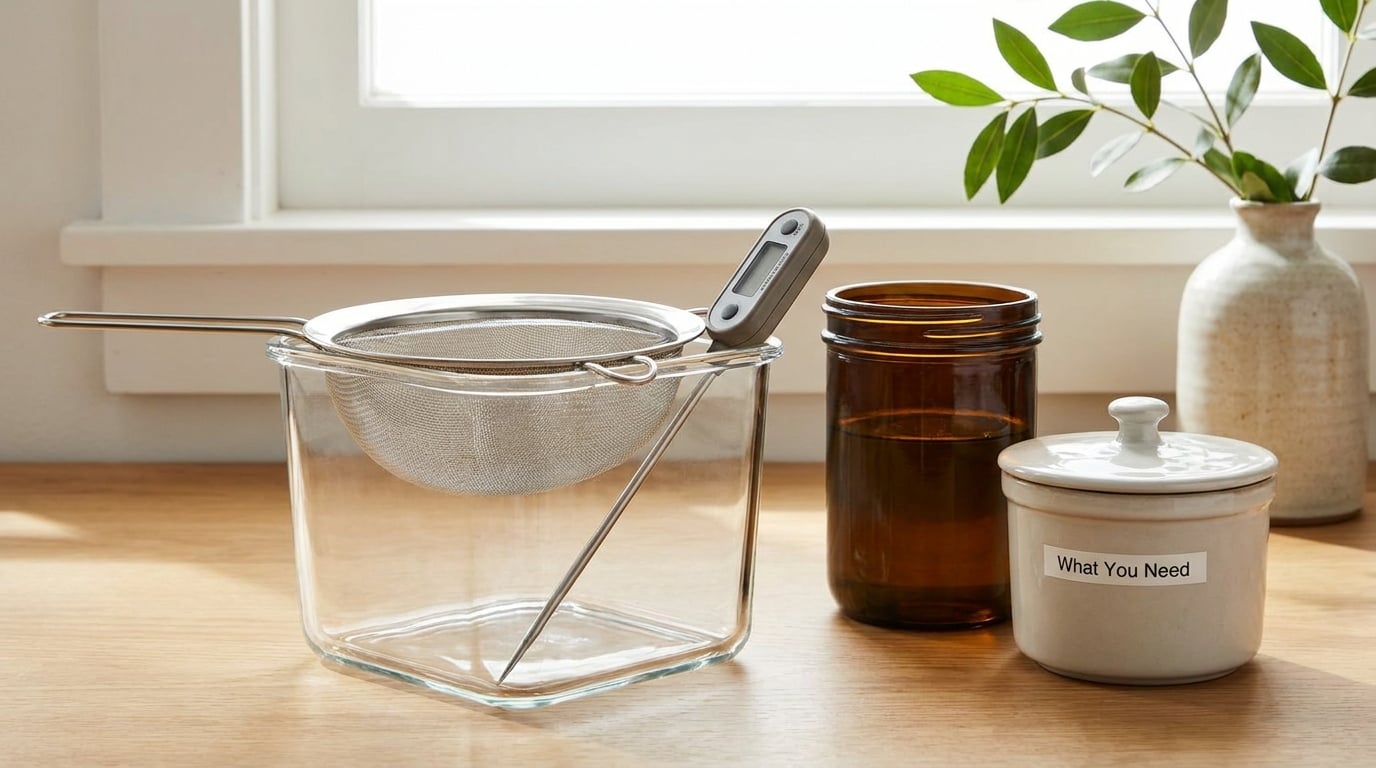
You do not need any of this to fry, but you do need it to reuse. The heatproof container is the one item worth buying specifically for this.
- A heatproof container with a tight lid. A glass jar, a stainless steel canister, or a food-grade plastic container. Avoid a container you plan to pour hot oil into, and never use a container that is not rated for hot liquids.
- A fine mesh strainer, or filter paper. A sieve, a cone filter for a fryer vat, and even a coffee filter or a piece of cheesecloth in a strainer all work. The finer the better.
- A slotted spoon or skimmer for the first pass, before you strain.
- Labels or masking tape and a pen to write the date and the number of times the oil has been used.
- A kitchen thermometer, optional. Useful for the cooling stage and for holding a steady frying temperature.
- Airtight storage space that is cool and dark. A pantry cupboard or the back of the refrigerator, not a shelf next to the stove.
For home kitchens this is the whole setup. Commercial filtration equipment and free fatty acid test kits exist, but they are not needed to keep a few cups of oil in good shape for a month.
Step-by-Step: How to Reuse Frying Oil Safely
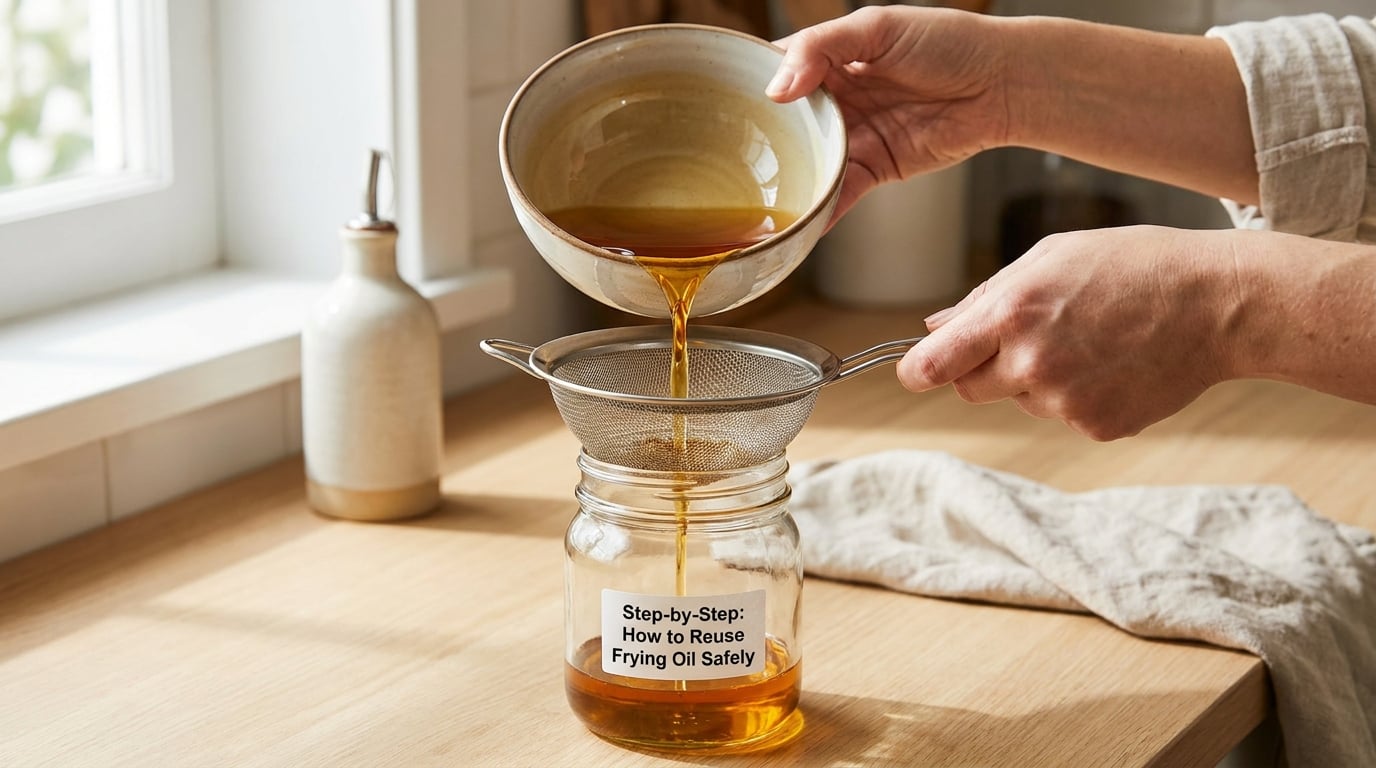
Six steps, in this order. The readiness signal is given for each one, because the difference between good oil and ruined oil is usually a step skipped in a hurry.
1. Let the Oil Cool Completely
Turn off the heat and move the pan or fryer to a cool burner or a heatproof surface. Wait until the oil is below about 100°F before you touch it, which takes 30 to 60 minutes depending on how much there is.
You will know it is ready when you can rest a hand an inch above the surface and feel warmth rather than heat, and when the shimmer has gone out of it. Hot oil burns badly, and moving it while it is thin and fast is how people splash themselves.
Keep the pan somewhere a curious kid or a dog cannot reach it, and never leave it on a burner you might forget about.
2. Remove Food Particles and Excess Moisture
Skim floating crumbs and loose bits of batter off the surface with a slotted spoon before you pour anything. Those particles are the biggest single cause of fast oil breakdown, because they keep cooking in the oil and turn it dark and thick.
Moisture is the other half of the problem. Water in hot oil spatters violently, and the steam pockets it creates break down the oil faster than the frying itself does. Dry your food before it goes in, and if you are finishing a batch of something wet, lower the heat slightly.
The signal here is simple: pour the oil, and if crumbs or cloudy water show up in the receiving container, you poured too soon.
3. Strain the Oil
How to reuse frying oil safely depends more on this step than on anything else you do. Pour the cooled oil through a fine mesh strainer, or through filter paper, or through cheesecloth layered in a strainer, into a clean heatproof container.
Do not pour used oil back into the bottle of fresh oil. Residue in a plastic jug is exactly what turns a clean supply of oil cloudy and off-tasting within a week.
You are finished when the strainer holds solid crumbs instead of a dark liquid sludge, and the oil coming out runs clear and thin rather than syrupy.
4. Store It Covered and Labeled
Cover the container tightly and write two things on the label: the date you strained it and the number of times it has been used. That label is the whole tracking system, and it takes five seconds.
Store it in a cool, dark, airtight place. A pantry cupboard is fine for a few weeks. The refrigerator extends the window, and it matters most in warm weather or if you are storing oil for more than a month. Go ahead and refrigerate it, just make sure the container is sealed so it does not absorb odors from the fridge.
Never store oil on the counter in an open pan. Light, air, heat and a wide open surface are the four things you are trying to avoid, and an uncovered pan gives you all of them.
5. Inspect It Before Reusing
Pour a small amount into a pan or a cup and look at it, then smell it. Discard it if any of the following is true.
- It smells rancid, stale, or faintly nail-polish-like. That is a hard stop, not a warning.
- It has turned noticeably darker than fresh oil, or looks cloudy.
- It is thicker than it should be, or leaves a sticky film on the container.
- It foams heavily or smokes at a normal frying temperature.
- You can see any solid bits, foam that will not settle, or a watery layer at the bottom.
Smell wins over every other signal. Oil that looks acceptable but smells faintly off will taste off in the food, and it will keep degrading on the next fry.
6. Reheat Gradually and Use the Right Temperature
Warm the oil slowly on a medium burner. Each heating cycle drops the smoke point of oil by roughly 10 to 15 percent, so starting from a high setting and blasting it back to temperature is the fastest way to burn through your remaining uses.
Watch for a light shimmer rather than a thin layer of smoke, and hold a steady 350 to 375°F for most foods. Add small batches so the temperature does not crash, and let the oil recover between batches instead of hammering it back to heat.
You are ready to fry when the oil flows like water and shimmers across the whole surface. If it smokes before you put anything in it, the oil has gone too far.
Common Mistakes
Almost every ruined batch of reused oil comes from one of these.
Storing oil while it is still hot. Hot oil in a sealed or loosely covered container is a burn and fire hazard, and it also drives off compounds faster. Cool to about 100°F first, every time.
Leaving food in the oil. Bits of breading and batter continue to cook and carbonize in the warm oil, and they are the main reason reused oil turns bitter. Skim, then strain, then empty the pan.
Any water contact. A wet pan, a wet spoon, a rainy-day splash. Water causes spattering, and the steam pockets it forms accelerate breakdown. If you already added water, let the pan sit on the heat until the spatter stops and the oil is quiet again.
Topping off dark oil with fresh oil. This is the most common shortcut and every source warns against it. The old degraded oil is still there, spread thinner. If a batch smells or tastes off, discard it and start over with a clean container.
Overheating to hide a smell. A high flame does not clean oil, it just breaks the polymers down further and makes smoke. Smoky oil and bitter food are the result.
Reusing oil that touched an allergen. If someone with a nut, shellfish or fish allergy eats from food fried in that oil, the allergen stays in the oil. Strainers and filters do not reliably remove it, so the safe move is to discard the oil.
Reusing oil after fish or strongly spiced food for something mild. The flavor carries over into the next batch. Fries taste faintly of fish, and a delicate doughnut tastes of cumin. Either use the same category of food again, or start fresh.
How Long Can You Reuse Frying Oil?
There is no reliable universal time limit, and anyone who gives you one is guessing. Storage temperature, light exposure, the type of oil, the type of food, how hot you fried, and how well you filtered all change the answer. The smell and appearance of the oil in front of you beat any calendar.
As working limits for a home kitchen, three to five uses is a reasonable ceiling for plain-fried food, and one to two for breaded or battered food. Many home cooks who filter carefully after every session stay inside those numbers for a month or two. If you fry rarely, a single stored batch sitting for more than two months is worth discarding even if it looks fine.
| What you fried | Sensible reuse ceiling | Why |
|---|---|---|
| Fries, chips, plantain | 3 to 5 uses | Low moisture and little coating, so few particles to break down the oil |
| Plain vegetables, plant-based patties | 3 to 5 uses | Similar to fries, as long as nothing was battered |
| Breaded or battered chicken, onion rings | 1 to 2 uses | Starch coating leaches sugars and crumbs into the oil |
| Fish and other seafood | 1 to 2 uses, and use it only for seafood | Moisture, strong flavor and allergy cross-contact |
| Spiced or strongly flavored food | 1 to 2 uses, same flavor profile only | Flavor compounds carry into the next batch |
Commercial kitchens run 20 to 40 cycles with filtration equipment, controlled temperatures and constant testing. That is not a fair comparison to a Dutch oven on a home stove, which is why the numbers in a restaurant article and the numbers on a home cooking forum rarely agree.
Home testing gear exists, and it is worth understanding even if you never buy it. Frying oil degrades by oxidation, which produces free fatty acids, polar compounds and other breakdown products. Most commercial kitchens discard oil when free fatty acids pass about 5.5 percent, or when total polar compounds run past about 25 percent. Without a test kit, the closest approximation a home cook has is the smell and the look, and that is exactly why the smell rule is a hard stop rather than a suggestion.
Frequently Asked Questions
How long can you reuse frying oil safely?
Judge it by the oil, not the calendar. A well-filtered batch used for fries usually handles 3 to 5 uses over a few weeks, and oil used for breaded or battered food usually handles 1 to 2. Store it covered in a cool dark place or the refrigerator, and discard it as soon as it smells rancid, looks very dark or cloudy, or smokes at a normal frying temperature.
Can you store frying oil in the refrigerator?
Yes, and it is the better choice if you plan to keep oil for more than a few weeks or if your kitchen stays warm. Use a sealed container so the oil does not pick up refrigerator odors. Refrigeration slows oxidation rather than stopping it, so a refrigerated batch still needs a smell check before you fry with it and a date on the label.
How do you know when frying oil has gone bad?
Smell it first. Rancid, stale or nail-polish-like odor means discard immediately, even if the oil looks fine. Other signs are a noticeable darkening, cloudiness, a thicker or sticky consistency, heavy foaming, and smoke at a temperature that should not produce smoke. A faint off smell on a second batch means it is already past the point where the taste will improve.
Can water or food particles be left in frying oil?
Neither one. Water in hot oil spatters violently, and the steam pockets it forms speed up breakdown of the oil. Food particles keep cooking in the warm oil, darkening it and turning it bitter over time. Skim floating crumbs while the oil is still warm, dry food before frying, and strain the oil through a fine sieve or filter paper before storing it.
Is it safe to reuse oil after frying burgers?
Usually, yes, with limits. Plain patties without a heavy batter usually leave 3 to 5 uses in the oil. If the burgers were breaded, treat the batch as having 1 to 2 uses left. Keep fish, shellfish and nut frying out of that same oil entirely, because straining does not reliably remove those allergens, and a person with the allergy eating food fried in shared oil is the real risk.
Should frying oil be covered when stored?
Cover it tightly. Oxygen and light are two of the main things that degrade oil, and an open container gives the oil both while it sits. A heatproof glass jar or stainless steel canister with a tight lid is the simplest option. Label it with the date and the number of uses, and keep it in a cupboard away from the stove or in the refrigerator for longer storage.
Conclusion
Start with the cooling and the solids. Let the oil fall below about 100°F, skim the crumbs, strain it fine, and store it covered with the date and use count written on the lid. Do that consistently and the smell test will keep telling you the truth for weeks.
How to reuse frying oil safely is less about a fixed number of uses and more about what you did between them. Cool it, keep it clean, keep it dark, and throw it out the moment it smells off. Updated for 2026.