
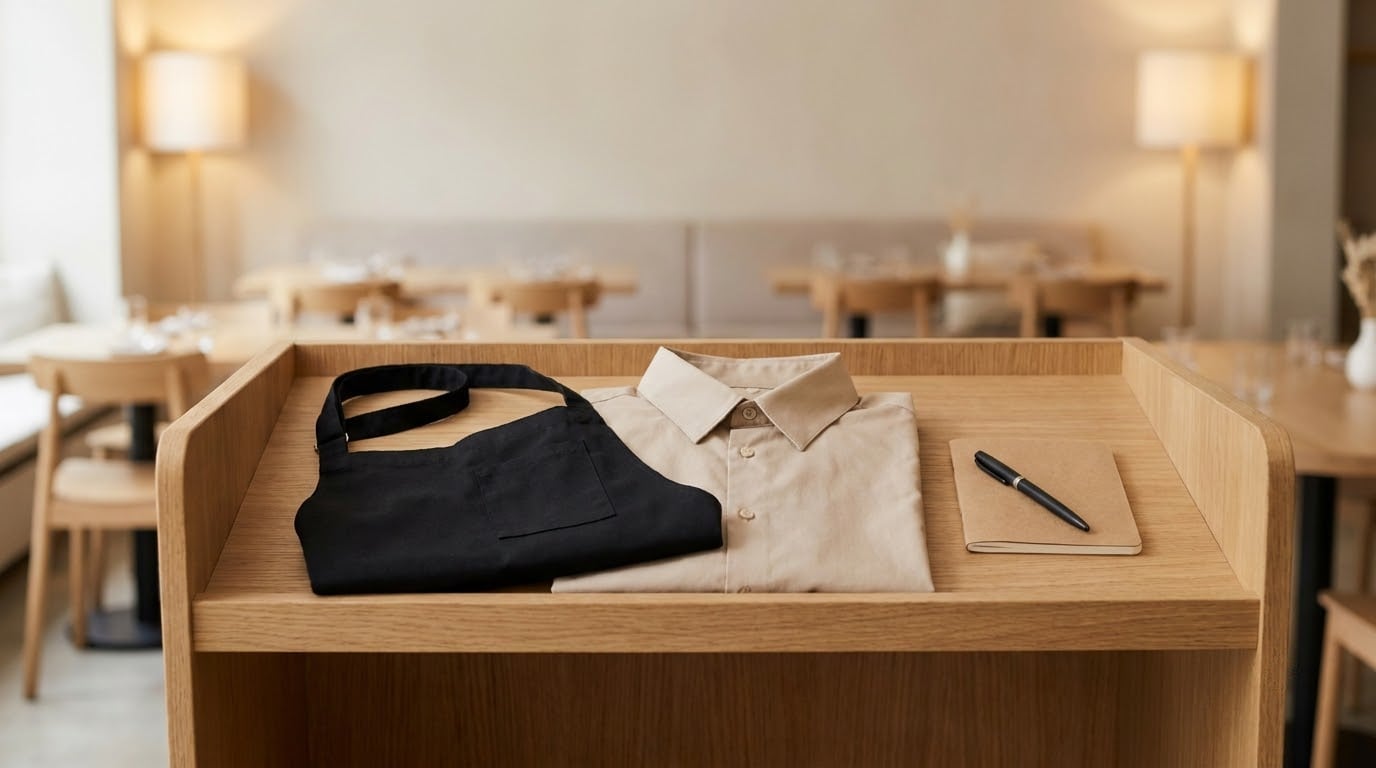
Here is what to expect in a restaurant job interview: a short, informal conversation, often 10 to 25 minutes, with the manager, owner, or shift lead who would actually work with you. They are checking three things fast: whether you are genuinely interested, whether you can cover the shifts they need filled, and whether you have the temperament for a busy dining room. Some interviews end there. Many add a working interview or a paid trial shift.
That last part surprises people. Plenty of candidates treat this like an office interview and get caught off guard when the manager hands them an apron and says, “Let’s see how you move.” Knowing the format in advance is most of the preparation.
Table of Contents
- What to Expect in a Restaurant Job Interview
- How to Prepare for a Restaurant Interview
- What Questions Do Restaurant Employers Ask?
- What Skills Should You Demonstrate?
- Will There Be a Working Interview or Job Demo?
- What Should You Wear to a Restaurant Interview?
- What Should You Ask at the End of the Interview?
- How to Follow Up After a Restaurant Job Interview
- Frequently Asked Questions
- How should I prepare for a restaurant interview?
- What are the top questions asked in a restaurant job interview?
- How long does a restaurant job interview last?
- What should I wear to a restaurant interview?
- Will I have a working interview or trial shift?
- How do I answer when I have no restaurant experience?
- Should I bring references to a restaurant interview?
- How to Prepare for Your First Restaurant Shift
What to Expect in a Restaurant Job Interview
Restaurant hiring moves quickly because schedules break. A server calls out at 4pm and the manager needs someone on the floor by 5, so decisions get made in the same conversation, sometimes on the spot.
Interview logistics at a glance
| Element | What to expect |
|---|---|
| Typical duration | 10 to 25 minutes. Some run five minutes or less, and that is not a rejection sign. |
| Format | Mostly conversation. Chain restaurants often run group formats or hiring days; independents usually do one-on-one. |
| Who you meet | Usually the general manager, kitchen manager, or shift lead. Owners do the hiring at many independent spots. |
| Where | Often on the floor or in a booth, sometimes a quick phone call, occasionally at the host stand during a rush. |
| What to bring | Photo ID, a resume, your availability written down, and two references on hand. |
| What follows | A decision, a second conversation, or a working interview or trial shift. |
One candidate on r/jobs described a restaurant interview that lasted five minutes and covered only three things: his experience, what set him apart, and what he would improve about himself professionally. Short does not mean bad. It usually means the manager saw what they needed and moved on.
Most longer interviews follow four beats. You get a greeting, the manager asks about your background and attitude, you get a couple of situational questions about guests or rushes, and then it is your turn to ask questions. Some hiring managers do most of the talking because they are between rushes. That is normal, not a sign of a bad interview.
How to Prepare for a Restaurant Interview
Ten focused minutes of preparation does more than an hour of rehearsing answers. Work through this list the night before and the morning of.
Research the restaurant before you walk in
Open the menu. Read the recent reviews and look at the photos. Note whether it is fast casual, a full-service dining room, a bar, or a food truck, and how the kitchen is described. If you can name two dishes you would order and one thing that makes the place different, you have already done most of the work.
Culinary school career advice puts it bluntly: the first question is often “What do you know about this place?” A blank stare loses momentum you cannot get back.
Bring a short list of your availability
Write down the days and hours you can actually work, including open and close availability. Restaurant managers are filling a schedule, not building a resume, so this is usually the single most practical thing you can tell them. If you can only do weekends, say so early rather than hoping it works out.
Handle the practical details
Bring a government photo ID, a paper copy of your resume, and the names and phone numbers of two references. Plan your route and parking, and if you are relying on a ride, build in cushion. Silence your phone before you walk in, not in the lobby.
Arrive five to ten minutes early. Earlier than ten can look lost, and at a busy restaurant nobody wants to debrief a candidate while a table waits.
When you arrive, ask for the person you scheduled with by name. If nobody is expecting you, wait in the dining room rather than the kitchen, and do not start helping yourself to plates. Wait to be told to come in.
What Questions Do Restaurant Employers Ask?
Expect a mix of three types. Technical questions check whether you know the work, behavioral questions dig into how you handled a real situation, and situational questions ask what you would do right now.
How to answer the ten most common questions
- Tell me about yourself. Keep it to about 60 seconds. Name who you are, one or two relevant experiences, and why you are here. A manager at a diner does not need your life story, but a hiring manager at a hotel restaurant will appreciate a more structured answer.
- Why do you want to work here? Say something specific about the concept, the menu, or the pace. Vague enthusiasm is the answer that gets no follow-up.
- What do you know about this place? Menu, concept, and anything recent you noticed. Prep this one and it pays off immediately.
- What restaurant experience do you have? List roles, venues, and how long you worked. If it is your first one, say so plainly and move to what you do have.
- How do you handle a busy rush? Answer in order: stay visible, keep moving, check in with the table that has been waiting longest, and communicate if something is running late.
- What would you do if a guest sent food back? Apologize once, listen, fix it immediately, and check back. No defensiveness, no debating whether it was really wrong.
- How do you handle a coworker you disagree with? Show you take it to the shift lead, not to the guest and not to the whole line.
- What are your availability and how far can you stay? Give clear days and hours and answer honestly about school, family, or other jobs.
- What questions do you have for us? Always have three. Saying “you covered everything” reads as no interest.
- Where do you see yourself in five years? Show ambition inside the industry. Most applicants at a neighborhood spot are competing with people who would love to move up to shift lead.
Behavioral answers work best with the STAR method: Situation, Task, Action, Result. Keep the situation to two sentences, spend most of your time on what you did, and land on the outcome. A 30-second answer built on STAR sounds far more competent than a rambling two minutes.
One more thing managers say out loud: keep it positive. A poster on r/Restaurant_Managers described asking a lot of questions about past situations and stressing that keeping the interview positive is critical. If a previous job went badly, tell it as what you learned and what you changed, not as a list of people who wronged you.
Questions that change by role
| Role | Questions you should expect |
|---|---|
| Server | Table turns, menu knowledge, splitting checks, handling a difficult guest, wine or beverage service |
| Host or hostess | Reservation systems, seating logic, wait list management, phone and guest communication |
| Bartender | Drink knowledge, drink speed during a rush, responsible service, closing the bar alone |
| Line cook | Station prep, ticket times, batch cooking, what you do during a breakdown |
| Dishwasher or prep | Sanitation standards, station setup, pace and volume of dishes per hour |
| Shift lead or captain | Opening and closing lists, scheduling support, calling in a no-show, training a new hire |
| General manager | Labor cost, turnover, guest complaints, reviews, vendor relationships, P and L basics |
Answering when you have no restaurant experience
Plenty of good hires start with no food service background at all. Translate what you already did. Retail, childcare, office reception, customer support, or a volunteer shift all prove the same things a manager is looking for: showing up on time, handling a cranky person, working with a team, and staying calm when several things go wrong at once.
A 16-year-old asking for help with a first fast-food interview on Quora asked what to wear, who to tell them they had arrived, and what questions would be asked. Those are reasonable questions and the answers are simple: clean and neat is fine, ask the manager by name, and expect availability and teamwork as the main topics.
What Skills Should You Demonstrate?
Restaurant managers hire for temperament and reliability far more than for credentials. Cleanliness matters more than people expect, because in this business your appearance is part of the product.
- Communication. Say your full sentences, look at people when you greet them, and repeat order details back so nothing gets misheard.
- Reliability. Show up when you said you would, and if you cannot, tell your manager early.
- Customer service instinct. Describe a time you made an awkward situation harder for someone.
- Working under pressure. Give a real example with a time limit in it, not a general claim.
- Teamwork. Mention helping a line cook, bussing a table, or covering a station that was not your job.
- Attention to detail. Name accuracy, portion consistency, or noticing an allergy order needs care.
- Willingness to learn. Say what you would want to be better at in 90 days. It is a better answer than claiming there is nothing left to learn.
Will There Be a Working Interview or Job Demo?
Yes, often, and it is the part most candidates never hear about until it happens. A working interview is a practice shift where you work a real service and usually are not paid. A trial shift is similar but typically paid and treated as a formal evaluation. A job demo is shorter, often 30 to 60 minutes, and tests one skill, like taking an order or slicing a station item.
What gets tested depends on the role. Servers may greet a guest, walk an order, and handle a problem at the table. Hosts work the reservation book and manage a wait list. Bartenders build a drink to spec. Kitchen hires get a station and a ticket time expectation. Bussers and dishers are usually given volume and sanitation checks.
Ask before you say yes: whether it is paid, how long it runs, who is watching you, and when you will hear back. Those are ordinary questions and asking them signals that you have worked before.
On the day, arrive early, ask what the station or section is, and watch how the regulars work before you start. Follow the person who is training you rather than doing it your way. A short shift done exactly as asked beats a confident performance in someone else’s system.
What Should You Wear to a Restaurant Interview?
Dress one step above what staff wear on a busy night. That reads as “I understand this job” without looking like you wandered in from a corporate office. A suit is almost always too much; office and hospital advice pages push full suits, and restaurant hiring managers consistently disagree.
| Restaurant type | Good choice | Avoid |
|---|---|---|
| Fast food or chain | Clean polo or button-down, khakis or dark jeans without rips, clean closed-toe shoes | Ripped jeans, graphic tees, hoodies, sneakers with no socks |
| Casual diner or neighborhood spot | Button-down or neat sweater, chinos or dark jeans, belt | Overly casual shorts, flip flops |
| Bar or gastropub | Dark jeans or chinos, collared shirt, clean boots or loafers | Overly formal suit and tie, club wear |
| Fine dining | Dark slacks or dress trousers, button-down, dress shoes or clean black shoes | Jeans, sneakers, casual shirt |
A few specifics. Closed-toe shoes, always, because you will likely be on your feet. Nails short and clean if you are applying for a host or server role. Grooming matters in the same way. Keep perfume or cologne light, since a dining room is a shared space. Simple colors like navy, white, gray, and black read as clean and professional without trying.
What Should You Ask at the End of the Interview?
Asking good questions is one of the clearest signals you can send. A manager who has heard “you covered everything” often assumes the candidate is not interested.
- What does a typical shift look like for this role?
- How long does training usually take before working the section alone?
- Who would I be working with most weeks?
- Is there a path to shift lead or captain from here?
- How is the schedule built, and how far in advance do you publish it?
- What is the pay structure, and is there a tip share or a service charge?
- When can I expect to hear back, and who should I contact?
- Is the next step a working interview or a trial shift?
Asking about pay does not disqualify you in most restaurant hiring. A simple version works: “Can you walk me through the pay structure for this position, including anything with tips?” Let them explain the whole picture, including how a tip share is calculated, before you respond.
Two terms worth knowing. A tip share is when servers pool tips with bartenders, hosts, or bussers, usually by role rather than by hours worked. A comp or comped meal is a shift meal provided by the restaurant, which is normal in kitchen roles and often discounted in service roles.
How to Follow Up After a Restaurant Job Interview
Send a short thank-you the same day, while the conversation is still fresh. Three or four sentences is right. Mention something specific from the interview, restate your interest in the role, and add a line confirming your availability.
If you interviewed with a general manager, a quick email is enough. With an owner at an independent, a brief text or note is normal too. Skip anything long.
If you hear nothing after a few days, follow up once around a week later with two sentences. After that, one more attempt after another week is fair, then stop. Restaurant hiring moves fast, which often means positions were filled before a decision was made on your application.
Frequently Asked Questions
How should I prepare for a restaurant interview?
Read the menu and recent reviews, then be able to name two dishes you would order and one thing that makes the place different. Bring photo ID, a resume, two references, and your availability written down by day and hour. Pick an outfit one step above what staff wear on a busy night. Arrive five to ten minutes early, silence your phone, and ask for the manager you scheduled with by name.
What are the top questions asked in a restaurant job interview?
Expect to be asked to tell them about yourself, why you want to work there, what you know about the restaurant, your past food service experience, how you handle a rush, and what you would do if a guest sent a dish back. Managers usually follow with availability, how you handle a coworker conflict, and where you see yourself in five years. Bring three questions of your own to close.
How long does a restaurant job interview last?
Most run 10 to 25 minutes, though some last five minutes or less because the manager had what they needed and was short-staffed. A very short interview is not automatically a rejection. If the conversation ends quickly, follow up anyway with a brief thank-you, since the role may still be open.
What should I wear to a restaurant interview?
Dress one step above what regular staff wear on a busy night. That usually means a clean polo or button-down with khakis, chinos, or dark jeans without rips, plus closed-toe shoes. A suit and tie reads as too corporate for most restaurant roles. Keep cologne or perfume light and choose simple colors like navy, gray, white, or black.
Will I have a working interview or trial shift?
Many restaurants do, and it is common enough that you should plan for it. A working interview is a practice shift, usually unpaid. A trial shift is similar but typically paid and treated as a formal evaluation. Before agreeing, ask whether it is paid, how long it runs, who is observing you, and when you will hear back about the role.
How do I answer when I have no restaurant experience?
Say plainly that this is your first restaurant job, then translate what you already do. Retail, childcare, office reception, customer support, and volunteer work all prove showing up on time, handling an upset person, working as part of a team, and staying calm when several things go wrong at once. Most kitchens train new hires on the job, so willingness to learn is a real answer.
Should I bring references to a restaurant interview?
Bring them. Have two names and phone numbers ready on paper, even if the posting did not request them. Many managers check references quickly, sometimes by phone during the same week. If a reference is someone you worked with briefly, tell them to expect a call and remind them of the dates and the role.
How to Prepare for Your First Restaurant Shift
Getting the job is the easy part of the checklist that decides whether it goes well. Before your first shift, confirm the start time and which door to use, find out who is training you, and ask what to wear and whether food is provided.
Arrive early enough to be settled before the rush. Arrive in clean, comfortable shoes and a uniform that fits the standard you saw on your interview day. Put your phone away for the length of the shift except for breaks.
On the floor, watch the regulars for the first service. Ask questions early rather than mid-rush, and treat the closing list or the opening checklist as something to actually know, not skim. Ask your shift lead what good looks like at the end of a busy week. Managers notice who asks.
Restaurant hiring gets decided fast and mostly on instinct, so the interview is where the impression gets made. Research the place, dress one step above the working uniform, answer with a specific real story instead of a perfect one, and send a thank-you the same day. That is the whole playbook.