
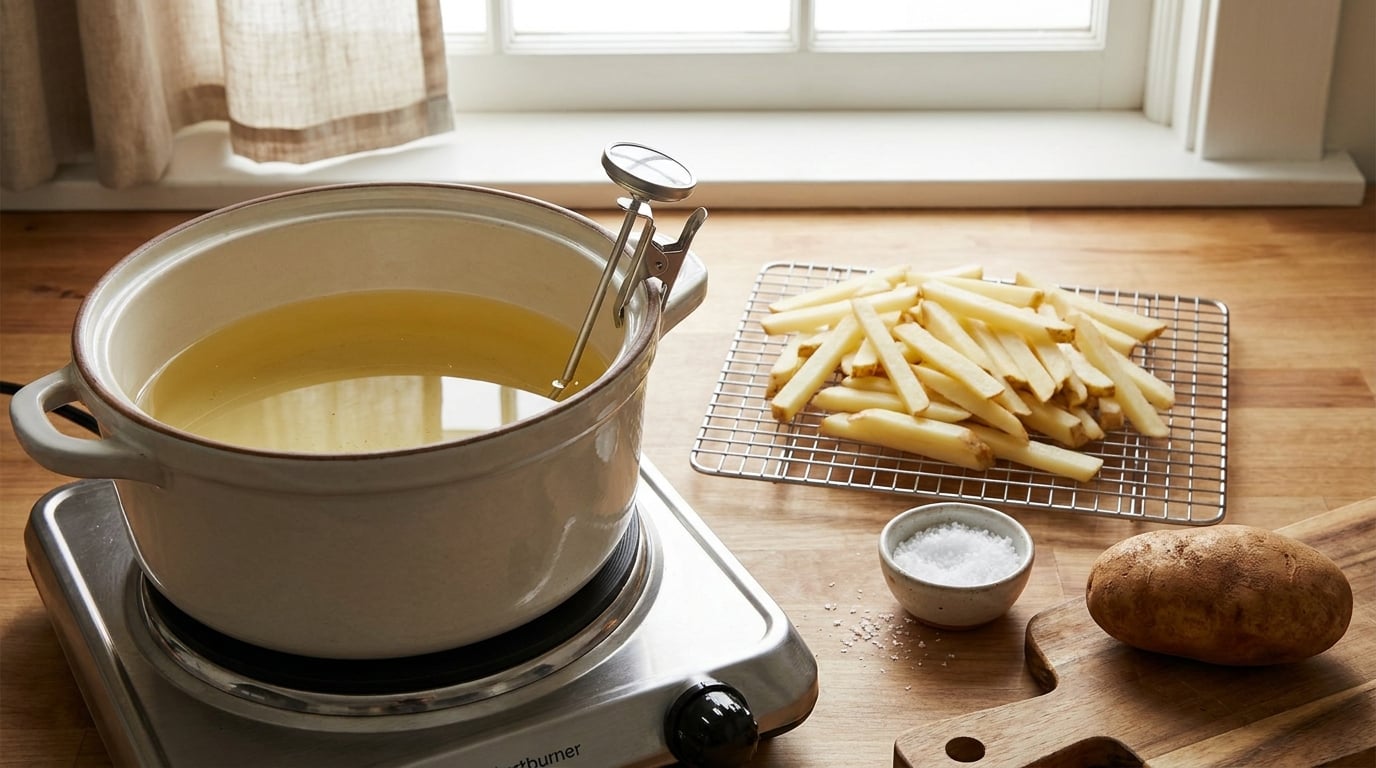
What temperature to fry French fries? Heat your oil to 325°F (163°C) for the first fry, blanch the potatoes for 4 to 5 minutes, then raise it to 375°F (190°C) for a 2 to 3 minute finish. That two-stage approach is the whole difference between limp, oily fries and the crisp-shelled, fluffy-centered kind you get at a restaurant. It takes about 25 minutes start to finish, plus 30 minutes for the soak.
Oil temperature decides crispness, color, and how much oil the potato drinks. Too cool and the surface stays wet and greasy, too hot and the outside scorches before the middle cooks. No amount of good oil or careful drying rescues the wrong number.
What You Need to Fry French Fries
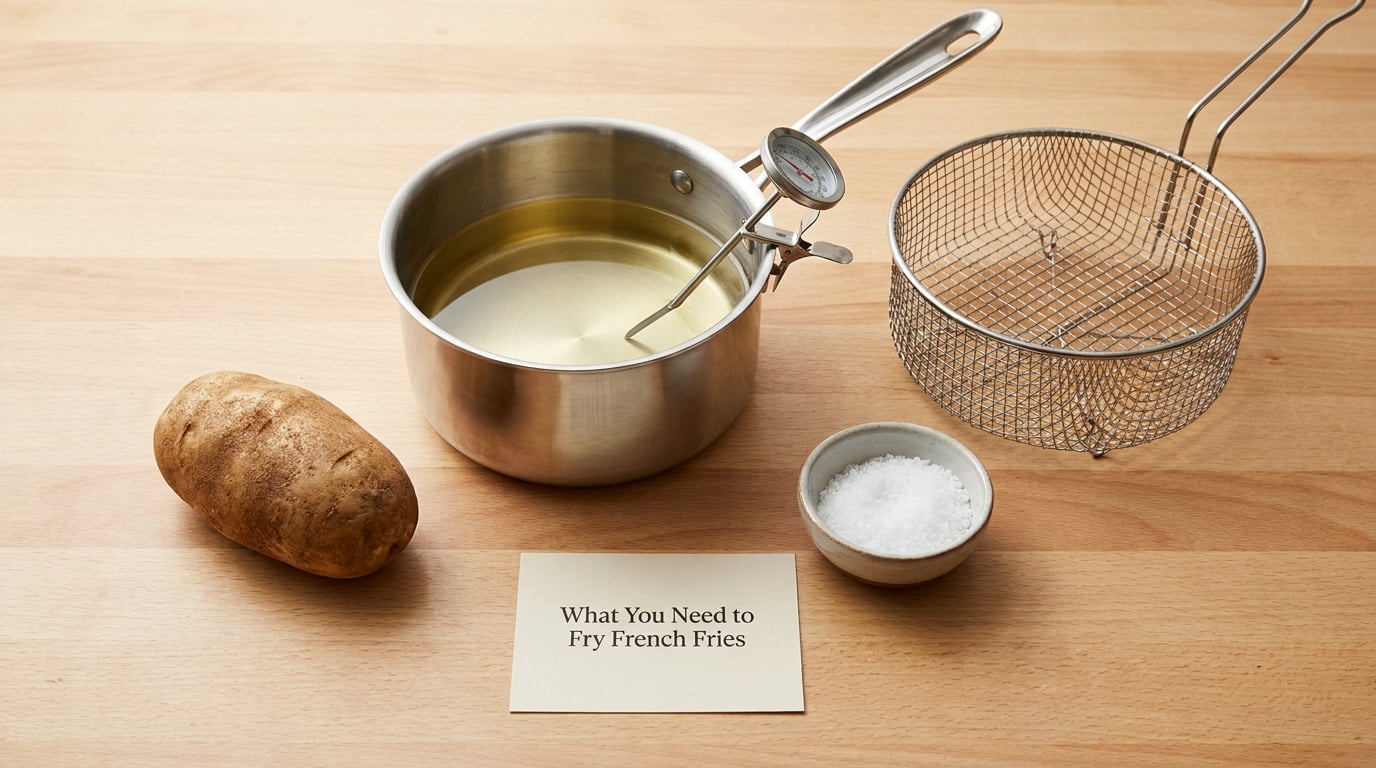
A thermometer is the one tool that decides whether this works. Fry oil is not something you eyeball from the side of the pot, and the difference between 350°F and 375°F is exactly the difference between a soft crust and a shattering one.
- High-sided pot or deep fryer: at least 4 inches deep with a heavy base, so the heat stays steady and the oil does not climb over the rim when you add food. A Dutch oven or a heavy stockpot both work.
- Clip-on deep fry thermometer: accurate to at least 5°F and able to clip to a pot rim. An instant-read probe is the safer option if you have one, since you never have to reach over the hot oil to read it.
- Neutral, high-smoke-point oil: canola, peanut, or refined vegetable oil. Peanut holds heat best and adds a little flavor, while canola is cheap and clean. Skip olive oil, whose smoke point falls below fry temperatures.
- Russet potatoes: starchy and low in moisture, which is exactly what keeps the inside fluffy. A pound yields roughly two servings.
- Wire rack or slotted spoon: fries drain on the rack, not on paper towels, so steam escapes instead of soaking back in.
- Coarse salt: for seasoning in the first minute after the finish fry.
Step-by-Step
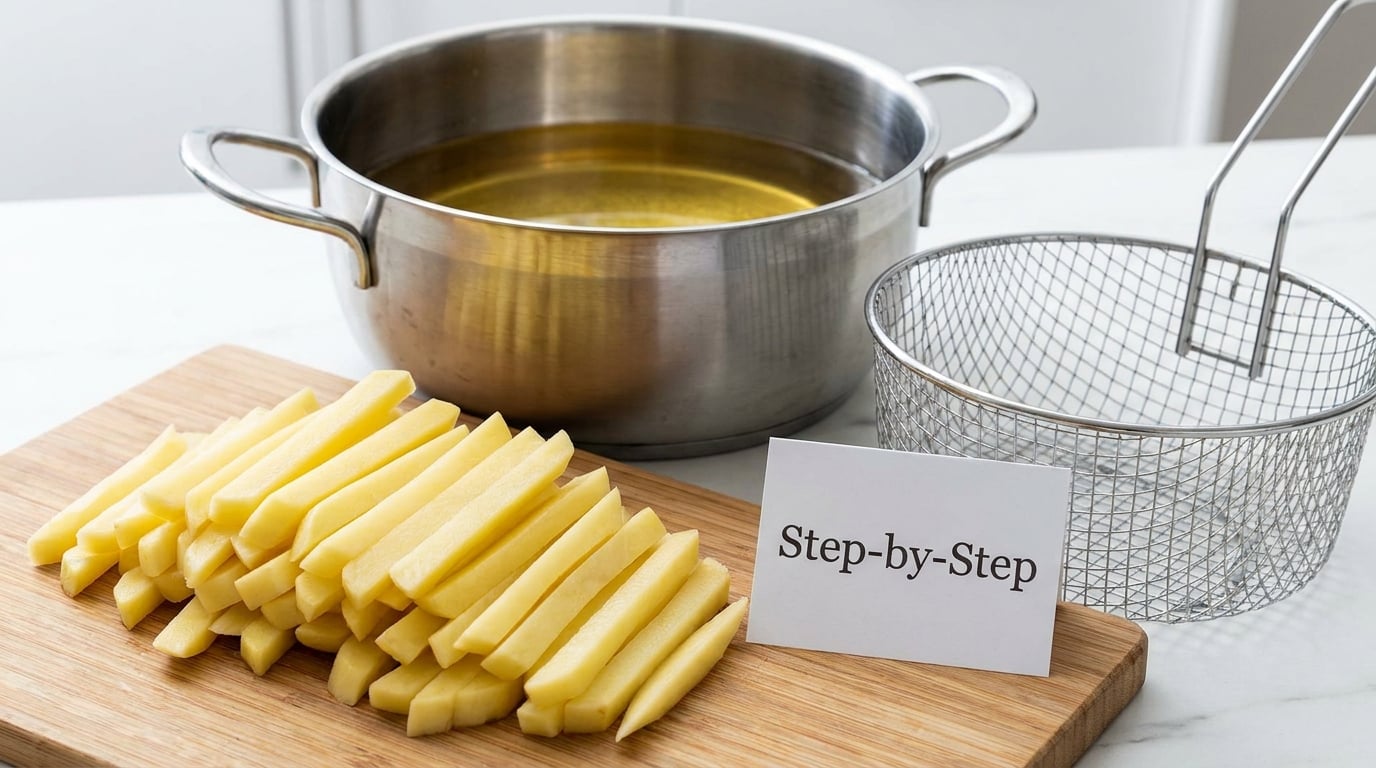
- Cut to an even thickness. Slice into sticks about a quarter-inch thick. Even cuts cook at the same rate, which matters more than most people expect: a batch of mismatched pieces colors before the thick ones finish.
- Soak in cold water for 30 minutes. This pulls off surface starch that would otherwise glue the fries into a pale, gummy shell. You can tell it worked when the water turns cloudy and the sticks look noticeably lighter.
- Dry them completely. Spread on a towel or spin in a salad spinner. Water on a potato is the single biggest cause of greasy fries, because it sputters and the steam never gives the surface a chance to cook dry.
- Heat oil to 325°F (163°C). Set the burner a little under what you think you need, because the oil keeps climbing. You know it is right when the thermometer settles at 325°F and the surface shimmers gently as you lower a dry fry in.
- Blanch in small batches for 4 to 5 minutes. One loose layer, never packed tight. Look for pale, tender sticks with no color at all that bend easily when you lift one.
- Drain, then rest. Spread on the rack for at least 10 minutes. Twenty minutes in the fridge gives you an extra-firm fry. During the rest, the steam finishes cooking the interior.
- Raise the oil to 375°F (190°C). Work back quickly so the oil does not sit long at low heat, then fry in batches for 2 to 3 minutes. Deep golden brown is the signal, and the fries go rigid on the rack as they drain.
- Salt and serve in the first minute. Salt hits the crisp shell while it is still hot, which is the only time it sticks properly. Hold the rest in a 200°F (95°C) oven if you must, never on the counter.
How to Choose the Right Temperature for Your Fries
Treat 325°F then 375°F as the default and adjust from there. The range that matters runs from about 300°F (149°C) on the low end to 375°F (190°C) on the high end for the finish fry.
Thicker steak-cut fries need less temperature and more time. A three-quarter-inch cut fries well at 325°F but wants the full 6 minutes plus a longer rest, because heat has further travel to the center. Thin shoestring fries finish in 90 seconds at 375°F, and pushing them to 4 minutes means you eat charcoal. Match your times to the cut, not to a recipe card written for someone else’s potatoes.
Expect the oil to drop when the potatoes go in. Most home cooks plan for a fall of 50 to 60°F on the first batch, which is exactly why the first fry is set lower and why small batches matter. A pot stuffed with fries sits in oil that never reaches temperature, so the sticks soak instead of sear. Two loose batches beat one crowded one every time.
Without a thermometer, you have three cues. The oil should shimmer steadily and look like it is just below its first bubble stage. The fry should hiss on contact and keep hissing, not go quiet. And the finished fry should stiffen almost immediately on the rack.
| Method | Stage | Temp | Time | Doneness cue |
|---|---|---|---|---|
| Double-fry | First fry (blanching) | 325°F / 163°C | 4-5 min | Pale and tender, no color |
| Double-fry | Second fry (crisping) | 375°F / 190°C | 2-3 min | Deep golden brown |
| Triple-fry | First | 320°F / 160°C | 4-6 min | Cooked through, lightly gold |
| Triple-fry | Second | 350°F / 175°C | 2-3 min | Slightly deeper gold |
| Triple-fry | Third | 370°F / 188°C | 60-90 sec | Crisp, ribbed surface |
| Single fry | One fry | 350-375°F / 175-190°C | 5-6 min | Golden brown, softer crust |
| Air fryer | One fry | 380°F / 193°C | 15-20 min | Golden, shake the basket twice |
| Oven | One bake | 425°F / 218°C | 20-25 min | Golden, flip at 12 min |
| Frozen fries | Fry from frozen | 350°F then 375°F | 3-4 min then 2 min | Crisp, no thawing first |
| Cold-start fry | One fry, no thermometer | Cold oil to a rolling boil | 15-25 min | Deep golden |
Air fryer and oven numbers sit higher than oil numbers on purpose. Dry heat cooks by browning the surface rather than surrounding it in fat, so it needs more heat and it never gets the even, fast crust that immersion delivers. Frozen fries split opinions further, with dependable results anywhere from 350°F for 20 minutes to 425°F for 10 minutes. Both land crisp if you shake the basket twice and leave the fries alone between shakes.
Double-Frying for Extra Crispness
The double fry is not a restaurant trick you cannot do at home. It is two short fryings, and the rest between them is the part everyone skips.
Blanch at 325°F (163°C) for 4 to 5 minutes until the potatoes are just cooked through and still pale. Drain them and leave them off heat for 10 to 20 minutes. Then bring the oil to 375°F (190°C) and fry for 2 to 3 minutes until deep golden brown.
That first fry drives moisture out of the center and gelatinizes the starch, so the interior stays fluffy and the surface is dry enough to brown hard in the second fry. Resting lets the interior steam finish cooking and the surface set. Skip the rest and you are essentially doing a single fry with extra steps.
If you want to go one step further, the triple fry at 320°F (160°C), 350°F (175°C), and 370°F (188°C) is worth the extra pan of oil for a large batch. It gives the crispest shell, though the difference over a good double fry is smaller than most people expect.
Before you heat anything: never fill a pot more than halfway with oil, keep a lid within reach, and turn off the heat before you walk away from the stove. Hot oil burns are worse than boiling water because the water in your skin flash-boils instantly. Let the oil cool completely at room temperature before you strain and store it.
Common Mistakes
Almost every disappointing batch traces back to a temperature problem or a preparation problem that feeds into one. Here is what usually went wrong and what fixes it.
| What happened | Likely cause | Fix |
|---|---|---|
| Soggy, no crust | Oil below 325°F at entry, or the pot was overcrowded so the temperature fell further | Check the thermometer before the batch, and fry two small batches instead of one full pot |
| Greasy, needs minutes of draining | Potatoes went in wet, or oil was too cool so the surface never sealed | Dry the sticks completely and confirm 325°F (163°C) before dropping them |
| Burnt outside, raw center | Oil above 380°F (193°C) at the finish fry | Pull the heat down, fry at 375°F (190°C), and lift thick-cut batches a minute earlier |
| Uneven browning, some pale sticks | Cuts of different sizes in the same batch | Trim every stick to the same thickness before soaking |
| Fries limp by the time they hit the plate | Salted late, or piled up where steam trapped and softened the shells | Salt within a minute and spread on a rack in a single layer |
| Thick cuts raw in the middle | Second fry is a 2-3 minute finish, which cannot cook a large piece through | Extend the blanch to 6 minutes and rest longer before finishing |
One more habit worth naming: stop moving the fries while they fry. Constant stirring softens a crust that is still setting, and it makes you reach over an open pot of 375°F oil for no reason.
Frequently Asked Questions
What is the best oil temperature for crispy French fries?
Use two temperatures: 325°F (163°C) for the first fry of 4 to 5 minutes, then 375°F (190°C) for a 2 to 3 minute finish. The cool first fry cooks the potato through and pushes moisture to the center, and the hot second fry dries and browns the surface into a shell. Measure both with a clip-on thermometer rather than guessing.
Should I fry French fries once or twice?
Twice. A single fry at 350-375°F (175-190°C) for 5 to 6 minutes works, but the crust stays noticeably softer and more forgiving of imperfect prep. Double-frying costs about ten extra minutes of rest time and gives you a shell that stays crisp for 20 minutes instead of five, which is worth it.
Why are my French fries soggy after frying?
Almost always one of three things: the oil was under 325°F (163°C) when the fries went in, the batch filled the pot and dropped the temperature further, or the potatoes were still wet from soaking. A wet surface sputters, the steam softens the crust, and the fry drinks oil instead of sealing. Dry them thoroughly and verify the temperature for every batch.
Can I use a regular kitchen thermometer to check fryer oil?
Yes. Any instant-read probe or clip-on thermometer works, as long as the dial or screen stays readable from a step back and the tip never touches the bottom of the pot, where it will read falsely low and can damage the sensor. Many home cooks keep one clip-on thermometer permanently on the fryer for this reason.
What temperature should I use for frozen French fries?
Fry straight from frozen, never thawed, since thawed fries soak up water in the freezer bag. Use the same double-fry approach: 350°F (175°C) for 3 to 4 minutes, then 375°F (190°C) for about 2 minutes. Dropping a frozen basket in lowers the oil fast, so fill it no more than halfway.
How do I keep French fries crisp after frying?
Salt within the first minute, while the shell is hot enough to take it. Drain on a wire rack in a single layer instead of a pile or a paper towel, since trapped steam softens the crust. If you must hold them, keep them in a 200°F (95°C) oven on the rack, and avoid salting or tossing more than once.
Conclusion
Put a thermometer in the pot before anything else. Heat a neutral oil to 325°F (163°C), blanch small batches for 4 to 5 minutes, rest them 10 minutes, then finish at 375°F (190°C) for 2 to 3 minutes.
Salt within the first minute and drain on a wire rack. Those four numbers, checked rather than guessed, are what separate a good batch from a soggy one.