
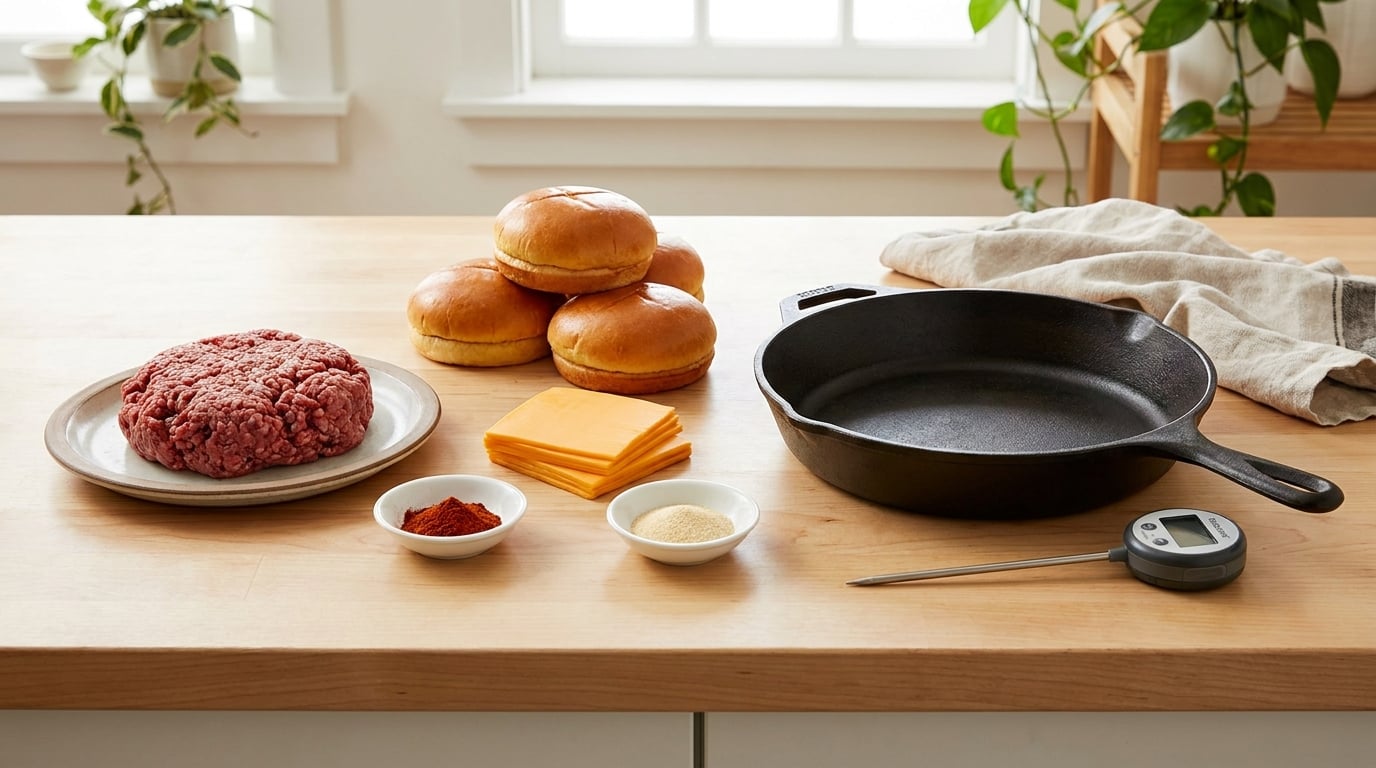
Learning how to make bison burgers is mostly about resisting two things: overmixing the meat and overcooking it. Season 85/15 ground bison gently, shape loose one-inch patties, sear them over medium-high heat for about four minutes a side, and pull at 130 to 140 degrees Fahrenheit with a thermometer. From mixing to plate it takes about 30 minutes, and honestly the hardest part is using a washable surface instead of giving up on the grill.
Bison behaves differently from ground beef in one big way. It carries noticeably less fat, so it has nothing to baste itself with during the cook. That means a hot pan and a short stay, not a slow roast. Get those two things right and the patties come out juicy with a browned crust, mildly sweet and never gamey.
What You Need
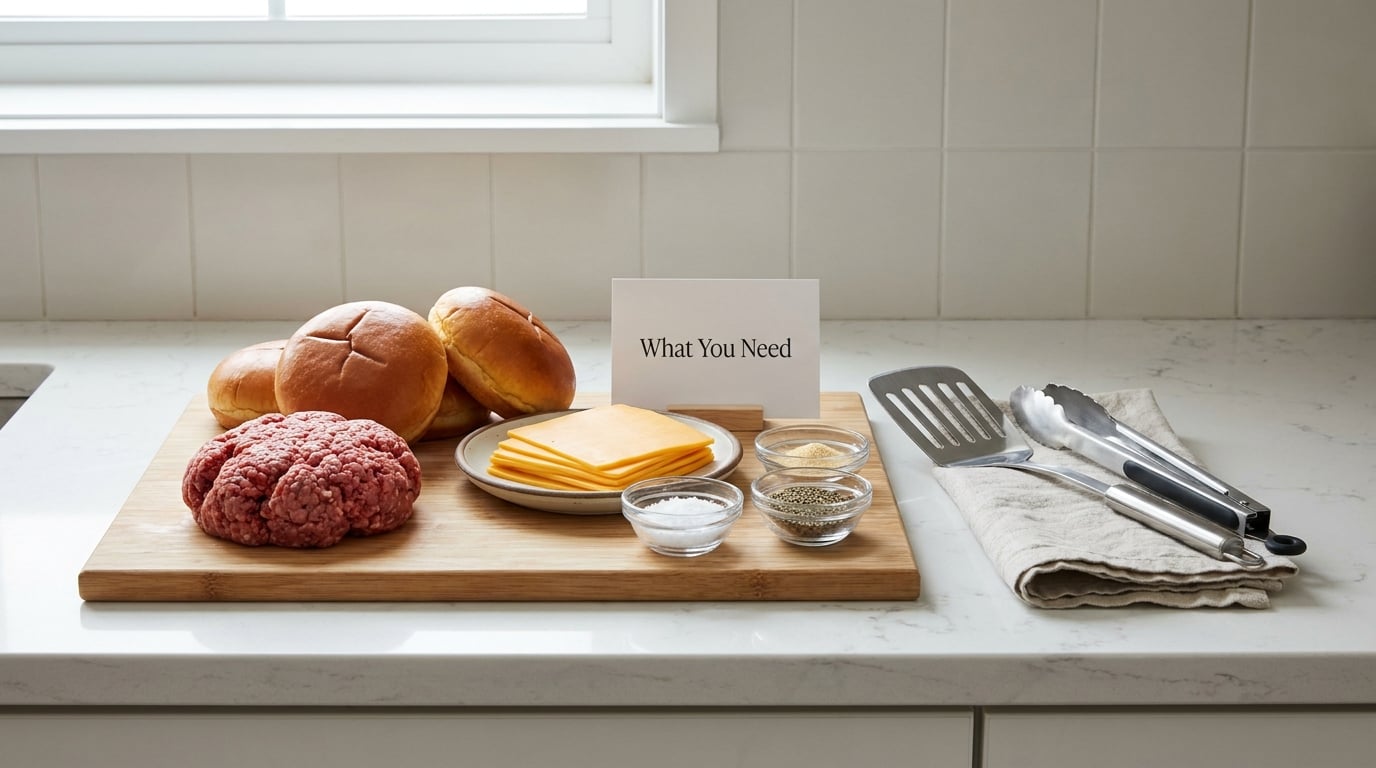
For four burgers you need about 1.5 pounds of ground bison. Pick 85/15 if you want the easiest path to a juicy burger, 90/10 if you like the flavor more lean and are willing to add fat to the pan.
- 1.5 pounds ground bison, 85/15 or 90/10, kept cold
- 1 tablespoon Worcestershire sauce
- 1 teaspoon kosher salt, plus more for the patties
- 1 teaspoon black pepper, freshly ground
- 2 teaspoons smoked paprika
- 1 teaspoon garlic powder
- 1 teaspoon onion powder
- 1 teaspoon Dijon mustard
- 1 tablespoon bison tallow, avocado oil, or butter for the pan
- 4 slices sharp cheddar or provolone
- 4 brioche or Kaiser buns, 4 to 6 inches
- Optional toppings: caramelized onions, lettuce, tomato, pickles
You also want an instant-read thermometer. Guessing is how bison ends up dry, and a five dollar tool removes the guessing. A cast iron skillet, a grill, or an air fryer all work, and the times are close enough that you do not need all three.
Let the bison sit out 15 to 20 minutes before you mix it. Cold meat seizes when it hits the pan and the patties tighten into rubbery pucks. Cold meat is also the number one reason patties crumble on the first flip.
How to Make Bison Burgers: Step-by-Step
Prepare the Bison Mixture
Dump the bison into a bowl with the Worcestershire, salt, pepper, paprika, garlic powder, onion powder, and Dijon. Use a fork or your fingertips and break it up with maybe fifteen gentle stirs.
Stop while you can still see streaks of plain meat. The moment the mix looks uniform, you have gone too far, and overworked bison turns dense and dry in the pan. Use the mixture right away rather than letting it sit, since the salt starts pulling moisture out of the meat within a few minutes.
Shape the Burgers
Divide the mix into four portions of about six ounces each. That gives you four standard patties, and a pound of bison will make six small sliders or two thick double-stacked patties. Lightly wet your hands, then cup each portion and shape it with a gentle press.
Aim for three-quarter-inch thick and slightly wider than the bun, since lean meat shrinks more than beef. Press the center with your thumb to make a shallow well so the patty lies flat, and keep the edges a bit looser than feels natural. A perfectly smooth patty is a patty that falls apart.
Chill the shaped patties for 10 minutes if you have time. Cold, firm patties hold together through a hard sear far better than warm ones.
How to Make Bison Burgers Stay Juicy
Heat a cast iron skillet over medium-high heat until a drop of water skitters and evaporates. Add the tallow or oil and swirl it around. The fat needs to shimmer but not smoke heavily, which usually takes about two minutes of preheating.
Lay the patties down and keep them untouched. Resist flipping for three to four minutes, until the edges turn brown and release from the pan without scraping. The crust forming at the edges is what holds the patty together, and an early flip tears it loose.
Flip once, cook another three to four minutes, and start checking the temperature. Bison is thin and it cooks fast, so a patty can jump from 130 to overdone faster than you expect.
Pull at the doneness you want, remembering that carryover cooking adds another 5 to 10 degrees while the patty rests. Use the list as a guide:
- Rare: pull at 120 degrees F, finishes near 125 degrees F
- Medium-rare: pull at 130 degrees F, finishes near 135 degrees F
- Medium: pull at 140 degrees F, finishes near 145 degrees F
- Medium-well: 150 to 155 degrees F, still slightly moist in the center
- Well-done: 160 degrees F, USDA minimum for ground meat
On safety, the USDA recommends cooking ground meat to 160 degrees Fahrenheit because bacteria can be distributed throughout ground product rather than only on the surface. Restaurant and home cooks frequently pull bison earlier for a medium-rare result. If the meat is farm-raised bison from an inspected source and you prefer a pink center, that is a personal risk call worth knowing you are making. Rest the patties three to five minutes on a warm plate before you build them.
For a grill, follow the same logic. Preheat the grate over medium-high heat, clean and oil it, and cook about four minutes a side away from direct flame. High heat flare-ups scorch the crust before the center catches up, so a cooler zone on the side of the grill is your friend. A spray of water on the coals keeps the fat from dripping and burning.
In the oven, set a heavy skillet in a 425 degree F oven, sear the patties two minutes a side on the stovetop, then finish them in the oven for four to six minutes. In an air fryer at 400 degrees F, cook eight to ten minutes, flipping once at the halfway point. Sous vide at 135 degrees F for two hours works, and a combi oven at that temperature for two hours gives a tender result, though most cooks find the crust too soft to be worth the extra equipment.
Assemble and Serve
Add the cheese in the last 30 seconds of cooking so it melts over the patty instead of sliding off. Toast your buns cut-side down in the rendered fat for a minute if you have a spare pan going, then top with caramelized onions, lettuce, tomato, and pickles.
Assemble and eat right away. Bison does not sit well, and a patty that has been resting for ten minutes in a closed bun is a dry patty with better intentions. If you are batching, hold cooked patties on a rack in a single layer, not stacked, and warm them briefly when you are ready to serve.
Common Mistakes
1. Mixing the meat too much. This is the most common failure. You want visible streaks of seasoning, not a uniform paste. Overworked bison tightens like sausage casing and turns leathery on the plate. Fix: fifteen stirs, then stop.
2. Flipping too early. If the patty sticks or the top tears when you move it, the crust has not formed yet and the patty will break. Cook another minute instead. On a grill, this is the single most cited reason bison patties fall apart.
3. Working with cold meat straight from the fridge. Cold bison tightens on contact with the hot pan and the edges crack. Fix: temper the meat for 15 to 20 minutes and chill your formed patties, not your unformed mix.
4. Making patties too thin. Anything under a quarter inch dries out before the center cooks through. Keep them near three-quarter inch and let them shrink naturally.
5. Cooking past medium. Lean bison has no internal fat to hold moisture, so every degree past medium is a degree of dryness. Pull ten degrees below your target and let the rest finish the job.
6. Skipping a final seasoning check. Bison is mild and it tastes flattish if you season only at the start. Taste a tiny pinch of the raw mix, and add salt if it does not taste quite seasoned enough.
One fix worth knowing if you love the flavor but find it lean: mix the bison with an equal weight of ground beef, or fold a tablespoon of pork fat into each patty. This is a common workaround among home cooks and it works, though the pure version with tallow in the pan gets you most of the way there without diluting the flavor.
Frequently Asked Questions
What is the best way to make bison burgers?
Mix 85/15 ground bison gently with salt, pepper, and a little Worcestershire, forming loose three-quarter-inch patties. Sear over medium-high heat for about four minutes a side, flip once, and pull at 130 to 140 degrees Fahrenheit. The low fat content means hot heat and a short cook, not a slow one.
What is a good binder for bison burgers?
None, for most recipes. Bison is lean but not fat-free, and the muscle and connective tissue still bind well when you handle the meat gently. A binder turns the patty dense and breadlike. If you are using very lean 90/10 and patties keep breaking, a tablespoon of breadcrumbs or a spoon of mashed potato is a reasonable rescue.
How do I keep bison burgers from falling apart?
Temper the meat 15 to 20 minutes, mix only until streaky, shape patties a little thicker than the bun, and chill them for 10 minutes before cooking. Most importantly, do not flip until the edges have browned and release on their own, usually three to four minutes in.
What internal temperature should a bison burger be cooked to?
The USDA recommends 160 degrees Fahrenheit for ground meat. Many cooks pull bison earlier, at 130 to 140 degrees Fahrenheit, for a medium-rare burger, and the patty finishes a few degrees higher while it rests. Take the temperature with an instant-read thermometer in the thickest part of the patty.
Do you cook bison burgers the same as beef?
Not quite. Bison cooks faster because it is leaner and has less fat to render, so it wants the same medium-high heat but a shorter stay. Expect about three to four minutes a side rather than five or six, and pull it earlier than you would a beef patty to protect moisture.
What does bison taste like?
Farmed bison tastes mild, slightly sweeter, and more mineral than beef, with a faint nuttiness from its higher iron content. It is not gamey, which surprises people who expect a wild flavor. Grass-raised and wild game can taste more earthy, so wild bison carries an extra caution about cooking it thoroughly.
Conclusion
If you remember one thing about how to make bison burgers, remember this: start with fresh ground bison, let it sit out of the fridge for 15 minutes, and season it with about fifteen stirs and no more. Shape four loose patties, give them a short chill, and sear them hard in a fatty cast iron skillet or on a preheated grate. Watch a thermometer, pull ten degrees below your target, rest three minutes, and eat them right away. That is the whole method.