
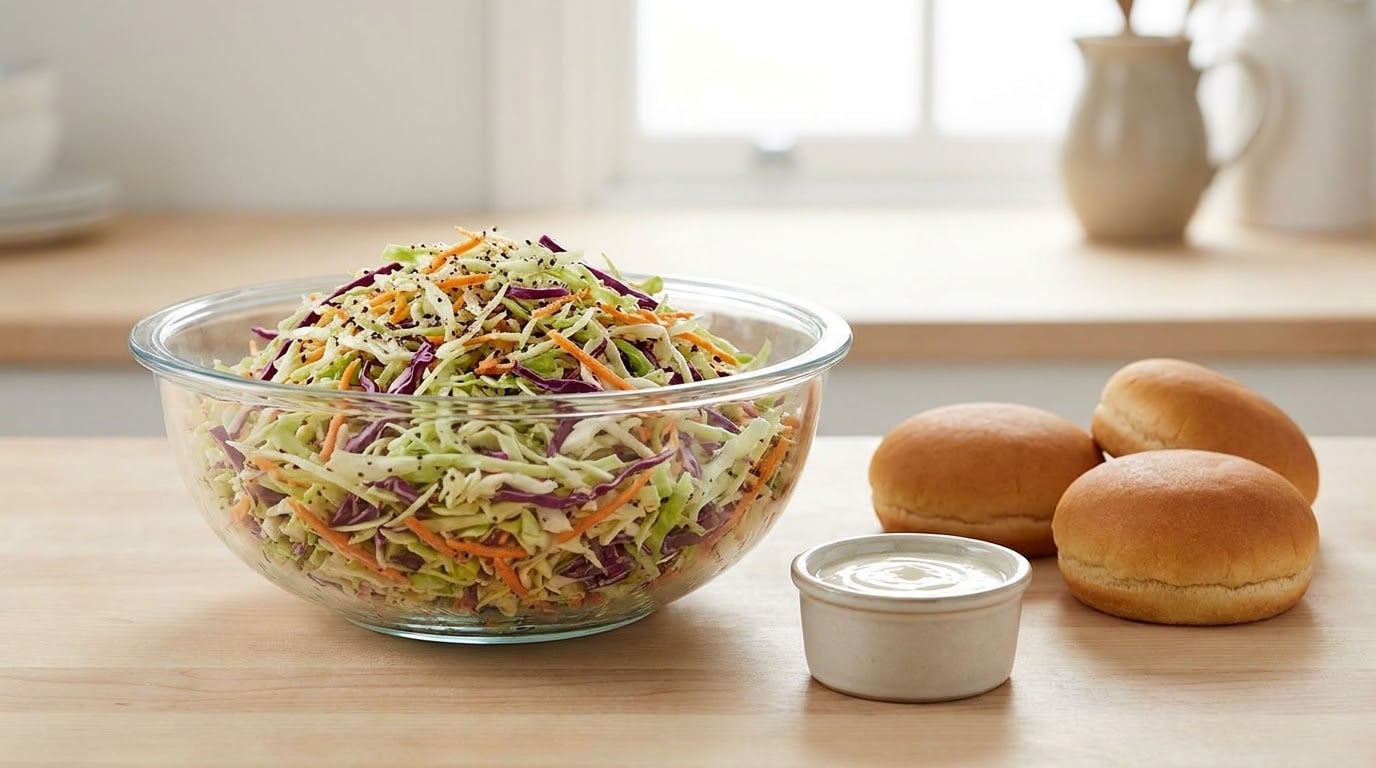
Good burger slaw is finely shredded green and red cabbage with grated carrot, tossed in a dressing of mayonnaise, vinegar, mustard and a little sugar, then chilled for 30 to 60 minutes before it hits the bun. The whole thing takes about 15 minutes of active work plus chilling time, and it is the fastest way to make a plain patty taste like a cookout burger.
That last part matters. A burger is rich, hot and soft. Cold, acidic, crunchy slaw is the opposite of all three, and that contrast is why people order it even when they think they don’t want it.
Prep time: 15 minutes. Chill time: 30 to 60 minutes. Yield: about 4 cups, enough for 6 to 8 burgers.
What You Need
You need one small head of green cabbage, a quarter of a small head of red cabbage for color, two carrots, and a five-ingredient dressing. No mandoline and no special equipment required, though a box grater gets you closer to restaurant texture than a knife.
The vegetables
- 3 cups (75 g) shredded green cabbage — about half a small head. Green cabbage is the backbone; it shreds into softer strands than red and disappears into the burger, which is exactly what you want.
- 1 cup (60 g) shredded red cabbage — for color and a firmer bite. Skip it if you must, but the purple is what makes a bowl of slaw look worth photographing.
- 1 cup (110 g) grated carrot — grate it on the large holes of a box grater. Carrot is the sweet counterweight to the vinegar, so do not leave it out of a burger version.
- 2 tablespoons finely minced red onion — optional. Soak it in cold water for 5 minutes if you want the bite without the raw edge.
The creamy dressing
- 1/2 cup (120 ml) mayonnaise — use a real, room-temperature mayo. It emulsifies into the dressing; a reduced-fat version tends to split and go slick in the bowl.
- 2 tablespoons apple cider vinegar — the acid is what cuts the fat of the burger. White vinegar works but tastes sharper, and rice vinegar is the gentlest swap.
- 1 tablespoon yellow mustard — Dijon works and adds a little heat. Yellow mustard is the classic burger-friendly choice.
- 1 teaspoon sugar (or brown sugar, or honey) — sugar is not optional in a burger slaw. Burger patties are rich, and undressed sugar is what balances them.
- 1/4 teaspoon salt, plus 1/4 teaspoon black pepper — more pepper than feels right at first.
Equipment and the mayo-or-vinegar question
A box grater shreds cabbage faster than a knife and finer than a salad spinner’s blades. A mandoline gives the most even result, but its fine-shred setting is the one that matters here: thick ribbons are chewy, not crisp, and they do not hold dressing the way thin strands do.
As for mayonnaise versus vinegar, that is the real fork in this recipe. Mayonnaise gives you a creamy slaw that clings to the bun and tastes like a deli. Vinegar gives you a lighter, sharper, more Carolina-style slaw that stays crunchier for hours and is what most barbecue joints actually serve. Make the creamy one for burgers you are eating straight off the grill, and the vinegar one when the slaw has to survive a cookout table or a picnic.
How to Make Coleslaw for Burgers, Step by Step
Shred, dry, whisk separately, toss gently, and chill. The order matters less than the two things people usually skip: getting the water out of the cabbage and letting the finished slaw sit before serving.
Prepare the vegetables
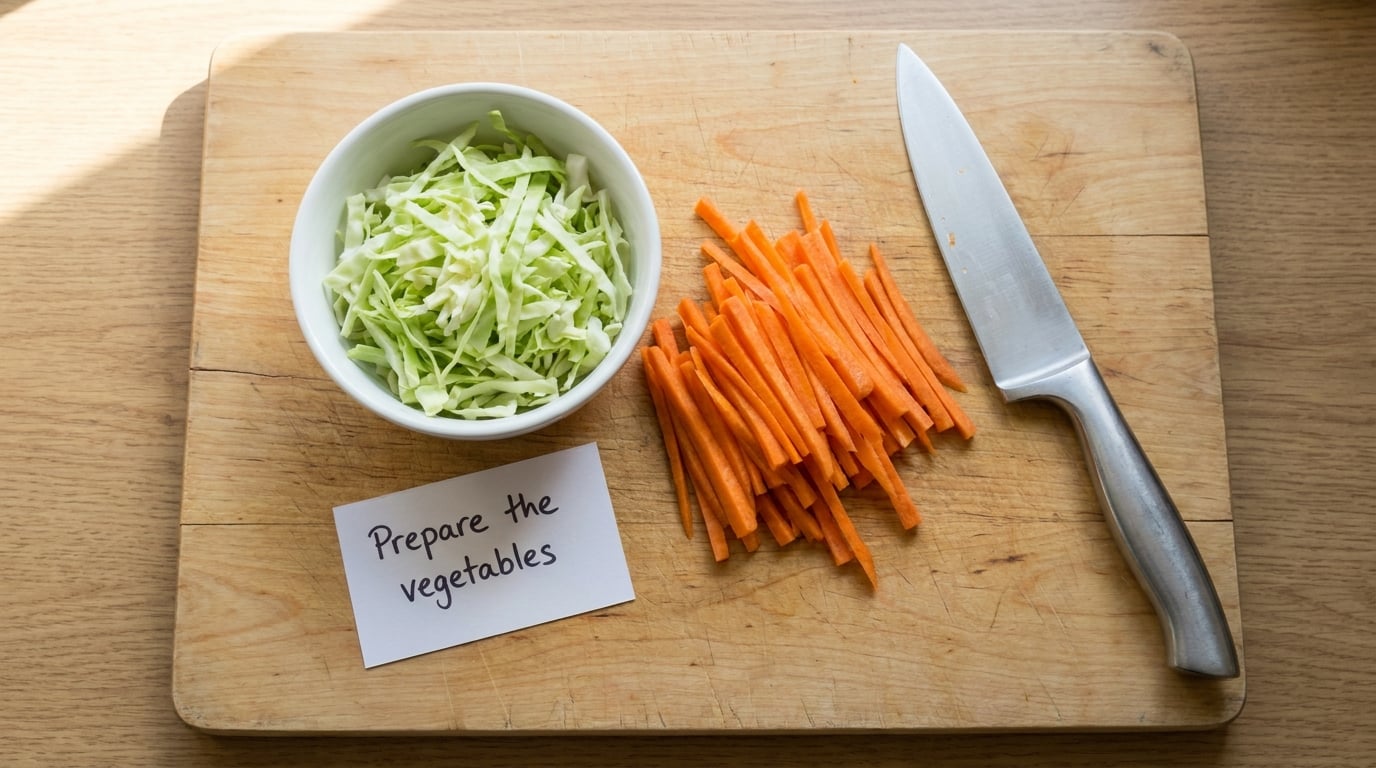
Halve the cabbage through the core, cut it into manageable wedges, and shred each face with a box grater or a mandoline set fine. Turn the wedge as you work and keep your fingers out of the path of the blade, which is how most people cut themselves doing this.
Now get the water out. This is the step that decides whether your slaw is crisp in hour three or a puddle, and it takes 30 seconds. Toss the shredded cabbage with 1/2 teaspoon of the salt, leave it in a colander over the sink for 10 minutes, then press it firmly with the back of a clean bowl to squeeze out the liquid. The pile will shrink noticeably and look limp and dull; that is correct. Rinse it briefly under cold water, spin or pat it dry, and only then add it to your bowl.
Grate the carrots on the large holes of the box grater and mince the red onion. Aim for roughly three parts cabbage to one part carrot. More carrot reads as a carrot salad, and the burger loses the crunch that made you want slaw in the first place.
Make the tangy dressing
Whisk the dressing in a separate bowl before it ever touches the cabbage, so the sugar dissolves fully and the mustard emulsifies into the mayo rather than sitting in streaks.
Add the mayonnaise, vinegar, mustard, sugar, salt and pepper. Whisk hard for 20 or 30 seconds, until it looks uniform and slightly thickened. Taste it on a fingertip: it should read as a little too sharp and a little too sweet on its own, because the burger will absorb half of it.
Adjust from there. Too sharp for your taste, add a teaspoon more sugar. Too flat, add another half teaspoon of mustard. A pinch of celery seed turns this into a noticeably older-fashioned deli slaw, and a teaspoon of horseradish gives you the sharp bite that goes well with smoked meat.
Toss and chill the coleslaw
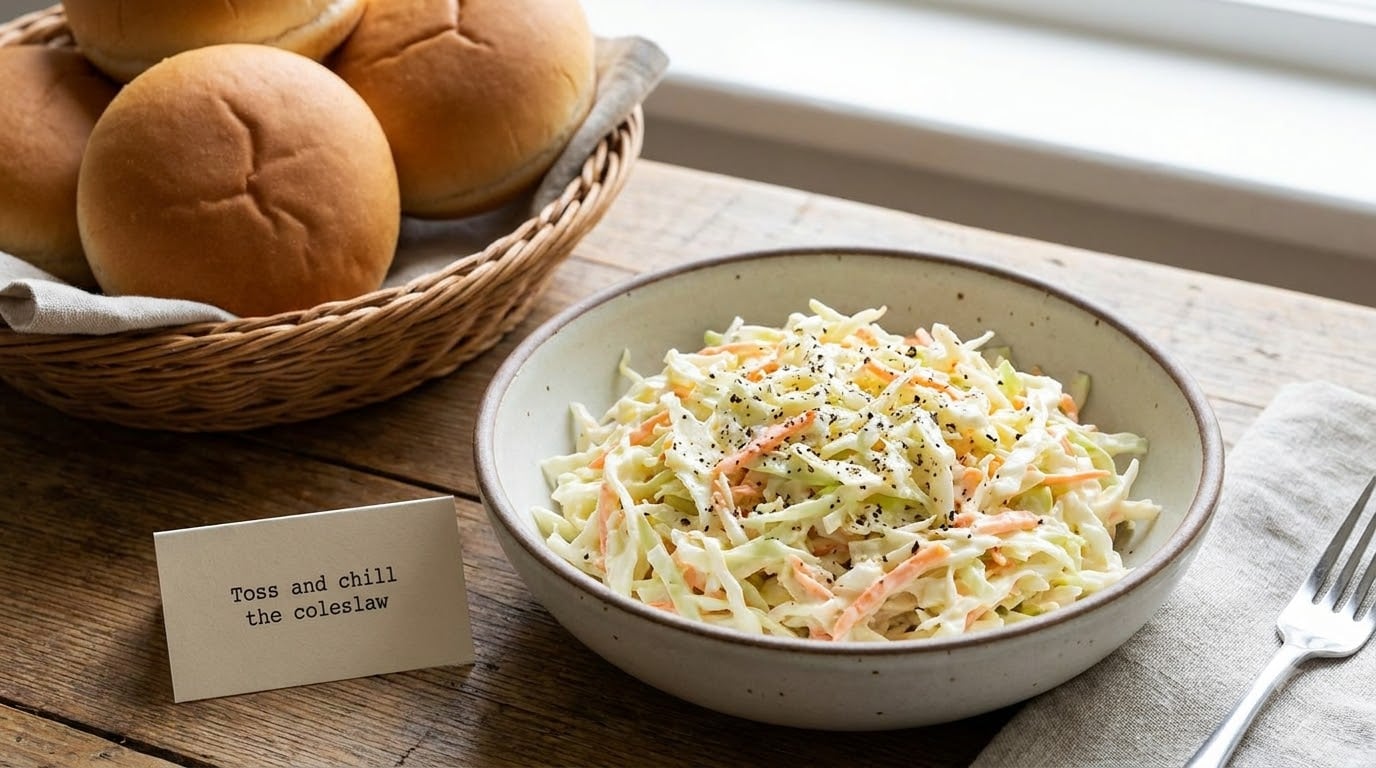
Add the dried cabbage, carrot and onion to the dressing and fold with your hands or a pair of tongs, using as few strokes as it takes to coat everything. Stirring hard bruises the cabbage and turns crisp slaw into paste.
Cover and refrigerate for 30 minutes minimum, up to an hour if you can. During that time the salt draws the dressing deep into the cabbage strands, the sugar softens the raw edge, and the texture settles from raw-crunchy to crisp-tender. This is the single biggest difference between homemade slaw that tastes flat and slaw that tastes alive, and it is the step most recipes treat as optional.
Taste again after chilling and correct with a spoon of vinegar if the cabbage has drunk the dressing, or a spoonful of mayo if the opposite happened. Then it is ready for the buns.
How Much Slaw Per Burger and How to Stack It
About 1/3 cup of well-dressed slaw per burger is the right amount. That is roughly a heaped scoop that sits in the bottom bun without pushing it apart.
Layer it on the bottom bun, under the patty, not on top. Slaw under the beef gets warmed slightly by the patty and the sauce, so the mayo thins out and bonds to the bread instead of sliding around. Slaw on top of a hot patty goes warm, watery and falls out of the bun halfway through eating it. The top bun goes on last, and any press-worthy slaw comes on after.
Count on about 1 cup of finished slaw per burger served, so 3 cups of dry vegetables becomes roughly 4 cups dressed. A 12-burger cookout needs you to roughly double the recipe. Keep the slaw in a bowl in the middle of the table and let people build their own, which is how nobody ends up with the soggy bottom bun.
Common Mistakes and Tips
Nearly every complaint about burger slaw comes down to water, sugar or timing. All three are avoidable before you even start.
Watery slaw. You skipped the salt-and-squeeze, or you dressed the cabbage and then let it sit for four hours. Salt the shredded cabbage and let it drain for 10 minutes, squeeze it dry, and keep the finished slaw cold. A second squeeze after dressing, in the colander, pulls out a surprising amount of liquid.
Too much dressing. If the slaw pools at the bottom of the bowl, the cabbage was wet when you mixed. Start with three-quarters of the dressing you think you need, add more at the end, and remember the cabbage will keep releasing liquid during chilling.
Bland dressing. Almost always undissolved sugar or too little salt. Whisk until there is no grainy texture left, and season again after chilling rather than only before.
Made too far ahead. Vinegar-based slaw improves overnight because the acid keeps biting into the cabbage. Creamy slaw is best on day one, and no version is at its best after three days in the fridge.
Store-bought mix. Bagged mix is mostly water and cabbage, and it turns limp within hours. The recipes on this site that use it treat it as a shortcut, not a shortcut to the same result.
Restaurant-Style and Vinegar-Based Slaw
Restaurant slaw tastes better because it is made in three moves most home recipes skip: the cabbage is brined or salted to draw out water, the dressing is vinegar-forward rather than mayo-forward, and the finished slaw is allowed to cure in the fridge before it is served.
To make the vinegar version, skip the mayonnaise entirely. Combine 1/2 cup (120 ml) apple cider vinegar, 1/2 cup (120 ml) neutral oil, 2 tablespoons sugar, 1 tablespoon yellow mustard, 1 teaspoon salt and a lot of black pepper, then whisk until the sugar dissolves. Fold it through 4 cups of dried shredded cabbage and grated carrot, chill at least 2 hours, and taste for salt. This is the Carolina style that barbecue joints serve, and it holds its crunch for a full day beside a hot grill.
For a fried-chicken-shop style slaw, the dressing gets thinner and sharper still: mostly vinegar and sugar, a spoon of mayonnaise for body, and a couple of tablespoons of finely diced dill pickle. That version is a natural fit for burgers too, because the pickle reads as a topping rather than a salad.
Frequently Asked Questions
What is the best cabbage for coleslaw on burgers?
Green cabbage is the best base for burger slaw. It shreds into soft strands that blend with the patty and hold dressing without chewing. Add about a quarter of a small head of red cabbage for color and a firmer texture. Shred both as finely as you can, then salt the cabbage for 10 minutes and squeeze out the water before dressing it.
Can I make coleslaw without mayonnaise?
Yes, and many cooks prefer it. Replace the mayonnaise with an equal amount of apple cider vinegar and a tablespoon of neutral oil, and add a little extra sugar to keep it balanced. That vinegar-based version is Carolina style, stays crunchier for hours, and pairs especially well with pulled pork and smoked meat as well as beef.
How do I keep coleslaw from getting watery?
Salt the shredded cabbage with half a teaspoon of salt, let it drain in a colander for 10 minutes, then squeeze it dry with the back of a bowl. That pulls out the water the cabbage is holding. Dress it as late as possible, keep it refrigerated, and avoid squeezing raw cabbage by hand, which bruises the strands and makes them release more liquid.
How long should burger coleslaw chill before serving?
At least 30 minutes, and up to an hour if you have the time. The chill is not just for serving cold; the salt in the dressing draws it into the cabbage and softens the raw edge, which is what turns raw crunchy shreds into crisp-tender slaw. Vinegar-based versions taste better after 2 hours of curing.
Can I make burger coleslaw ahead of time?
Yes. Make it up to 24 hours ahead and refrigerate it covered, then give it a good stir before serving. Vinegar-based slaw actually improves overnight. Creamy mayo-based slaw is best on day one but holds fine for two to three days; after that the cabbage gets soft and the dressing turns loose.
Should coleslaw be served cold or at room temperature?
Serve it cold, straight from the fridge. Cold slaw is what balances a hot, fatty burger, and it keeps its crunch instead of wilting against warm bread. If you are serving it as a side dish at a cookout, put the bowl over ice or set it inside a larger bowl of ice so it holds its temperature through a long afternoon.
Conclusion
Shred the cabbage finely, salt it and squeeze out the water, then whisk the mayonnaise, vinegar, mustard and sugar in a separate bowl. Fold, chill for 30 minutes, taste again, and pile about 1/3 cup onto the bottom bun under the patty. That order is the whole recipe, and it is why your slaw stays crisp next to a hot burger instead of sliding out of it.