
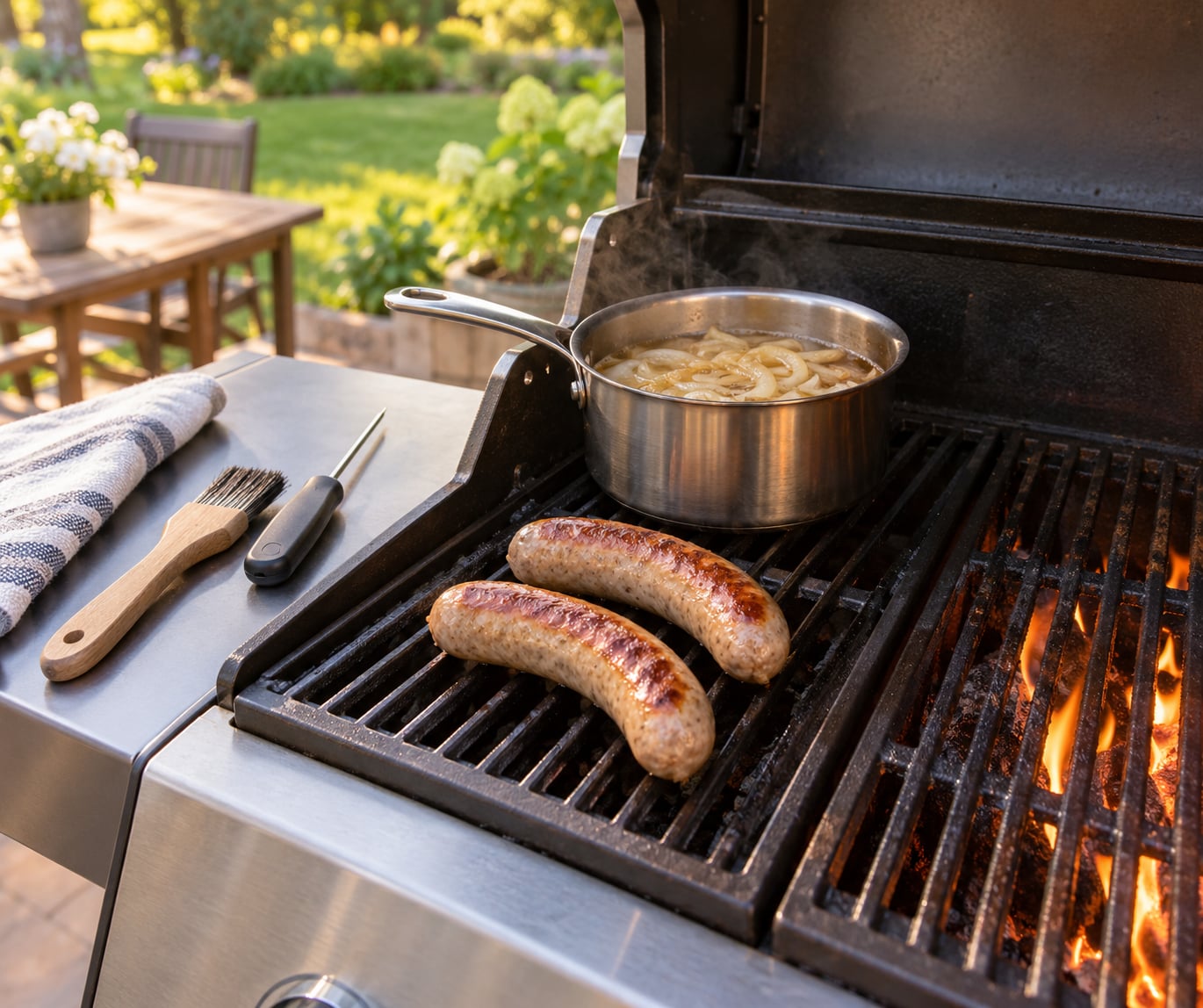
Brats dry out because direct high heat renders the fat and pushes the juice out before the middle ever cooks through. The fix is a two-zone fire at medium heat, an optional beer bath, turning every three to four minutes, and pulling them off at 160°F (71°C). It takes about 20 minutes of actual grill time, and most of the skill is in the heat, not the sauce.
Bratwurst is ground pork, usually around 75% meat to 25% fat, packed into a natural or collagen casing. That fat is what keeps it juicy, and it is also what a hot fire steals from you. Once the casing splits or you push past 160°F, the moisture is gone and no amount of mustard brings it back.
The method below works on gas, charcoal or pellet, and the same heat logic works in a cast iron skillet if you have no grill at all.
What You Need
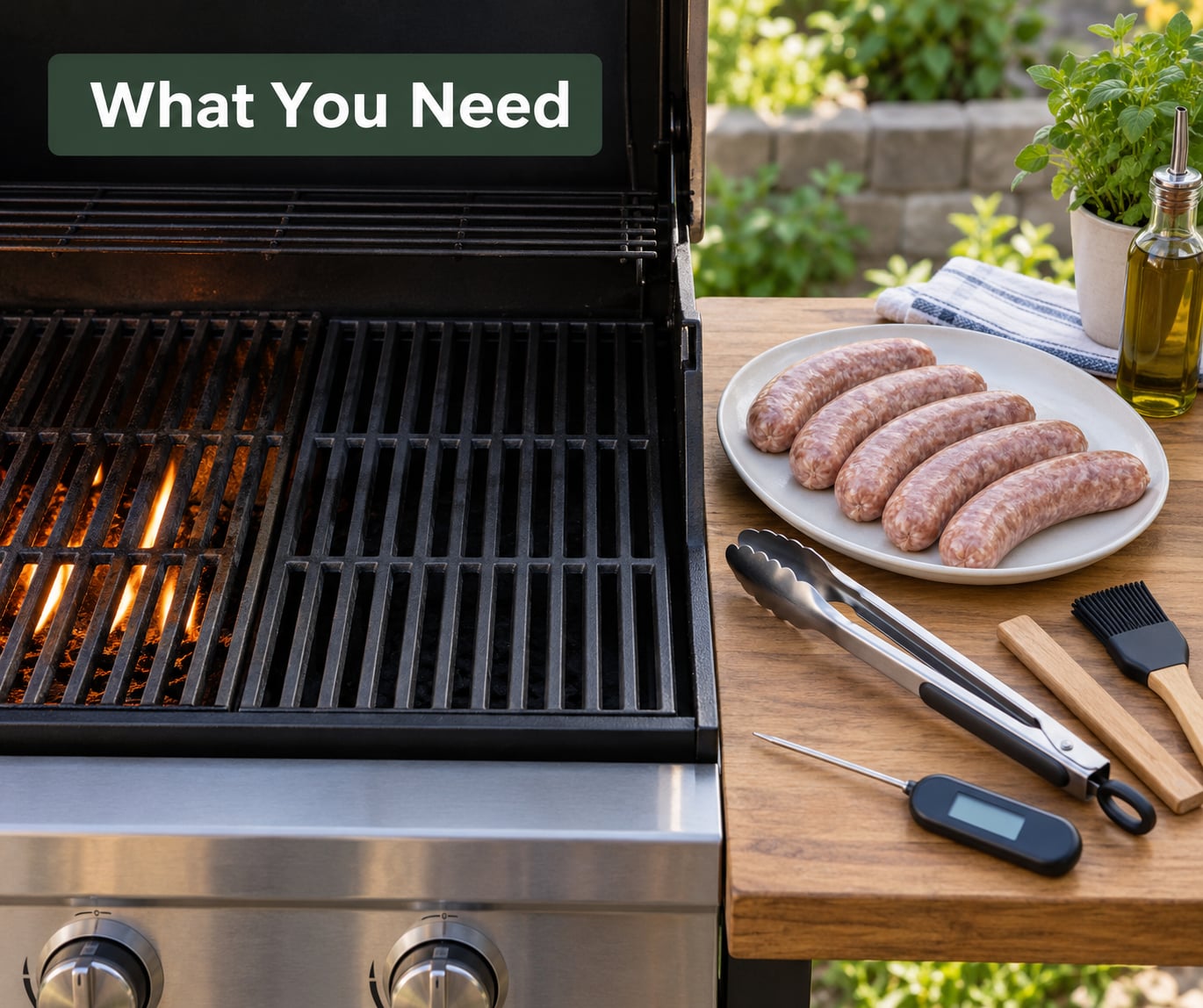
You need very little, and all of it is probably already in your garage. A grill or griddle, a pair of tongs, a basting brush, and an instant-read thermometer are the whole list. The thermometer is the one people skip and then wonder why their brats are dry. Guessing doneness by poking and prodding is how brats get overcooked.
Some people keep a small squeeze bottle or shallow pan of melted butter, mustard and honey for basting in the last few minutes. That is a finishing step, not a fix. You cannot baste moisture back into a sausage that has already lost it.
Know what you bought before you light anything. Fresh raw bratwurst needs to be fully cooked through, so it takes longer on the grill. Pre-cooked brats from the refrigerated case only need reheating to 160°F and browning, so they go on for a much shorter time. If you overcook pre-cooked brats, that is the single most common reason they turn rubbery, because they were cooked once already in the package.
Check the label. It will say raw, fresh, or precooked, and that one word changes your timing completely. Thaw frozen brats in the refrigerator overnight, or run them under cold water for 20 minutes. Never microwave them frozen, because the outside skins over while the center is still ice.
Step-by-Step
How Should You Prepare Brats Before Grilling?
Do not pierce them. That old tip about poking holes so the brats don’t burst is exactly what makes them dry, because every hole drains juice onto the charcoal. If you want to stop splits, control the heat instead, not the fork.
Do not soak them either. A short soak in warm water or beer does not rehydrate a sausage that has been sitting in a package. It can dull the casing and leave the outside of the sausage slimy before it ever hits the grate.
Pat the brats dry, then score shallow diagonal slashes about a quarter inch deep, no deeper. The cuts open the surface so more of the sausage browns, and they give rendered fat somewhere to go instead of pooling and dripping onto the coals. Season right before they go on the grate, with salt, pepper and whatever else you like.
Lightly oil the brats and the grate. A little oil on the casing keeps it from welding to the metal and tearing when you turn it. Wipe the grate with a paper towel held in tongs, then run a brush with a little oil over it.
Fresh raw brats benefit from a gentle pre-cook in liquid. The classic move is a beer bath. Warm a light lager or pilsner in a wide pot with a sliced yellow onion, add the brats, and hold them just under a bare simmer for 15 to 20 minutes. Not a rolling boil, which is what splits casings and drives off fat. A cold start works even better: put the brats in a cold pot, add the beer and onion, and bring the whole thing up to a simmer together.
Skip the bath for pre-cooked brats. They are already done, so the bath just warms them through and you can go straight to the grill. For fresh brats, the bath is optional but it is the safest route to a juicy center, especially for a big batch.
What Heat Should You Use for Grilling Brats?
Use a two-zone fire at medium heat, roughly 350°F (177°C). Push all your coals to one side of a charcoal grill or burn only half the burners on gas, which gives you a hot side for browning and a cool side for cooking. More detail on setting up that split is in our guide to two zone heat on a grill.
The cool side is where most of the cooking happens. It is hot enough to keep the brats sizzling steadily, not hot enough to brown the outside faster than the inside cooks. The hot side is only for the last minute or two of browning, once the inside is already done.
Constant searing is what dries brats out. At 450°F and above, the casing chars in two minutes while the center is still cold, then you keep flipping and the outside blackens while the inside stays gummy. Dripping fat makes it worse, because every flare-up scorches the casing. When fat starts to smoke, move the brats to the cool side rather than waiting it out, and our guide to controlling flare-ups covers the rest.
Check your grill the way cooks actually do it. Hold the back of your hand a few inches above the grate for four to five seconds. If you cannot hold it there, that zone is too hot for slow cooking.
How Do You Grill Brats Without Drying Them Out?
Start on the cool side, spaced apart so the air can move between them. Cook over medium heat and turn them only when the first side is actually browned, usually every three to four minutes. Turning earlier than that gives you pale color and no crust, and turning too often cools the grate.
Keep the lid closed for most of the cook so the heat stays even and the casings get a light steam, then leave it open for the final browning so excess moisture can escape. Going from closed to open at the end is what gives you both a tender interior and a properly browned exterior.
Move to the hot side only when the brats are cooked through. Give each one 30 to 60 seconds a side over direct heat, watch for flare-ups, and pull them the moment the casing blisters and the fat between the segments starts to render and shine.
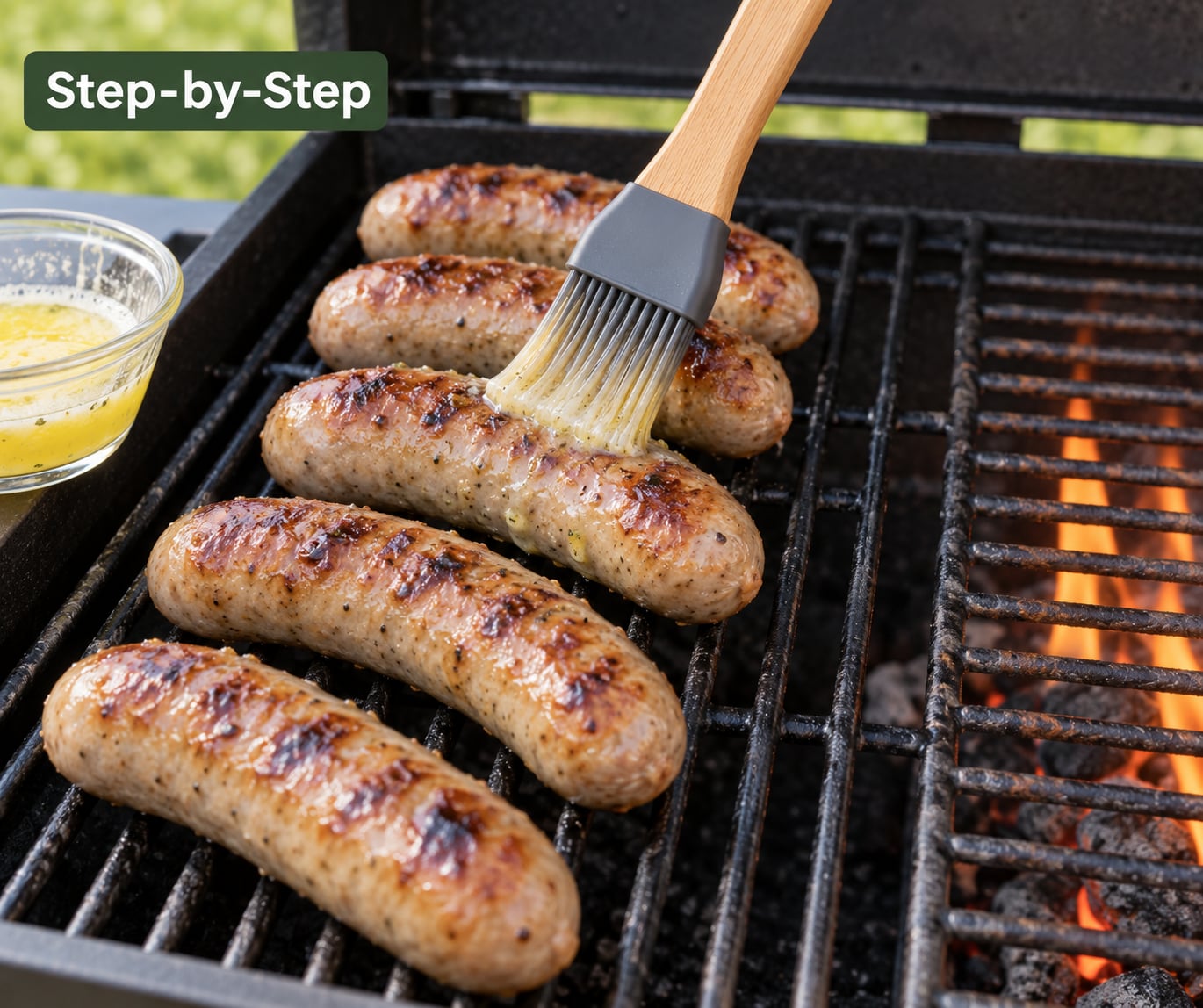
Baste lightly near the end if you want a sweet, glossy surface. A thin coat of butter and honey, or a mustard and honey mix, is enough. Do not repeatedly open and close the lid to brush and flip and baste all at once, because every opening drops the grill temperature and adds time to the cook.
Time and temperature by brat type and grill type:
| Brat type | Gas grill | Charcoal grill | Pellet grill | Internal target |
|---|---|---|---|---|
| Fresh raw bratwurst | 18-22 minutes | 20-25 minutes | 22-28 minutes | 160°F / 71°C |
| After a beer bath | 8-12 minutes | 10-14 minutes | 12-16 minutes | 160°F / 71°C |
| Pre-cooked brats | 6-10 minutes | 8-12 minutes | 8-12 minutes | 160°F / 71°C |
| Parboiled brats | 10-14 minutes | 12-16 minutes | 14-18 minutes | 160°F / 71°C |
| Frozen, thawed first | add 5 minutes | add 6 minutes | add 6 minutes | 160°F / 71°C |
All of those times assume medium heat, turning every three to four minutes, and finishing with a short sear on the hot side. Treat them as a guide and let the thermometer decide.
How Can You Tell When Brats Are Cooked?
Use the thermometer, every time. The USDA minimum safe internal temperature for ground meat, which is what bratwurst is, is 160°F (71°C). Insert the probe into the center of the sausage through the side, avoiding the casing, and read it without touching bone or the grate.
Check two or three brats from different spots on the grill, not just the one nearest you. Grate hot spots are real, and the brats at the far end are usually the last to come up to temperature.
Color is a supporting cue, not the deciding one. Look for a deep golden brown outside with visible blistering on the casing, juices running clear when you cut into the center, and a firm springy feel. If the meat is pink or jellified in the middle, it needs more time on the cool side, not more time over flame.
How Do You Keep Brats Juicy After Grilling?
Rest them for 5 to 10 minutes before serving, loosely tented with foil or in a closed pan. Resting lets the juice that pushed to the surface during cooking move back into the meat. Leaving them out uncovered on a bare grate for 20 minutes while everyone comes to the table is how perfectly grilled brats become dry brats.
For a crowd, hold the finished batch in a low, slow oven around 200°F (93°C) in a covered pan with a splash of the beer from the bath or a little water in the bottom. A pile of brats stacked on the warming rack is the worst option, since the ones on the bottom steam themselves dry while the ones on top cool.
Cooking a large batch at once is also a problem. Do it in two or three staggered rounds instead, so each batch gets full grate space and consistent heat. If you want to get ahead, cook to about 152°F (67°C), drop the brats into an ice bath for 10 to 15 minutes to stop the cooking, then finish them fast over a hot grill right before you serve.
Those same timers go into serving. If you are pouring a few while the grill keeps going, our guide to pouring beer without too much foam is the other half of the cookout that most people rush.
Common Mistakes
| Mistake | Why it dries brats out | Fix |
|---|---|---|
| Constant high heat | Outside chars before the center cooks; fat renders out fast | Two zones at medium heat, about 350°F |
| Overcooking pre-cooked brats | They were already fully cooked in the package | Reheat only, 6-10 minutes, pull at 160°F |
| Piercing with a fork or tongs | Drains juice straight onto the coals | Turn with tongs on the surface, never spear |
| Turning too often | Grate never gets hot enough to brown anything | Turn when the first side is browned, every 3-4 minutes |
| Rolling boil in the beer bath | Fat and moisture leave the sausage fast, casings split | Hold just below a simmer for 15-20 minutes |
| Sitting on a bare warming grate | Steam and heat wick moisture away | Covered pan in a 200°F oven |
| Skipping the rest | Juice that moved to the surface drains away when you cut | Rest 5-10 minutes, loosely tented |
| Flare-ups left unattended | Scorched casing, uneven cooking on the outside | Move brats to the cool side, let fat burn off, return |
Two more that show up a lot. Loading the grate cold and leaving the brats untouched until they look done is the same as grilling over constant high heat, just with more waiting. And cooking a whole package at once crams the sausages together, where they sit in their own rendered fat and steam instead of sear.
No grill? A cast iron skillet over medium heat does the same job. Brown the brats in the pan, then add a half inch of pilsner and a sliced onion, cover, and simmer gently until the center hits 160°F. Finish them back over direct heat for a minute to re-crisp the casing. Several home cooks do exactly this and skip the grill entirely.
Frequently Asked Questions
Should you poke holes in brats before grilling?
No. Piercing a brat drains juice onto the fire before it ever reaches the grill, and that lost liquid is exactly what dries the meat out. Score shallow diagonal slashes about a quarter inch deep instead. The cuts open the surface for browning, let rendered fat escape, and give the casing somewhere to give if it bulges. Turn brats with tongs on the outside, never by spearing them.
Do you grill brats with the lid open or closed?
Closed for most of the cook, open at the end. Keeping the lid closed on the cool side holds an even 350°F and lets the casings soften in light steam, which is what keeps brats tender. Open the lid for the final one to two minutes over the hot side so surface moisture can escape and the casing browns and blisters. All the lid flipping you do during the middle is just costing you temperature.
Is it necessary to boil brats in beer or water first?
Not necessary, but very helpful for fresh raw brats. A gentle simmer in light beer or water for 15 to 20 minutes cooks the center gently before the grill ever touches it. Keep it just below a simmer, never a rolling boil, or the casings split and the fat leaves. Pre-cooked brats do not need a bath at all. A cold start, where brats go into a cold pot with the beer and onion and come up to temperature together, works even better.
How long do you cook raw bratwurst on the grill?
About 18 to 22 minutes on a gas grill, 20 to 25 on charcoal, turning every three to four minutes over medium indirect heat with a final sear on the hot side. If you simmered them in beer first, that drops to 8 to 14 minutes. Pre-cooked brats need only 6 to 10 minutes to reheat and brown. Use 160°F as your real target and let the thermometer end the cook.
What is the best way to keep brats warm after grilling?
Put them in a covered pan in a 200°F oven, not on the warming rack. A bare grate steams them dry from below while the top row cools down, and brats left too long keep cooking into rubber. Rest them 5 to 10 minutes before serving, and cook in staggered batches so nothing waits more than about 20 minutes. A splash of the beer from your bath in the pan keeps the bottom from drying out.
What do you serve with bratwurst?
Serve them in a semmel roll or a sturdy split bun with German brown mustard, a spoonful of sauerkraut, and diced raw onion. Grilled onions and caramelized onions both work, as does a smear of spicy mustard with honey. On the side, keep it simple: potato salad, warm bread and pickles, or a green salad to cut the fat. A light pilsner or lager pairs better with the char than a dark or heavy beer.
Start With the Cool Side
If you only change one thing, set up a two-zone fire at medium heat and start the brats on the cool side. Everything else on this page is refinement. Pull them at 160°F, rest them loosely covered, and serve them within a few minutes of the rest ending. That is how you grill brats without drying them out, and it works the same for a single brat on a Tuesday as it does for twenty at a cookout.