
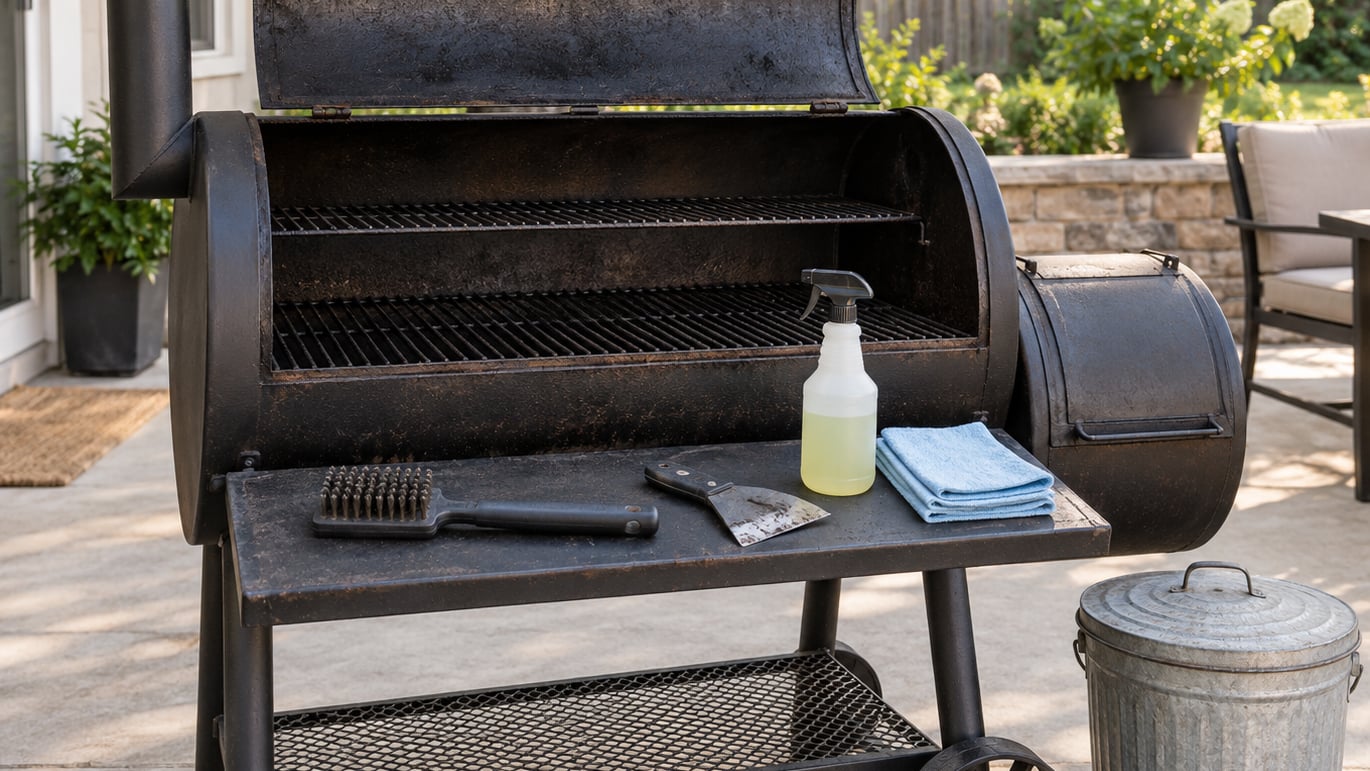
To clean a smoker, let it cool completely, empty the ash pan and grease tray, scrape off baked-on grease and creosote, wash the removable grates and trays in warm soapy water, then wipe the bare metal with a thin coat of high-heat oil. A ten-minute wipe-down after every cook keeps flavor clean; the full job takes about two hours.
The whole thing is less dramatic than it sounds. Smokers get dirty in three layers, and each layer has a different fix: loose ash you shovel out, grease film and cooked-on grime you scrub, and tar-like creosote you degrease or burn off.
What you should not do is go in with a pressure washer and strip everything to bare silver. That black patina inside your smoker is seasoning, and most of it is protecting the metal from rust. The forum consensus on this point has not moved in a decade: on bbq-brethren, cooks still insist a smoker should keep its black seasoning.
Safety comes first, and it is not optional. Ash keeps its ability to hold embers for days, and warm metal plus water is how people warp a pan or get burned.
Table of Contents
- What You Need to Clean a Smoker
- Step-by-Step: How to Clean a Smoker
- 1. Turn Off the Smoker and Let It Cool Completely
- 2. Empty the Ash Pan, Grease Cup, and Chip Tray
- 3. Brush the Cooking Chamber, Racks, and Lid
- 4. Remove Greasy Creosote and Built-Up Residue
- 5. Clean the Grease Drain, Vents, and Outside Panels
- 6. Rinse Only Parts the Manufacturer Says Are Safe
- 7. Dry, Check, and Reassemble the Smoker
- Routine Clean vs. Deep Clean: How Often
- Common Mistakes When Cleaning a Smoker
- Frequently Asked Questions
- Conclusion
What You Need to Clean a Smoker
Gather everything before you start, because most of the frustration with cleaning a smoker is carrying a greasy part across the yard to find the rag you left inside.
- A metal container with a tight-fitting lid. This is not optional and it is not a bucket you leave open on the patio. Cold ash can hold live embers for several days, and a lidded steel container is the only safe place to put it. A cheap ash can is fine for this.
- Heat-resistant gloves. Your smoker stays uncomfortably hot long after the cook is over, and metal edges near the firebox are the worst offenders.
- A stainless steel or brass grill brush for grates and hard residue, plus a soft-bristled brush for delicate interior surfaces and anything near an electrical element.
- A putty knife or plastic scraper. Baked-on grease film comes off in sheets with a flat edge, which no brush replicates.
- A smoker-safe degreaser and a clean rag. Spray-and-let-sit is the most-recommended commercial method across smokingmeatforums, and it is the one I default to for thick creosote.
- Paper towels or a roll of shop towels, plus a bucket if you are soaking removable parts.
- High-heat oil such as canola or grapeseed for seasoning grates and bare interior steel afterward.
Check your smoker’s manual before you buy any cleaner. Manufacturers differ on which surfaces tolerate degreasers, and on whether porcelain-coated grates or an electric element can take a wet cloth at all. Some manuals specify a neutral pH product and nothing else; others warn off chemicals near the control box entirely.
If you want a separate mental model for grease and grime on a much larger scale, how to clean a kitchen after frying covers the same chemistry on a bigger canvas.
Step-by-Step: How to Clean a Smoker
Work top to bottom, in this order. Skipping ahead is how people end up with clean grates sitting above a greasy floor that immediately re-contaminates them.
1. Turn Off the Smoker and Let It Cool Completely
Shut the fire down the way your manual describes, then disconnect electricity at the outlet or close the propane tank valve. Do not rush this step for an electric or pellet smoker; the element and the grease in the tray can stay hot enough to burn for hours after the dial reads cold.
How do you know it is ready? Put the back of your bare hand near the firebox opening without touching it. If you feel radiating heat, wait another 30 minutes and check again.
This applies equally to a charcoal or wood offset, an electric cabinet, a pellet grill, and a propane burner. Same rule everywhere.
2. Empty the Ash Pan, Grease Cup, and Chip Tray
Remove the ash pan, grease tray, water pan, wood chip tray, and grease cup one at a time and empty each into the metal container. On an upright pellet smoker, empty the hopper and the burn pot separately, and check the corners of both for fused pellets and hardwood chunk fragments that hide under the grates.
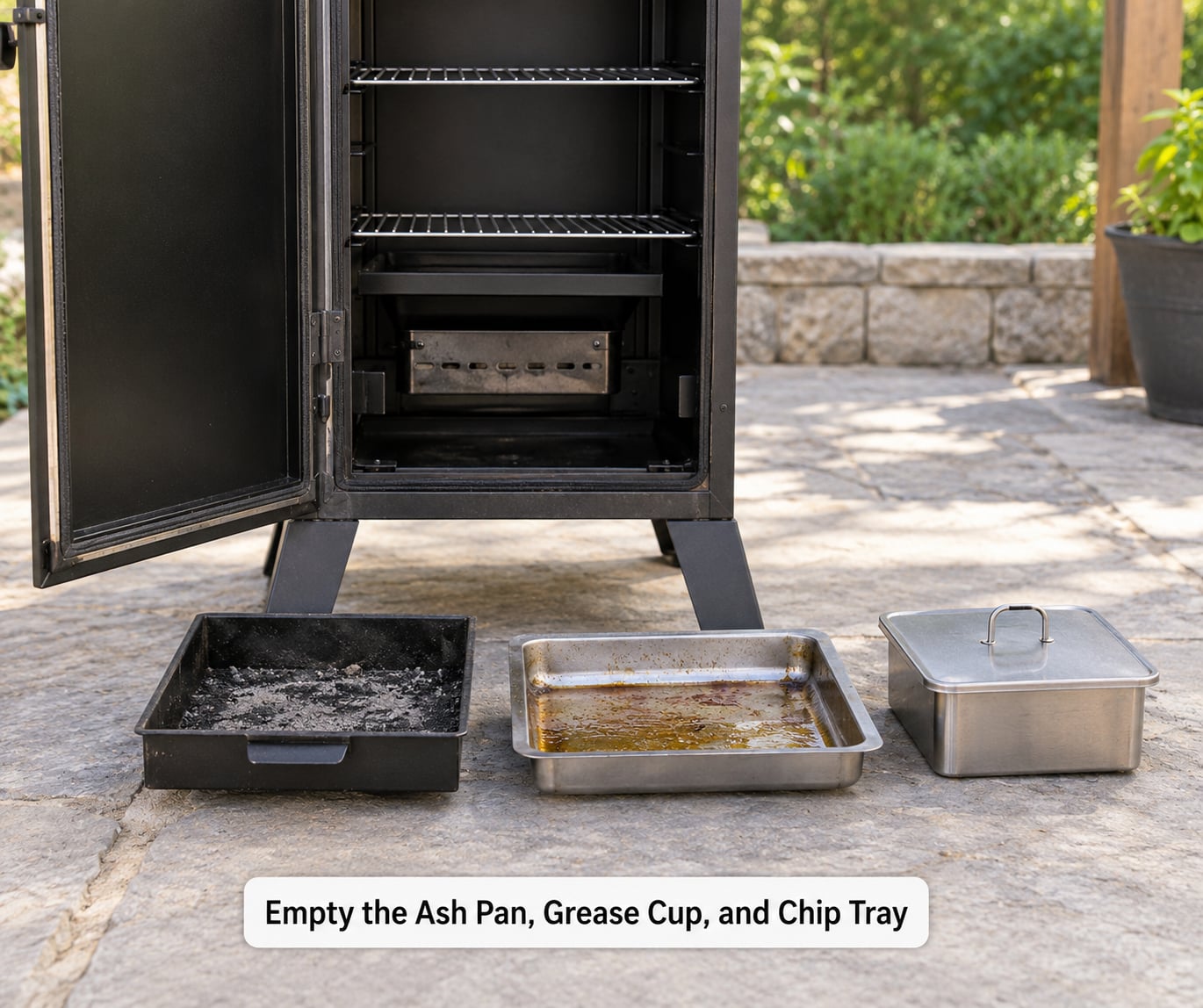
Grease hides in places you would not think to look: under the drip tray, inside the grease channel running along the bottom of the cooking chamber, and in the trough behind the firebox on a reverse-flow offset. Run a gloved finger along those seams and you will usually find a sticky black film.
How do you know it worked? The container should have visible grey or black ash at the bottom and nothing wet or steaming. Never pour loose ash near a deck, a fence, or a rubbish bin. Never put it straight into a plastic bag or bin.
3. Brush the Cooking Chamber, Racks, and Lid
Hit the cooking grates with a stainless steel or brass bristle brush while they are still warm, then again when cold. Brush along the bars rather than across them, because across-the-bars pressure is what bends them.
Do the underside of the lid, not just the racks. Vaporized fat runs up the lid and onto the rack bars above your food, and that film is a major source of off-flavors nobody thinks to blame.
Use the soft brush near the element on an electric smoker and near any plastic or painted trim. You want to loosen the flake, not sandblast the coating off.
4. Remove Greasy Creosote and Built-Up Residue
Creosote is the black tar that forms when smoke drips onto hot metal and vaporizes before it burns off. Thin brown film is harmless seasoning. Thick, black, sticky, slightly shiny residue that smells like a campfire is creosote, and it belongs on a rag, not in your next brisket.
Spray degreaser onto a rag or a brush rather than directly onto a hot or electrical surface, then scrub. Give it a few minutes to sit before you work on it. The putty knife comes in here: slide it under a lifted sheet of residue and peel rather than grinding it off.
Keep chemical off the temperature probe, the element, the ignition wiring, and the control box. If you use a cleaner at all, follow the label’s rinse instructions and plan a burn-off to clear any residue before food goes back in.
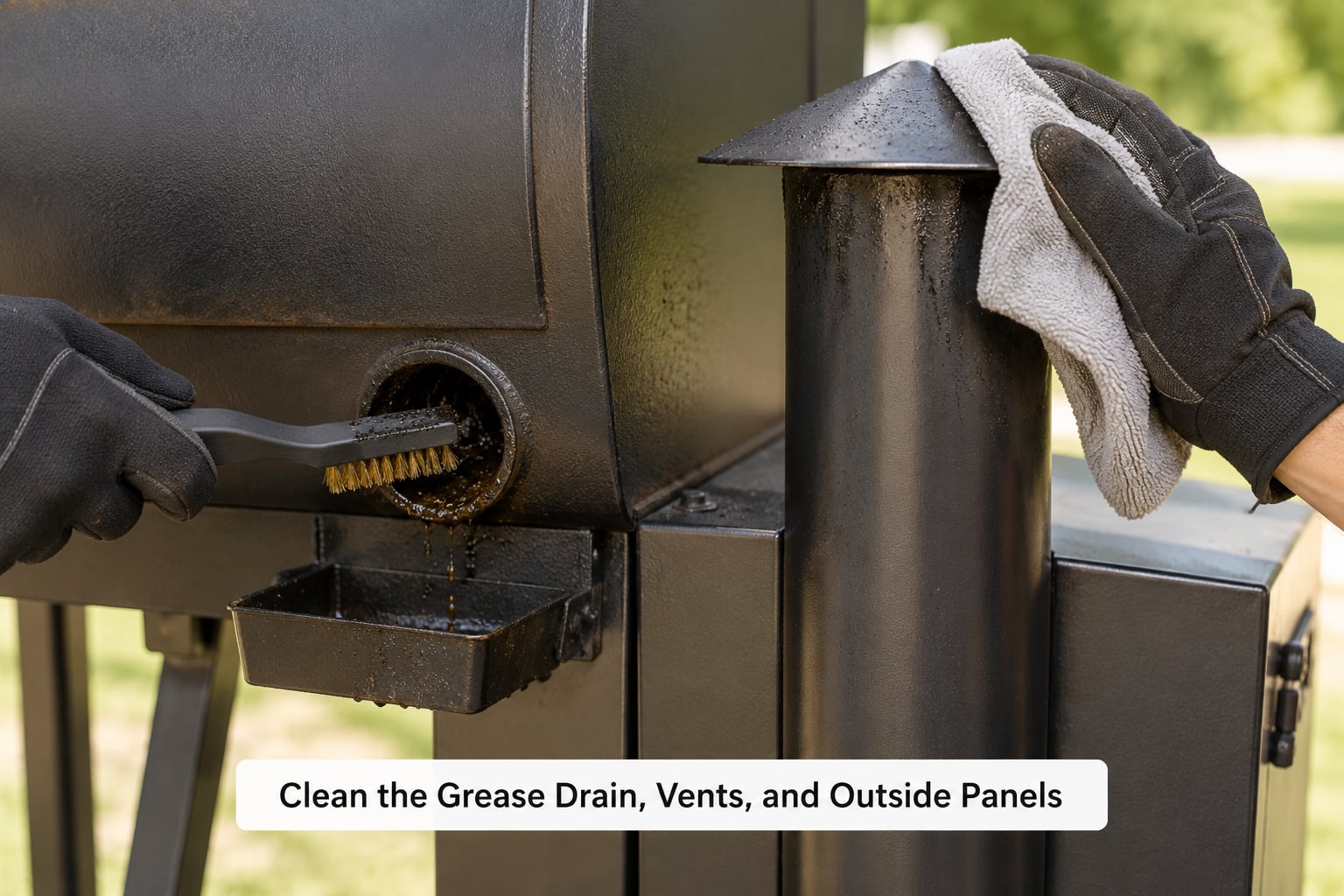
5. Clean the Grease Drain, Vents, and Outside Panels
Clear the grease drain hole and channel until you can see light through it. A plugged drain is a fire risk, and even before that it starves the fire of airflow, which shows up as uneven heat and bitter, acrid smoke.
Open the damper and smoke vents and brush them out. Then wipe the outside panels with a damp cloth and a little of the same degreaser, then dry them. Stainless steel lifts and etches if you leave a wet film to dry on it.
How do you know the vents are clear? Air should move through the chamber freely when you open the door, and the draft should hold steady during a burn-in.
6. Rinse Only Parts the Manufacturer Says Are Safe
Most smoker interiors should not be soaked, hosed, or power-washed. Water drives into seams, sits in the firebox, and turns to a rust patch you cannot see until six months later.
Wash only the parts your manual lists as removable and washable: grates, drip and water pans, chip tray, and grease cup are the usual candidates. A warm soak of 30 to 60 minutes in soapy water loosens most baked-on grease before you touch it with a brush.
Dry those parts fully before they go back in. Trapped moisture behind a grate is how you get a musty smell out of a smoker that was clean yesterday.
7. Dry, Check, and Reassemble the Smoker
With everything clean and dry, confirm the firebox, drip tray, grease drain, and vents are clear before you put the grates back. Look down the drain line and make sure you can see through it.
Lightly oil the cooking grates with a high-heat oil and wipe on any bare interior steel you exposed. Keep that oil away from the burner, element, and ignition parts, where it would smoke and soot the chamber.
Then fire the smoker empty at high heat for 30 to 60 minutes to burn off cleaner residue and re-season the metal. You are not looking for smoke rings; you are watching for odor to fade and for a faint even patina to form.
Two habits make the next clean trivial. Line the water pan with aluminum foil before a fatty cook like pork belly, and cover the smoker when it is not in use. Weekly covers cut how much reaches the interior in the first place.
Routine Clean vs. Deep Clean: How Often
Most people either over-clean or forget entirely. The useful answer is a small routine job plus a bigger one on a schedule.
| Smoker type | After every cook | Every 10 to 15 cooks | End of season |
|---|---|---|---|
| Offset, box, or wood-fired | Empty ash pan, wipe grease cup, brush grates | Scrape firebox, clean grease channel, degrease interior | Full deep clean, inspect and re-season, cover and store dry |
| Pellet smoker | Empty burn pot, scrape grease tray, brush grates | Clean grease channel and hopper, check auger and chute, degrease interior | Full deep clean, clean hopper and chute, re-season, store dry |
| Electric smoker | Wipe interior, empty water pan, brush grates | Degrease walls, clean the grease cup and drip pan, wipe the door seal | Full deep clean, check the element, re-season, store with the door ajar |
| Propane or gas smoker | Wipe interior, empty grease cup, brush grates | Degrease interior, clean burner ports and grease channel, check the drip pan | Full deep clean, inspect hoses and fittings, cover |
The tell that you have waited too long is flavor, not appearance. When meat starts tasting acrid, or the smoke smells chemical, a dirty firebox and a plugged grease channel are the first suspects.
Common Mistakes When Cleaning a Smoker
Cleaning while warm. It feels efficient and it is how people burn forearms and warp drip pans. Wait until there is no radiant heat at the opening.
Pouring water on hot metal or hot grease. The steam can spit boiling grease, and sudden thermal shock warps steel. Wash parts cool, always.
Pouring ash into a plastic bin or loose rubbish. Embers hide in ash for days. A tight-lidded metal container, kept away from the house and anything combustible, is the only safe disposal.
Stripping the black seasoning. The patina is the rust barrier. Scrape loose flakes and grease, keep the seasoning. The exception is a restoration, where you sand back to bare steel and re-season from scratch because the metal underneath is already wrecked.
Using harsh chemicals on a food-contact surface without a burn-off. Degreaser off-gasses. Clean early, then run the chamber empty and hot to clear the residue before cooking again.
Ignoring the grease drain. It is the least visible part of the smoker and the most important. A clear drain keeps airflow predictable and removes the single biggest fire hazard in a wood or offset cooker.
Soaking electrical components. The probe, element connections, and control box stay dry. Damp cloths only, and never sprayed directly.
Steel wool on a food-contact surface. Fine grit and stray filaments end up in the food. Use it on rust on exterior or non-contact steel, and nowhere near the grates you eat off.
If your smoker is one you bought used or inherited, the restoration path is different and more aggressive: scrape out every bit of old grease and creosote, sand rust off the interior steel, clean the grates, then prime with a high-heat burn before the first real cook. It is a weekend of work, and the payoff is a smoker that tastes like yours rather than like a garage.
Wider context on grease, grime, and clean surfaces helps outside the smoker too. What to look for in a clean restaurant kitchen breaks down the same priorities at scale.
Frequently Asked Questions
How often should I clean a smoker?
Empty the ash pan, grease tray, and water pan after every cook, and brush the grates while they are still warm. Wipe the interior every few cooks, and plan a full deep clean every 10 to 15 cooks or once a season. If your food starts tasting bitter or the smoke smells chemical, you have gone past due for a deep clean regardless of the schedule.
Can I use soap or bleach to clean a smoker?
Warm soapy water is fine for removable, manufacturer-approved parts such as grates, drip pans, and grease cups. Skip bleach: it corrodes stainless steel and leaves a residue you would need to burn off. If you use a commercial degreaser inside the chamber, keep it off probes, elements, and wiring, follow the label’s rinse instructions, then run the smoker empty and hot to clear the residue.
Why does my smoker smell like grease or chemicals?
Almost always creosote, which forms when smoke drips onto hot metal and vaporizes before burning off. Chemical smells usually mean degreaser residue or an unburned coating. Scrape the interior with a putty knife, degrease the walls, wipe the underside of the lid, and fire the chamber empty at high heat for 30 to 60 minutes before cooking again.
How do I remove stubborn carbon from a smoker?
Soak removable parts in warm soapy water for 30 to 60 minutes, then scrub with a stainless steel or brass brush. For fixed surfaces, spray a smoker-safe degreaser, let it sit for a few minutes, and work it with a rag or a putty knife held flat so it lifts flakes rather than grinding them. A hot empty burn-in finishes the job on residue you cannot reach mechanically.
Do I need to clean the exterior of a smoker?
Yes, lightly. Stainless steel panels spot and etch if a wet film is left to dry on them, and grime around the door seal and control box eventually creeps into the gasket. Wipe the outside with a damp cloth and a little degreaser after the chamber is clean, then dry it fully. It takes five minutes and it is what keeps the finish looking new.
What is the safest way to dispose of smoker ash?
Empty it into a metal container with a tight-fitting lid and keep that container outdoors on a non-combustible surface, away from the house, deck, and anything that burns. Leave it sealed for at least 48 hours before disposal. Never use a plastic bin, a paper bag, or a loose pile, because buried embers can stay hot for days and start a fire long after you went to bed.
Conclusion
Here is the whole routine in one line: cool it down, empty the ash and grease, brush the chamber, degrease the residue, clear the drain, and follow your manual for anything you are not sure about.
Do the ten-minute version after every cook and the deep clean on a schedule, before flavors turn acrid rather than after. Keep the black seasoning, keep the grease drain open, and the smoker will keep cooking the way it did the day you brought it home.