
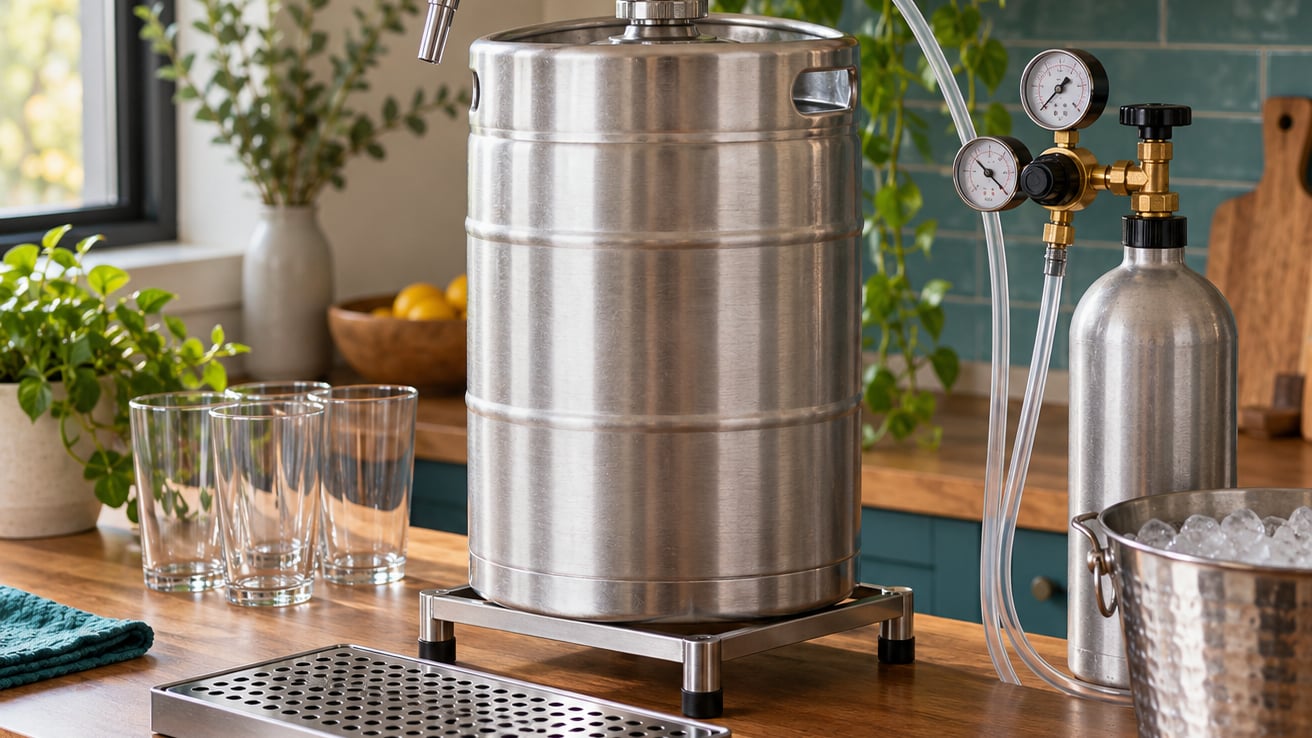
How to tap a keg takes about a minute once the beer is cold. You lock a coupler onto the valve on top of the keg, and the pressure sitting in the headspace pushes beer up through the spear and out of the tap handle. The whole job is four moves: lift the tap handle so it is disengaged, remove the plastic dust cover, seat the coupler on the valve and twist it clockwise until snug, then push the handle down and pour. Lift that handle before the coupler goes on, every single time, or the first pull will foam across your counter.
It is not a difficult job. The fiddly part for most first-timers is picking the right coupler, and the expensive part is the one mistake that ruins a keg: pouring half of it down the drain as foam because the beer was warm and the tap was pumped too hard.
- Chill the keg fully, then let it sit still for a while if it was jostled in transit.
- Pick the coupler that matches the keg valve, and lift the handle so it sits upright and unlocked.
- Pop off the plastic dust cover, align the coupler, and twist clockwise about a quarter turn until snug.
- Push the handle down and out to open the spear, let a short burst of foam clear the line, then pour.
Everything below expands those four moves into a full job, including what to do when nothing comes out.
Table of Contents
- What You Need
- Step-by-Step: How to Tap a Keg
- 1. Identify the Keg and Choose the Right Coupler
- 2. Secure the Keg and Inspect the Equipment
- 3. Chill the Keg and Prepare the Serving Area
- 4. Connect the Coupler and Gas Cylinder
- 5. Open the Gas and Set a Controlled Pressure
- 6. Purge the Lines and Pour the First Glass
- 7. Shut Down and Store the Keg Safely
- Common Mistakes
- Frequently Asked Questions
What You Need
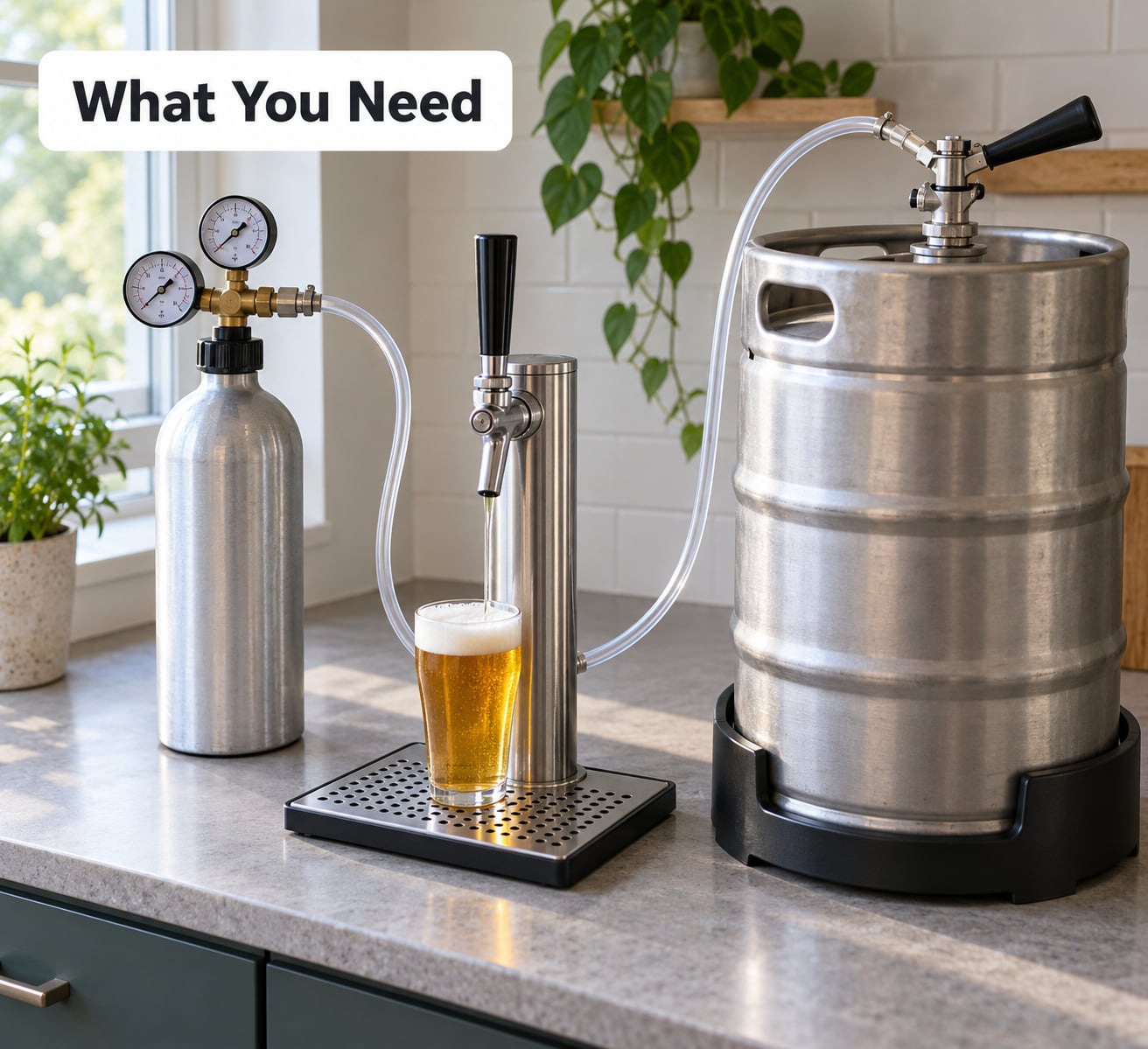
The equipment list is short, and most beginners who already own a party pump only need one extra piece. What you cannot skip is the coupler match. A coupler is built around one specific valve shape, and if it does not match, it will not seal, it will not pierce the spear, and nothing comes out.
- A keg. A full US half-barrel, a quarter-barrel pony keg, a sixth-barrel sixtel, or a mini keg. All of them tap, they just behave differently (see the last section).
- A coupler that matches the valve. Not a coupler that “fits most kegs.” A Sanke D coupler, an S coupler, a G coupler, or a ball-lock connection for a corny keg.
- An approved gas cylinder and a regulator set to the range the equipment instructions specify. Most ales and lages are served somewhere around 8 to 12 psi at cellar temperature, but your regulator and tap documentation wins if it says something different.
- Food-safe tubing and a beer line, if you are running CO2 rather than pumping by hand.
- A drip tray and a towel. The first pull always puts a surprising amount of beer on the floor.
- Solid support for the keg. A sturdy stand, a crate, or a kegerator rated for the weight. A full half-barrel is heavier than most people expect.
- Cleaning supplies: food-safe coupler cleaner, a bucket, and clean glasses.
- Optional: a party pump (picnic tap) instead of a cylinder, a kegerator for cold storage, and a beer-line cleaning kit if you plan to keep the line for more than one keg.
One more note on the coupler. Most US taprooms and rental companies hand out Sanke-style kegs, and a Sanke D coupler is the one you will use nine times out of ten. Homebrew corny kegs use a completely different fitting, and a corny keg will not accept a Sankey coupler at all.
Here is how to tell what you are holding.
| Keg valve type | What it looks like | Coupler you need |
|---|---|---|
| Sankey D (US standard) | Spout with two grooves on the outside, a flat top and a round opening in the middle | Sanke D coupler |
| Sankey S (European) | Spout with a smooth, ungrooved outside and a visible side inlet tube | Sanke S coupler |
| Grundy G | Hook-shaped spout with a small bent outlet tube | G-type coupler |
| Corny / ball-lock | Wide mouth with two threaded openings and visible swivel nuts sitting on top | Ball-lock or dual ball-lock post connection |
| Sixtel (one-sixth barrel) | In the US these carry the same Sanke valve as a full keg, just a smaller keg | Same Sankey coupler, usually D |
Party pump or CO2 system? A party pump is hand-pumped, portable, and needs no cylinder, which makes it the right call for one afternoon in a driveway. It also pulls air into the keg every time you pump, so the beer picks up oxygen and tastes flatter the longer it sits, and a pump tap that sits empty between drinks goes flat fast. A cylinder with a regulator holds pressure steadily, keeps the beer fresher, and is the setup you want if the keg will be open for more than a few hours or for more than one gathering.
Step-by-Step: How to Tap a Keg
1. Identify the Keg and Choose the Right Coupler
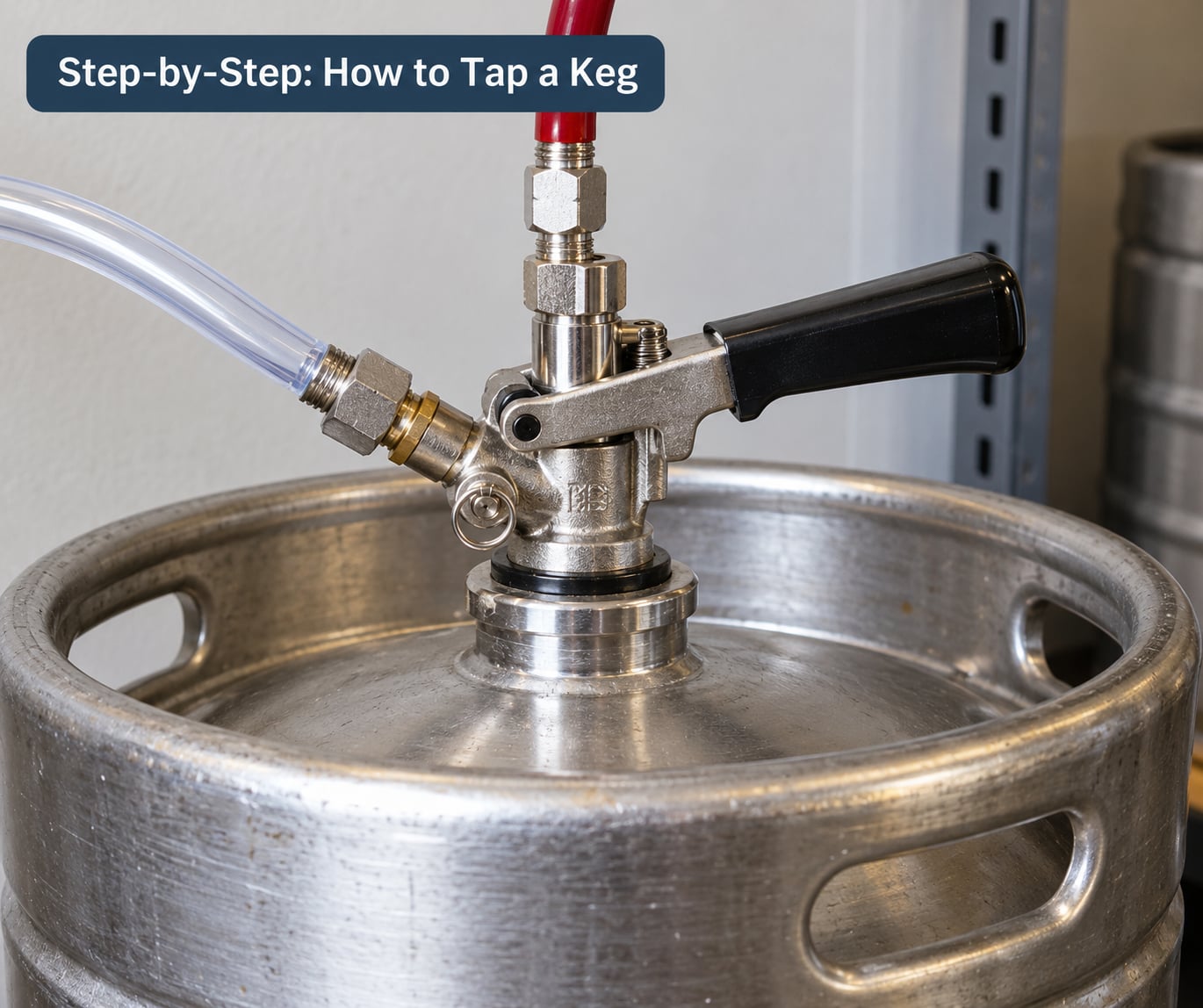
Start by looking at the valve on top of the keg, not at the keg itself. Two grooves on the spout means Sankey D, a smooth spout means S, a hooked spout means G, and a wide threaded mouth means a corny keg that needs a ball-lock connection. This is the step where beginners go wrong, and it is worth a full minute.
Never force a coupler that does not fit. If the coupler does not slide on and rotate smoothly, you have the wrong system, and forcing it can damage the coupler and the keg valve together. That is exactly why r/Homebrewing beginners are told to get a Sanke D coupler before they touch a commercial keg.
2. Secure the Keg and Inspect the Equipment
Set the keg on a stand rated for a full keg, upright and level. A shifty keg tips, and a tipped keg foams no matter how well you did everything else.
Then look at the parts. The coupler’s O-ring should be flexible, not hard, cracked or missing, and the two grooves on the spout should be clean of old gasket material. Check the tubing for kinks and the fittings for drips. Replace anything damaged before you connect, not after the beer is warm and the guests are hungry.
3. Chill the Keg and Prepare the Serving Area
Give a full half-barrel 12 to 24 hours in a refrigerator to reach serving temperature, around 38°F for most ales. An ice-and-water bath around the keg brings a warm keg down in roughly 3 to 5 hours, with more ice and more rotation speeding it up.
That spread is where the conflicting advice online comes from. One hour is enough to settle a keg that sat still, overnight is the safe answer if you have the time, and 3 to 5 hours is a reasonable ice-bath compromise. The cue is not the clock, it is the keg: cold to the touch, beading with condensation, and heavy in your hands.
If the keg was shaken in transit, let it stand for a couple of hours after it is cold. Foam right after tapping is usually just that, not a mistake. While it settles, set the drip tray, rinse the glasses, and clear a path for the coupler so you are not working over a crowded counter.
4. Connect the Coupler and Gas Cylinder
With the tap handle lifted to the upright, unlocked position, pop off the plastic dust cover from the keg valve. Set the coupler on the valve, aligning the coupler body with the two grooves on the spout, then twist the coupler clockwise about 90 degrees until it stops.
Stop at snug. Allagash’s tap guide makes the same point, and homebrew forum regulars warn about the same thing on r/beer: cranking the coupler all the way down wears the internal seals and can pop a pressure relief valve on a disposable keg. A coupler that is seated correctly sits flat and straight rather than slanting.
Connect the gas last, following the order your coupler and cylinder instructions give, and open the cylinder valve slowly. If the connection hisses, shut the valve off, dry the fitting and reseat it before you go further. Do not test a gas line with a flame.
5. Open the Gas and Set a Controlled Pressure
Open the cylinder, then turn the regulator up slowly rather than cranking it to the target right away. Watch the needle climb and stop at the pressure your equipment specifies. After each adjustment, give it a minute, because the gauge reading lags behind the handle.
More pressure does not mean faster beer. It means more foam, a warmer glass, and beer that goes flat faster in the keg. If the pour runs too fast, back the regulator down a few PSI and wait for the reading to catch up before you adjust again.
6. Purge the Lines and Pour the First Glass
With the coupler sealed and pressurized, pull the handle down and out. That opens the spear and lets the pressure in the headspace push beer up through the tube and out of the nozzle. The first burst is cold, stale liquid from the line, often with foam on top of it, so hold the spout over the drip tray and let a few ounces run out before you serve it.
A short foam spurt on that first pull is normal, even for experienced servers. What is not normal is a stream that stays pure white, and that means the beer is too warm, the pressure is too high, or the party pump is being over-pumped. On a party pump, start with five or six pumps and add more only as the flow actually slows.
Pour the glass at an angle, stop before the head exceeds an inch or so, and rinse the glass in cold water between pours. Then watch the flow: a steady pour is a good keg with good pressure, a gushing pour is too much pressure, and a weak dribble means you need to add gas or a pump stroke.
7. Shut Down and Store the Keg Safely
Close in the reverse order of assembly. Lift the handle to its upright unlocked position, turn the coupler counterclockwise, and pull it straight off the valve. Then close the cylinder valve, release the regulator, and disconnect the coupler from the line.
Rinse the coupler and spout with warm water, run coupler cleaner through it according to the product directions, and let it dry. Wipe the dust cover back over the keg valve so dirt and insects stay out of the spear. If the keg is finished, seal it and move it somewhere cold and upright; if you are swapping, you can put the new cold keg straight into the same stand.
Common Mistakes
Almost every bad first keg comes down to one of these eight. Each one has a straight fix.
- Seating the coupler with the handle down. The spear opens under pressure and the first pour gushes everywhere. Lift the handle to the upright position before the coupler goes on, every time.
- Forcing the wrong coupler. It will not seal and the spear will not be pierced, so nothing comes out. Match the valve type first, and if the coupler does not slide on smoothly, you have the wrong system.
- Over-tightening. Tightening past snug compresses the internal rubber, wears the coupler early, and can release a pressure relief valve on a single-use keg.
- Running too much pressure. A fast pour means foam and a warm glass. Reduce pressure a few PSI at a time and wait for the gauge to settle.
- Pouring from a warm keg. Beer pulled above about 40°F foams badly and tastes thin. Chill it properly and give it time.
- Using a shaky or unsupported keg. Any movement stirs the beer. Set it on a rated stand and leave it alone.
- Skipping the clean-down. Old beer and old gasket debris make new beer taste off. Clean the coupler between kegs and clean the beer line on a schedule.
- Leaving a pump tap open and empty. Air gets pushed into the keg, the beer oxidizes, and it goes flat. Close the nozzle between pours, and if the keg has been open for hours, expect a flatter glass at the end of the party.
| Symptom | Likely cause | Fix |
|---|---|---|
| Foam only, no beer | Handle seated too low, or beer far too warm | Lift the handle, drop pressure, and chill the keg longer |
| Nothing comes out | Wrong coupler type, or coupler seated crooked so the spear is not pierced | Untap, check the valve type, reseat so it sits flat and straight |
| Weak, dribbling pour | Low pressure, warm beer, or a kinked or partly blocked line | Add pressure in small steps, check the line, confirm the temperature |
| Leaking at the coupler | Dry, cracked or missing O-ring | Replace the O-ring, clean both sealing surfaces, retest with soapy water |
| Foam after the first pull, every time | Over-pumping or too much pressure | Fewer pumps, less pressure, longer between adjustments |
| Flat, papery taste | Party pump pulling in air, or too few pumps on a pump tap | Seal the nozzle between pours, pump only as flow slows, or switch to a regulated cylinder |
| Spritzes and fizzes on its own | Keg jostled, or a coupler that is not fully seated | Let it settle, then reseat the coupler |
How to Tap a Keg Without Any Tap: What Works
You can, but you are improvising. The blunt options are driving a screwdriver into the valve, which puts a hole in a vessel holding pressure and can injure you and anyone nearby, or prying the spear open with pliers, which sprays the contents across the room. Neither is worth a keg of beer.
The workable middle ground is a squeeze-tap adapter or a plastic mini tap that screws onto the top of a corny keg, or a rented hand-pump tap you push straight onto the valve for an afternoon. A corny keg with a ball-lock keg coupler is a simple build from a hardware store and behaves predictably. If a rented keg arrives with no tap at all, the rental company almost always supplies or loans the coupler, and that is the one to call before you improvise with tools.
Mini, sixtel and disposable kegs need a word of caution. A single-use plastic mini keg is a pressurized plastic vessel with a pressure relief valve, so do not crank the coupler down hard, do not chill it in a freezer, and expect a shorter window before the beer picks up oxygen. A sixtel is a real Sanke keg at one-sixth the size, which means it works with the same coupler but warms up three times faster in the glass.
Frequently Asked Questions
How long should a keg sit before tapping it?
Give a full half-barrel 12 to 24 hours in a refrigerator to reach around 38°F, or about 3 to 5 hours in an ice-and-water bath if you are in a hurry. Sources disagree because they are answering different situations: an hour is enough for a keg that never got shaken, while a keg that arrived warm or jostled needs the longer window. After moving it, let a cold keg stand for a couple of hours so the disturbance settles.
How many pumps does it take to tap a keg?
There is no fixed number, because flow beats counting. A common starting point is five or six pumps on a party tap, then add strokes only when the pour actually slows. Over-pumping is the fastest way to turn a keg into foam, since every extra pump pushes more air into the headspace. If your tap has a pressure gauge rather than a pump, use the pressure your equipment specifies instead of counting pumps at all.
How hard is it to tap a keg for the first time?
It takes about a minute of actual work once the beer is cold. The physical part is easy: lift the handle, align the coupler, twist it clockwise until snug, push the handle down. The part that catches people is choosing the right coupler for the keg valve, and it is a five-minute check that saves you from a coupler that will not seal or pierce the spear.
What are the most common keg tapping mistakes?
The big ones are seating the coupler with the handle already down, forcing a coupler that does not match the valve, over-tightening past snug, pouring from a keg that is not cold enough, and over-pumping a party tap. Each has a simple fix: lift the handle first, match the coupler, stop at snug, chill the beer properly, and add pumps only as the flow slows. Running a lot of pressure is close behind all five.
Why is nothing coming out of my keg tap?
In almost every case it is the coupler, not the keg. Either the coupler is the wrong type for that valve, or it is seated crooked so the pin never pierced the spear inside. Untap the keg, confirm the valve type against the coupler, clean the two grooves on the spout, and reseat the coupler so it sits flat and straight rather than slanting. Check the O-ring too, since a hardened ring can also block the seal.
How long does a tapped keg stay good?
A keg tapped with a regulated CO2 system holds its freshness for weeks as long as it stays cold and sealed. With a party pump, expect noticeably better beer in the first day or two, because pumping pulls air into the keg and the beer oxidizes once it is open. Keep it cold, keep the nozzle closed between pours, and always finish a smaller keg before opening a second one.
Start with the coupler. Look at the valve on top of the keg, match it to the coupler, and get the beer cold the night before if you can. Everything after that is a short, quiet sequence: lift the handle, twist the coupler until snug, push down, purge the line, and pour. Do it once carefully and the keg will taste like it came out of a taproom rather than a garden hose.