
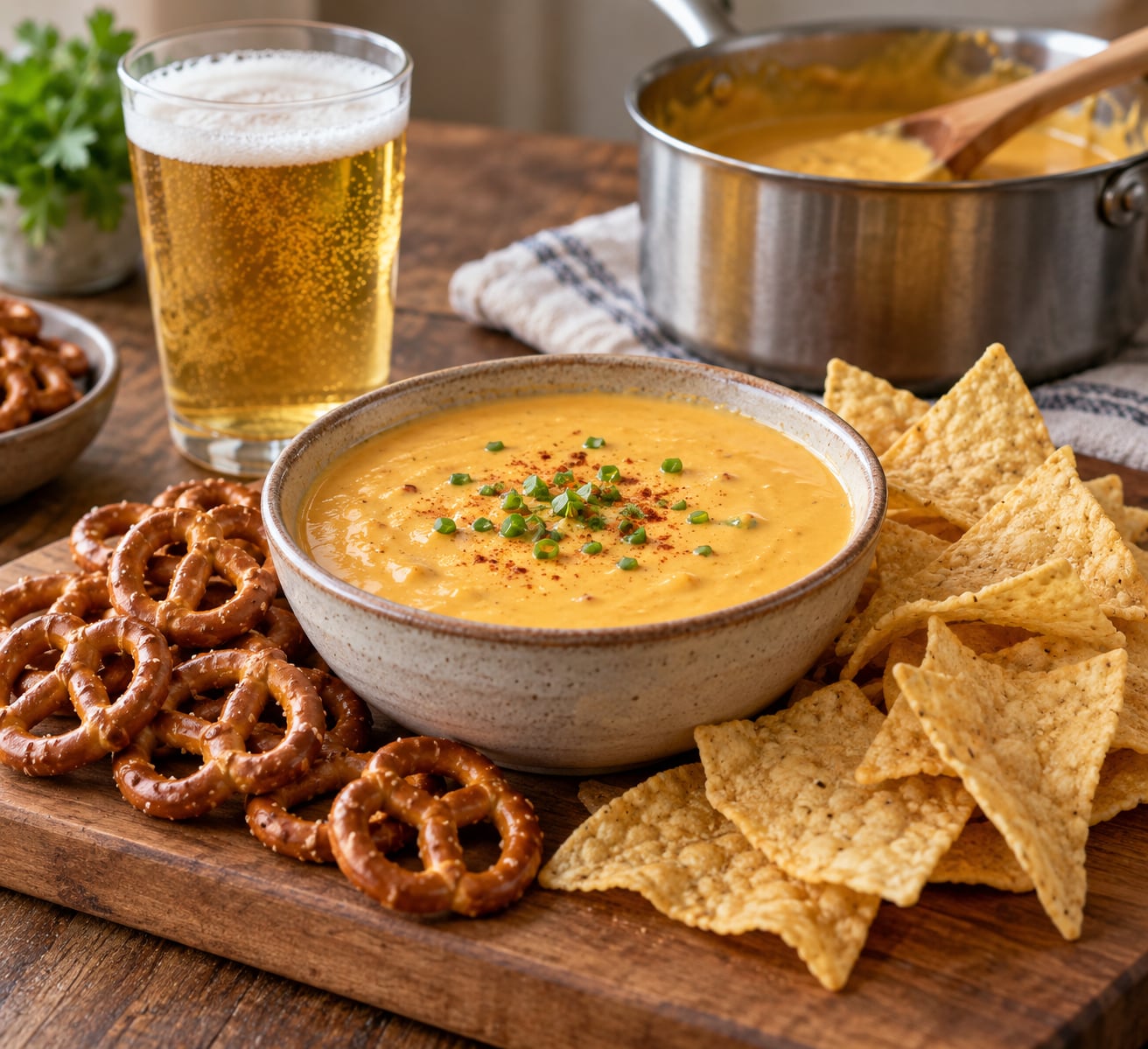
If you want the version that stays smooth for hours on a counter at a party, learning how to make beer cheese dip the roux way is worth the extra ten minutes. Simmer a pale lager down to a syrup, stir in a butter and flour roux, then melt grated low-moisture cheddar into the warm base off the heat. Twenty minutes, one saucepan, and a spoon that slides through it clean.
The classic mistake is dumping a block of cheese into hot beer. High heat and bagged shreds are what give beer cheese its reputation for being grainy and greasy, and the fix is mostly about temperature and patience. Here is how to do it properly, plus a cold make-ahead version for when you would rather not touch the stove.
What You Need

For a dip that serves about six, you need very little:
- 8 to 12 ounces sharp cheddar, grated by hand. Buy it in a block, not a bag.
- 1 cup light lager or pilsner for the reduction, plus 2 to 4 tablespoons held back in case you need to loosen the sauce.
- 2 tablespoons butter and 2 tablespoons all-purpose flour for the roux.
- 1/3 cup heavy cream or half-and-half.
- 1 teaspoon Worcestershire sauce, 1 teaspoon Dijon or yellow mustard, 1/2 teaspoon garlic powder, and a pinch of smoked paprika.
- Kosher salt and black pepper to taste.
Heavy cream gives the smoothest result because its higher fat content keeps the emulsion stable. Half-and-half works, but expect a slightly lighter body and a shorter window before the sauce stiffens as it cools.
On tools, a heavy-bottomed saucepan gives you even heat and stops the roux from scorching in one spot. A flat whisk or a sturdy silicone spatula both work; a wooden spoon is fine as long as you keep moving. A box grater beats a food processor here, because shredding by hand produces longer, drier strands that melt into the sauce instead of releasing water.
For the smoothest dip, keep your liquid-to-cheese ratio near 1.25 cups of liquid to 10 ounces of cheese after the reduction. Add liquid a tablespoon at a time near the end, because you can always loosen a thick dip and you cannot un-water a thin one.
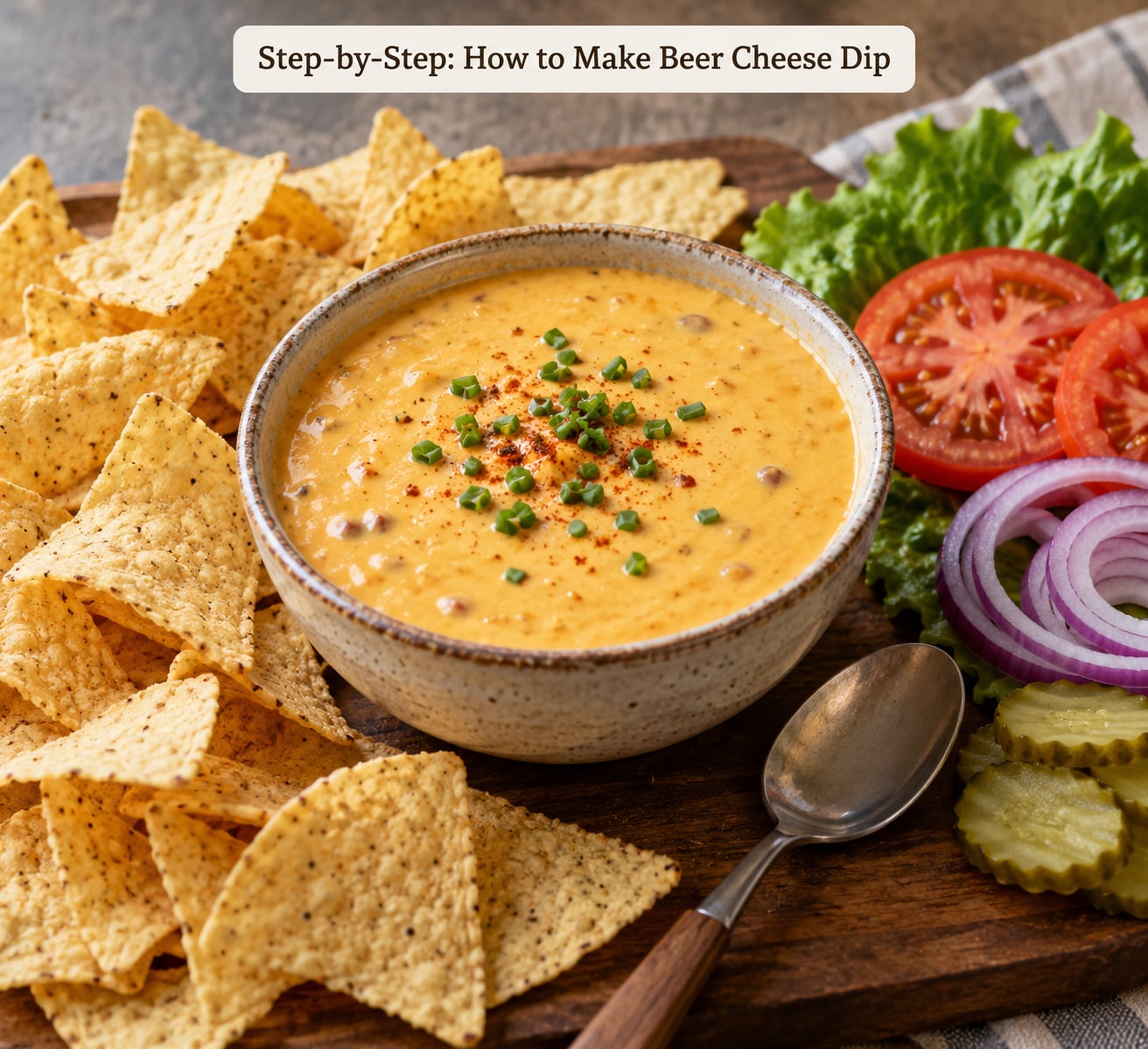
Step-by-Step: How to Make Beer Cheese Dip
1. Choose Your Cheese and Beer
Low-moisture cheddar is the one to reach for. Fresh, high-moisture cheeses release a surprising amount of whey as they heat, and that extra water is exactly what makes a sauce turn grainy. Pre-shredded bagged cheese is the other trap, because manufacturers coat it in starch or cellulose to keep it from sticking together in the bag. That coating keeps it from melting into a unified sauce too.
Sharp cheddar gives you the pub-style bite and the most cheddar flavor. Extra sharp is punchier and needs a little more cream to feel balanced. Gruyere or Swiss bring nuttiness and melt even more smoothly than cheddar, so a half-and-half blend of sharp cheddar plus Gruyere is a good middle ground for a sauce that has to stay loose on a warming tray. Colby melts smoothly and reads milder; pepper jack adds heat; smoked gouda is the shortcut to a smoky version without any extra work.
For the beer, a light lager or pilsner is the safe default. Amber lagers and brown ales add malt depth for a heartier dip, and a stout works if you want something darker. The styles to avoid are the hoppy and the aggressively aromatic: IPAs, pale ales heavy in citrus or pine, and anything flavored with fruit or spice will taste bitter and floral once the bitterness has nothing to hide behind. If you want beer flavor without alcohol, non-alcoholic lager works in the reduction and the dip is still worth making.
Worcestershire sauce is worth a note. The traditional style contains anchovies, so check the label if you are cooking for vegetarians and use a vegetarian Worcestershire or a dash of soy sauce instead.
2. Make the Beer Reduction
Pour 1 cup of beer into a small saucepan and set it over medium heat. Add the garlic powder, smoked paprika, and half the mustard. Let it come to a steady simmer, not a rolling boil, and reduce by about half.
You are looking for roughly half the volume left and a syrupy consistency that coats the back of a spoon. That reduction is where the dip gets its flavor, since a cup of raw beer added straight to cheese mostly reads as thin, watery, and vaguely flat. Tasting it at this point is a good idea. If it tastes harshly bitter, the beer was too hoppy, and you can rescue the batch by adding a tablespoon of cream or a pinch of sugar before moving on.
3. Melt the Cheese Slowly
While the beer reduces, melt 2 tablespoons of butter in a second saucepan over medium-low heat. Stir in 2 tablespoons of flour and cook for 60 to 90 seconds, until it smells toasted and looks like wet sand. That is your roux, and it is the piece most home recipes skip, which is why those versions run thin and split later.
Pour in the reduced beer a little at a time, whisking to keep it smooth, and simmer for 2 to 3 minutes so the flour cooks off its raw taste. Stir in the cream, then turn the heat down to the lowest setting.
Add the cheese in three or four handfuls, stirring between each, and let each batch melt almost completely before adding the next. This is the step that decides whether the dip is silky or grainy. Hot liquid plus a pile of cheese equals a seized, oily mess, whereas a barely warm sauce melts the cheese slowly and lets it fold in.
When the last handful disappears, pull the pan off the heat and keep stirring for a minute. The sauce will thicken noticeably as it finishes cooling, and the residual heat is enough to finish the melt without pushing the fat out of the cheese.
4. Adjust the Thickness
Dip the spoon in and drag the back of it through the sauce. A clean line that stays put means the dip is ready for chips and pretzels. A line that runs together means the sauce needs more body, and a line that leaves a thick, sticky coating means you have gone too far.
To loosen it, stir in the reserved beer or cream one tablespoon at a time, off the heat, and let it come back up in temperature before you judge it again. To thicken it for burger toppings, simmer the sauce gently for another 3 to 5 minutes to drive off moisture, or whisk 1 teaspoon of cornstarch with 1 tablespoon of cold water and stir that slurry in, then let it bubble for a full minute before tasting.
Skipping the slurry is usually better if you can simmer instead. Cornstarch gives an immediate thickening but dulls the cheese flavor slightly, while reduction keeps the cheddar sharp.
5. Season and Serve
Taste before you add salt. Worcestershire and Worcestershire-heavy seasoning lists are easy to overshoot once the sauce has reduced. Adjust with the remaining mustard, a splash of Worcestershire, black pepper, and a pinch of cayenne if you want heat. A small squeeze of lemon at the very end sharpens a flat-tasting batch, which is worth trying before you reach for more cheese.
Hold it warm rather than hot. Pour it into a small slow cooker on low or a bowl set over barely simmering water, and stir it every fifteen minutes or so. A dip kept at a lazy simmer stays fluid for hours, and it goes on pretzels, sturdy bread, fried pickles, vegetables, and thick-cut fries, or straight onto a smashed patty as a burger topping.
Pairing it with the right beer is half the fun. If you are planning a full cookout, our guide to how to pair beer with burgers breaks down which styles hold up against a rich patty, and what beer goes with a bacon cheeseburger covers the saltier side of the menu. Serving this at a tasting? How to host a beer and burger tasting night has the setup laid out.
For a cold, no-cook version, soften 8 ounces of cream cheese, stir in 4 ounces of grated sharp cheddar, 3 tablespoons of a light lager, a spoonful of Worcestershire, and a pinch of paprika, then let it sit in the fridge for an hour. It is not the same dish, but it is the same idea, and it holds up for days.
Common Mistakes and How to Fix Them
Why is my beer cheese dip grainy?
Graininess means the cheese proteins tightened and squeezed out fat and water, which then escaped as grease. Almost always this is heat, moisture, or both. The fixes: grate the cheese yourself, keep the pan over the lowest setting, and never let a pile of cheese sit in liquid that is already bubbling hard.
Why is it oily and separated?
That is the same break showing up differently, usually because the sauce boiled while the cheese was melting or because there was not enough liquid to emulsify the fat. Whisk in a tablespoon of cold cream or cold milk off the heat, then warm it gently and stir hard. If it will not come back, run the whole pan through a blender for 30 seconds.
How do I fix a watery or thin dip?
Simmer it uncovered and stir until it thickens, which takes about 3 to 5 minutes per tablespoon of liquid you need to lose. If you need more than that, use a cornstarch slurry as described in step 4. Shredded cheese alone will not thicken a watery sauce, and adding more of it is how people end up with a clumpy pot.
Why does it taste bitter?
Hop bitterness survives a long reduction, so a heavily hopped IPA or a double IPA will stay bitter no matter how much you simmer it. The fix is dilution and dairy: stir in cream or milk until the sharpness rounds out. Next time, use a light lager.
Can I make it ahead?
Yes, and it is often better the next day. The cheese and the beer need a night together for the flavors to settle. Cool it, cover it, and refrigerate it for up to 3 to 4 days. Do not freeze it; the texture turns grainy and watery when it thaws.
How do I reheat it without it separating?
Reheat slowly on the stove over low heat with a splash of milk or cream, stirring constantly, and stop as soon as it is hot and fluid. Reheat only what you plan to serve. If you are reheating a dish that sat out, take it to 165°F (74°C) in the center, and keep the dip at 140°F (60°C) or hotter while it sits out, per USDA leftovers guidance.
Frequently Asked Questions
What is the best beer for beer cheese dip?
A light lager or pilsner is the most reliable choice because its mild maltiness lets the cheese lead. Amber lagers, brown ales, and stouts work well if you want more malt depth. Avoid IPAs and heavily aromatic pale ales, since hop bitterness and citrus notes sharpen as the beer reduces and will make the dip taste bitter.
What cheese is good with beer?
Low-moisture sharp cheddar is the classic answer because it melts smoothly without releasing excess water. Gruyere and Swiss melt even more easily and add nuttiness, so a cheddar and gruyere blend is a good all-purpose choice. Colby is milder and melts well, pepper jack adds heat, and smoked gouda gives you a smoky version with no extra steps. Avoid fresh high-moisture cheeses and pre-shredded bagged cheese.
How can I make watery cheese sauce thicker?
Simmer the sauce uncovered and stir until it reduces, which removes about a tablespoon of liquid every three to five minutes. If it needs more than that, whisk 1 teaspoon of cornstarch with 1 tablespoon of cold water, stir the slurry into the hot sauce, and let it bubble for a full minute. Adding more shredded cheese does not thicken a watery sauce and usually causes clumping.
Why is my beer cheese dip grainy and how do I fix it?
Graininess happens when heat or excess moisture tightens the cheese proteins so fat and water separate. Grate your own cheese instead of using bagged shreds, keep the heat on the lowest setting, and add the cheese in small handfuls so each batch melts before the next goes in. To rescue a broken batch, whisk in a tablespoon of cold cream off the heat, then warm it gently and stir hard.
Can I make beer cheese dip ahead of time?
Yes, and the flavors usually meld better after sitting overnight. Cool the sauce, cover it, and refrigerate it for up to 3 to 4 days according to USDA leftover guidance. Keep the dip at 140°F (60°C) or hotter while it sits out at a party, and reheat only the portion you need, slowly and with a splash of cream, so the rest stays smooth.
Does the alcohol cook out of beer cheese dip?
Not entirely. The alcohol in a cup of beer is roughly a quarter of its weight, and reducing the beer by half leaves a meaningful amount behind, so the finished dip is not alcohol-free. Simmering for several minutes reduces it further, and adding dairy slows evaporation. For a dip that everyone can eat, swap in a non-alcoholic lager and use the same method.
Conclusion
Start with the version that has the fewest ways to go wrong: simmer a cup of light lager down by half, cook a butter and flour roux, stir in cream, and melt hand-grated low-moisture cheddar in handfuls over the lowest heat until it disappears. Taste, adjust with mustard and Worcestershire, and hold it warm.
From there, make it yours. Swap Gruyere in for half the cheddar, add a spoonful of smoked gouda, or thin it with extra cream for pretzels. Once you have learned how to make beer cheese dip on the stovetop, the same formula works cold, and it is the kind of recipe people ask for by name at every cookout.