
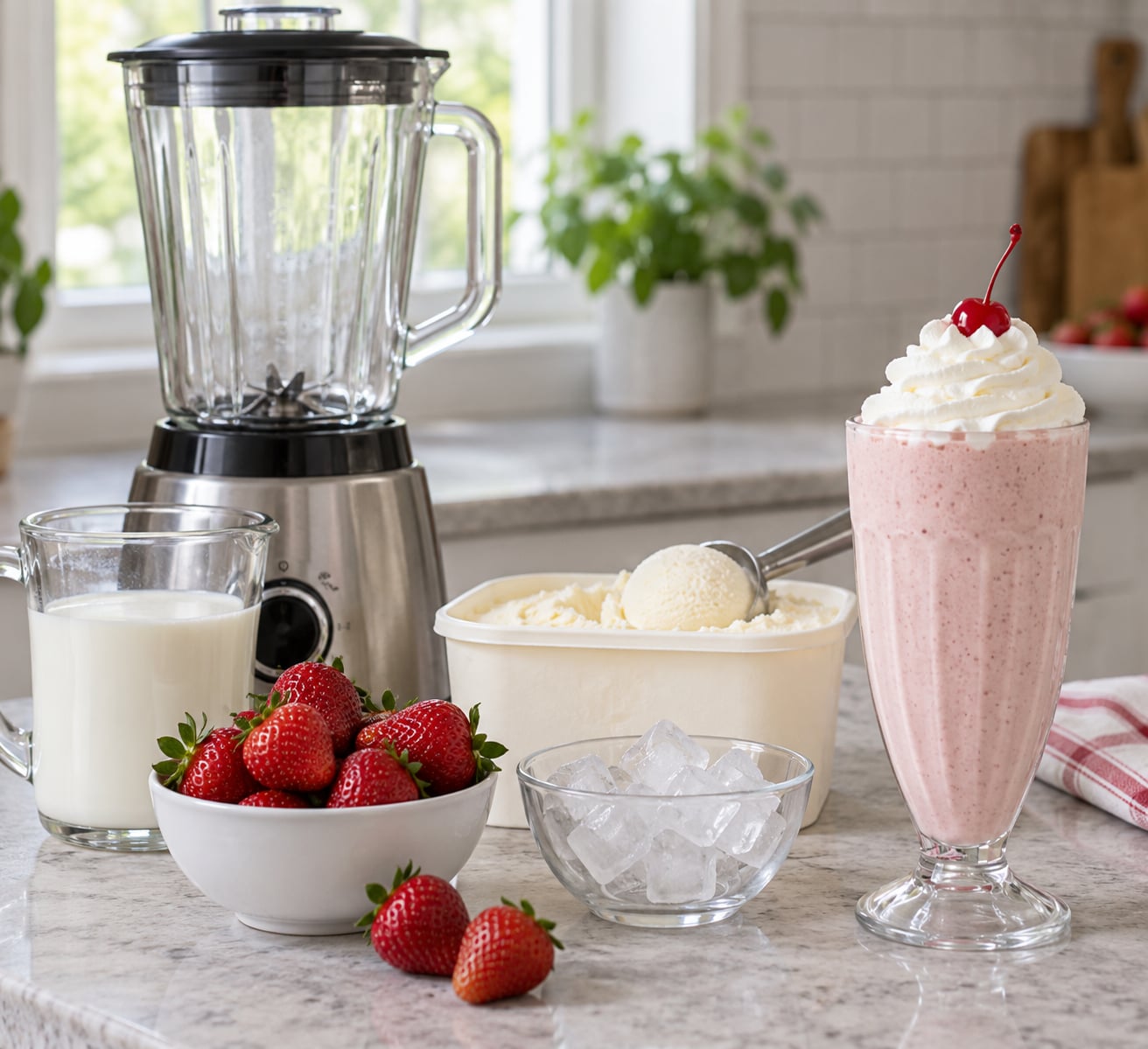
To make a thick milkshake, blend about 2 cups of soft ice cream with a scant half cup of cold whole milk for a classic diner shake, or push it to 4 cups of ice cream for an extra-thick spoonable one. Three rules do the heavy lifting: keep every ingredient and the glass cold, load the liquid before the ice cream, and pulse in short bursts instead of running the blender continuously.
That should take you about five minutes, and you do not need anything beyond a blender, a spoon and a cold glass. The part most recipes get wrong is not the ingredient list, it is how long you blend.
What You Need
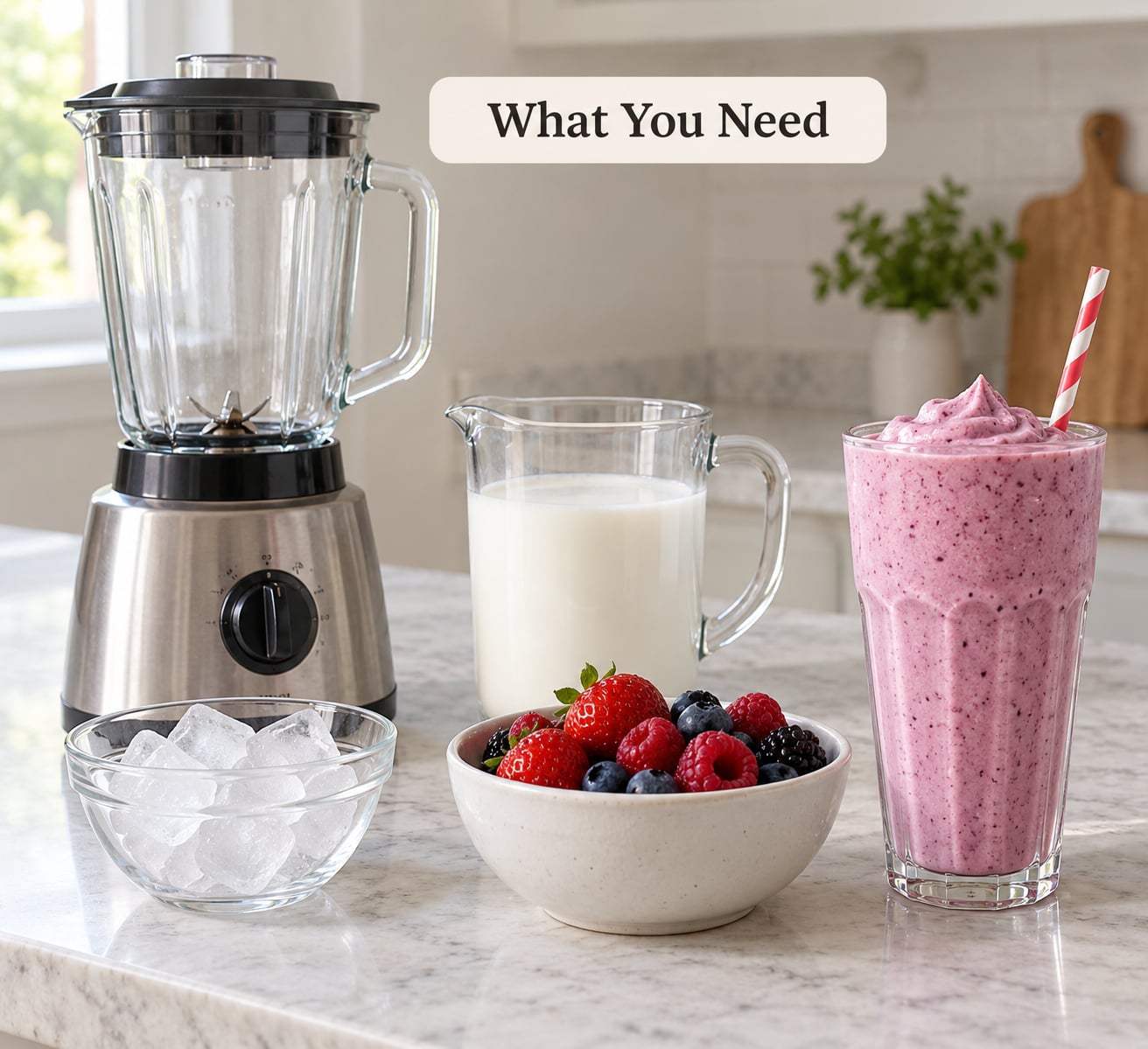
Keep the list short. A thick shake is mostly ice cream, a splash of liquid and whatever flavor you want folded through it.
- Ice cream: 2 cups (about 5 scoops) of vanilla for a classic shake. Use a full-fat, premium tub rather than a budget one, and let it sit on the counter for 5 to 10 minutes so it softens into a scoopable slump.
- Milk: 1/2 cup of whole milk, straight from the fridge. Whole milk gives you the body; 2% works in a pinch.
- Optional flavor: 2 tablespoons chocolate syrup, 1/2 cup fresh berries, 1/4 cup cocoa powder whisked with the milk, 2 tablespoons malted milk powder, or a spoonful of nut butter.
- Optional mix-ins: 2 to 3 tablespoons of mini marshmallows, cookie pieces, M&Ms or chopped nuts, added after blending.
- Toppings: whipped cream, chocolate drizzle and a maraschino cherry. These go on top, never in the glass before blending.
- Equipment: blender, a spatula, a measuring cup and a tall glass.
No blender? An immersion blender works almost as well, lowered into a tall jar or beaker so the ice cream stays submerged. A food processor with the metal blade works too, in short 5-second pulses, and a wide fork in a jar of softened ice cream gets you a rough, spoonable texture in about a minute.
Before you start, put the serving glass in the freezer. A room-temperature glass starts melting the shake the moment it lands.
Step-by-Step
Choose the Right Base
The base is where thickness is decided, and the ice cream to milk ratio is the number that matters most: 2:1 for a classic, drinkable shake, 4:1 for extra-thick, 6:1 for the triple-thick shakes diners charge extra for.
Whole milk is the default because fat is what carries the creamy texture. Skim milk makes a thinner, sharper drink no matter how much ice cream you add. Half-and-half thickens a shake noticeably and still pours through a straw, which is handy for a 4:1 or 6:1 batch.
Skip heavy cream in a blender. The agitation breaks the fat into small solids and you can end up with flecks that taste like butter, a problem people run into constantly.
Frozen yogurt and gelato are both workable. Gelato carries less fat and less air, so it makes a denser, more intensely flavored shake, while frozen yogurt reads as slightly tangier and a bit icier. Dairy-free varieties work fine, though check for a higher protein or coconut fat content since many are thinner than dairy ice cream.
For flavor, syrup is the safest bet. Cocoa powder can leave grit in the shake unless you whisk it into the cold milk first and let it sit for a minute so it hydrates.
How to Make a Thick Milkshake in the Blender
- Soften the ice cream. Leave the tub out for 5 to 10 minutes. You want a soft slump, not a liquid. Rock-hard ice cream stalls the blades, and the fix people reach for, more milk, is what makes the shake thin.
- Pour in the cold milk and flavor first. This gets the blades moving before the thick stuff goes in, and it means you are pre-mixing the milk with the syrup or cocoa so nothing settles at the bottom.
- Add the ice cream in two or three scoops, not all at once, so the mixture stays cold and the blade keeps catching.
- Pulse in 5 to 10 second bursts on low speed. Stop and scrape down the sides with a spatula, then pulse again, until the mixture looks like soft-serve and no loose ice remains. Three or four rounds of pulsing is normal.
- Add the mix-ins now, if any, and pulse twice just to fold them through. Anything more will push the mixture past the point where it comes back.
The pulsing is the part that surprises people. A milkshake is a partially frozen emulsion, and running the blender continuously beats air into it. That air expands, the mixture loosens, and you get a thin, foamy drink instead of a thick one. Short bursts stop the air from getting in and keep the temperature low enough that the shake holds its shape.
If you want a chocolate shake without the frostbite texture that comes from a too-cold, too-short blend, one pass of chocolate syrup into the milk does more for you than a handful of cocoa.
There is a related recipe worth knowing: if you want the grainy, malted-shop texture instead of a smooth shake, how to make a chocolate malt walks through the blended-milk version of the same drink.
Check the Thickness and Serve
A properly thick shake folds over on itself when you tilt the spoon, holds a soft peak for a second or two, and pours slowly enough to leave a visible ribbon in the glass. If it flattens out into a puddle, it is too thin. If it sits there like soft-serve and refuses to move, you have gone the other way.
Too thin? Add another half scoop of ice cream and pulse twice. Never add more milk, and never add ice cubes, which melt into extra water. Too dense? Splash in a tablespoon or two of cold milk and pulse once.
Spoon the shake into the frozen glass rather than pouring if you want the thickest possible result, and scrape the blender clean with the spatula. Top with whipped cream and a cherry, and drink it straight away.
A thick shake softens in about 5 to 10 minutes at room temperature, which is normal. Freezing it to hold it longer does not work; the texture comes back hard and icy, not creamy.
If you want to keep the mixture cold before serving, blend it, cover it, and set it in the freezer for 10 to 15 minutes rather than freezing it solid. And for a soda-shop version of the same thing, how to make a root beer float takes the thick shake in a different direction.
Common Mistakes
Too much liquid. This is the number one reason a homemade shake tastes like flavored milk. Measure the milk and stay at or below the ratio for your target consistency, because milk is the only ingredient you cannot add back once it is in.
Overblending. Running the blender until the sound changes thins the shake and foams it. Stop the moment the last chunk of ice disappears.
Hard-frozen ice cream. When the blades stall, people reach for the milk, and the shake is thin before it ever blends. Soften the ice cream first and you avoid the whole problem.
Melting ice as a thickener. Crushed ice does not thicken a milkshake. It waters it down as it melts, and the drink thins faster than it did before.
Weak flavor. Syrup added after blending disappears into the body. Mix it into the cold milk before the ice cream goes in, and taste before you pour.
Watery toppings. Wet toppings like fresh fruit on the bottom, or caramel and chocolate syrup pooled in the glass, release water into the shake. Drain or dry the fruit, and paint the inside of the glass with syrup instead of filling it.
On thickeners: if your ice cream is good, you do not need xanthan gum, cornstarch or pudding powder. More ice cream and less milk is the whole trick. The exception is blended drinks from machines like the Ninja Creami, where home cooks do lean on pudding mix to hit a spoonable texture, and that is a different process with a different goal.
Skipping the freezer entirely? A no-blender route is covered in how to make a milkshake without an ice cream maker.
Frequently Asked Questions
Can I make a thick milkshake without a blender?
Yes, though the texture will be rougher. With an immersion blender, lower it into a tall jar with 2 cups of softened ice cream and half a cup of cold milk, and blend in short 5-second bursts until smooth. A food processor with the metal blade does the same job. With neither tool, mash 2 cups of very soft ice cream with a fork in a jar, then stir in the milk and flavor a spoonful at a time until the texture is even.
What can I add to thicken a milkshake that came out too thin?
Add more ice cream, not more liquid. Scoop in another half cup of very soft ice cream and pulse the blender twice. Extra milk, water, or ice cubes all thin the drink further, because ice melts and adds water. If you are out of ice cream, a tablespoon or two of nut butter or a scoop of frozen yogurt folded in will add body without watering down the flavor.
How long does a thick milkshake stay thick before it melts?
In a pre-chilled glass, a thick shake holds its spoonable texture for about 5 to 10 minutes at room temperature, and longer if the glass has been sitting in the freezer. Keep every ingredient and the glass cold, and serve it right away. You can chill a finished shake for 10 to 15 minutes in the freezer, but freezing it longer than that makes the texture hard and icy instead of creamy.
What is the ideal consistency for a milkshake?
For drinking through a wide straw, aim for a classic 2:1 ice cream to milk ratio, which pours like a thick drink. If you want a spoon that stands up on its own, go to 4:1 for an extra-thick shake or 6:1 for the triple-thick tier diners use for their thickest shakes. The test is simple: tilt the spoon and the mixture should fold over on itself and hold a soft peak for a second.
How do I make thick milkshakes for a group or a party?
Make one master batch rather than blending shake by shake. For eight shakes at the classic 2:1 ratio, use 4 quarts of softened ice cream and 1 cup of cold milk, plus whatever flavor you are using. Blend in short pulses, working in batches so you do not have to fill the jar twice, and pour each serving into a glass that has been in the freezer. Set out the mix-ins and let people top their own.
Conclusion
Start with the ratio: 2 cups of ice cream to a scant half cup of cold whole milk gets you a classic diner shake, and 4 cups gets you extra-thick. Keep the ice cream soft, the milk cold and the glass frozen, and pulse the blender in short bursts rather than letting it run.
That is the whole method. Everything else, from malted milk powder to a spoon of nut butter, is a variation on it.