
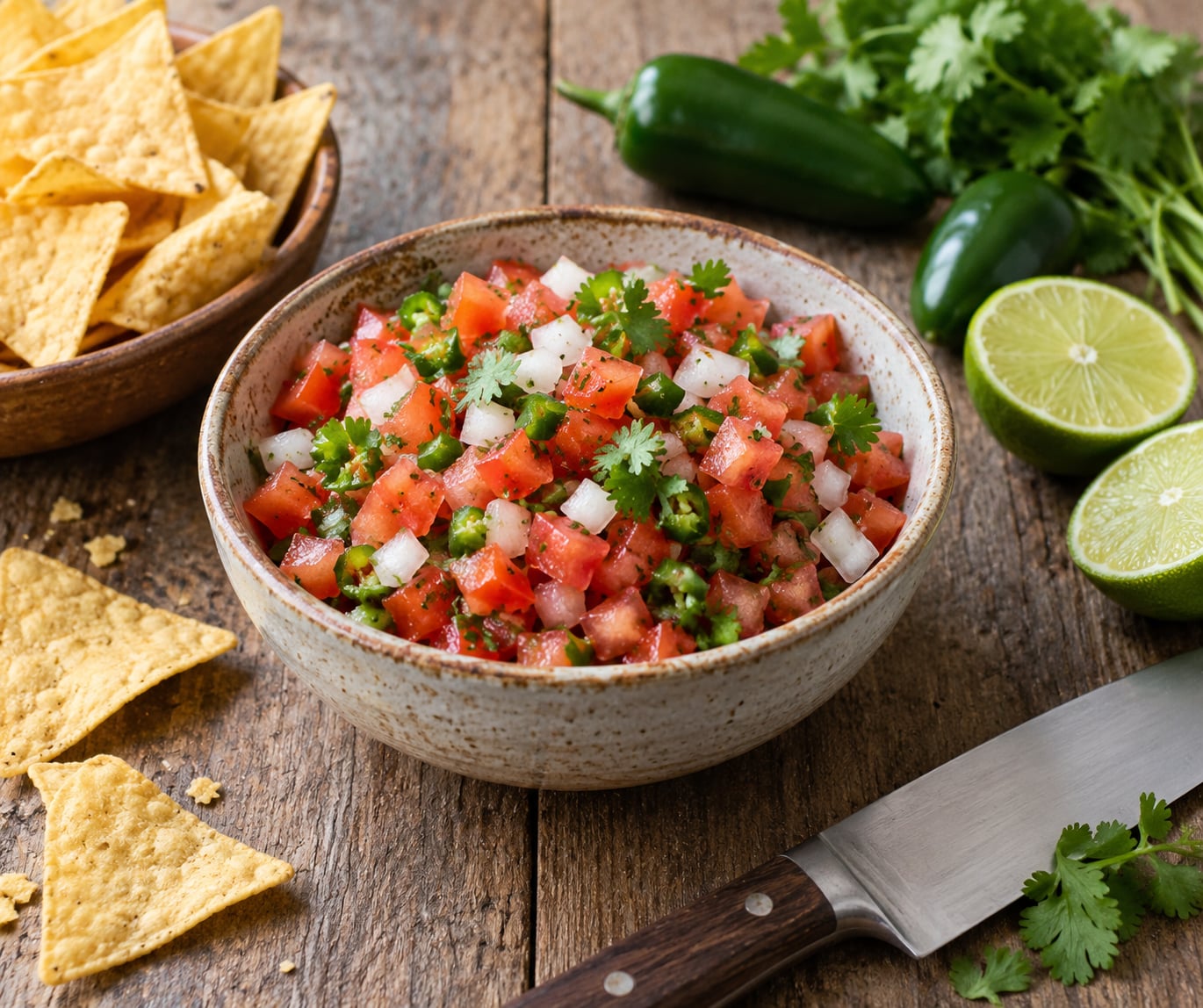
Pico de gallo takes about 10 minutes and involves no cooking at all. You finely dice ripe Roma tomatoes, white onion, a jalapeño, and cilantro, then toss everything with fresh lime juice and salt and let it rest. The lime and salt pull flavor out of every ingredient, and the tomato juice that collects at the bottom of the bowl becomes the dressing.
The whole thing hinges on two things most people skip: chopping by hand instead of in a food processor, and giving the salsa 10 to 15 minutes to sit before you eat it. Skip either one and you get something closer to jarred salsa with extra steps.
Below is the method I use at home, with the ratios that hold up when you double the batch, plus the fixes for a watery bowl or a salsa that is hotter than you planned.
Table of Contents
- What You Need
- Step-by-Step
- Common Mistakes
- Frequently Asked Questions
- What is the secret to the best pico de gallo?
- What is the tomato to onion ratio for pico de gallo?
- Why is my pico de gallo watery, and how do I fix it?
- How long does homemade pico de gallo last in the fridge?
- How hot should the jalapeño be, and how do I control the heat?
- Can I make pico de gallo without cilantro?
- Conclusion
What You Need
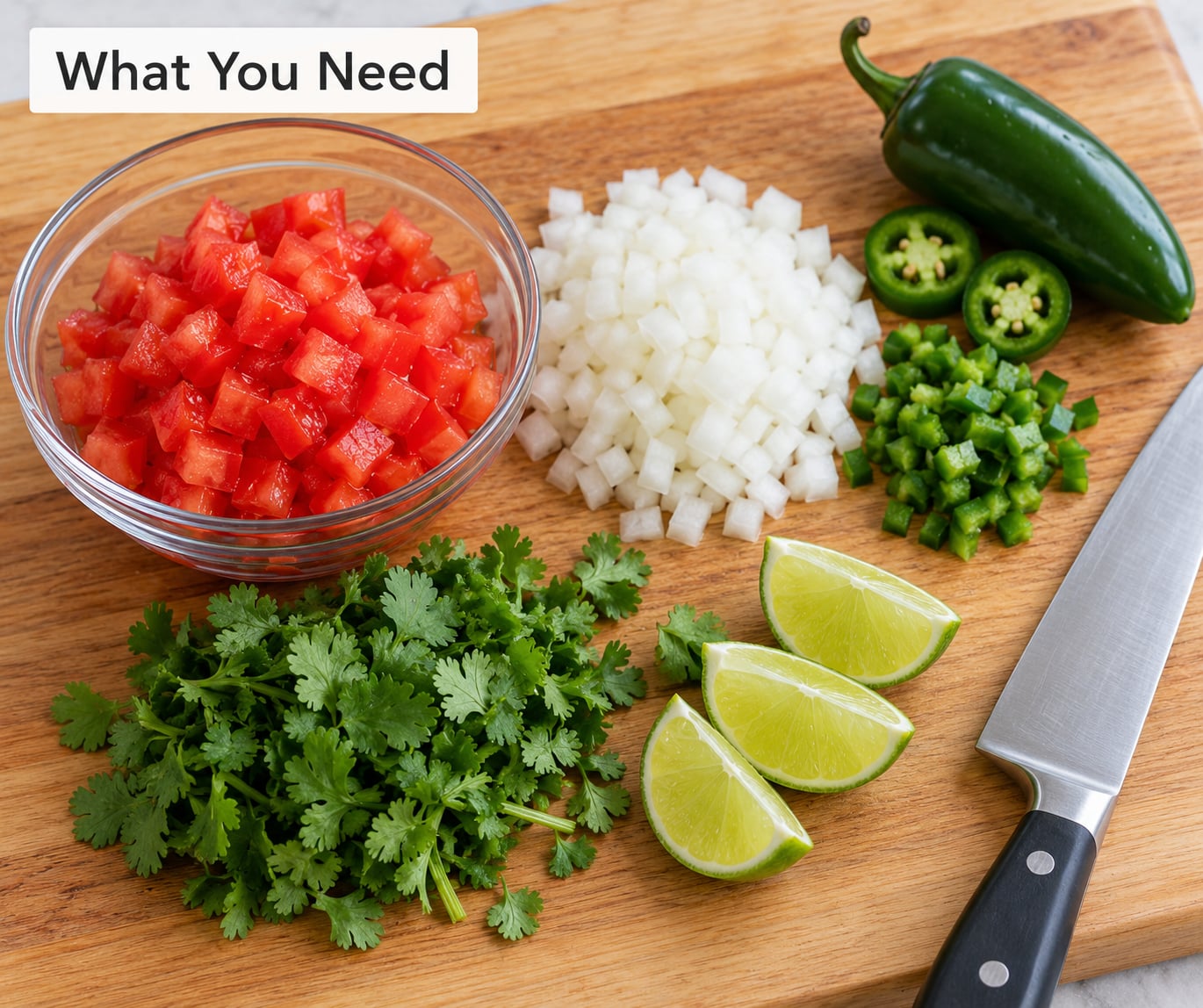
For about 4 cups, roughly 6 servings as a dip:
- 5 to 6 Roma tomatoes (1.5 lb / 680 g), firm but ripe
- 1/2 medium white onion, finely diced
- 1 to 2 jalapeños, seeded and finely diced
- 1/2 cup fresh cilantro, leaves and tender stems, chopped
- 1 tablespoon fresh lime juice, plus more to taste
- 1/2 teaspoon kosher salt, plus more to taste
Optional additions: one small garlic clove minced fine, a pinch of cumin, a splash of olive oil, or a few pickled jalapeños sliced thin for a sour edge. Every one of these is a variation rather than a requirement, so make the base first and only then decide the salsa needs more.
On equipment, you need a sharp chef’s knife, a large bowl, and a cutting board. That is the whole list. A food processor is the one tool you should actively avoid, because the blades shear the tomatoes into a paste and release far more juice than a knife does.
If you do not have a jalapeño, the substitutions run from mild to punishing. A serrano is hotter and crunchier, a poblano is mild and smoky, and a single habanero will make a small batch genuinely fierce. If you would rather not gamble on heat, pickled jalapeños give you the flavor with none of the burn.
For the onion, white is traditional and reads as a clean, sharp bite. Red onion is milder and slightly sweet, shallot is a good middle ground, and green onion works if you want a softer edge.
For the acid, fresh lime is the standard. White vinegar is the common swap in households that never have limes, and it gives a sharper, less floral tang. Orange juice is too sweet to use on its own, though a teaspoon alongside lime is pleasant.
For the herb, cilantro is the default. Flat-leaf parsley is the standard stand-in for people whose cilantro tastes soapy, and mint is worth a try in a pinch. You can also leave it out entirely and lean on the lime and chile for brightness.
Step-by-Step
Step 1: Prepare and Dice the Ingredients
Wash the tomatoes, jalapeños, cilantro, and lime under cold running water, then dry them. Wet produce dilutes the salsa and makes the onion turn grainy rather than crisp.
Cut the tomatoes in half and squeeze out the watery gel and seed pockets in the center. This is the single most effective step against soupy pico, and it takes about a minute per tomato. Dice the flesh into roughly 1/4-inch (6 mm) pieces.
For the jalapeño, slice it lengthwise and cut out the pale membrane and seeds, which carry most of the heat. Skipping them is how you turn a medium salsa into a hot one. Wear disposable gloves or wash your hands and use soap afterward, since capsaicin oil lingers on fingertips and will spread to your eyes.
Dice the white onion as small as you can manage. Onion wants a finer dice than the tomato, roughly 1/8-inch (3 mm), because it is the ingredient that should be nearly invisible in the finished bowl. Chop the cilantro loosely with the stems, and cut the lime into wedges so you can adjust the juice as you taste.
Step 2: Make the Pico de Gallo Base
Combine the diced tomato, onion, jalapeño, and cilantro in a large bowl and stir with a spoon until the colors look evenly distributed. A rough rule of thumb is 2 parts tomato to 1 part onion, which is the ratio home cooks keep landing on and the one restaurant batches tend to use. Everything else goes in by taste rather than by measurement.
You are looking for a distinct, separate dice in the finished salsa, not a blended texture. If the pieces are sharp-edged you have gone too fine, and if they are jagged and torn you pushed the knife instead of letting it fall. A dull knife drags the tomato across the board and crushes it, so a sharp one matters more than any other tool here.
This is also the moment for the step that separates decent pico from restaurant pico. The most-repeated technique on r/Cooking and r/GifRecipes is to let the diced onion and jalapeño sit in the lime juice alone for 5 to 10 minutes before anything else goes in. The acid softens the raw onion bite and pulls the chile flavor forward.
Step 3: Season and Balance the Flavor
Pour the lime juice over the mixture, add the salt, and stir again. Taste with a clean spoon and work through four things in order: acidity, salt, heat, and freshness.
If it tastes flat rather than sour, add lime a squeeze at a time. If it tastes sharp and thin, it needs salt. If it is bland across the board, both usually need another round. Add salt in pinches, tasting after each, because it is far easier to add than to take back out.
Now decide on the heat. Jalapeños vary a lot from pepper to pepper, so a fixed count in a recipe is a rough suggestion rather than a promise. Start with one seeded jalapeño, taste, and add more if you want it hotter. The same rule applies in reverse if you have already gone too far: a spoonful of diced tomato and a squeeze of lime will pull the heat back down.
If you are adding garlic, mince one small clove and fold it in now, then let it sit for at least 10 minutes so it mellows. Fresh garlic straight from the clove is much sharper than it will taste after resting, and under-seasoned garlic is the most common reason a batch tastes unfinished.
Step 4: Rest, Serve, and Store
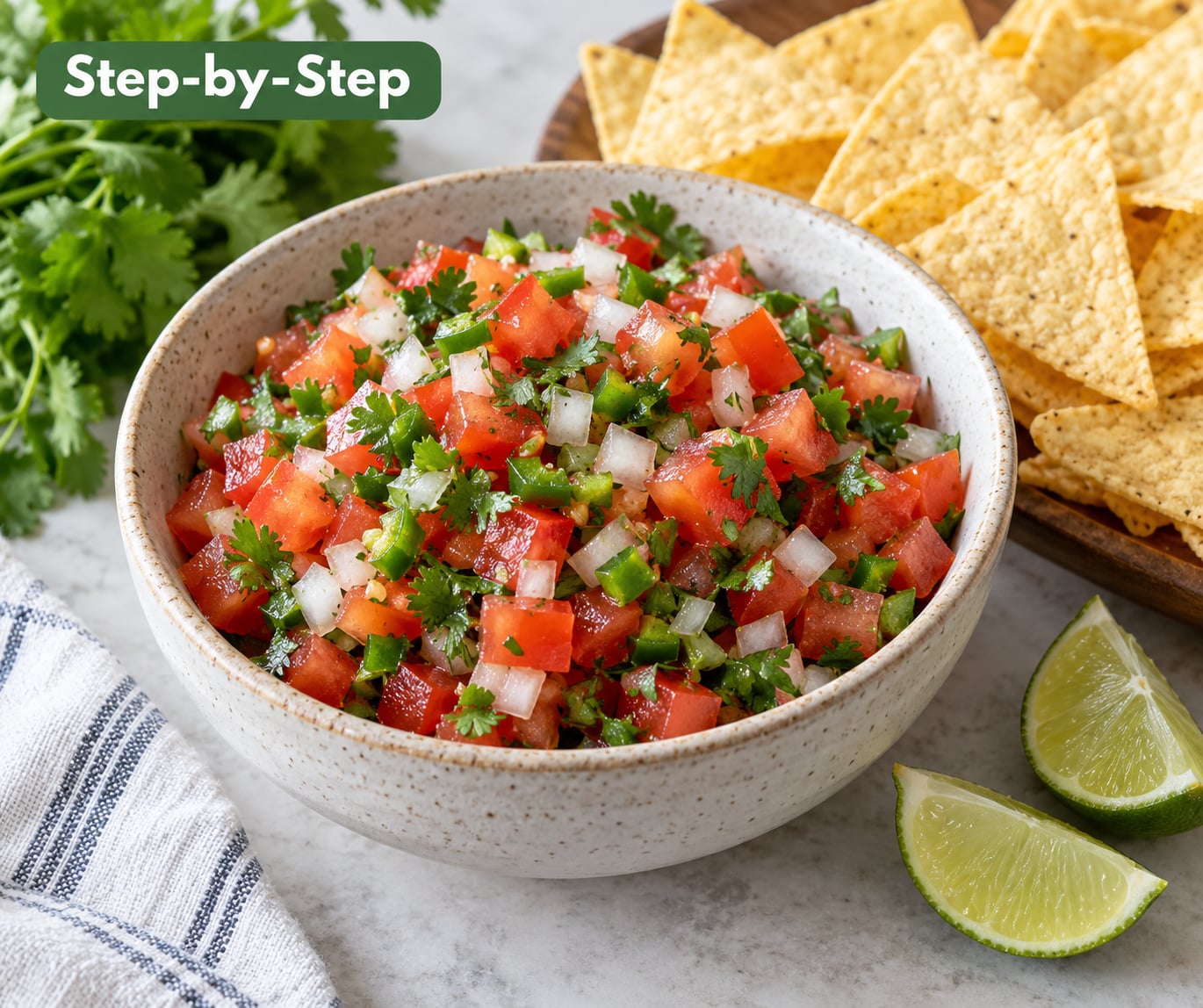
Cover the bowl and let it sit at room temperature for 10 to 15 minutes, or refrigerate it and let it come back toward cool before serving. During the rest the salt draws juice from the tomatoes, which mixes with the lime and becomes the dressing, and the raw onion flavor settles down.
Serve with tortilla chips, or spoon it over tacos, burritos, and quesadillas. It works as a topping for grilled steak, grilled chicken, and burgers, where the acid cuts through the fat. A spoonful on scrambled eggs in the morning is a genuine use rather than a novelty one.
For leftovers, transfer it to an airtight container and refrigerate. Use it within 1 to 2 days, which is when the cilantro is still bright and the onion still has bite. After that the texture softens and the liquid at the bottom gets cloudy. A slotted spoon is the right tool for serving, so the chunky solids stay on the tortilla instead of sliding off.
If you are making it ahead for a party, double the recipe and keep the components separate. Dice everything and store the tomato, onion, and chile together, but hold the cilantro and the lime juice back and fold them in an hour before serving. Cilantro added hours early wilts and turns army green, and lime loses its brightness.
Common Mistakes
Watery salsa. Usually caused by overripe tomatoes, canned tomatoes, or skipping the deseeding. Scoop out the tomato gel and seeds, use firm Roma rather than beefsteak, and serve with a slotted spoon. If the bowl already has an inch of liquid at the bottom, drain it before eating rather than stirring it back in.
Mushy texture. A food processor, or a dull knife, is the reason. Both shear the tomato cells until they give up their liquid. A sharp chef’s knife and a cutting board keep the dice intact.
Too much heat. The seeds and membrane, not the flesh, carry most of the capsaicin, and pepper heat varies by batch. Seed the jalapeños, start with less than you think, and adjust with extra tomato and lime.
Bland seasoning. Under-salting is the usual cause. The salsa needs noticeably more salt than a cooked dish because the tomatoes are raw. Add it gradually and taste between pinches.
Sharp raw onion. Mellowing comes from acid and time, not from a softer onion. Dice the onion small, let it sit in the lime juice for 5 to 10 minutes, or switch to red onion or shallot.
Adding herbs too early. Cilantro mixed in hours before serving loses its color and turns soapy in flavor. Fold it in at the last moment.
Frequently Asked Questions
What is the secret to the best pico de gallo?
Three things: chop everything by hand, let the diced onion and jalapeño sit in the lime juice for 5 to 10 minutes before mixing, and give the finished salsa 10 to 15 minutes to rest. The acid softens the raw onion bite, the salt draws tomato juice out to become the dressing, and the rest lets the chile flavor spread through the whole bowl. Hand chopping is the part people skip, and it is what keeps the texture chunky instead of pasty.
What is the tomato to onion ratio for pico de gallo?
Roughly 2 parts tomato to 1 part onion by volume, which works out to about 5 to 6 Roma tomatoes for half a medium white onion. Treat that as a starting point rather than a rule. If you like a sharper salsa, add more onion; if you want the tomato to lead, which is how most restaurant batches are built, stay at or slightly below 2 to 1. The chile and cilantro go in by taste.
Why is my pico de gallo watery, and how do I fix it?
Overripe tomatoes, canned tomatoes, and leaving the seeds and gel in the flesh are the usual reasons. For the next batch, squeeze out the tomato centers and use firm Roma tomatoes. For the batch you already have, let it sit in a colander for 15 minutes and serve with a slotted spoon so the liquid stays behind. Adding a pinch of salt draws out more liquid, which is why you do that earlier rather than later.
How long does homemade pico de gallo last in the fridge?
Use it within 1 to 2 days, stored in an airtight container in the refrigerator. It is a raw fresh salsa with no preservatives, so it changes faster than a jarred one. By day three the cilantro is wilted, the onion has lost its crunch, and there is usually a layer of cloudy liquid at the bottom. If it smells off, the liquid has turned cloudy rather than clear, or the cilantro has gone brown, throw it out rather than skimming it.
How hot should the jalapeño be, and how do I control the heat?
Heat varies from pepper to pepper, so any fixed count in a recipe is a rough starting point. Seed the jalapeño and remove the pale membrane inside, which is where most of the capsaicin sits, then start with one seeded pepper for 5 to 6 tomatoes. Taste and add more if you want it hotter. If you overshoot, stir in a spoonful of diced tomato and a squeeze of lime to dilute and cool it down.
Can I make pico de gallo without cilantro?
Yes, and the salsa still works, it just leans more on the lime and chile for brightness. Flat-leaf parsley is the most common swap and adds a cleaner, less citrusy note. Mint is a good option if you want the salsa to read as fresh rather than herby, and scallion tops work if you want a mild onion-green flavor. If you avoid cilantro because it tastes soapy to you, skip it entirely rather than forcing a substitute in.
Conclusion
If you only remember one thing from this, make it the first one: squeeze the seeds and gel out of the tomatoes before you dice them. That single step does more for the texture than any other trick in the article, and it costs about a minute.
After that, treat the lime, the salt, and the jalapeño as variables rather than measurements. Start with 1 tablespoon of lime and 1/2 teaspoon of salt, taste, and adjust until the salsa tastes bright and slightly sharp rather than merely salty. The best batch is the one that sits somewhere between what the recipe says and what your tongue says.
While the salsa rests, it is a good excuse to put something else on the grill. If you are cooking outside, grilled vegetables for burger night and jalapeño poppers both pair well with a big bowl of pico, and a double batch of this salsa doubles as the base for guacamole for burgers with the jalapeño left out.