
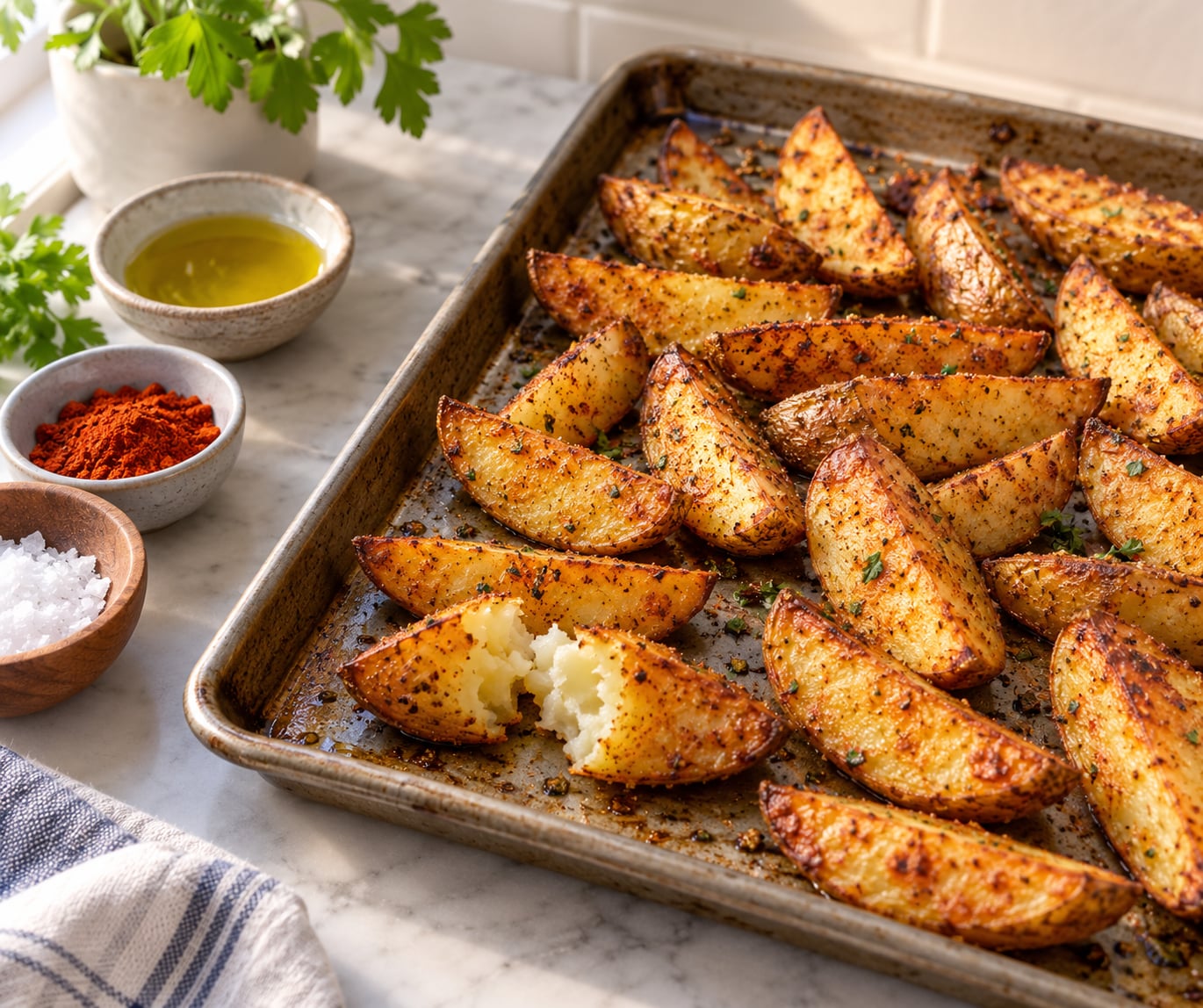
Toss 3 large russet potatoes with olive oil and seasoning, roast them cut-side down at 425°F for 30 to 35 minutes, and you get wedges with crisp golden edges and a fluffy middle. No deep fryer, no babysitting a pot of oil, and about 15 minutes of actual work. Learning how to make potato wedges in the oven well comes down to one thing: keeping them from steaming.
A potato in a crowded pan releases its own moisture and sits in a warm cloud of steam, which softens the cut faces instead of browning them. That is the whole reason most homemade wedges come out pale and bendable. Cut them evenly, dry them completely, and give them space, and the same oven that fails you on a bad pan will hand you something crisp.
Total time is roughly 45 minutes, most of it unattended. For a burger night side, or an appetizer that disappears fast, this is one of the cheapest wins in a home kitchen. If you like the idea of oven-crisped potatoes but want a different shape entirely, my hash browns for brunch method uses the same dry-and-space-out principle.
Table of Contents
- What You Need
- Step-by-Step: How to Make Potato Wedges in the Oven
- Common Mistakes and Tips
- Frequently Asked Questions
- What temperature is best for potato wedges in the oven?
- Should I peel potatoes before making oven wedges?
- How do I stop potato wedges from turning soggy?
- How long do potato wedges take to bake?
- Can I bake frozen potato wedges instead of fresh potatoes?
- How should I reheat potato wedges so they stay crisp?
- Conclusion
What You Need
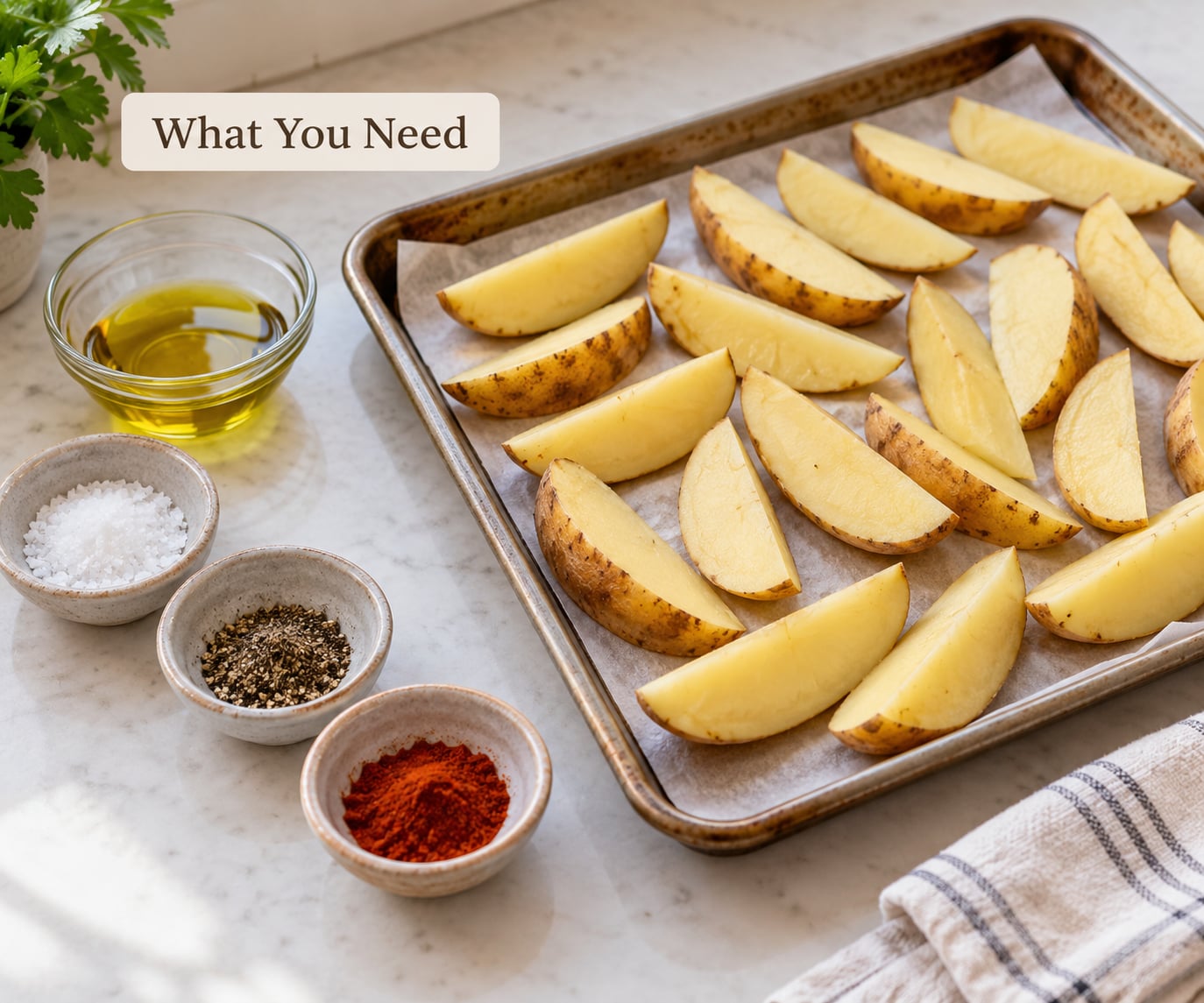
Quantities below make about 4 servings as a side. The equipment list matters as much as the ingredients here, because a flat rimmed sheet is what lets heat reach every face of a wedge.
- 3 large russet potatoes (about 1.5 to 2 pounds total). Yukon Golds work too and are more forgiving, but they brown less deeply.
- 3 tablespoons olive oil, plus a little more for the pan.
- 1 teaspoon paprika or smoked paprika
- 1 teaspoon garlic powder
- 1/2 teaspoon onion powder
- Kosher salt and black pepper, to taste. Flaky salt added after baking gives a better crunch than seasoning salt baked in.
- Optional: fresh rosemary, grated Parmesan added in the last 5 minutes, or a pinch of cayenne.
A rimmed baking sheet with low sides is the right pan. Parchment paper or silicone liner keeps wedges from sticking, though direct pan contact crisps the flat face slightly more. Skip foil. Wedges welded to foil tear when you try to turn them, and readers on cooking forums consistently report exactly that.
A wire rack set on the sheet also works and lifts airflow under the wedges, which speeds up the drying. A sharp knife and a salad spinner or clean towel finish the tool list. No mixer, no thermometer.
Step-by-Step: How to Make Potato Wedges in the Oven
Preheat the oven and prepare the baking sheet
Heat the oven to 425°F (220°C), or 400°F (205°C) with the convection fan on. Give it a full 10 minutes at temperature, and put the empty baking sheet in while it heats. A sheet that starts hot gives the wedges a head start on browning, which is worth more than any extra seasoning.
Lightly oil the hot sheet or line it with parchment. A crowded pan is the single most common reason wedges fail, so plan on one single layer with a finger’s width between wedges. Cooking in two batches takes longer but beats one sad, grey layer.
Cut the potatoes into even wedges
Scrub the potatoes well and leave the skin on. It crisps, holds the wedge together through the bake, and means less prep. Slice each potato lengthwise into 3 or 4 wedges, roughly 1 to 1.5 inches thick at the base.
Even thickness is the thing that matters most. A wedge twice the size of its neighbor needs twice as long to cook through, which is why big and small pieces on the same pan end up one burnt and one raw. To peel or not to peel is a fair question; peeling works, but you lose crispness and some nutrients for a texture you can get without the work.
If you have 20 minutes to spare, soak the cut wedges in cold water for 15 to 30 minutes. The water pulls surface starch off, and starch is what makes potatoes gluey and soft. A teaspoon of sugar in the soak water is an old restaurant trick that several readers swear by for deeper browning. Then dry them thoroughly: a salad spinner, or a clean towel squeezed around each handful. Water left on the surface steams, and steamed potatoes never crisp.
Season the wedges before baking
Put the dry wedges in a bowl, drizzle with the 3 tablespoons of olive oil, and toss until every piece looks lightly glossy. Oil is what conducts heat into the surface and carries browning, so the wedges need a thin coat, not a heavy one. Puddles of oil pool under the wedge and make the bottom scorch before the top colors.
Add the paprika, garlic powder, onion powder, a big pinch of salt and some pepper, then toss again. Season now and finish with flaky salt at the end. Arrange cut-side down on the hot sheet, then get them in the oven.
Bake until crisp and tender
Bake uncovered for 30 to 35 minutes at 425°F, turning once at the 20 minute mark with a thin spatula or tongs. If a wedge resists the turn, leave it; that means the bottom has not set yet, and pulling it will tear the skin.
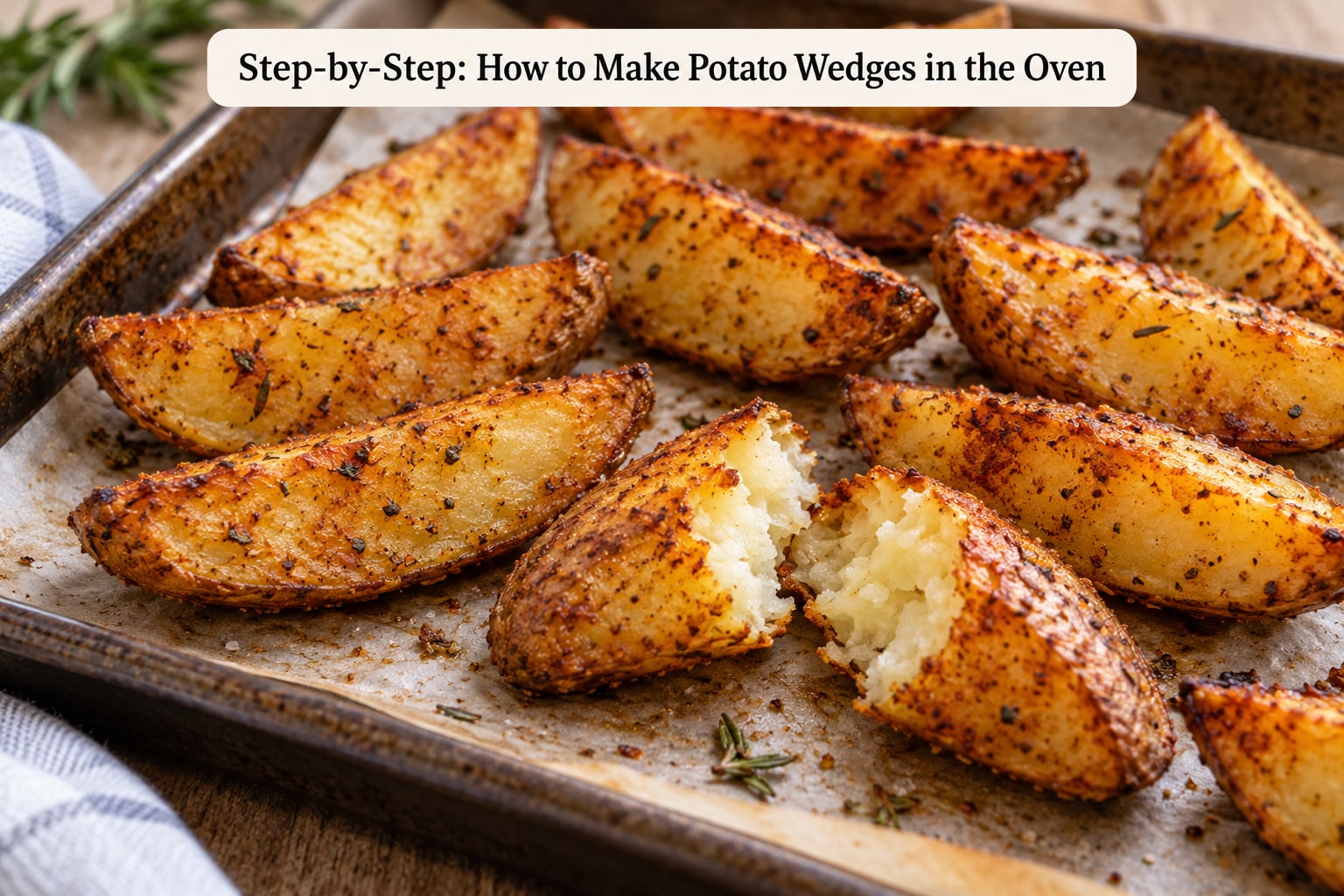
They are done when the flat faces are deep golden, the edges look dry and rough rather than smooth, and a fork slides into the thickest part with no resistance. Pick one up and it should feel noticeably heavier than a raw wedge, with a slight give in the middle.
For a faster finish, move the pan under the broiler for the last 2 to 3 minutes with the oven door cracked open. Stay in the room and watch it. Broiling pale wedges is how a good batch turns bitter in ninety seconds.
Published bake times swing from 30 minutes to over an hour, and the honest reason is wedge size, pan crowding and oven calibration. Read the color, not the clock. One commenter on a popular wedge recipe needed nearly 20 extra minutes because she cut larger wedges on a light-colored aluminum sheet. Thicker cuts and a dark sheet both push the time toward the long end.
If you bake at a different temperature, adjust like this:
| Oven setting | Approximate bake time | Result |
|---|---|---|
| 350°F (175°C) | 45 to 55 minutes | Gentle browning, softer texture |
| 375°F (190°C) | 40 to 45 minutes | Even, moderate color |
| 400°F (205°C) | 35 to 40 minutes | Good crispness, forgiving |
| 425°F (220°C) | 30 to 35 minutes | The sweet spot for most ovens |
| 450°F (230°C) | 25 to 30 minutes | Fastest and crispest, easiest to burn |
| Convection | Drop 25°F and cut 5 minutes | Fan cooks and dries faster |
Want a similar idea but a different oven method? My sweet potato fries oven method uses the same dry-first logic with a starchier vegetable that colors differently.
Serve the potato wedges
Serve them right away while the outside is still crackling. They are at their best within a few minutes of leaving the oven and lose their crunch as they cool, so don’t plan to hold them for the length of a meal.
A cold dip balances the salt: sour cream and chives, a garlic aioli, or a simple mustard and vinegar sauce. Jalapeno poppers for burger night pair well as a starter if you are serving wedges alongside burgers.
Refrigerate leftovers in an airtight container for up to 3 or 4 days. Spread them on a sheet and reheat at 425°F for 8 to 10 minutes, or run them 5 minutes in an air fryer at 400°F. A microwave reheats them soft; the oven or air fryer brings the crust back.
Freezing works too. Blanch the wedges 3 minutes, drain, dry and spread on a tray until solid, then bag them. Bake from frozen at 425°F for 35 to 40 minutes, no thaw. For air fryer from frozen, cook at 400°F for 12 to 15 minutes, shaking the basket twice.
Feeding 15? Use two sheet pans at once if your oven takes them, but never stack racks into a single pan. If you need to cook one batch at a time while the first cools, the second batch gets crisp during its own bake anyway. Scaling a crowd is the one situation where an air fryer batch actually helps.
Common Mistakes and Tips
Wedges are soggy or soft inside. Almost always steam. Three causes cover nearly every case: they weren’t dried after soaking, they were crowded, or they were covered. Cut back on oil, space them out, and bake uncovered. A single layer touching the pan on all sides can only crisp; wedges touching each other cook in each other’s vapor.
They stick to the sheet. Oil the pan rather than sprinkling flour, and let the sheet heat before the wedges go on. If you’re on parchment, use a light silicone coating. Sticking almost always means the wedges sat on the pan for the whole bake without being moved, so turn them once midway.
Outside wedges burn while the middle ones stay pale. That’s crowding. Two pans beat one. Also check your cut: a potato sliced into one giant wedge next to four small ones will never cook at the same rate.
Edges are pale and dull. Usually a damp surface. Pat the wedges dry again after tossing if any liquid pooled in the bowl, and make sure the oven is actually at temperature. Pale results also come from baking at 350°F, where wedges cook through before they have time to color.
The bottoms scorch first. Too much oil, or a sheet that is too close to the broiler. Use the middle rack, move the pan down one notch on the first 15 minutes, and check sooner if your oven runs hot.
Herbs and garlic burn. Fresh herbs and minced garlic go in for the last 5 minutes, not at the start. Powdered seasonings are more heat-stable, which is why garlic powder is the safer choice at 425°F and up.
Baking soda or baking powder? Baking soda is the one. It raises the surface pH, which breaks down surface starch and speeds up browning, giving you a crisper surface. Baking powder has no meaningful effect on potatoes, so it is only worth using in batter. Toss a pinch of soda with the oil if your wedges have been pale, but too much tastes soapy.
A few extra tips that cost nothing. Boil the wedges for 5 to 6 minutes instead of soaking, shake them dry in a colander so the edges go ragged, then roast. The ragged edges crisp better than smooth cuts, and it’s the most effective trick in restaurant kitchens. There is a short version of this on how I crisp hash browns for brunch, and the par-boil stage is identical.
Other quick wins: put the wedges skin-side down, use a dark baking sheet, and don’t let a single piece go past deep gold. Adding a teaspoon of sugar to the soak water is a reader-tested shortcut with the same effect as the soda, minus the flavor risk. And don’t pile them on the serving plate; any steam trapped in the heap softens the top layer in minutes.
Frequently Asked Questions
What temperature is best for potato wedges in the oven?
425°F (220°C) is the most reliable temperature for home ovens. It gives the cut faces enough heat to brown before the centers overcook, and 30 to 35 minutes produces deep gold with a fluffy middle. For convection ovens, drop to 400°F (205°C) and check five minutes early, since the fan cooks and dries faster.
Should I peel potatoes before making oven wedges?
No. Leaving the skin on crisps better, holds the wedge together through the bake, and saves you time at the sink. Scrub the potatoes well first. If you prefer peeled wedges, they will still work, but expect a slightly softer surface and peel the potatoes before the soak so any skin left behind comes away clean.
How do I stop potato wedges from turning soggy?
Drying, spacing and browning uncovered are the three levers. Squeeze the wedges dry after soaking, arrange them cut-side down in a single layer with room between them, and leave the pan uncovered so moisture can escape. Overcrowding is the usual culprit, and cooking in two batches is faster than picking shards off a grey sheet.
How long do potato wedges take to bake?
At 425°F, allow 30 to 35 minutes for wedges cut about 1 to 1.5 inches thick, turning once at 20 minutes. Lower temperatures need longer, and 450°F needs only 25 to 30. Judge by color rather than the clock: deep golden flat faces, dry rough edges, and a fork that slides through without resistance.
Can I bake frozen potato wedges instead of fresh potatoes?
Yes, and they work well. Bake them from frozen at 425°F for 35 to 40 minutes, spreading them in a single layer and turning once midway. Avoid piling them, since frozen wedges frost over quickly and steam against each other. Add a few extra minutes compared with fresh wedges, and skip the soak entirely.
How should I reheat potato wedges so they stay crisp?
Use a 425°F oven for 8 to 10 minutes, spread on a sheet rather than stacked in a dish, which lets hot air reach every surface. An air fryer at 400°F for about 5 minutes is the fastest option. The microwave will warm them but leaves them soft, so it is the last choice if crispness matters.
Conclusion
Cut your wedges the same size, get them completely dry, coat them lightly in oil, and give them a single uncrowded layer on a hot sheet. Bake at 425°F uncovered for 30 to 35 minutes, turning once, and pull them when the flat faces are deep gold and a fork goes through without resistance.
That is the whole method. Once you stop the wedges from steaming, the oven does the rest.