
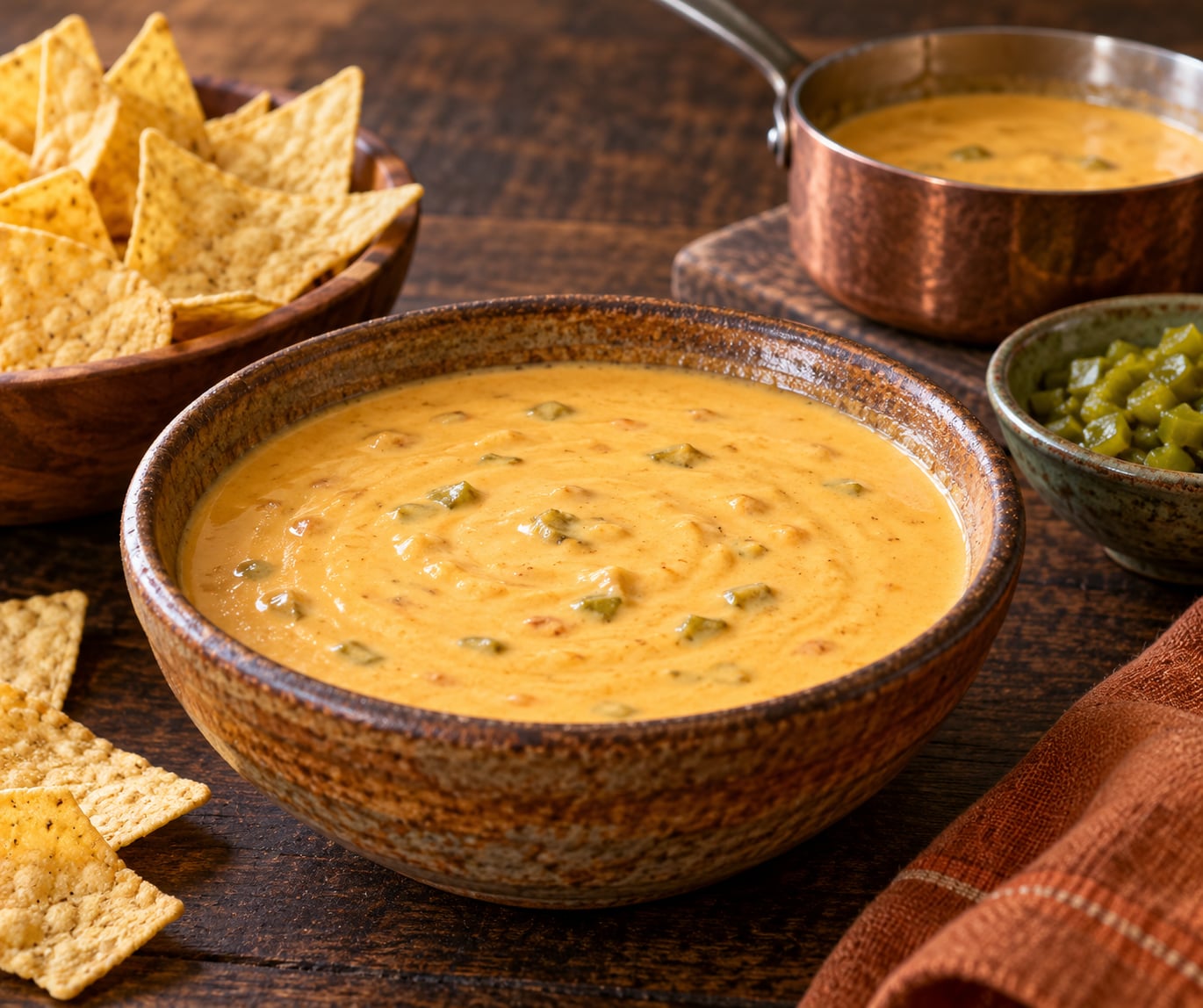
To make queso dip at home, shred white American cheese and melt it slowly in a saucepan with a splash of milk and a little butter over low heat, stirring often until glossy and smooth. It takes about 15 minutes, needs one pan, and tastes like the stuff they hand you at the table.
Most jarred queso tastes flat because the flavor was cooked once already, then boiled again in the jar. A fresh pot takes barely longer and you control the heat, the salt, and how much bite goes in. The whole thing hinges on one thing: keep the heat low and add the cheese gradually.
Below is the plain version that works every time, followed by the mistakes that turn it grainy or gluey.
What You Need
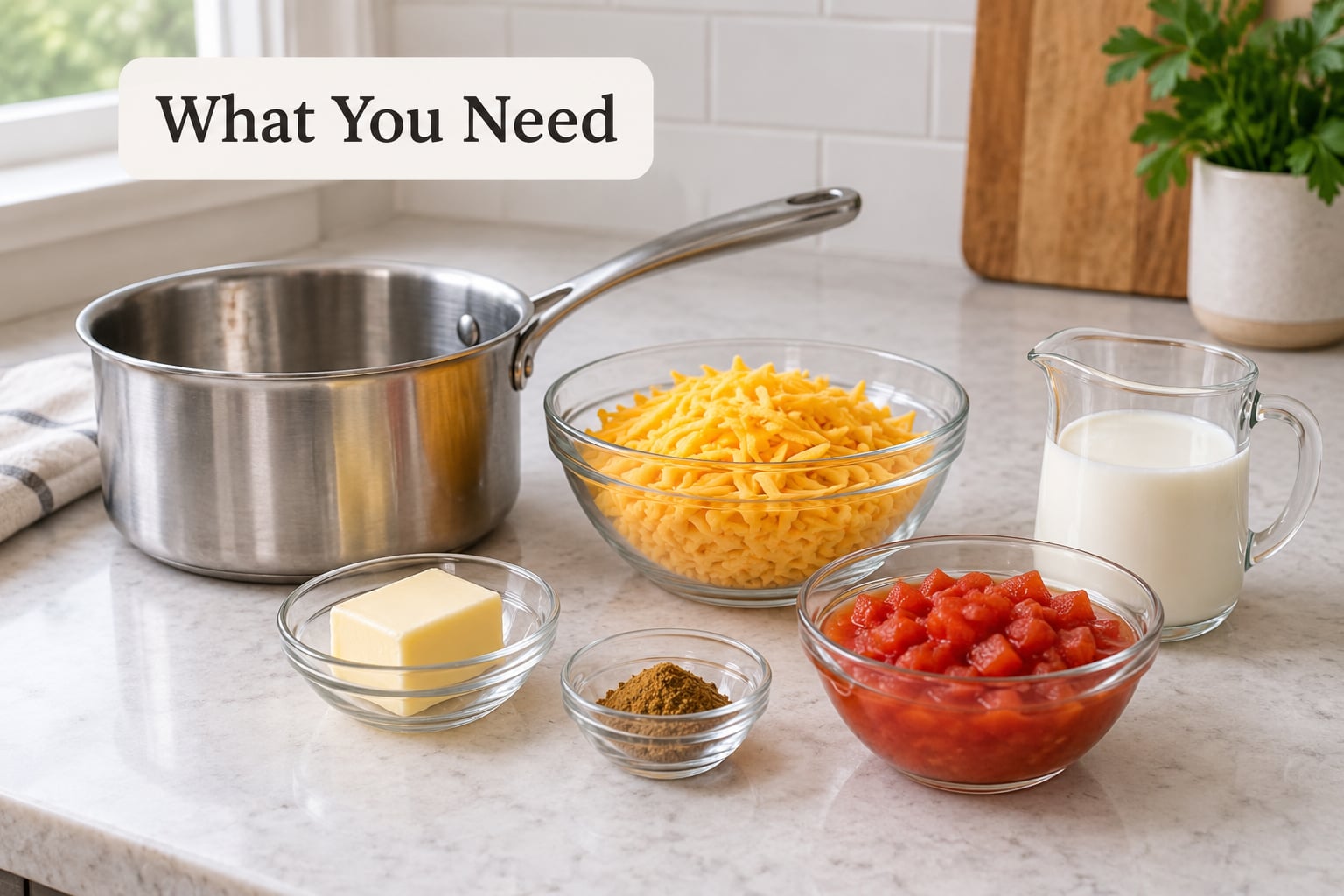
A heavy saucepan is the one tool that matters here. A thin skillet scorches the milk before the cheese softens, and a big pot spreads the heat too thin to stir properly. A wooden spoon or silicone spatula works better than a whisk, because you need to scrape the bottom.
For the base you need:
- 1 pound (450 g) white American cheese, grated by hand from a block
- 1/3 cup (80 ml) whole milk, plus more for thinning
- 2 tablespoons butter
- 1 can (4 ounces) diced green chiles, drained
- 1/2 teaspoon ground cumin
- 1/4 teaspoon garlic powder
- Salt and a few grinds of black pepper
The milk and butter are what control thickness. Cheese alone gives you a solid block; a quarter cup of milk per pound gives you a thick dip, a third cup gives you something closer to a drizzle, and a half cup turns it into nacho sauce you can pour.
Two optional add-ins change the character more than any spice does. A tablespoon of pickled jalapeno brine from the jar cuts through the fat and sharpens everything, and a small can of diced tomatoes with chiles trades your mild base for a bright, saucy one. Cornstarch is worth knowing about too, because a half teaspoon whisked into the milk is insurance against a grainy finish.
Step-by-Step: How to Make Queso Dip
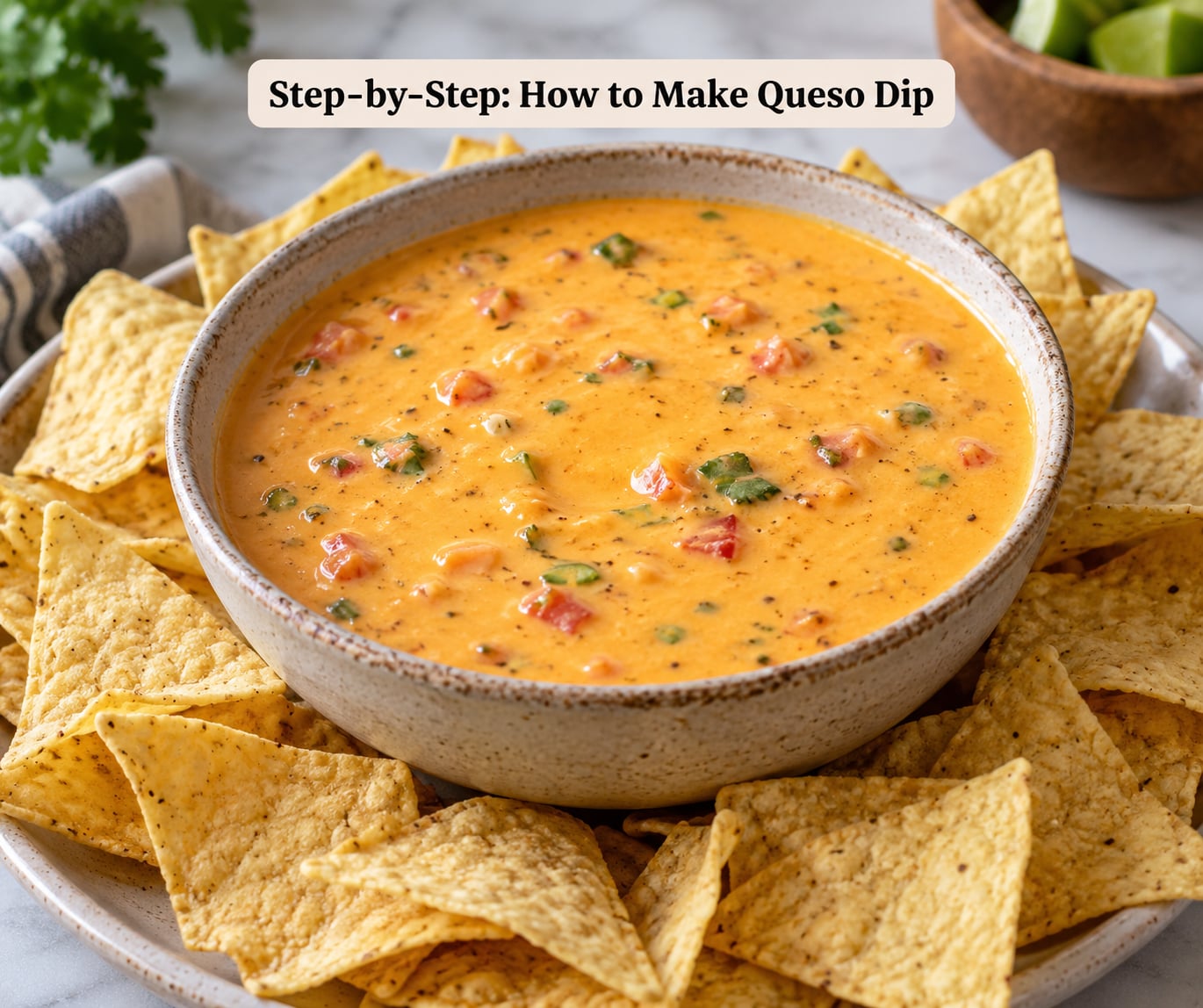
Step 1: Choose Your Queso Style
Decide before you grate anything. White queso is the destination here, and it comes from white American cheese, Monterey Jack, or a blend of the two, with no tomatoes in the pan. Add diced tomatoes or a can of tomatoes with chiles and you have made a different dish, a mild salsa con queso, which is thinner and sharper and meant to be spooned rather than dipped into.
Queso fresco, the crumbly fresh Mexican cheese, is a third thing entirely. It does not melt into a sauce and cannot be substituted for anything in this recipe.
If you want a cool, sharp dip on the table next to it, our how to make guacamole for burgers comes together in about the same amount of time.
Step 2: Prepare the Ingredients
Grate the cheese yourself from the block and shred it fine. Bagged pre-shredded cheese carries an anti-caking starch coating, and that starch is the single most common reason homemade queso turns grainy in the pot.
Drain the diced green chiles in a sieve and press out the excess brine. Too much water in the pan is what causes separation later on. Set your extra milk out so it is not straight from the fridge, since very cold liquid added to hot cheese tightens it into clumps before it can loosen again.
Step 3: Build the Flavor Base
Melt the butter over medium-low heat, then add the drained chiles and the cumin. Stir for 60 to 90 seconds until the chiles look glossy and the kitchen smells toasty rather than raw.
If you want more depth, throw in a halved jalapeno with the seeds removed at this point and pull it out before the cheese goes in. If you are using chorizo, brown it in the butter first, drain the grease, and add it back at the end so it stays chewy instead of crumbling to sawdust. The same seed-and-pinch move shows up in our how to make jalapeno poppers for a burger night guide, which is a good second cook for the same tray.
Step 4: Melt the Cheese Slowly
Turn the heat down to its lowest setting. Add the milk, stir once, and wait for small bubbles at the edges of the pan before the cheese goes in. Then add the cheese in three or four handfuls, stirring slowly and letting each batch soften before the next one.
You are looking for a glossy sauce that coats the back of your spoon and leaves a clean line when you drag it across the bottom. When you tip the pan and the whole thing slides as one mass, it is done. If it looks matte with visible shreds, keep going; if it is bubbling hard, drop the heat.
Stir constantly at this stage, and mean constantly. Cheese left sitting undisturbed at the bottom of a hot pan scorches within a minute.
Step 5: Adjust the Thickness and Season
Turn the heat off entirely, then stir in the diced chiles, garlic powder, salt, and pepper. Seasoning goes in off the heat so you taste what is actually there rather than what the hot pot amplifies.
Taste with a chip. Too thick means a splash more milk, stirred in while the pan is still warm. Too thin means a minute over the heat, not a handful of cheese, because adding cheese to fix thinness is how you get stringy.
For the restaurant version, stir in a tablespoon of jalapeno brine and a pinch of smoked paprika at the very end. For heat, add minced fresh jalapeno, a teaspoon of chipotle powder, or several dashes of hot sauce after the heat is off. A dish of pickled onion on the side lets each person set their own level.
Step 6: Serve or Keep Warm
Cheese dip should be served at about 140°F (60°C), warm enough to flow but not hot enough to steam. Put it in a small slow cooker on warm, a dip warmer, or the lowest oven setting with a splash of milk stirred in first. A water bath in a wide pan holds it evenly and stops the bottom from scorching.
Keep it covered between dips. Every time you dip a chip into an open bowl, the top forms a skin that hardens within a few minutes.
If You Want It Perfectly Smooth
Home cooks online swear by blending the finished dip, and the tip holds up. Cool it for five minutes, blitz it in a blender until it turns silky, then warm it gently again. It takes an extra minute and the texture gets noticeably closer to what a restaurant pours.
A double boiler is the other route. Melt the cheese in a bowl over barely simmering water so it never touches direct heat. It is slower and fussy, but nearly impossible to scorch.
Common Mistakes
Heat too high. Boiling milk is the number one cause of a broken, oily sauce. The proteins tighten and squeeze out the fat, leaving a slick sheen on top of curds. Keep the burner on low and add milk off the heat if you are unsure.
Pre-shredded cheese. That anti-caking starch keeps shredded cheese from clumping in the bag and clumps in your sauce instead. Grate it from the block yourself; this one change fixes most grainy attempts.
Too much liquid. Extra milk looks like it is thinning the cheese when it is really cooling the pan. Add a tablespoon at a time and wait a minute before deciding you need more.
Over-blending at full heat. A blender full of molten cheese expands violently and is a good way to scald yourself. Cool it first, blend in short bursts, and never seal a full blender tightly.
Seasoning early. Salt and cumin added at the start get cooked into the butter and then muted by the cheese. Save them for the end, when the flavor will actually land.
For a warm tray that stays dippable for a couple of hours, hold the queso in a slow cooker on warm and stir it every 30 minutes. Any film that forms on top, scoop it off rather than stirring it back in.
Frequently Asked Questions
What is the best cheese for smooth queso dip?
White American cheese bought by the block and grated yourself. Its emulsifying salts melt into a glossy sauce that stays smooth as it cools. Monterey Jack works and tastes more like real cheese, but it needs a teaspoon of cornstarch in the liquid to stay glossy. Velveeta is the most forgiving option of all, since it is already emulsified.
Can I make queso dip without milk?
Yes. Water works, and many restaurant recipes use it, because the goal is dilution rather than dairy flavor. Evaporated milk is the better swap if you want something richer and slightly sweeter. Start with a quarter cup per pound of cheese, add it off the heat, and thin from there. Avoid skim milk, which lacks the fat needed for a smooth melt.
Why is my melted cheese dip clumpy or greasy?
Three causes cover nearly every case. The heat was too high and the milk boiled. The cheese was pre-shredded and carried anti-caking starch. Or the cheese was low-fat, which does not have enough fat to emulsify. Turn the heat to its lowest setting, grate cheese from the block, and use full-fat dairy. Blending the cooled dip will rescue a batch that has already broken.
How do I keep queso dip warm without drying it out?
Use low, indirect heat and keep it covered. A slow cooker on warm or a dip warmer works better than the stovetop, which scorches the bottom as it thickens. If the top firms up between dips, stir in a tablespoon of warm milk. Do not let it simmer, and do not leave the lid off, since escaping moisture is what tightens the sauce.
Can I make queso dip ahead of time and reheat it?
Yes. Cool it, transfer to an airtight container, and refrigerate for up to 3 to 4 days. Reheat in a saucepan over low heat with a splash of milk, stirring until it loosens, or microwave in 30-second bursts at half power. High heat is what makes reheated queso turn oily and separate, so take your time with it.
How can I make restaurant-style queso dip spicier?
Add heat after the cheese has melted and the heat is off, so nothing burns. A teaspoon of chipotle powder adds smoke and moderate heat, minced fresh jalapeno adds fresh heat, and hot sauce adds vinegar-sharp heat. Pickled jalapeno brine is the restaurant move: a tablespoon seasons and thickens at the same time. Serve pickled onions and additional hot sauce on the side.
Conclusion
Start by grating a block of white American cheese and melting it in a third cup of milk over your lowest heat setting. That low, slow melt with cheese added in batches is the whole technique behind how to make queso dip, and everything else is seasoning on top of it.
Once the sauce looks glossy and slides cleanly off the spoon, taste it with a chip and fix it then, not before. A tablespoon more milk for thinner, a spoon of jalapeno brine for sharper, and you have a dip that tastes like you made it on purpose.