
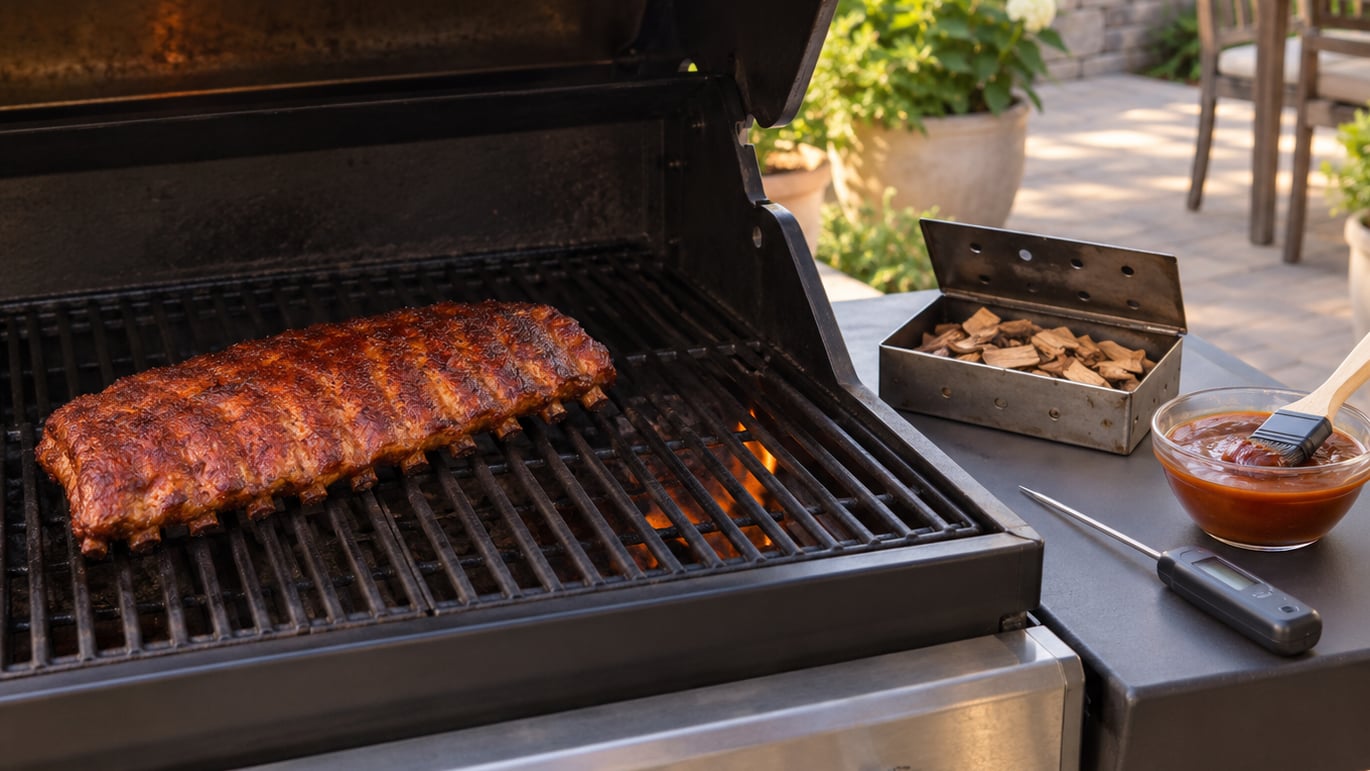
Learning how to grill ribs on a gas grill comes down to one thing: indirect heat, a closed lid, and time. You light one outside burner on medium-low, put the ribs on the far side of the grate, hold 225-250F, and let them go for 2.5 to 4 hours. No smoker, no special gear, no babysitting.
The whole point is that ribs do not want direct heat. They render a lot of fat, and any fat that hits a flame burns fast, so you end up with charred edges and tough meat in the middle. Slow indirect cooking is what turns collagen into gelatin, which is the difference between ribs that chew and ribs that pull clean from the bone.
Budget about 30 minutes of prep and then 3 to 4 hours of cooking. Most of that is waiting, not working.
Table of Contents
- What You Need
- Step-by-Step: How to Grill Ribs on a Gas Grill
- Common Mistakes
- Frequently Asked Questions
- What temperature should a gas grill be for ribs?
- How long should you cook ribs on a gas grill?
- Do you need a smoker box to grill ribs on gas?
- Should I wrap ribs in foil when grilling?
- When should I put barbecue sauce on ribs?
- How do I know when ribs are done without cutting them?
- Can I grill pork belly the same way as ribs?
- What to Do First
What You Need
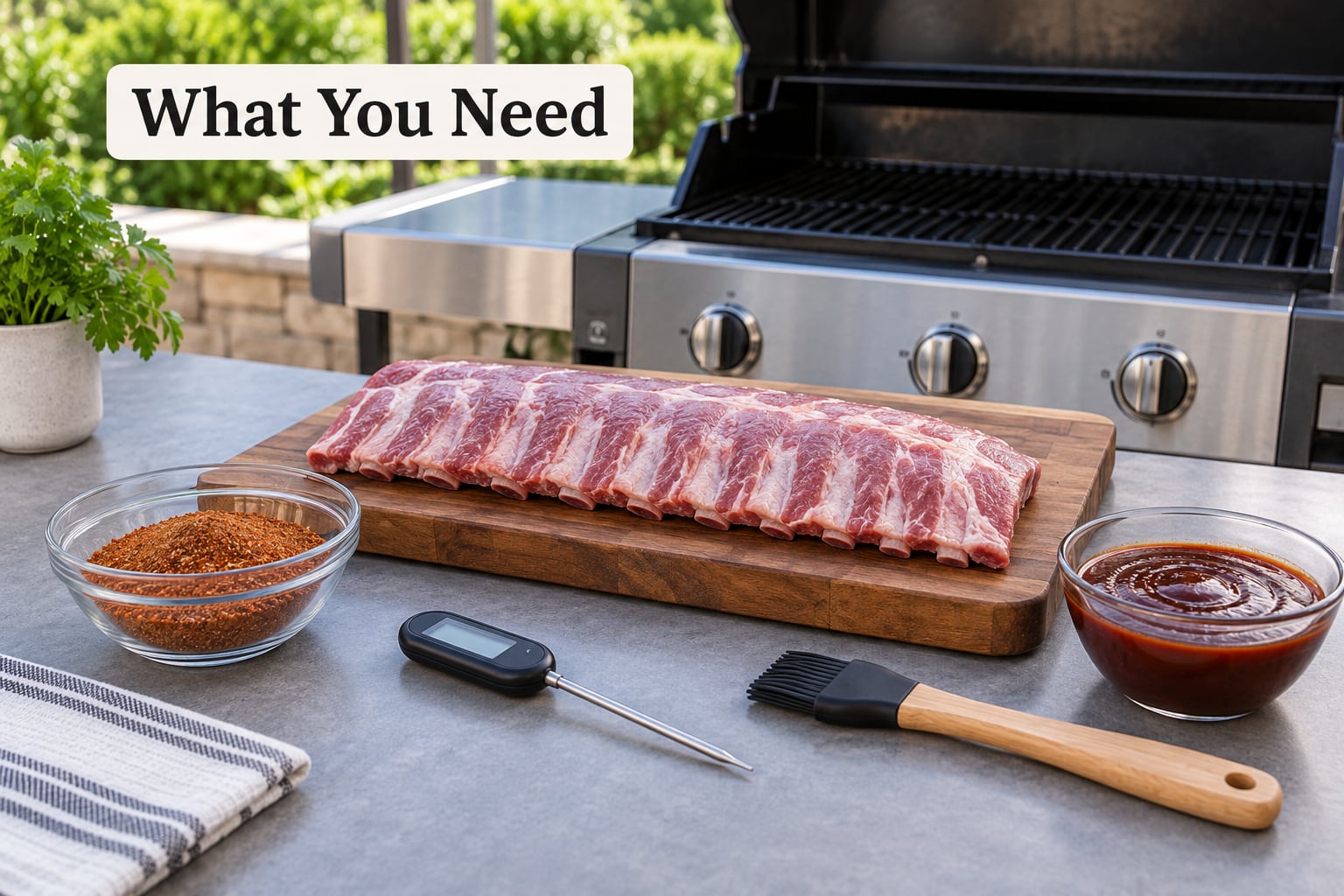
You need very little. A gas grill with at least two burners, a rack of pork ribs, a dry rub, and a sauce covers the basics. Everything else makes it easier or tastes better.
- Ribs: baby backs (about 2 to 3 hours), St. Louis style spares, or full spares (3 to 4 hours). A rack of St. Louis ribs feeds two or three people with sides.
- Gas grill with two or more burners. More burners means easier temperature control. Read my two-zone heat setup guide before you start.
- Instant-read thermometer plus a leave-in probe if you have one. Lid temperature and grate temperature are not the same number, and ribs care about the difference.
- Paper towels, a butter knife or glove, and kitchen shears for membrane removal and trimming.
- Binder and rub: yellow mustard or olive oil, plus a dry rub. No special tools needed for either.
- Wood chips and a smoker box, optional. A foil pan with 10 to 15 holes poked in the bottom works fine if you do not own one.
- A heavy-duty foil pan for wrapping halfway through.
- Basting brush and barbecue sauce for the last 15 minutes. Thick, sweet sauce only, and never earlier.
Step-by-Step: How to Grill Ribs on a Gas Grill
1. Choose and Prepare the Ribs
Pick a rack that feels heavy for its size and has meat covering most of the bone. Loose or dried-out racks cook unevenly, no matter how well you manage the grill.
Rinse the ribs, then pat them completely dry. That is non-negotiable. Wet meat steams instead of browning, and you will never get bark.
Turn the rack bone side down and slide a butter knife under the membrane at the bone end, then grab it with a paper towel and pull. The membrane comes off in one piece if you have sharp ribs; if it tears, the second attempt usually works. Leaving it on is what makes ribs turn papery and slide around, and cooks describe it as a deal breaker.
Trim the fat cap down to a thin layer. It will render for most of the cook, so leaving a thick one just buys you flare-ups.
You can dry-brine for 4 to 8 hours in the refrigerator, uncovered, with salt on the meat side. It seasons deeper and helps the meat hold juice. Skip it if you are short on time; it is a bonus, not a requirement.
2. Set Up Two-Zone Indirect Heat
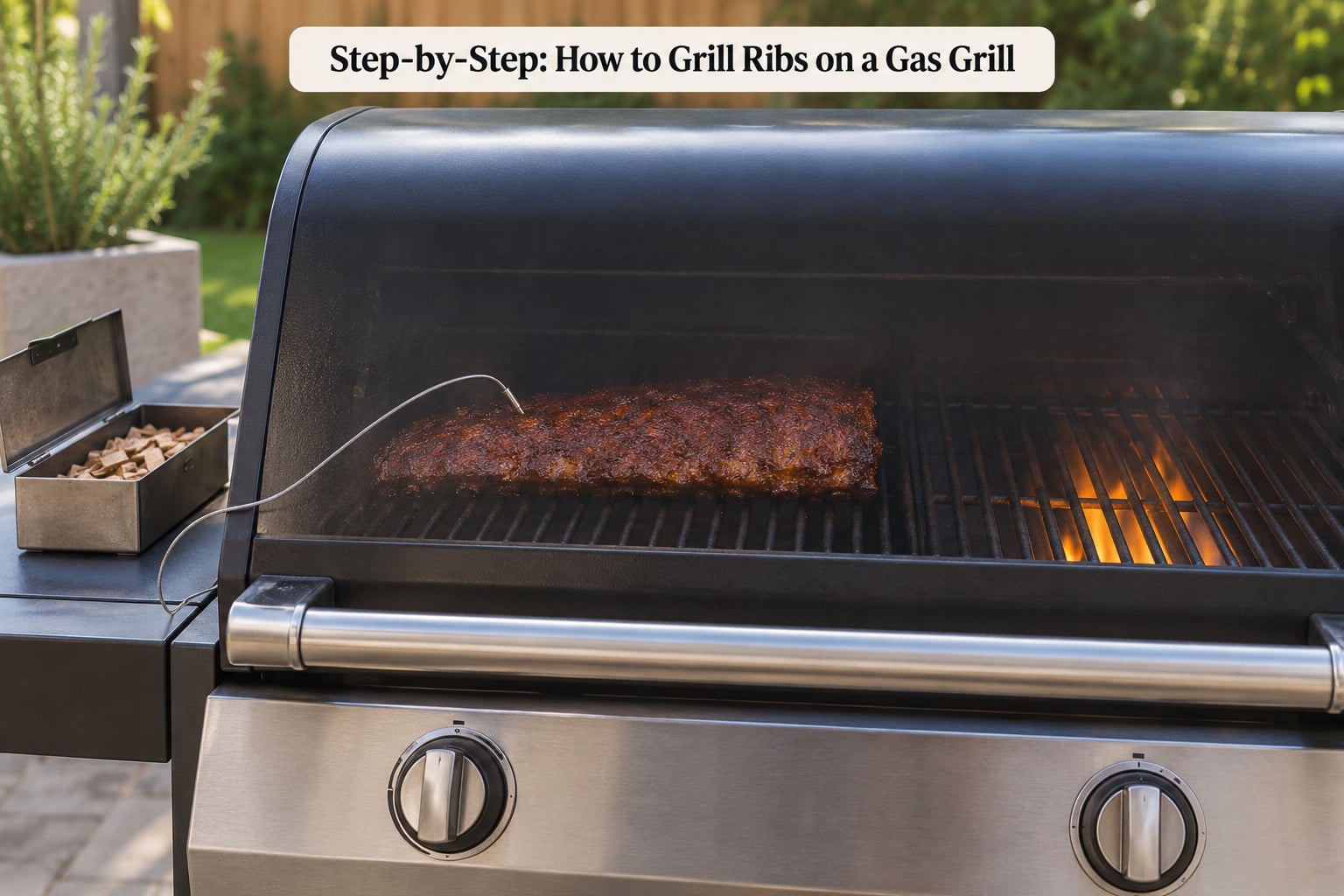
Preheat with the lid closed for 10 to 15 minutes. Start all burners on high, then turn down to one outside burner on medium-low and shut the others off. The ribs go on the unlit side, as far from the flames as the grate allows.
Burner layout matters. On a grill with vertical burners on the left and right, light the right side only. On a grill with horizontal burners across the back, light the back-left or back-right corner. If your grill has a side burner, ignore it; it is too small and too far from the main chamber.
Check the temperature with the lid closed and the probe sitting where the ribs will be. You want 225-250F. A gas grill at its lowest setting often sits well above that, which is the single most common complaint in the cooking forums, and more on that below.
Fill a smoker box with soaked chips (30 minutes in water) or use your foil pan DIY, and set it over the lit burner. Most people see smoke for the first 30 to 45 minutes, then nothing. That is normal. Chips are for seasoning the bark, not for coloring the room for four hours.
3. Season the Rub
Wait, seasoning belongs before the grill, not during. Coat the ribs lightly with binder, then dust with rub and press it in. Work the edges and the meat between the bones; that is where most people under-season.
A simple rub gets you far: coarse salt, coarse black pepper, and brown sugar, with smoked paprika and garlic powder if you like. Apply it 15 to 30 minutes before grilling, not the night before, unless you are deliberately dry-brineing.
Skip the wet marinade if you want bark. Sugar-heavy marinades caramelize in the first hour and turn acrid on a grill that runs hot.
4. Cook the Ribs Until Tender
Place the racks bone side up over the cool side, close the lid, and walk away. Bone side up lets the rendered fat run down into the meat instead of pooling under the bones.
Hold 225-250F with the lid shut. Check the temperature every 30 to 45 minutes, not every five minutes, because every lid lift drops the chamber temperature and makes your clock meaningless.
| Rib cut | At 225-250F | At 275-300F |
|---|---|---|
| Baby back ribs | 2 to 3 hours | 1.5 to 2 hours |
| St. Louis style spare ribs | 3 to 4 hours | 2 to 2.5 hours |
| Full spare ribs | 3.5 to 4.5 hours | 2.5 to 3 hours |
Add 30 to 45 minutes for spares compared with baby backs on the same method. That difference is real and it is where most first-timers get caught.
At roughly the halfway point, wrap the ribs in foil with a splash of apple juice, a spoon of barbecue sauce, or both. Seal it tightly. Wrapping traps steam and finishes the meat tender without costing you much bark.
When you should wrap depends on your grill. If it will not hold below 275F, wrap earlier and unwrap sooner. If you have a grill that holds steady, you can leave them bare and let the bark set.
5. Glaze and Finish for Caramelization
Unwrap when the probe slides into the meat between the bones with no resistance. Somewhere around 185-205F is the working range. That is the number, not the clock, that decides it.
Do the bend test too: lift a rack with tongs and let the end hang. If it bends like a rubber hose without cracking, it is close. If the bark starts to crack along the bone, pull it now.
Then move the ribs over to the lit burners for direct heat. Sauce them thickly, four to five minutes per side, flipping twice. You want the sauce glossy and darkened at the edges, not black.
Sauce contains sugar, and sugar burns in under a minute over a gas flame. This is why you wait until the last 15 minutes.
Rest 5 to 10 minutes off the heat before you cut. Then cut between the bones with a sharp knife, not a saw.
Common Mistakes
Grilling over direct heat. This is the big one. Ribs on a lit burner char in 15 minutes and stay tough for hours.
Your grill will not go below 275F. Most people never open the lid on their gas grill, so they never learn how much a small adjustment buys you. If your lowest burner setting still reads high, put the ribs on the far side, close the lid, and trust the lid thermometer. If that still fails, cook hotter and shorter at 300F, or move the cook to a 250F oven and finish on the grill. The oven-plus-grill hybrid is the reliable shortcut for a weeknight, and it is the one method nobody documents.
Leaving the membrane on. Papery skin, no seasoning adhesion, and ribs that slide off the bone in a bad way.
Saucing too early. Two hours of sugar over indirect heat equals burnt sauce. Sauce in the last 15 minutes.
Opening the lid constantly. Every peek costs you 20 to 30F and adds 10 to 15 minutes to the cook.
Cutting too early. Ribs pulled at 180F chew. Push to 190-205F, and remember that meat should pull, not fall apart into shreds as you lift it.
Chasing fall-off-the-bone tenderness. That is how you turn a good rack into mush. Pull when the meat bends and gives, not when it collapses.
Forgetting flare-ups. Ribs shed grease, and drippings near a lit burner cause flames. Keep the meat away from the burners and use a foil tray under the cook if your grill runs hot. My flare-up control guide covers the rest.
Leaving wood chips unattended. Chips burn down after 30 to 45 minutes and can become a fire hazard on a long cook. Check them between temperature checks and pull the box once the flavor is set. If you want the smoke flavor to last, refill with fresh chips instead of piling more on top of ashes.
Cutting a rack in half to fit a small grill. It works, but the cut end dries out over a long cook. Better to cook two half-racks in separate batches than to rush one.
Frequently Asked Questions
What temperature should a gas grill be for ribs?
Hold 225-250F with the lid closed for a low-and-slow cook, which takes 2.5 to 4 hours depending on the cut. If your grill will not drop that low, cook at 275-300F instead and finish in 30 to 45 minutes less time. Always check the temperature where the ribs will sit, not just at the lid.
How long should you cook ribs on a gas grill?
Baby back ribs take about 2 to 3 hours at 225-250F. St. Louis style spares need 3 to 4 hours, and full spares closer to 4.5. At 275-300F, cut that roughly in half. Treat the times as a range and pull on tenderness and internal temperature instead, since every grill runs differently.
Do you need a smoker box to grill ribs on gas?
No. Ribs cook well on a plain gas grill using indirect heat alone, and the smoke flavor is a bonus rather than a requirement. If you want it, a foil pan with 10 to 15 holes punched in the bottom works like a smoker box. Soak chips for 30 minutes, expect smoke for the first 30 to 45 minutes, then add fresh chips if you want more.
Should I wrap ribs in foil when grilling?
Wrap them at the halfway point with a splash of apple juice or a spoon of sauce. The foil traps steam and softens the meat into tenderness without adding much cook time. If your grill runs hot and will not hold below 275F, wrap earlier and unwrap sooner. Unwrapping too late gives you a soft, pale bark.
When should I put barbecue sauce on ribs?
Only in the last 10 to 15 minutes. Sugar burns fast over a gas flame, so sauce applied at the start turns black long before the meat is tender. Move the ribs over direct heat, sauce them thickly, and give them four to five minutes per side with two flips. You want a glossy coat with darkened edges, not char.
How do I know when ribs are done without cutting them?
Slide a probe into the meat between the bones with no resistance. Around 185-205F is the working range. The bend test works too: lift a rack with tongs and let it hang. It should flex like a rubber hose without the bark cracking. Pork ribs are safest eaten fully cooked, so cook them well past the usual pork temperature guidance.
Can I grill pork belly the same way as ribs?
You can, but the timing is different and the cut is easier to burn. Pork belly has more fat and more sugar in the surface, so cook it slower and further from the flame, and expect to trim the bark before serving. Ribs give you a built-in doneness test and a bone to work with, which makes them far easier for a first cook.
What to Do First
Rinse and dry the ribs, pull the membrane, and get the grill to 250F with the lid closed and one burner lit. Everything after that is waiting. Start at 250F for spares, 275-300F if your grill runs hot, and pull the rack when the probe slides between the bones with no resistance.
Once you have the timing down, it is worth a side-by-side on heat sources. I compared the two in charcoal vs gas for burgers, and the same flavor gap shows up on ribs.