
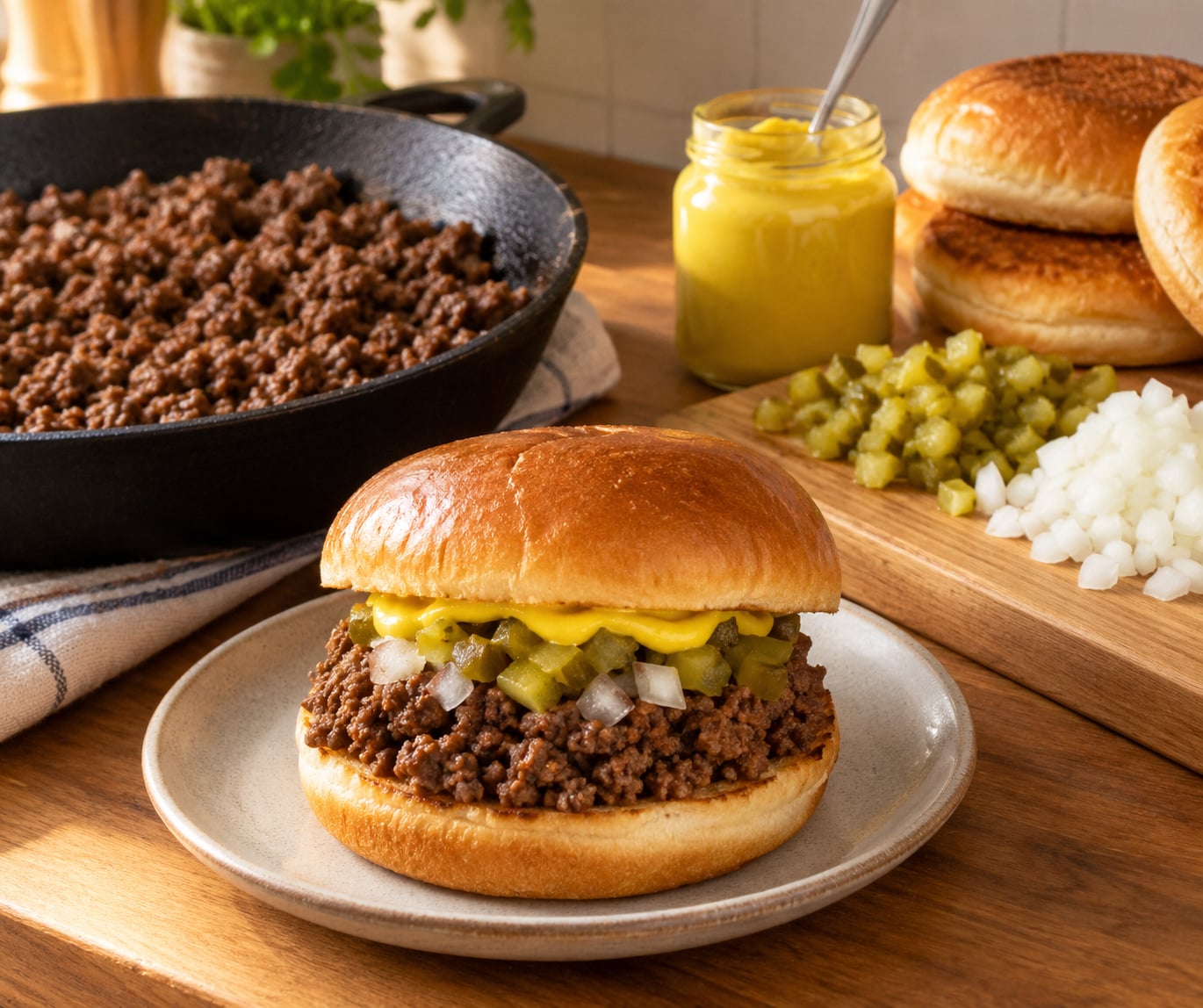
A loose meat sandwich is seasoned ground beef browned in a skillet, simmered in broth and mustard until the liquid cooks away, then piled onto a soft bun with yellow mustard, pickles and chopped onion. There is no tomato sauce anywhere in it. If you only take one thing from this guide, take this: cook the beef until it looks dry, not saucy. Most disappointing loose meat sandwiches fail because the filling was wet.
This version takes about 40 minutes from a cold skillet to sandwiches on the counter, and the work is almost all unattended. It scales easily for a cookout crowd, and the filling freezes well if you want to make it once and eat it twice. Beginners usually get the tenderness right and the seasoning wrong, so both get their own sections below.
What You Need
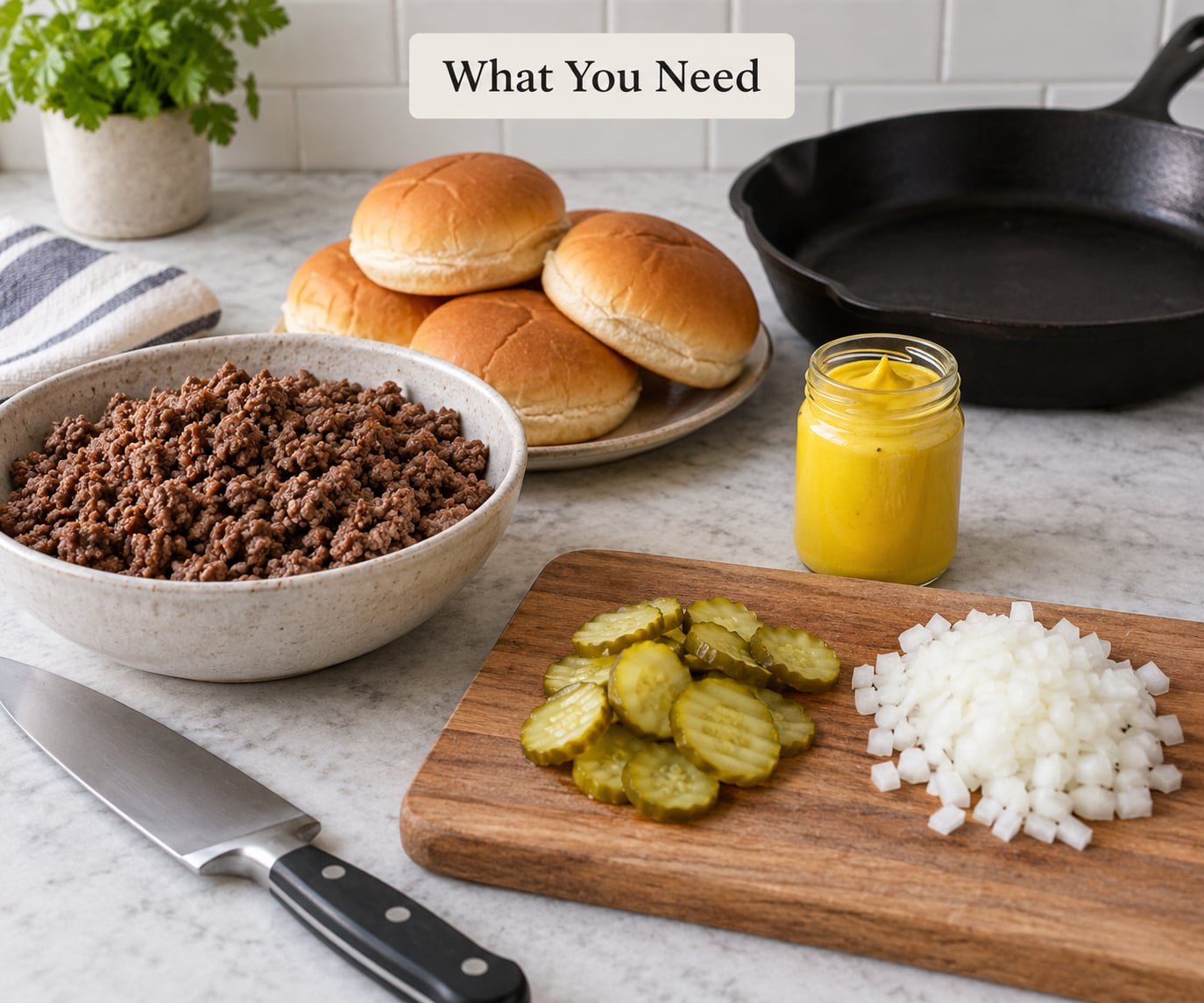
Ground beef is the standard filling, and an 80/20 blend is the sweet spot. The fat gives the meat flavor and keeps it tender after a long simmer, while the lean keeps the crumbles from turning greasy. Buy 2 pounds for about eight sandwiches.
Here is the shopping list for a first batch:
- 2 pounds 80/20 ground beef
- 1 cup low-sodium beef broth, or water if you prefer a cleaner taste
- 2 tablespoons prepared yellow mustard, plus more for the buns
- 1 tablespoon dry mustard powder, for a sharper tang
- 2 tablespoons Worcestershire sauce
- 1 teaspoon salt and 1/2 teaspoon black pepper, plus more to taste
- 1 tablespoon onion powder or 1 small onion, grated
- 1 teaspoon garlic powder
- 1 teaspoon sugar, which rounds out the mustard and cuts the sharpness
- 8 soft hamburger buns, dinner rolls or potato buns
- Dill pickles, chopped onion and shredded cheese for topping
A wide skillet or Dutch oven with a lid is the only piece of equipment that matters. A wood spoon and a wide slotted spoon handle the rest. If you plan to feed a crowd, [portioning meat in bulk before you cook](/how-to-buy-meat-in-bulk-and-portion-it/) saves a lot of chopping later.
For doneness, use an instant-read thermometer rather than guessing. Ground beef is safe and tender at 160 F, and whole cuts such as chuck roast reach 145 F. Those numbers follow the USDA guidance that also applies to [grilling and smoking meat](/food-safety-rules-for-grilling-meat/), so the same thermometer covers both sides of your cooking.
Step-by-Step: How to Make Loose Meat Sandwiches
How to Cook the Beef Until It Is Tender
Heat a wide skillet over medium-high heat. Add the beef in a single layer and leave it alone for two or three minutes so it develops a browned crust, then break it into small pieces with the back of a spoon.
Keep the heat at medium from here. Crowding the pan drops the temperature and steams the meat instead of browning it, which is where a lot of loose meat turns grey and rubbery. If your skillet looks full, cook in two batches.
Once the beef is browned and crumbled, stir in the broth, both mustards, the Worcestershire, the onion, garlic, sugar, salt and pepper. Bring it to a boil, then turn the heat down to its lowest setting and simmer uncovered.
Let it cook until you can see bare pan bottom when you drag the spoon across, roughly 20 to 30 minutes. Scrape the bottom often. A film of fond that keeps darkening is where the flavor concentrates, and left alone it burns bitter.
A slow-cooked whole cut works too, and some people prefer the texture. Braise a chuck roast at 325 F until a fork slides in with no resistance, about three hours, then pull it apart into strands. That method trades 40 minutes for nearly three hours, so it suits a weekend rather than a Tuesday.
Whichever route you take, check the internal temperature with your thermometer before moving on.
How to Shred and Season the Loose Meat
Pour off all but about a tablespoon of the rendered fat. Leaving a little grease in the pan is what gives an authentic tavern sandwich its slight sheen, but a pool of fat at the bottom of the bowl makes the bun soggy. Season and taste, then adjust.
For ground beef, keep the texture loose by stirring rather than pressing. If you want the very fine, uniform crumble that diner versions have, pulse the cooked beef in a food processor a few times or run it through a meat grinder a second time. That second pass is the classic twice-ground method, and it works because breaking the cooked muscle fibers again creates more surface area for the broth to soak into and for the mustard to cling to.
For a whole-cut roast, let it cool until you can comfortably handle it, then pull it apart along the grain with two forks. Cutting against the grain shortens the fibers and gives you shorter, drier shreds. Two forks keep the strands long and moist.
Whichever you chose, season the finished meat while it is still warm. Dry mustard, salt and pepper go on now while there is enough moisture to dissolve them. A spoonful of the reserved cooking liquid stirred back in at the end is the easiest cure for meat that seems dry.
How to Assemble Loose Meat Sandwiches
Split and lightly toast the buns. Toast them in the same skillet with a little of the reserved beef fat for a minute on the cut side, which is the step most shortcuts skip.
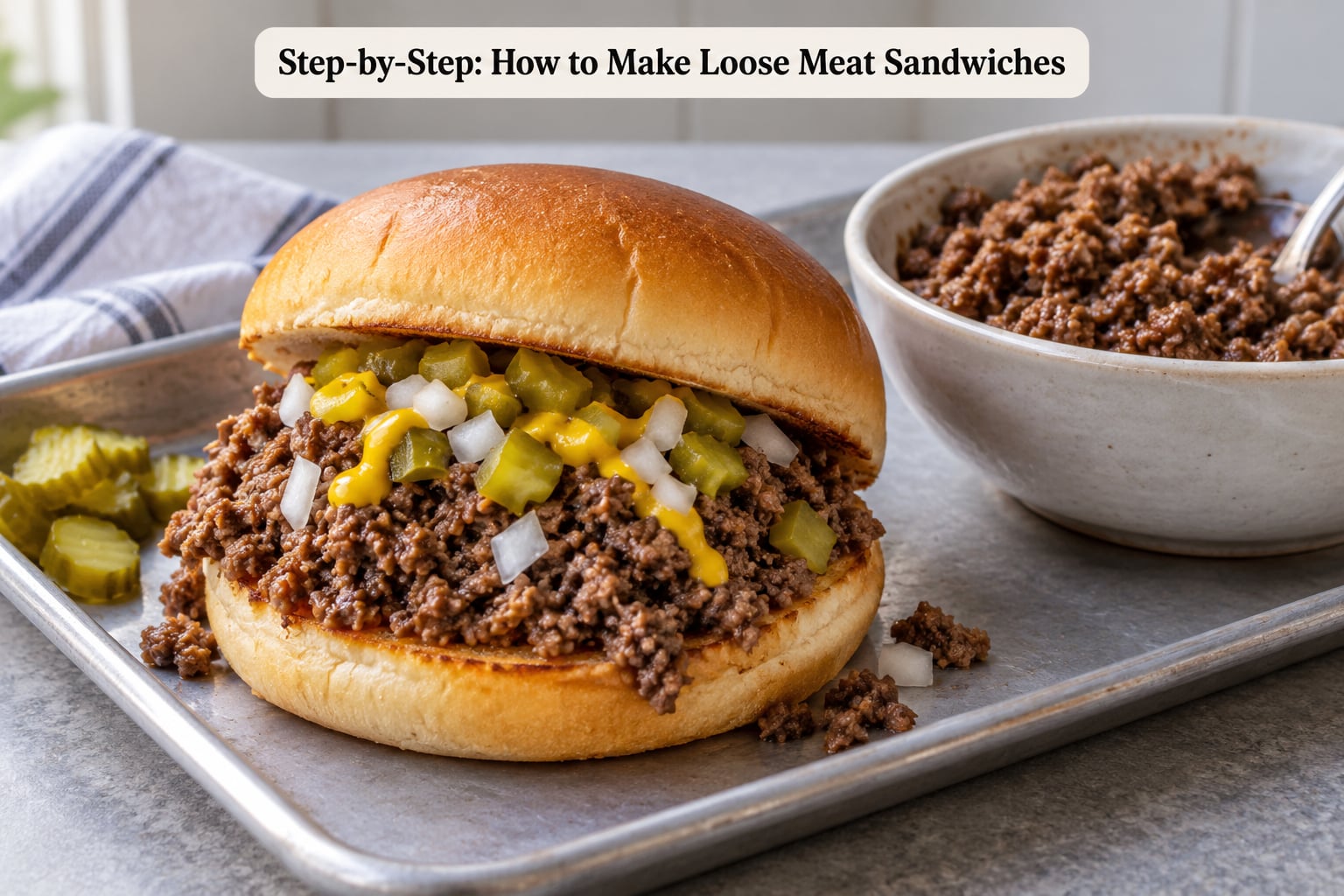
Spoon the beef in generously and press it down just enough to stay put. Add mustard, then chopped onion, then pickles, in that order, so the pickles sit on top and stay crisp instead of steaming.
Shredded American or cheddar melts well on the hot beef if you add it before the bun goes on the plate. Peppers, hot sauce, a spoonful of horseradish and a drizzle of pickle brine all work. What does not belong is ketchup, and purists in Iowa and across the Midwest are firm about that.
Assemble these close to serving. Buns start going soft within about ten minutes, and that is the one thing no amount of good filling will fix. [Keeping lettuce crisp for sandwiches](/how-to-keep-lettuce-crisp-for-sandwiches/) has the same timing logic if you want to add greens alongside the beef.
Common Mistakes
Using a tough cut. Lean sirloin and 90/10 blends dry out during a long simmer. Stick with 80/20 or 85/15, and if you want the flavor of a chuck roast, cook the whole cut instead of buying a lean ground blend.
Letting the liquid simmer too long. The broth is there to season the meat and tenderize it, not to make a sauce. The moment it evaporates and the beef starts to sizzle again, stop.
Overcooking after the liquid is gone. Extra time in a dry pan dries the crumbles and scorches the fond. Once the pan looks clean, the cooking is done.
Cutting roast shreds too short. Thin slices and short chopped pieces lose moisture quickly. Pull long strands instead and leave the chunks a little uneven.
Skipping the second seasoning. A single seasoning pass in the liquid is not enough once the liquid is gone. Taste the warm meat and add salt, dry mustard and pepper until it tastes slightly stronger than you think it should.
Serving the filling undrained. Carry the meat to the table in a slotted spoon or drain it first. Extra juice soaking into the bun is the most common reason people describe their loose meat sandwiches as soggy.
Overcrowding the skillet. Too much beef at once lowers the pan temperature and steams it. Two batches of a pound each gives you the browning that carries the whole sandwich.
Scaling up without scaling the pan. Two pounds works in a 12-inch skillet. Ten pounds needs a stockpot, or two skillets, or the beef will cool and water instead of brown. Since about two pounds of raw beef fills eight sandwiches, a group of twenty needs roughly five pounds.
Frequently Asked Questions
What meat is best for loose meat sandwiches?
An 80/20 ground beef blend is the best all-around choice because the fat keeps the crumbles tender after simmering and adds flavor without turning greasy. An 85/15 blend works if you prefer a leaner filling, and chuck roast cooked until it shreds gives you longer strands with a deeper beef flavor. Avoid 90/10 or lean sirloin, which dry out during a long cook.
Can I make loose meat sandwiches ahead of time?
Yes, and the filling is better for it. Cook the beef up to two days ahead, cool it uncovered before tightening the lid, then refrigerate it in an airtight container. Keep the mustard, pickles and chopped onion separate and add them when you build the sandwiches, or the onions turn watery and the pickles go soft.
How do I keep the shredded beef moist?
Stop cooking as soon as the liquid is gone, leave a tablespoon of rendered fat in the pan, and stir a few spoonfuls of the reserved cooking liquid back through the meat at the end. For long storage, braise the meat in that liquid rather than simmering it dry. Reheat gently on low with a splash of broth, never high in a hot dry pan.
Can I use ground beef for loose meat sandwiches?
Ground beef is the traditional choice, not a shortcut. It is what the original 1926 Iowa version was built on. A slow-cooked chuck roast is the alternative if you want a chunkier, shredded texture, and a plant-based ground product works with the same seasoning, though the filling will not have the rendered fat that makes the real thing taste like a tavern sandwich.
How should I reheat leftover loose meat?
Warm it in a skillet over low heat with a splash of beef broth and a lid on for a few minutes, or microwave in short bursts in a covered container. Both methods trap steam and stop the crumbles from drying out. Reheating it hot and dry is the fastest way to turn good leftover beef into a disappointing one.
What toppings go best with loose meat?
Yellow mustard, chopped raw onion and dill pickles are the classic trio, and each one does a job: mustard for tang, onion for bite, pickles for crunch and brine. Shredded American or cheddar melts on the warm beef, and hot sauce or a little horseradish adds heat. Ketchup belongs beside the sandwich if you want it, never in the meat.
Conclusion
The recipe is short because it has few moving parts: a tender cut of beef, a seasoned liquid, and the patience to stop cooking when the pan runs dry. Pick an 80/20 blend, season the broth with both mustards and Worcestershire, shred or crumble the meat only once it is cool enough to handle safely, and pile it onto a toasted bun just before you eat. Get those three right and you have a loose meat sandwich worth the traffic in the building.