
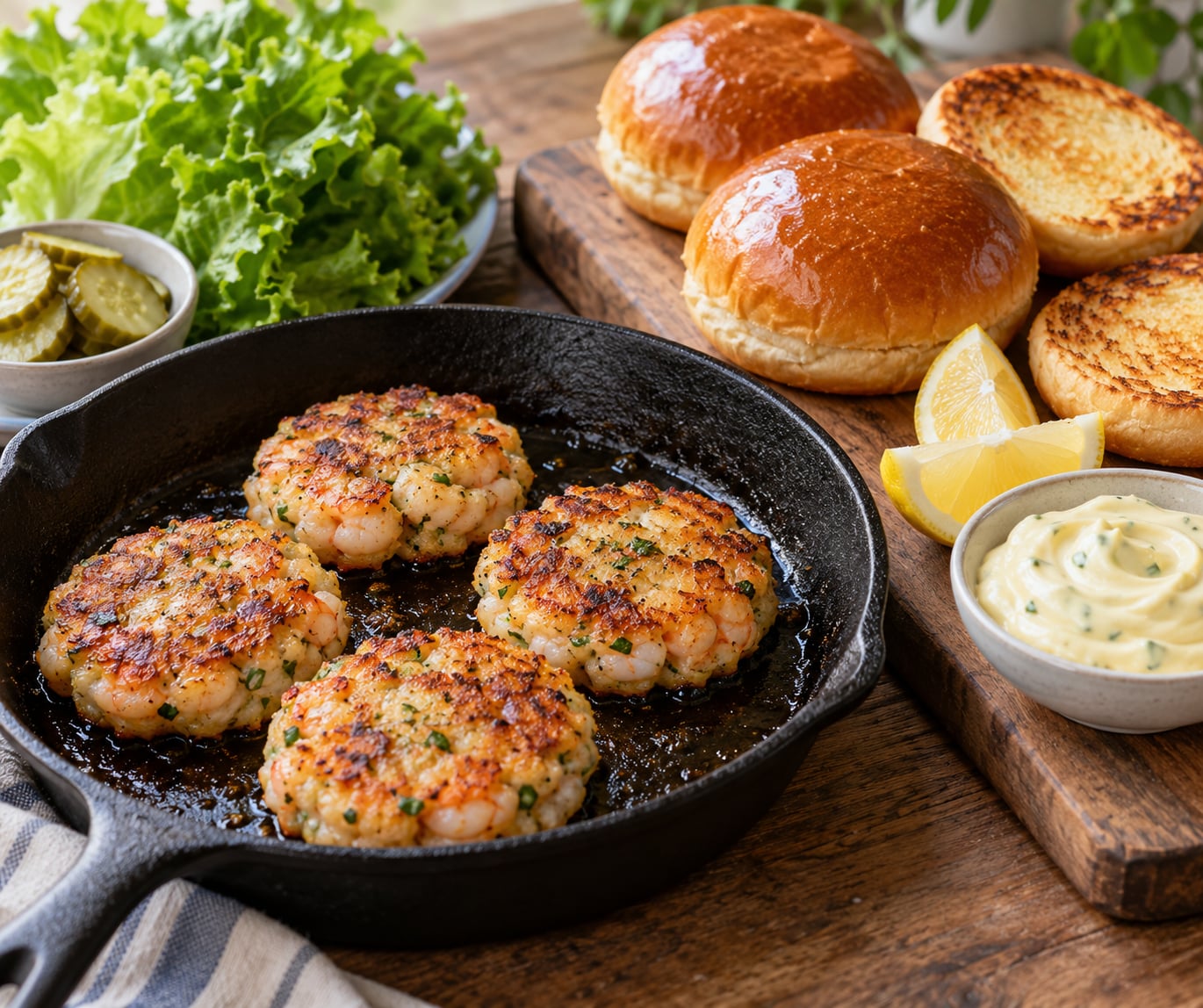
You can make shrimp burgers at home in about 35 minutes: chop raw shrimp, bind it with egg and breadcrumbs, chill the patties so they set, then pan-fry them about three minutes per side until golden and at least 145°F / 63°C inside. No deep fryer, no weird equipment.
The part that trips people up is the patty. Shrimp has almost no fat and no gluten, so a mix with nothing in it crumbles in the pan. Once the binder and a real chill time are in the routine, you get a burger that holds together, sears deep brown, and stays juicy in the middle.
I’ve made this roughly a dozen times over the past year, and the version below is the one I stopped fiddling with. Four patties, one skillet, about an hour once chilling is included.
What You Need for Four Shrimp Burgers
Everything here is either a shrimp, a binder, a seasoning, or a bun. You do not need a food processor, though one makes the chopping faster.
The shrimp
- 1 to 1.25 pounds raw shrimp, peeled and deveined, tails off
- Medium or large shrimp works best. Jumbo are fine, just chop a little finer
- Fresh or frozen, both work. Frozen is usually cheaper and honestly does the job as well
Check the tails before you start. A single leftover tail gives the burger a gritty bite no amount of seasoning hides.
The binder
One binder per pound of shrimp is plenty, and mixing two is usually where people go wrong. Pick one:
| Binder | Amount per pound of shrimp | Best for | Watch out for |
|---|---|---|---|
| Panko breadcrumbs | 1/3 cup plus 2 tablespoons for dredging | Crispest crust, most forgiving patty | Dries out if you skip the egg |
| Plain breadcrumbs | 1/3 cup | Budget option, decent browning | Finer, so the patty feels denser |
| Egg | 1 large, plus a splash of milk to beat | Cheapest binder, no crumbs needed | Needs more chilling than panko |
| Mayonnaise | 2 tablespoons | Rich flavor, extra moisture | Browns fast, so lower the heat slightly |
| Self-made aioli | 3 tablespoons | Garlicky, restaurant style | Salt the aioli lightly if the shrimp are briny |
The seasoning
- 1 teaspoon fine salt, plus more for the shrimp if they taste bland
- 1 teaspoon black pepper
- 1 teaspoon garlic powder
- 1 teaspoon Old Bay or Creole seasoning, or 1/2 teaspoon cayenne plus 1/2 teaspoon paprika
- 1 tablespoon lemon zest
- 2 scallions, sliced thin
- 1 tablespoon Dijon mustard
One note on salt: kosher salt is roughly twice as strong per tablespoon as table salt, so measure by volume and taste. Salty shrimp burgers are one of the most common complaints from home cooks, and it is almost always a heaping tablespoon of table salt in the mix.
The rest
- 4 brioche, potato, or sesame hamburger buns
- 1 to 2 tablespoons neutral oil for the pan
- Lemon wedges, lettuce, tomato, pickles, thin red onion for serving
- A sauce you like: tartar, spicy mayo, lemon aioli, or cocktail sauce
Brioche buns are worth the extra few cents. The egg wash in the dough soaks up the sauce and keeps the burger from tasting heavy. If you are avoiding gluten, use lettuce leaves or a toasted slice of gluten-free bread instead, and lean on a bolder sauce to make up for the missing richness. If you also have guests who do not eat seafood, how to make veggie burgers from scratch follows a similar shaping routine and cooks in the same pan.
Step-by-Step: How to Make Shrimp Burgers
1. Prep the Shrimp and Seasoning: How to Make Shrimp Burgers Juicy
Drain the shrimp thoroughly. Lay them on paper towels for ten minutes and blot the tops dry, then give them a rough chop into half-half-inch pieces.
For the juiciest result, leave about a third of the shrimp coarsely chopped and pulse the rest in a food processor a few times, just until it turns into a sticky coarse puree. That paste is what holds the patty together. If you pulse to a smooth paste instead, the burger cooks up bouncy and rubbery.
A knife works fine too. Chopping by hand gives you the most control, and you can leave a few larger pieces in for texture.
Now the important part: how to make shrimp burgers that do not fall apart is about seasoning gently. Combine the chopped shrimp, the puree, one binder, the seasonings, the scallions, the lemon zest and the Dijon in a bowl. Fold with a spoon until it just holds together.
Do not knead it and do not overmix. Overworking shrimp squeezes out the liquid and makes the mixture gummy. Stop as soon as the ingredients look evenly coated and the mixture clumps when you squeeze a handful.
2. Shape the Shrimp Patties
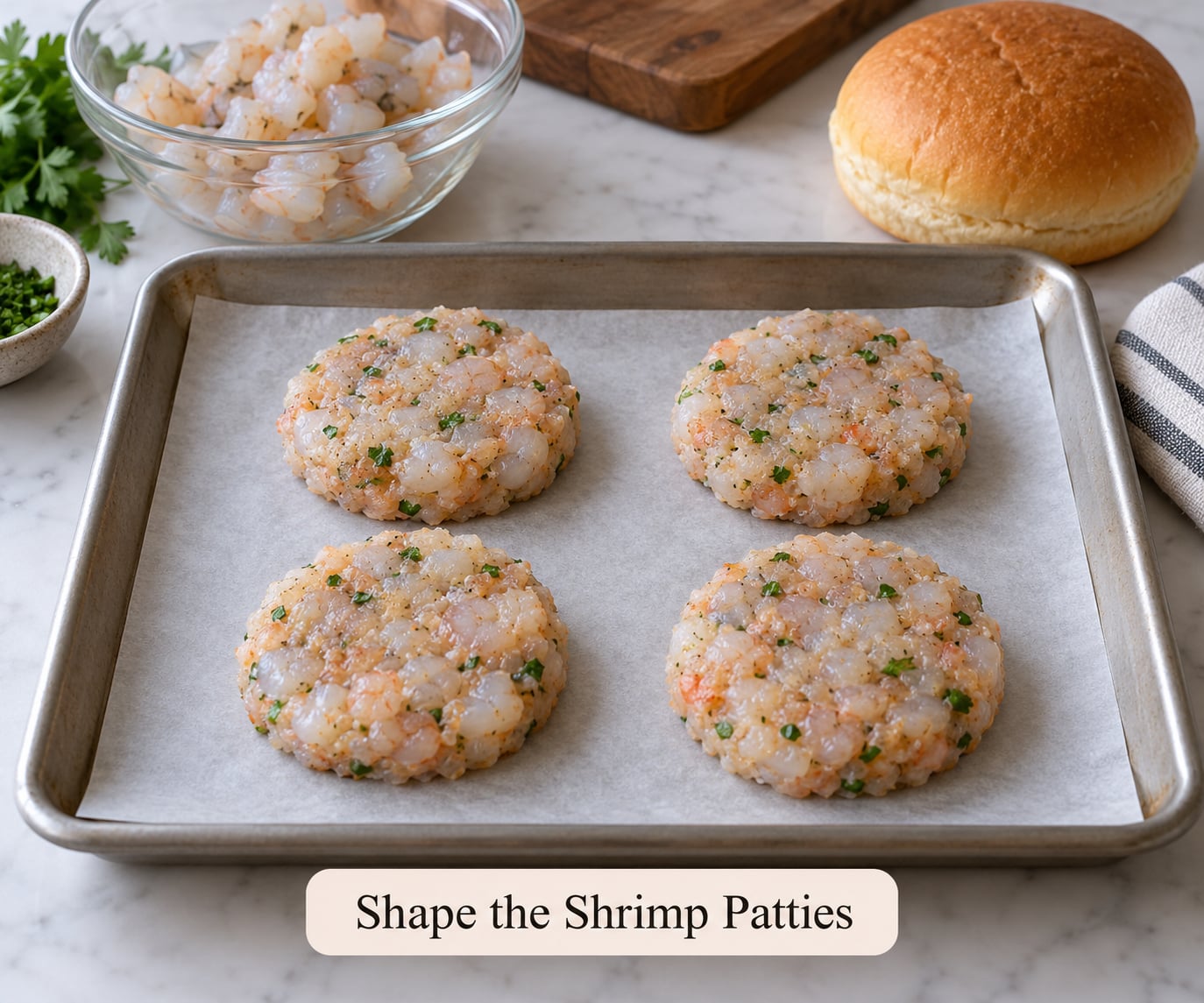
Divide the mixture into four equal portions and shape each one into a patty a little wider than your bun, roughly a quarter-inch thick. Cup your hands, press firmly, then smooth the surface flat so the patty sits evenly in the pan.
An even center is what makes the burger cook at one rate. A thick middle stays raw while the thin edges burn, which is the fastest way to end up with a disappointing shrimp burger.
Set the patties on a parchment-lined tray, not directly on the board, so you can slide them into the fridge without handling them again. Cover and chill for at least 30 minutes, and an hour if you have the time. That chill is the single biggest difference between patties that hold together and patties that crumble in the skillet.
3. Sear Until Golden and Fully Cooked
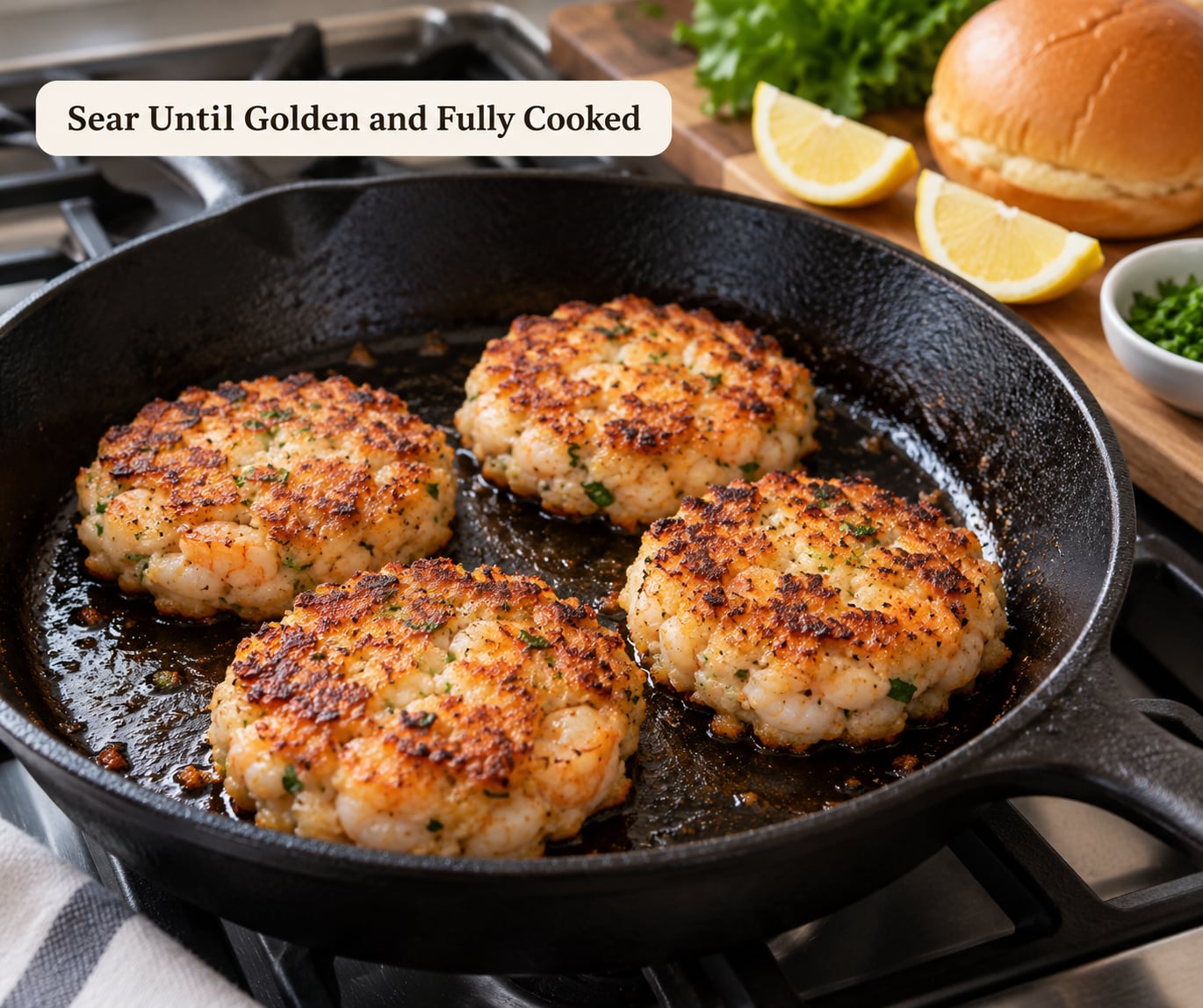
Heat a skillet or griddle over medium-high heat and add the oil. Let the oil shimmer and flow freely before the patties go in.
Carefully lay the patties down and then leave them alone. Resist moving them for about three minutes. Pulling early is what tears the crust off, and that torn edge is exactly what releases into the pan as water.
After three minutes the underside should be deep golden brown and firm enough to release. If it is pale, give it another minute. Flip once and cook the second side for two to three minutes more.
Shrimp turns opaque and pearly white the moment it is done, and it keeps cooking from residual heat. Pull the patties at 145°F / 63°C in the thickest part, verified with an instant-read thermometer. That is the FDA minimum internal temperature for shrimp and other fish.
Rest the patties on a plate for two minutes while you toast the buns. Do not stack them, or the trapped steam softens the crust you just built.
4. Toast the Buns and Add the Toppings
Split the buns and toast the cut faces in the same skillet for about 30 seconds, cut side down, until they are lightly golden. Rub the warm cut faces with a little garlic butter or a garlic powder and olive oil blend if you want extra flavor.
Spread a thin layer of sauce on the bottom bun. Thick blobs of sauce soak straight through the bread and turn the bottom into a damp trap, so spread it light.
Set the patty on top, then build in order of moisture: lettuce, tomato, thin onion, pickles. That order keeps the wet ingredients away from the bun.
A simple squeeze of lemon over the patty before the top bun goes on does more than most people expect. The citrus cuts the richness of the shrimp and makes the whole burger taste lighter.
If you want something with more body, a small scoop of guacamole works well here. It cools the heat of Creole seasoning and adds fat that the shrimp patty itself does not have. Our homemade guacamole for burgers takes about five minutes if you already have ripe avocados.
5. Serve the Shrimp Burgers Right Away
Serve these the moment they come out of the pan. A shrimp burger has nothing like the resting tolerance of a beef patty, and after ten minutes the crust has softened and the bun has started to give.
Fries, sweet potato fries, or a simple salad all sit well. A cup of coleslaw is my pick for summer, since the cold crunch cuts the richness just as well as the lemon does, and how to make coleslaw for burgers takes five minutes of hands-on time.
For drinks, a cold lager works, and so does a dry white such as an unoaked Chardonnay or a Sauvignon Blanc.
Cooked shrimp keeps three to four days in the refrigerator at or below 40°F / 4°C, sealed in an airtight container. Reheat in a skillet over medium heat rather than a microwave, so the crust stays crisp instead of turning rubbery.
Cooking Methods Compared: Pan-Fry, Grill, Air Fryer and Oven
The skillet is the most reliable method, but the others work once you adjust for the fact that shrimp is lean and dries out fast.
| Method | Heat | Time per side | What you get |
|---|---|---|---|
| Skillet or griddle | Medium-high | 3 minutes, then 2 to 3 minutes | Best crust, most control |
| Outdoor grill | Medium-high over direct heat | 3 minutes, then 2 minutes | Smoky edges; patties need a longer chill |
| Air fryer at 400°F | 400°F / 205°C | 5 to 6 minutes, flipping once | Great crust, no smoke indoors |
| Baking sheet | 425°F / 220°C | 10 to 12 minutes total, flipping once | Even cooking, softer crust |
On a grill, the patties need a full hour of chilling and a well-oiled grate, or they will stick and tear. Any cooking method needs the same 145°F / 63°C finish.
Common Mistakes and How to Fix Them
The patty falls apart when you flip it. Three causes, in order of likelihood: it was not chilled long enough, the pan was not hot enough to form a crust quickly, or you moved it before the underside set. Give it a full hour in the fridge, heat the pan properly, and leave it for three minutes untouched.
The patty crumbles before it even hits the pan. You skipped the binder, or you formed the patties too loosely. Press firmly, and the mixture should squeeze together and hold without crumbling at the edges.
The burger is dry or rubbery. Shrimp overcooks in about 30 seconds past done. Take it off the heat at 145°F / 63°C, not when the color looks right. Over-processing the shrimp is the other half of this problem, since a fine paste cooks into a bouncy texture.
The outside burns before the center cooks. Your heat is too high or your patties are too thick. Drop to medium and press the patties to about a quarter-inch. Cutting the patty thickness slightly different on each one is what causes uneven cooking.
There is water in the pan and the burger is soggy. The shrimp released liquid. Blot the shrimp dry before mixing, chill the patties on a tray rather than a bowl, and stop flipping more than once.
The bun is wet and falling apart. Too much sauce, applied too early. Spread a thin layer and add the patty immediately before serving.
Two more habits worth keeping. Taste your seasoning blend before it goes in the shrimp, since raw shrimp is mild and hides salt more than you expect. And make the patties slightly wider than your buns, because a shrimp burger loses a little width in the pan.
Frequently Asked Questions
Can I use frozen shrimp to make shrimp burgers?
Yes, and most home cooks do. Thaw the shrimp in the refrigerator overnight, then drain and blot them dry before chopping. Thawing in cold water works too, but it softens the shrimp, so pat them dry extra carefully. For burgers specifically, frozen peeled and deveined shrimp gives the same result as fresh once the surface moisture is gone. Skip any shrimp that smells sour or feels slimy.
How do I keep shrimp burger patties from falling apart?
Chill them. Shape the patties, set them on a parchment-lined tray, and refrigerate for 30 minutes to an hour before cooking. A cold patty firms up enough to survive a hot skillet. Use one real binder such as panko or egg, press firmly when shaping, and do not flip the patty until the underside is deep golden after about three minutes. Hot pan plus a cold patty is the whole trick.
What should I serve with shrimp burgers?
Keep the sides light. Fries, sweet potato fries, or a simple green salad all work, and a cup of coleslaw is my favorite because the cold crunch cuts the richness. A lemony potato salad also holds up well. For drinks, a cold lager or a dry white such as Sauvignon Blanc. Avoid heavy fried sides like onion rings, which compete with the crust you just spent three minutes building.
Can I prepare shrimp burger patties ahead of time?
Yes, and it improves them. Shape the patties, lay them on a parchment-lined tray, cover and refrigerate for up to 24 hours. For longer storage, freeze the patties in a single layer until solid, then transfer to a freezer bag for up to two to three months. Cook from frozen in a skillet over medium heat, adding a couple of minutes per side, and confirm 145u0026deg;F / 63u0026deg;C internally before serving.
How should I store and reheat leftover shrimp burgers?
Store cooked burgers in an airtight container in the refrigerator at or below 40u0026deg;F / 4u0026deg;C and eat within three to four days. Reheat in a skillet over medium heat for two to three minutes per side, or in an oven at 350u0026deg;F / 175u0026deg;C for about 10 minutes. A microwave works for safety but softens the crust. If you kept the patties separate from the buns, warm each part separately and reassemble so the bread stays crisp.
Conclusion
The whole thing rests on three decisions: drain the shrimp dry, season them lightly, and use just enough binder to hold the patty together.
Shape the patties a little wider than your buns, chill them for a full hour, then sear over medium-high heat for three minutes on the first side without touching them. Pull them at 145°F / 63°C and rest them two minutes.
Start with a toasted bun, a thin layer of lemon aioli or tartar, and a squeeze of lemon over the patty. Everything after that is optional.