
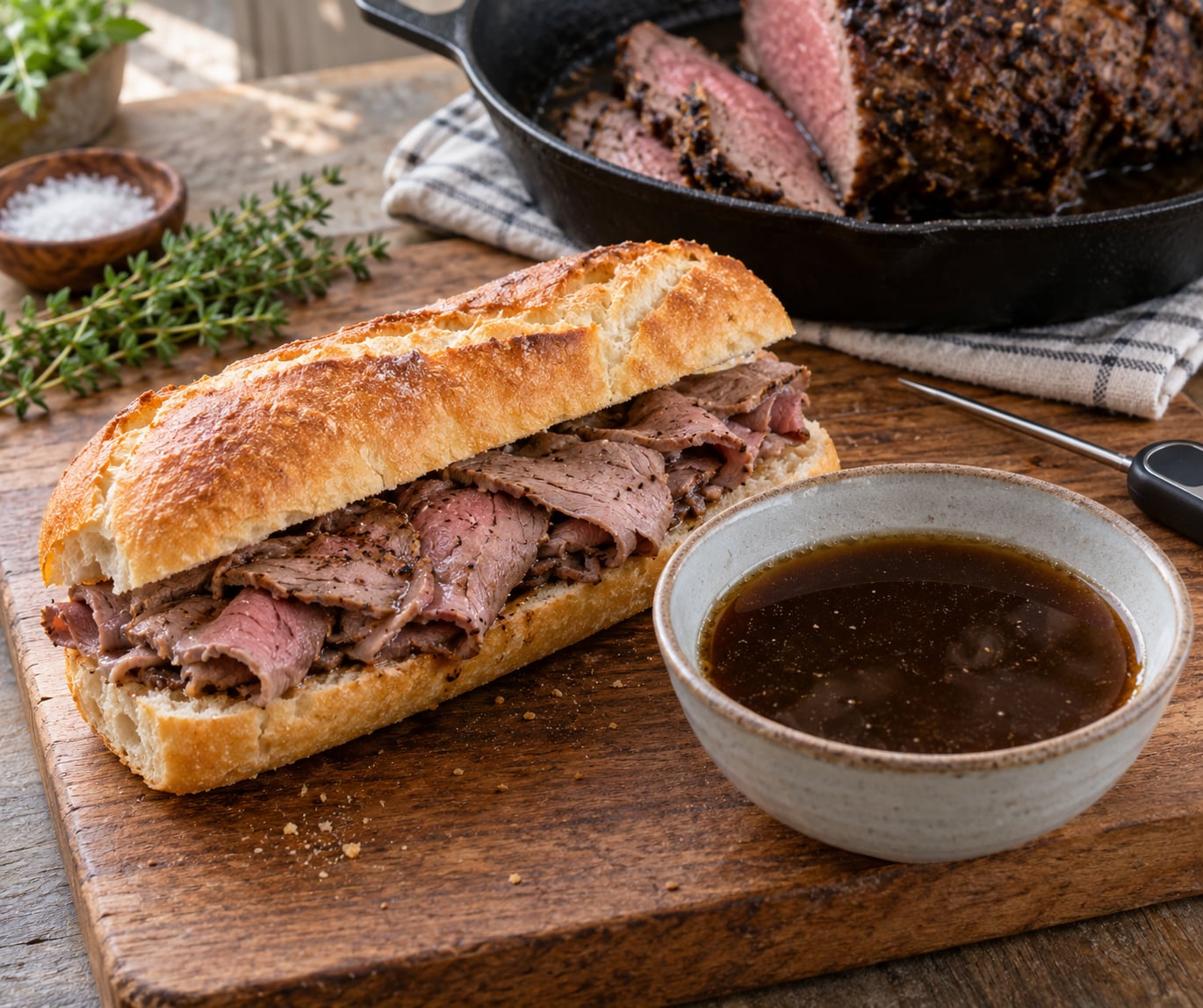
A French dip sandwich is thin-sliced roast beef piled into a split baguette, toasted until the cut face crackles, and dunked into a bowl of au jus, which is simply the concentrated drippings from the beef. The whole thing takes about three hours, most of it hands-off in the oven, and honestly the technique is easier than it sounds: sear the beef hard, cook it covered until a fork goes in without argument, rest it, slice it thin, and toast the bread in the last five minutes.
Skip those steps in the wrong order and you get the two classic failures: a tough roast and a sandwich that collapses into mush before you finish the second half. Here’s how to make a french dip sandwich that holds together, with the details that actually move the needle.
What You Need
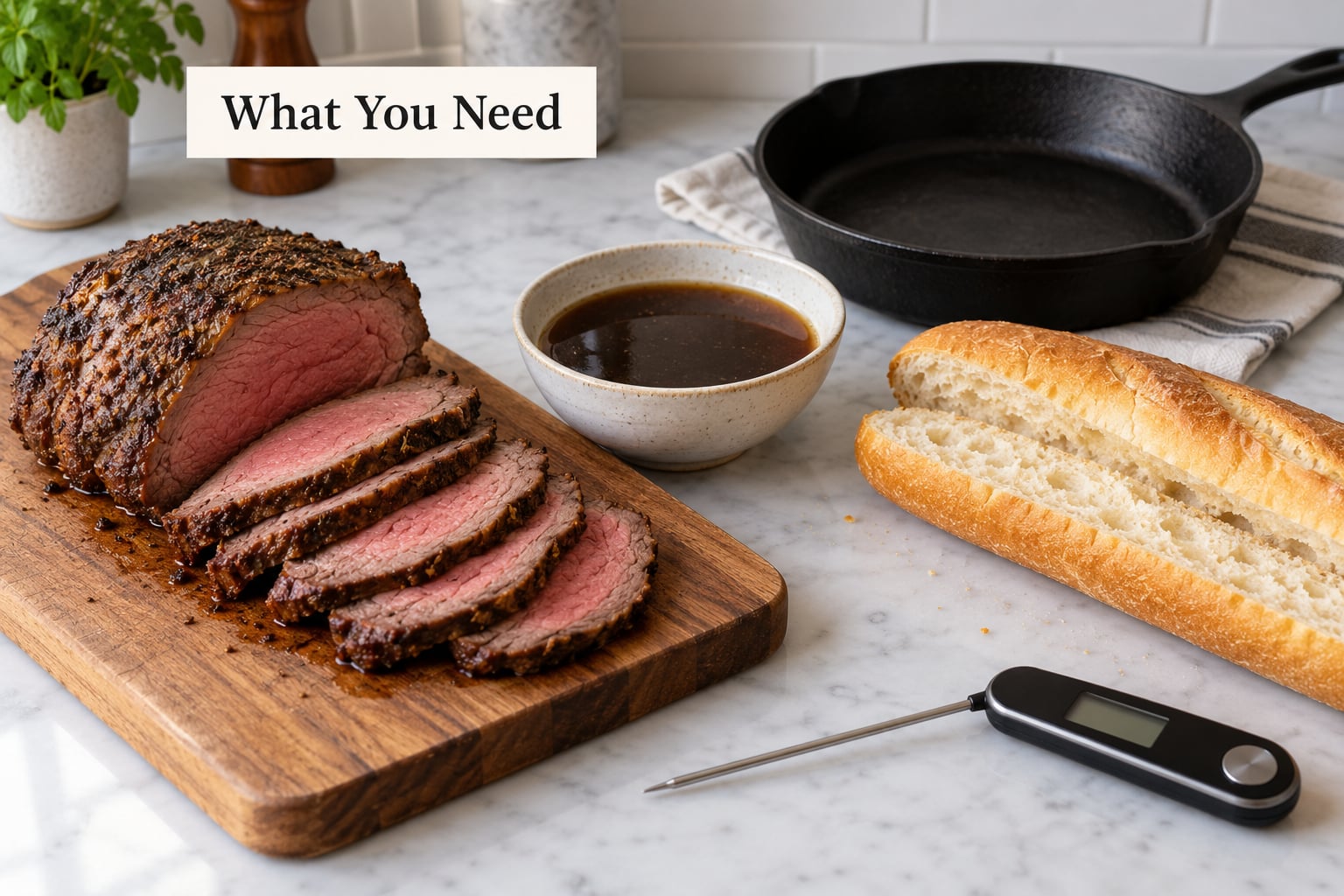
The core list is short. Everything else is a swap or an addition.
- Beef: a chuck roast or bottom round roast, about 2 to 3 pounds. Sirloin and flank work in a pinch, but they’re leaner and easier to overcook.
- Fat and acid: 1 tablespoon neutral oil, 1 tablespoon Worcestershire sauce, and a splash of red wine vinegar or balsamic for the beef.
- Seasoning: kosher salt and black pepper, plus garlic powder, onion powder, and a pinch of dried thyme or oregano.
- Liquid: 2 cups low-sodium beef stock, hot water, or a combination.
- Bread: one small French baguette, a hoagie roll, or two split French rolls. See the bread notes below.
- Optional cheese: slices of provolone, Swiss, or low-moisture mozzarella. Provolone melts the smoothest and stays mild; Swiss gives a nuttier, tangier bite.
- Optional extras: caramelized onions, shredded romaine, sliced bananas with pepper jelly, or a spoon of horseradish mayo on the cut face.
For equipment, a heavy skillet with an oven-safe handle, a roasting pan or Dutch oven for the covered cook, and an instant-read thermometer are the tools that change the result. A meat slicer is genuinely useful if you roast beef regularly, but a sharp long knife angled about 30 degrees off the board works fine for one sandwich.
Bread is where most people pick wrong. A baguette is the traditional choice because the thin crumb turns creamy when it drinks au jus without falling apart. A hoagie roll holds more beef and stays sturdier for kids. Avoid anything soft, like a hamburger bun or a sliced sandwich loaf, since those go to mush immediately. If you want the same idea with different bread, our guide to how to make a burger without a bun works the same way: sturdy base, generous filling, sauce on the side.
Step-by-Step
1. Season the Beef and Prepare the Pan
Pull the roast from the fridge and let it sit 20 to 30 minutes so it isn’t stone cold when it hits the heat. Dry it all over with paper towels, then season heavily with salt and pepper on every face, including the sides and ends. Pat the seasoning into the meat with your hands.
Heat 1 tablespoon of oil in a heavy skillet over medium-high heat until it shimmers. If you’re using a Dutch oven or roasting pan, preheat it in the oven at 450°F instead. The goal here is a hot surface that browns rather than steams.
2. Sear the Roast Beef
Set the roast in the hot pan and keep it untouched for 3 to 4 minutes. You want a deep brown crust, and moving the meat early just tears the surface. Sear each side the same way until all four faces are browned, about 14 to 18 minutes total.
You’ll know it worked when the outside is dark mahogany and the kitchen smells like beef rather than steam. Pull the beef out, spoon the Worcestershire sauce and vinegar over it, and rub it in.
3. Cook the Beef to Tender Doneness
This is where a French dip sandwich is won or lost. Tasting the beef after an hour will not make it more tender; covered, moist, low-and-slow heat will.
Set the roast in the preheated pan, add 2 cups of stock or hot water around the meat, and cover tightly with a lid or foil. Lower the oven to 325°F and cook until the meat is fork-tender, checking once an hour and adding liquid if the pan looks dry.
- 2 to 3 pound roast: about 2.5 to 3.5 hours at 325°F
- 4 to 5 pound roast: about 3.5 to 4.5 hours
Baste with the pan liquid every 45 minutes or so. The USDA recommends a minimum internal temperature of 145°F for whole cuts of beef followed by a three-minute rest, but for a sandwich like this you’re cooking well past that on purpose: the collagen needs to break down for the beef to shred or slice without resistance. Aim for 190 to 205°F in the thickest part, with the probe sliding in like it is going through butter.
4. Rest and Slice the Beef
Move the roast to a cutting board and let it rest for 20 to 30 minutes under loose foil. Resting is not optional: cut too early and the juice runs onto the board instead of staying in the meat, which leaves you with a dry sandwich and a watery board.
Slice against the grain with a long, sharp knife, aiming for slices thin enough to see your hand through. Chuck falls apart and shreds beautifully; bottom round and rump slice cleaner. Loosely pile the meat into the roll, letting it mound above the top edge, and don’t pack it down tight.
5. Make the Au Jus
Pour off the fat from the roasting pan and set it aside. Spoon off all but a thin film, then put the pan over medium heat and deglaze with a splash of the cooking liquid, scraping up the browned bits stuck to the bottom. Those bits are most of the flavor.
Add the remaining stock, the reserved roasting juices, and any beef drippings, and simmer for 5 to 10 minutes to reduce it slightly. Season with salt, a dash of Worcestershire, and if it tastes flat, a teaspoon of gelatin or a small splash of red wine. Strain it through a fine sieve for a clean, glossy sauce.
The shortcut: skip the roasting entirely and simmer 1 cup of store-bought beef stock with 1 teaspoon of beef bouillon and 1 teaspoon of cornstarch slurry until it thickens. It won’t have the depth of a homemade au jus recipe, but it works in a hurry.
6. Toast the Bread and Assemble the French Dip Sandwich
Split the baguette lengthwise, leaving the bottom half a bit wider than the top. Toast cut-side down in a dry skillet over medium heat for 2 to 3 minutes, or under the broiler for 1 to 2 minutes, watching constantly. You want a crisp, buttery, faintly golden face that will hold up to the dip.
If using cheese, layer it on the beef and give the assembled sandwich 2 minutes under the broiler or 5 minutes in a 400°F oven, just until it melts and the top edge browns. Many cooks spread a thin layer of horseradish mayo on the toasted cut face first, and it sharpens the rich beef nicely.
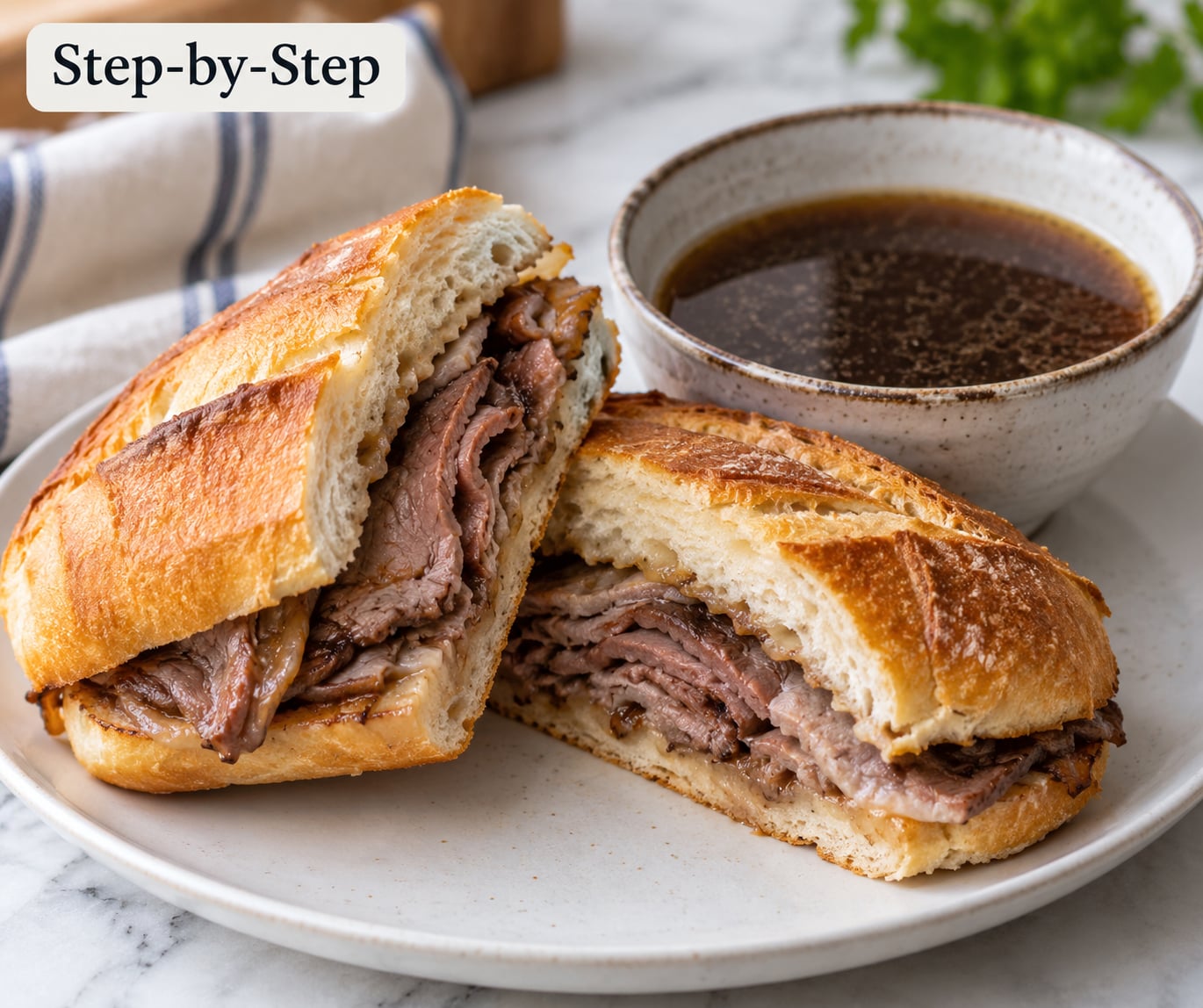
Cut the sandwich in half on a diagonal. A diagonal cut gives you a wider dip edge and less crumbling, and it fits the bowl better. Serve immediately with the au jus in small bowls, hot enough to steam.
Common Mistakes
The beef is tough. Almost always undercooked rather than overcooked. Roast to 190°F or higher and let the covered time run the full duration. Salting 24 hours ahead helps, but temperature and time do the heavy lifting.
The bread goes soggy. Toast later, toast harder, and toast cut-side down. Also, don’t assemble more sandwiches than you can eat in ten minutes, and don’t pour au jus over the sandwich if you want to keep it crisp.
The au jus is watery. Reduce it longer, strain out the fat properly, or finish it with a teaspoon of cornstarch slurry. If it’s thin, it soaks the bread instead of coating it.
The au jus is bland. Deglaze the pan properly and season at the end, not the start. A splash of red wine vinegar at the finish wakes up a flat sauce better than more salt.
The bread is too hard to bite. A baguette can be aggressive for some people. A hoagie roll or a soft French roll gives you the same dip experience with a gentler bite. If you like crunch, the flaky, seasoned fries from our hand-cut fries guide pair well with the drip plate.
The cheese is cold or scorched. Put the sandwich under the broiler with the beef already piled on, and never leave it unattended. Broilers go from melted to black in seconds.
Everything is too salty. The classic mistake is salting the beef, the stock, and the finished au jus all at once. Season the beef lightly, use low-sodium stock, then taste the au jus at the end and adjust from there.
A couple of make-ahead notes. The beef and the au jus both keep three to four days in the fridge, and the au jus freezes well in a container for up to three months. Store the meat and bread separately, and reheat in a 350°F oven for about 10 minutes so the bread re-crisps. If you want a second sandwich from the same roast, our breakfast sandwich method works with leftover roast beef just as well.
Frequently Asked Questions
What cut of beef is best for a French dip sandwich?
Chuck roast is the best all-around cut because its fat and connective tissue break down into a tender roast and produce the best au jus. Bottom round and rump roast are leaner, slice more cleanly, and are the better choice if you want neat thin folds rather than shredded meat. Deli-style roast beef from the counter works when you are in a hurry.
Can I make a French dip sandwich with a chuck roast?
Yes, and it is the classic choice. A 2 to 3 pound chuck roast needs about 2.5 to 3.5 hours covered at 325°F to reach 190 to 205°F, which is the range where the collagen turns tender. Sear it first for crust, baste with the pan liquid, and rest it 20 to 30 minutes before slicing thin against the grain.
How do I keep the bread from getting soggy?
Toast the split baguette cut-side down in a dry skillet or under the broiler right before you assemble, and only toast the amount of bread you will eat within a few minutes. Stacking wet beef on untoasted bread is the main cause of sogginess. Serve au jus in a bowl on the side rather than spooning it over the sandwich, and dunk a half at a time.
Can I add cheese to a French dip sandwich?
Definitely. Provolone melts the smoothest and keeps the flavor mild, Swiss adds a nutty tang that pairs well with the au jus, and low-moisture mozzarella is the easiest to melt. Layer it on the beef and broil for 1 to 2 minutes or bake at 400°F for about 5 minutes, watching closely so the top edge browns without burning the bread.
How should I store leftover French dip sandwich and au jus?
Keep the beef and the au jus in separate airtight containers in the fridge for three to four days, and store the bread on its own so it does not turn soft. Reheat the sandwich in a 350°F oven for about 10 minutes, or microwave the beef and au jus separately for 60 to 90 seconds and toast the bread in a skillet. The au jus also freezes for up to three months.
Can I make the au jus without roasting beef?
Yes. Simmer 1 cup of beef stock with 1 teaspoon of beef bouillon for 5 minutes, then finish with 1 teaspoon of cornstarch whisked into cold water to thicken it slightly. This is a fast version for weeknights. The homemade au jus from roasting drippings tastes deeper because the browned bits from the pan dissolve into it, so reserve that method for when you have time.
Conclusion
Three moves decide whether your version works. Cook the beef covered until it is genuinely fork-tender, around 190 to 205°F, not just until it hits safe temperature. Rest it 20 to 30 minutes before slicing thin against the grain so the juice stays in the meat. Then toast the bread in the last five minutes and serve it with hot au jus on the side. Do those three things and you get a french dip sandwich with a crisp crust, a tender filling, and a sauce worth dipping into.