
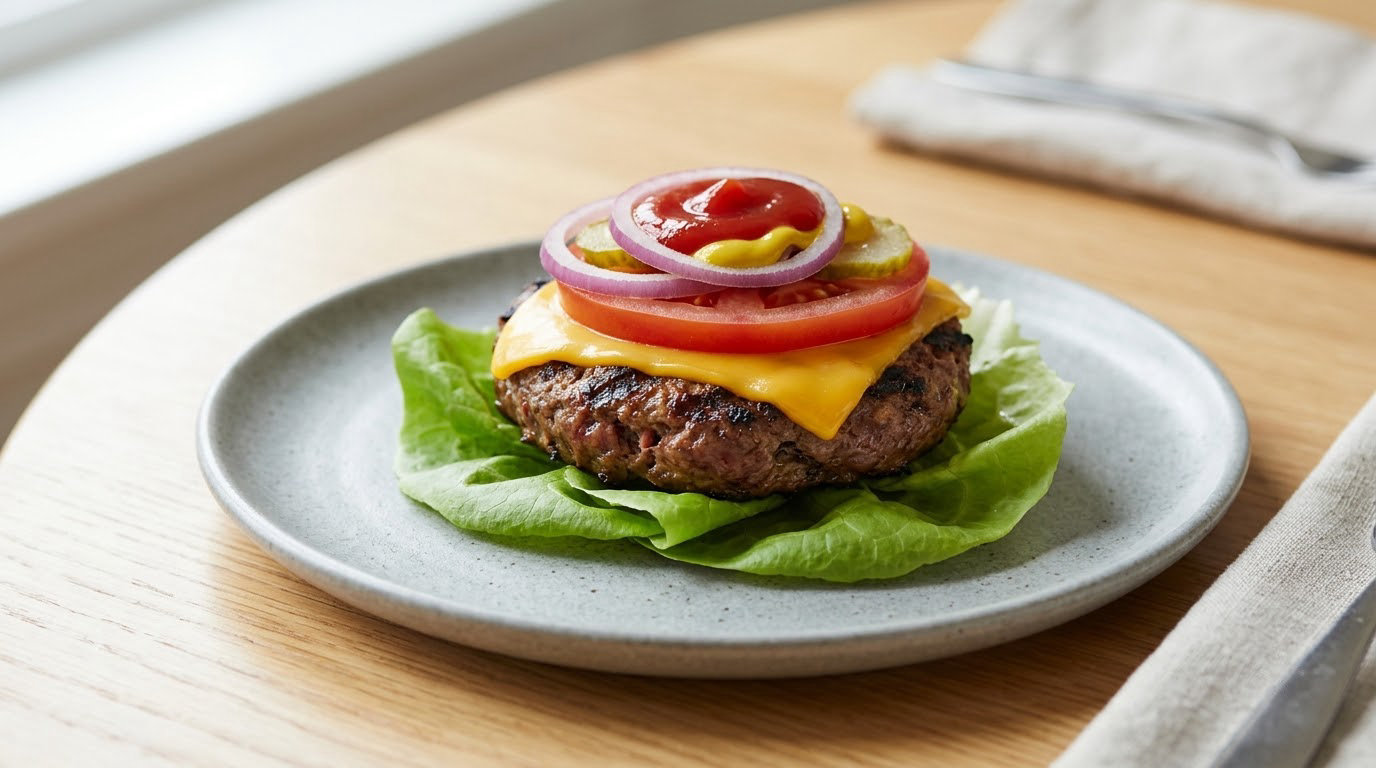
Learning how to make a burger without a bun takes about 20 minutes, one hot pan, and ground beef. The patty is the burger; the bun is only a carrier. Sear the beef hard, salt it, and let its own crust do the holding, then serve it in lettuce, in a bowl, or straight on a plate.
Yes, a burger is still a burger without buns. Once you stop treating bread as the definition and start treating it as packaging, this becomes the easiest weeknight dinner in my kitchen, and the only real skill is not moving the patty too early.
What You Need
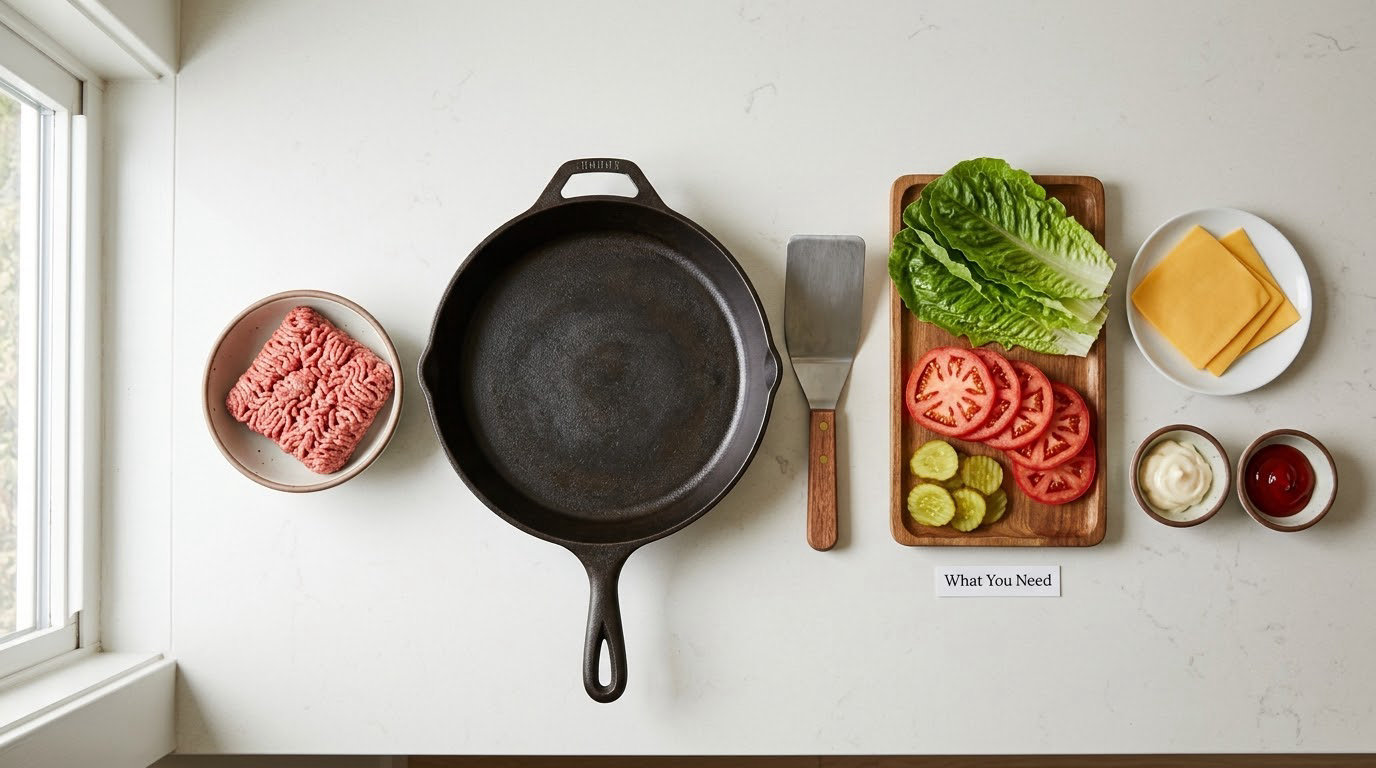
For four people you need about 450 to 680 g (1 to 1.5 lb) of ground beef. An 80/20 blend gives you the juiciest result, and lean 90/10 is fine too as long as you add a binder.
- Ground beef: 450 to 680 g, kept cold until you shape it
- Binder, optional: one egg and a tablespoon of breadcrumbs or oat flour, only for lean beef
- Seasoning: coarse salt and black pepper, plus smoked paprika or garlic powder if you like
- Cooking surface: a cast-iron skillet, a griddle, or a grill over high heat
- One tool: a wide, stiff spatula for pressing and flipping
- Cheese: sharp cheddar or American, one slice per patty
- A base: romaine leaves, portobello caps, sliced avocado, a tortilla, or bread slices
- Toppings: pickles, diced onion, tomato, shredded lettuce, and whatever sauce you actually like
Keep everything else within reach before the pan gets hot. A bunless burger assembles fast and moves around, so you want the pickles open and the sauce poured before the meat lands.
Step-by-Step: How to Make a Burger Without a Bun
Choose a Bun Substitute
Romaine is the workhorse. The rib is sturdy, the leaf is wide, and it folds around a patty without snapping, so it holds a double stack far better than butter lettuce. Butter lettuce tastes nicer raw but tears under anything heavy, which is why it is better for a single thin patty.
Portobello caps work when you want a base that feels like a bun. Pull the stem out, scrape the gills clean with the back of a spoon, salt the hollow side, and grill them for 3 to 4 minutes a side. Sliced avocado is the softest option, good for a lighter plate but too slippery to stack. A flour tortilla, a slice of bread, or a split English muffin turn the meal back into a sandwich when the burger is for someone who is not avoiding carbs.
Shape and Season the Patty
Shape the beef with a light hand. Pat it into a loose round about 1.5 cm (5/8 inch) thick, roughly the width of your palm, and stop working it. Overworking squeezes out the fat and gives you a dry, bouncy patty instead of a juicy one.
Make a shallow dimple in the centre with your thumb so it stays flat on the pan. Season both sides generously with salt and pepper right before the beef hits the heat. The scoop-and-smash method that circulates on r/MealPrepSunday is a good size reference: about a quarter cup of beef per patty, pressed flat, cooked 3 to 4 minutes a side.
How to Cook a Burger Without a Bun
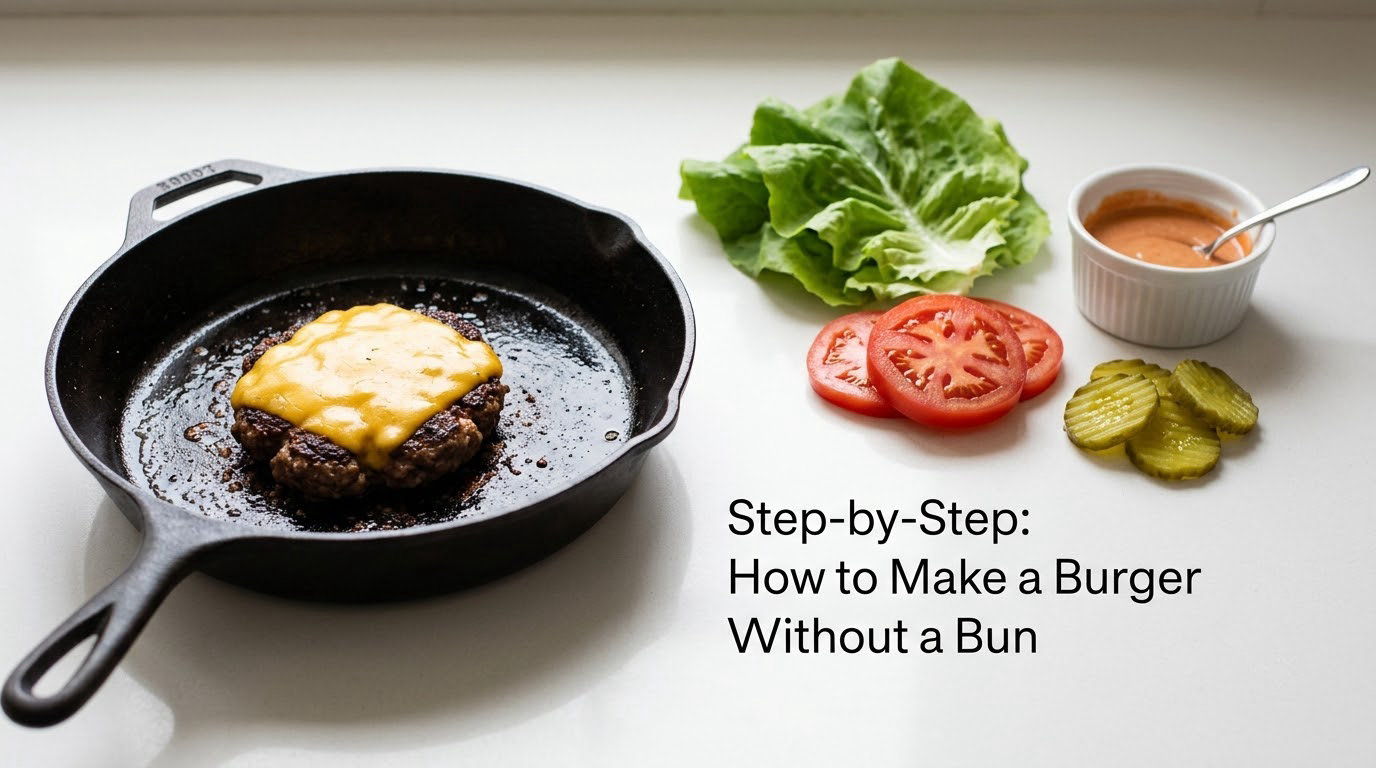
Heat the skillet until a drop of water skates and spits, then add a thin film of oil. Lay the patty down and leave it alone. Resist flipping it for at least 3 minutes, because the crust that forms during that time is the only thing holding your toppings in place later.
Flip once, cook another 3 to 4 minutes depending on thickness, and check that the centre of the patty reads 71C (160F) on an instant-read thermometer. A thinner smash patty cooks in 2 to 3 minutes a side, a thick one can take 5. Skip the pressing and you skip the char, so only press once if you want those lacy edges.
For the oven, set the rack 8 cm (3 inches) from the broiler, broil the patties for 5 to 7 minutes, and check the same internal temperature.
Add Cheese and Toppings
Drop a slice of cheese on the patty the moment it comes off the heat and let it soften for 30 seconds. Melted cheese is glue, and that is the whole trick to a bunless burger that survives the first bite.
Sauce goes on the patty, not under it, because there is no bread below to soak it up. Add wet toppings first, then dry and crunchy ones, then the pickles and onion on top. Two thin patties with one slice of cheese between them holds together better than one thick patty loaded with toppings, and using two lettuce leaves instead of one solves the double-patty flop.
Serve and Pair It
Plate it as a bowl with a rice or salad base and load the toppings over the top like a taco bowl, or wrap the whole thing in the romaine leaf and fold the sides in before eating. A side of roasted potatoes, a bowl of slaw, or a handful of pickles keeps the plate balanced without bread.
Crisp toppings matter more here than anywhere else, since a bunless burger has no soft contrast. Pickled jalapenos, crisp fried onions, or a scatter of shredded cheese restore the crunch a bun would have provided. A cold lager or a cold brew with a squeeze of lime does the same job a soda would.
Common Mistakes
The patty is dry. You cooked lean beef without a binder, or you flipped it five times. Use 80/20, add an egg for lean mixes, and flip exactly once.
The patty falls apart. It hit the pan before the crust formed, or you pressed it too thin for its weight. Wait 3 minutes on the first side, keep patties about 1.5 cm thick, and use a stiff spatula that slides under the whole disc.
The lettuce goes soggy. Wet leaves wilt and tear. Dry them thoroughly in a salad spinner or between two towels, and dress them only at the last second.
The stack turns into a mess. Too much sauce, and the bottom layer dissolves. Put sauce on the patty, keep the quantity to about a tablespoon, and eat it with a fork when the leaf is too floppy to trust.
A double patty overwhelms one leaf. Use the sturdy rib of a romaine, or wrap in two leaves, or drop to a single thin patty with the second one on the side.
Frequently Asked Questions
What is the best substitute for a burger bun?
Romaine lettuce is the best all-round substitute because the rib holds weight and the leaf folds tightly. Portobello caps give you the closest bread-like texture once grilled, and a slice of crisp grilled cheese works well for a low-carb version. Sliced avocado is the softest, tortilla and bread the most familiar.
Can I make a burger without a bun in a skillet?
Yes, and a cast-iron skillet is the best tool for it. Heat the pan until very hot, add a thin film of oil, lay the patty down, and leave it untouched for 3 minutes before the first flip. Cook another 3 to 4 minutes and check that the thickest part reads 71C (160F) before you top it.
What ground beef temperature is safe for a burger patty?
Ground beef is safe at 71C (160F) measured at the thickest part of the patty, which is the USDA minimum internal temperature. Use an instant-read thermometer rather than judging by colour or by pressing the meat. If you swap in turkey or chicken instead, the safe minimum rises to 74C (165F).
Can I use turkey or chicken to make a bunless burger?
You can, with two adjustments. Turkey and chicken are leaner, so mix in a little olive oil, egg, or breadcrumbs so the patty stays tender, and season more boldly with paprika, garlic, and salt. Cook ground poultry to 74C (165F) internal, which is a higher target than ground beef.
How do I keep a bunless burger from falling apart?
Use two thin patties with a slice of cheese between them instead of one thick patty, and wrap in two romaine leaves or the sturdy rib of one. Put sauce on the patty rather than under it, and keep toppings to a wet layer plus a dry layer. A crispy fried or grilled base also holds better than a soft leaf.
Can I prepare bunless burgers ahead of time?
Yes. Shape raw patties, season them, and freeze them on a tray until solid, then bag them for up to a few months. Cook from frozen at 4 minutes a side, or thaw in the fridge overnight for a shorter cook. Toppings and sauces keep better than the patties, so slice the onion and pickles fresh.
Conclusion
Start with the patty, not the base. Season it with salt and pepper just before it hits a very hot pan, give it 3 minutes untouched on the first side, flip once, and confirm 71C (160F) in the thickest part. That crust is what will hold the toppings once the bun is gone.
Then pick the carrier to match the meal: romaine for a wrap, a bowl for a loaded salad-style version, or a portobello cap when you want something more substantial. Once you know how to make a burger without a bun, you are less likely to call it a diet compromise and more likely to treat it as Tuesday dinner.